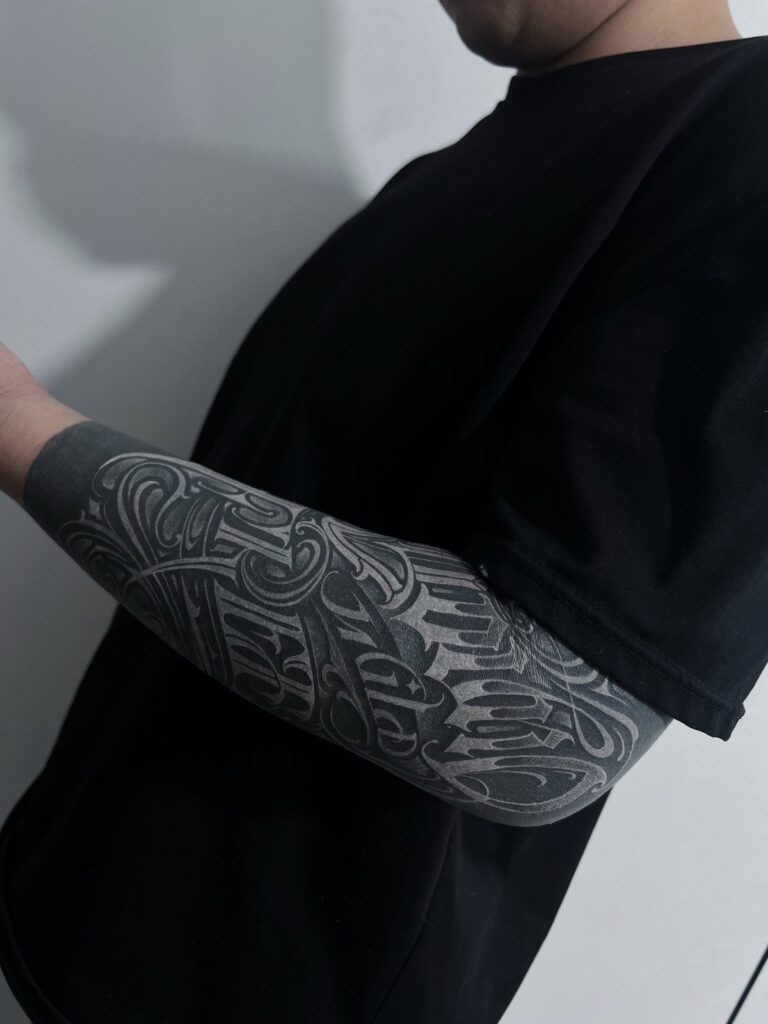
White ink over solid black can lighten an existing tattoo or create high-contrast designs on a blackout sleeve, though the white heals to warm tan or light brown on darker skin tones.
Bold geometric patterns and thick linework hold better than delicate script because white loses visibility over time, and thin lines disappear first.
1. White Ink Over Black Cover-up
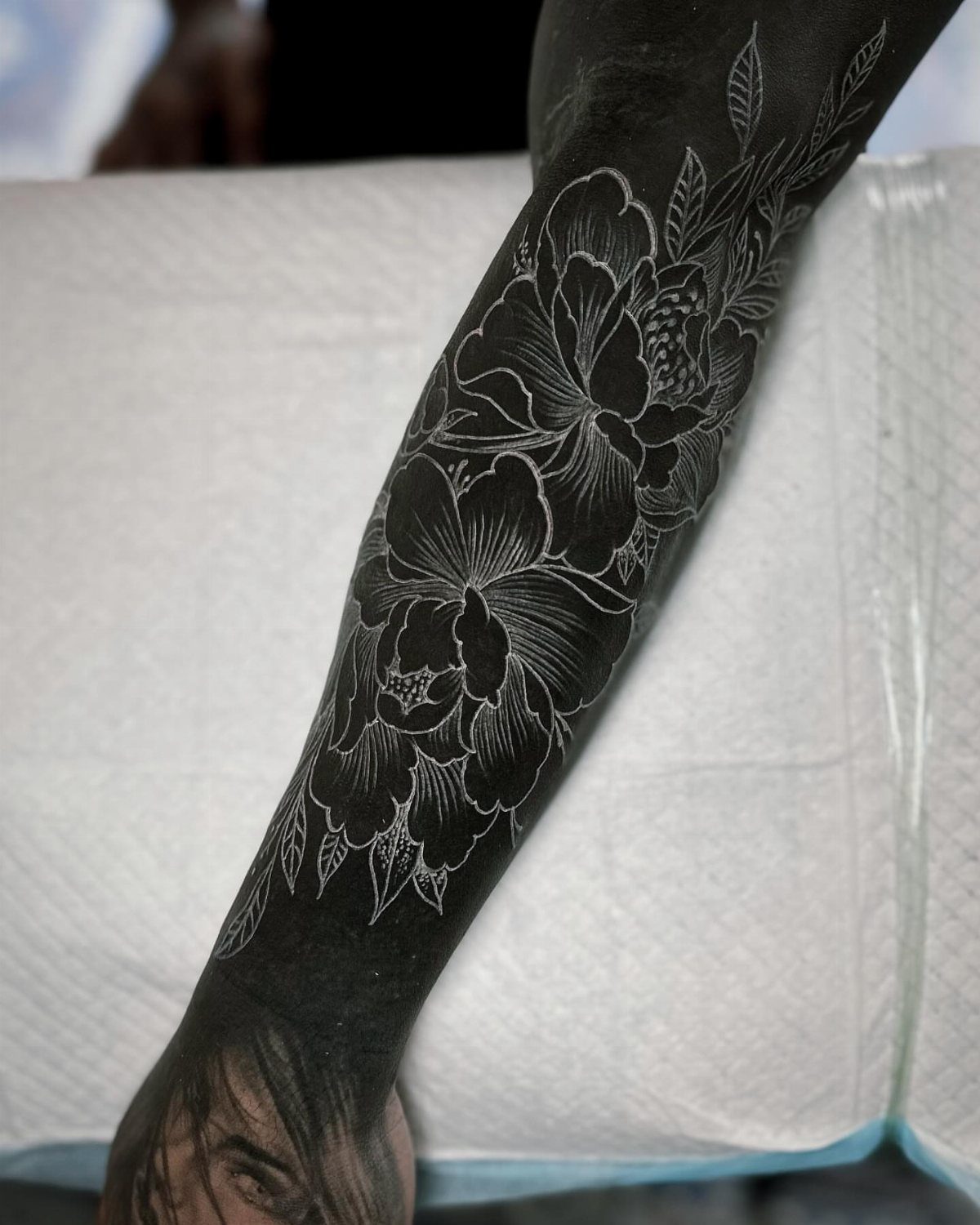
White ink laid over solid black ink can lighten or rework a tattoo you already have, giving it a second life without the time and expense of removal. Peonies hold fine detail well in white over a blacked-out sleeve.
Expect multiple sessions. White ink needs more passes than black to reach full opacity, and the artist will likely go over the design at least twice to build enough density for the pattern to read clearly.
The ink sits on top of existing pigment rather than mixing into it, so a bold design with thick lines will hold better than fine, delicate work.
And although many who go for this type of tattooing opt to keep it black, some have embraced tattooing white over top. The white on black tattoo trend is exceptionally striking, as it plays with contrast in a way seldom seen in tattooing.
2. White Ink on Black Skin Tattoo
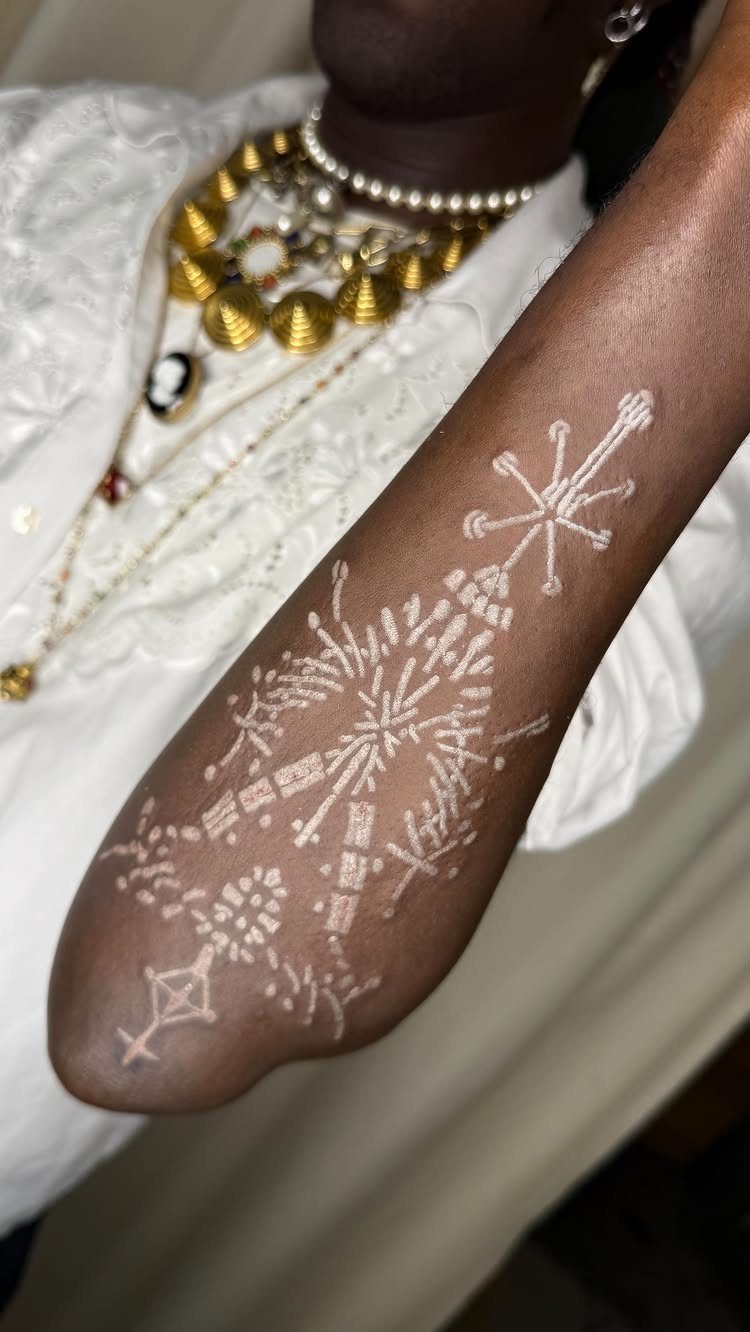
White ink on darker skin tones often heals to a warm tan or light brown rather than the bright white you see in stencil photos.
The contrast is softer, and the design may take 1 to 2 years to lighten fully after healing. Crisp, high-contrast linework is not what this pairing delivers.
Geometric patterns work better than script or portraiture because the shapes still read even when the color shifts. Ask to see healed photos on skin tones close to yours before you commit.
3. White Floral on Blackout Arm
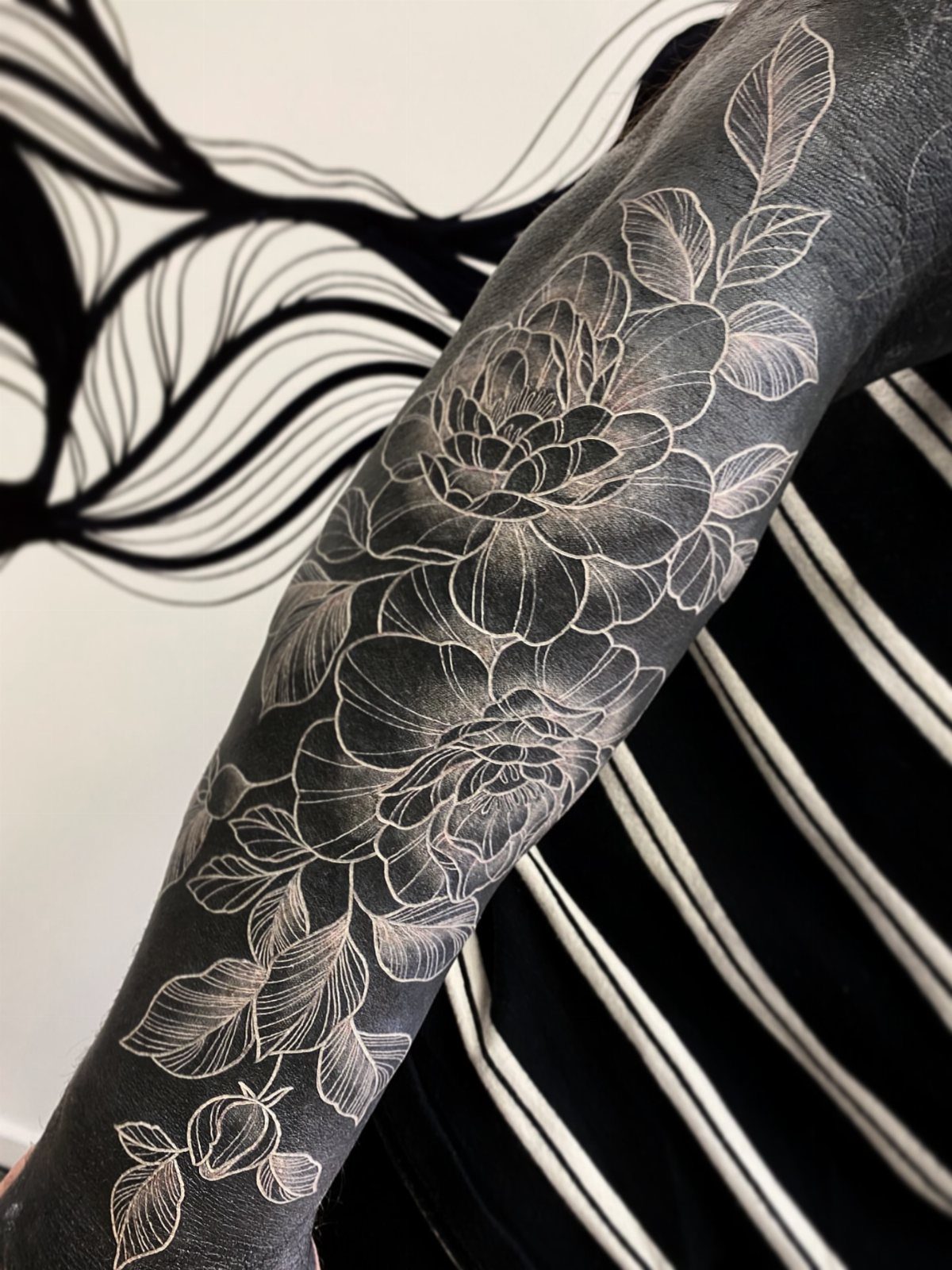
Floral patterns in white ink over a blackout sleeve give you room to add fine detail without competing with an old design underneath.
I prefer designs with clear separation between elements. Tight clusters can blur together as the white ink fades, and a composition with open space around each bloom will still read cleanly years later.
4. White Ornamental Script on Blackout
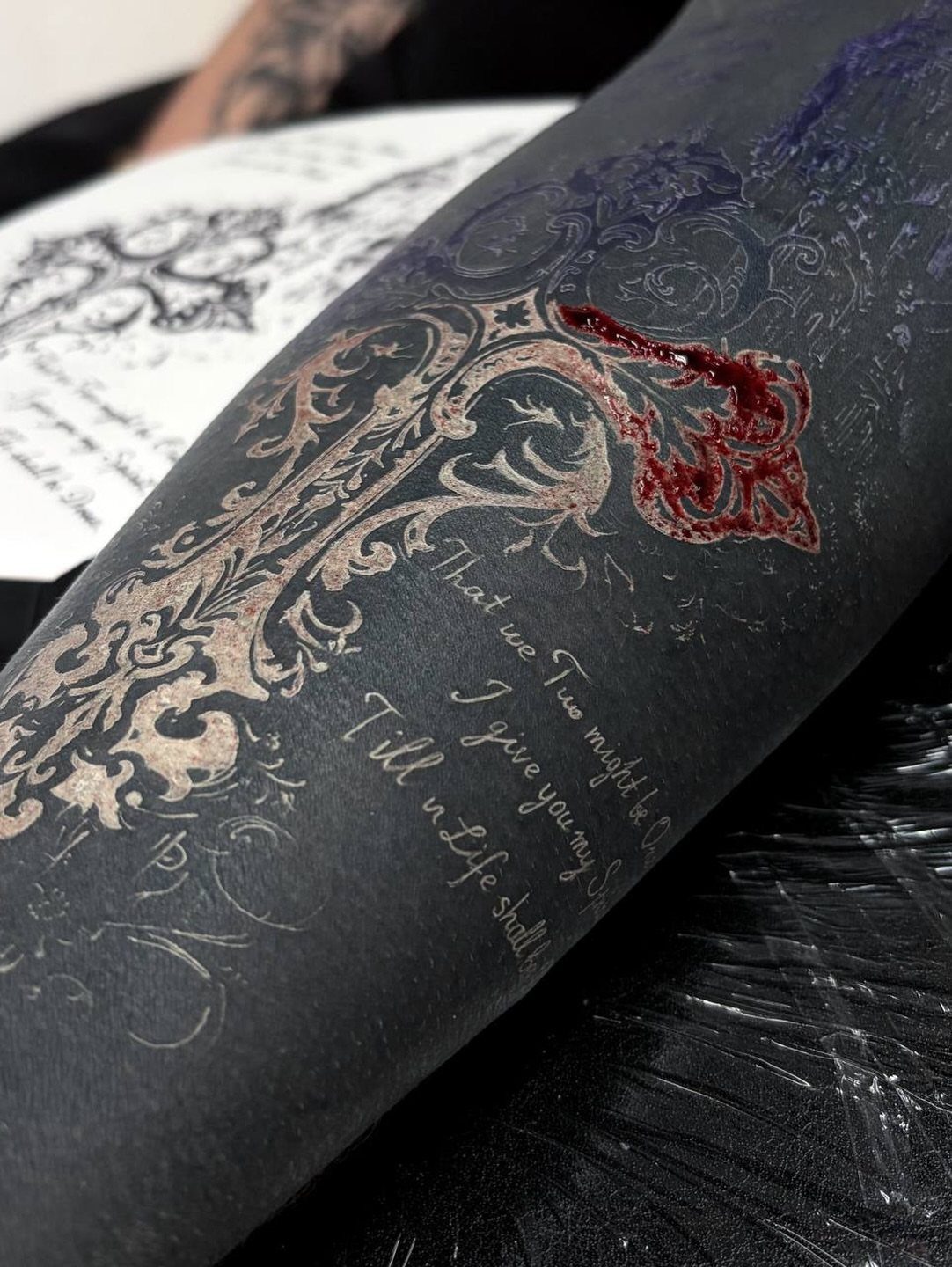
Ornamental linework and script in white ink over a blackout tattoo gives you a way to add lettering or pattern to a solid sleeve without breaking up the base.
The curves and flourishes here read clearly because the black underneath is fully saturated and uniform.
Script needs to be sized large enough that the letterforms stay legible as the white ink fades. Thin cursive will blur faster than bold, geometric ornament, so if the text matters more than the decoration, go heavier on line weight.
5. White Ink Line Art Sleeve
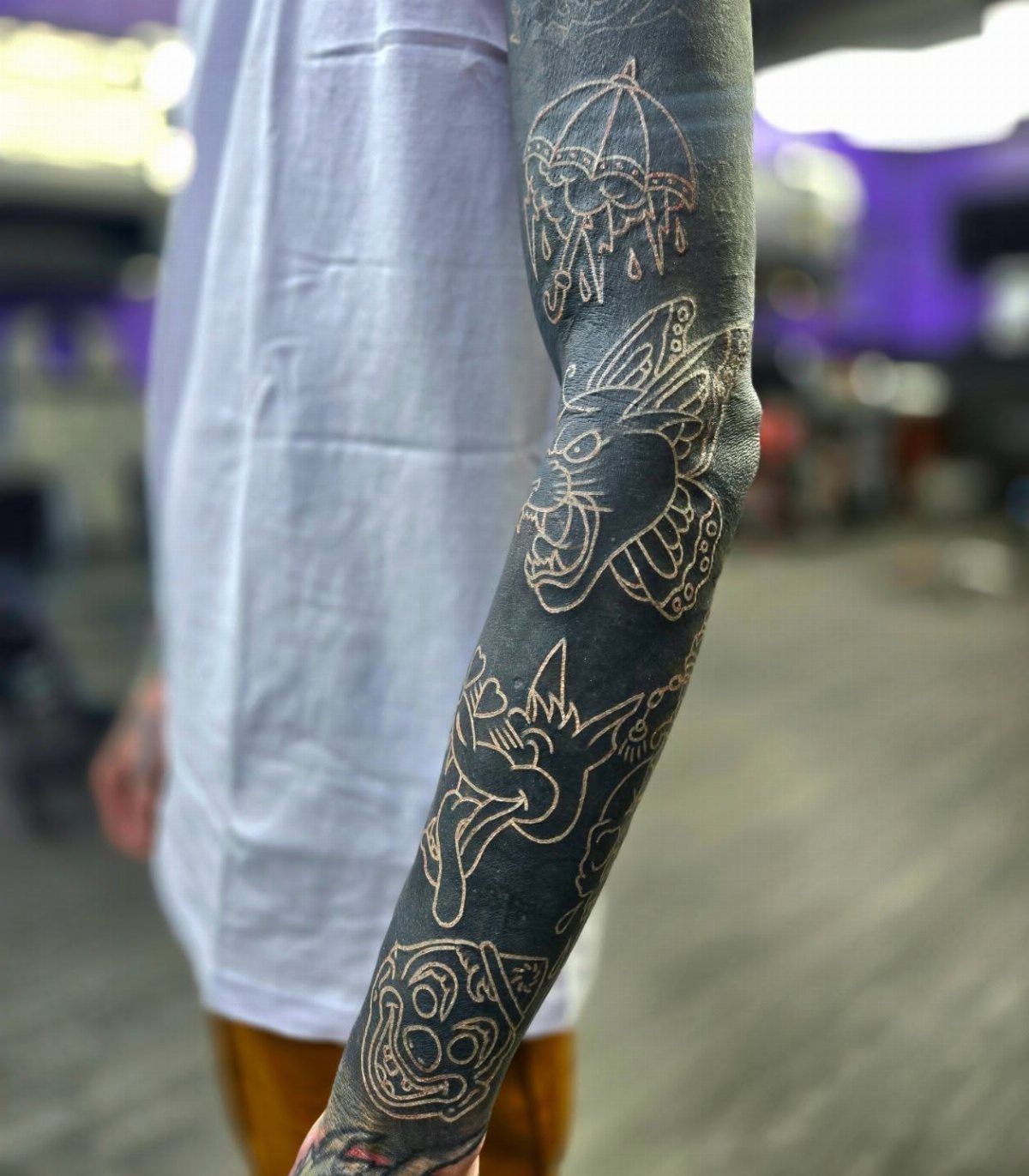
Line art in white ink over a black sleeve lets you add illustrative detail without shading or color, keeping the design graphic and high-contrast.
The jellyfish and creature outlines here work because the linework is bold enough to stay sharp as the white fades.
Thicker lines hold better than fine detail. I would keep the design simple, with clear silhouettes and minimal interior linework, since white ink loses brightness over time and thin lines will disappear first.
6. Ornate White Cross on Black
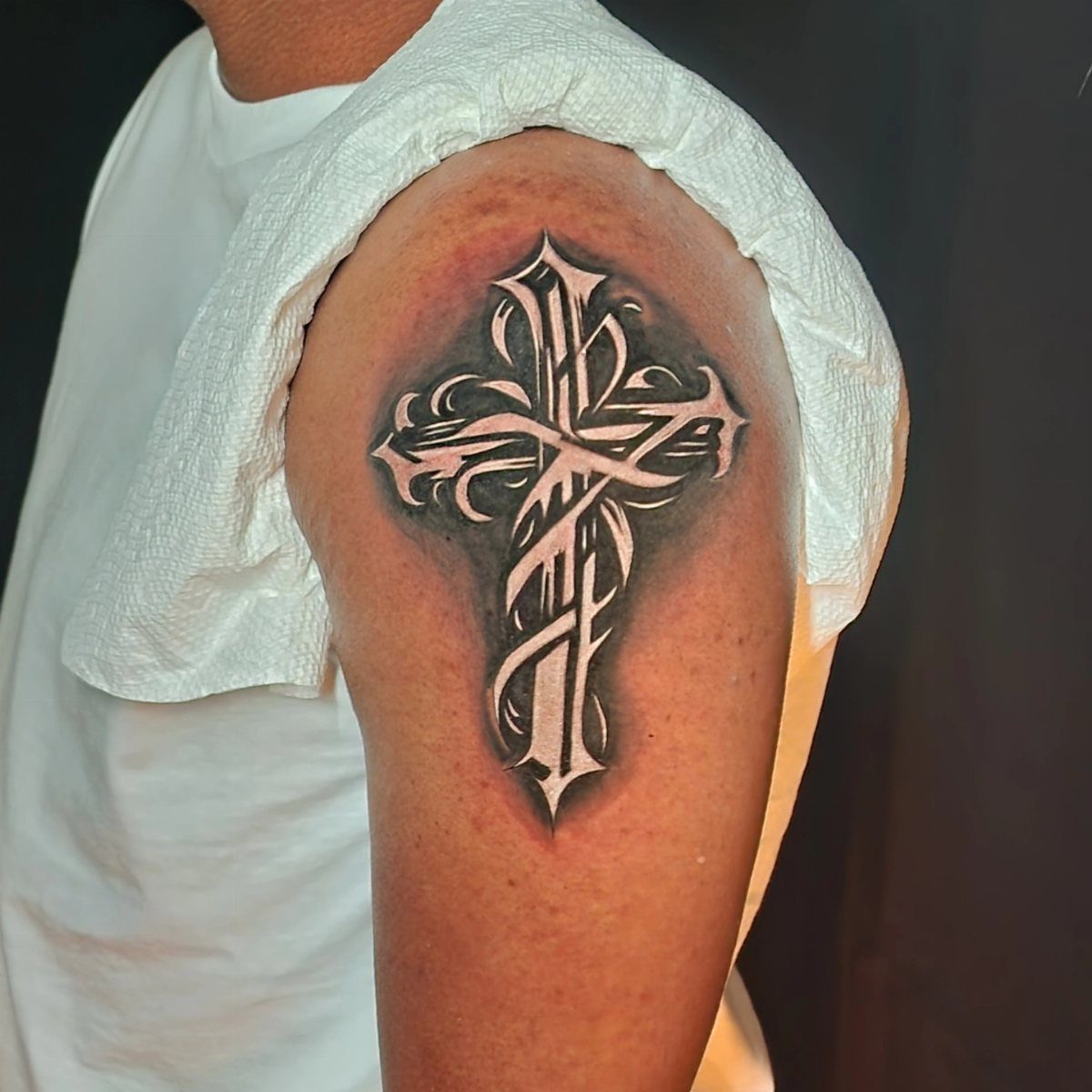
An ornate cross in white ink set against heavy black shading gives you a centered, symmetrical design that stays readable.
White ink lightens sooner than black, so the contrast will soften over time. To keep the cross crisp, plan for a touch-up every few years to rebuild the white where it has lightened.
7. White Bird on Blackout Patch
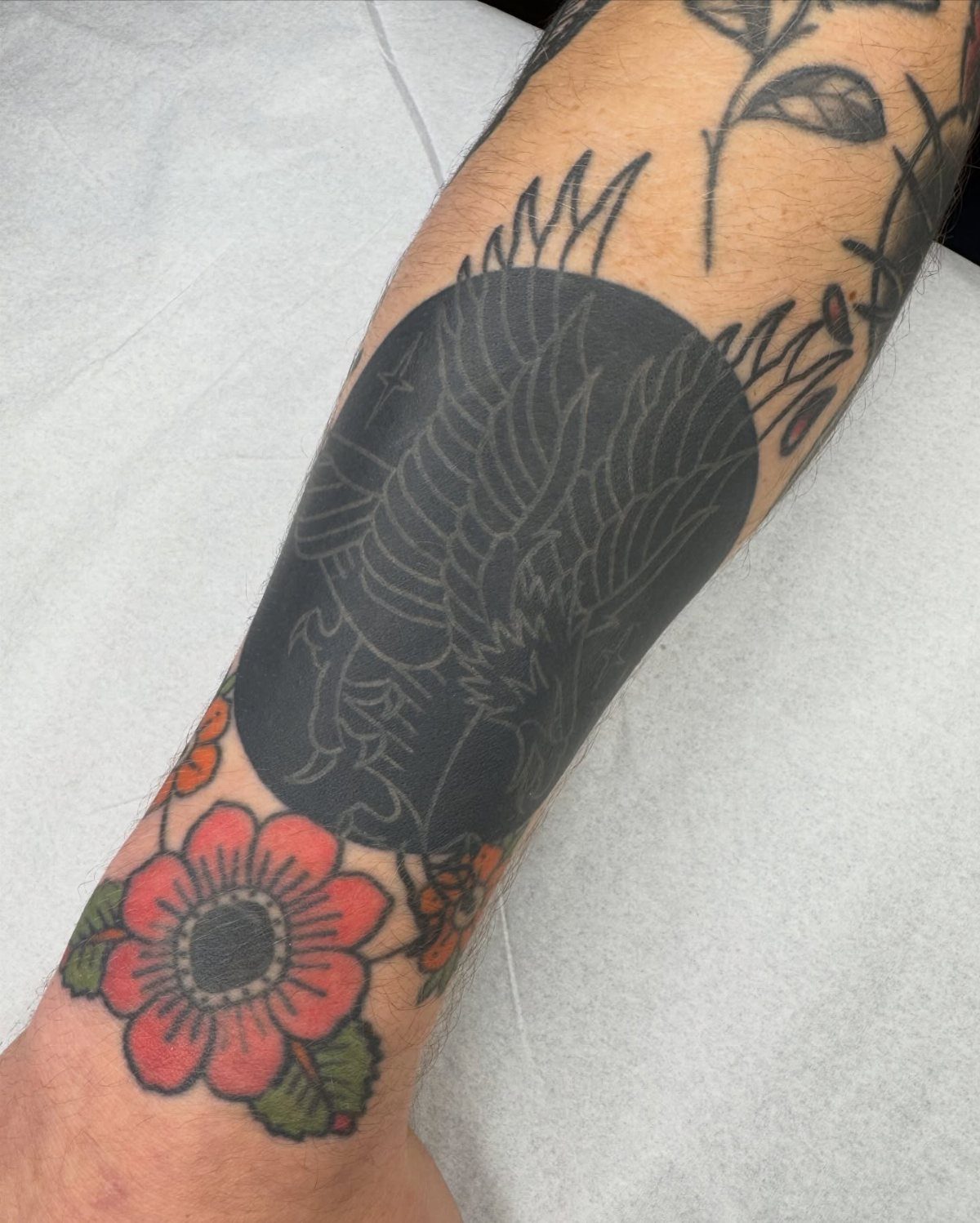
A circular blackout patch gives you a clean frame for white ink detail without blacking out the entire limb.
The bird and foliage here stay contained in one zone, so you can leave the surrounding tattoos alone and add a design that reads on its own.
The circular shape keeps the composition tight.
A square or organic edge would work the same way, but the geometry makes placement easier since the artist can center it on a flat part of the arm where the skin doesn’t shift as much during healing.
8. White Ink Skull Over Blackout
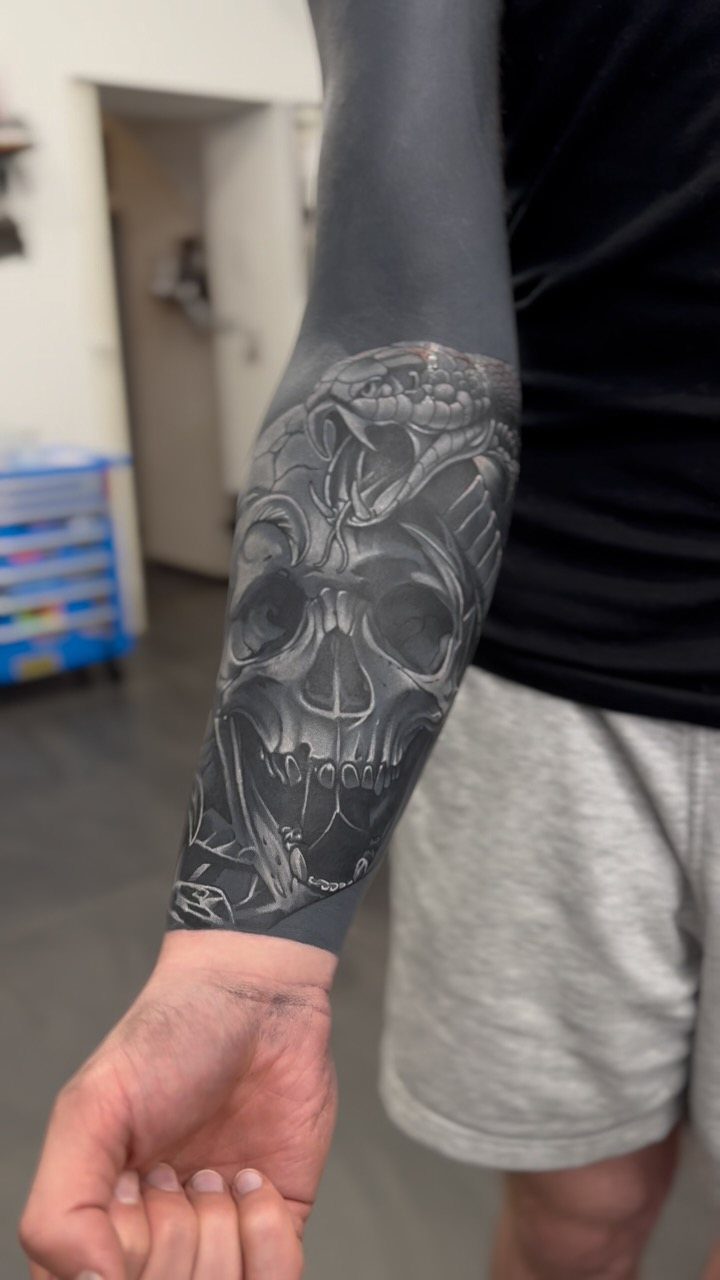
A skull rendered in white ink over a solid black forearm background gives you strong contrast and a design that still reads across a room.
The shading here is built entirely with white, so the skull has dimension without any color or gray wash.
The snake coiled through the skull adds movement and fills the space naturally, and both elements are sized large enough that the white won’t disappear as it fades over the next few years.
Consultation Tips
A healed example on skin close to your tone gives you a realistic picture of what the design will actually look like long-term.
Wait until the skin is fully healed before adding more white ink over the same area. Going over it too soon can cause scarring or uneven pigment, and the touch-up will take longer to settle.
Ink Quality
Fusion White, Eternal SuperWhite, and Solid White Ink are formulated with heavier pigment load, which gives you better coverage over a solid black base without needing as many extra sessions.
Thicker consistency also means the needle has to deliver ink evenly without streaking. If the flow is inconsistent, the white will heal patchy, and the unevenness shows up more clearly against black than it would over bare skin.
Quality needles keep the application smooth and reduce the chance of healing complications that leave the design looking uneven or scarred.
Frequently Asked Questions
Is white ink on a black tattoo healed?
White ink can only be added once the black tattoo has healed completely.
Trying to layer white over fresh black ink causes scarring and uneven pigment, and the design will settle poorly. Give the black enough time to heal completely before the artist starts the white.
What color can go over a black tattoo?
White ink gives you the strongest contrast over a solid black tattoo and covers any old design completely without laser removal.
Blacking out the unwanted piece first hides colors that are difficult to remove, like green, yellow, or neon tones, then white ink adds the new pattern on top.