Leg bands run from single-session geometric rings that take 1–2 hours on the calf to full Celtic knotwork wrapping ankle to thigh across multiple sessions.
The spot you choose matters more than the style itself: thigh placements stay hidden under most shorts and sit on muscle that cushions the needle, while ankle bands hurt more since bone sits close to the surface and fabric rubs the fresh ink during healing.
1. Thigh Leg Band Tattoo
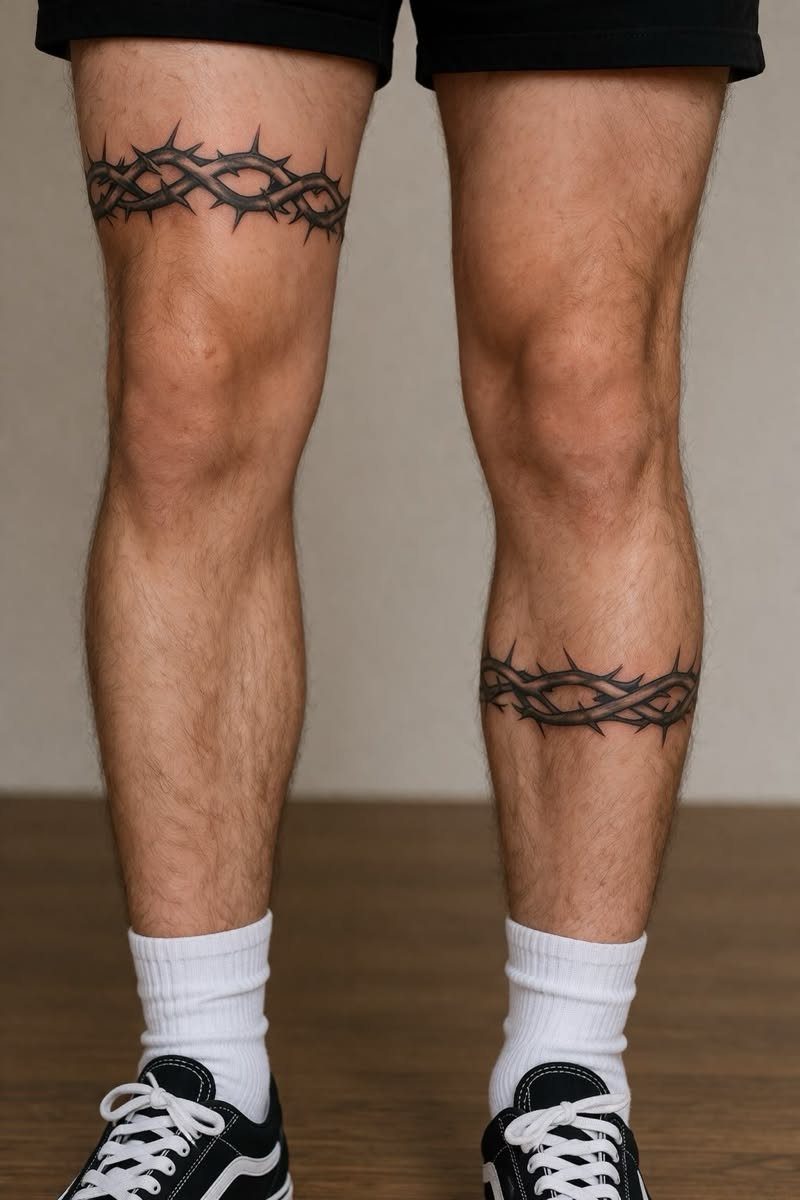
Barbed wire wraps around the upper thigh in sharp, angular loops that mimic the real thing down to the twisted metal texture.
The placement sits high enough to stay hidden under most shorts but bold enough to make a statement when visible.
Size this design tall enough so the barbs stay readable without blurring together over time. Pain levels here are moderate since the outer thigh has more muscle cushioning than bonier spots lower down.
Pricing depends on how much detail your artist packs into each barb and whether you want one band or two stacked at different heights.
2. Two Parallel, Solid Black Ink Bands Wrapped Around the Limb
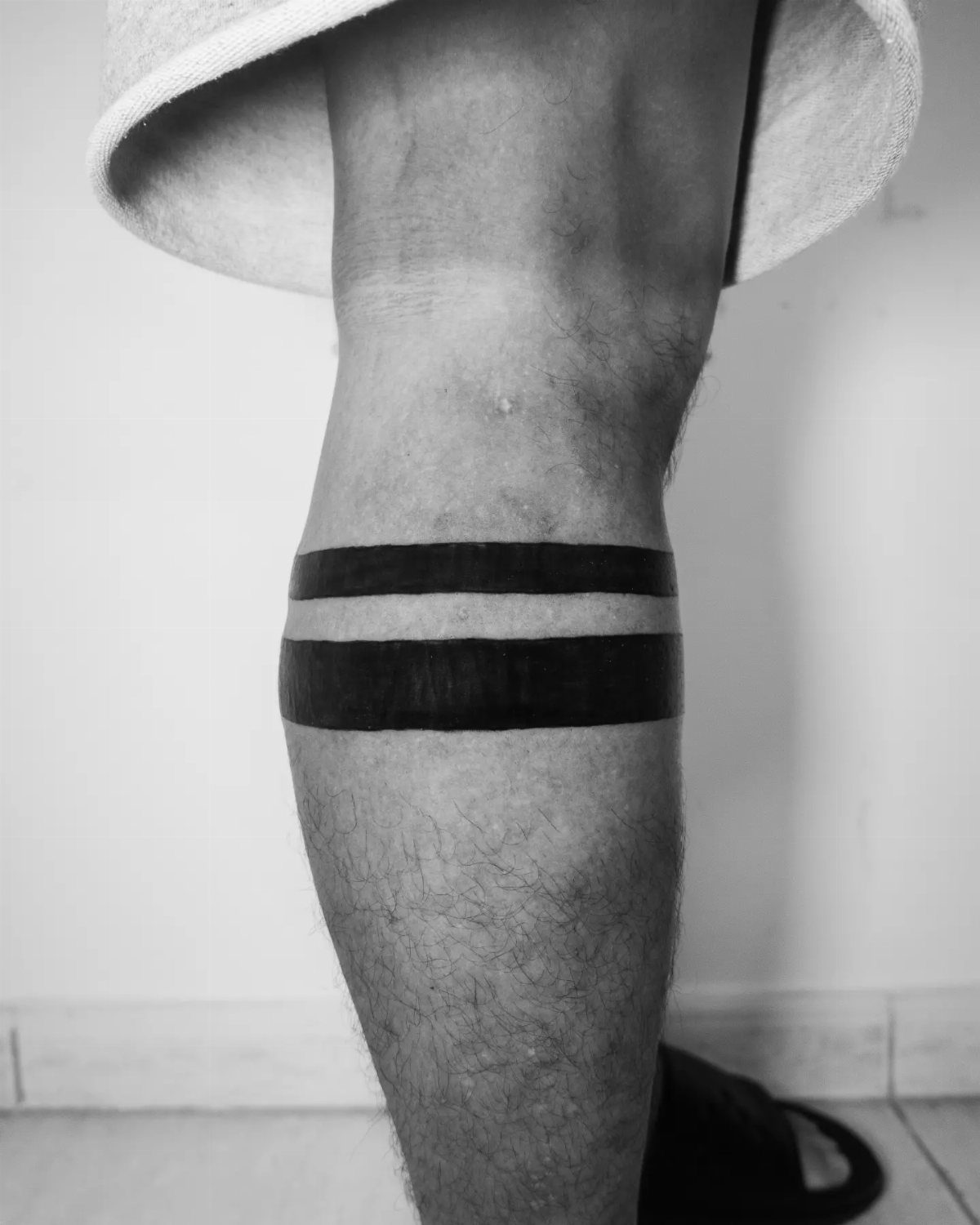
Two thick black rings circle the calf in perfect parallel, each band spanning about half an inch to an inch in width with clean edges and solid saturation.
The design reads instantly from across a room and ages well since there are no fine lines to fade or blur.
Placement on the calf works for most body types since the muscle there gives the artist a smooth, rounded surface to work with.
The skin stretches less during sitting or standing compared to joints, which helps the bands stay crisp over decades.
Session time runs 1–2 hours for both bands, and the calf ranks as one of the less painful spots on the leg.
3. Tribal Leg Band Tattoo
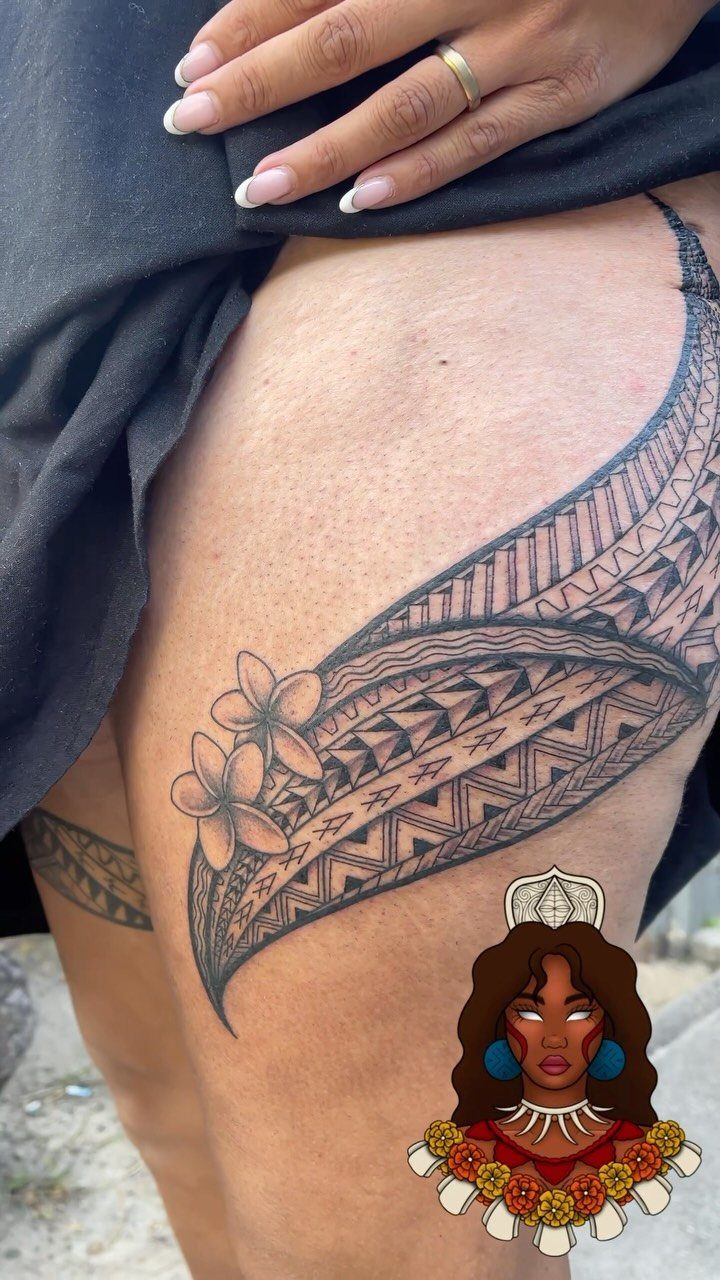
Plumeria flowers bloom between interlocking tribal patterns that wrap the upper thigh in a continuous band, blending Polynesian-style angular geometry with softer floral curves.
The contrast between sharp tribal points and rounded petals stops the piece from feeling too heavy or too delicate.
Tribal leg bands originally marked rites of passage in Pacific Island cultures, though modern versions mix traditional motifs with personal symbols like these flowers. The thigh offers enough real estate for the artist to add detail without crowding the composition.
Budget enough time for a piece this size with shading in the petals and line work in the tribal sections.
4. Ankle Leg Band Tattoo
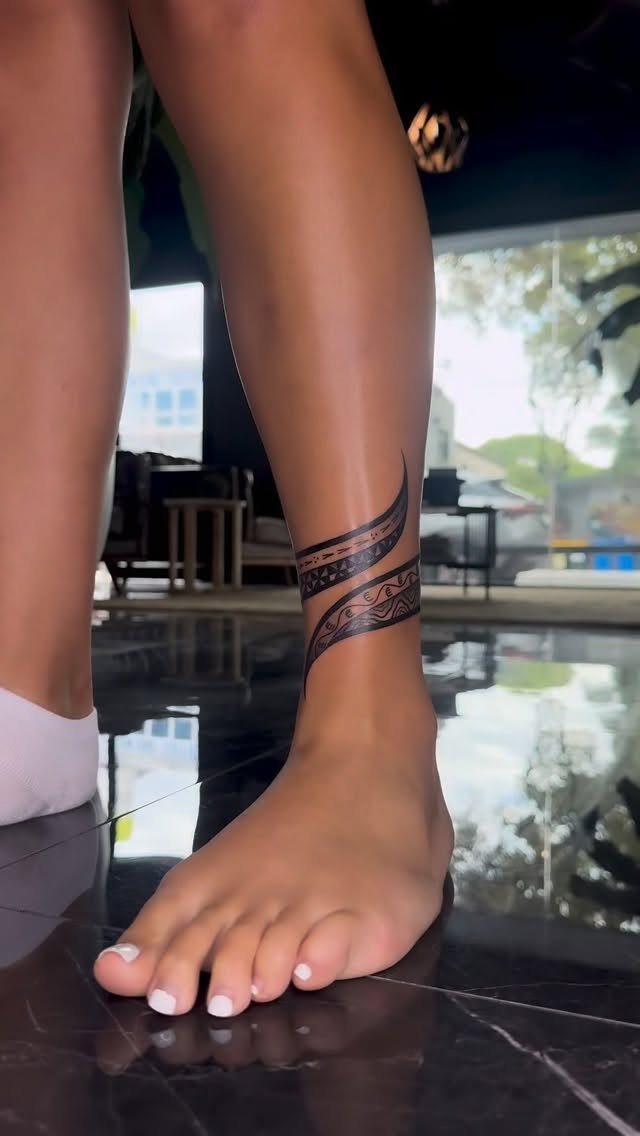
A swirling pattern wraps the ankle in black ink, looping into itself with organic curves that look almost like calligraphy or abstract waves frozen mid-motion.
The band sits just above the ankle bone where the leg narrows, creating a natural frame that draws the eye down.
Ankle tattoos hurt more than meatier placements since the needle works close to bone with minimal padding underneath. Healing takes extra care here too since shoes and socks rub the area constantly during the first few weeks.
Keep the design under 2 inches tall so it does not creep too far up the calf or down onto the foot, both of which change how the composition reads.
5. Lower Leg Band Tattoo
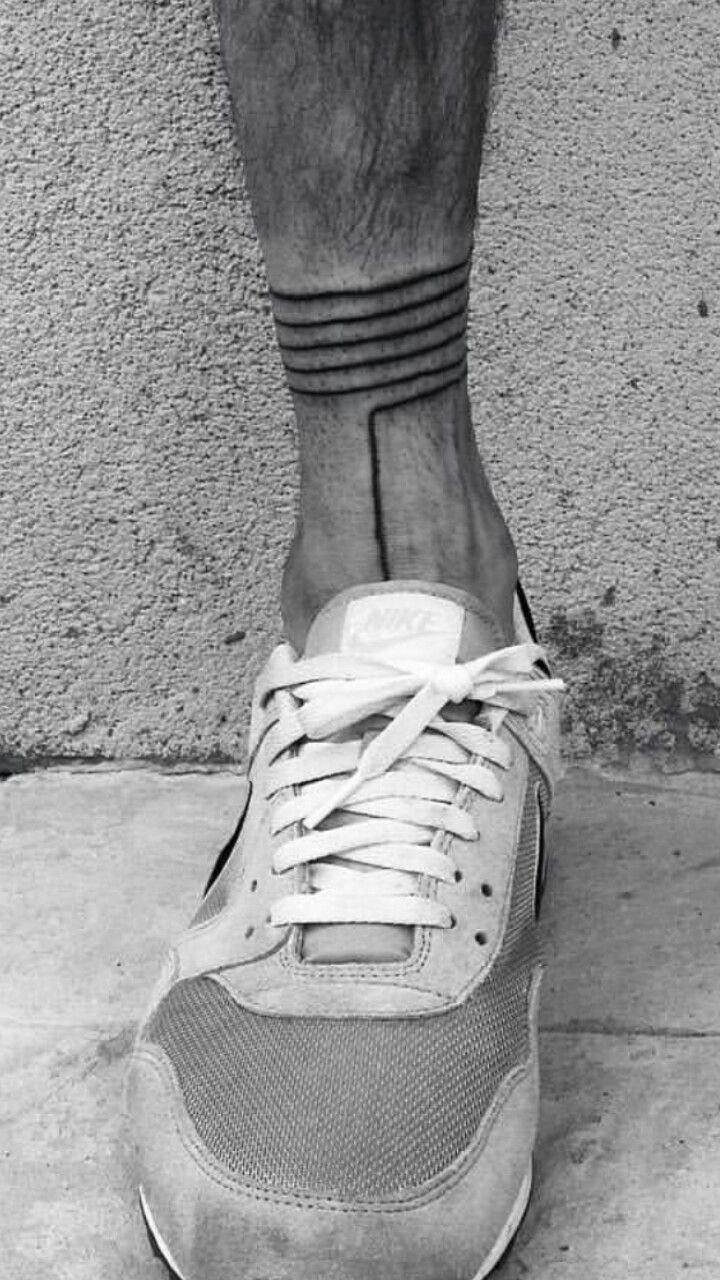
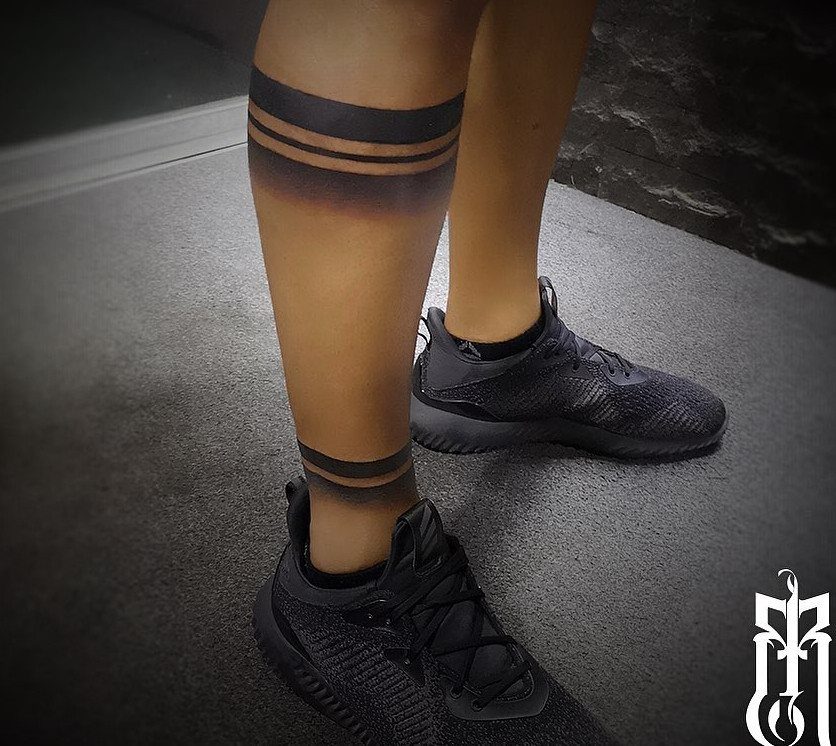
A solid black band circles the lower leg just above the ankle with a single vertical line dropping straight down to connect it to a thinner ring below.
The design plays with negative space, using the gap between bands to create rhythm instead of filling every inch with ink.
This style works well if you already have other black-work tattoos and want something that ties into that aesthetic without repeating an existing piece. The vertical line acts like a bridge, turning two separate bands into one unified composition.
Sessions run 1–2 hours, and the lower leg heals faster than the ankle since fabric does not rub it as much during daily movement.
6. Celtic Leg Band Tattoo
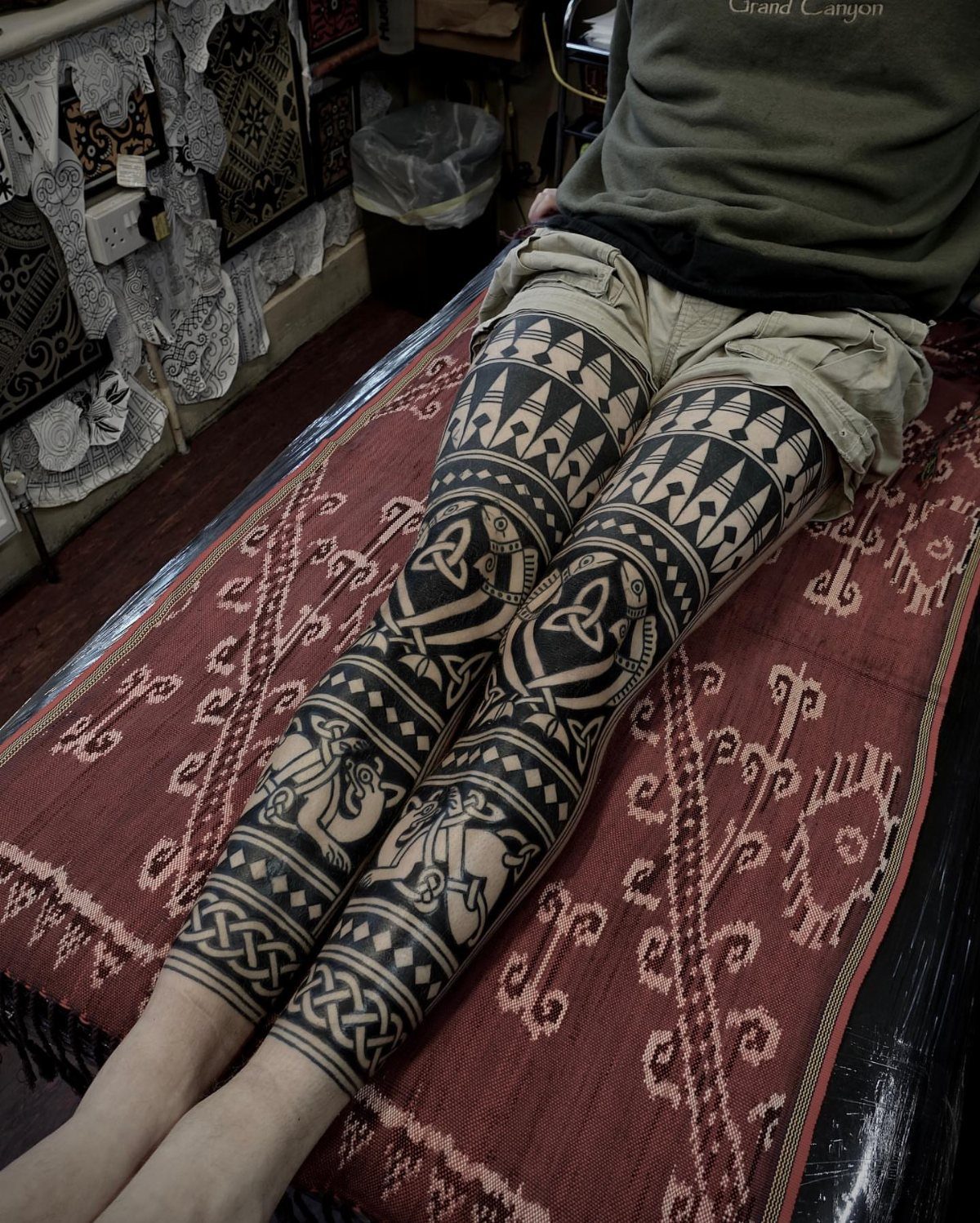
Interlocking Celtic knots spiral around both legs in dense black-work, wrapping from ankle to knee in continuous bands that weave over and under themselves without breaking.
The knotwork tradition dates back over a thousand years, originally carved into stone and metal to represent infinity since the lines have no visible start or end.
This much coverage demands multiple sessions depending on how tightly your artist spaces the patterns and how much shading they add for depth.
Pain varies as the needle moves from the meaty calf down to the shin, where bone sits closer to the surface.
Full leg bands like this run high, so budget accordingly and plan rest days between sessions to let your skin recover.
7. Geometric Patterns Leg Band Tattoo
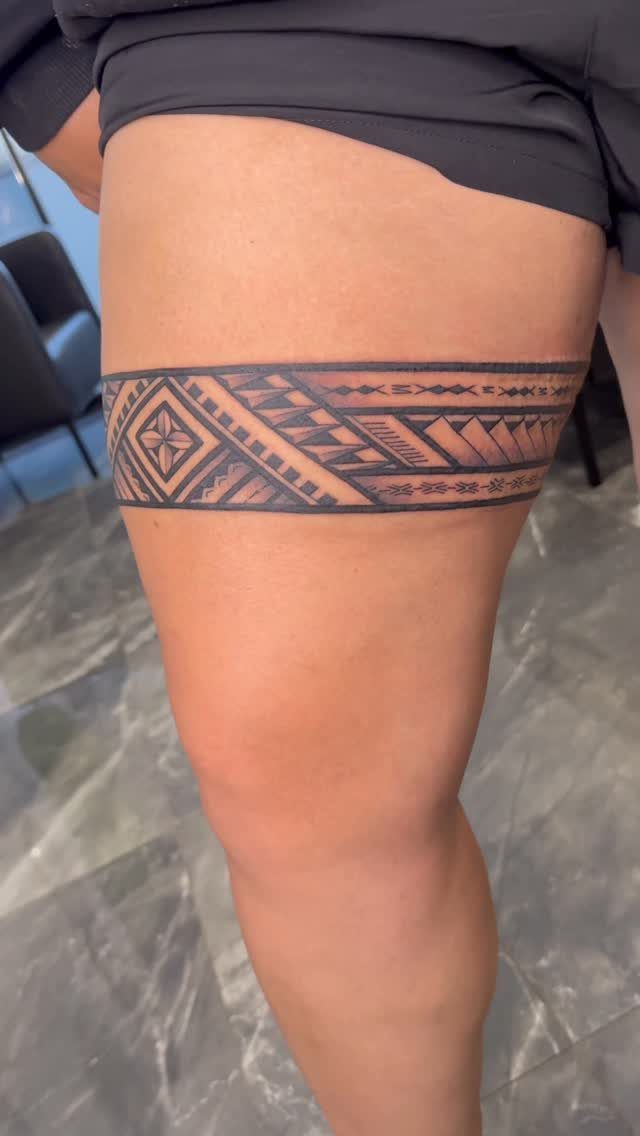
Sharp triangles and interlocking lines form a geometric band around the upper thigh, stacking patterns in dense black ink that reads crisp from any angle.
The design borrows from tribal traditions but leans harder into symmetry and precision, with each shape meeting the next at perfect angles.
Placement on the thigh gives your artist a wide canvas to keep the geometry tight without cramping the composition. Pain stays moderate here since muscle pads the area better than spots closer to bone.
Budget 2–3 hours depending on how many rows of patterns you stack and whether you add dotwork or negative space between sections.
8. Floral Leg Band Tattoo
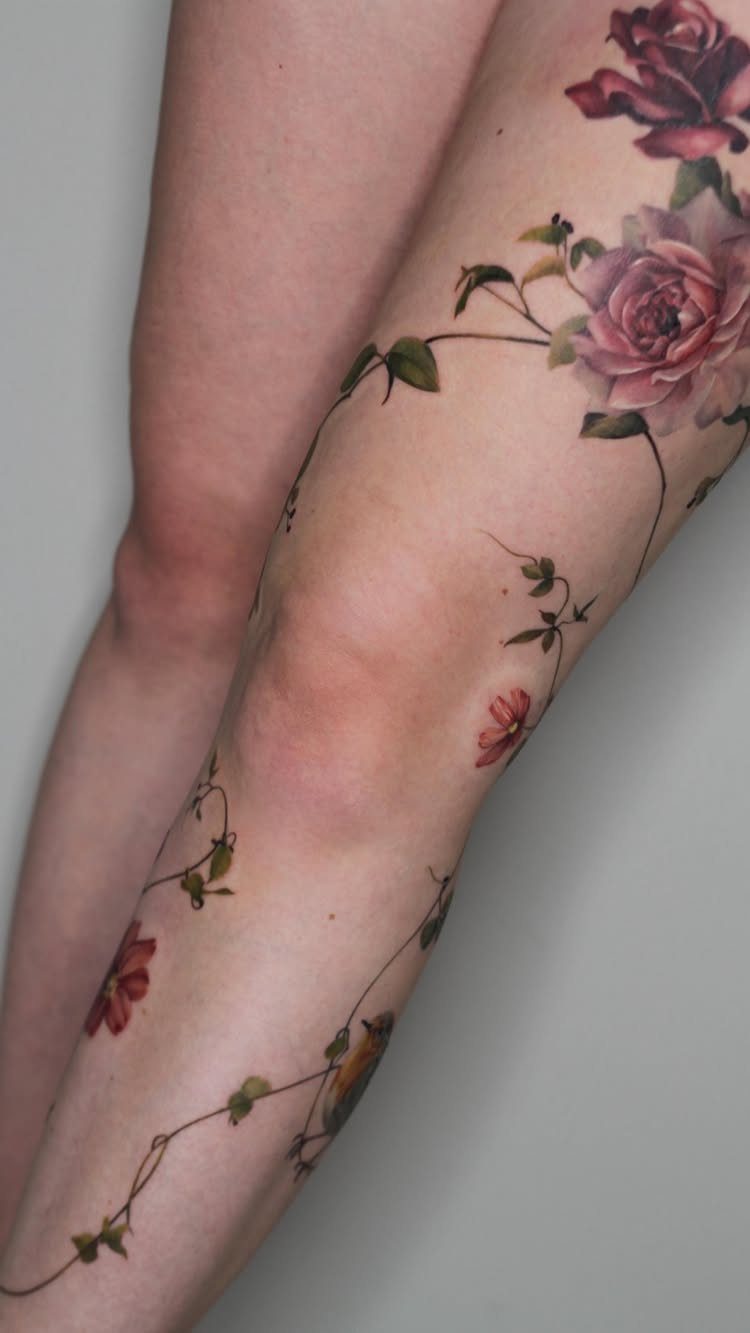
Pink roses and green leaves spiral around the leg in a continuous band, with stems and vines filling the gaps between blooms so the piece flows without hard stops.
A small bird perched among the flowers adds movement and breaks up the symmetry.
Floral bands soften the bold look of solid black rings while still reading clearly from a distance, and color holds well on the leg since fabric rarely rubs it during healing.
The outer calf or thigh works best for designs this detailed since curves there let the flowers wrap naturally.
Full color and shading take longer to complete, and touch-ups later keep the pink from fading into the skin tone.
Leg band tattoos are a powerful medium for personal expression. Their versatility in style and depth of symbolism make them appealing to a wide range of individuals.