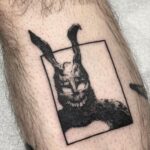
Hyperrealism tattoos start at a few hundred dollars and climb into the thousands for full sleeves or back pieces, because the artist is layering ink in dozens of passes to build the gradients and fine detail that make the image read as photographic.
A portrait needs a sharp reference photo with good light on the face, an animal piece works best when the fur direction and eye catch are clear, and a skull reads as real bone only when every shadow and texture mark is placed right.
1. Realism Tattoos Portrait
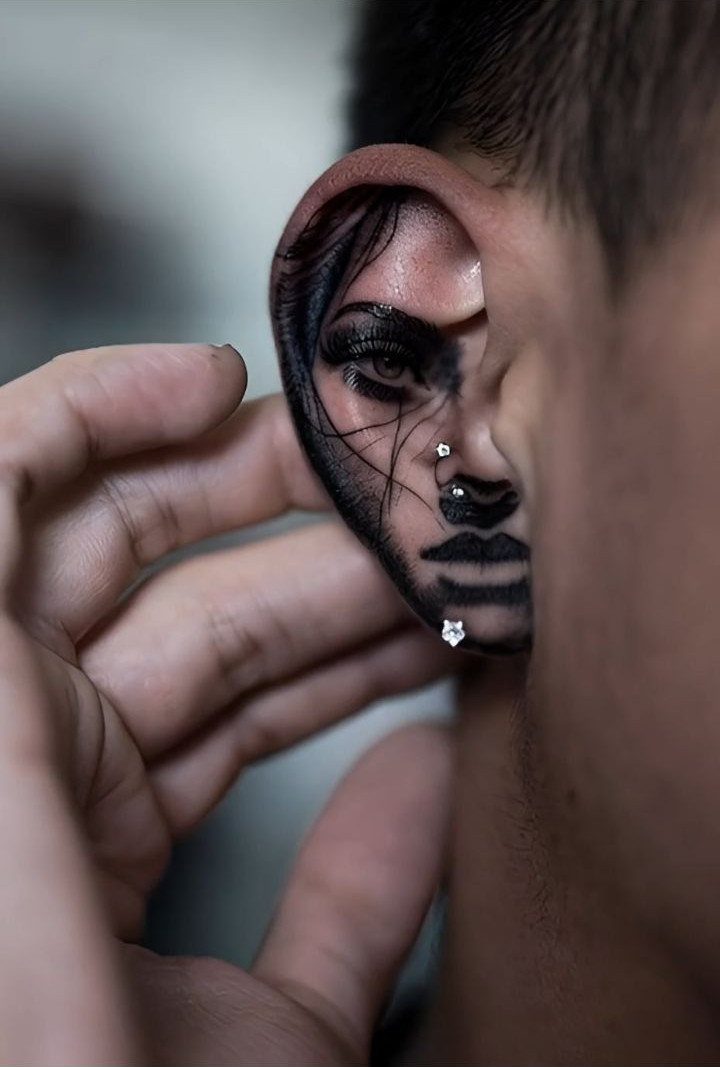
A portrait rendered in black and grey ink captures the face of someone who shaped your life: a parent, a partner, a friend you lost too soon.
The detail matters here more than anywhere else, because people know faces, and a forehead that sits too high or eyes spaced wrong will read as off every time you look at it.
Find an artist who works primarily in portraiture and bring a high-resolution reference photo with even lighting and clear features.
Expect to pay more and sit longer than most other styles, because the artist is building dimension with nothing but shading.
2. Hyper Realistic Tattoo with Fine Lines
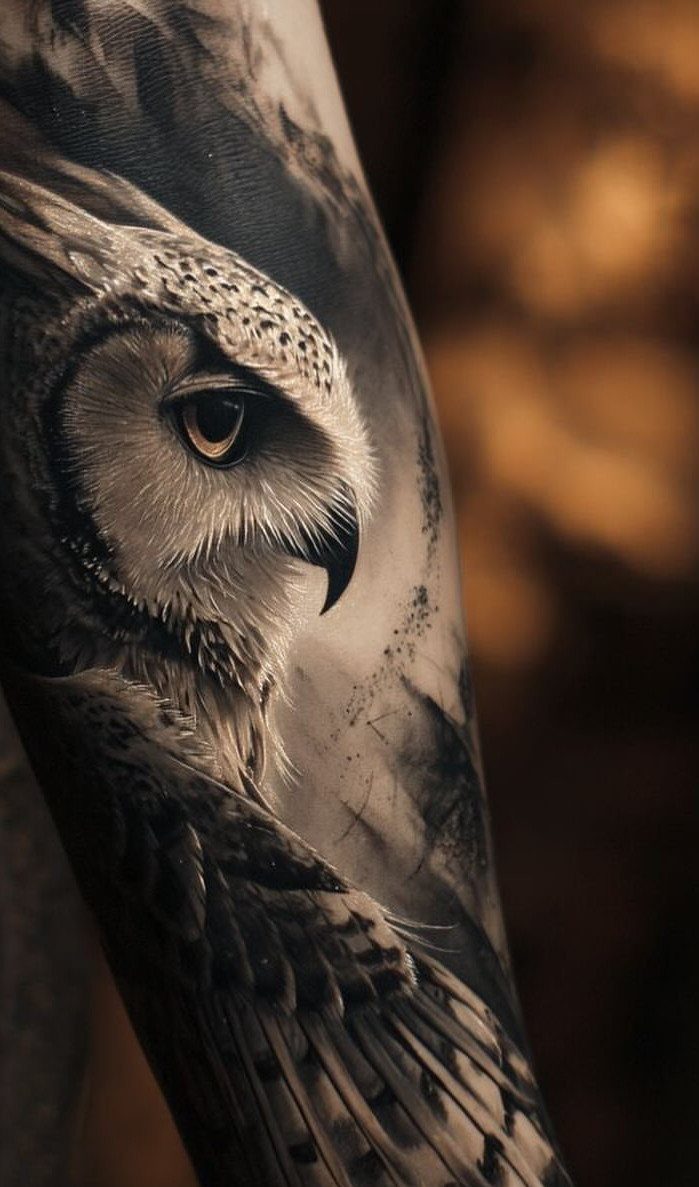
Fine-line realism relies on needles configured in tight groupings, sometimes as few as 3 or 5 at a time, to carve out individual feathers, whiskers, or the delicate rim of an iris.
The result reads as softer and more intricate than bold realism, though it fades faster over time because those thin lines hold less ink.
Placement matters.
Fine lines hold best on flat, low-movement areas like the forearm or shoulder blade. Hands, feet, and ribs will blur the detail within a few years, no matter how skilled the artist.
3. Animals
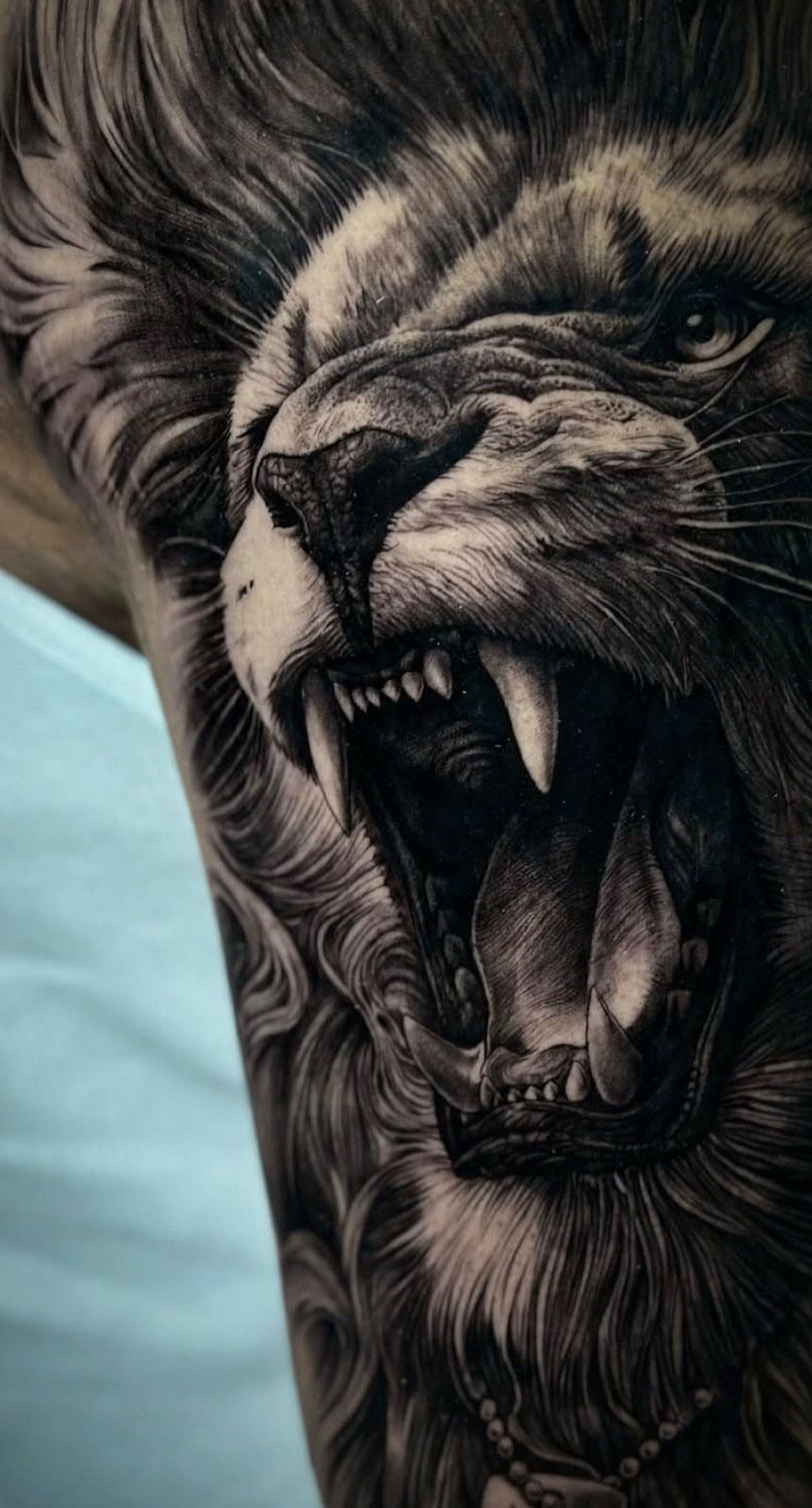
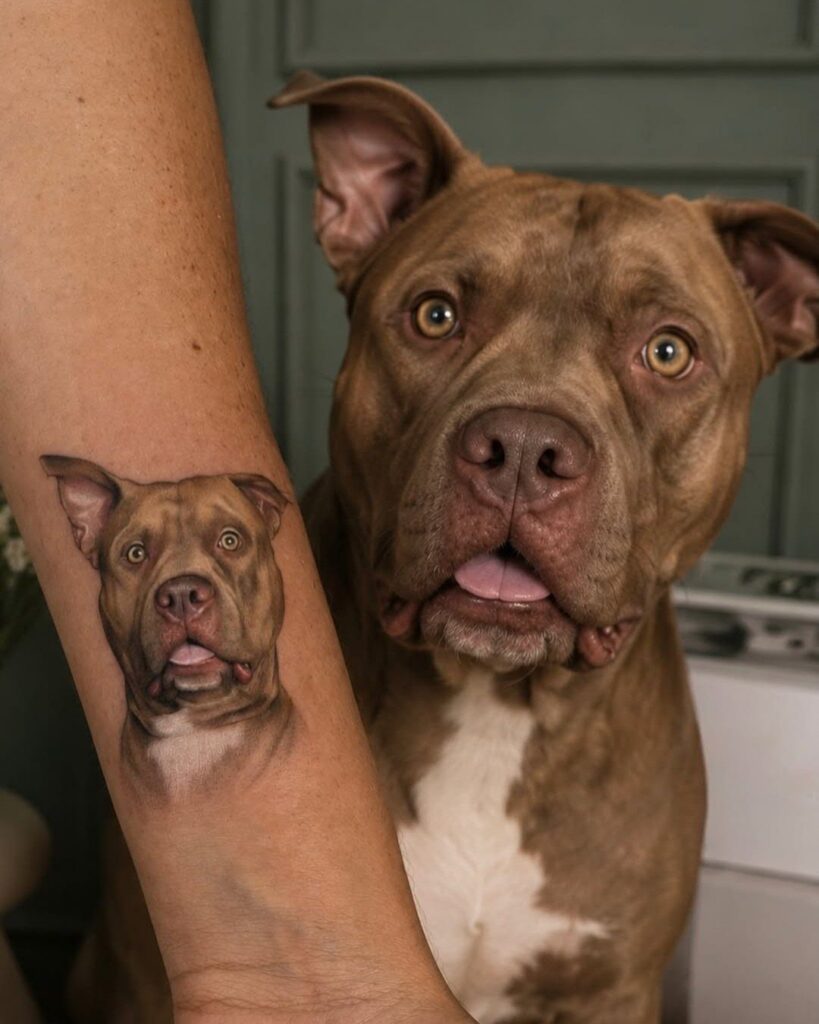
Fur texture is where most animal realism lives or dies.
The artist builds it by layering ink in the direction hair grows, darker at the roots and lighter at the tips, then pulling individual strands out with white ink or negative space.
Eyes anchor the piece. A highlight in the right spot makes the animal look alive; miss it and the whole tattoo flattens.
If you’re memorializing a pet, bring multiple photos so the artist can capture the shape of the face and the way light hits the eyes in your reference, not someone else’s stock image.
4. 3D Hyper Realism Tattoos
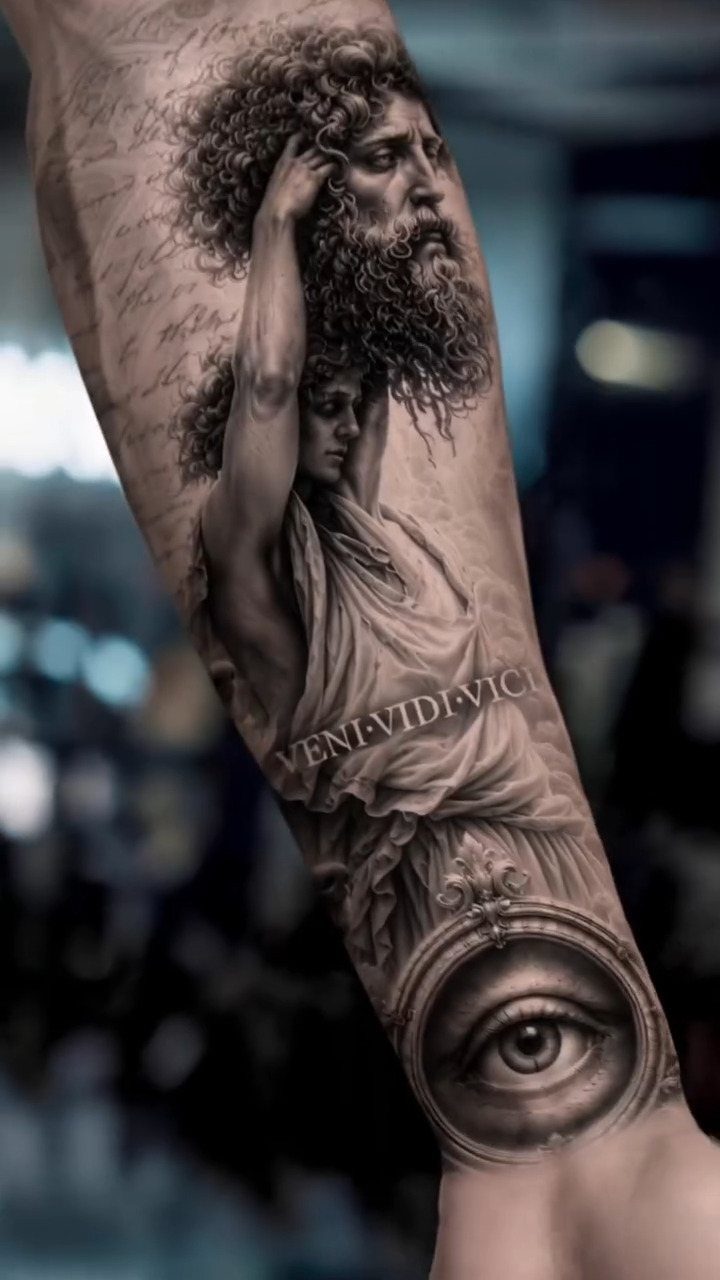
3D realism tricks the eye by adding cast shadows and highlights in places your brain expects them, so a sculpted figure or an open eye appears to sit on top of the skin instead of in it.
The effect holds best on rounded body parts like the bicep or calf, where the natural curve of your arm or leg supports the illusion.
Contrast does the work here.
The darkest darks and the brightest highlights, often white ink, create the depth. On darker skin tones, white ink fades quickly, so the artist may rely more on black shading and negative space to build dimension.
The popularity of realistic tattoos has grown tremendously over the years and some have become viral sensations on social media.
— HuffPost
5. Common Techniques Used
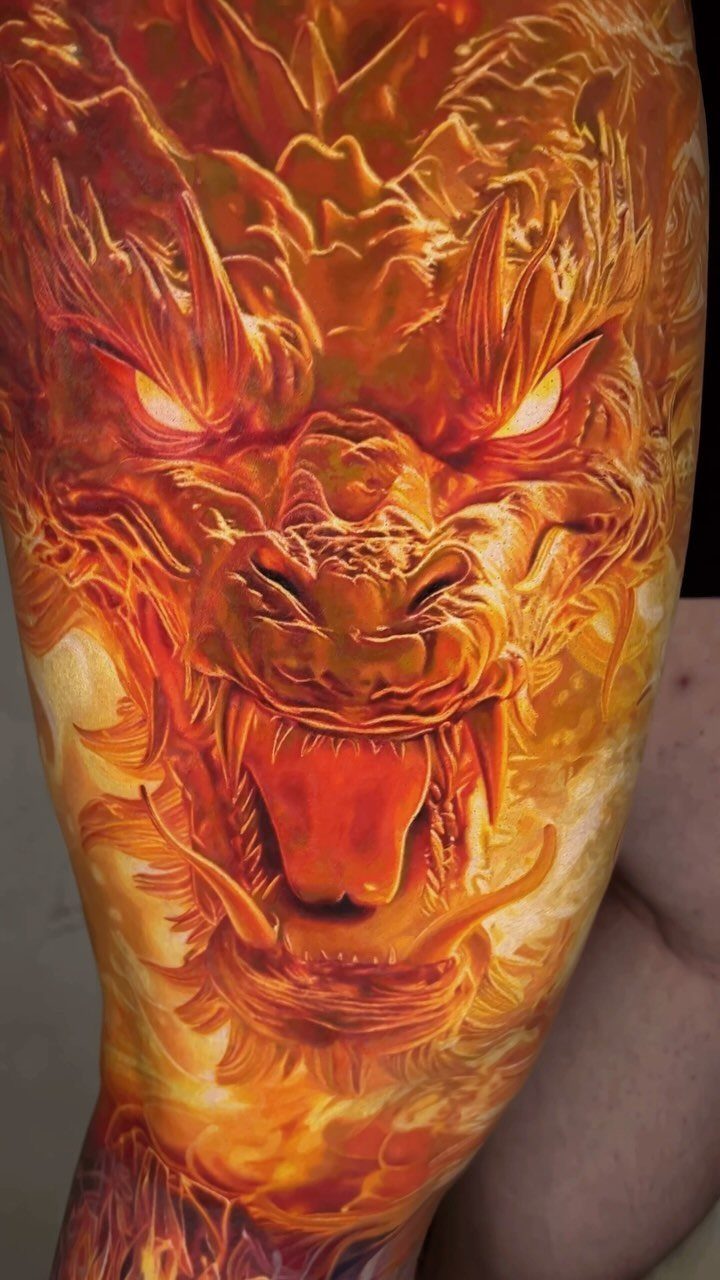
Shading fills the space between light and shadow, usually applied with a round shader needle in smooth, overlapping passes.
Blending softens the transition so there’s no hard line where one tone meets another, which keeps the image reading as three-dimensional instead of flat.
Color gradients layer transparent washes of ink, moving from deep orange to bright yellow the way fire actually burns, or from black to grey the way a shadow falls off.
Realism tattoos skip solid fills and heavy outlines, the artist is painting with ink, not drawing with it.
6. Pop Culture Character Realism
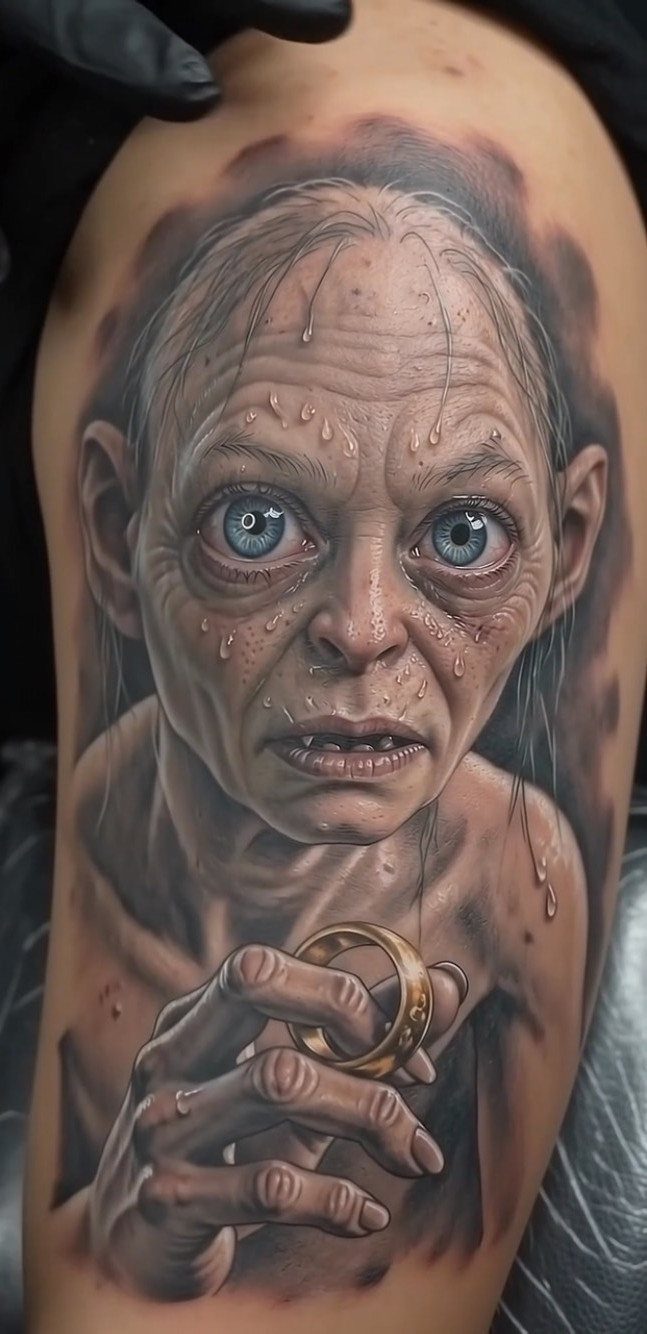
Pop culture realism works best when the character’s face is iconic enough that people recognize it at a glance, even before they spot the ring or the pointed ears.
Gollum’s gaunt cheeks and wide, bulging eyes make him a strong candidate; a background character from the same film would need a prop or costume detail to land.
Skin texture matters more here than in most realism pieces, because the character’s look depends on wrinkles, pores, and the way light catches moisture on the lips.
Expect a longer session and a higher price than a simpler portrait, the artist is rendering both a face and the makeup or digital effects that define it.
7. Hyper-realistic Skull Tattoos
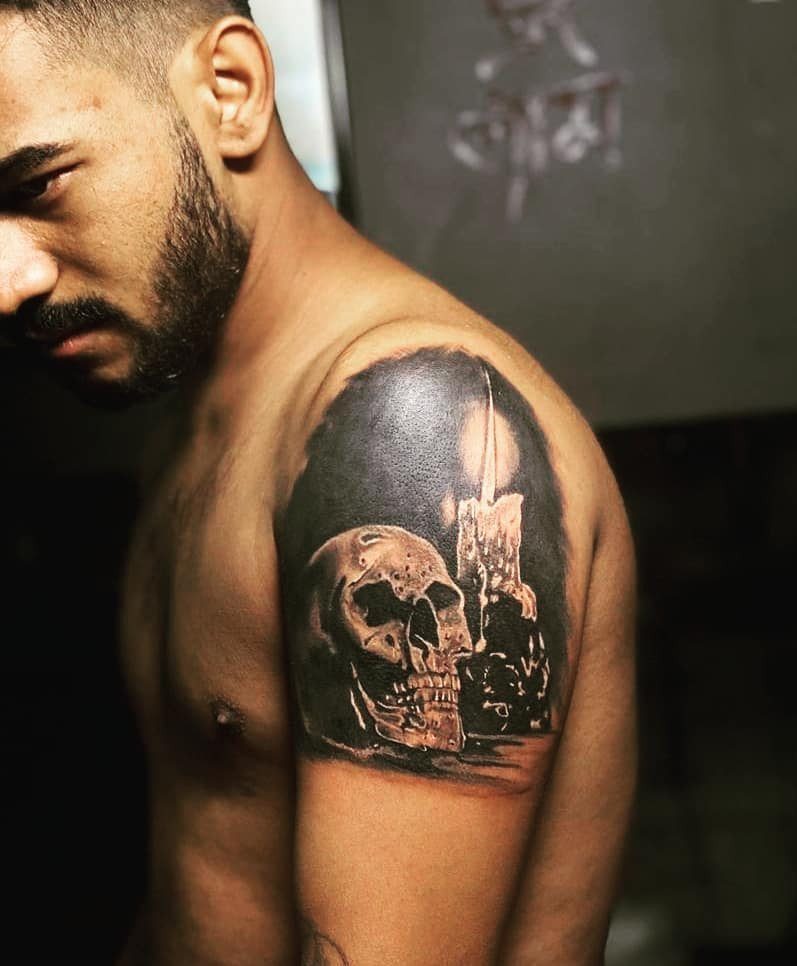
A skull rendered in black and grey reads as bone when the artist maps out every crack, suture line, and hollow where light would fall through the eye sockets.
The depth comes from contrast: the darkest blacks sit in the deepest recesses, and highlights pull the cheekbones and forehead forward.
Teeth are where most artists either commit or soften the piece. Individually shaded teeth with slight spacing irregularities make the skull feel like it belonged to a real person; uniform white blocks flatten it into clipart.
Placement on rounded muscle like the shoulder or bicep lets the skull curve with your body, which supports the illusion that it has dimension.
8. Japanese Samurai Realism
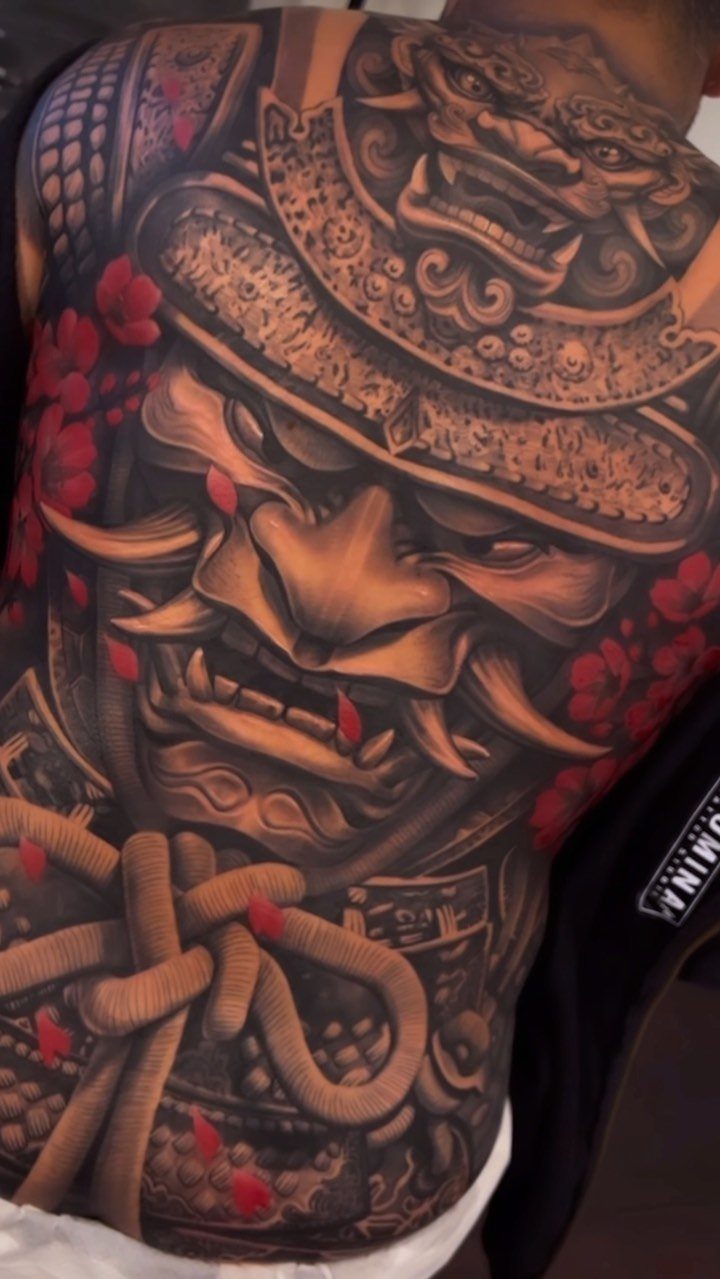
Traditional samurai armor is built from overlapping plates laced together with silk cord, and a realism piece captures that by shading each plate separately so the edges cast shadows onto the layer beneath.
The menpo mask, worn to protect the face and intimidate enemies, often features exaggerated teeth or a demonic expression that gives the piece its focal point.
Red accents, whether in the cord binding the armor or the flowers framing the warrior, pull the eye and break up what would otherwise read as a monochrome mass.
Most samurai realism sits on the back or forearm where there’s enough space to render the full figure and its details without cramping the composition.
9. Photorealistic Eye Tattoo
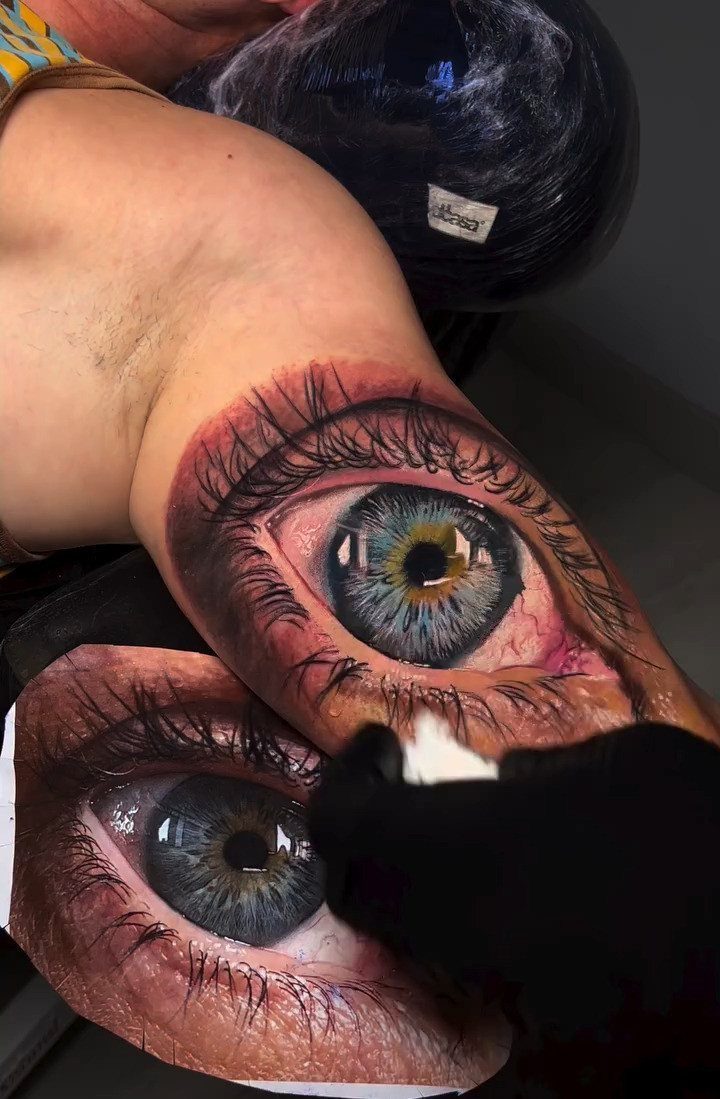
An eye tattoo depends on the catchlight, the small bright spot where light hits the cornea.
Place it correctly and the eye looks wet and alive; miss it and the whole piece goes flat. The iris gets its texture from fine radial lines that fan out from the pupil, layered in multiple passes to build depth.
Matching the tattoo to a reference photo shows off the artist’s skill, but it also locks you into one specific eye.
If the reference is someone you know, that connection holds. If it’s a stock image, you’re wearing a stranger’s eye for life.
10. Religious Realism Tattoo
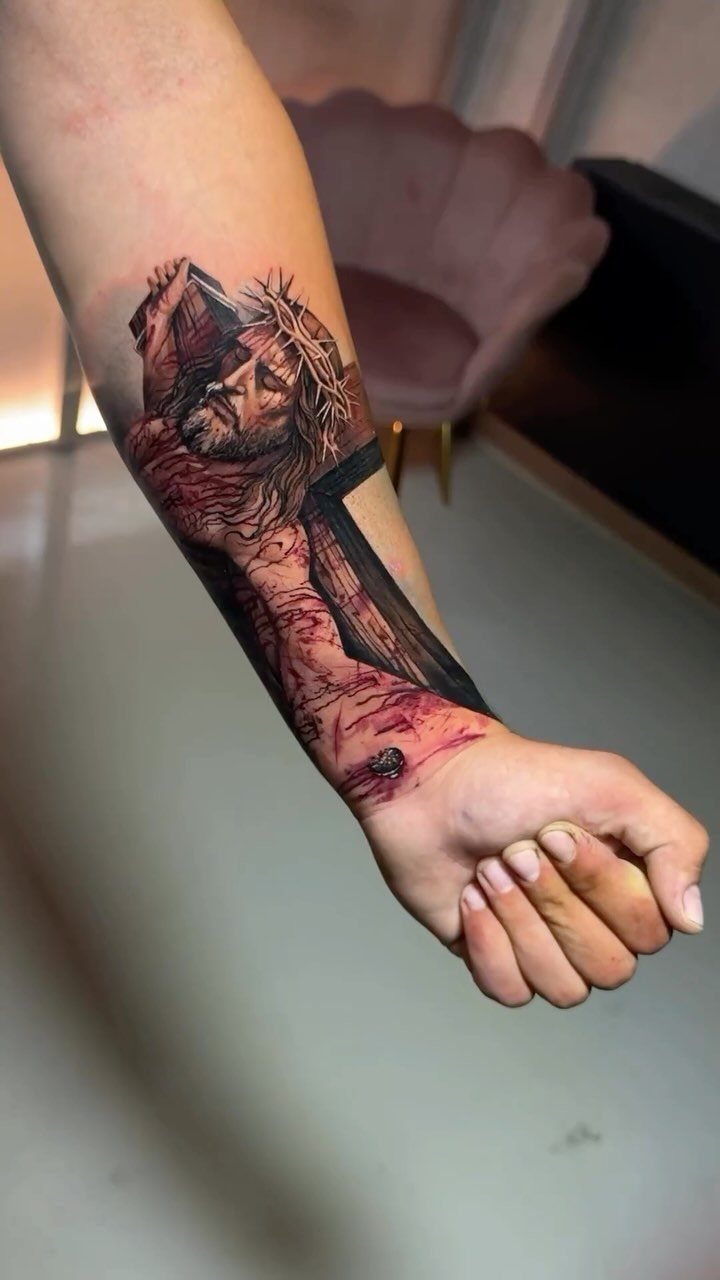
Blood dripping from the crown of thorns is the detail that separates devotional realism from something softer.
The artist builds it with glossy highlights that mimic the way blood catches light, and the droplets need to follow gravity or the whole piece reads as careless.
Facial expression carries the meaning here.
A serene face suggests sacrifice and peace; anguish or pain brings the suffering forward. Placement on the forearm keeps the image visible during prayer or daily wear, which matters to most people choosing this subject.
Skin tone in the tattoo itself needs enough contrast to read clearly against your own. On darker skin, the artist may rely more on deep blacks and sharp highlights rather than mid-tone greys.
Cost Considerations
A few hundred dollars is where most hyperrealism pieces start, and full sleeves or back pieces run into the thousands.
The price reflects hours in the chair, because the artist is layering ink in dozens of passes to build the gradients and fine detail that make the image read as photographic.
Touch-ups maintain the depth. Black ink holds well, but the mid-tone greys that create dimension can lighten over time, especially in areas that see sun or friction.
Most artists recommend a touch-up within the first year, then every few years after that depending on placement and how your skin holds ink.
Artist skill is everything. Not all tattooers are trained in realism, and a portfolio full of bold traditional work tells you nothing about whether they can render a face.
Artistic Expression
Hyperrealism lets you put a photograph on your skin, but the choice of subject is where the personal meaning sits.
The challenge of rendering depth and lifelike texture pulls both artist and client into the process.
Building a piece that looks like a high-resolution photo requires steady hands and dozens of hours, and the result is something people stop you to examine because the detail holds their attention longer than a simpler design.
The storytelling happens in what you choose to make permanent.
A realistic eye, a skull with every crack mapped out, or a samurai in full armor each says something different, and the image you pick reflects what you want to carry with you.
Finding Inspiration
Instagram is the fastest way to see what hyperrealism artists are currently producing. Search hashtags like #hyperrealismtattoo or #realisticportrait and filter by location to narrow down artists in your area.
Portfolios show you whether the artist’s style leans toward soft fine-line work or high-contrast bold realism, and you can spot immediately if they specialize in faces, animals, or something else.
Save reference images that match the mood and composition you’re after, not just the subject. For a portrait, collect photos with the lighting and expression that feel right, because those details guide the artist more than a description ever will.
Look for artists whose healed work appears in their feed. Fresh tattoos always look sharp, but healed pieces show you how the detail holds over time and whether the blacks stay saturated or the highlights fade out.
Frequently Asked Questions
What is hyperrealism tattoo?
Hyperrealism tattoos replicate photographs on skin, built entirely from shading and contrast with no outlines. The result is a piece that reads as three-dimensional and lifelike, not drawn.
Is $100 a good tip for a $500 tattoo?
A generous tip matches the hours and skill that hyperrealism demands. Full sleeves and back pieces cost thousands because the artist is building photographic depth one pass at a time.