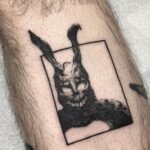
Traditional tattoo designs hold their shape and color through decades because they are built on bold black outlines, flat color fills, and a palette limited to red, yellow, green, blue, and black.
If you want a design that stays legible as the ink settles and blurs slightly over time, pick something with thick outlines and solid fills rather than gradients or fine detail.
A forearm piece tends to hurt less than ribs or elbows, and a full sleeve runs several thousand dollars over multiple sessions.
1. Limited Color Palette
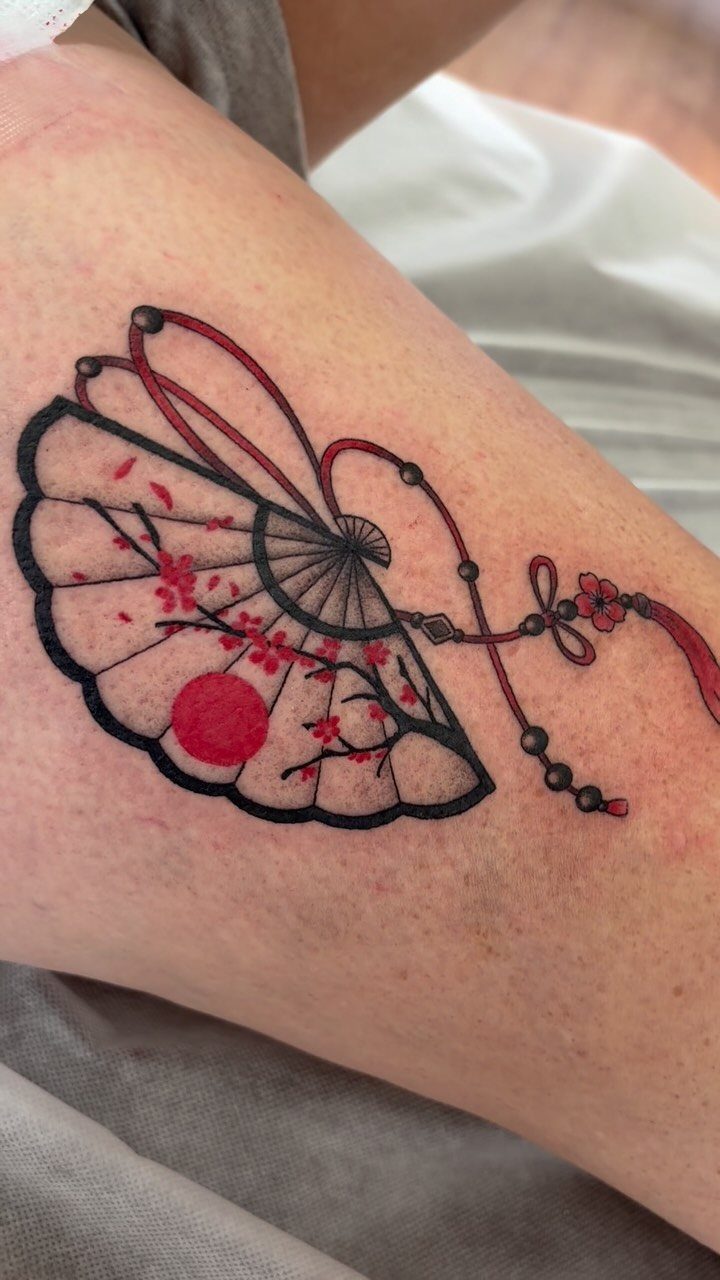
Traditional tattoos stick to red, yellow, green, blue, and black, each color laid in flat and solid. Colors sit flat and separate, each one filling its own shape inside the black border.
The palette stays readable for decades. Black outlines stay sharp, and each color sits in its own zone.
Adding yellow or green would give you more range without losing that clean separation between shapes.
2. Sailor Jerry Traditional Tattoo Design
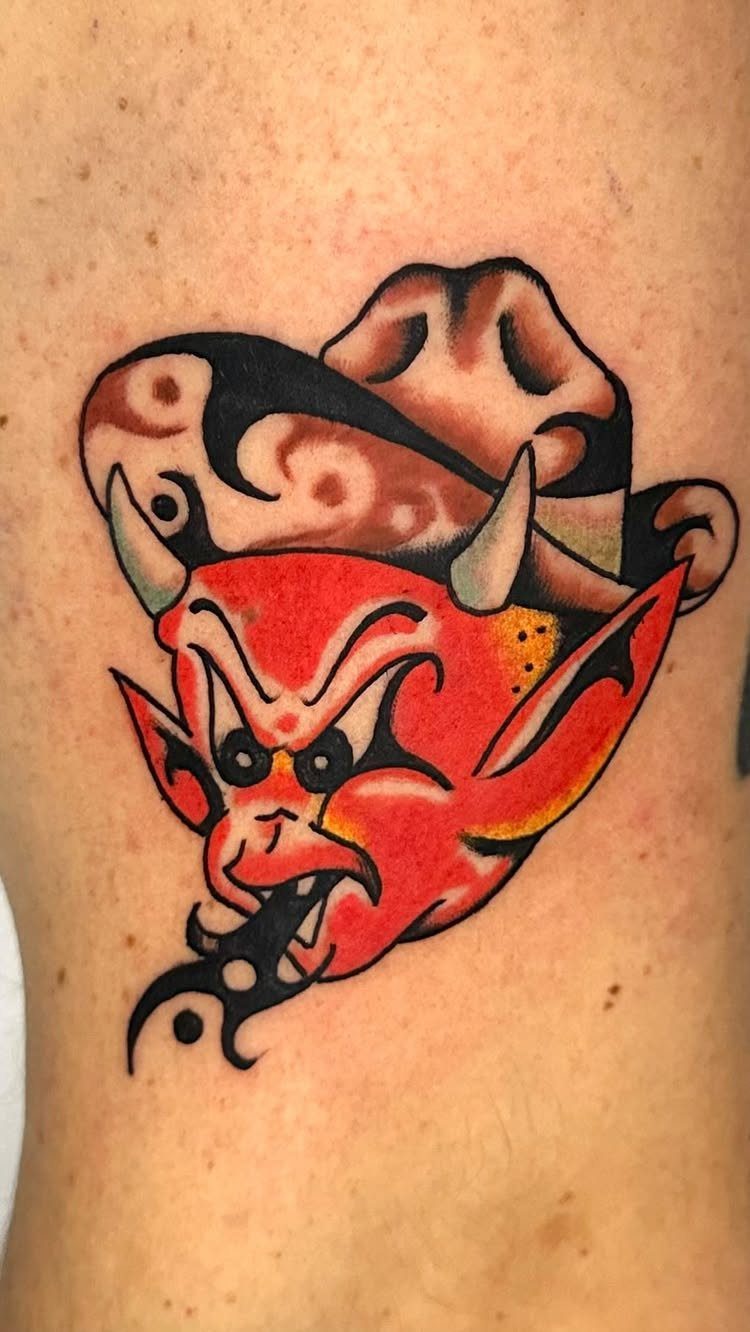
Sailor Jerry designs come from Norman Collins, who defined American traditional tattooing in the mid-20th century. His catalog ran heavy on nautical images, pin-up women, eagles, panthers, and devils.
Collins used bold outlines, saturated primaries, and subjects that sailors wanted: luck symbols, defiance, and humor packed into a palm-sized piece.
Bring a reference from his flash sheets when you go in. Many artists specialize in reproducing his work exactly, down to the color choices and line weight he used.
3. Neo-traditional Tattoos
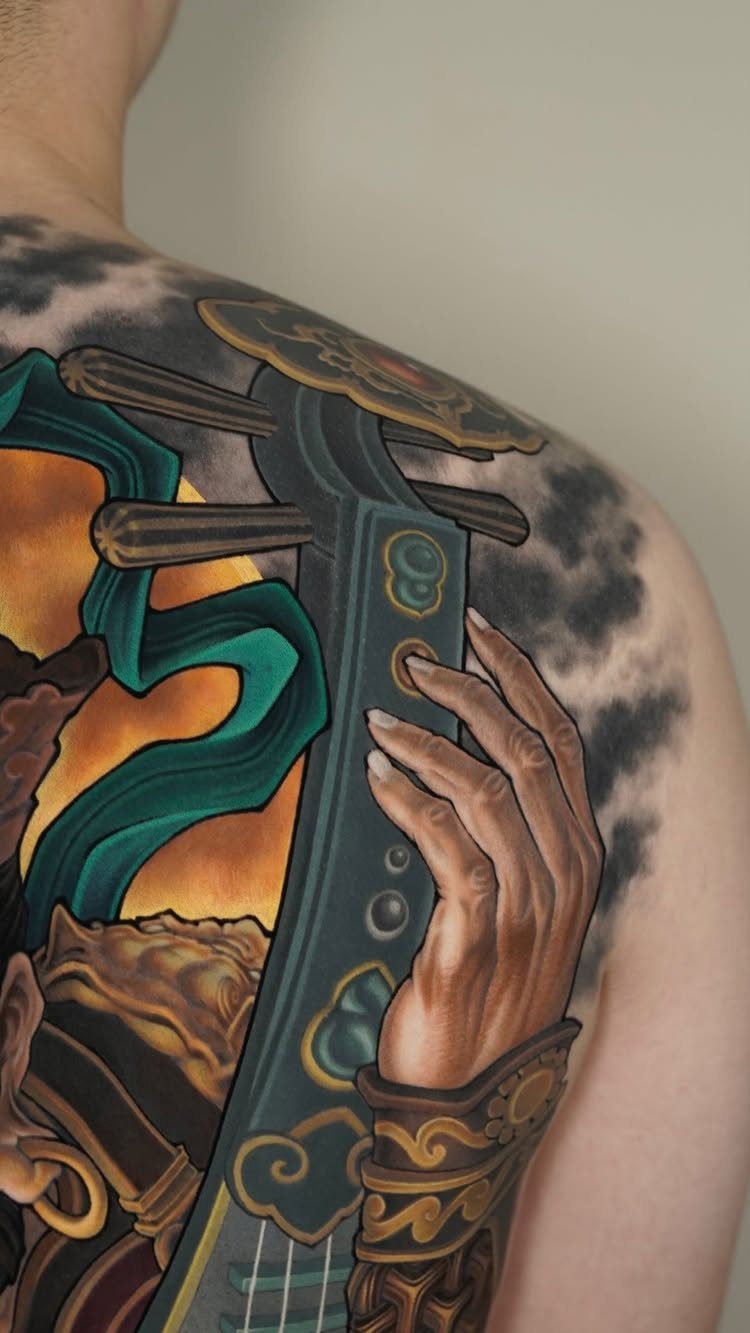
Neo-traditional borrows the bold outlines and structure of traditional tattoos but opens up the color range and adds illustrative detail. You get more shading, more realistic textures, and often a wider palette that includes pastels or metallics.
The hand and instrument have depth and modeling you would not see in a strict traditional tattoo, but the composition and outline weight keep it tied to the older style.
Neo-traditional suits you if you like the clarity of traditional work but want something closer to fine art illustration. It costs more per session because the detail takes longer to apply.
4. Rose
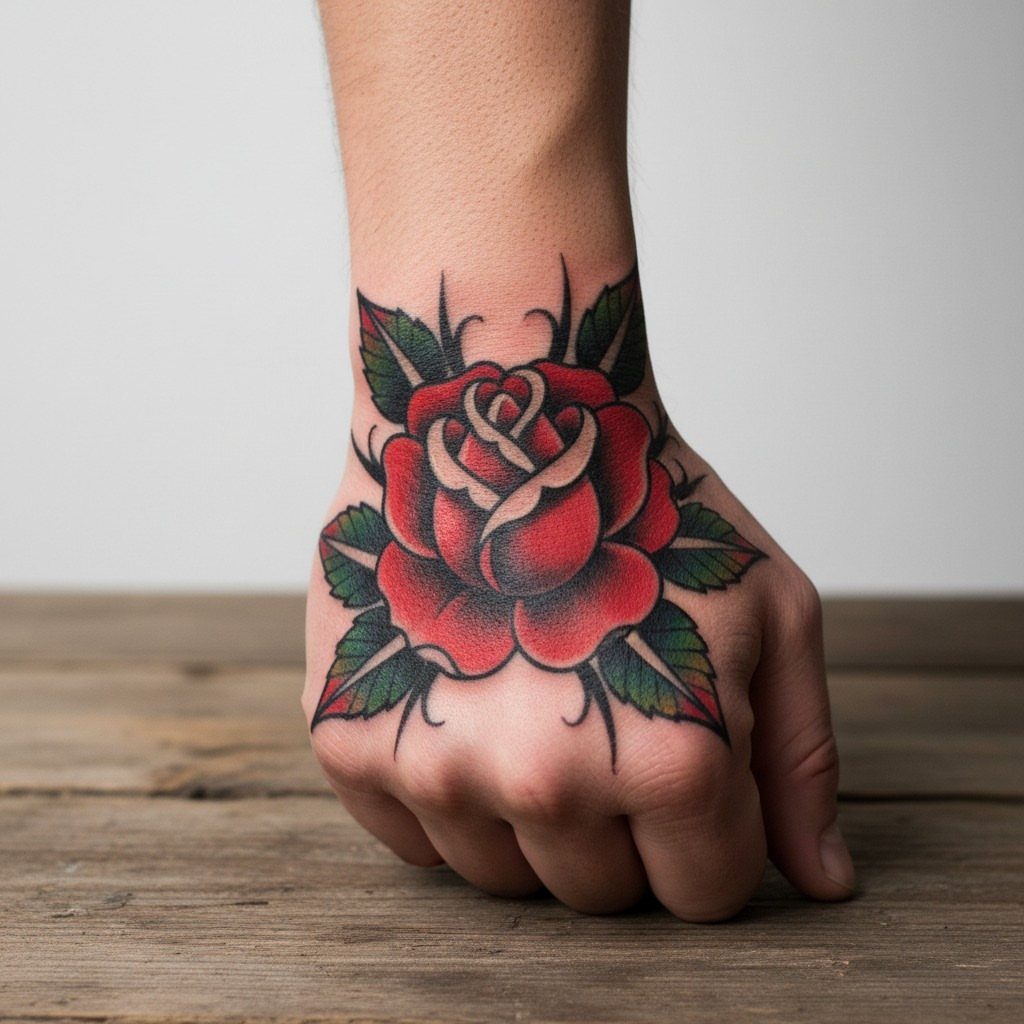
The rose fits every placement and pairs with nearly any other motif in traditional tattooing. It works alone on a hand, as filler in a sleeve, or as the center of a chest piece.
Red petals with green leaves is the standard version, and it reads clearly at any size. Black-only roses exist but lose some of the symbolic weight, since the red carries the association with passion and blood.
A rose on the back of the hand ages well if the outlines are thick enough. Hands blur faster than most body parts, so go with an artist who pushes the black deep on the first pass.
5. Eagle
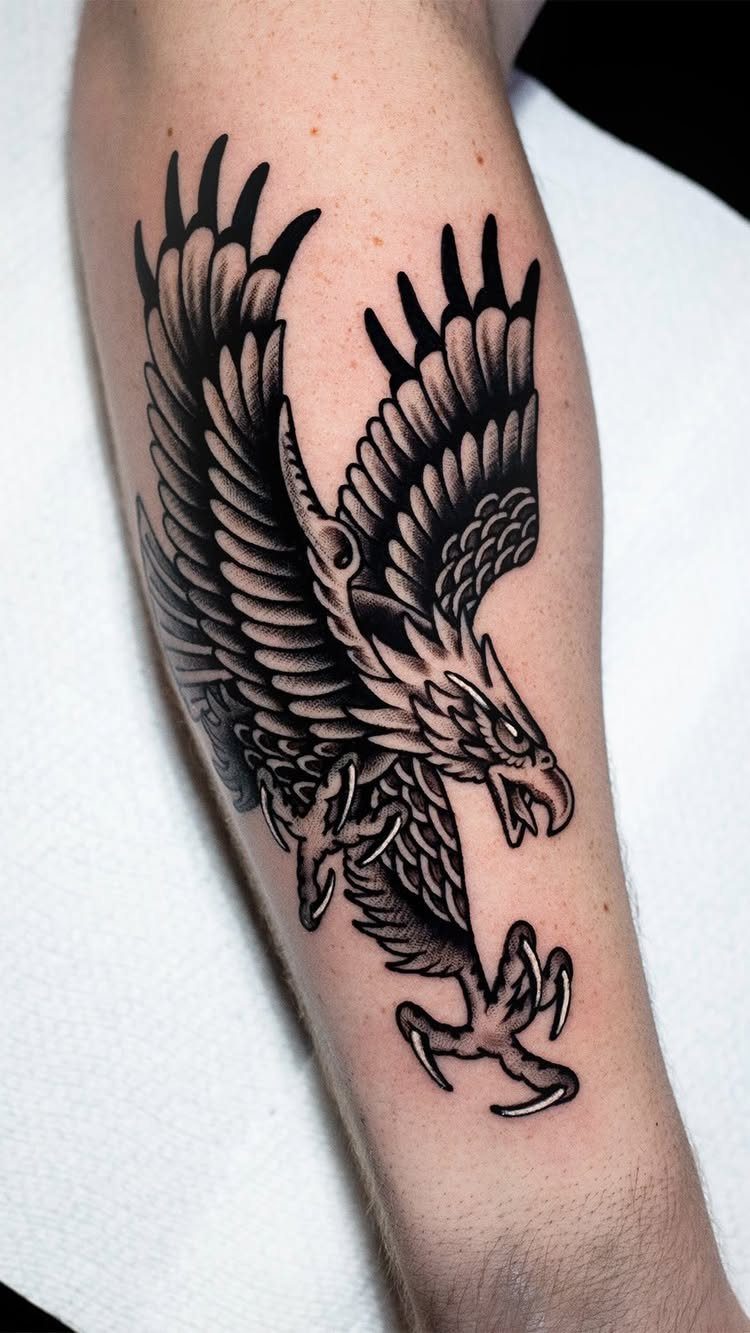
The eagle is the cornerstone of American traditional tattooing, tied to patriotism, military service, and independence.
Black and grey eagles lean into realism and suit clients who want the imagery without the bright primaries. Red, white, and blue in the feathers or background gives you the flag motif.
The shading in the feathers is where an experienced artist separates from a beginner, so check portfolios for clean gradients and feather texture before booking.
6. Bold Black Outlines
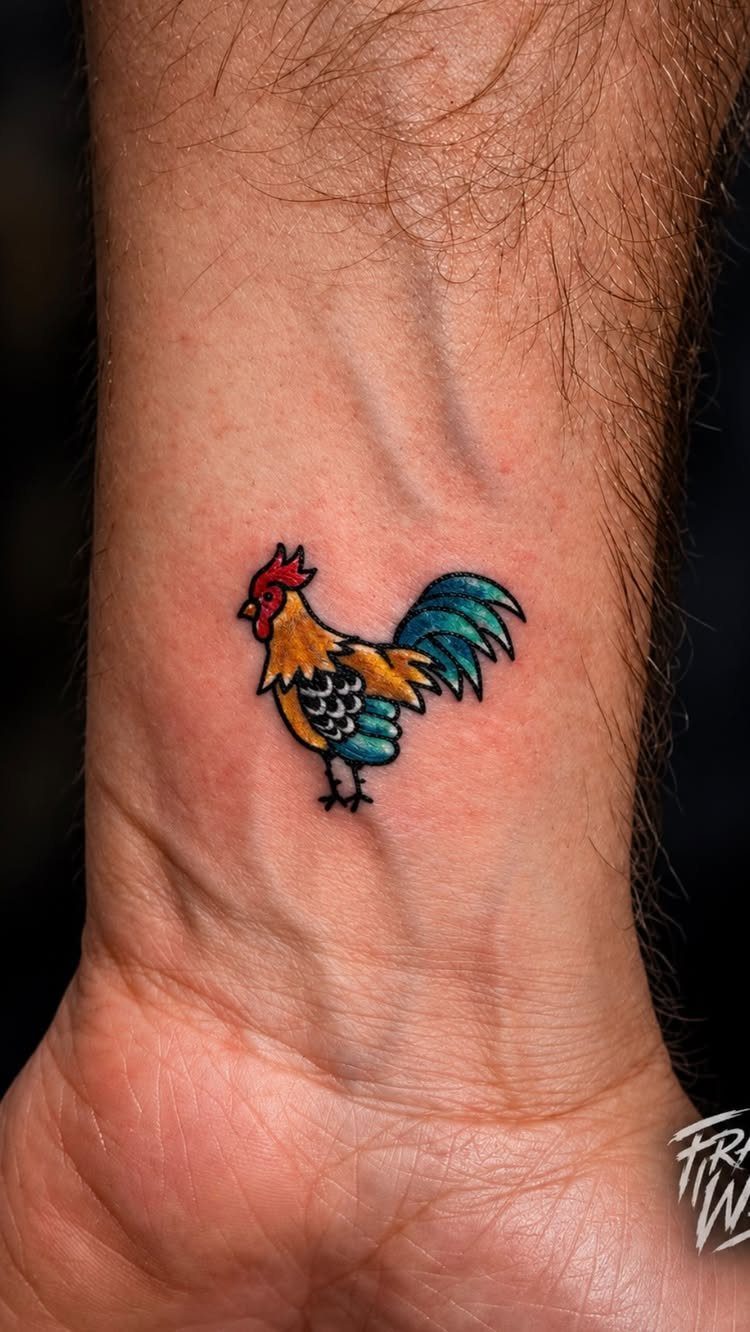
Bold black outlines hold the design together and keep it legible as the ink blurs slightly over time. Traditional tattoos use lines thick enough to contain the color fills and maintain contrast against the skin.
Even with bright fills, the black defines every feather and keeps the shapes distinct. Thinner lines would blur into the color as the tattoo ages.
Artists apply the outline first, then fill. If you are sitting for a traditional piece, expect the outline pass to hurt more than the color, since the line is continuous and the artist is working slowly to keep it clean.
7. Flash Tattoos
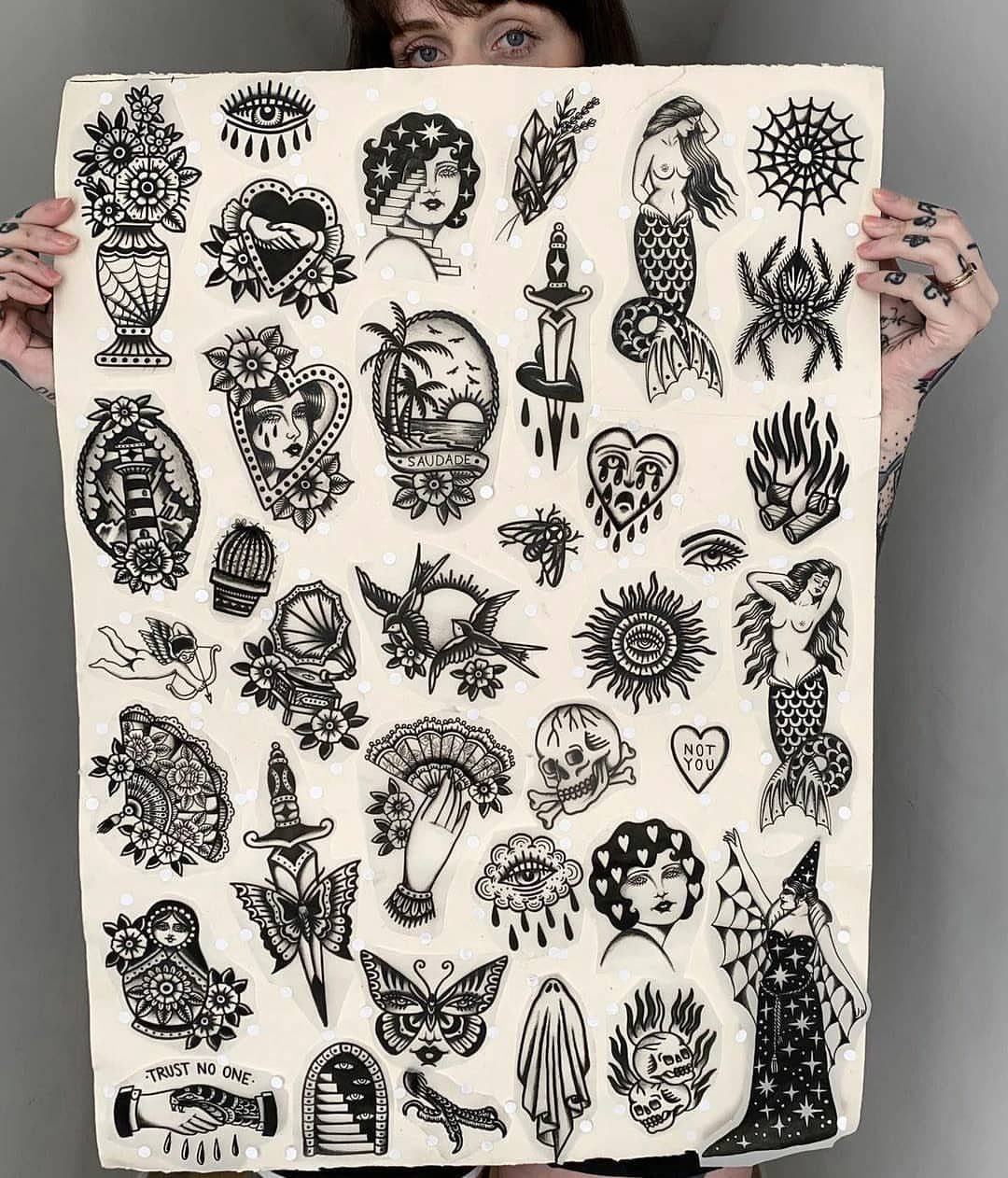
Flash tattoos are pre-drawn designs hung on studio walls or kept in binders, ready to tattoo as-is.
You pick one, the artist scales it to your placement, and you walk out with a proven image that has been applied hundreds of times.
Flash is faster to book and usually costs less than custom work, since the design is already complete. Many traditional artists still work primarily from flash, and the catalog includes most of the classic motifs: anchors, daggers, swallows, panthers.
Flash means someone else already walked out with the same design. But if you like a design, it will look exactly as sharp as the reference.
8. Traditional Forearm Tattoo Design
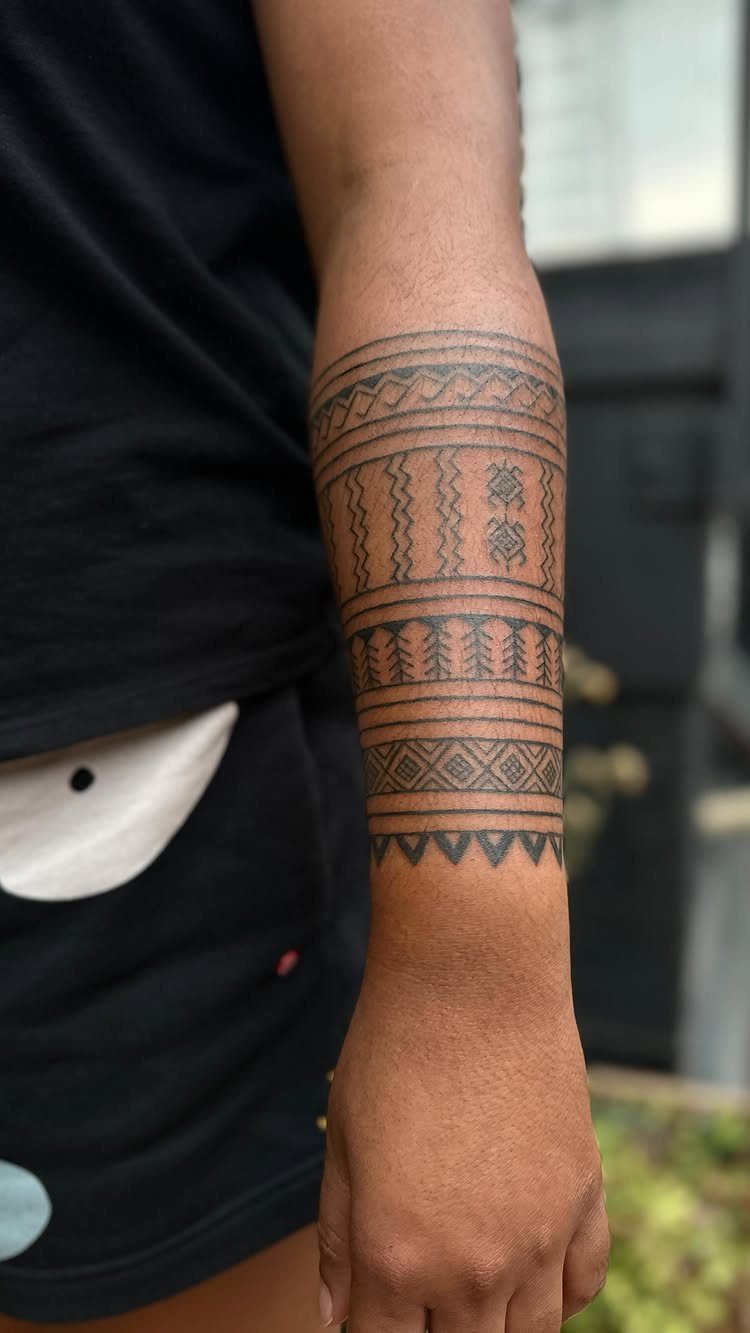
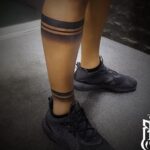
The forearm is flat, visible, and handles bold geometric bands or continuous wraps without much distortion. Muscle movement is minimal compared to the bicep, so straight lines stay straight.
The forearm is also one of the less painful placements, ranking below ribs and elbows.
If you sit at a desk, expect questions. The forearm is always on display unless you wear long sleeves year-round.
9. Traditional Sleeve Tattoo
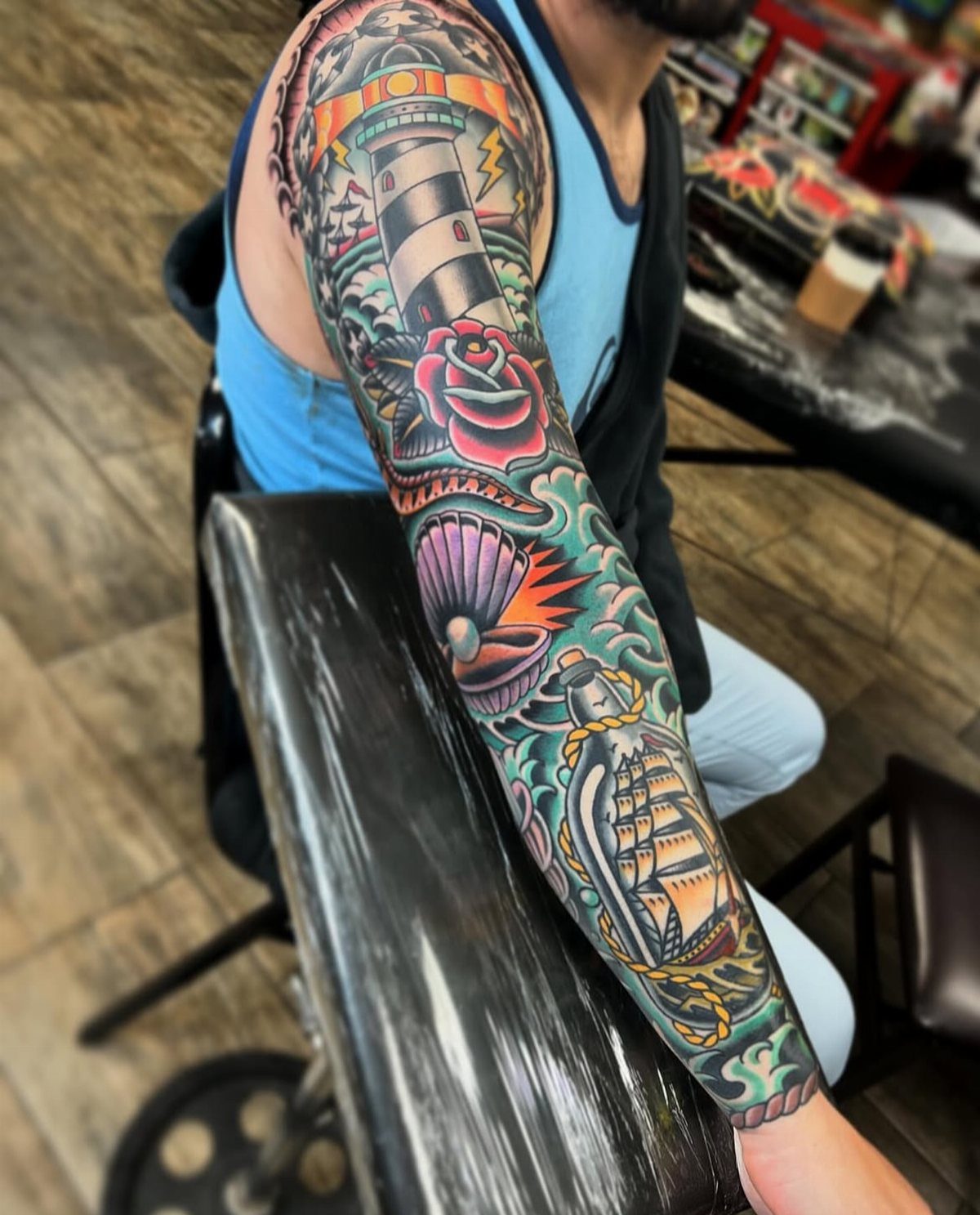
A traditional sleeve pulls together multiple motifs into one continuous piece, usually starting at the shoulder and running to the wrist.
The lighthouse, rose, shell, and ship in a bottle here are separate images but share the same line weight and palette, so they read as a unified composition.
Sleeves take multiple sessions, spread across weeks or months. Budget several thousand dollars for a full traditional sleeve, more in major cities.
Start with the largest piece at the shoulder or upper arm, then fill gaps with smaller motifs. Trying to plan every inch at once usually stalls the project.
10. Traditional Tiger and Peony Tattoo
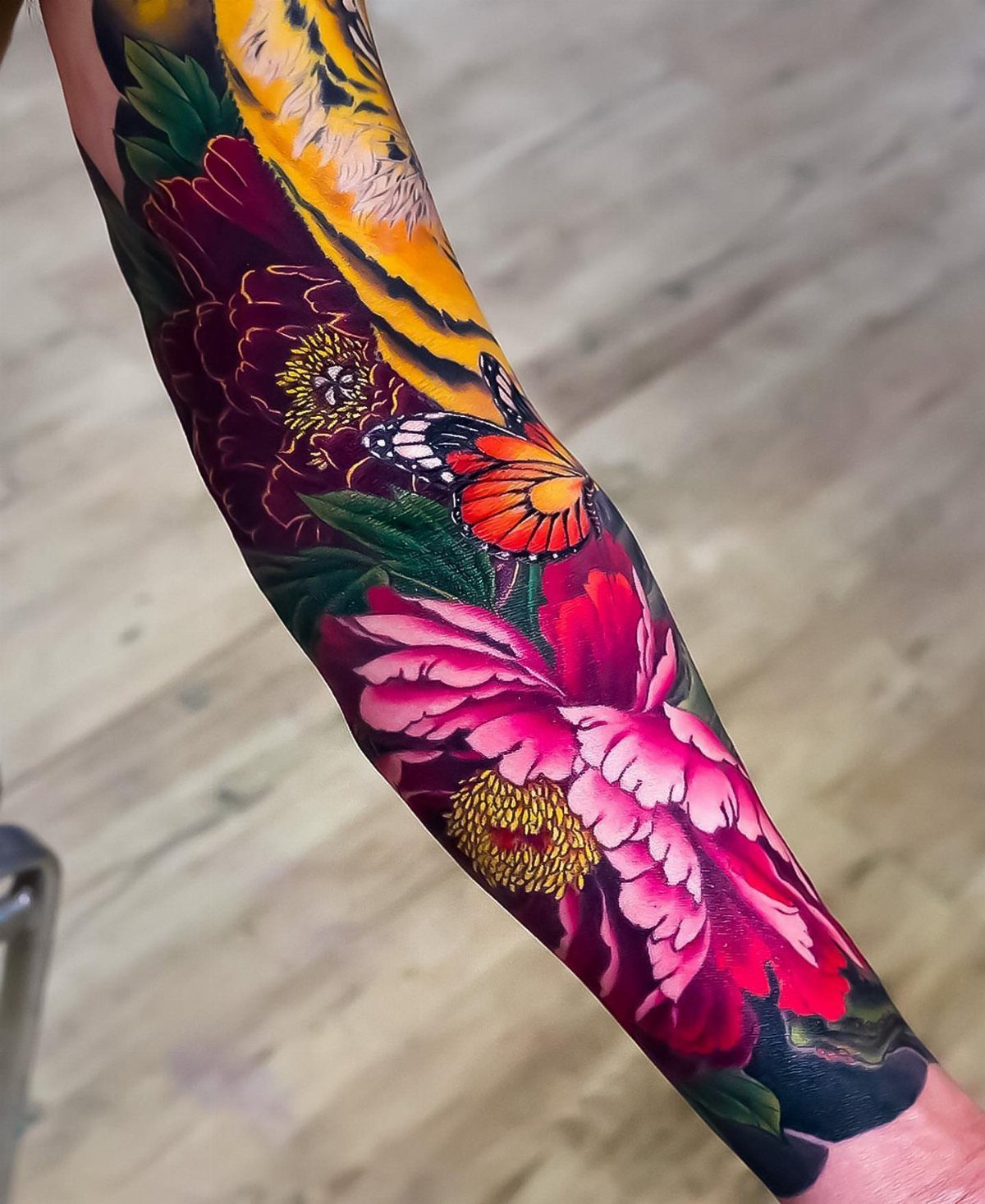
Tigers and peonies are borrowed from Japanese tattooing but show up often in Western traditional work, especially when you want something bold and colorful. The tiger face carries aggression and strength, while the peonies soften the composition and add movement.
Pink and orange together give you contrast without the standard red and yellow of most traditional pieces. The butterfly adds a third element but keeps the same saturated palette.
This combination works on the upper arm, thigh, or back. Smaller placements lose the detail in the tiger’s face, so plan for enough width to keep the expression readable.
Symbolism in Tattoos
A swallow meant you had sailed 5,000 nautical miles.
An anchor kept you grounded when everything else moved. A dagger driven through a heart carried the weight of betrayal, or love that left a mark.
Traditional tattooing built its catalog around symbols sailors, soldiers, and travelers could recognize instantly. The imagery worked as shorthand: one glance told you what mattered to the person wearing it.
Most of those meanings still hold. A ship still marks a journey or a rough passage survived.
A rose still lands on love or beauty. A skull still says mortality or rebellion, depending on what sits next to it.
You can wear a design for its historical meaning or ignore it entirely and pick the image because it looks right.
The symbolism is there if you want it, but a panther does not stop working just because you never set foot on a ship.
Tattoo Care
Wash the tattoo 3 times a day with unscented soap and lukewarm water for the first 2 weeks. Pat it dry with a clean towel, never rub.
Apply a thin layer of unscented lotion or a product your artist recommends.
Too much moisture traps bacteria and slows healing. Too little lets the skin crack and pulls ink out of the design.
Keep the tattoo out of direct sunlight and away from pools, lakes, and baths until the skin has fully closed. Submerging a fresh tattoo risks infection, and chlorine fades the color before it has settled.
Bold black outlines in traditional work hold up well if you follow aftercare exactly. The thick lines can handle normal healing, but skipping steps costs you clarity years later.
Frequently Asked Questions
What are popular traditional chest piece ideas?
The eagle with spread wings owns the center of the chest in American traditional work, but you’ll also see clipper ships, single roses, and symmetrical pairs that mirror across the pecs.
The eagle ties to patriotism and military service, and the chest gives you enough width to keep the feather detail readable. A good artist shapes the layout around your chest rather than forcing a square design onto a curved surface.
How do I find a traditional tattoo artist near me?
Check portfolios for clean gradients, feather texture, and thick black outlines before booking. Traditional artists often tattoo straight from flash sheets, so their books are full of anchors, daggers, swallows, panthers, and other motifs that define the genre.
Filter by location once you find an artist whose line weight and color choices match the style you want.