Grey shading reads through clouds better than color when the stars need to stay visible years later, and negative space holds contrast longer than white ink once the tattoo settles.
If you want the design to stretch horizontally, the forearm and upper arm give the artist room to layer tones without cramping the clouds or losing the stars in the shading.
Stippling takes longer than solid shading, so plan for extra session time when the edges need to stay soft.
The crescent moon anchors scattered elements, and a geometric frame keeps the scene from bleeding into adjacent tattoos if you’re building a sleeve.
1. Grey Ink Clouds and Stars
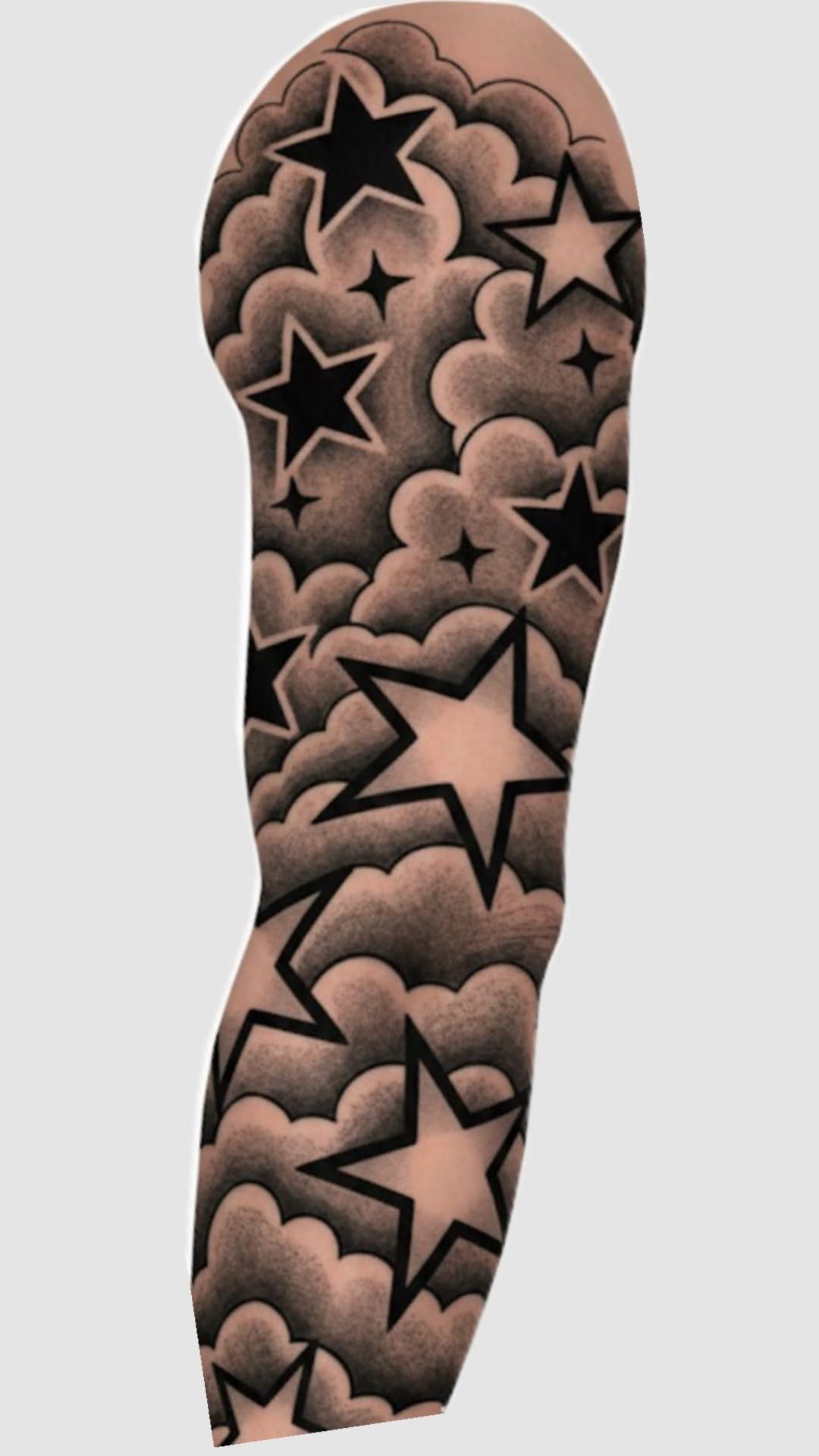
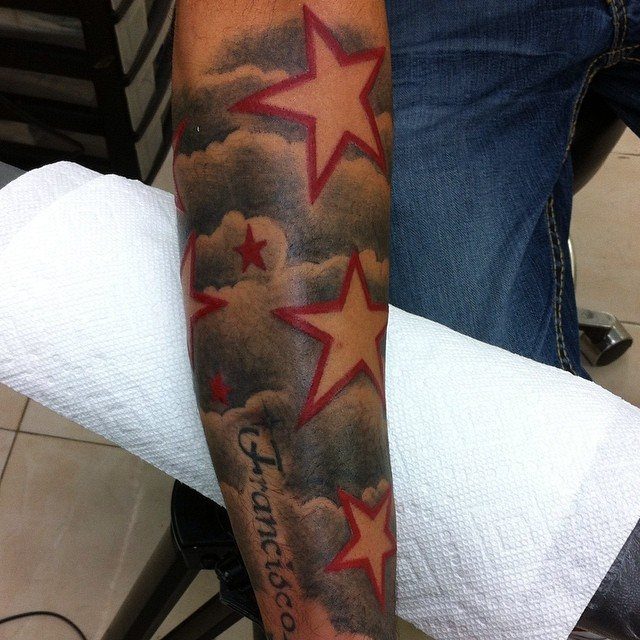
Grey ink keeps the mood overcast and moody, the kind of sky where stars punch through just enough to read against all that dark shading.
The gradient from deep charcoal to lighter grey gives the clouds depth without needing color, and the black outlines on the stars hold their shape even when the shading softens over time.
This works best on larger areas where the grey can stretch and blend naturally. Shoulders, upper arms and thighs give the artist room to layer the tones without the clouds looking cramped or the stars disappearing into the shading.
2. Negative Space Stars in Clouds
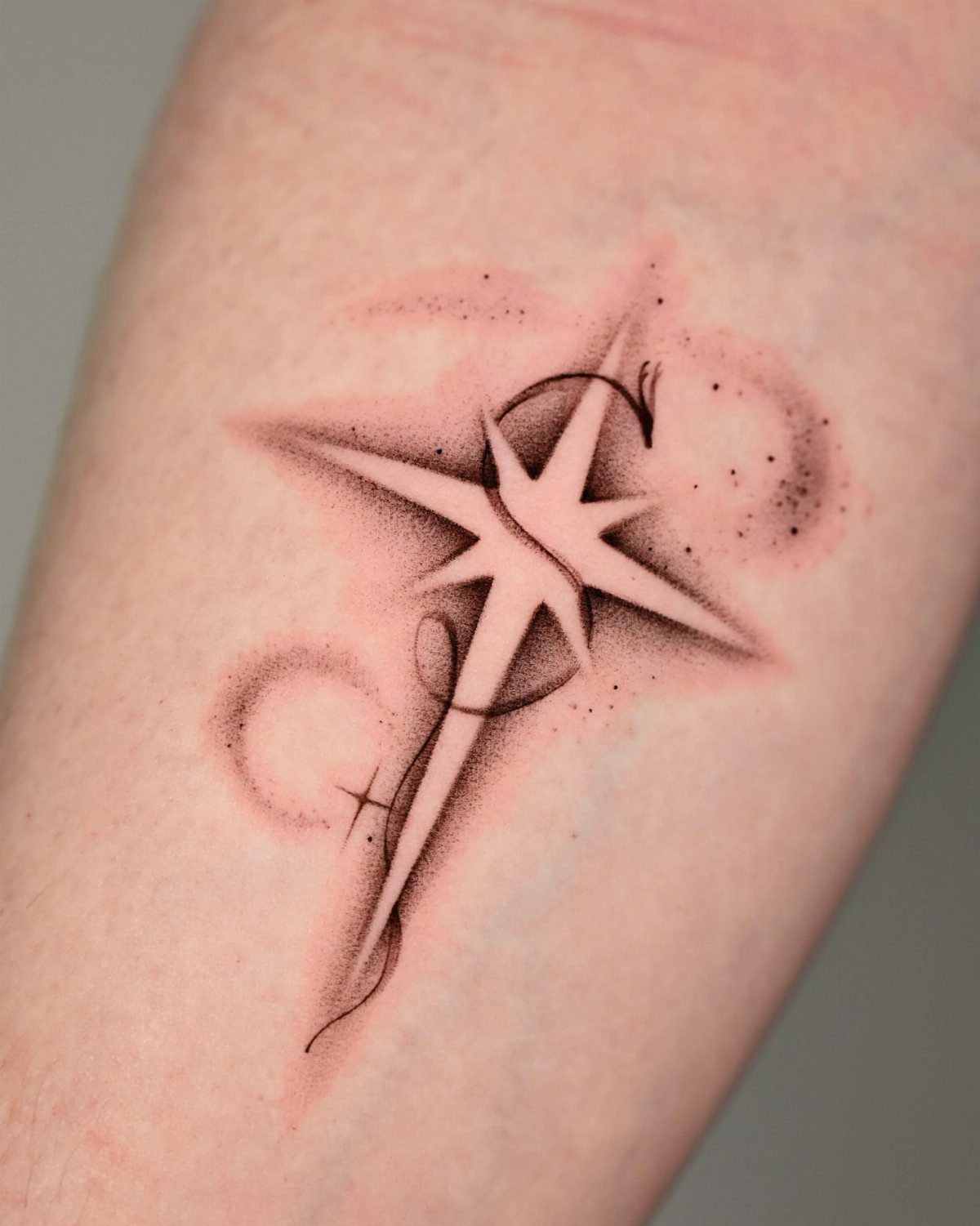
The star here is what you leave blank, not what you fill in.
Negative space carves the star shape out of the cloud, so the skin itself becomes the center while stippled grey shading builds the cloud around it. That contrast outlasts white ink, which fades and yellows.
Stippling takes longer than solid shading, so expect to add time depending on how soft the artist needs the edges.
The four-pointed star reads cleanly at smaller sizes, but you can ask for five points or more if the placement gives enough room for the detail to stay sharp.
3. Fluffy Clouds with Stars
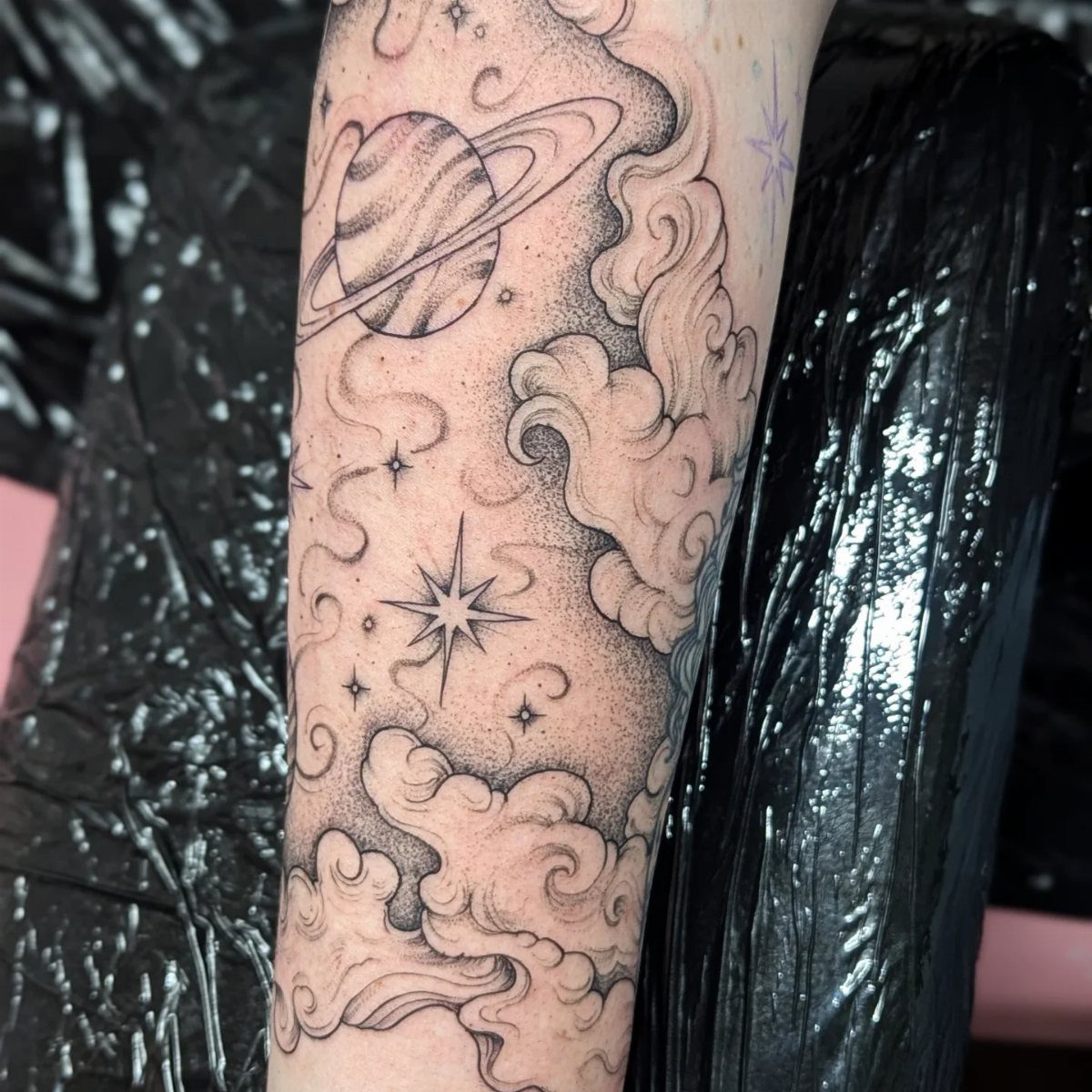
Fluffy shading softens the edges of the clouds so they look light and rounded instead of stormy, and pairing them with a ringed planet pushes the whole piece into outer space instead of earth’s atmosphere.
The stars stay small and scattered, which keeps the clouds as the main focus.
This style scales up well. Forearms, calves and outer thighs give enough room for the clouds to billow without the planet or stars pushed into a corner.
If you want more contrast, ask for darker shading at the base of each cloud to lift them off the skin.
4. Crescent Moon with Clouds and Stars
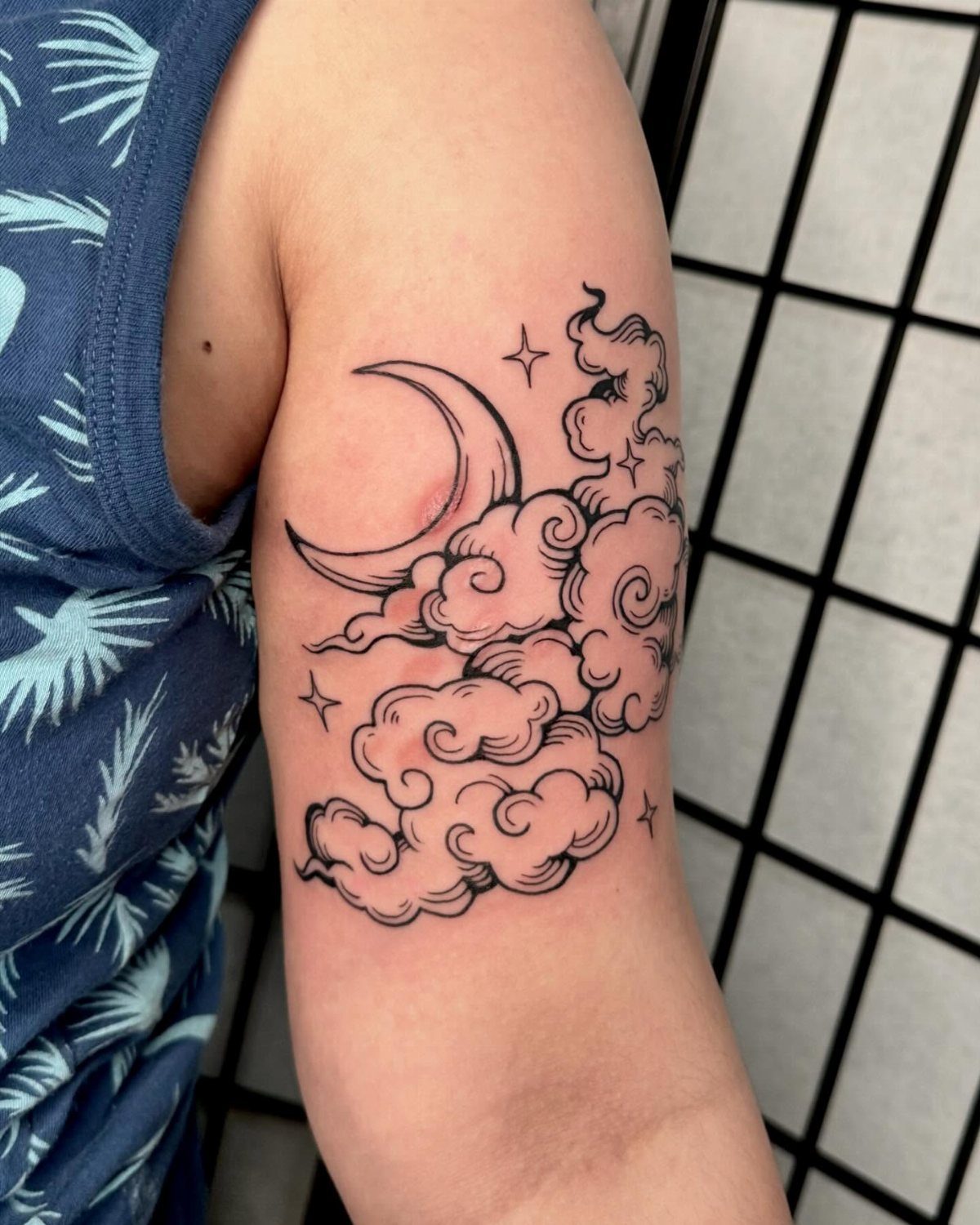
A crescent moon anchors the design and gives the clouds something to wrap around, so the composition feels balanced instead of scattered.
The moon sits at the center or slightly off to one side, and the stars fill the gaps where the clouds thin out.
Upper arms and shoulders suit this layout because the curve of the muscle mirrors the curve of the crescent.
Keeping the clouds soft and the moon outlined in black gives the piece enough contrast to read from a distance, and the stars stay small so they don’t compete with the moon for attention.
5. Stars and Clouds Sleeve
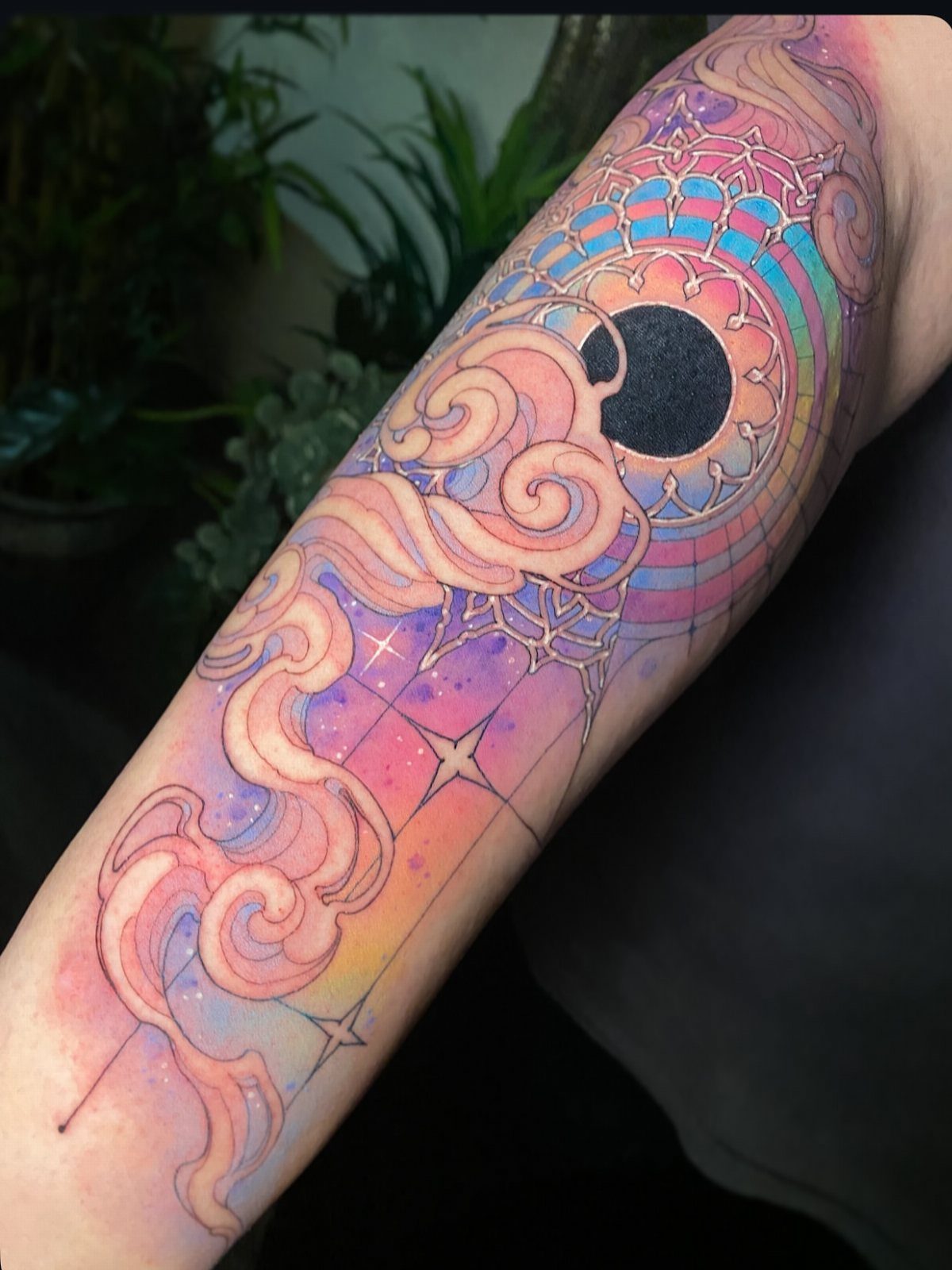
Color adds dimension: blues and purples in the clouds, a black moon for contrast, and the mandala in warm tones or black to anchor the center.
Sleeves take multiple sessions, with the count rising as detail and color saturation increase.
The mandala can sit at the shoulder, elbow or forearm, wherever you want the eye to land first. If you’re starting fresh, plan the mandala placement before filling in the clouds so the flow stays balanced from shoulder to wrist.
6. Geometric Clouds and Stars
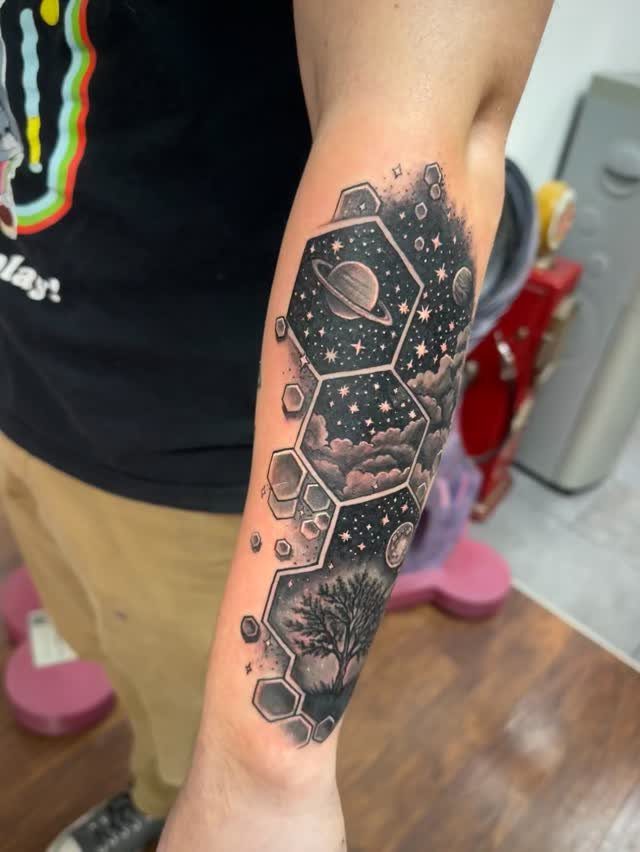
A honeycomb frame sections off the design and keeps the space scene from bleeding into other tattoos, which matters if you’re building a sleeve or filling a forearm.
The geometric border also gives the artist clean edges to work within, so the clouds, planet and tree stay contained instead of fading out at the edges.
If you want more geometry, the artist can extend the honeycomb pattern across the arm or repeat it in adjacent tattoos.
Black and grey keeps the focus on the shapes rather than color, and the sharp lines of the hexagons contrast with the soft shading inside.
7. Clouds with Sun, Moon, and Stars
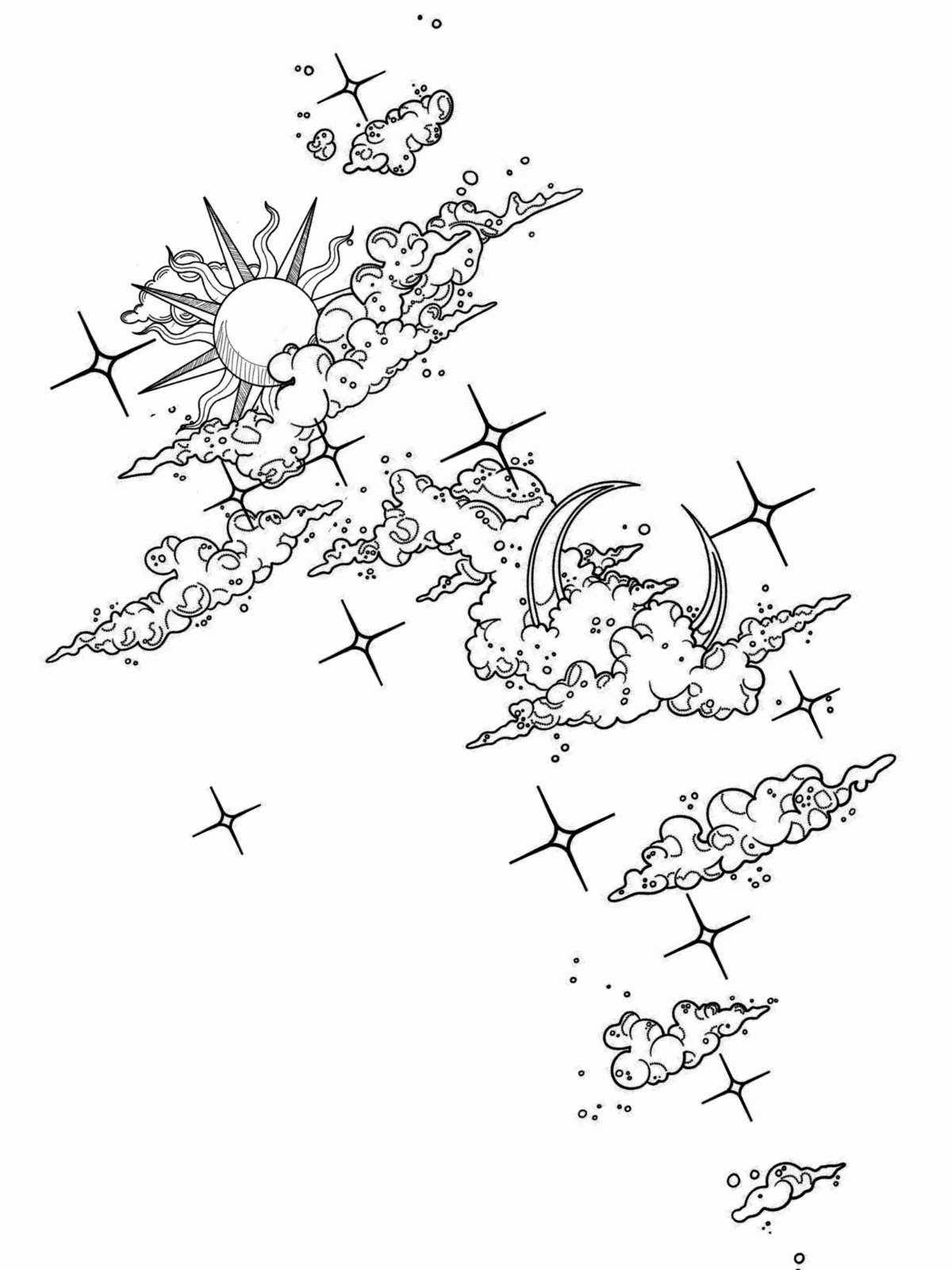
Stacking the sun, moon and stars with clouds splits the composition into layers, each one reading separately instead of overlapping into one crowded scene.
The sun and moon anchor opposite ends, and the clouds and stars fill the space between them so the vertical flow stays balanced.
This layout fits the forearm, shin or spine, where the length of the design follows the length of the muscle or bone.
Linework only stays clean and simple, so you can place it anywhere without worrying about shading that needs room to blend.
Placement Suggestions
Arms and forearms take clouds and stars naturally because the length matches the way clouds stretch horizontally, and the curve of the muscle adds dimension to the shading.
The forearm gives you visibility you can see yourself, which matters if you want the piece for yourself instead of only showing others.
Shoulders work when you want the design to follow the rounded cap of the joint, especially if the clouds wrap from front to back.
The back offers the most room for a large composition, so if you’re planning a scene with multiple elements or deep shading, that’s where you have space to let the artist build it out.
Placement affects pain, too. The forearm and outer arm sit over muscle and hurt less than the shoulder, where bone sits closer to the surface.
Meaning of Cloud Tattoos
Clouds shift, gather and disappear, so they’ve come to represent change and the temporary nature of things.
That reading fits people marking a transition or accepting that something passed. Stars add permanence to the design, the fixed points that stay visible even when the clouds move through, so the pairing balances what changes with what doesn’t.
Some people read clouds as mystery or the unknown, the part of the sky you can’t see through.
Others lean into the literal: clouds as weather, atmosphere, the forces that shape a day. The meaning you assign it matters more than any universal symbol, and cloud tattoos often symbolize change, transformation, and the passage of time.
Color Choices
Black outlines on the stars keep them sharp against the grey, and the contrast between solid black and blended grey holds up as the tattoo settles.
Blue shading shows up when the design leans into sky rather than storm, and it pairs well with white highlights on the stars if you want a brighter look.
White fades faster than grey or black, so plan for touch-ups if you go that route.
Black and grey together, with no color at all, stays clean and ages predictably. The stippling and shading techniques the artist uses matter more than the palette for how the clouds will look years later.