A single bolt in solid black heals in one session, while branching designs with fine offshoots need touch-ups every 3 to 5 years so the detail stays sharp.
Pick based on placement: the inner wrist suits compact bolts under 2 inches that won’t curve with the arm, the thigh gives room for a skull scene inside the frame, and traditional shapes work anywhere you want bold color.
1. Single Lightning Bolt Design
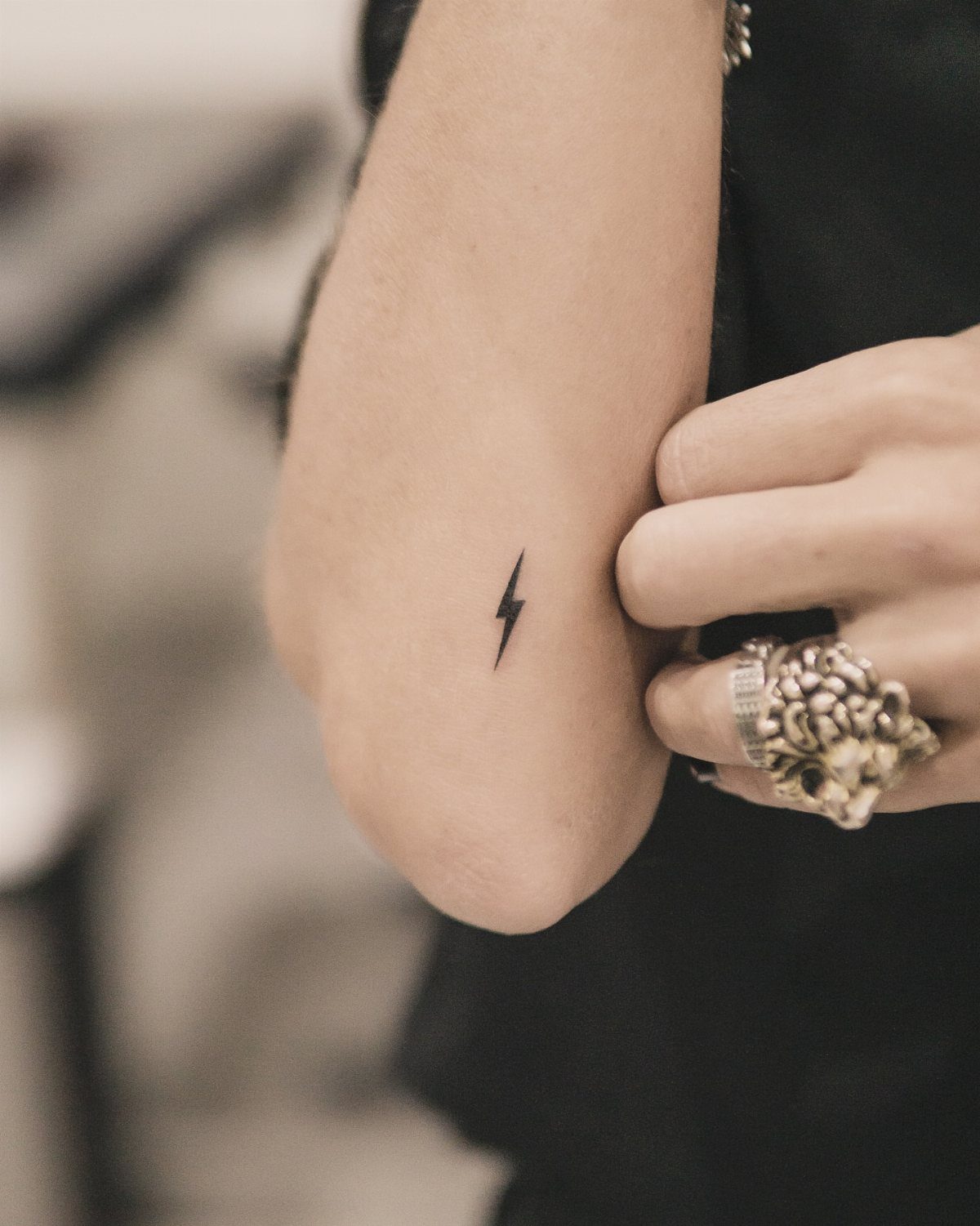
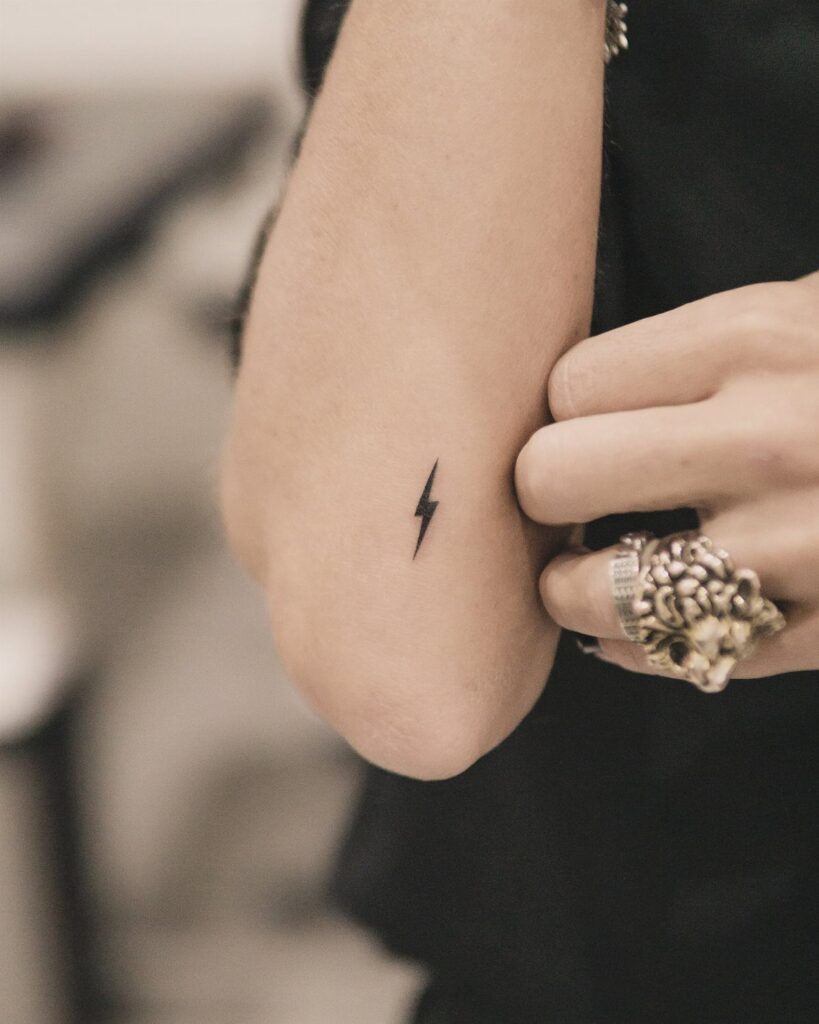
A single bolt drawn in solid black, positioned anywhere on the body but most often on the forearm, wrist or behind the ear. The shape is usually a clean zigzag, finished quickly.
I like how readable it stays at small sizes. The silhouette holds even when the line spreads slightly over time, which softer shapes lose.
Ask for a few short lines radiating from the main strike to make the bolt look electric rather than graphic. That detail takes a bit longer and leaves the bolt recognizable from across a room.
2. Inner Wrist Lightning Bolt Tattoo
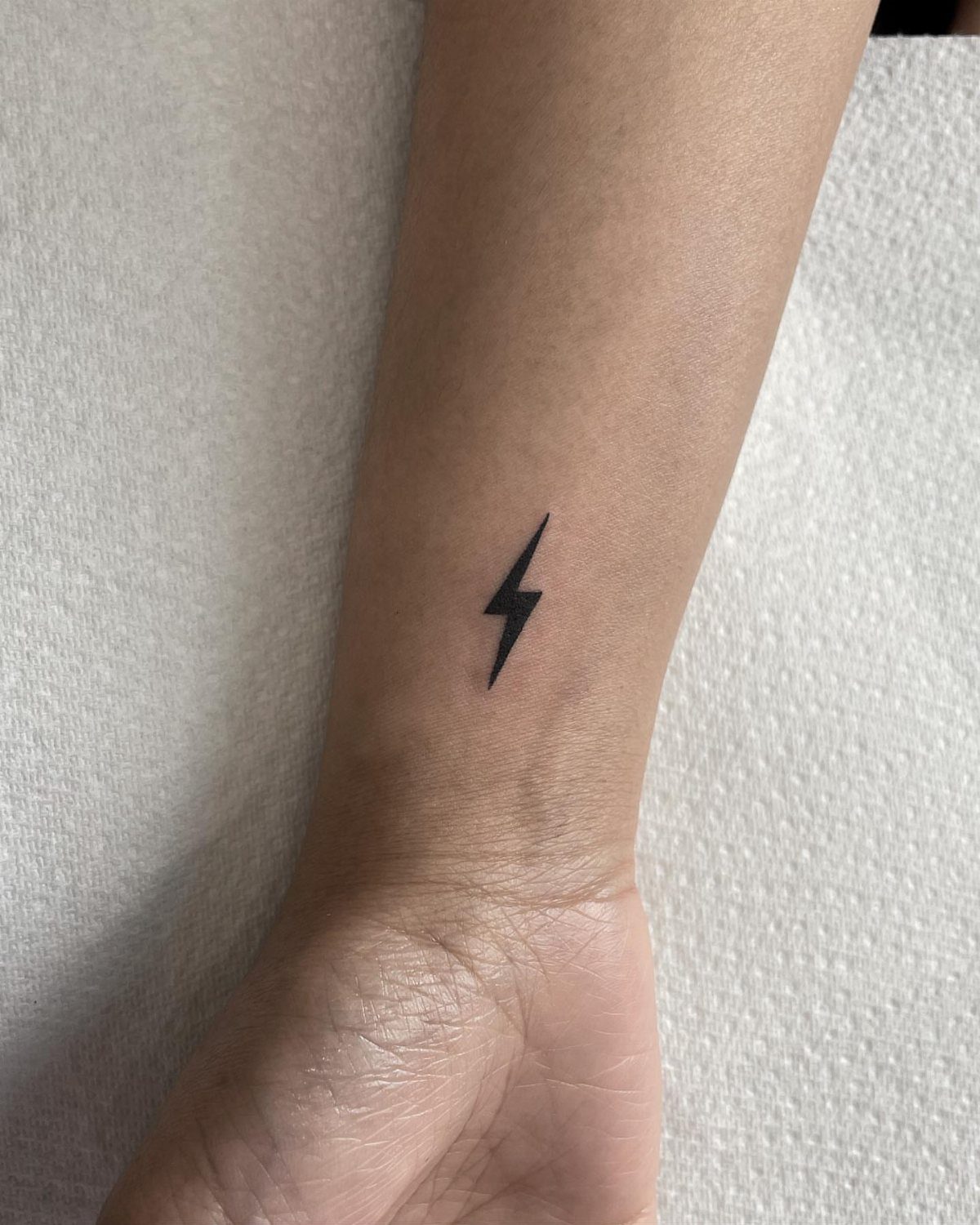
The inner wrist puts the bolt where you see it daily and where it stays visible in short sleeves or rolled cuffs.
Pain here sits toward the higher end since the skin is thin and close to bone, though the area heals fast with minimal rubbing from clothing.
Sizing matters more on the wrist than almost anywhere else. A bolt longer than 2 inches starts to curve with the arm’s natural shape, and anything under half an inch can blur into a smudge within a few years.
3. Traditional Lightning Bolt Tattoo
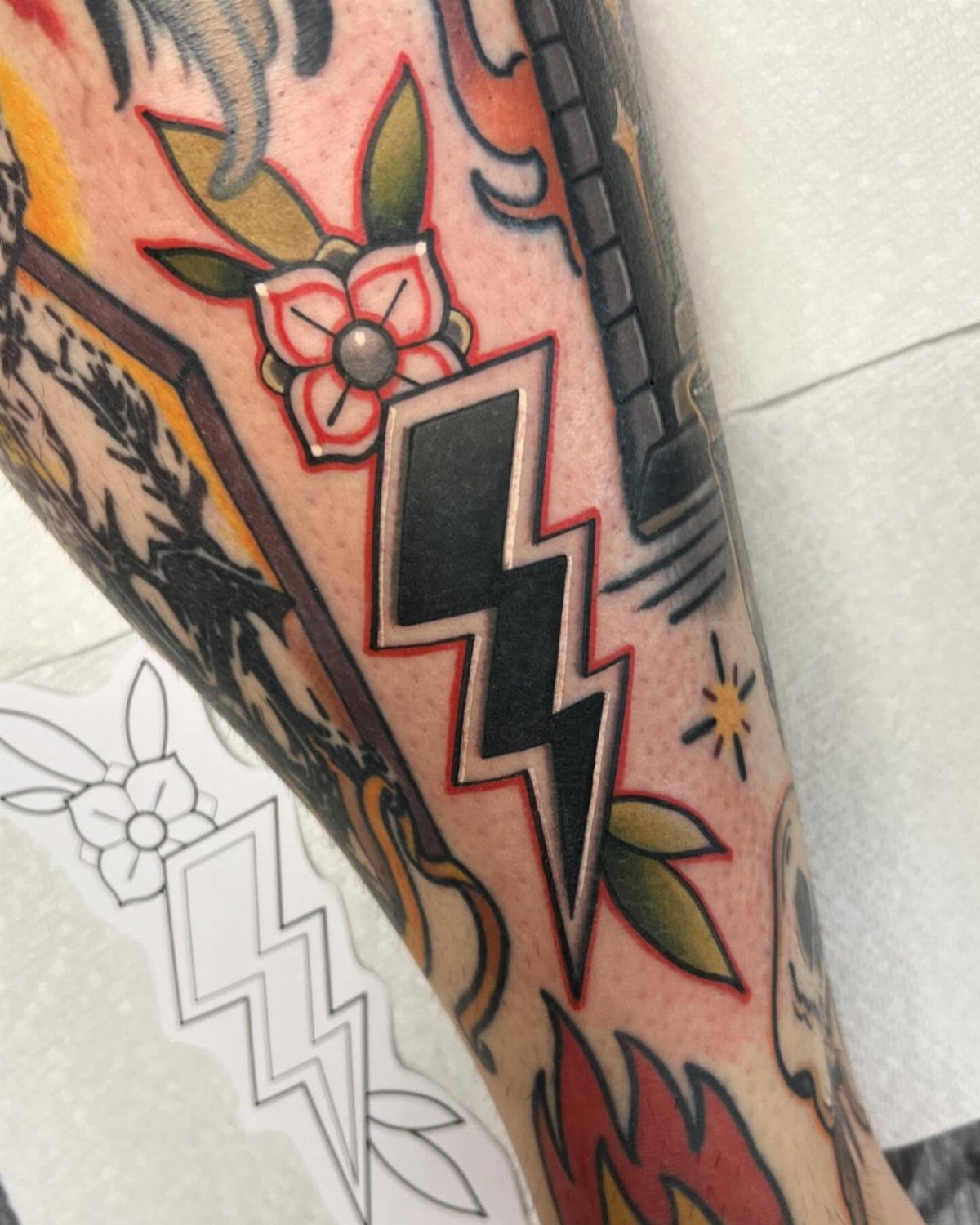
Traditional style gives the bolt a bold black outline filled with solid color, here red, and usually pairs it with roses, daggers or flames.
The lines are thick enough to hold their shape for decades, which is why the style has lasted so long.
If you are adding this to existing traditional work, match the line weight to what is already there.
A bolt drawn with thinner lines than the surrounding pieces will look like it came from a different artist, even if the color palette matches perfectly.
4. Small Lightning Bolt Tattoo
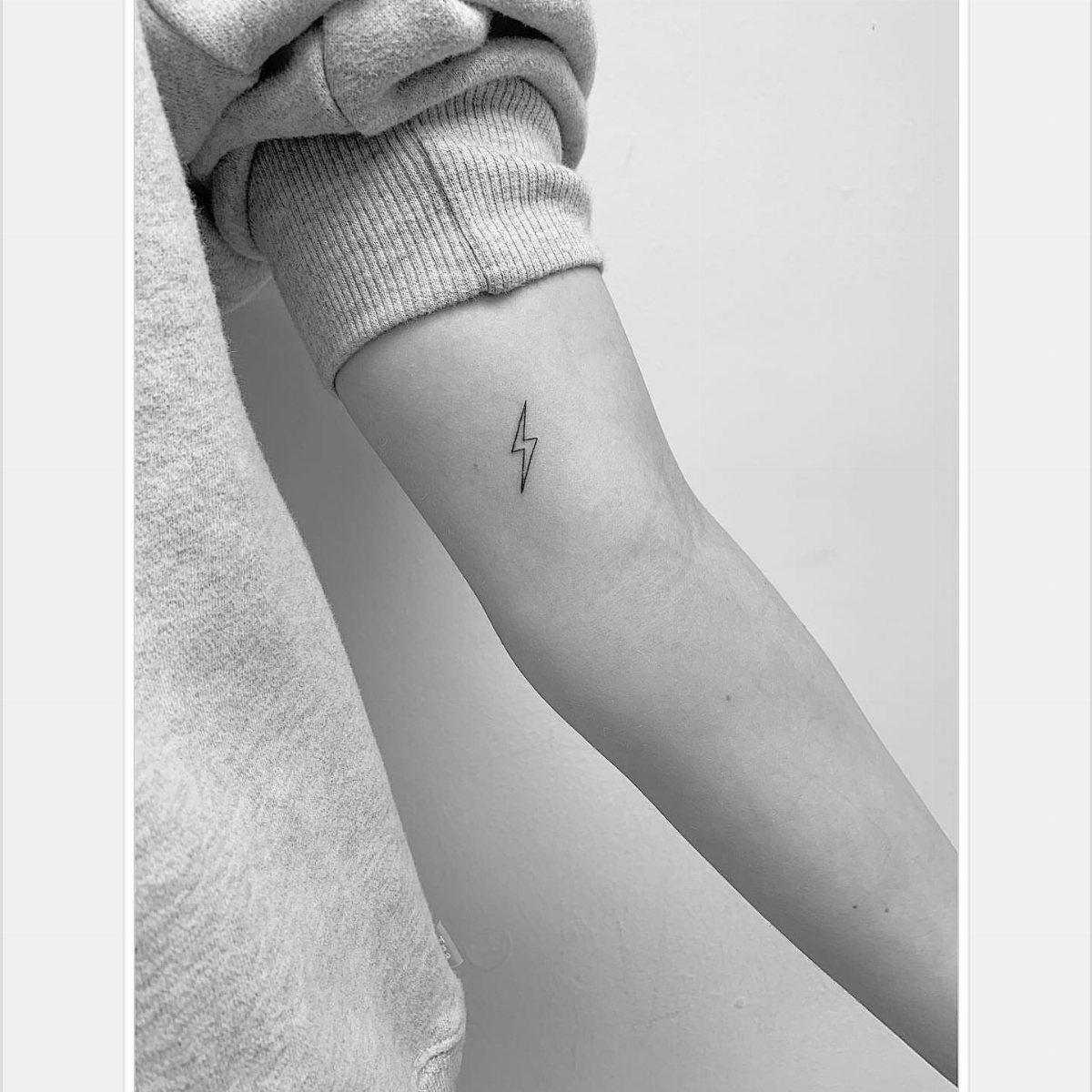
A small bolt fits cleanly on the inner forearm, ankle or collarbone. The reduced size keeps it discreet while still showing enough detail to read as a lightning strike rather than a generic zigzag.
Small tattoos fade faster than large ones because there is less ink deposited in the skin, so choose solid black over fine line work if you want the shape to stay crisp.
A touch-up every few years is typical for pieces this size.
5. Branching Lightning Bolt Tattoo
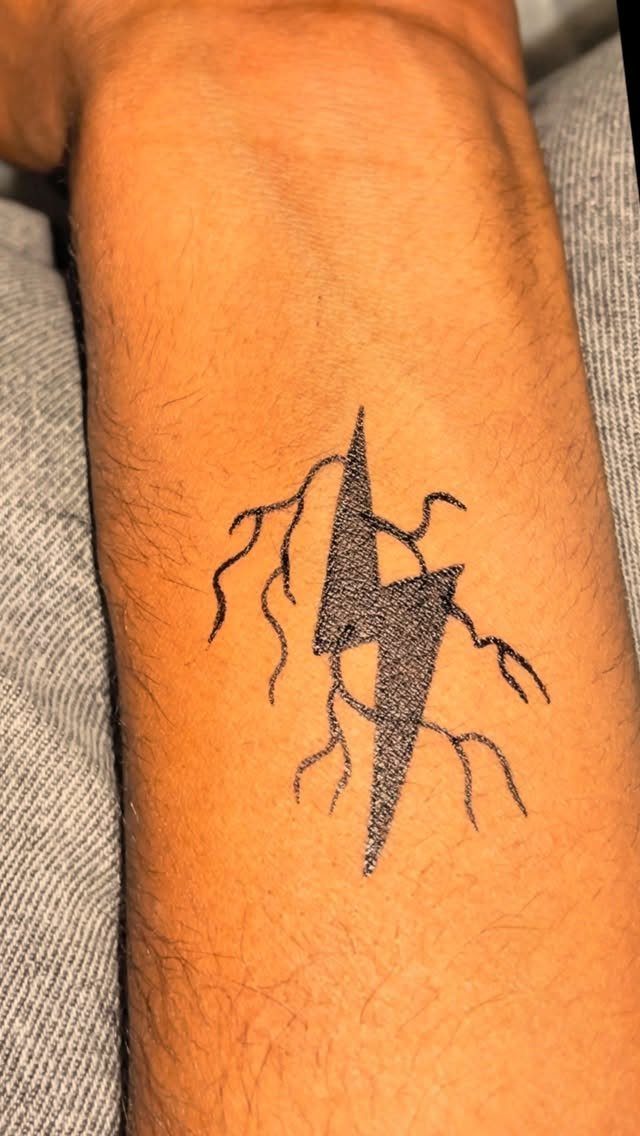
Realistic branching captures the way lightning actually splits across the sky, with multiple jagged offshoots spreading from a central strike.
The lines are usually thin and irregular, which makes the design look less symmetrical and more like a photograph of a storm.
Placement affects how far the branches can reach. On the forearm you get enough space to run several offshoots, but on the wrist or ankle the branches have to stay tight or they look cramped.
Fine lines like these soften faster than bold shapes, so plan for a touch-up within 3 to 5 years if you want the detail to stay sharp.
6. Illustrated Scene Inside Bolt
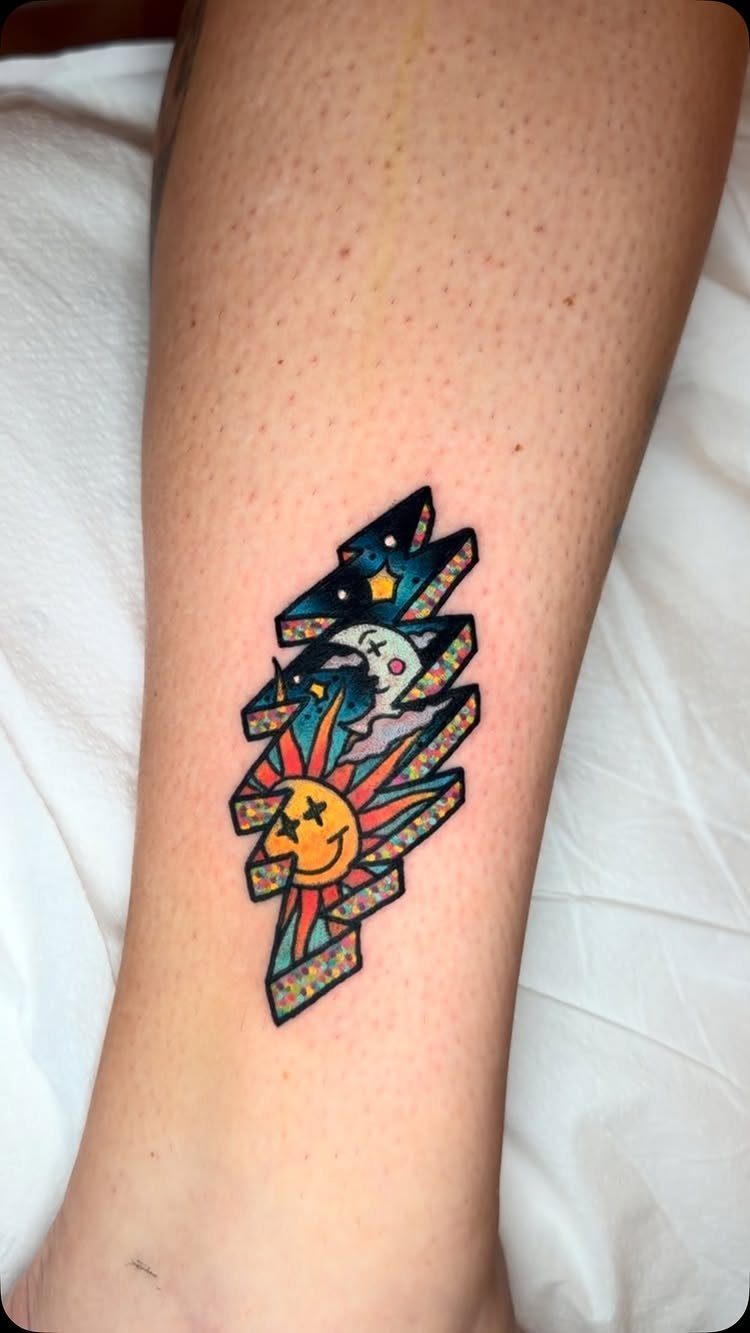
The bolt becomes a frame for a separate scene, usually celestial imagery like suns, moons and stars rendered in bright color. The shape keeps the composition contained while the subject inside adds narrative weight that a plain bolt cannot carry.
Color saturation matters here. Pale washes fade quickly on skin, so yellows and light blues need to be layered thicker than darker tones.
I would ask for the bolt outline in black so the frame stays readable even as the interior colors soften over time.
7. Skull and Lightning Bolt Tattoo
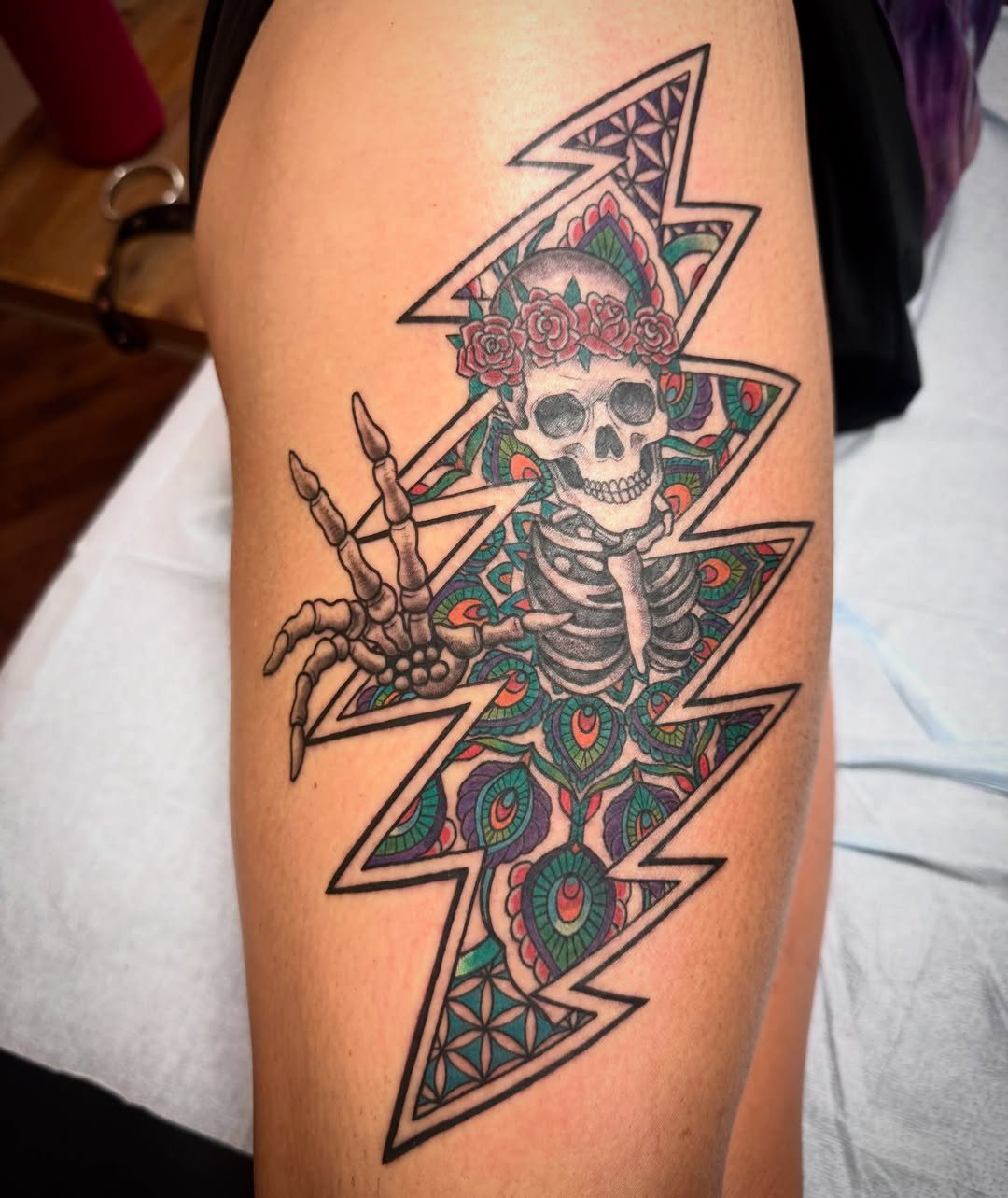
The bolt frames the skull and everything around it, locking the composition together so that roses, mandala patterns or skeletal hands stay contained rather than floating across the skin.
Placing the skull inside the bolt gives the piece a focal point that pulls the eye in before it reads the surrounding detail.
Thigh placement gives you room to scale the bolt large enough to hold complex interior work and keep the lines readable.
Color this dense needs a few sessions to build saturation, and the mandala fill inside the bolt will soften before the black outline does, so budget for a touch-up on the color alone down the line.
Avoiding Nazi Associations
2 lightning bolts side by side, drawn in matching angular shapes, read as the SS insignia. Germany bans it outright, and the ADL classifies it as a hate symbol.
A single bolt carries no such association. Neither do 2 bolts of different sizes or styles, since the uniformity is what makes the symbol recognizable.
For a pair, stagger the size or tilt so they read as 2 separate strikes instead of a mirror. That shift is enough to break the resemblance entirely.
Run the sketch past your artist before the appointment. They have seen this problem before and can tell you whether the spacing or symmetry needs adjustment.