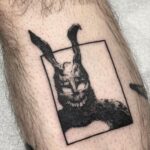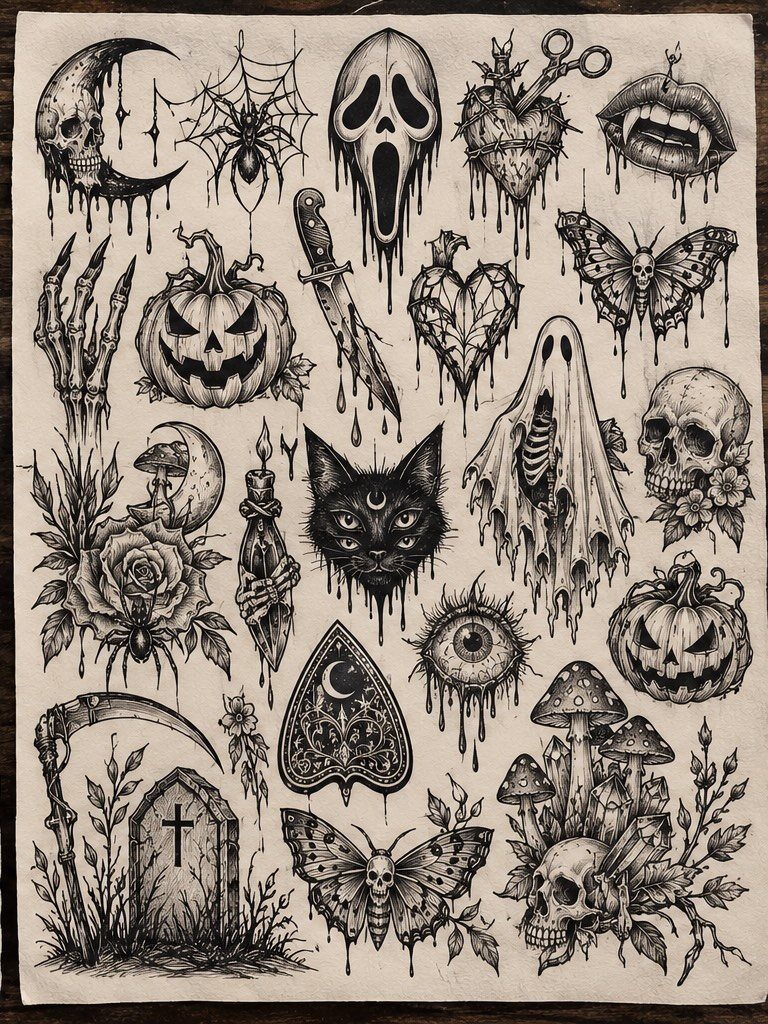
Size and detail decide where each design lands best.
A single cat or pair of vampire teeth fits a wrist because the shape stays simple, but a full spooky scene with a pumpkin, ghost, and moon needs forearm length to keep each element distinct.
A black cat or skeletal bat reads year-round, while a jack-o’-lantern or anything in bright orange flags October.
1. Spooky Scene
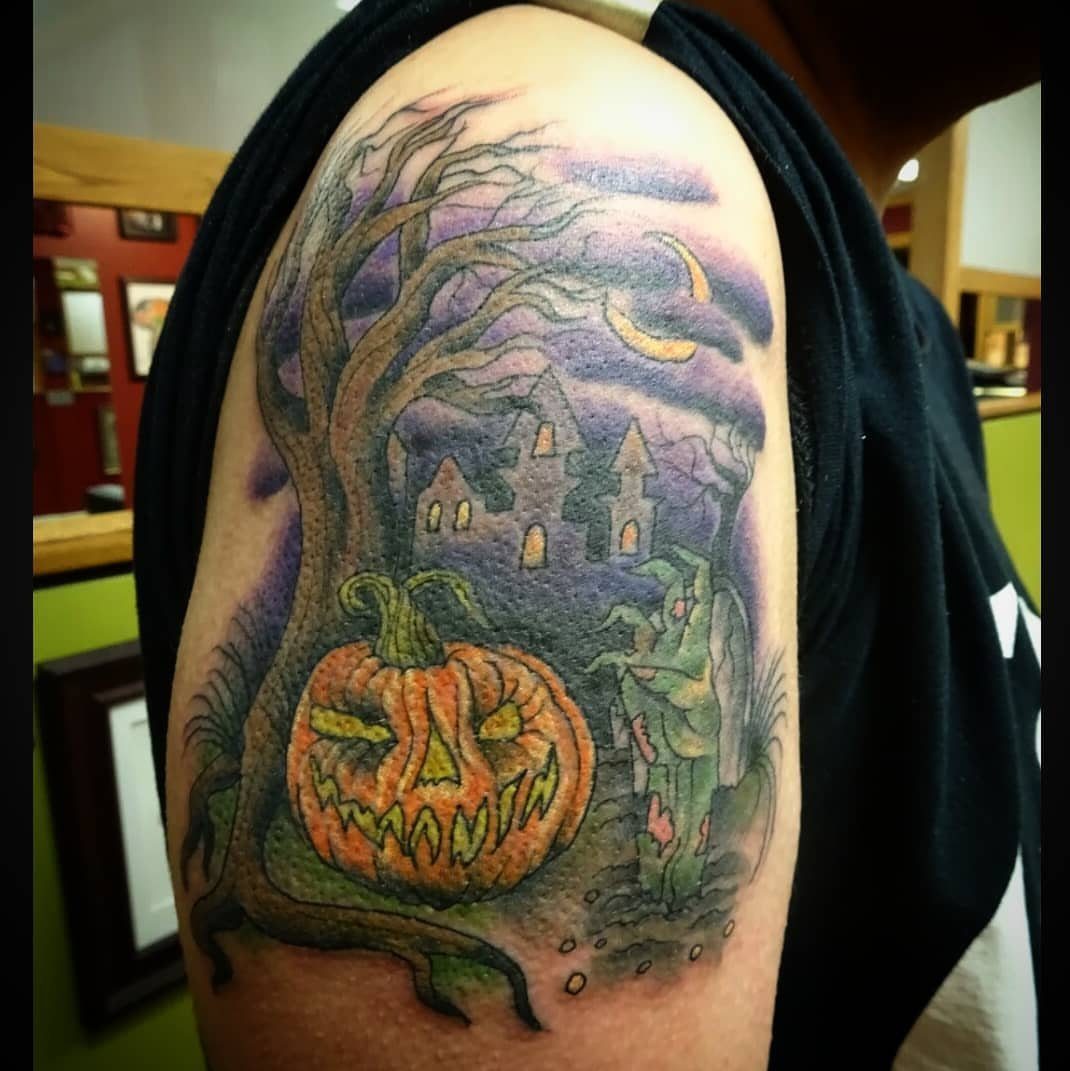
This one packs a full Halloween scene into a single piece: tree branches reaching across a pumpkin, a house on the hill, a crescent moon, and a ghost floating through.
The composition reads well when you fit that much into one space because each element stays distinct.
Expect to sit longer for a design like this. The linework alone takes time, and color adds another session for most artists.
The upside is you get the whole holiday in one tattoo instead of collecting separate pieces over time.
If you’re the latter, getting a Halloween-themed tattoo may be on your mind this year. After all, it’s the best way to show off just how much the holiday means to you.
2. Black Cat
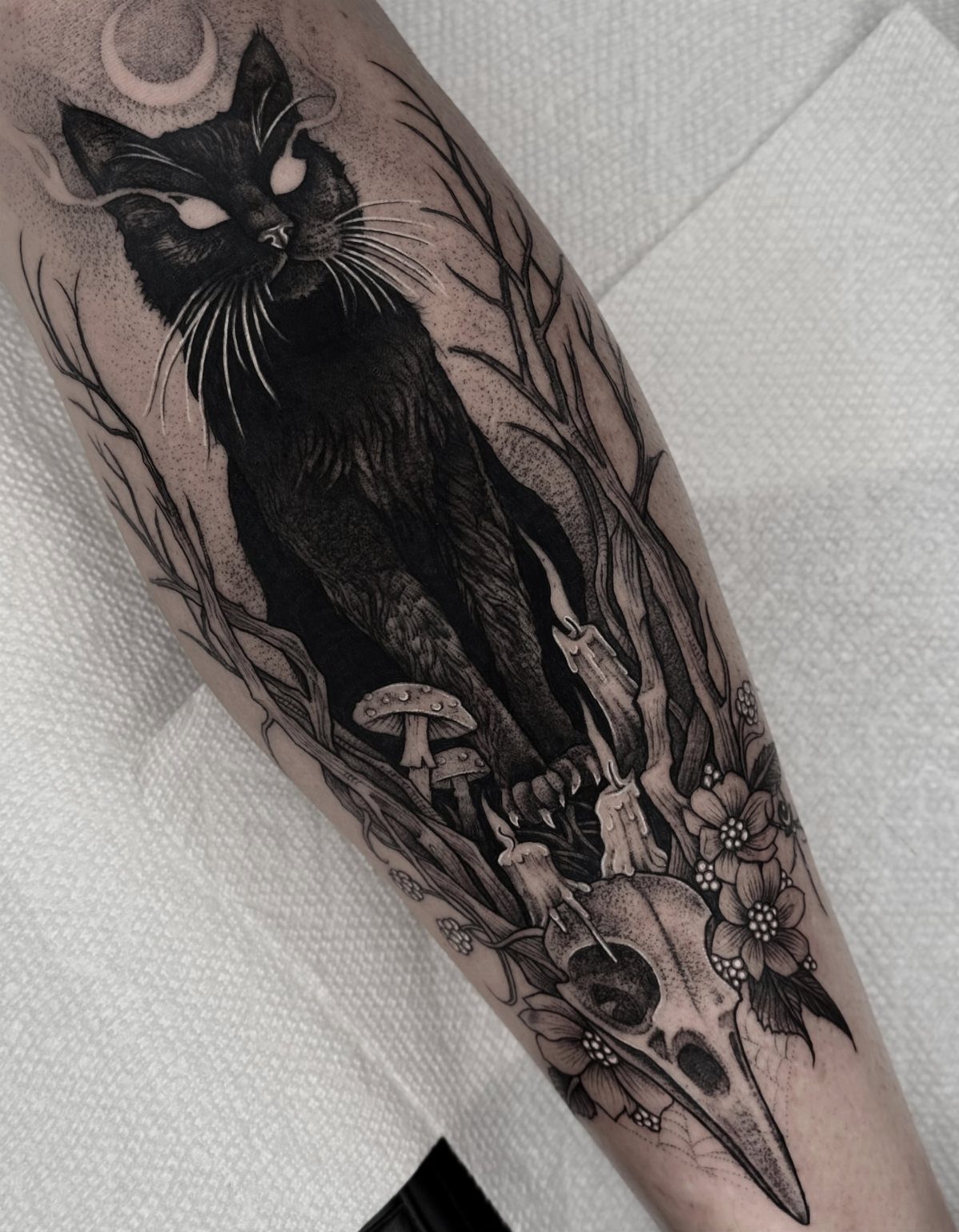
A black cat anchors this design, surrounded by mushrooms, a bird skull, and a crescent moon. The black and grey palette keeps it moody without leaning into bright Halloween orange.
Cat tattoos hold up well because the silhouette stays readable even as the ink settles. Add the moon and skull and you get something that works year-round, not just October.
Placement on the forearm or upper arm gives you room for the supporting elements without crowding the cat. Simpler versions can fit a wrist or ankle if you drop the extras and keep just the cat and moon.
3. Hocus Pocus Cat
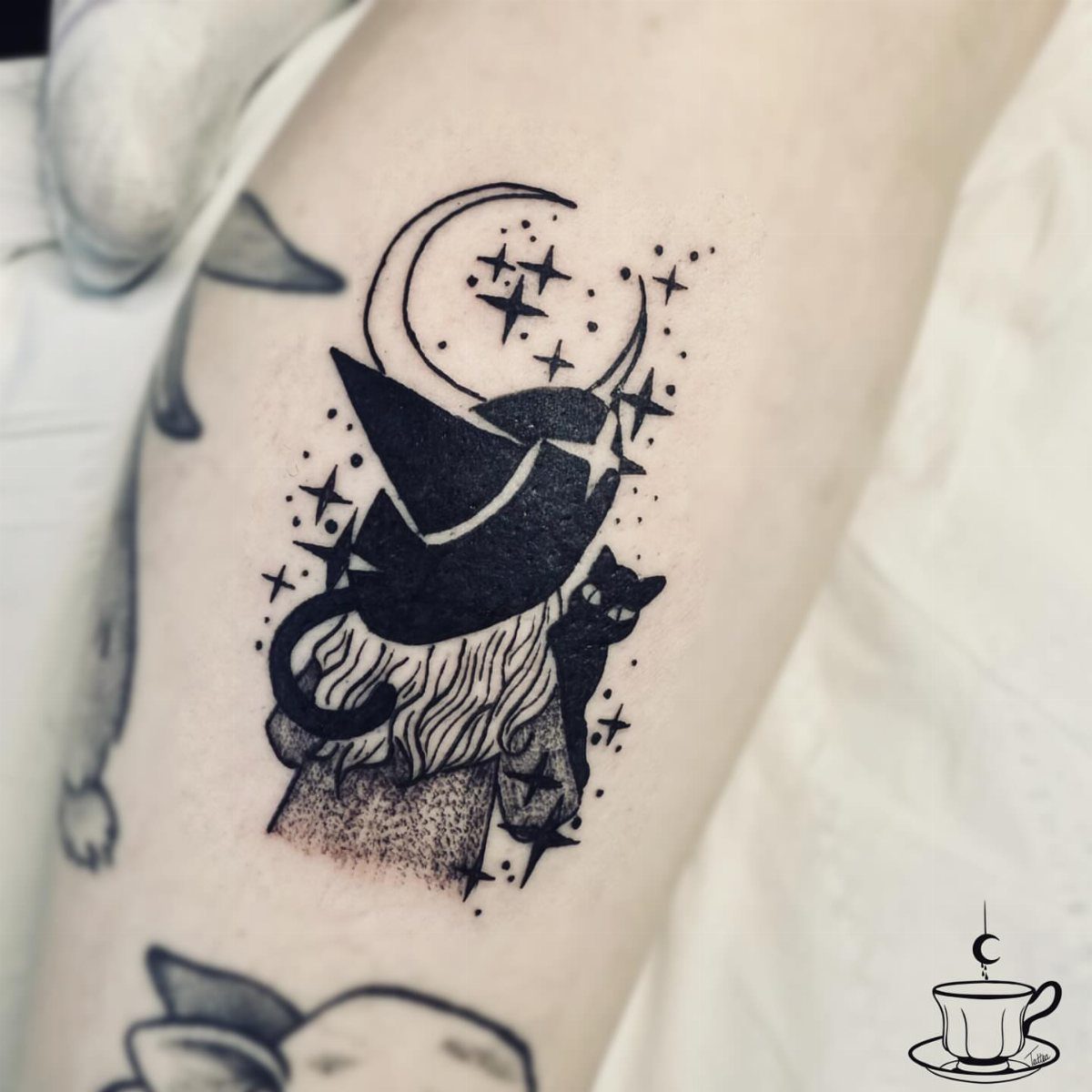
The witch hat on the cat is what makes this one. Add stars and a crescent moon around it and you get a Halloween tattoo that nods to Hocus Pocus without needing the full scene.
Black ink reads clean.
Linework this simple ages well because there’s no gradient or color to fade unevenly. Most artists can finish a piece this size in under an hour.
Sizing matters here. Forearm, shoulder, or calf all work.
4. Skeleton Bat
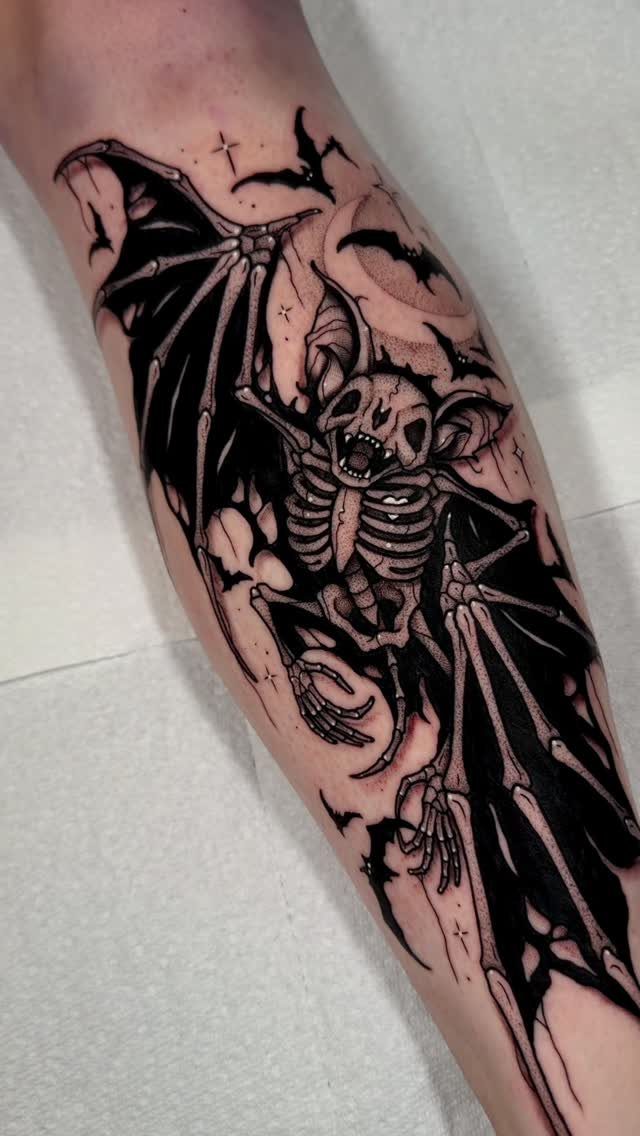
A skeletal bat gives you Halloween without the usual pumpkin or witch imagery. The bony wings and ribcage stand out because most bat tattoos stick to solid black silhouettes.
Detail like this needs space.
Forearm placement works because the wings can spread across the width without cramping the anatomy. Smaller versions lose the bone structure, and then you’re left with something that just looks busy.
Black and grey suits the concept. The shading is what separates bone from membrane, and adding color competes with that contrast instead of helping it.
5. Pumpkin Snail
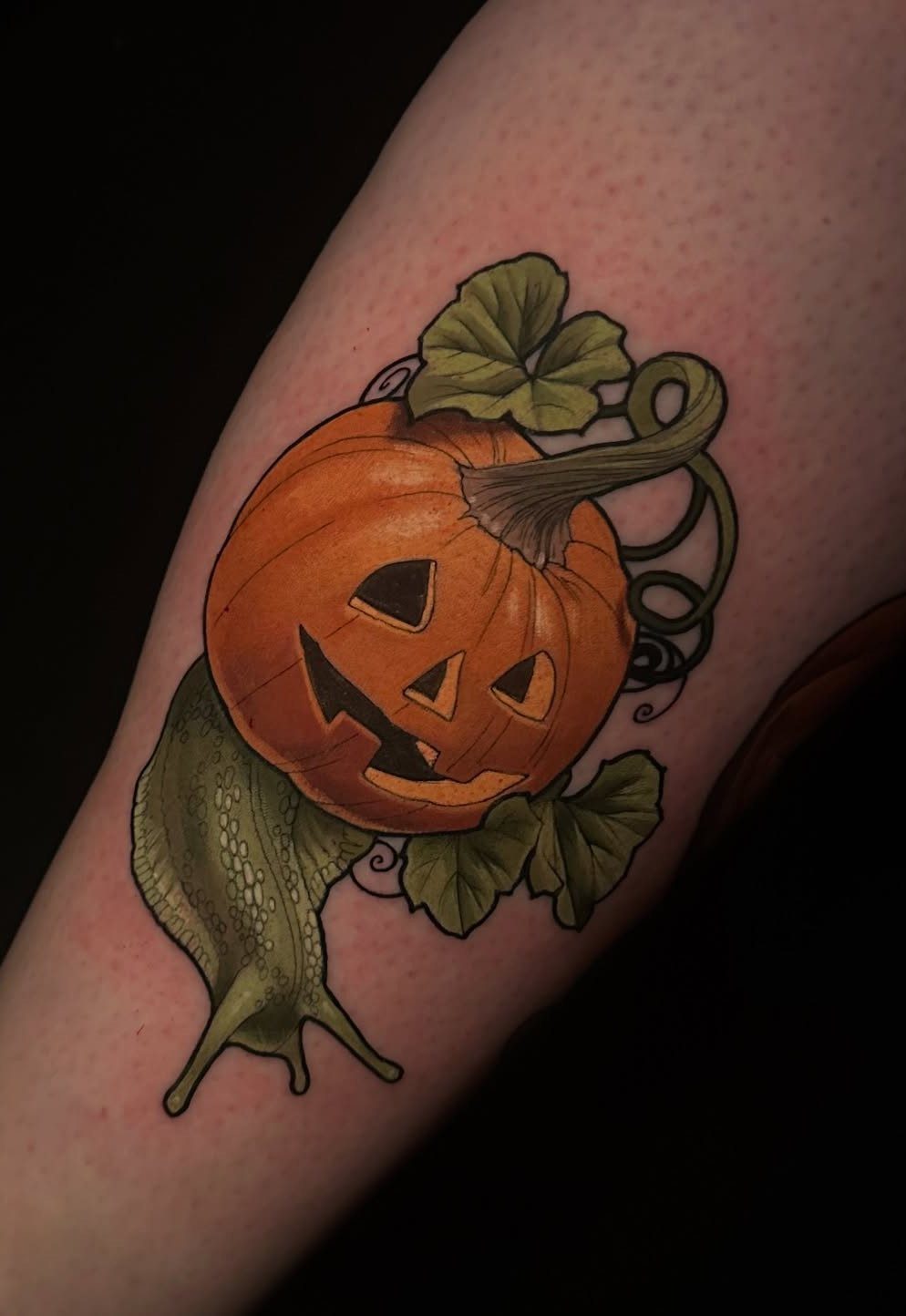
A snail carrying a carved pumpkin instead of a shell is one of those ideas that surprises people because it shouldn’t work but does. The green body and orange shell with a carved face stay Halloween without leaning too dark.
This one suits someone who wants seasonal ink that stays lighthearted.
The design reads quickly, so it works small: wrist, ankle, or behind the ear all fit. Add leaves or vines if you need to scale it up for a larger spot like the forearm.
Color holds the concept together here. Black and grey would flatten it into something harder to identify.
6. Ghost Face
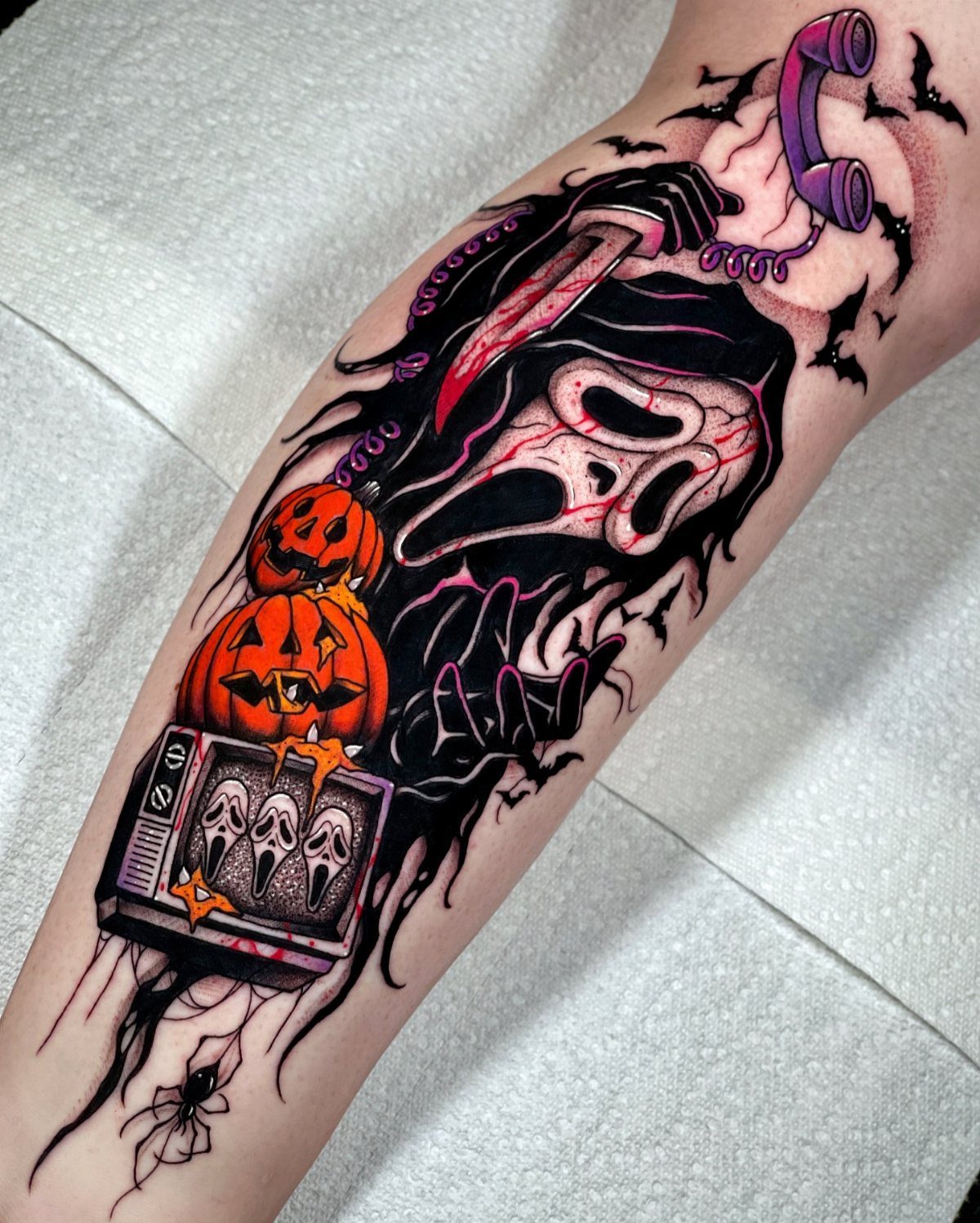
The purple tones and added props turn a horror movie icon into a full seasonal piece.
Color work like this takes longer and costs more than black and grey, but it’s what makes the design pop.
The shading on the mask and the detail in the pumpkins need an artist who’s comfortable with layering color without muddying it.
Dropping the phone and pumpkins simplifies it for a smaller version, but then you lose the Halloween context and you’re left with just a Scream tattoo.
7. Snake and Skull
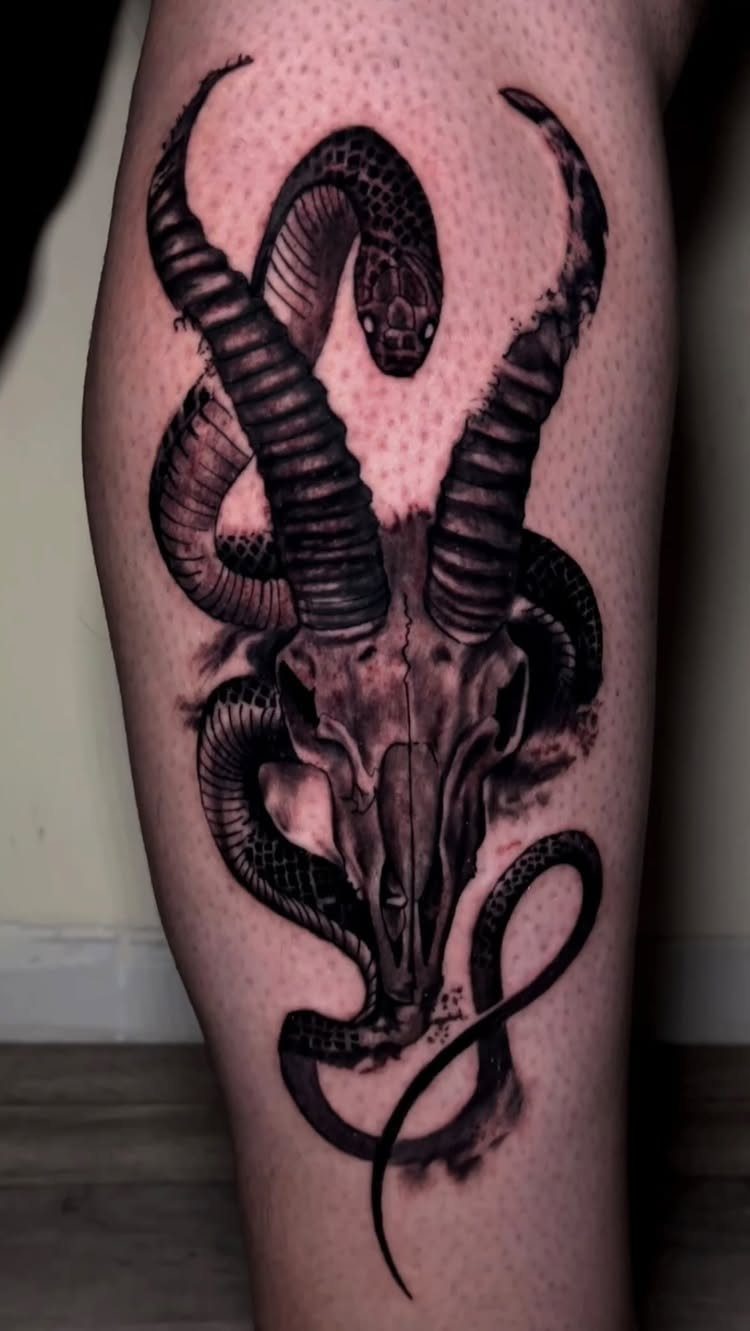
A snake winding through a horned skull keeps the Halloween tone dark without needing props or color. The composition works because both elements sit in the same visual weight: bone and scales, no background filler.
The texture in the skull and the scales on the snake come from shading, and adding color would pull focus instead of letting the forms do the work.
Calf placement gives you vertical room for the snake to wrap. Smaller versions flatten the coil and lose the movement.
8. Cheshire Cat
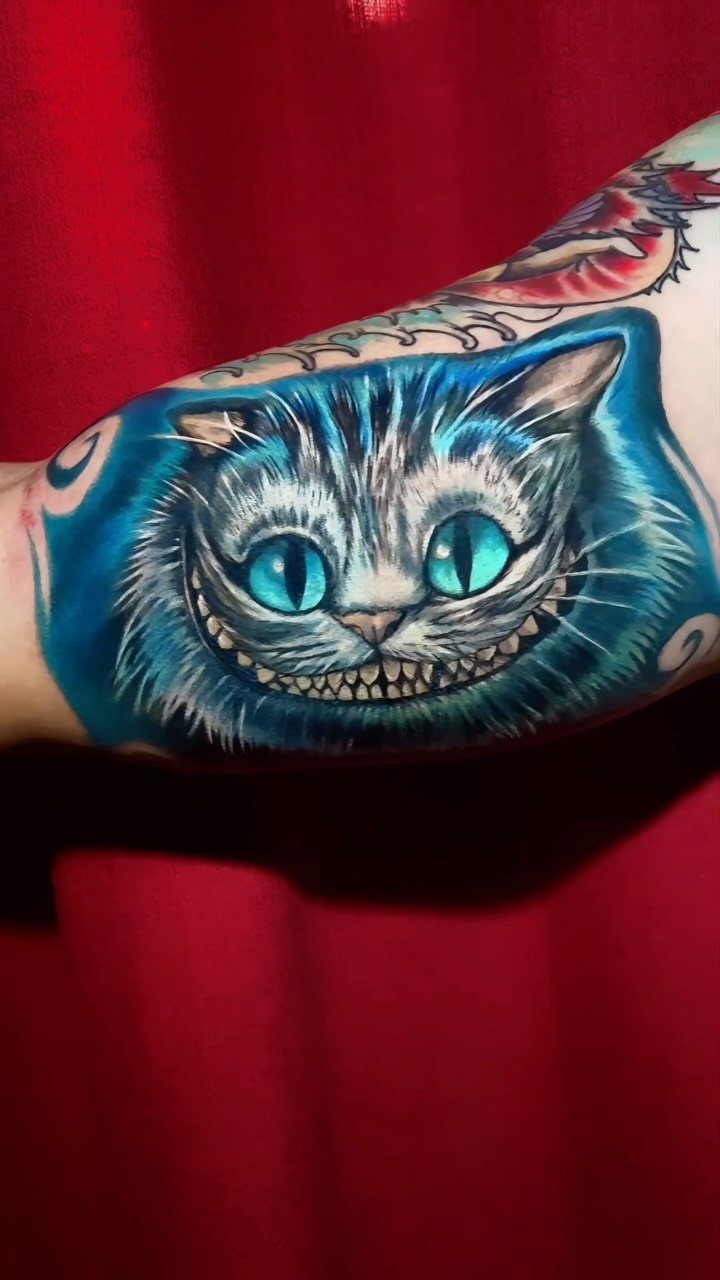
A Cheshire Cat with glowing eyes and that unsettling grin bridges Disney nostalgia and Halloween creep. The blue fur and red background push it past the pastel version most people remember.
Color is what tips this one into tattoo-worthy territory. Black and grey would lose the glow in the eyes and the contrast that makes the grin stand out.
Forearm placement works because the face reads clearly when someone looks at your arm. Budget extra time for the layered shading in the fur and the glow effects around the eyes.
9. Witchy Ghost
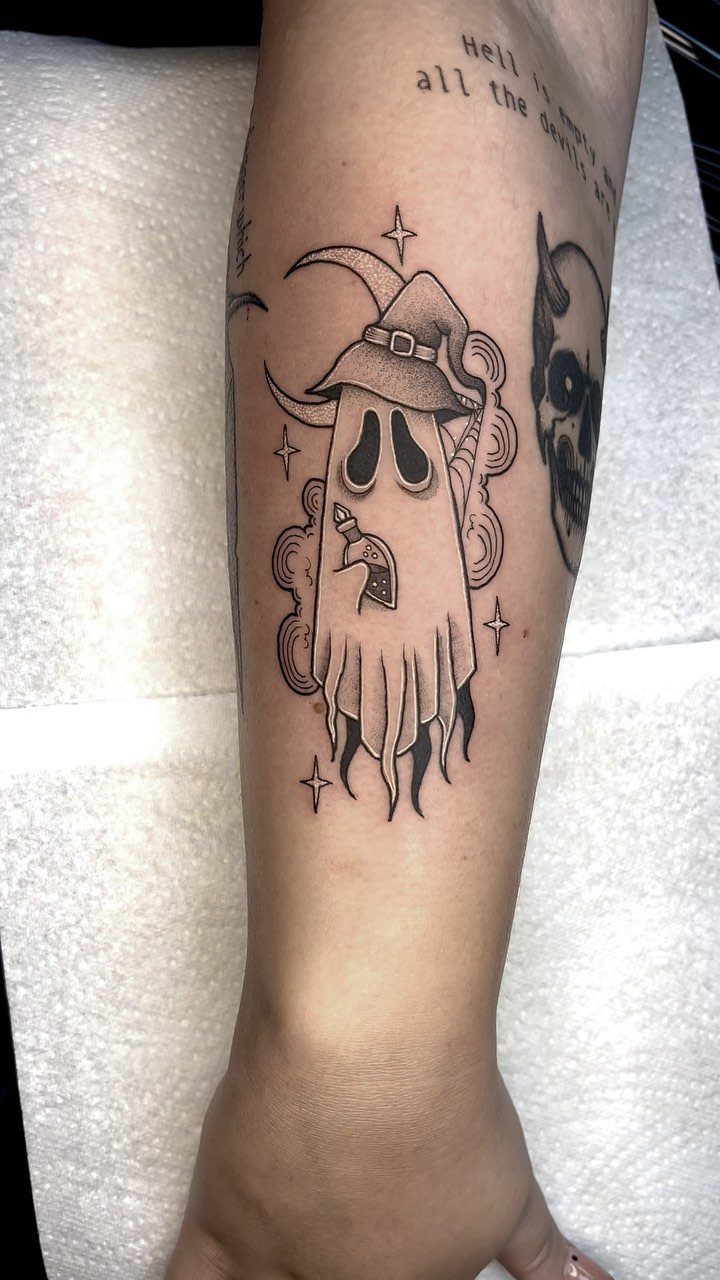
A ghost in a witch hat splits the difference between spooky and approachable. The candle and stars around it fill the space without crowding the figure.
10. Vampire Teeth
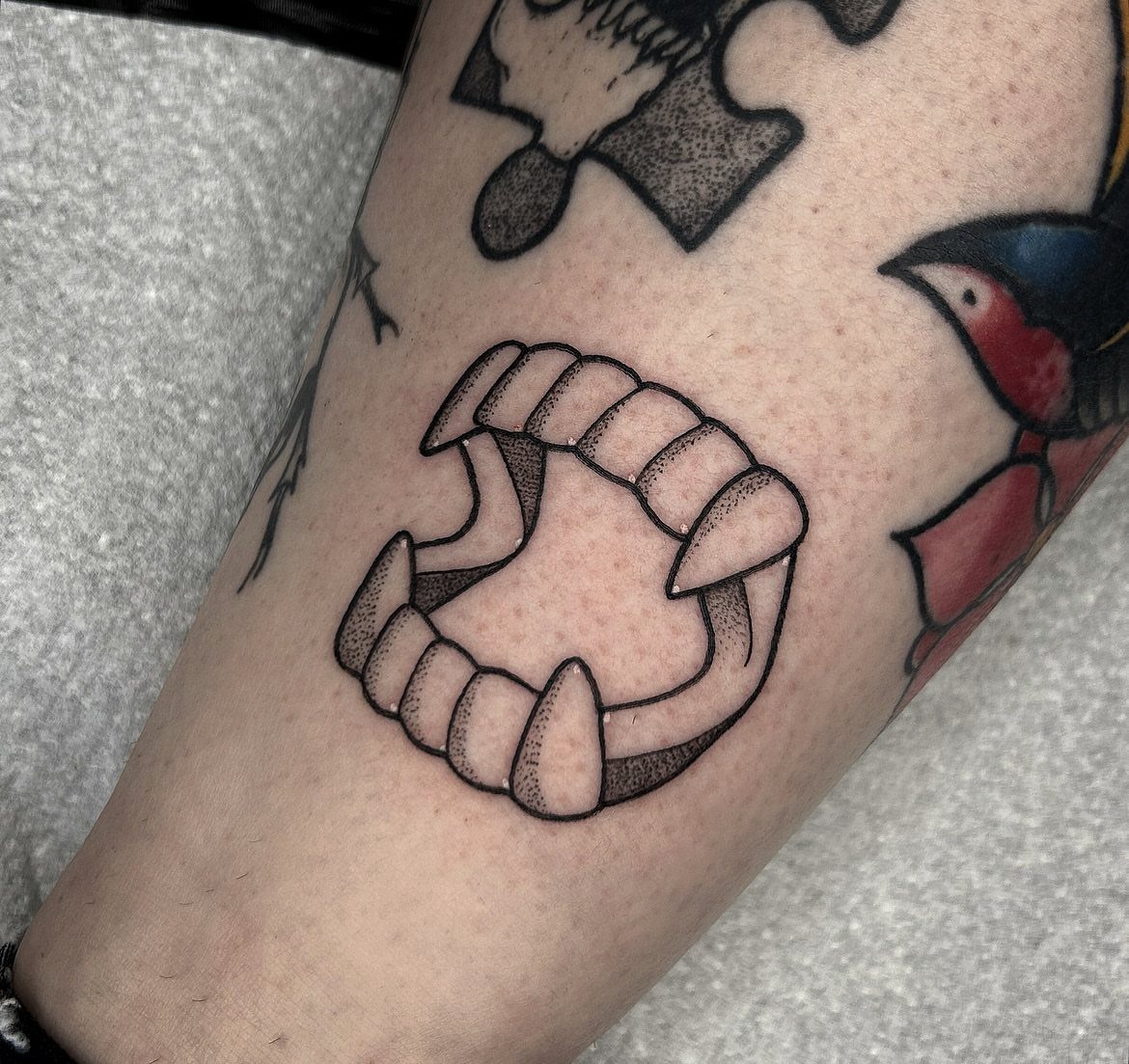
Vampire teeth give you a horror nod without committing to a full character portrait. The fangs and gums read instantly, and monochrome ink holds the edges better.
This one works small.
Wrist, forearm, or behind the ear all fit because the shape is simple and the details stay minimal. Add blood drips for something darker, but clean teeth suit someone who wants Halloween ink that doesn’t announce itself.
Shading in the gums is what makes it look dimensional instead of flat.
11. Jack-O’-Lantern
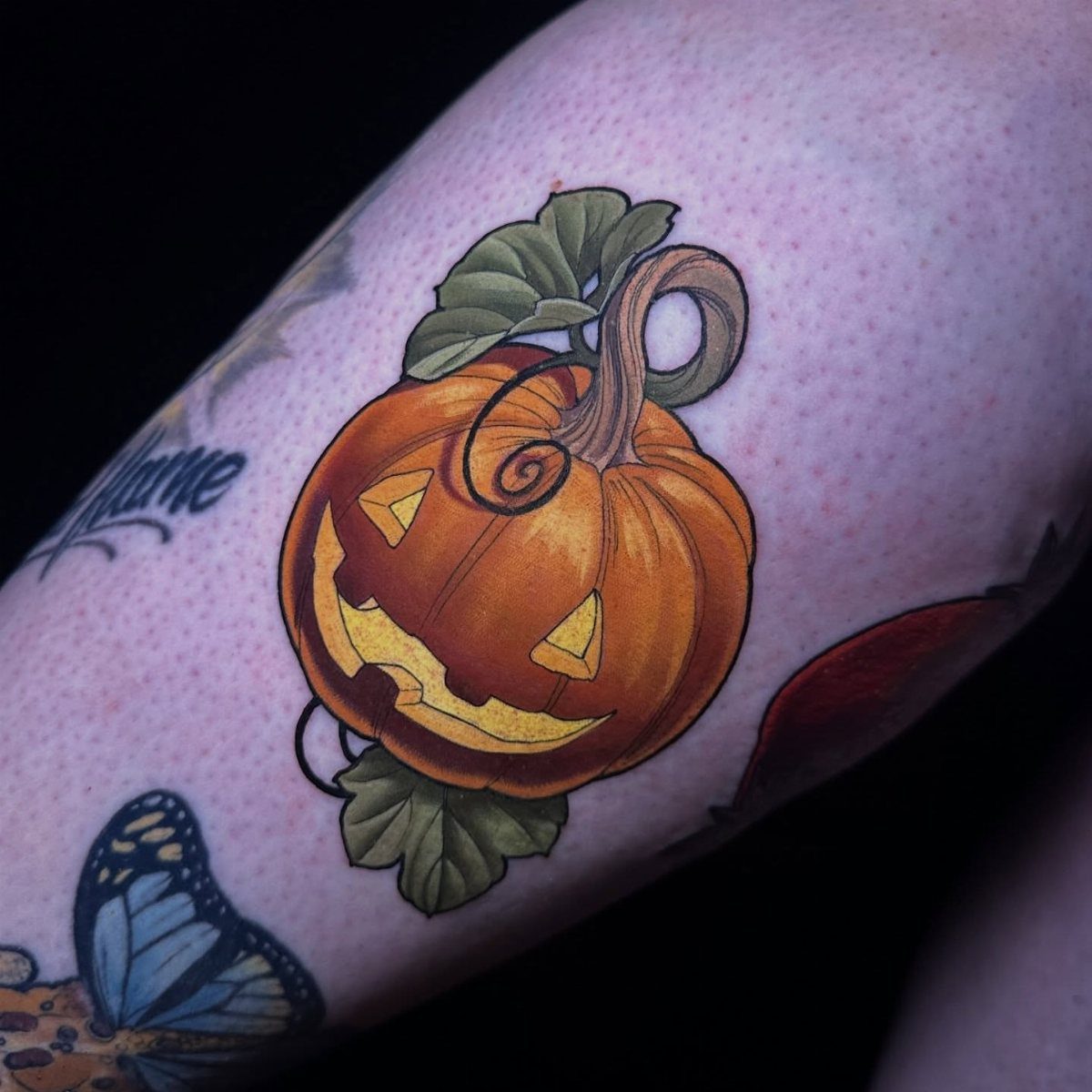
The orange and green pop against skin, and the carved face keeps it seasonal without added props.
Color holds this together.
Simpler faces carve faster and keep the sitting time short, but the expression is what gives a jack-o’-lantern personality.
12. Sugar Skull Tattoo
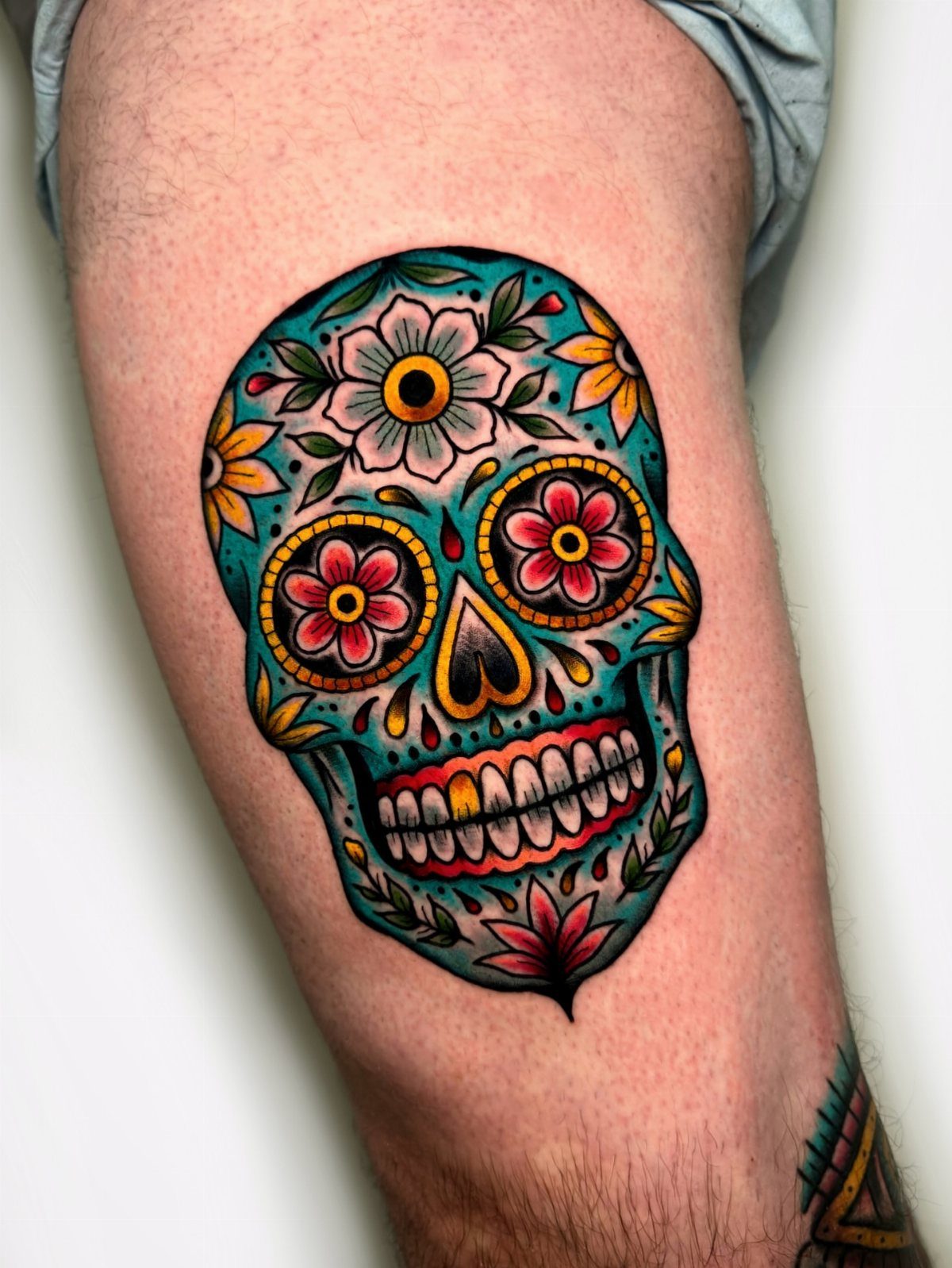
A sugar skull brings Day of the Dead into Halloween territory. The floral patterns and bright colors keep it decorative instead of dark, and the symmetry in the design holds up well over time.
Color work this layered takes multiple sessions for most artists. The flowers and face need separate passes to keep the tones clean.
Smaller versions lose the detail in the florals, and then the skull reads generic instead of ornamental.
13. Elvira Tattoo
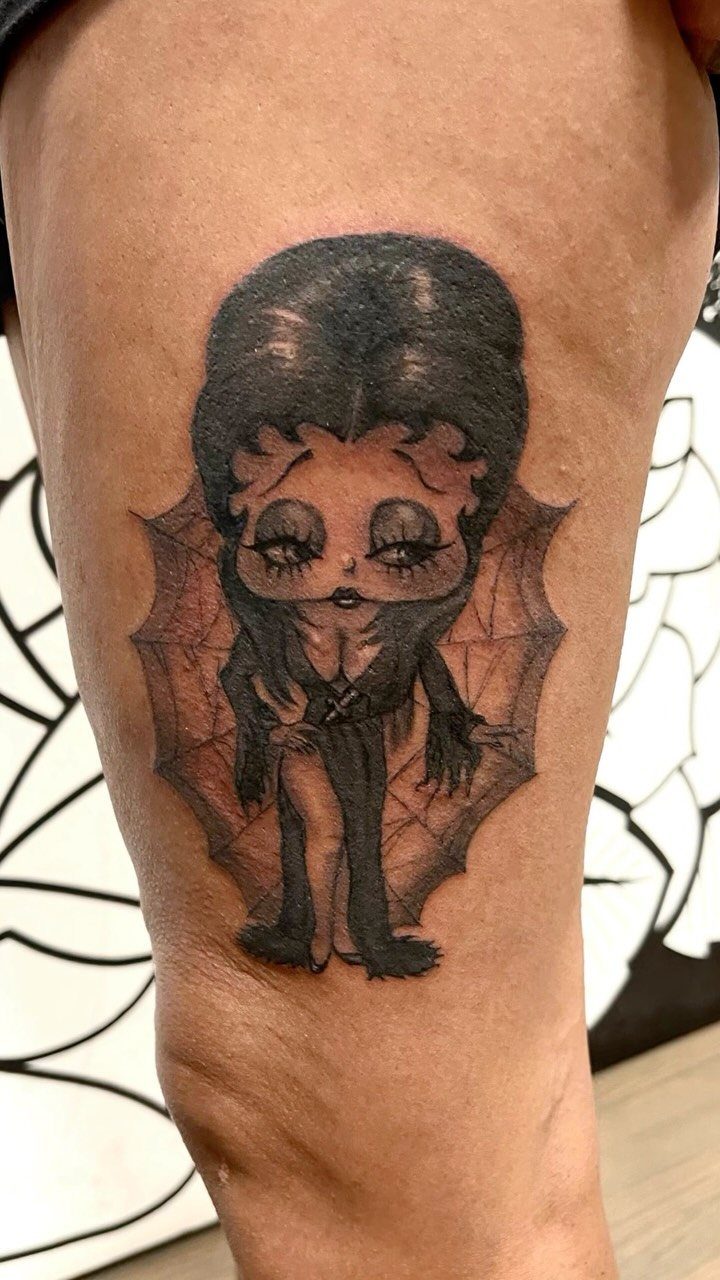
The spiderweb background keeps it Halloween without needing extra props.
The vertical space lets the dress and hair stretch naturally instead of cramping the proportions.
Black and grey work here because Elvira’s look is already monochrome. Color wouldn’t add much, and keeping it simple shortens the sitting time.
14. Hocus Pocus Sisters Tattoo
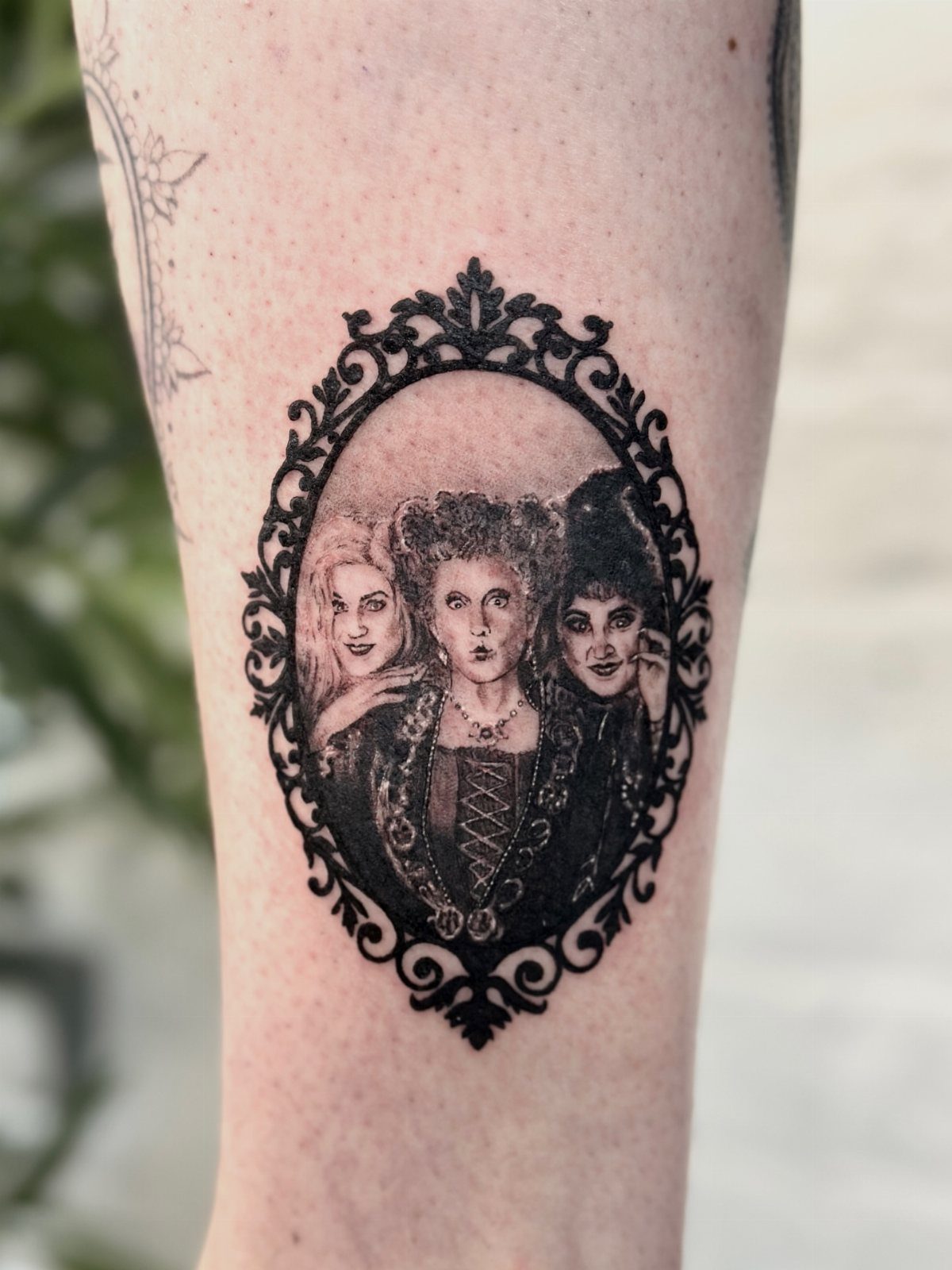
All 3 Sanderson sisters in one frame give you the full Hocus Pocus cast without needing a sleeve. The oval border contains the composition and keeps the faces readable even when the tattoo is small.
Black and grey ages better than color for faces this detailed. The shading is what separates one sister from the next, and color can fade unevenly across skin tone.
Upper arm or forearm placement both work. Framing the design gives it built-in boundaries instead of leaving the edges to trail off.
15. Jack Skellington Tattoo
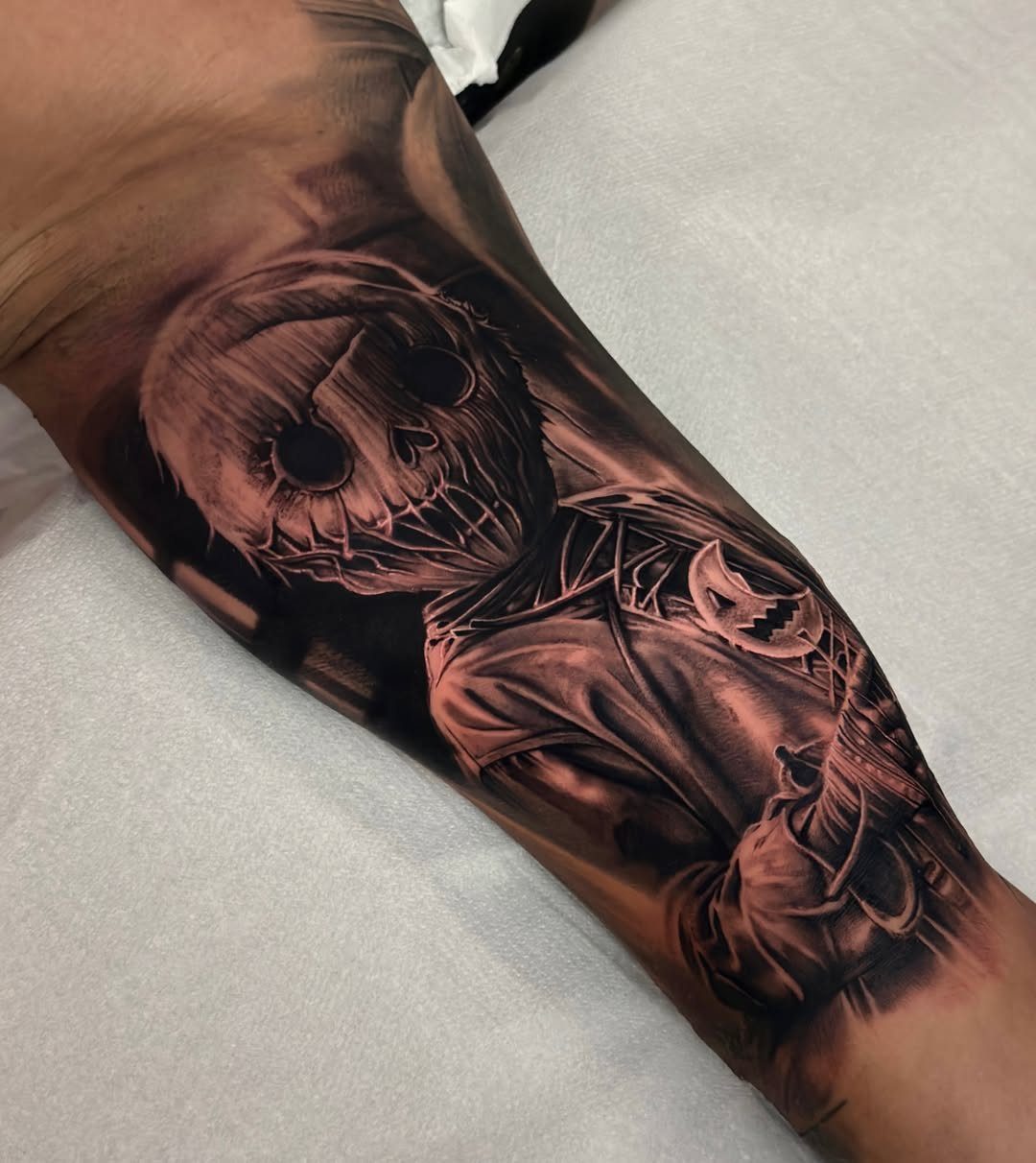
Jack Skellington in realistic black and grey trades the cartoon version for something darker. The crescent moon beside him ties it back to Nightmare Before Christmas without needing the full scene.
Realism takes longer than traditional linework because the shading builds dimension instead of relying on outlines. Budget at least 2 hours for a forearm piece this size.
Forearm placement puts the face where people can see it clearly.
16. Cute Grim Reaper Tattoo
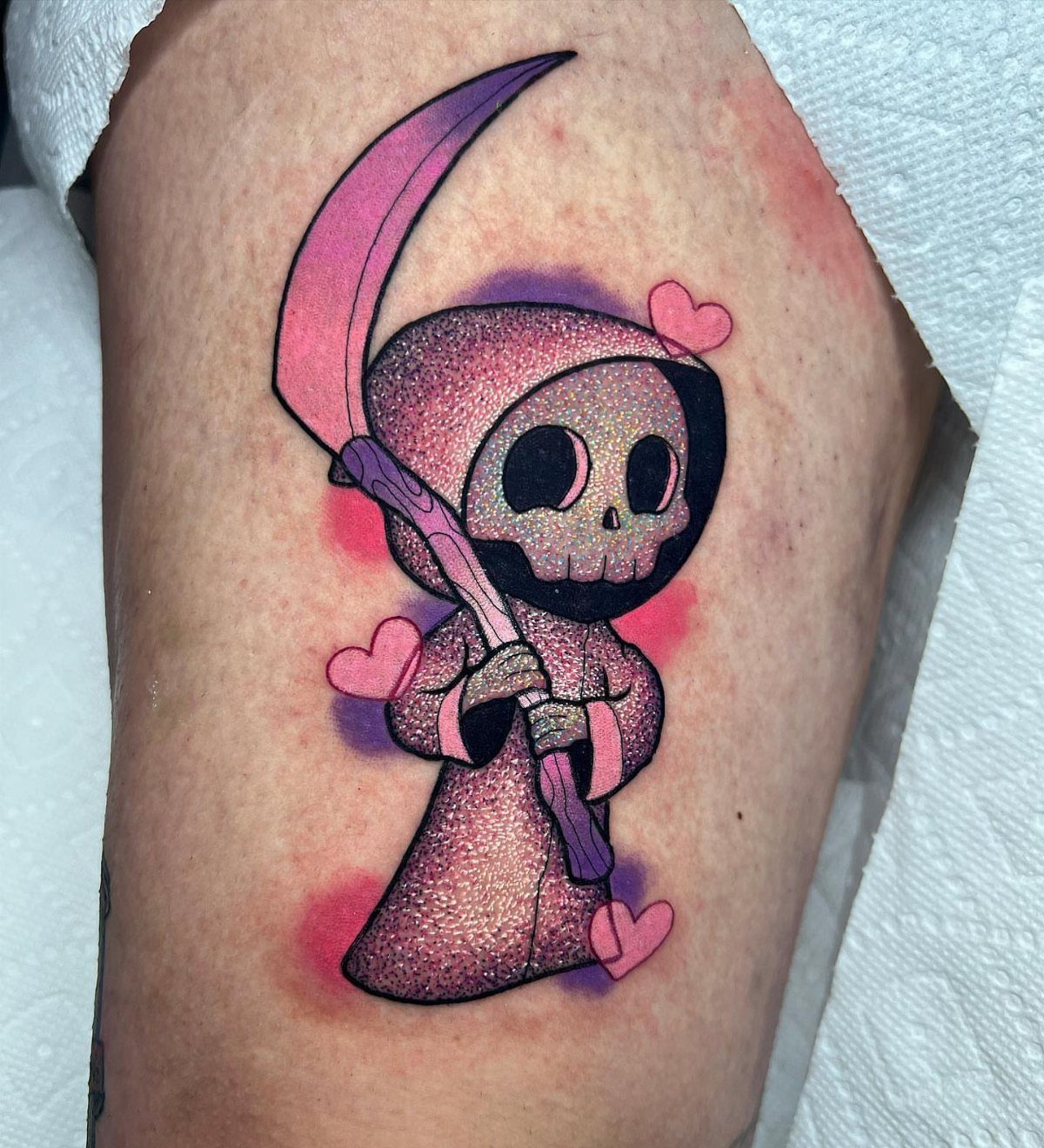
Purple robe and pink hearts soften the grim reaper into something closer to cute than creepy. The color combination keeps it playful instead of leaning into the usual black-and-bone palette.
Wrist, ankle, or forearm all fit without losing the robe folds or the hearts.
Color is what sells the tone here. Strip it to black and grey and you lose the contrast that makes it read as lighthearted instead of dark.
17. Disney Villains Sleeve
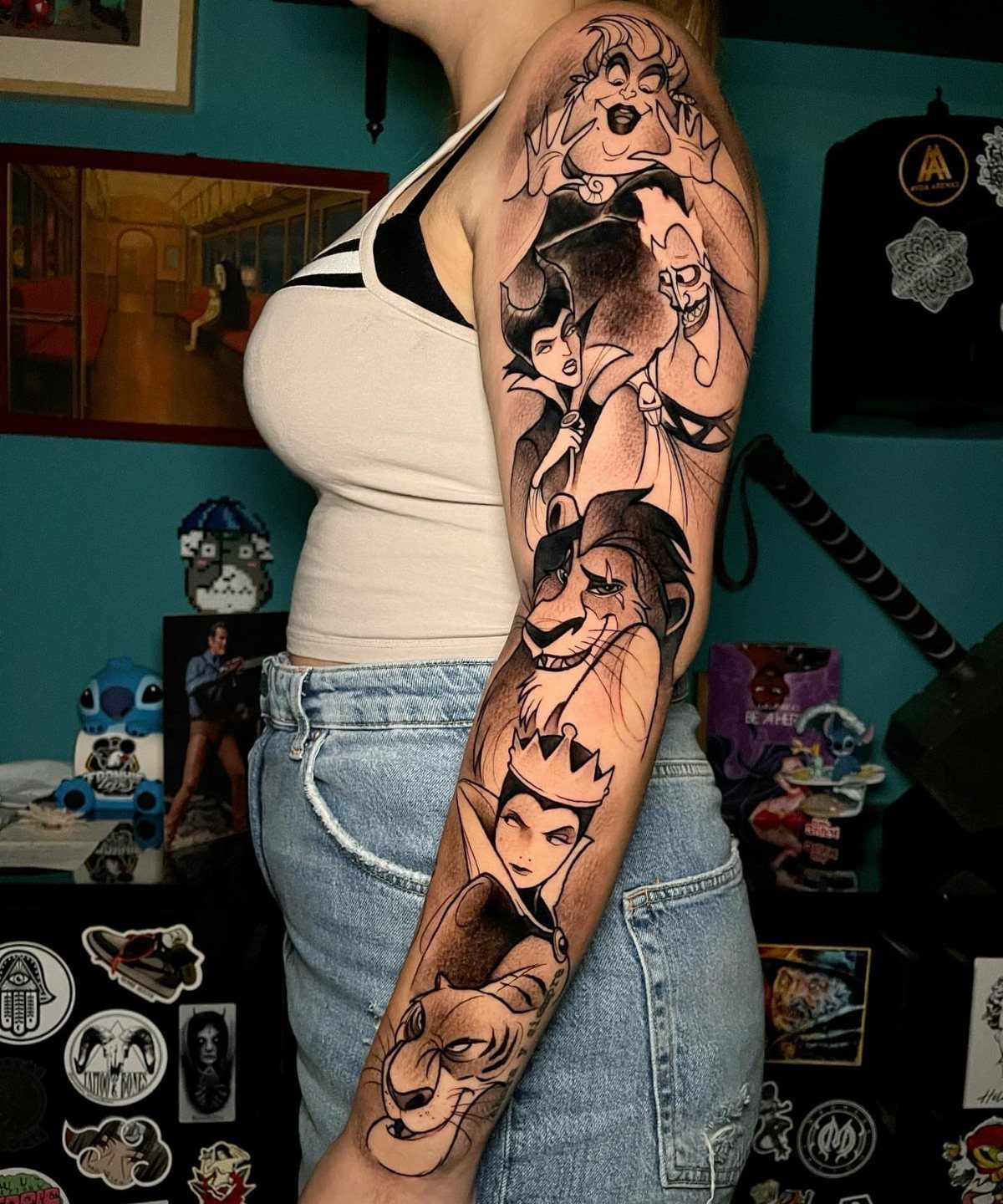
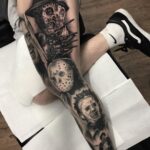
A sleeve stacked with Disney villains gives you multiple characters in one cohesive piece. Ursula, the Evil Queen, and the rest sit together because black and grey keeps the tone consistent across different films.
Full sleeves take multiple sessions, usually spaced weeks apart to let each section heal before adding the next. A full sleeve takes multiple sittings, and the shading on this many characters adds up fast.
Forearm to shoulder is the standard sleeve length. Portraits this detailed need space, so cramming too many faces into a half-sleeve flattens the detail and makes each one harder to identify.
Choosing the Right Tattoo
Placement and size drive most of these choices.
A design with multiple elements needs more surface area to stay readable, which rules out spots like the wrist or ankle. Forearm, upper arm, and calf give you room to spread detail without cramping the composition.
Color changes the cost and the sitting time. A single-session black and grey piece runs faster than full color, though size still decides how long you’ll sit.
The difference between year-round and seasonal comes down to palette and subject.
Black and grey reads darker and ages into other themes. Bright orange or purple keeps it locked to Halloween, which works if that’s the goal.
Skip the props if you want something smaller.
A skull or cat alone fits a wrist. Add the moon, stars, and background and you’re looking at forearm or larger.
Tattoo Placement Tips
The forearm is flat enough that detail holds without distortion, and most Halloween tattoo designs in the list fit that length without resizing.
Upper arm and shoulder work for vertical compositions. A reaper, a standing figure, or a framed portrait uses that height better than trying to fit it across a forearm.
Calf suits anything that needs vertical room but doesn’t need to be visible all the time. A snake winding through a skull or a tall candle scene fits naturally along that line.
Wrist and ankle limit you to simpler shapes.
A single cat, a small pumpkin, or a pair of vampire teeth fit without losing detail. Anything with multiple elements or shading that builds dimension gets cramped.
Tattoo Artist Recommendations
Look for an artist who posts work in the style you want.
A portfolio full of realistic portraits tells you they can handle shading and dimension. Traditional linework shows clean edges and bold shapes.
Check whether their color stays crisp or muddies over time. Layered tones and glow effects need someone who knows how to build color without losing contrast.
Ask how many sessions the design will take. Smaller single-subject pieces often finish in one.
Booking far in advance is standard for artists with strong portfolios. Popular shops fill months out, especially around October when Halloween requests spike.