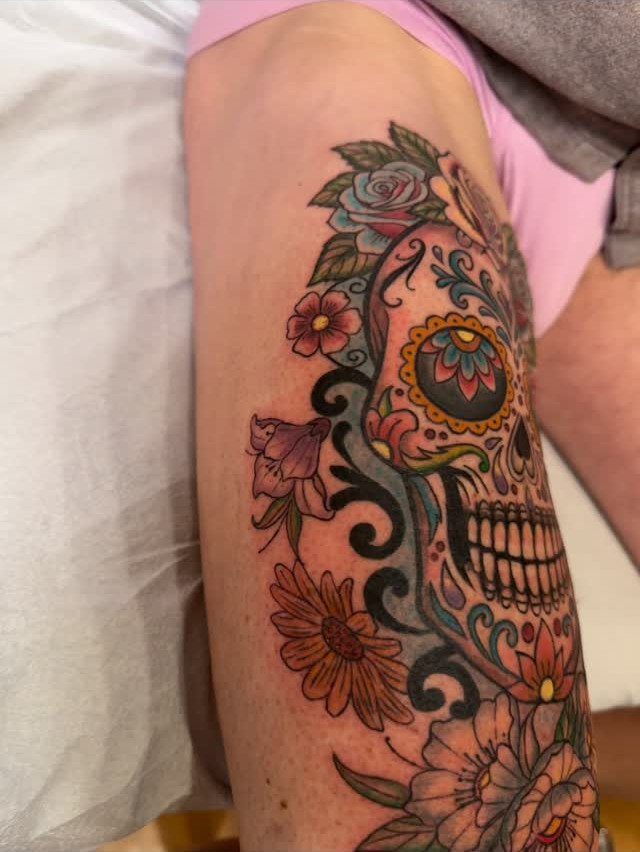
A sugar skull tattoo can take under an hour for a small black and white design or stretch across 3 or 4 sessions for an Aztec warrior piece with full shading and geometric background.
1. Traditional Sugar Skull Tattoo
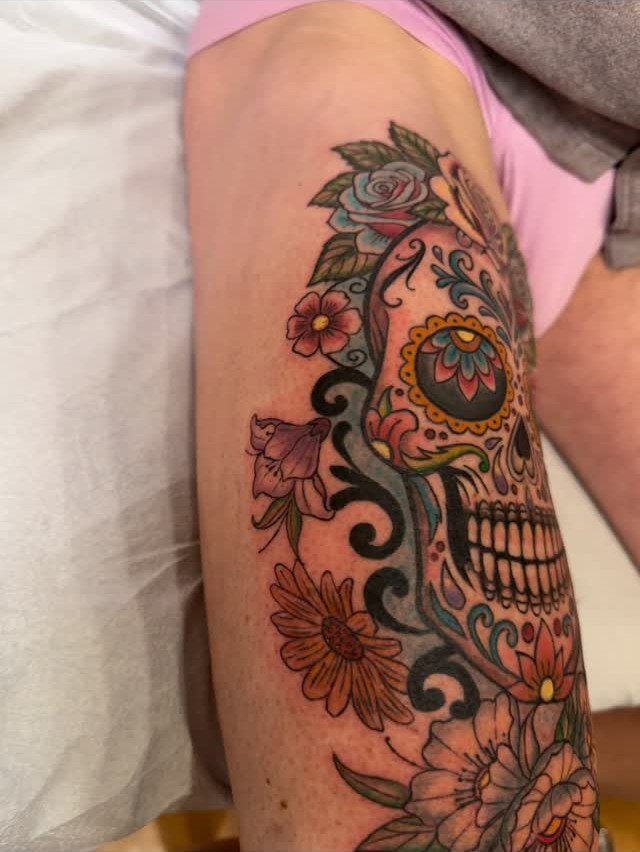
A sugar skull tattoo in full color, with the symmetrical face pattern and floral detail that connect it to Día de los Muertos tradition.
The bright palette reads clearly on skin and holds up if you go back for touch-ups every few years.
Roses, marigolds and geometric line work fill the forehead and cheeks. Most people place this on the thigh where there’s room for the whole composition.
The shading and saturated color take longer than outline-only work.
2. Woman Face Sugar Skull Tattoo
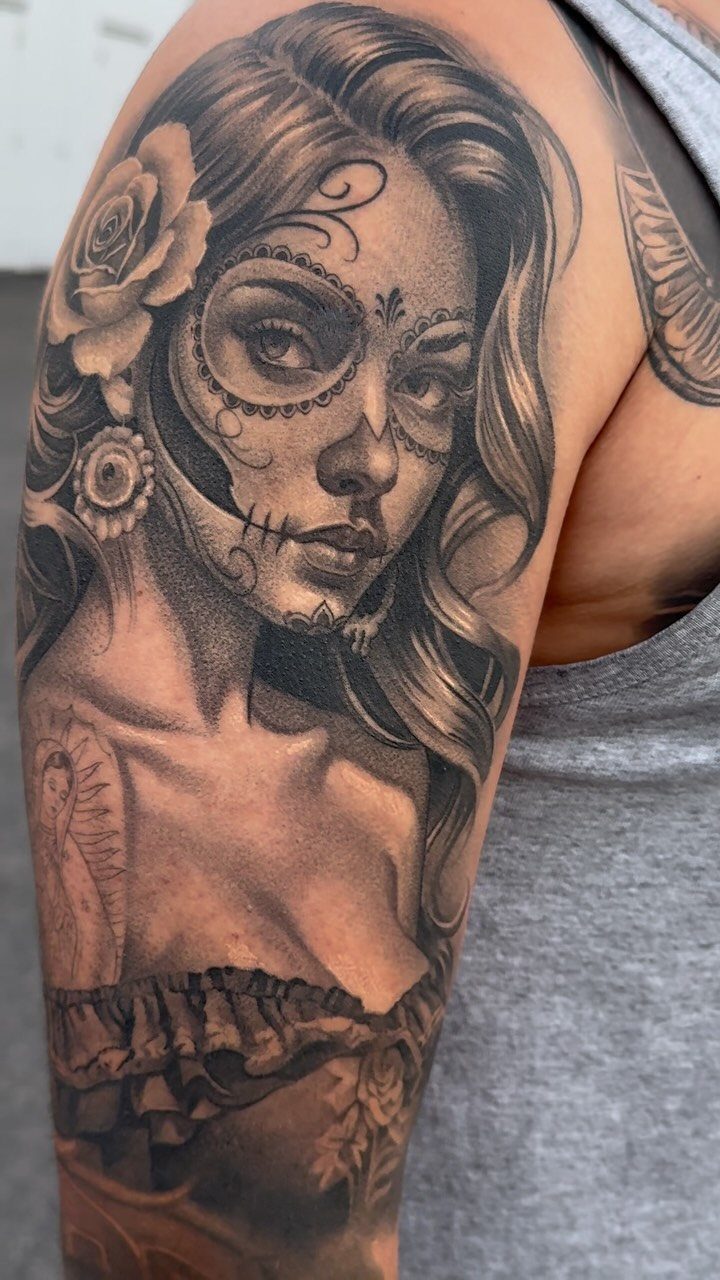
A portrait of a woman wearing sugar skull makeup, usually rendered in black and grey with roses or a veil woven into the composition.
The face stays recognizable while the painted details across the forehead, cheeks and jaw tie it to the sugar skull tradition.
Black and grey work ages well because there’s no color to fade unevenly.
Most artists shade the flower petals and the contours of the face to give it depth, and the upper arm gives enough flat surface for the portrait to read clearly from a distance.
3. Realistic Sugar Skull Tattoo with Roses
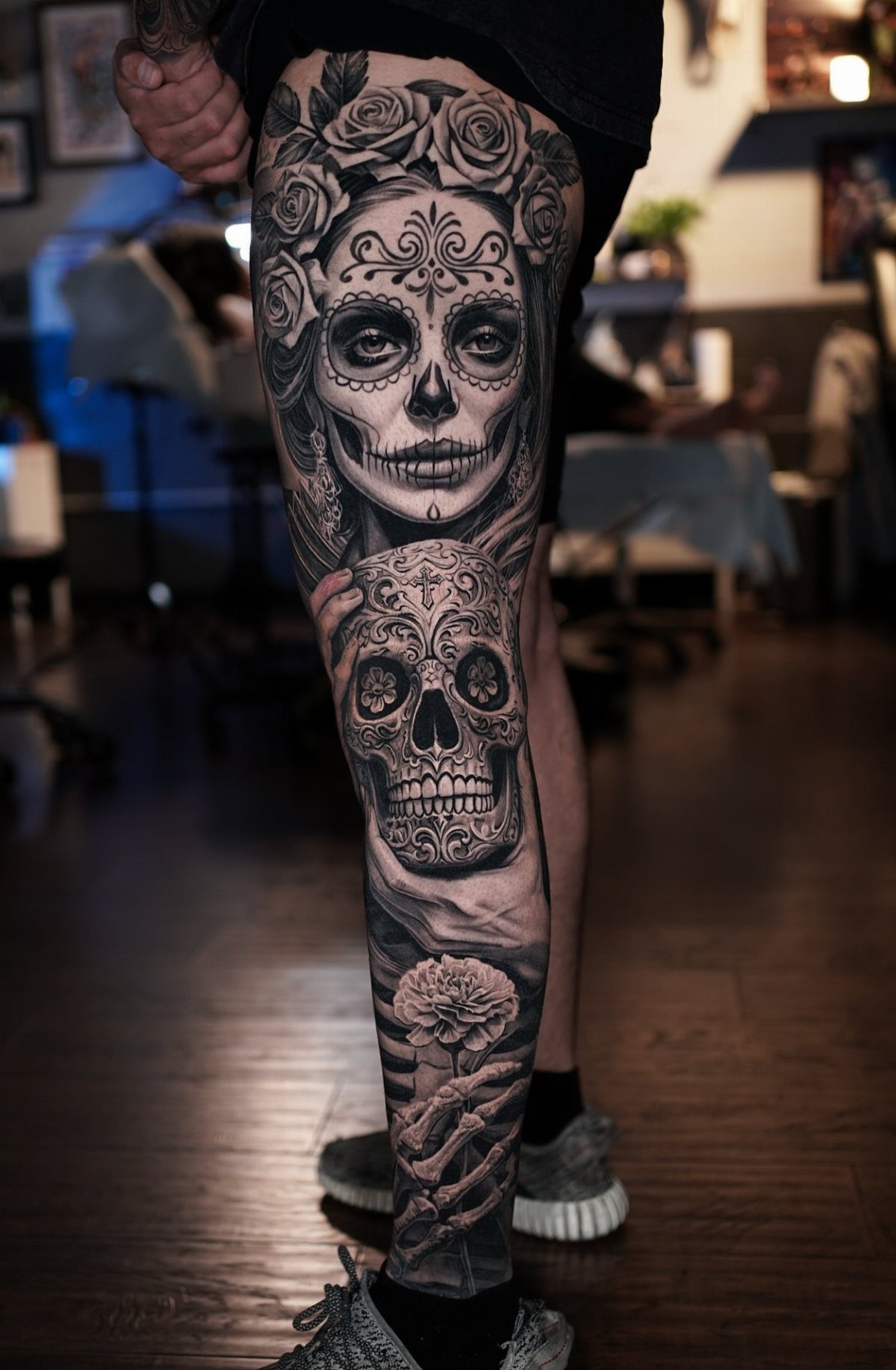
Realistic shading lifts the sugar skull off the skin, with roses tucked into the composition and enough fine detail that the petals, lace and bone texture all stay legible.
Black and grey realism depends on smooth gradients, so placement matters: the thigh or calf gives a large, flat canvas where the artist can work without interruption from joints or muscle movement.
Realism takes time. A piece this detailed usually needs multiple sessions.
4. Sugar Skull Butterfly Tattoo
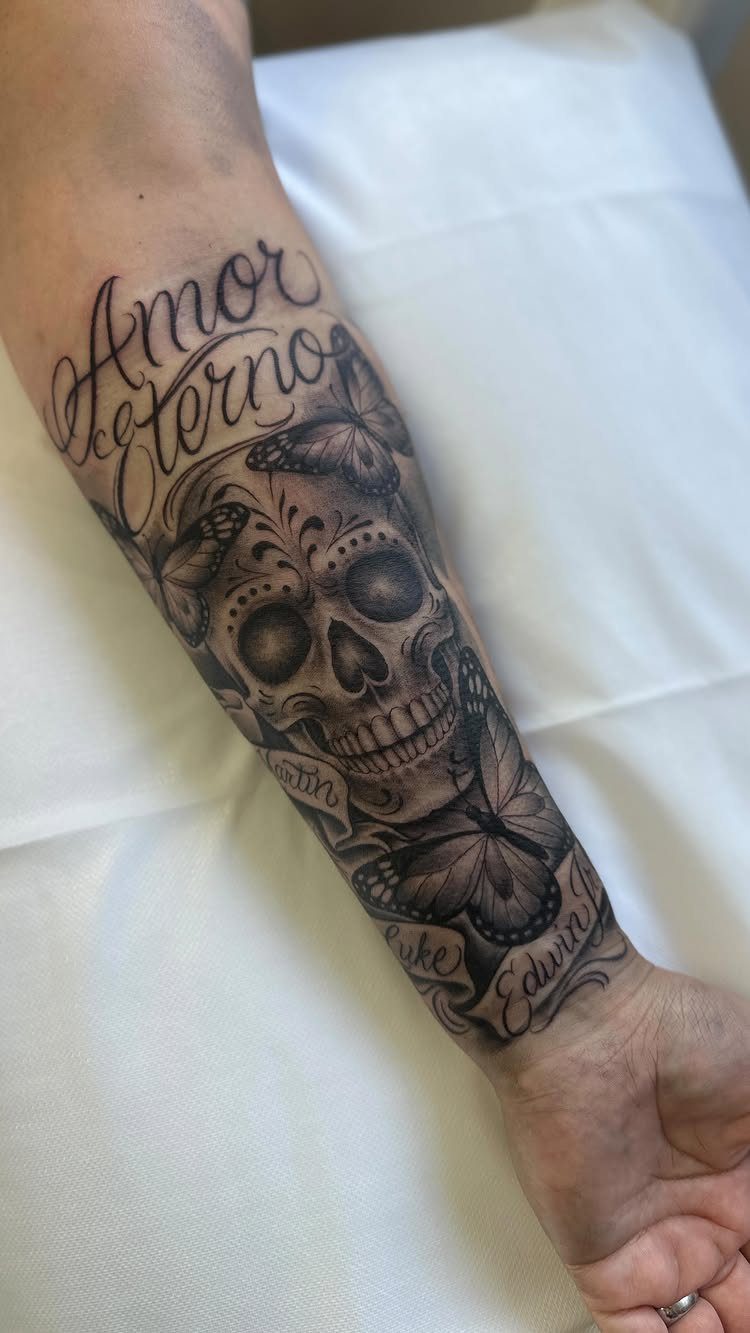
Butterflies surrounding a sugar skull add movement and tie the piece to themes of transformation or memory.
The wings can be shaded solid or left with fine line work, and adding names or a short phrase like "Amor Eterno" turns it into a direct tribute.
Forearm placement keeps the text readable and the butterflies visible when your arm is at rest.
5. Rose Sugar Skull Tattoo
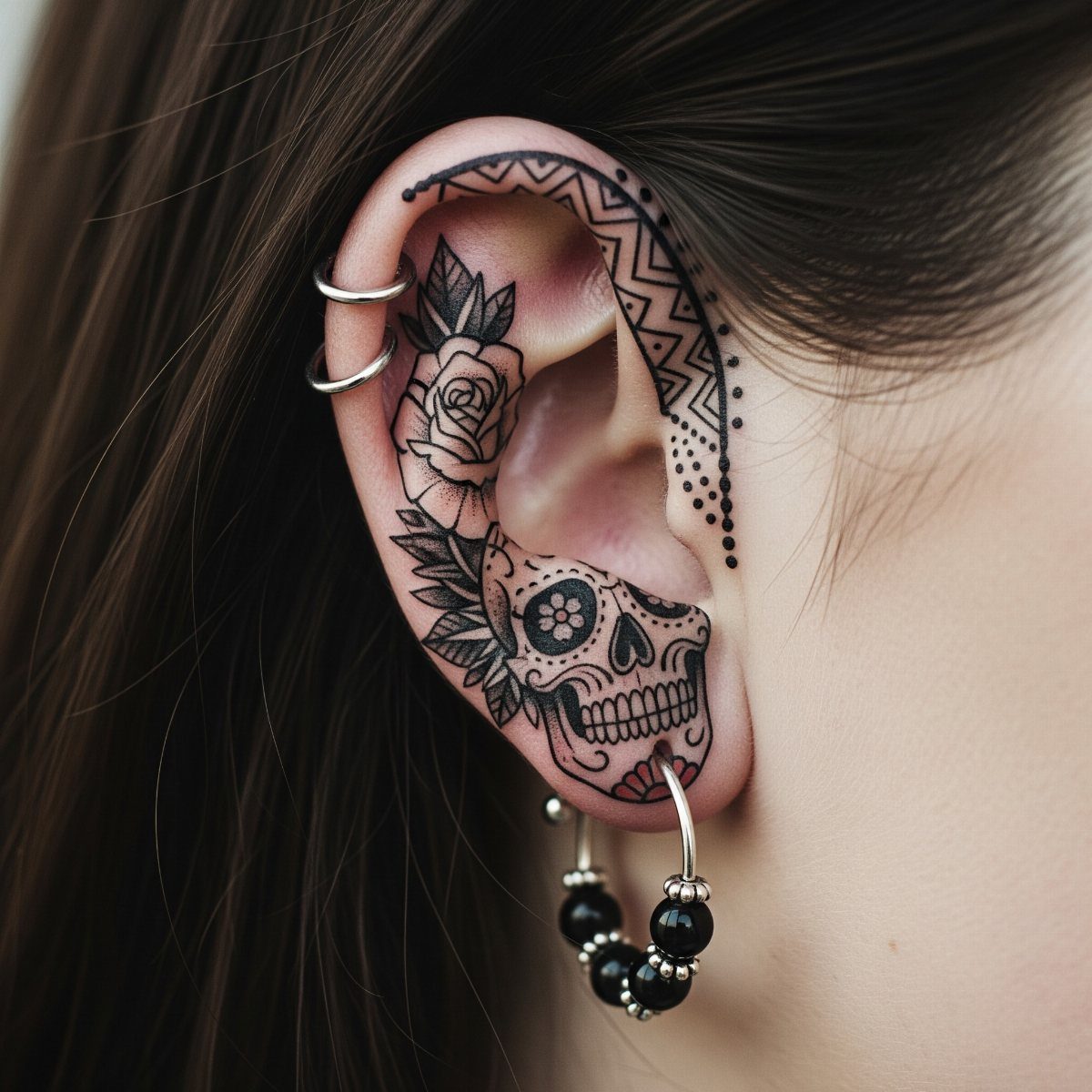
A sugar skull scaled down to fit the outer ridge of the ear, paired with a single rose for contrast. The limited space means fewer details, so the skull and flower are simplified to their outlines with minimal shading.
Ear cartilage is thin and the needle sits close to bone, so expect sharper pain than you’d feel on fleshier placements. You’ll need to avoid sleeping on that side for the first few nights.
Small scale keeps the session short, usually under an hour.
6. Black and Grey Sugar Skull Tattoo
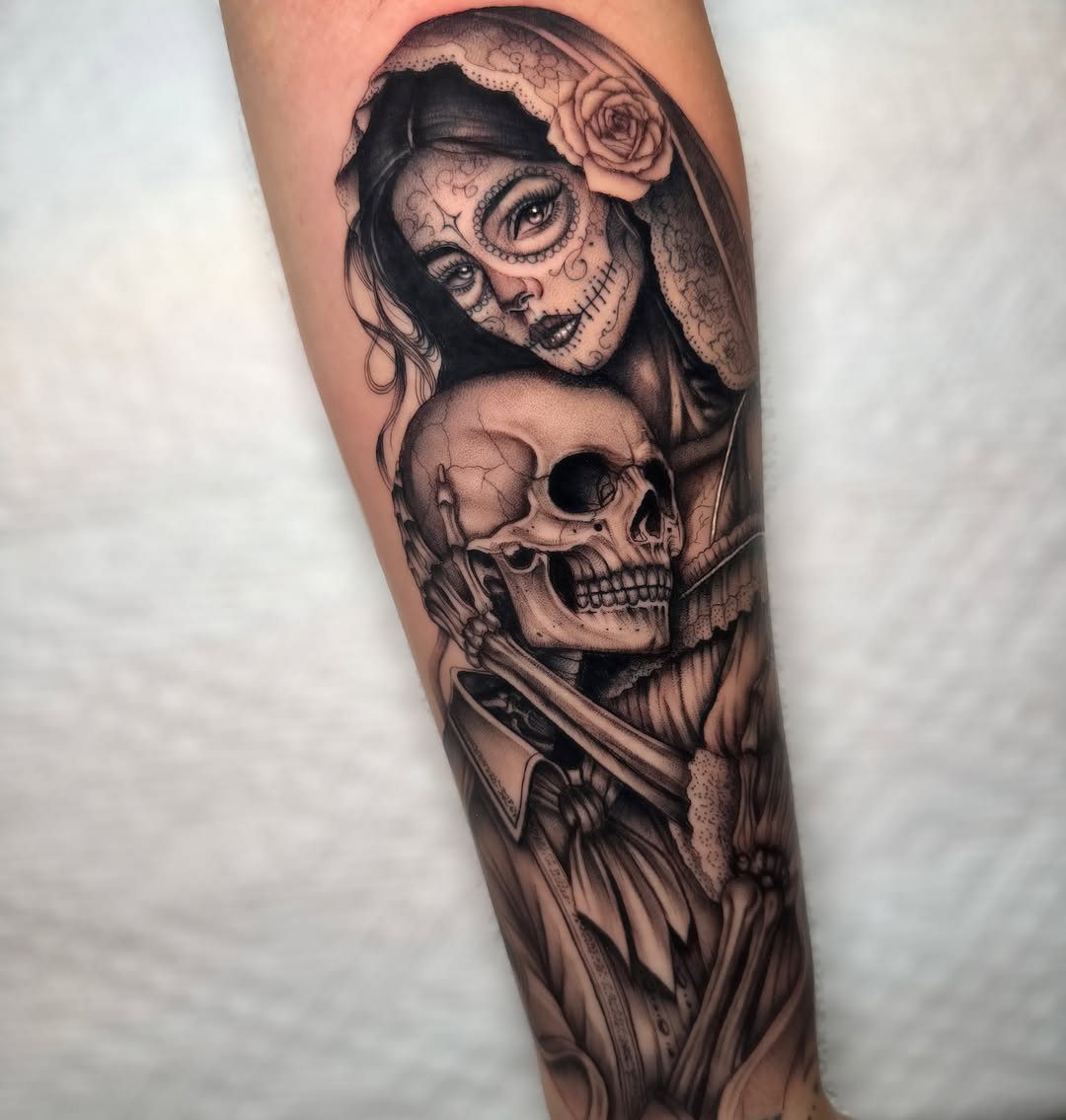
Black and grey ink gives a sugar skull tattoo a darker, more somber tone than the bright traditional version.
Heavy shading in the eye sockets, cheekbones and teeth pulls the piece toward realism, and adding a hooded figure or a human skull deepens the memento mori reading.
Grey wash builds dimension without color, and it fades more predictably than bright ink. A woman with sugar skull makeup and a veil, holding a skull, keeps the feminine iconography while leaning into mortality as the subject.
7. Black and White Sugar Skull Tattoo
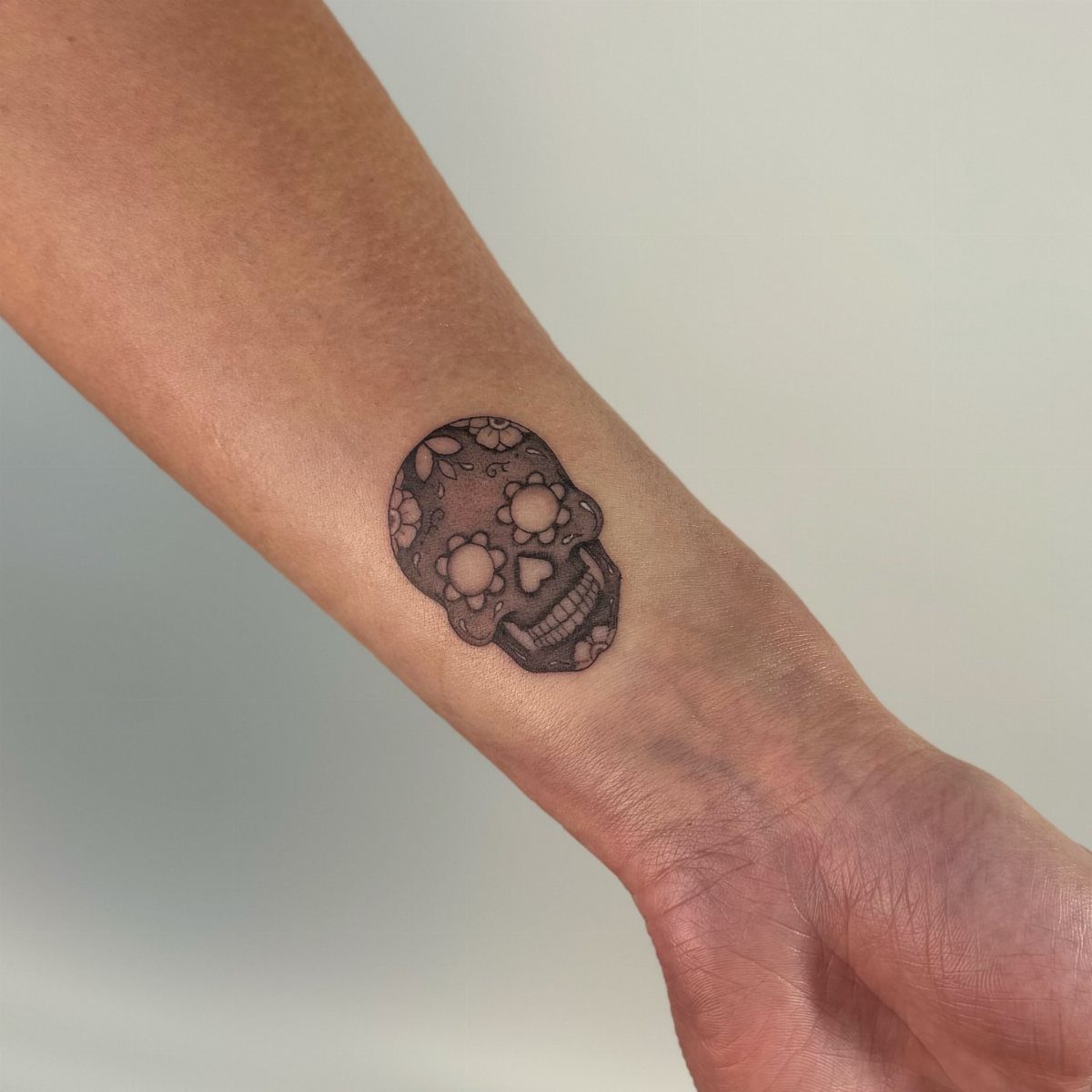
Black and white means no color to fade or maintain, just bold linework and a few shaded details where the skull pattern needs definition. The inner wrist keeps it visible without taking up much real estate.
Keep it clean and out of direct sun while it heals.
8. Sugar Skull Foot Tattoo
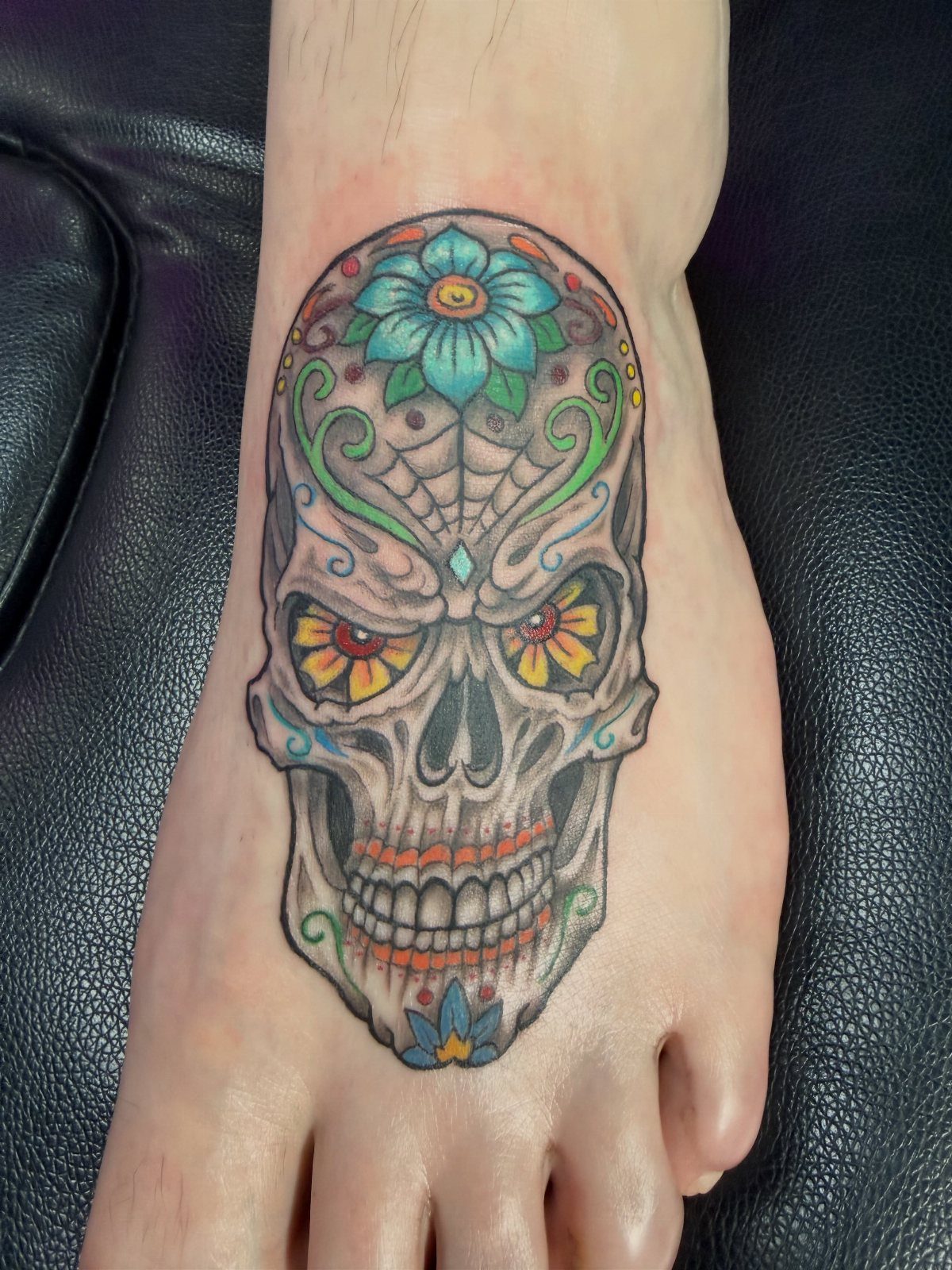
The top of the foot gives enough space for a full sugar skull composition with flowers and color, but the skin moves over bone and tendons with every step.
Placement here means sharper pain during the session and careful attention afterward.
Shoes that rub the fresh tattoo slow healing, so plan to wear sandals or go barefoot at home for the first week. Swelling is common on feet and usually settles within a few days.
Color on the foot needs a touch-up sooner because of constant friction and sun exposure.
9. Sugar Skull Owl Tattoo
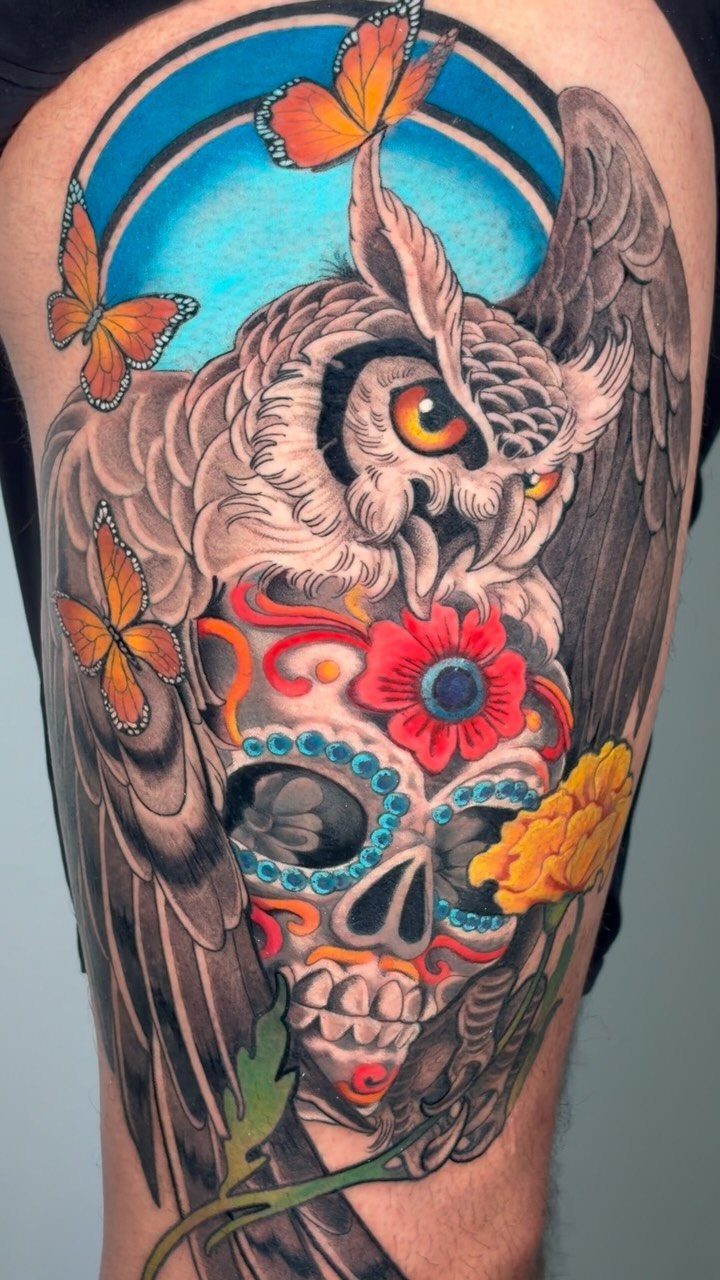
An owl perched on a sugar skull layers 2 symbols: wisdom and death, often read as honoring someone who guided you.
The owl’s feathers and the skull’s floral details give the artist room to work in shading and color, and butterflies around the edges reinforce the transformation theme.
Leg placement, especially the calf or thigh, gives a flat surface for the full composition. The blue circular background frames the piece and keeps the eye from drifting.
10. Aztec Warrior Sugar Skull Tattoo
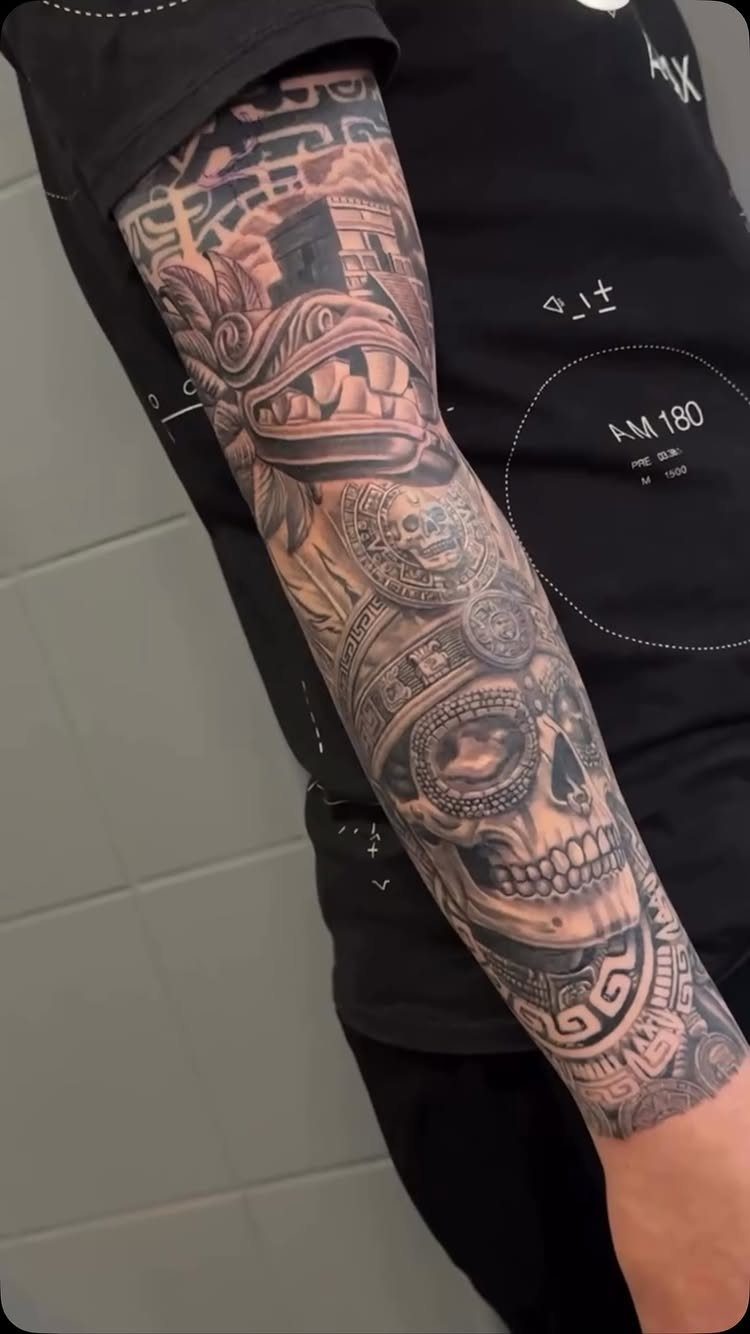
Aztec patterns woven into a sugar skull pull from pre-Columbian iconography: the temple, the warrior headdress and geometric line work that connect the piece to Indigenous Mexican history rather than just Día de los Muertos alone.
This takes multiple sessions, usually 3 or 4, because the artist needs time to build the gradients and fine line work without overworking the skin in one sitting.
11. 3D Sugar Skull Tattoo
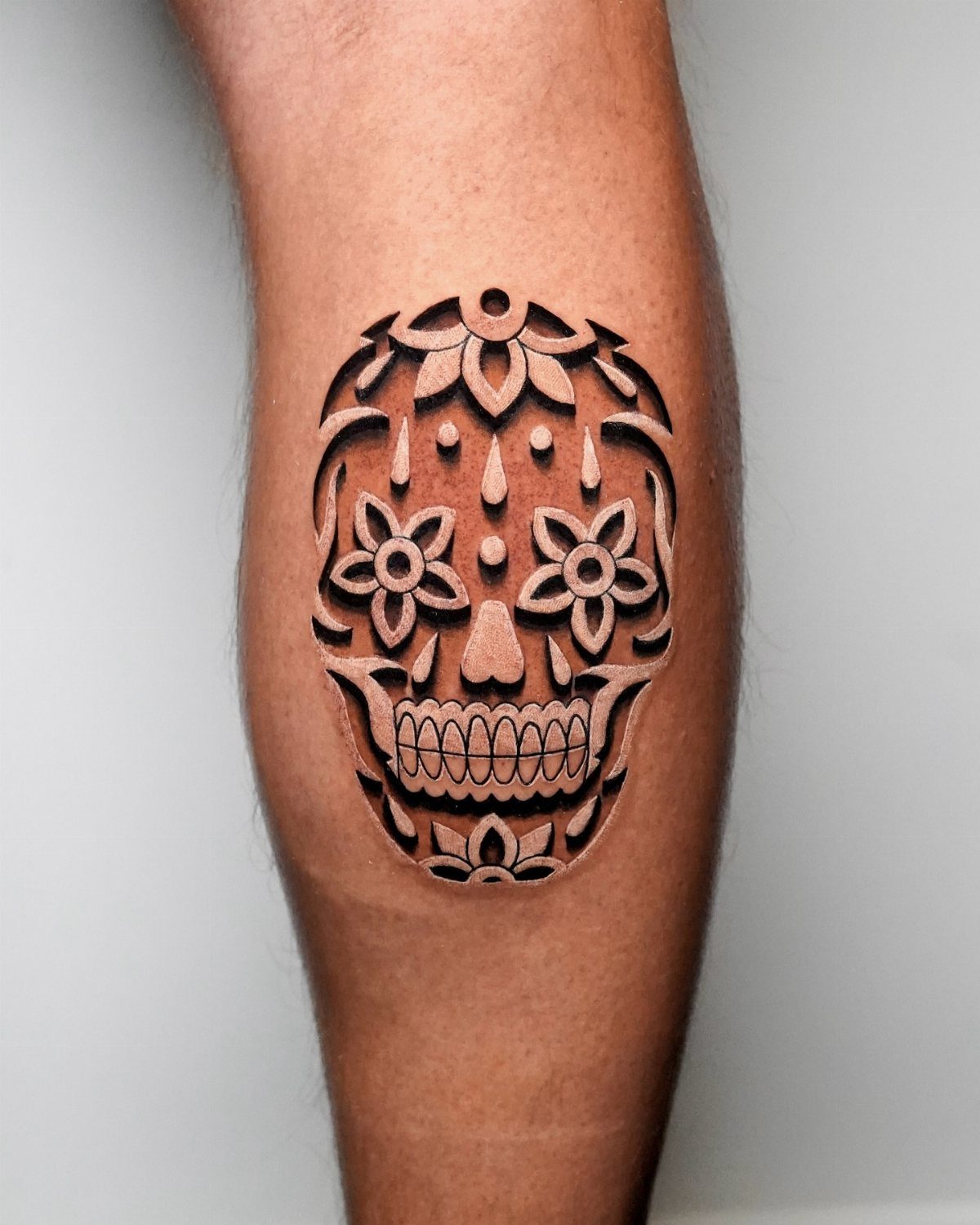
3D shading adds depth, so the skull appears to lift off the skin or sink into it. The effect depends on smooth gradients and careful placement of highlights, which means finding an artist who works in realism.
Floral details around the edges soften the piece and give the eye a place to rest. The lower leg or forearm gives enough flat surface for the shading to read clearly.
Sessions run longer than flat work because the artist builds multiple layers of grey to get the dimensional effect.
12. Colorful Sugar Skull Tattoo
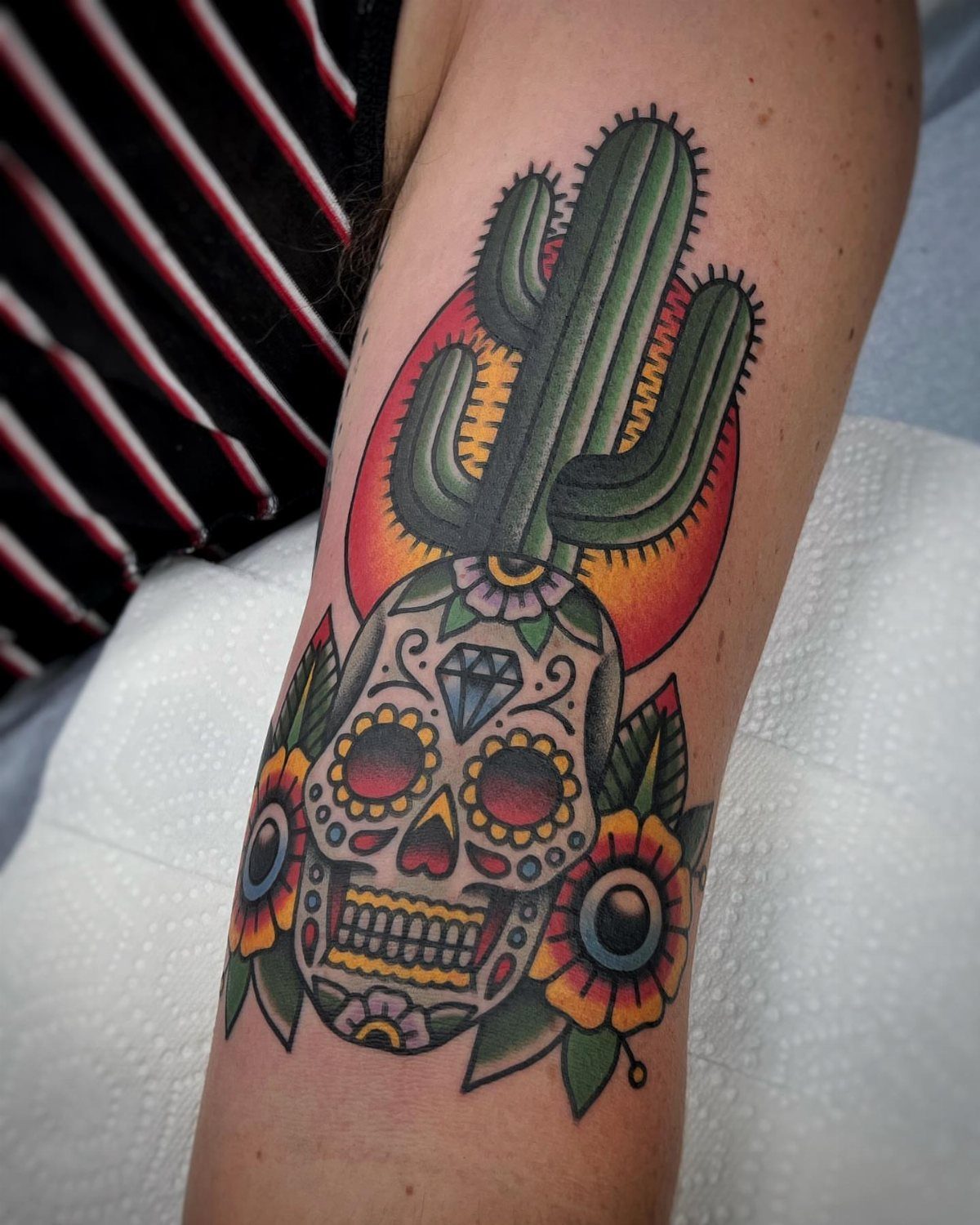
Bright color makes a sugar skull pop, and adding a cactus or desert flora ties it to Mexican landscape imagery.
The forearm keeps it visible and gives the artist a flat canvas to work without interruption from joints. The bold color and compact composition make this one easy to show or cover depending on what you’re wearing.
13. Sugar Skull and Flower Tattoo
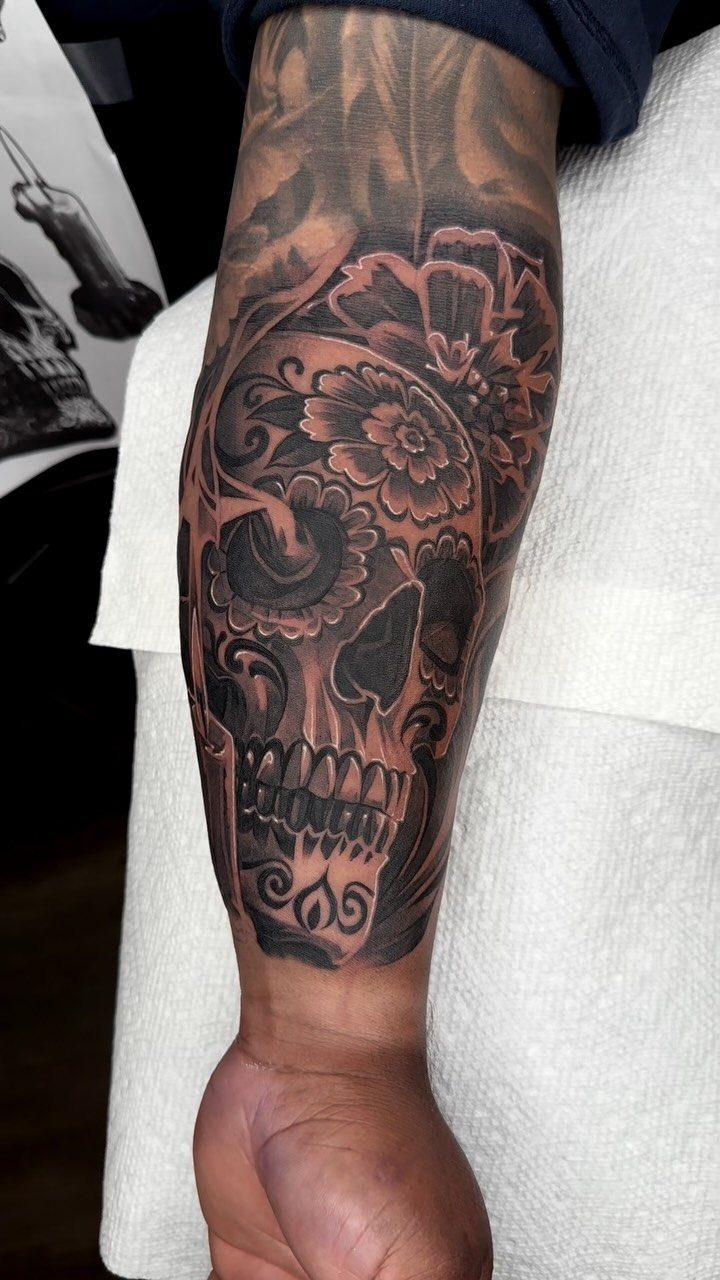
Flowers soften the hard geometry of a sugar skull and give the composition balance.
Roses, marigolds and dahlias are the most common choices because they tie back to Día de los Muertos tradition, but any flower works if the scale suits the placement.
Black and grey keeps the piece readable as it ages, and the contrast between the skull’s symmetry and the organic flower shapes holds up without needing color touch-ups. Forearm placement gives a flat surface where the details stay crisp.
14. Sugar Skull Tattoo on Forearm
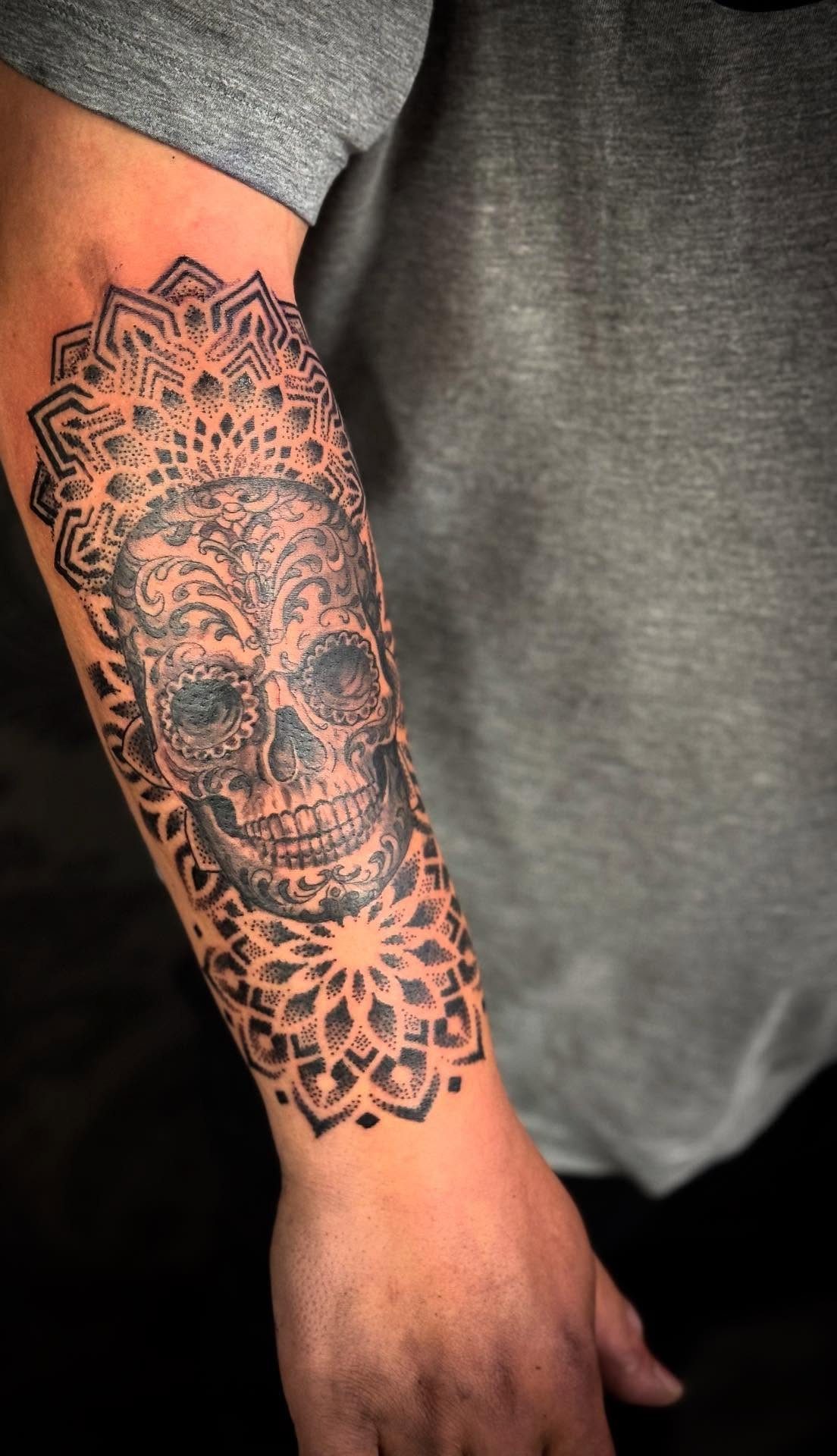
Forearm placement keeps a sugar skull visible and gives enough real estate for decorative detail without committing to a full sleeve.
The inner forearm hurts less than the outer edge where the bone sits closer to the skin.
Meaning of Sugar Skull Tattoos
A sugar skull tattoo marks someone you lost while holding onto the idea that death isn’t an ending.
The design comes from Día de los Muertos, where families build altars and offer brightly decorated skulls as a way to welcome spirits back for a night.
The tattoo carries the same intention: honoring a person by name, date, or symbol woven into the pattern.
The floral and geometric detail you add changes what the piece says.
Marigolds tie directly to the holiday. Roses broaden it into love or remembrance without requiring the viewer to know the tradition.
Add a name or portrait and the piece becomes a memorial; leave it bare and it leans toward the idea that life is short and worth living fully.
Cultural Significance
Sugar skulls started in Mexico as part of Día de los Muertos, a holiday that treats death as a reunion rather than a loss.
Families gather to remember the people they’ve buried, and the skulls, whether made from sugar or painted onto faces, are offerings meant to celebrate those lives rather than mourn them.
The tradition pulls from Indigenous Mexican beliefs about the afterlife, where death is a natural passage and the deceased return once a year to visit. That frame shifts the tone away from grief and toward gratitude.
A tattoo based on this imagery borrows that same outlook: it says you’re marking a loss without letting it define you, and it leans into the idea that life is short enough to deserve attention while you have it.
Customization Options
Decorative elements let you steer the tone and meaning without changing the core image. Flowers soften the skull and tie it to memory or beauty.
Butterflies add movement and signal transformation. A veil, a candle, or a rosary pull the piece toward spirituality, while Aztec patterns or a warrior headdress connect it to pre-Columbian history.
Color choice shifts how the tattoo reads.
Traditional bright colors hold the holiday’s feel but fade faster and cost more to refresh. Black and grey ages more predictably and leans darker in tone.
Adding a name, a date, or a short phrase turns the piece into a direct tribute, and placement decides how much of that detail fits. The forearm or thigh gives room for multiple elements without crowding the composition.