A rising sun smaller than 3 inches fits rays and one element underneath, while pieces with waves, mountains and detailed faces need more width to keep each part readable.
Placement decides whether the design wraps cleanly or fights the curve of your shoulder or arm.
If you want the visual without the historical weight, adding landscape elements like clouds or water shifts the focus toward the natural symbol and away from any single reference.
1. Rising Sun Tattoo
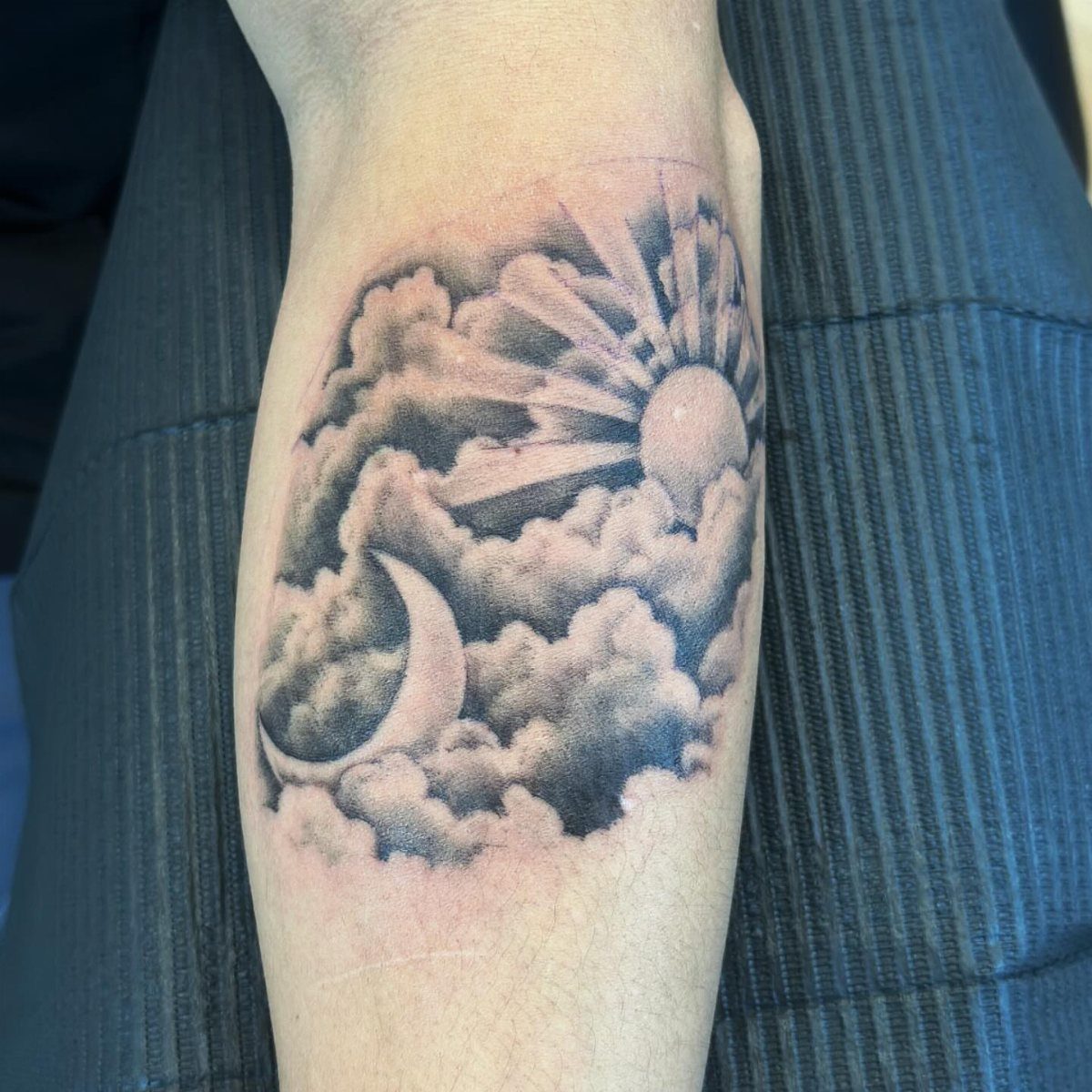
The forearm gives you space to fit both elements without cramping the rays or flattening the clouds.
Blackwork holds up better over time than color when you pack this much shading into a small area. Sessions for pieces this dense vary by how much detail the artist packs into the cloud edges.
Ask your artist to keep the rays bold and the moon’s crescent open so the sun reads clearly from a distance.
2. Rising Sun Tattoo on the Arm
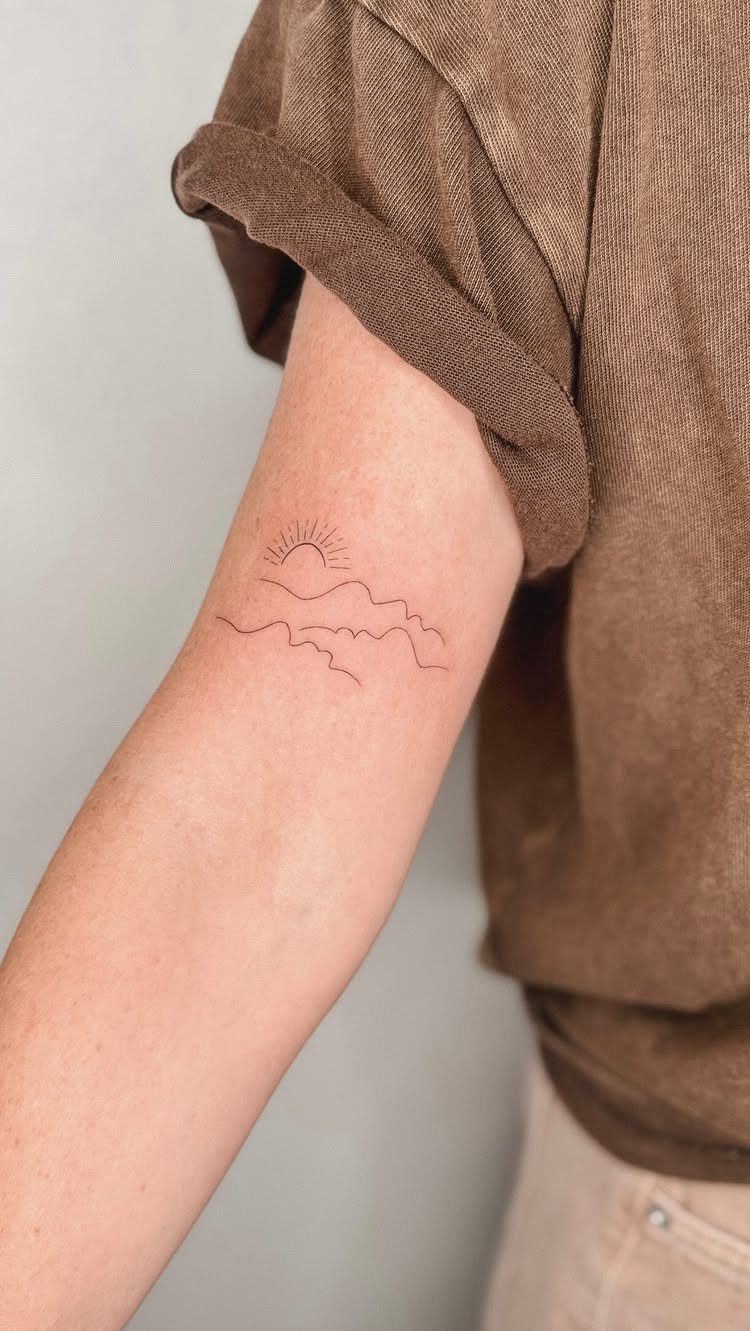
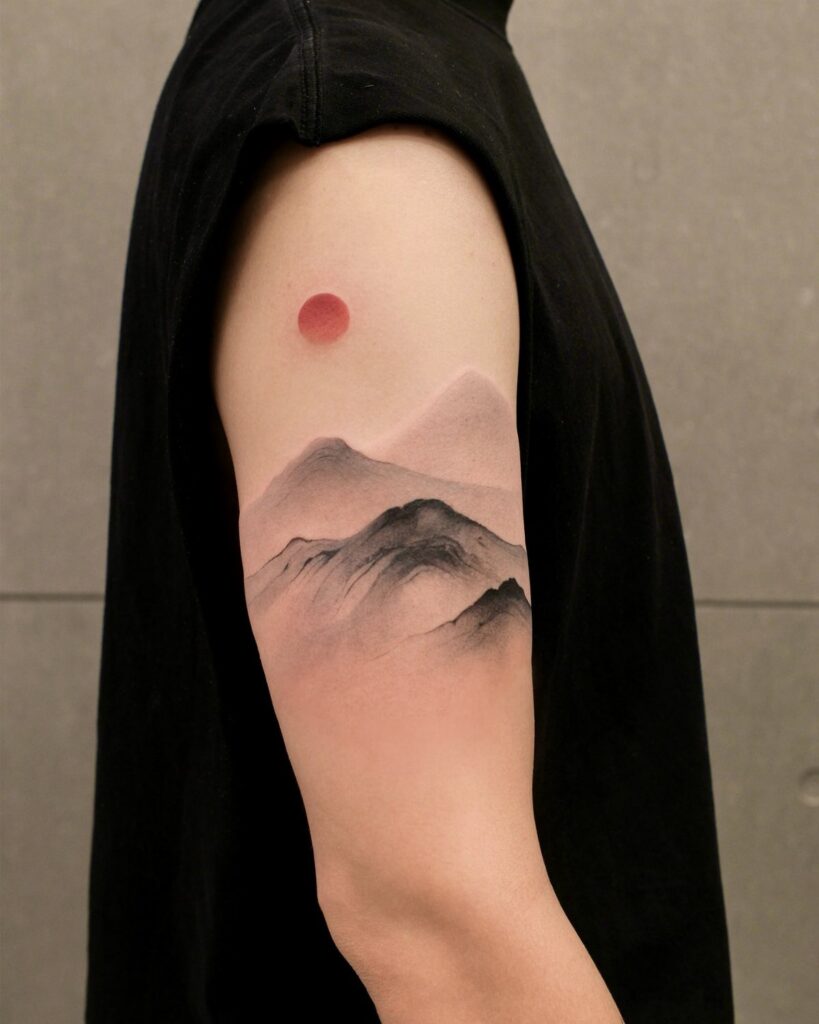
Your upper arm fits a small rising sun without fighting for space, and fine line work keeps the piece light. Mountains or waves underneath give the sun something to rise over.
Fine lines blur faster than bold ones, so placement on the outer arm protects the detail better than the inner bicep.
If your skin scars easily, test a small patch first. Fine line work on textured skin sometimes heals uneven.
3. Red Rising Sun Tattoo
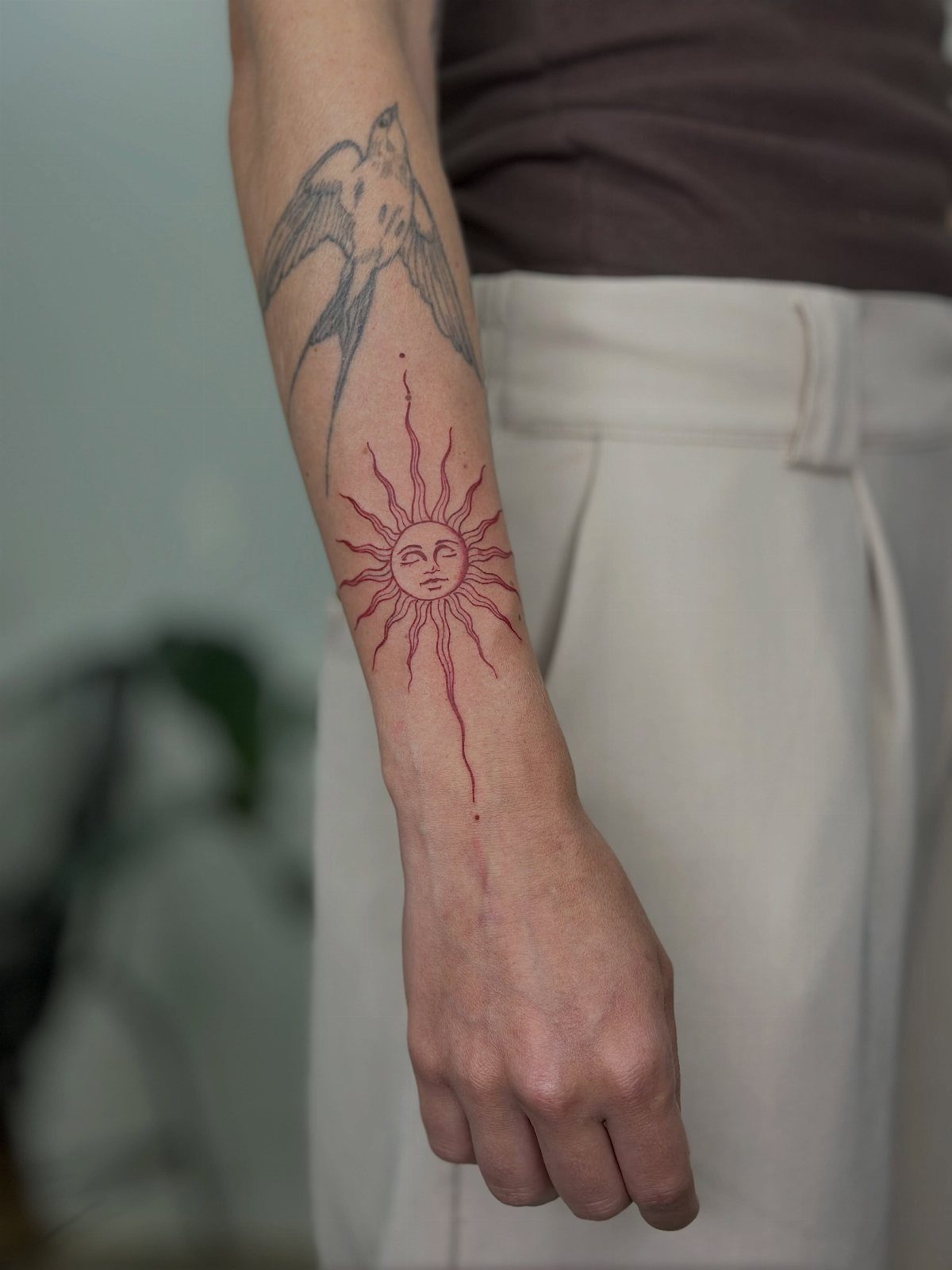
Red ink gives the sun warmth and pulls the eye. Adding a face inside the disc turns it from a symbol into a character.
Red ink needs touch-ups more often than black, so plan on a refresh every few years to keep the color bright. The forearm gets more sun exposure than most placements, which speeds the fade.
Pairing the sun with a black bird above it balances the composition and gives you 2 pieces that share the same skin tone as a background.
4. Japanese Rising Sun Tattoo with Waves
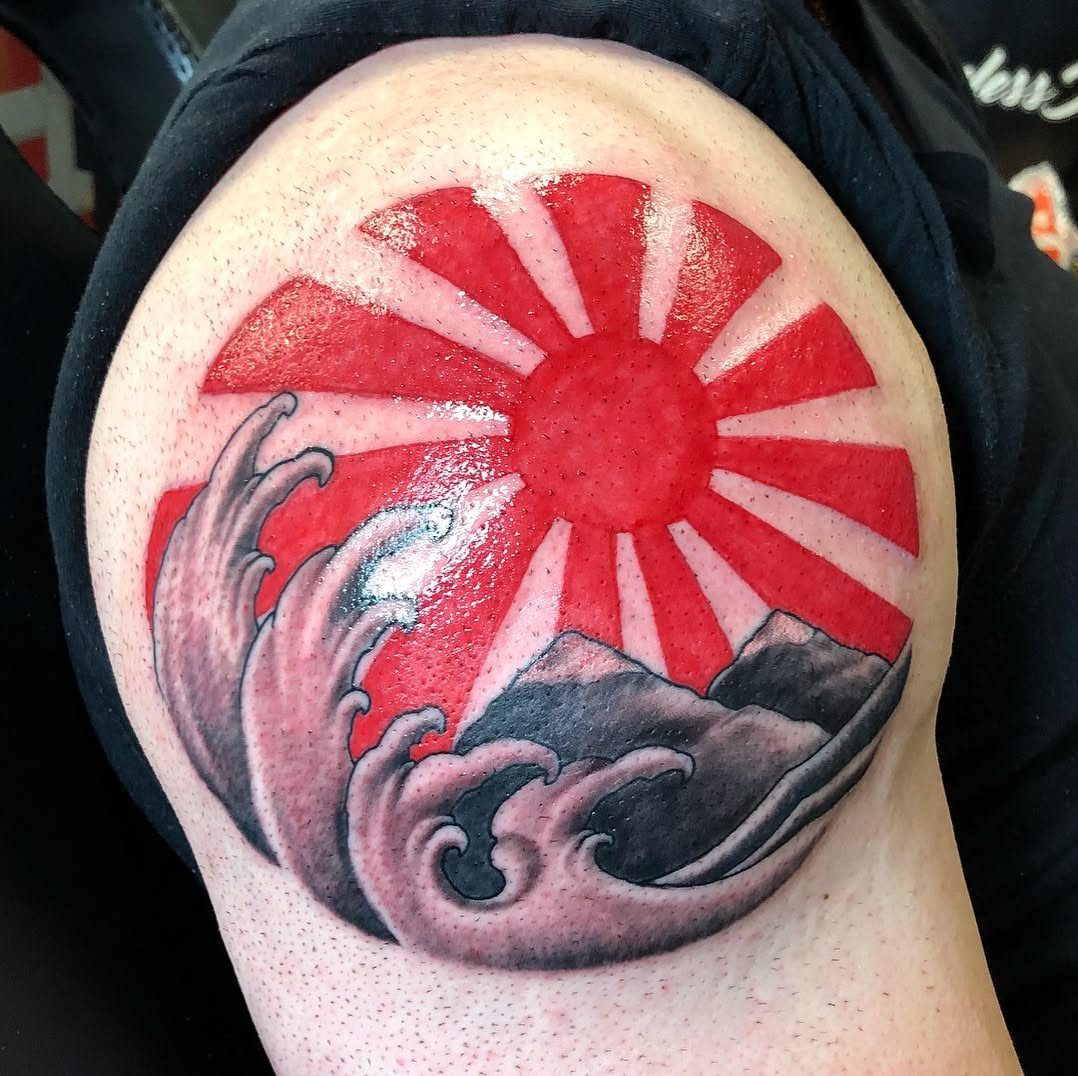
Grey waves and mountains anchor a red and white sun, and the shoulder gives you room to stack all 3 layers without crowding.
Traditional Japanese tattooing uses bold outlines and limited color, which means the design stays readable as it ages.
The shoulder curves, so an artist who knows how to wrap the rays around that shape will save you from a flat-looking piece.
If you plan to add more Japanese elements later, leave space below the waves for water or above the sun for wind bars.
5. Minimal Rising Sun Tattoo
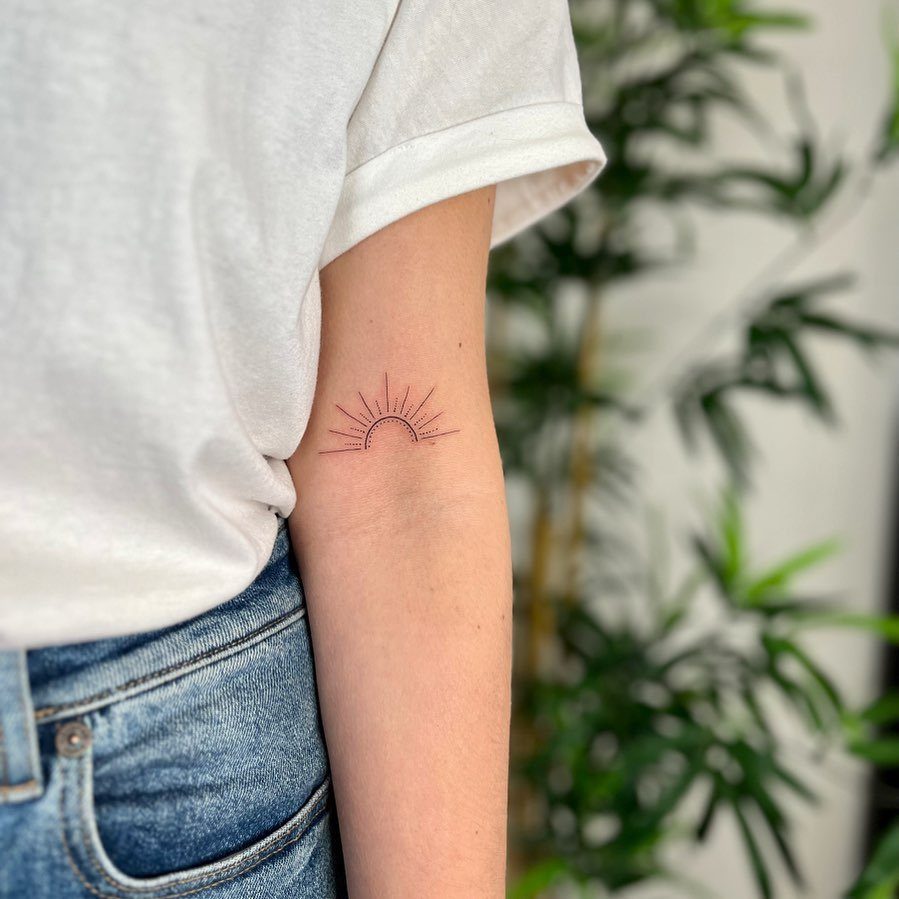
Thin lines and no shading keep the design quiet. Your upper arm hides it under a sleeve when you need it hidden and shows it clean when you don’t.
Minimal tattoos heal fast and cost less than shaded work.
If you like the idea but want it to last longer, ask for slightly thicker lines. Hair-thin work can blur into a smudge over time, especially on skin that moves a lot.
6. Illustrative Rising Sun Tattoo with Landscapes
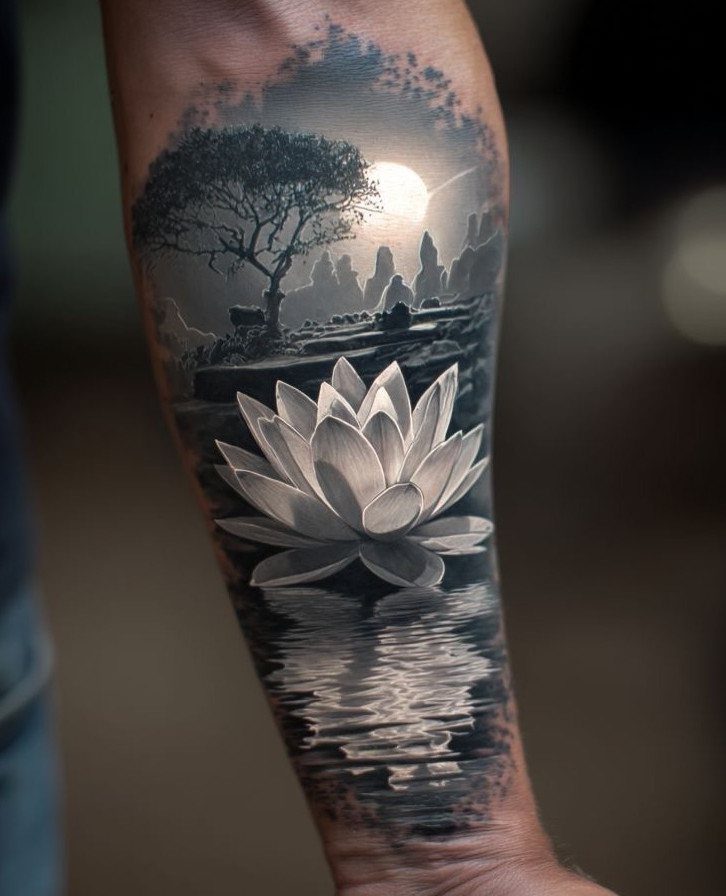
The sun’s reflection in water doubles the visual weight without adding more ink.
Illustrative work like this needs an artist who can balance detail across all the elements so one piece doesn’t overpower the rest.
Ask your artist to leave the lotus mostly white with just enough outline to define the petals so it pops against the rest.
Symbolism of Rising Sun
The rising sun marks the start of a new day, which is why it has carried meanings of hope, rebirth, and fresh starts across cultures.
If you are getting this tattoo to mark a personal turning point or a chapter you are closing, that symbolism sits right at the surface.
The design also traces back to Japan, where the rising sun has appeared on flags and remains a national symbol.
The rising sun has roots in Japanese imagery, so it carries associations some readers will recognize immediately. Some people choose it for the natural symbol alone, while others know the historical context and weigh that before committing.
If you are drawn to the visual but want to steer away from that context, adding mountains, waves, or clouds shifts the focus toward landscape and makes the piece less tied to any single reference.
Tattoo Design Considerations
Size affects how much detail you can include. A rising sun smaller than 3 inches across has room for rays and maybe one element underneath, but not much else.
When you add waves, mountains, and a detailed sun face, give the artist enough width to separate each part without crowding.
Placement changes how the design wraps.
Personal meaning should decide which elements you include.
A sun rising over water fits if you connect the idea to flow or change. A sun alone works if the symbol itself is enough.
Frequently Asked Questions
How does the sun affect a tattoo?
Sun exposure fades tattoo ink over time, with red and other bright colors fading faster than black.
The forearm and other areas that get regular sun need sunscreen or a refresh every few years to keep the design crisp. Minimal tattoos with thin lines blur more quickly in high-sun placements than bold work does.
Why is Japan known as the rising sun?
Japan sits far enough east that the sun rises there before it reaches most other places, which is how it got the name.
The rising sun appears on Japan’s national flag and remains tied to Japanese imagery. Adding mountains, waves, or clouds pulls the design toward nature and away from that historical tie.