Geometric tattoos balance ancient symbolism with modern precision, and the pattern you pick sets the entire tone of the piece. Forearm placement gives complex geometry room to breathe, but hand tattoos fade faster and need frequent touch-ups.
1. Sacred Geometry Flower of Life Tattoo
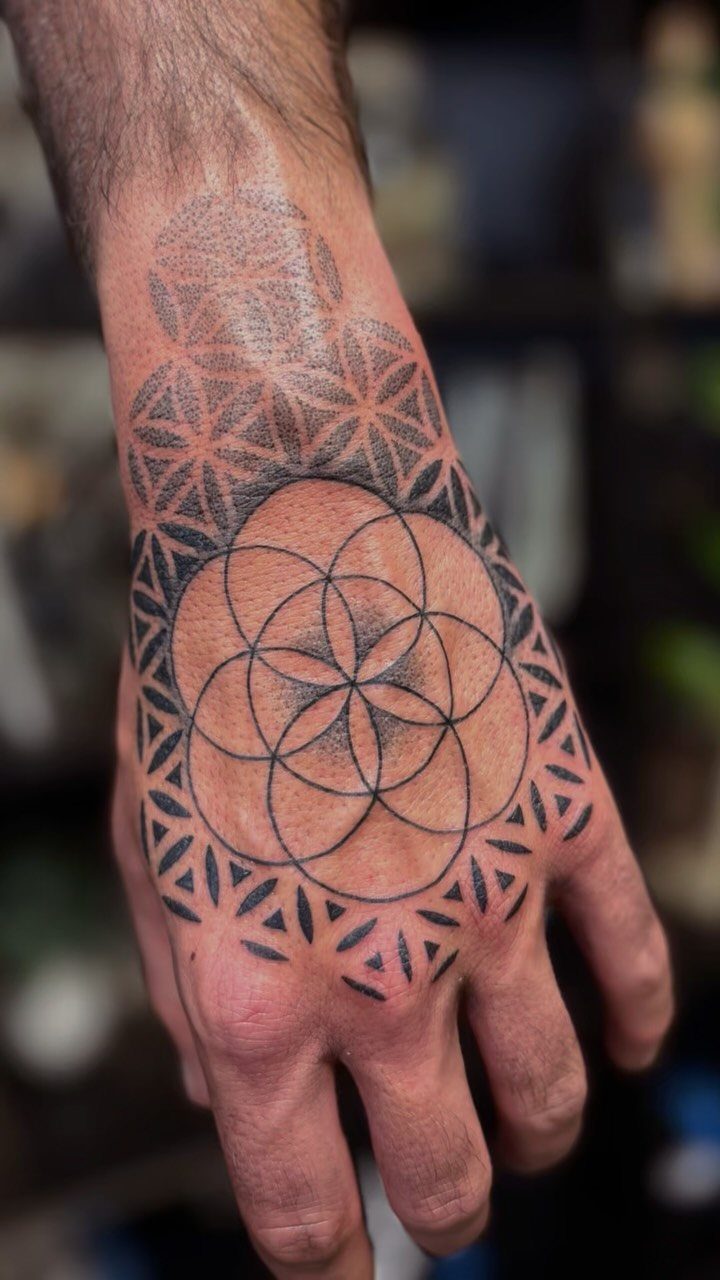
The Flower of Life stacks overlapping circles into a grid that shows up in temples, manuscripts and margin sketches across a dozen ancient cultures. Placed on the hand or wrist, it reads clearly at any size.
I like how visible this design stays. A hand tattoo fades faster than most spots, but the repeating geometry means touch-ups replace only the circles that need it, not the whole piece.
2. Metatron’s Cube
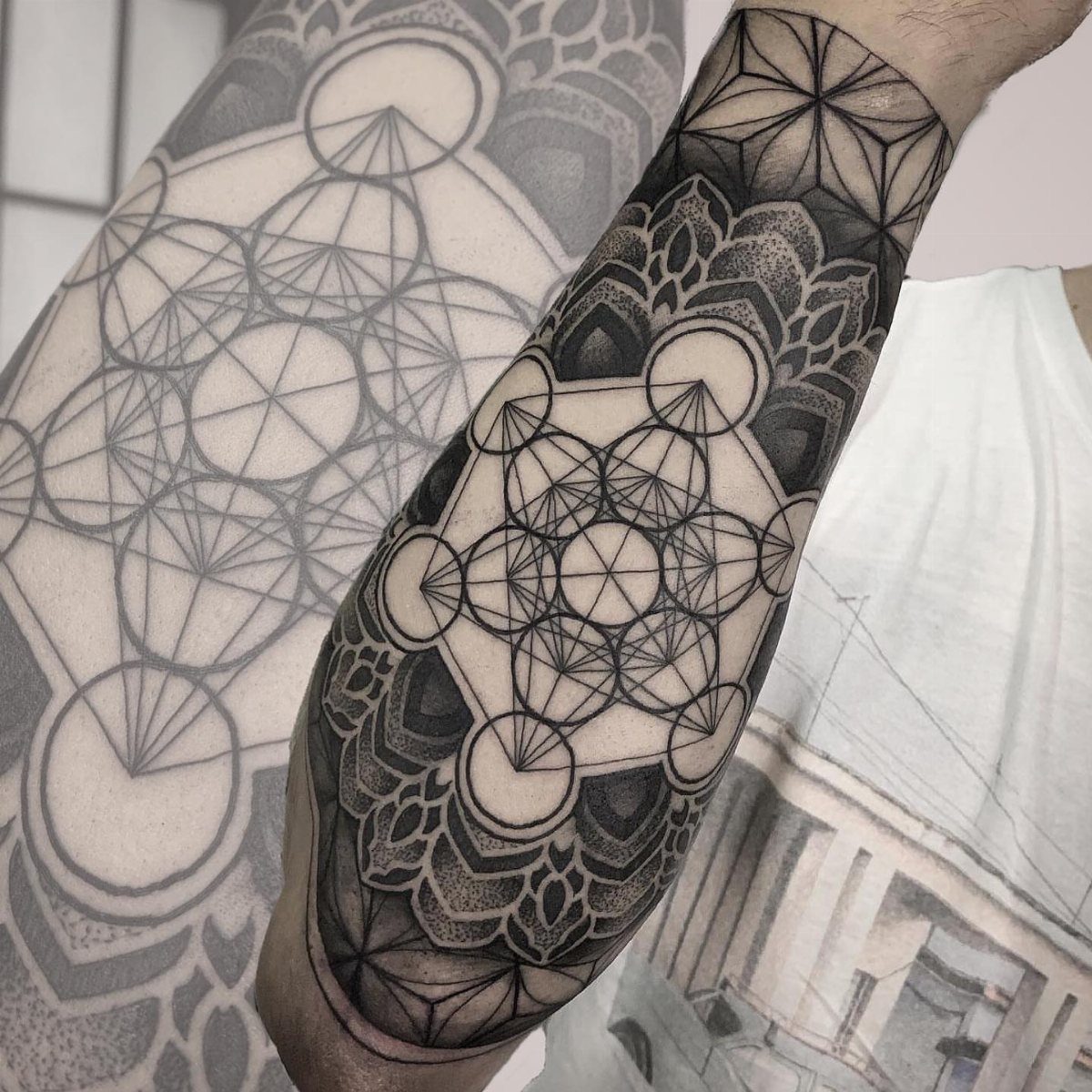
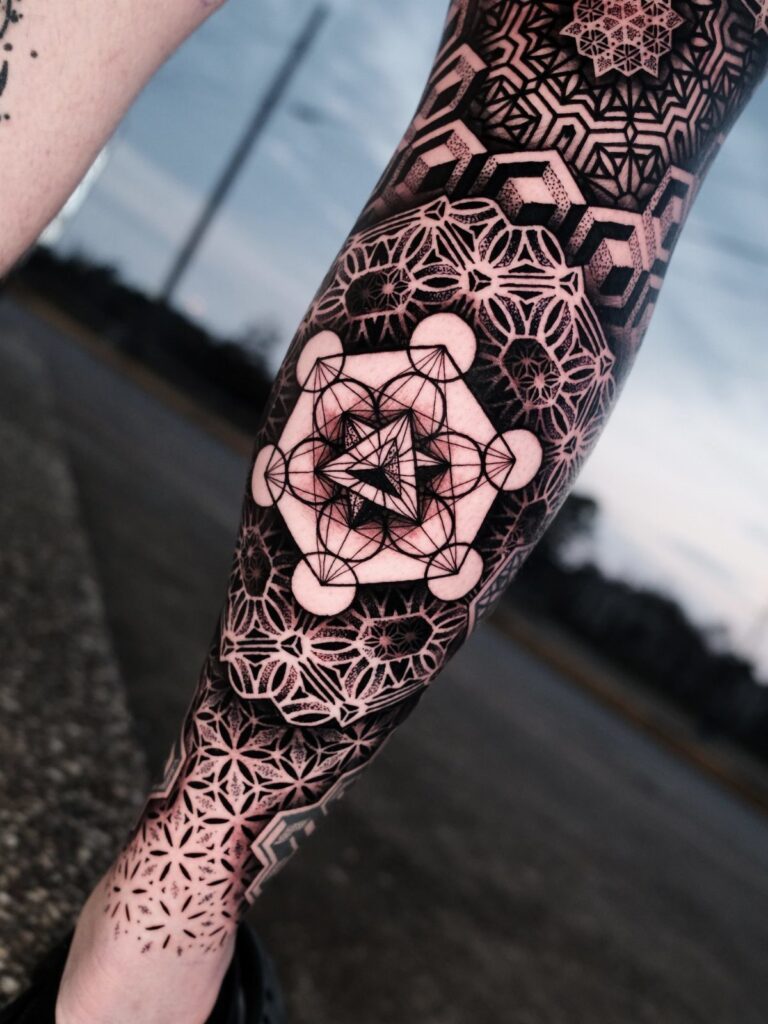
Metatron’s Cube connects circles with every possible straight line, and inside that web you find all 5 Platonic solids: the tetrahedron, cube, octahedron, dodecahedron and icosahedron. Ancient texts link it to the structure of matter and the blueprint of creation.
The forearm gives you room for the full diagram without crowding the lines.
Black ink makes the geometry legible, and a skilled artist will balance the line weights so the outer circles and inner polygons both stay visible as the tattoo settles.
3. Fibonacci Spiral
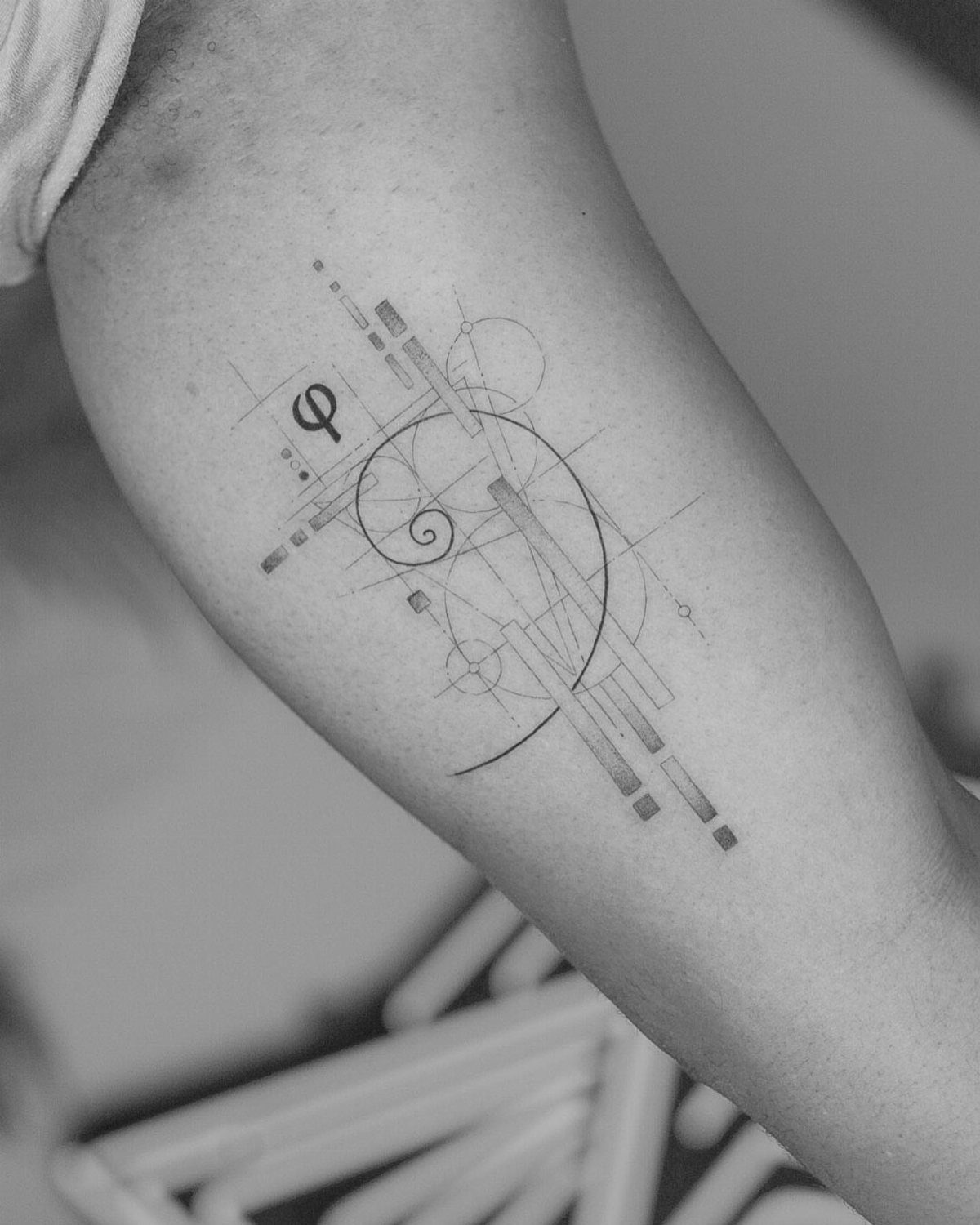
The Fibonacci spiral grows by the golden ratio, 1.618, and you see it in nautilus shells, sunflower seed heads and galaxy arms. Tattooed as a sequence of squares and the curve they trace, it captures the math behind natural growth.
The phi symbol anchors the design and tells anyone who knows the sequence exactly what they’re looking at. Forearm placement lets the spiral run lengthwise, which suits the shape better than trying to wrap it around a limb.
4. Triangles
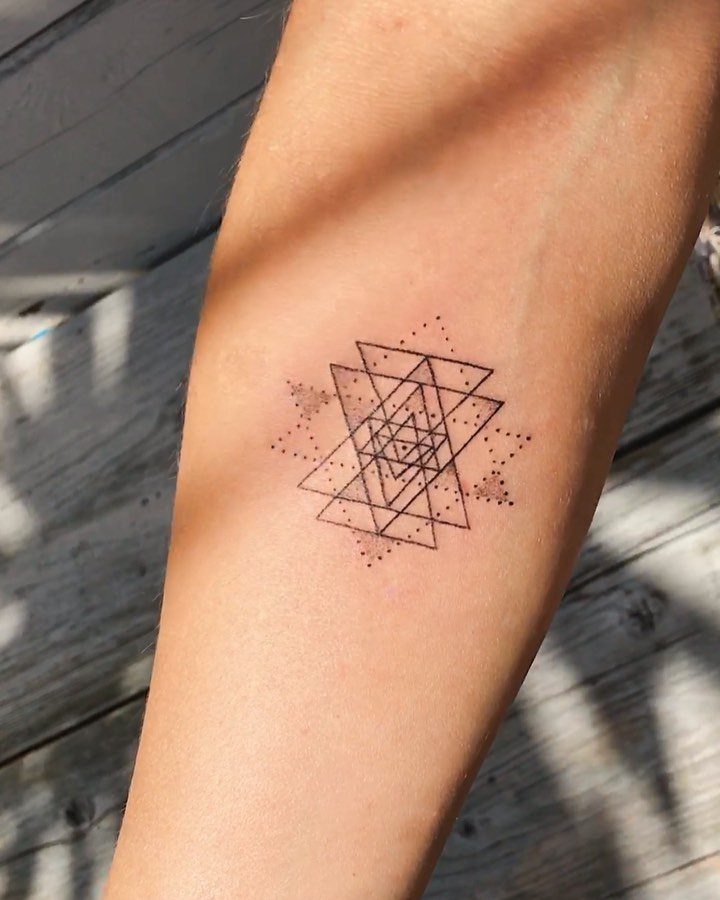
Triangles stack, overlap and invert to show duality, direction and structure. A single triangle points up for fire and masculinity or down for water and the feminine; layered geometry turns them into something more abstract.
Dotwork shading softens the hard edges and adds depth without color.
The design scales down well, so something compact for an inner wrist or behind the ear holds its shape at small sizes as clearly as it does at larger ones.
5. Vesica Piscis
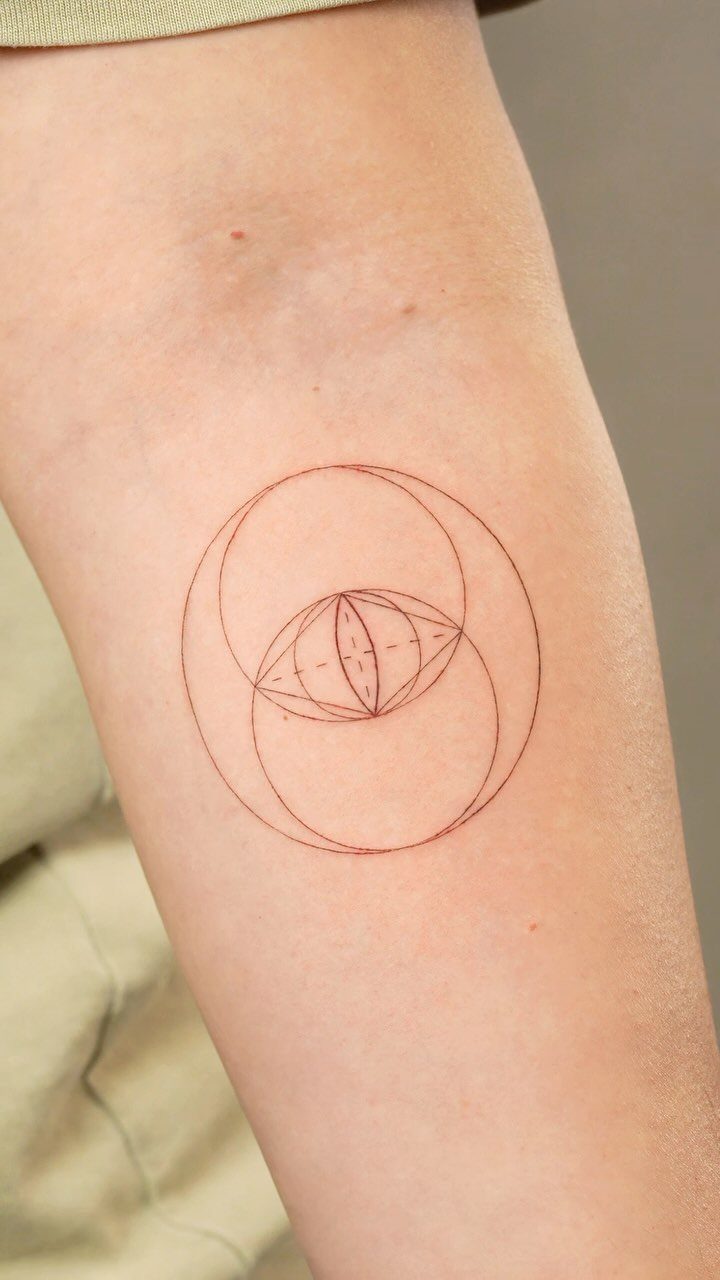
The Vesica Piscis forms where 2 circles of equal size overlap, each passing through the other’s center. Ancient builders used it to construct gothic arches, and symbol systems read it as the union of opposites: spirit and matter, heaven and earth.
Red ink stands out, but it fades faster than black and often needs a touch-up.
Choose the color and plan for maintenance. A forearm spot stays visible and makes those sessions straightforward.
6. Torus
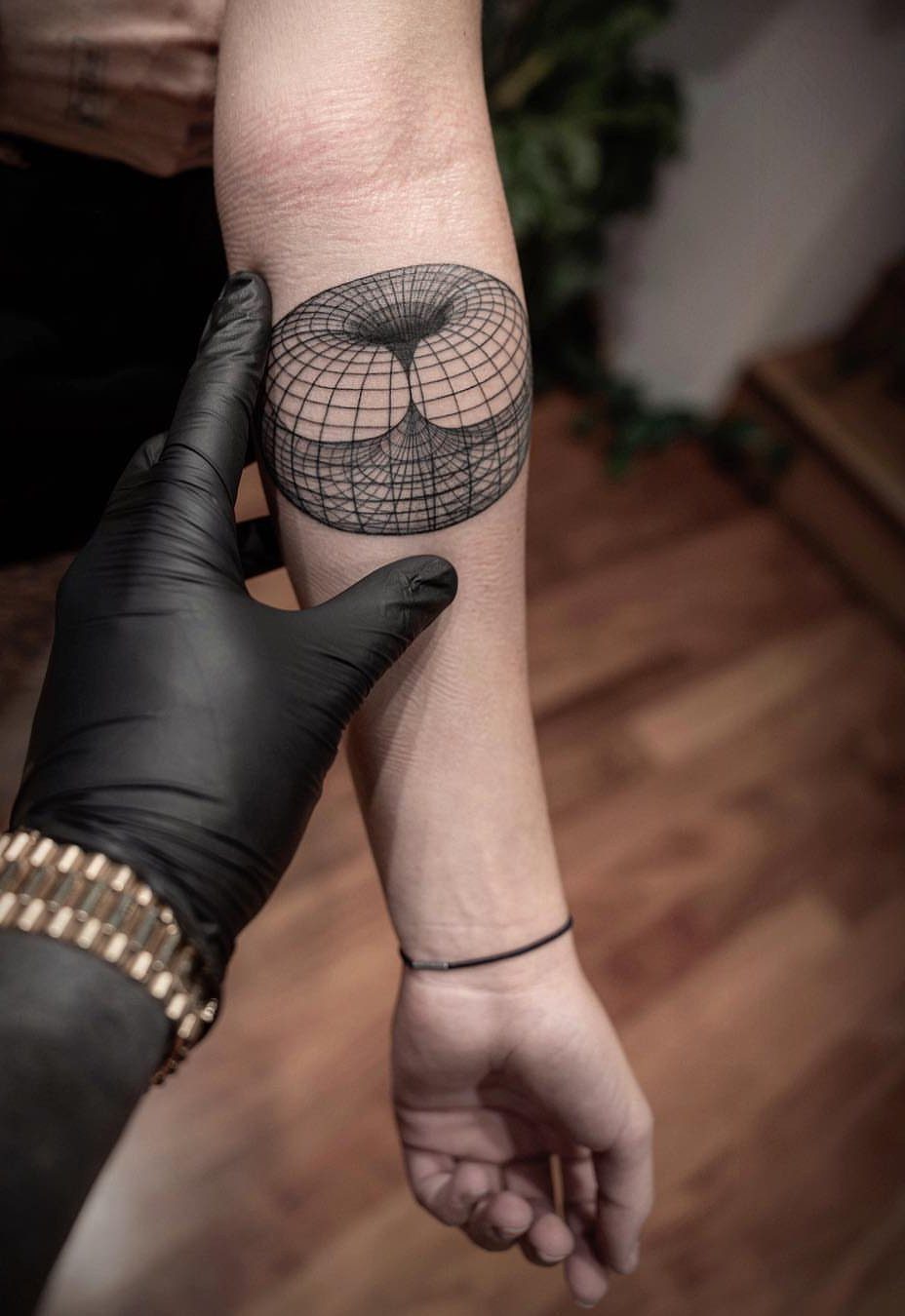
A torus is the shape a doughnut makes, and in sacred geometry it models how energy flows through a system: in through one pole, out through the other, looping back around the surface.
Rendered as a wireframe grid, it becomes a tattoo that reads as both ancient symbol and modern tech diagram.
The forearm gives the shape room to breathe.
Black ink and tight linework keep the grid crisp, but this design demands precision. If your artist’s lines waver or the spacing drifts, the whole form falls apart.
7. Isometric Cubes and Mandala Tattoo
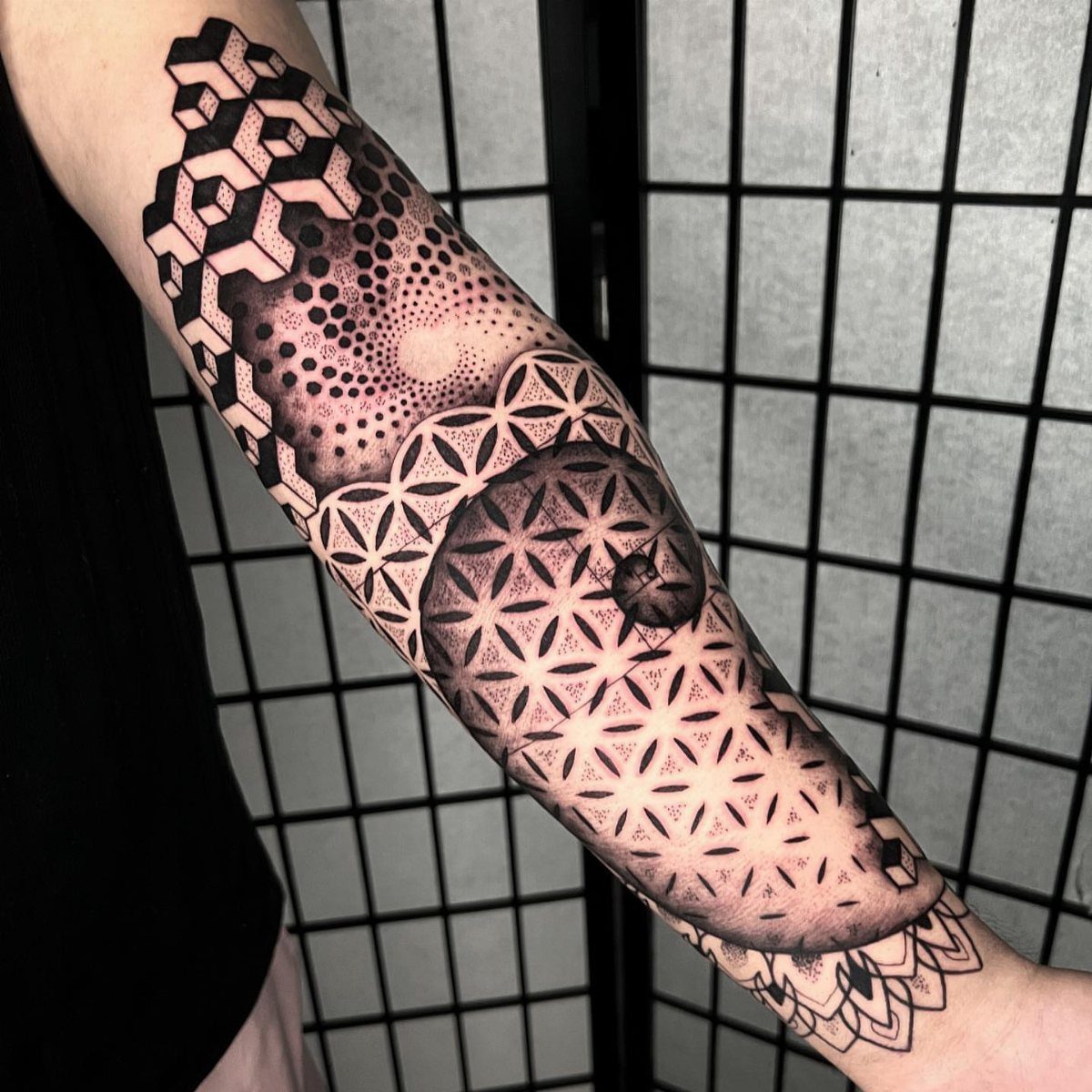
Isometric cubes drawn on a grid create the illusion of 3D depth on a flat surface, and paired with a mandala they balance geometric structure with radial symmetry.
The cubes stack and nest, and the mandala fills the negative space or anchors the composition.
Dotwork fills the background and adds texture without competing with the linework.
The forearm gives you enough length to run the cubes in a line or cluster them around the mandala, and the flat surface means the pattern stays readable as your arm moves.
8. Geometric Landscape Frame Tattoo
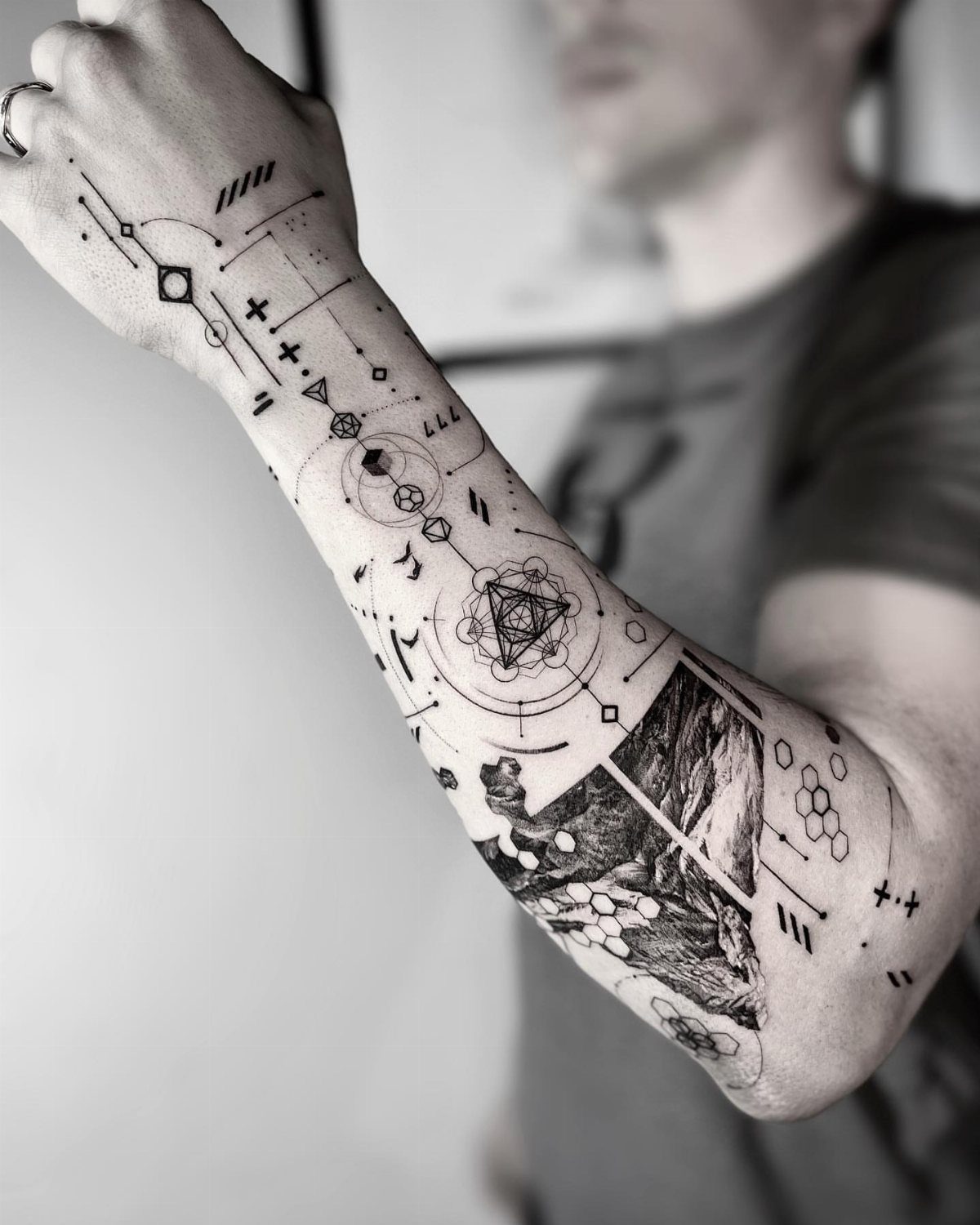
Geometric frames built from circles, triangles and radiating lines create a border for a small landscape scene, turning the tattoo into a kind of window.
The geometry holds the composition together, and the landscape adds narrative weight to what could otherwise read as pure abstraction.
The scene stays small, usually a silhouette or a simple horizon line, so it does not overpower the frame.
9. Eye of Providence Pyramid Tattoo
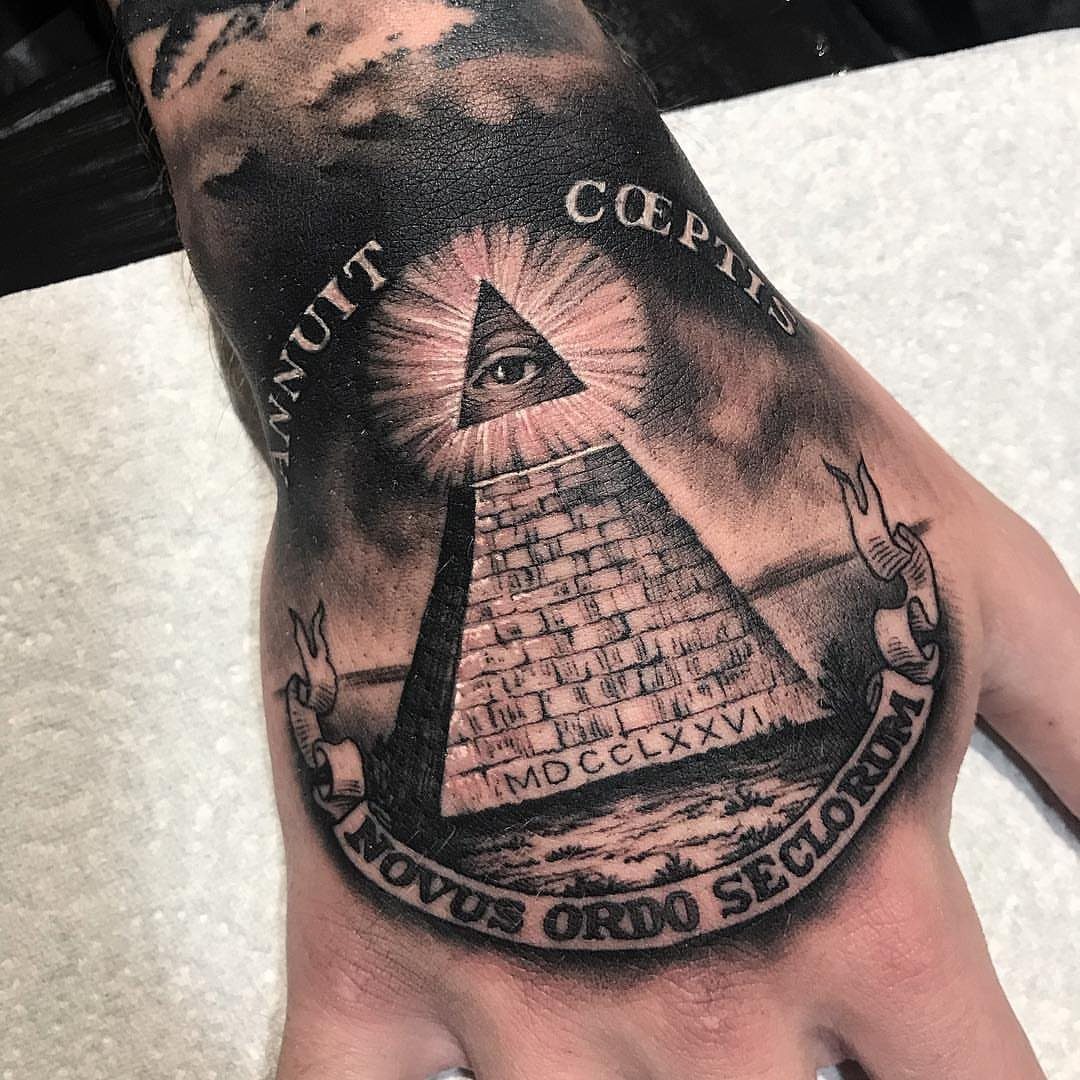
The Eye of Providence sits inside or above a pyramid, often with rays of light, and the Latin phrases "ANNUIT COEPTIS" (He approves our undertakings) and "NOVUS ORDO SECLORUM" (A new order of the ages) come from the Great Seal of the United States.
Hand placement makes the tattoo visible at all times, but hands fade faster than most spots.
Clouds or shading soften the background and keep the pyramid from looking flat. Touch-ups will be frequent, and the small surface area limits how much detail holds up long-term.
10. Geometric Grid Eye Pattern Tattoo
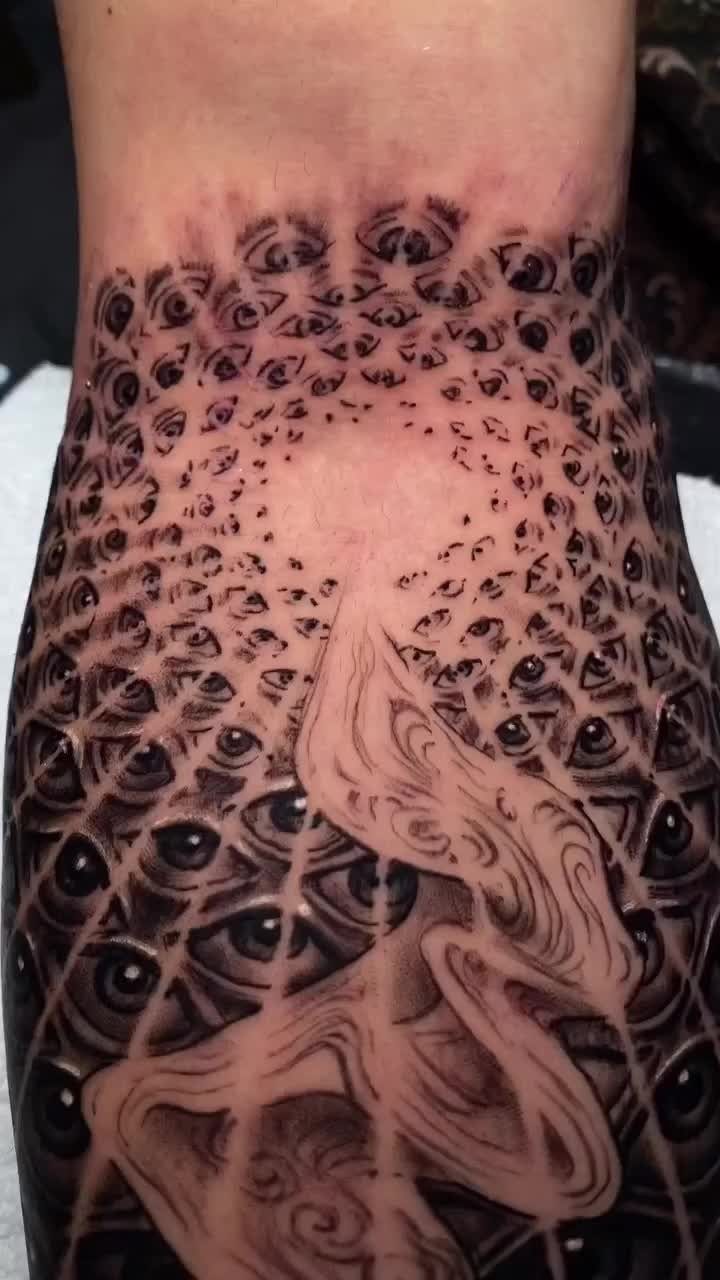
A grid of stylized eyes, each simplified to a curve and a dot, covers a curved surface and creates a repeating pattern that reads as both organic and mechanical.
Fluid shapes between the eyes break up the grid and keep the design from feeling rigid.
Placement on a limb that curves, like the calf or forearm, lets the grid follow the body’s contours instead of fighting them.
Fine lines and tight spacing mean this tattoo needs an artist comfortable with precision work, or the eyes will blur together as it heals.
11. Meditative Figure with Sacred Geometry
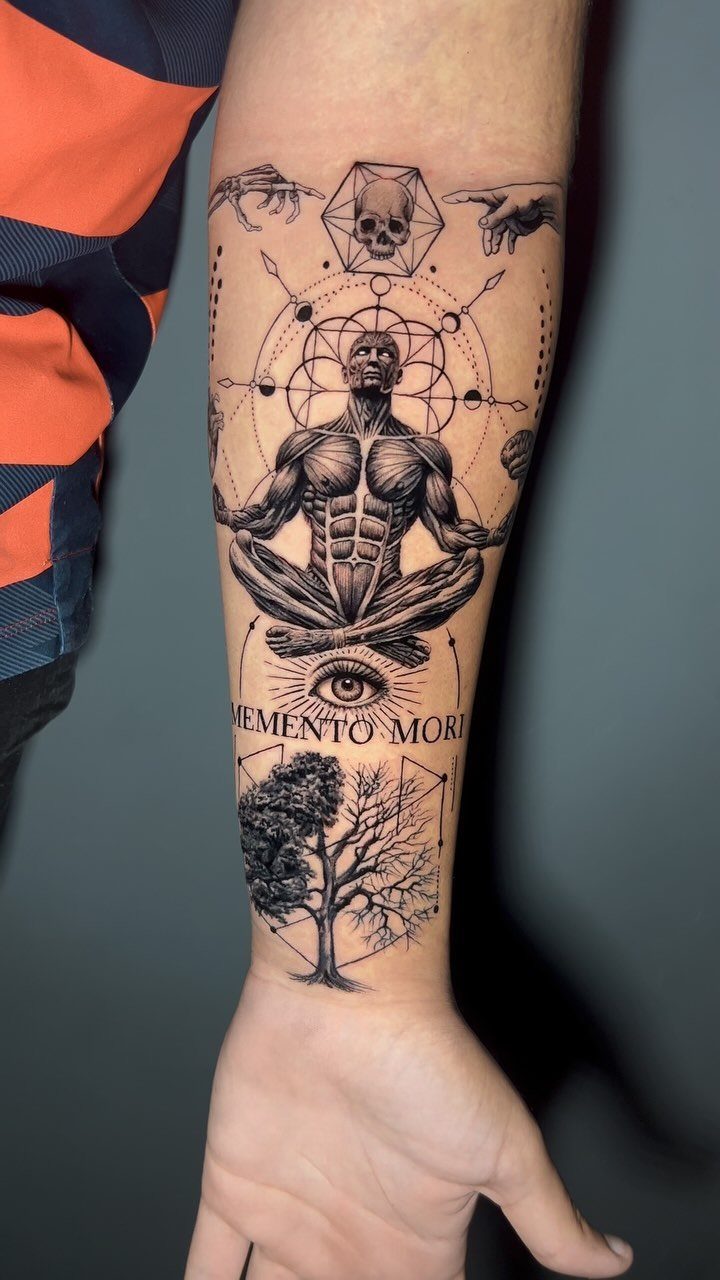
A meditating figure sits inside geometric circles and lines, surrounded by symbols that layer meaning: a skull for mortality, an eye for awareness, a tree for growth. The phrase "MEMENTO MORI" (Remember you must die) makes the theme explicit.
Shading in black and grey adds depth to the figure and separates it from the geometry behind it, and the high contrast keeps each symbol distinct.
12. Geometric Birds and Eye Tattoo
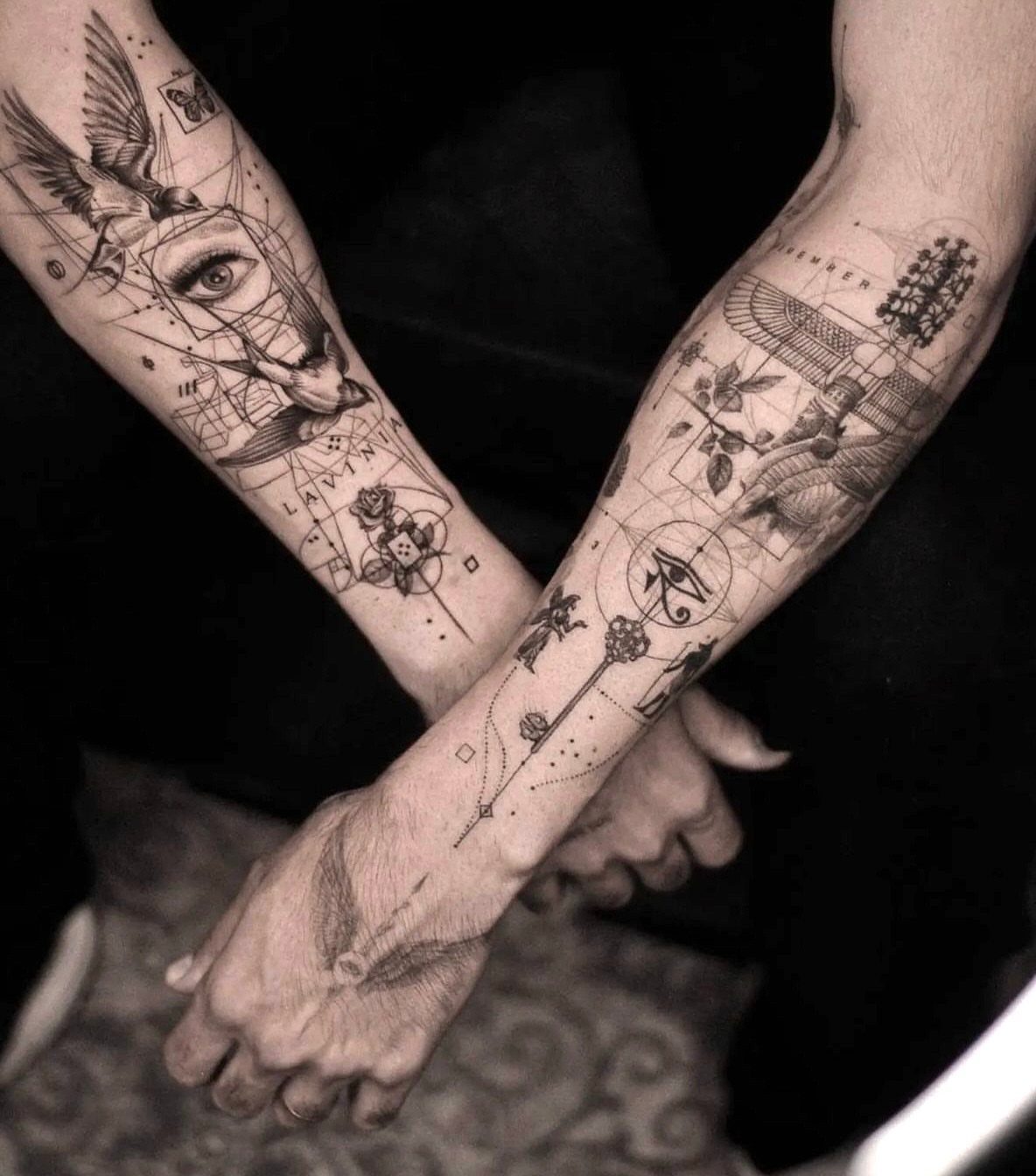
Matching tattoos on 2 forearms use geometric lines, an eye and flying birds to create a shared design that mirrors or complements across the pair.
Text like "LAVINIA" and "REMEMBER" personalizes the set and ties the imagery to a specific memory or person.
Fine linework and small details mean both tattoos need to be done by the same artist to match the weight and style.
The forearm keeps the designs visible and easy to align when the arms are held together, which is usually how matching tattoos are photographed.
Meaning of Geometric Tattoos
Each shape carries its own symbolism, so the overall meaning shifts depending on which forms the design brings together.
A circle represents wholeness and the infinite cycle, showing up in spiritual traditions across cultures as a symbol of eternity. Squares ground the design in stability, balance and the material world, tied to the 4 directions.
Mandalas capture wholeness and spiritual completeness, and the Flower of Life points to the geometric pattern underlying all biological forms.
Some pieces layer in religious imagery like the om or the Star of David, pointing to the wearer’s faith or a broader sense of the sacred.
Choosing a Tattoo Artist
Picking an artist for geometric work means finding someone with a steady hand and a clean sense of symmetry.
Drawing a circle freehand is harder than it looks, and geometric tattoos demand precision at every intersection and curve. You need an artist who understands how the patterns fit together, not just someone who can trace a stencil.
Find an artist who’s built a portfolio around sacred geometry or at least takes a genuine interest in how these patterns work.
An artist who loves the subject will know where lines need to align, how to keep repeating elements consistent, and how to balance detail across a complex composition.
Check their portfolio for geometric pieces before you book, and make sure the style matches what you want.
Tattoo Aftercare
Aftercare for geometric tattoos needs to be tight. All those intersecting lines and curves show every flaw, so healing has to go smoothly.
Use a quality tattoo balm and keep your hands off the scabs. Do not pick, and do not scratch, no matter how much it itches.
The aftercare product works outside the tattoo session just as well as during.
The time it takes to finish a geometric tattoo varies with size, complexity and how much detail the design holds, but precision work takes longer than loose compositions.
Plan for multiple sessions on larger pieces, and give each one the time it needs to heal fully before adding more.
Frequently Asked Questions
Did people get tattoos in ancient times?
Yes, tattoos have been found on mummies and mentioned in texts from Egypt, Polynesia, Japan and other cultures going back thousands of years.
The Vesica Piscis was used by ancient builders to construct gothic arches, and sacred geometry patterns show up in spiritual traditions spanning centuries.
Yes, tattoos have been used for centuries across cultures including Egypt, Polynesia and Japan, though many geometric symbols we ink today were originally carved in stone or drawn in manuscripts.
How long does a geometric tattoo take?
A small geometric piece might take an hour, while a detailed sacred geometry sleeve can require multiple sessions of 4–6 hours each. A small piece might finish in one session, while larger geometric tattoos need multiple sessions to complete.
Plan for the artist to work methodically, since geometric designs demand exact alignment at every line and intersection, and rushing that work shows in the final result.