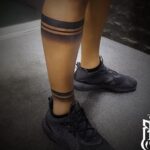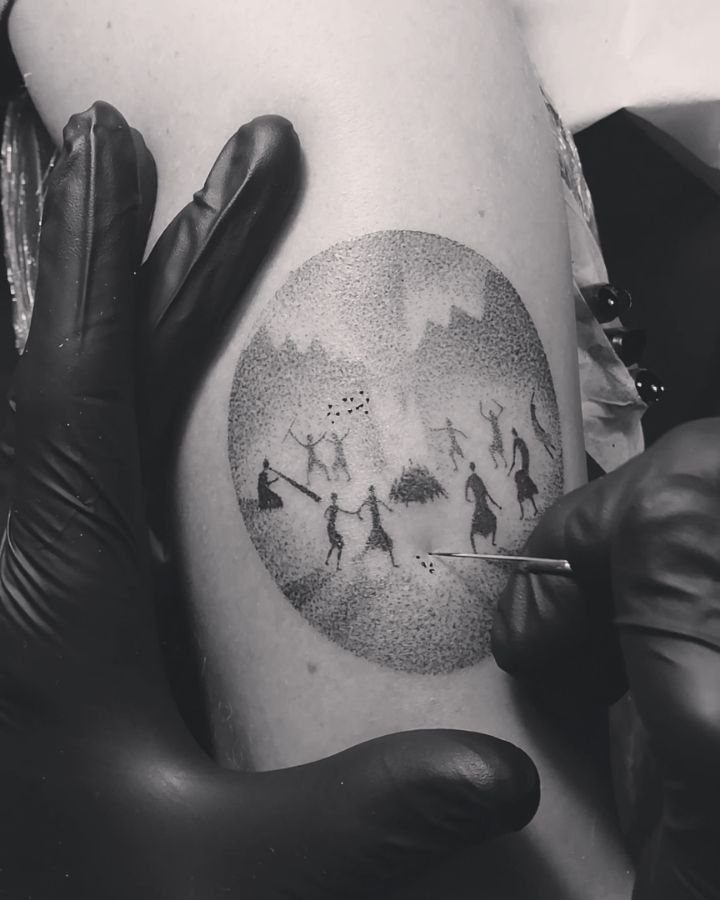
Hand-poked tattoos heal in about 2 weeks and hurt less than machine work because the needle taps dots into the skin rather than dragging a line.
Single-needle methods produce fine, detailed marks that suit small symbols and minimalist designs, while looser multi-needle work creates the softer, imperfect aesthetic most people associate with stick and poke.
Wrists and ankles take the technique well since the skin lies flat, but placement on the hand or wrist loses clarity sooner than arms or legs and usually needs a touch-up within a year.
1. Stick and Poke Tattoo Single Needle
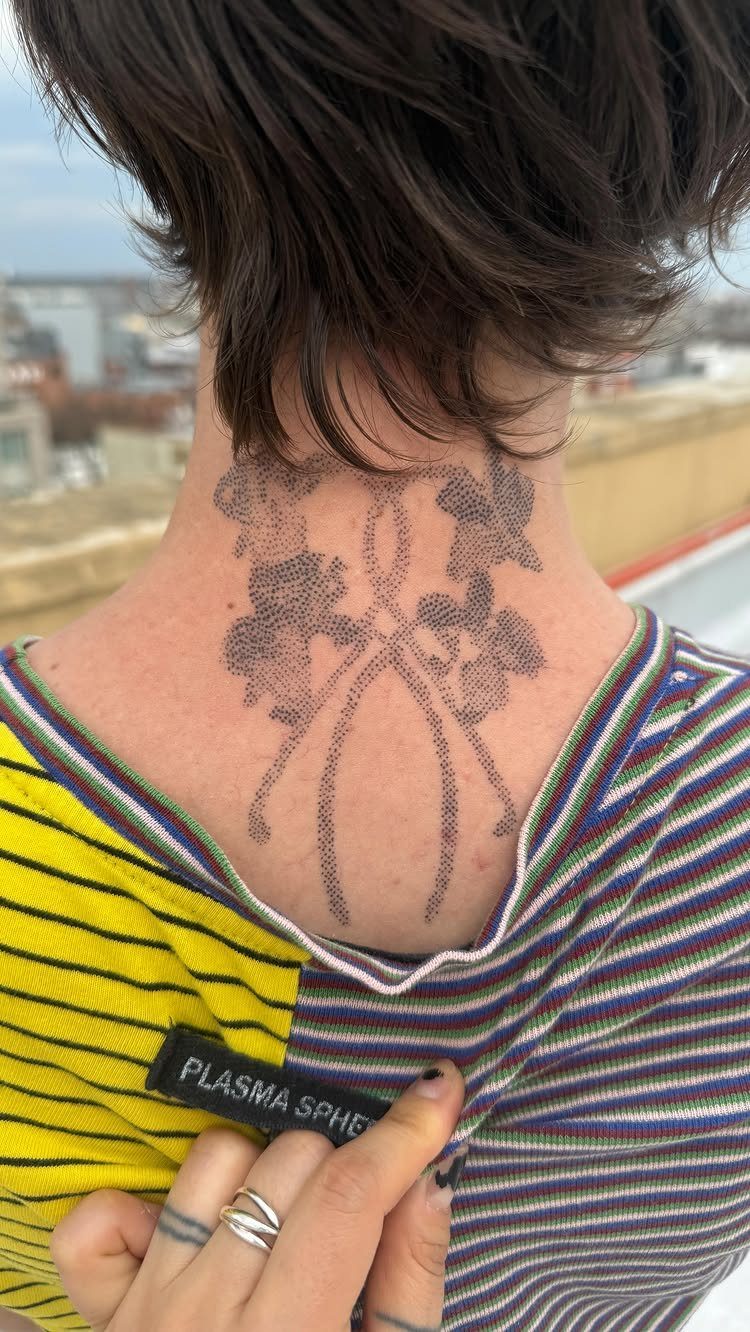
Single-needle stick and poke creates fine, detailed work that holds up best in small designs where precision matters. The method uses one sterile needle attached to a holder, dipped in ink and tapped into the skin dot by dot.
Each dot lands just into the dermis, shallow enough to heal without the trauma machine needles cause.
Pain sits below a coil tattoo because there’s no vibration, just repeated pricks. Healing runs 2 to 3 weeks if you keep it clean and dry.
2. Stick and Poke Tattoo Wrists
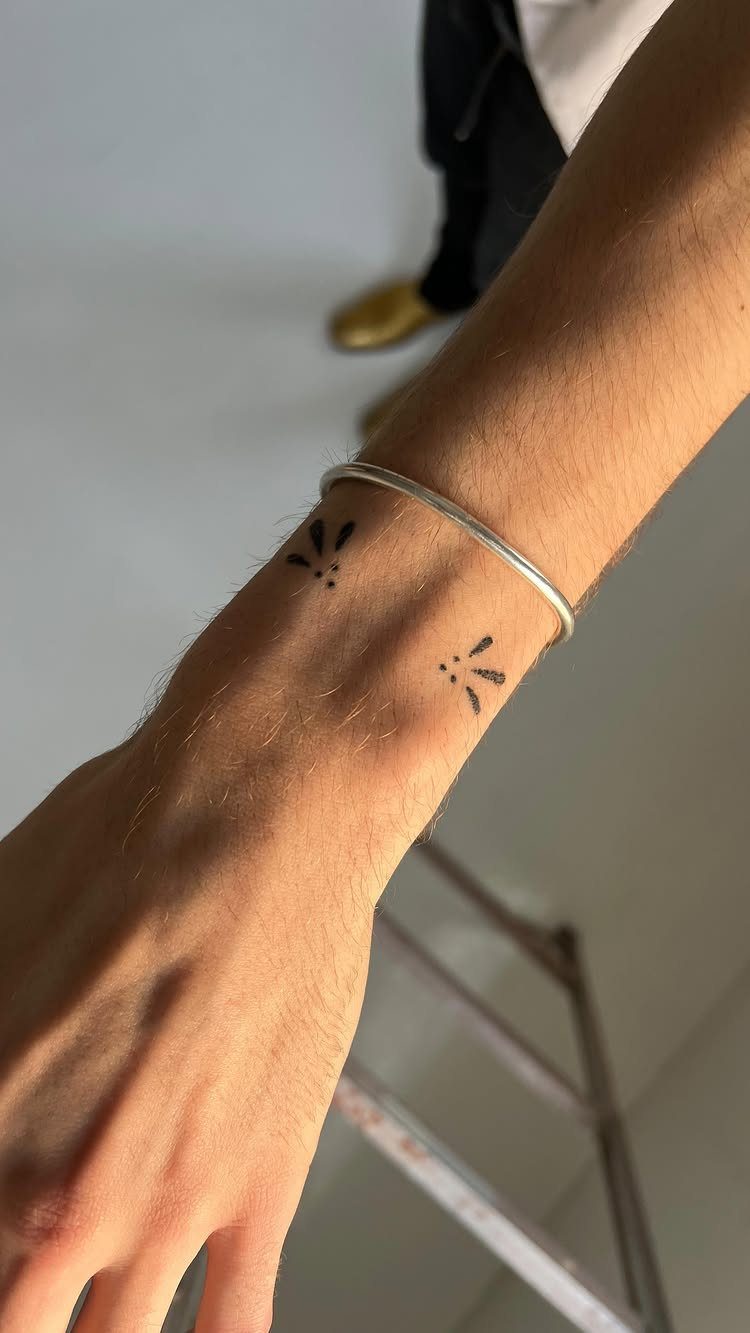
Wrists take stick and poke well because the skin lies flat and you can reach it easily without help. 2 small starbursts finish quickly and run less than most other placements at studios that offer hand-poked work.
The inner wrist hurts more than the outer side since the skin sits thinner over tendons and veins.
Placement close to the hand means the area moves constantly, so aftercare has to account for washing and friction from sleeves or bracelets.
Stick and poke fades faster on hands and wrists than on arms or legs. Plan for a touch-up within a year to keep the lines crisp.
3. Stick and Poke Tattoo Aesthetics
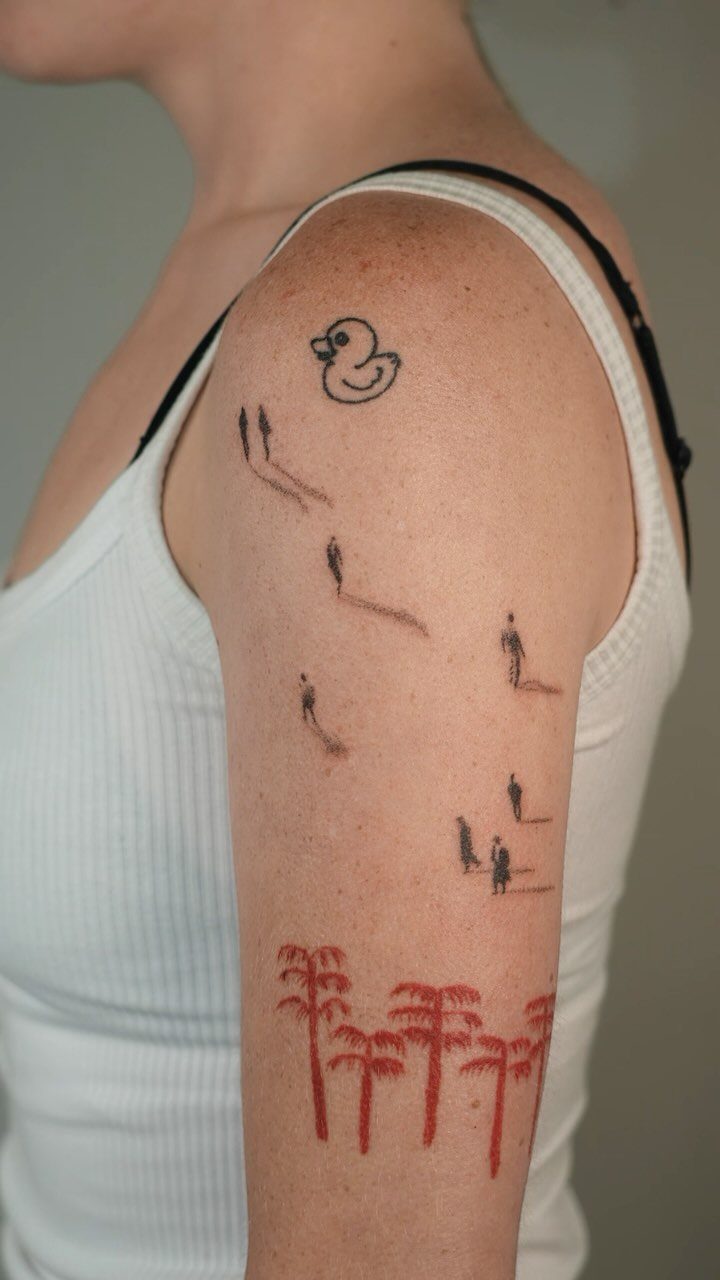
Hand-poked tattoos read as softer and less mechanical than machine work, with irregular dots and lines that look drawn rather than stamped.
The duck, figures and palm trees here show that looser quality, and mixing black with one color keeps the aesthetic grounded without looking unfinished.
This approach suits people who want tattoos that feel personal and imperfect. The uneven spacing and varying dot sizes come from the manual method, not from poor technique, and that roughness is part of the style.
Clean, identical lines come easier from machine work. Stick and poke gives you character, not precision.
4. Stick and Poke Tattoo Minimalist Symbols
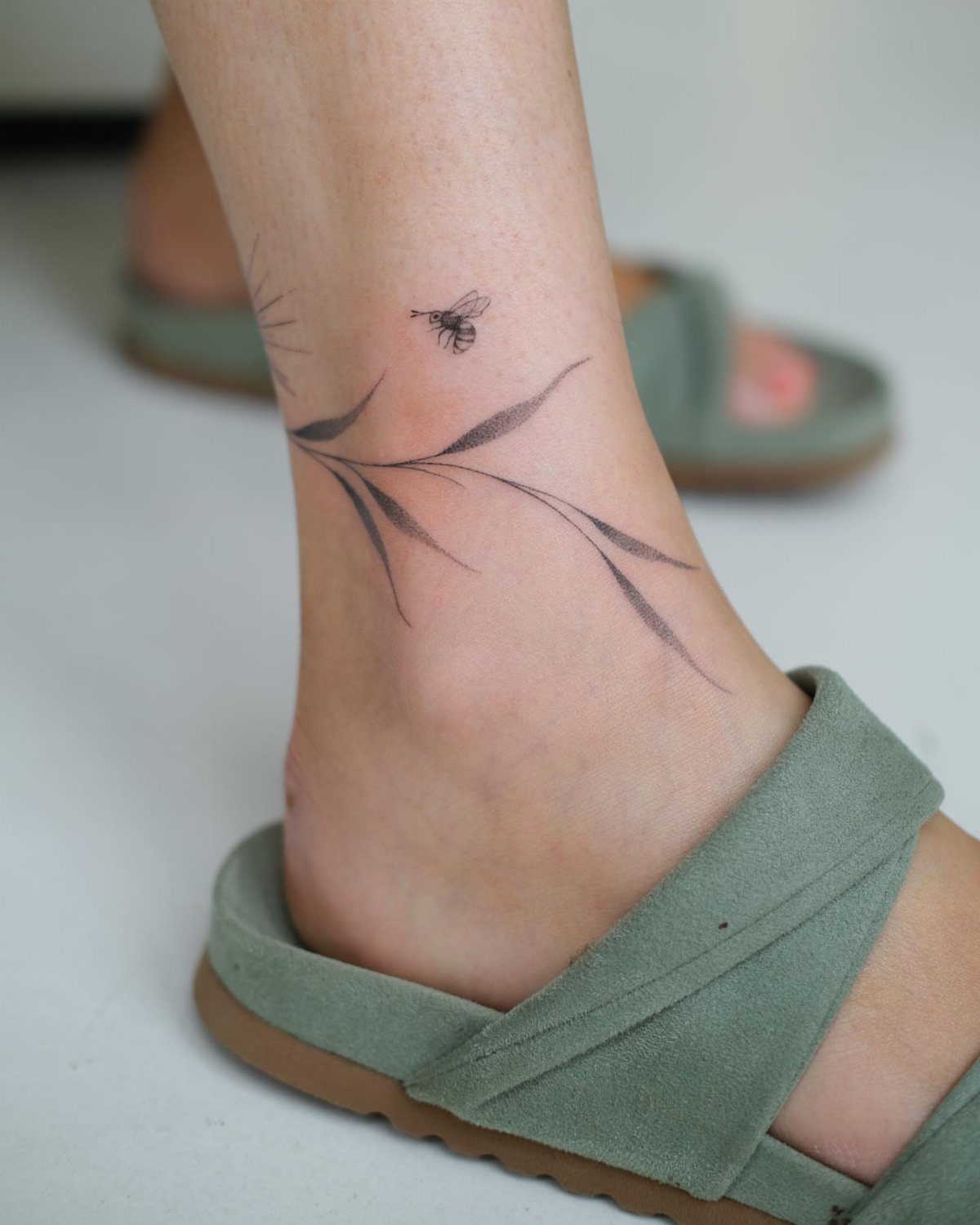
Small symbols hold up longer than script or faces when done by hand. A bee and branch like this one stay readable as they age because the shapes are simple and the lines have space between them.
Ankles hurt less than feet or knees, and the placement stays visible in sandals without being too obvious in professional settings. Stick and poke works well for minimalist designs since the method naturally produces thinner lines than a machine.
Black ink lasts longer than color in hand-poked tattoos. Color fades faster and needs a refresh sooner than black ink.
Stick and Poke Tattoo Safety Tips
Sterile needles matter more than any other part of the process. A needle used once and thrown away eliminates nearly all infection risk, while reusing one invites staph and bloodborne diseases into the wound.
Professional shops that offer hand-poked work handle sterilization the same way they do for machine tattoos: autoclaved equipment, single-use needles, and a workspace cleaned between clients.
At home, that standard is harder to meet, and most infections trace back to improvised tools or surfaces that were not sanitized.
If you are doing this yourself, buy a sterile needle kit made for tattooing and work on a surface wiped down with medical-grade disinfectant. Tattoo ink should come sealed, not decanted into another container days earlier.
Stick and Poke Tattoo Healing Process
Most hand-poked tattoos heal in 2 weeks, and many settle faster than machine work because the needle causes less trauma to the surrounding tissue.
Skin that has been tapped rather than dragged recovers with less swelling and rarely forms a thick scab.
Aftercare follows the same steps as any tattoo: wash it gently with unscented soap, pat it dry, and apply a thin layer of fragrance-free lotion or balm twice a day.
Keep it out of pools, lakes, and direct sun until the skin has closed completely.
Stick and poke tattoos that skip aftercare fade unevenly and sometimes scar. The ink sits in the dermis the same way machine ink does, and the body will push it out if the wound stays irritated or gets infected.
Stick and Poke Tattoo Cultural Significance
Hand poke has been around for thousands of years, long before electric machines existed. Indigenous cultures still use hand-poke methods tied to ritual, identity, and lineage.
Modern stick and poke splits into 2 tracks: preserved traditional methods passed down within cultures, and the DIY movement that grew out of punk and underground scenes in basements and house parties.
The DIY lineage is harder to trace because most of it happened in basements and house parties, but it produced a raw, approachable style built on simple tools and self-taught skill.
Some professional artists today prefer hand poke because it moves slower and gives them softer, more controlled lines. The method suits small, personal designs that do not need the speed or uniformity of a machine.
Whether it’s to regain a sense of control in the limbo that is COVID quarantine, an act of apocalyptic impulse in the face of uncertainty, or simply a new daily habit, stick and poke tattoos have become immensely popular among those stuck at home.
— Vice
Frequently Asked Questions
What is a stick and poke tattoo?
A stick and poke tattoo is applied by hand with a needle or small group of needles, no machine or power source involved.
The method produces softer, less mechanical lines than machine work and connects to tattooing traditions that existed long before electric equipment.
Do stick and poke tattoos go away?
Stick and poke tattoos are permanent, but they tend to lighten over time and most need a touch-up within a year to keep lines sharp.
Hand depth varies more than machine depth, so some stick and poke tattoos fade to charcoal gray or silver gray over time, especially on hands and wrists.
An experienced hand-poke artist with consistent depth produces work that ages closer to a conventional tattoo.