Realistic tattoos range from single portraits that fit a forearm to full back pieces that take 3 sessions or more, and the size you need depends on how much fine detail the design requires to stay sharp.
Most realistic work holds better in black and grey because color fades unevenly, though portraits and statues sometimes need a touch of color to separate skin tone from stone.
1. Portraits
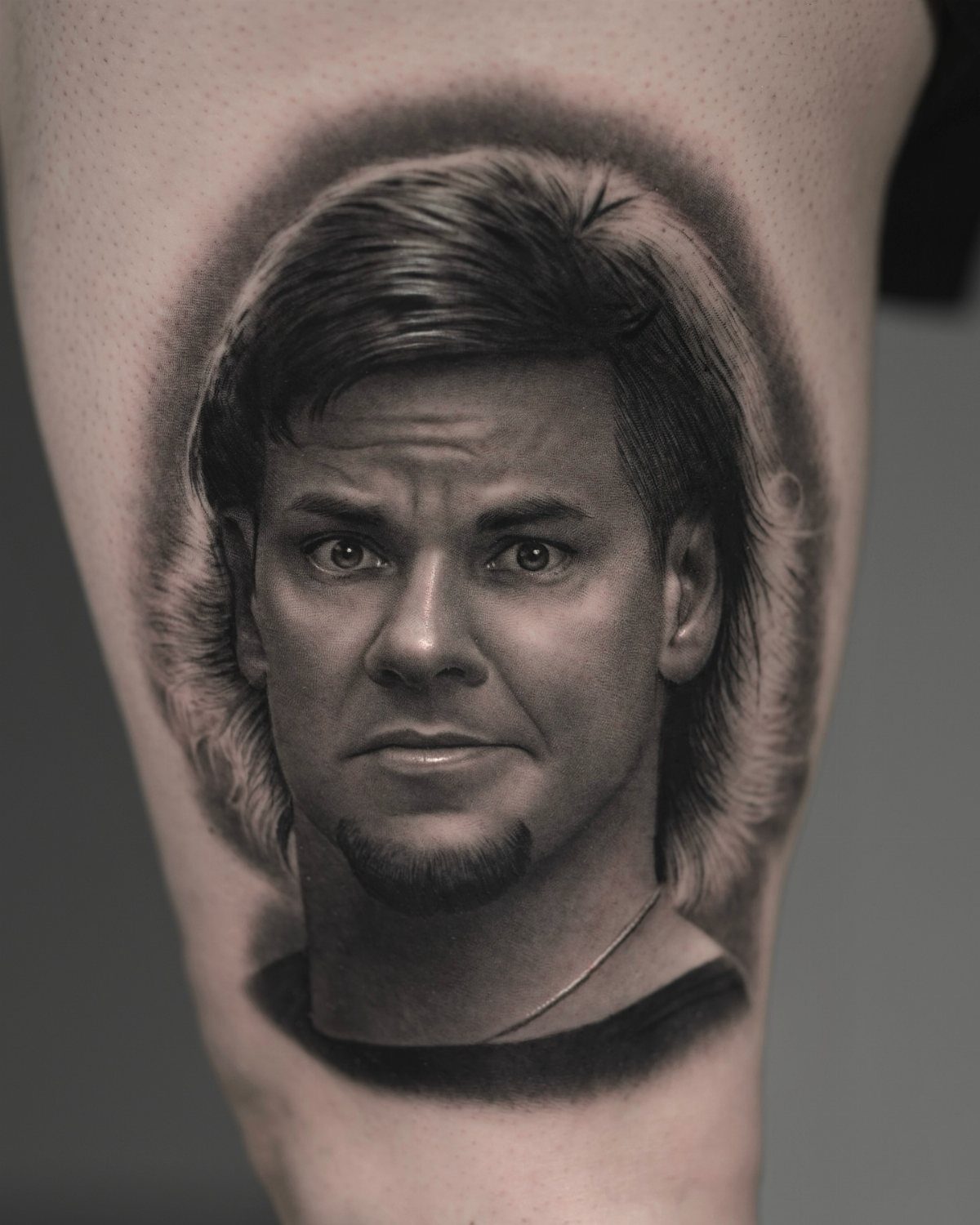
Portraits put someone you know on skin, usually a parent, grandparent or partner, sized to show fine detail in the face.
Black and grey works better than color for most likenesses because it reads the contours and shadows that make a face recognizable.
Find an artist who specializes in portraits and brings reference photos that show the face clearly, lit from one side.
Bad lighting in the reference means the artist is guessing at the features, and the tattoo will look like a stranger.
2. Animals
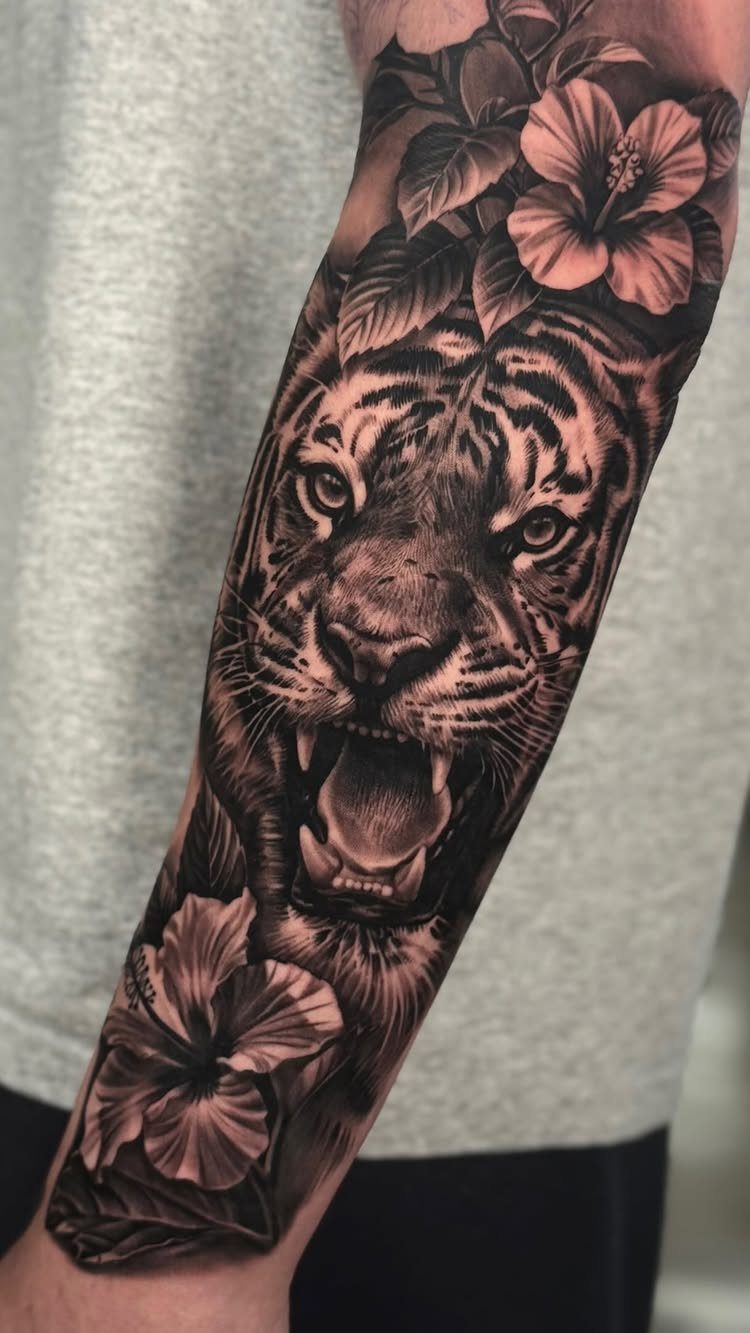
A pet or wild animal rendered in realistic detail, often paired with foliage or background elements that frame the subject.
Tigers, wolves and big cats show up often because their faces carry intensity and the fur texture gives a skilled artist room to prove their shading.
Placement matters more here than it does for simpler designs. A roaring tiger needs space, at least the full forearm or upper arm, so the face stays large enough for the detail to hold.
3. Nature & Landscapes
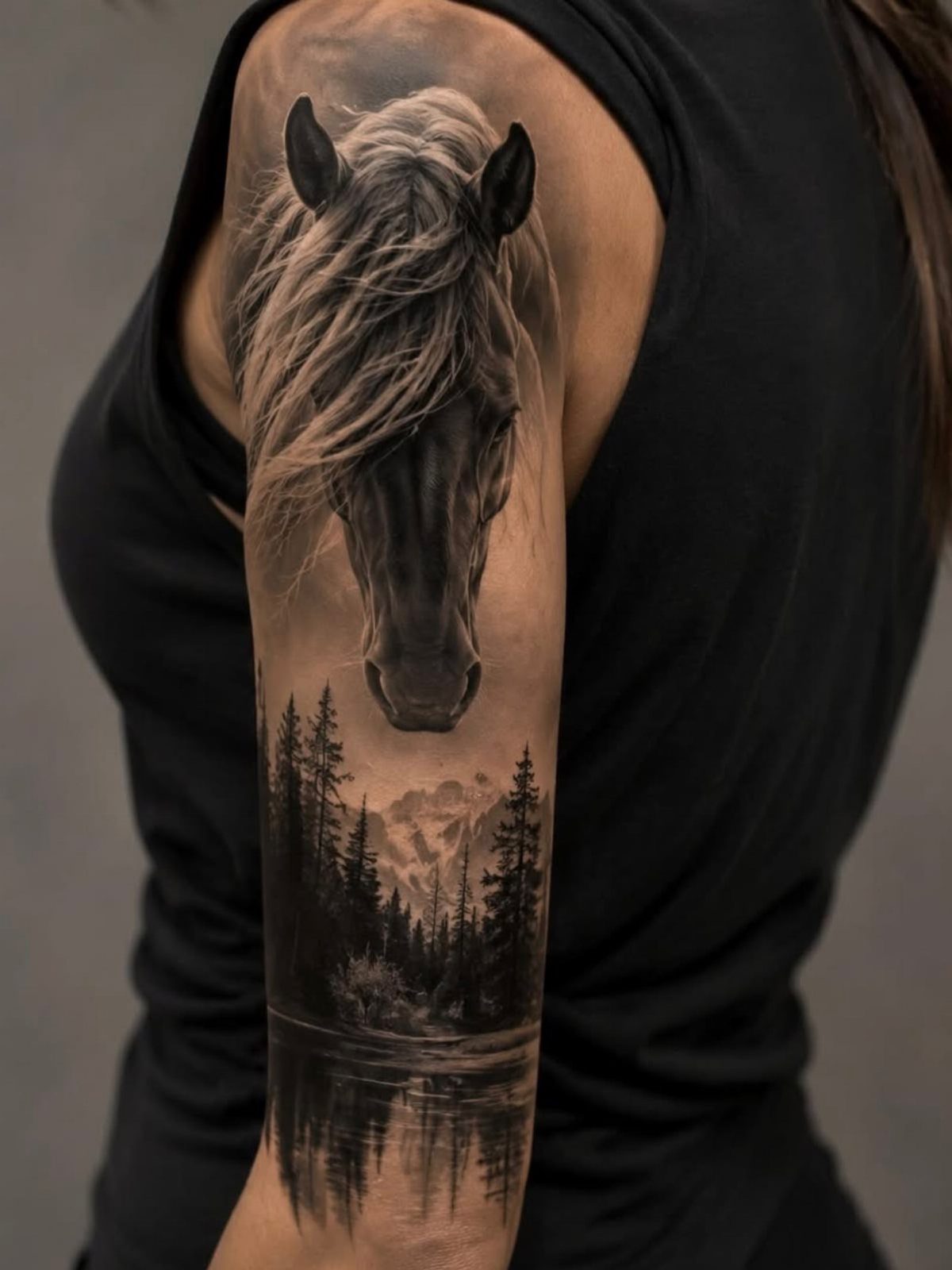
A natural scene tattooed large enough to show depth, often mountains, forests or water with an animal silhouette layered on top.
The composition usually stacks vertically, which fits the shape of an upper arm or thigh better than a horizontal limb.
These take multiple sessions because every tree, ridge line and reflection needs fine linework to stay sharp.
Budget enough time and expect the piece to wrap partway around the arm if you want the whole scene to read from one angle.
4. Floral Tattoos
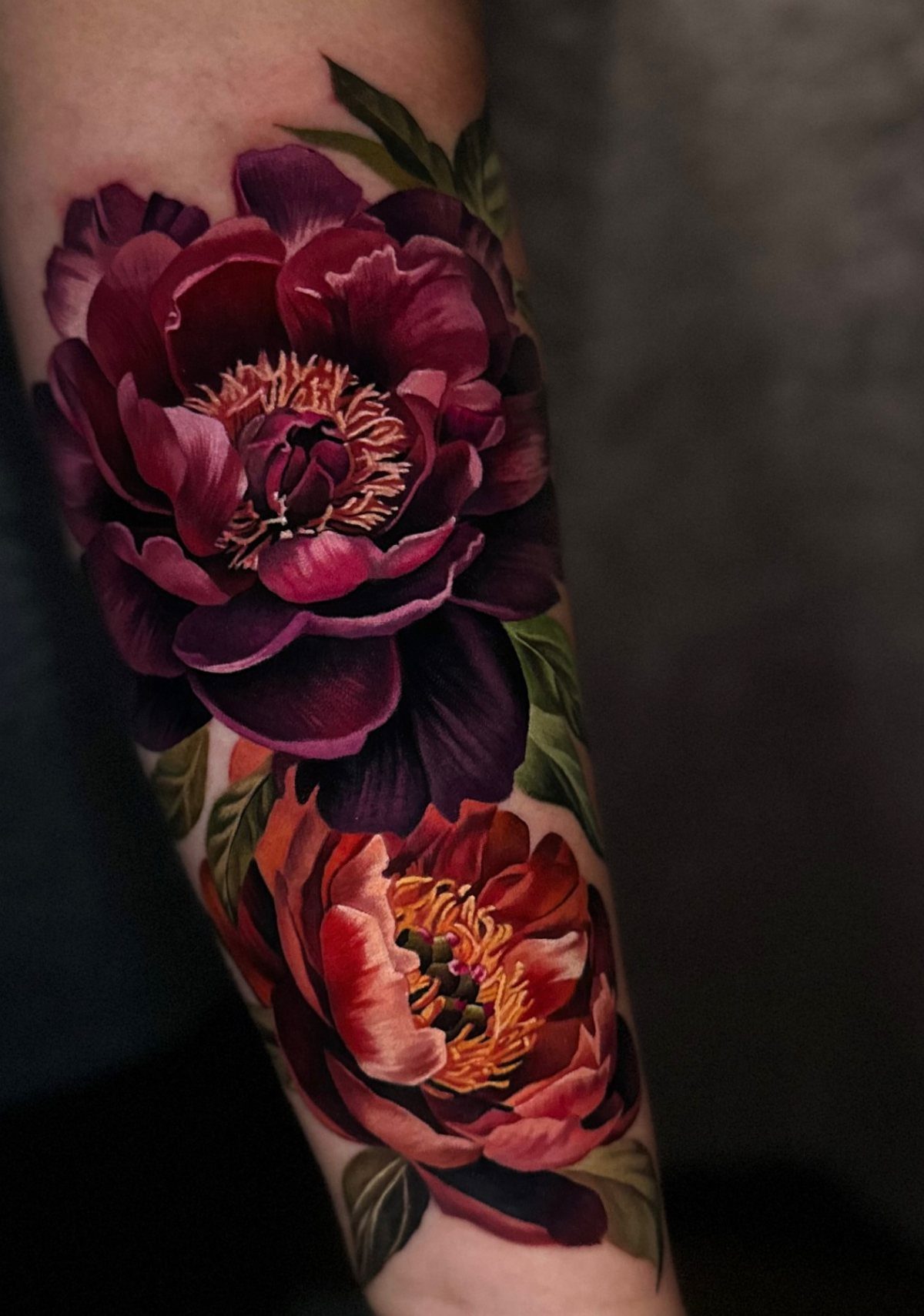
Realistic flowers tattooed at full scale, with every petal edge and vein rendered the way they grow. Peonies and roses show up most often because their layered petals give the artist room to build dimension through shadow.
Color makes the piece more complex and costs more per hour, but it also ages differently.
Red and purple fade faster than black and grey, so plan for a touch-up every few years if you want the saturation to stay strong.
5. Skulls & Anatomy
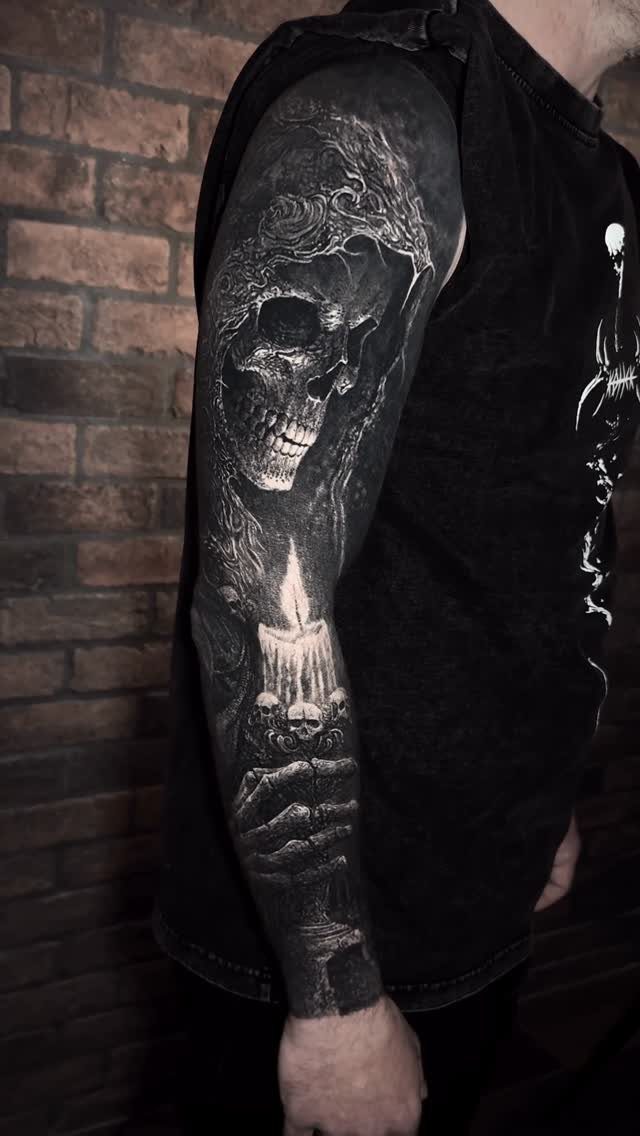
A human skull rendered with anatomical accuracy, often paired with objects like candles, hourglasses or flowers that add symbolic weight.
The skull itself reads clearly in black and grey because bone has natural contrast, and the hard edges hold detail better than soft tissue.
These work well on the forearm or upper arm where the cylindrical shape of the limb matches the curve of the skull. Size it large enough so the eye sockets and teeth stay legible as the ink settles.
6. Eye with Reflection
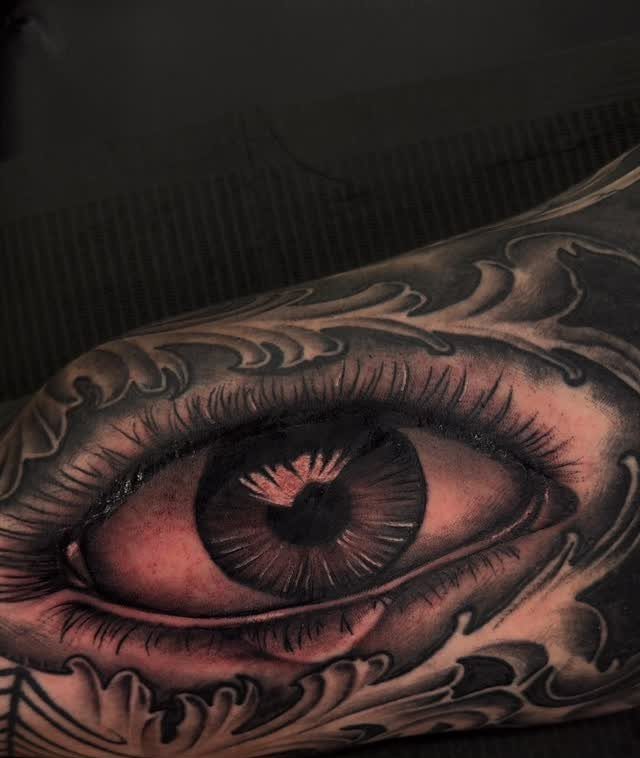
A single human eye tattooed large enough to show the iris texture, highlights on the cornea and a tiny reflection in the pupil.
The reflection is usually a face, a window or a landscape, and it’s what makes the piece read as hyper-realistic instead of just detailed.
This design lives or dies on the artist’s ability to place highlights correctly. A misplaced white dot makes the eye look flat or crossed, so find someone whose portfolio shows multiple successful eye tattoos before you commit.
7. Statues
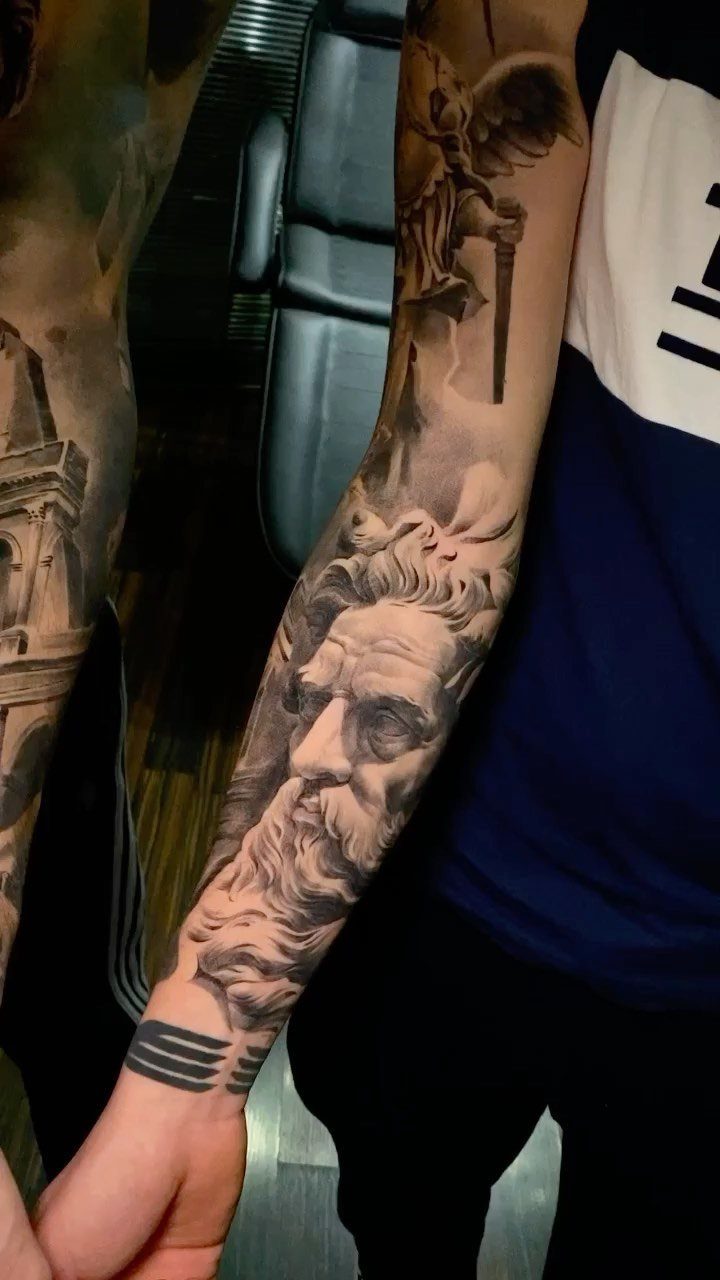
A classical sculpture rendered in black and grey, sized to show the texture of weathered stone and the contours of the carved face.
Greek and Roman figures work well because their strong features and beards hold detail as the ink settles.
The shading is what makes this read as stone instead of skin. Look for an artist whose portfolio shows consistent work with soft gradients, because marble has no hard edges and a heavy hand will make the piece look flat.
8. Realistic Back Tattoo
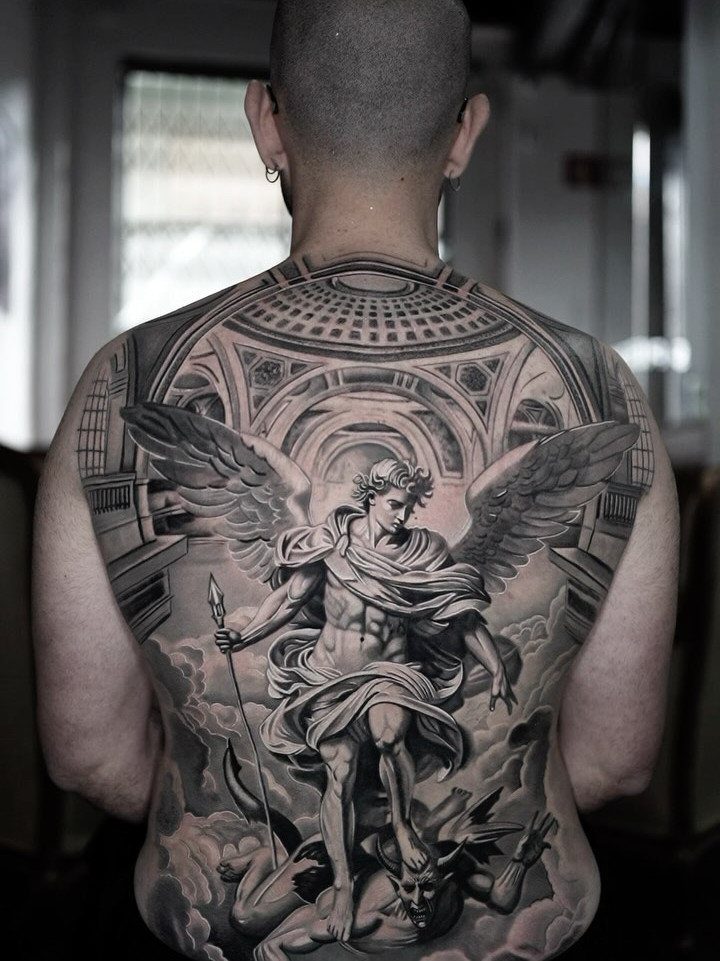
The back offers the largest uninterrupted canvas on the body, and realistic pieces here often combine multiple elements into one scene. Architecture, figures and lighting effects can all fit without competing for space.
Plan for at least 3 sessions, often more, because the artist needs time to build the depth and contrast that makes the composition read from a distance.
Sitting for your back also means lying face down for hours at a time, which gets uncomfortable faster than other placements.
9. Mythical Creatures
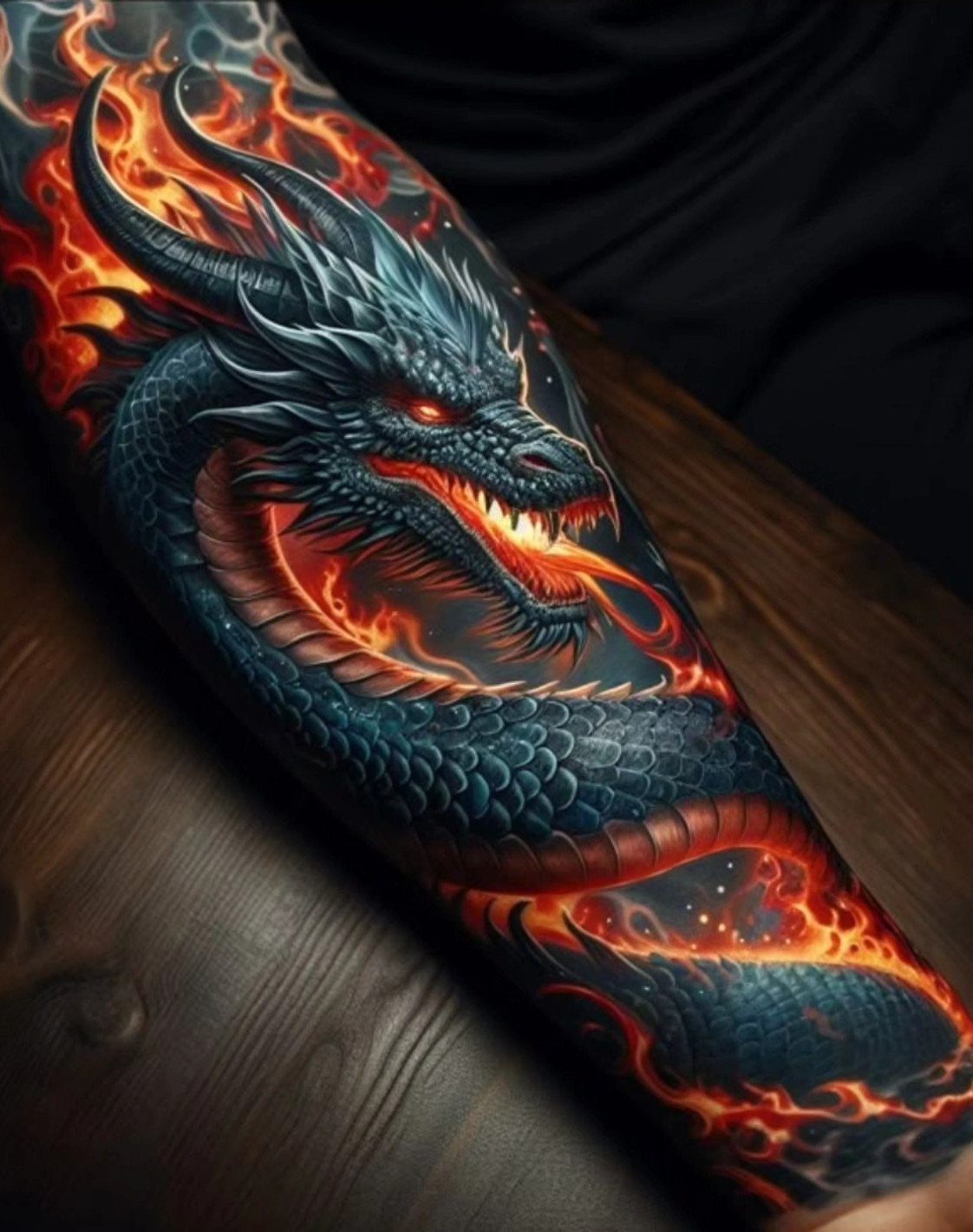
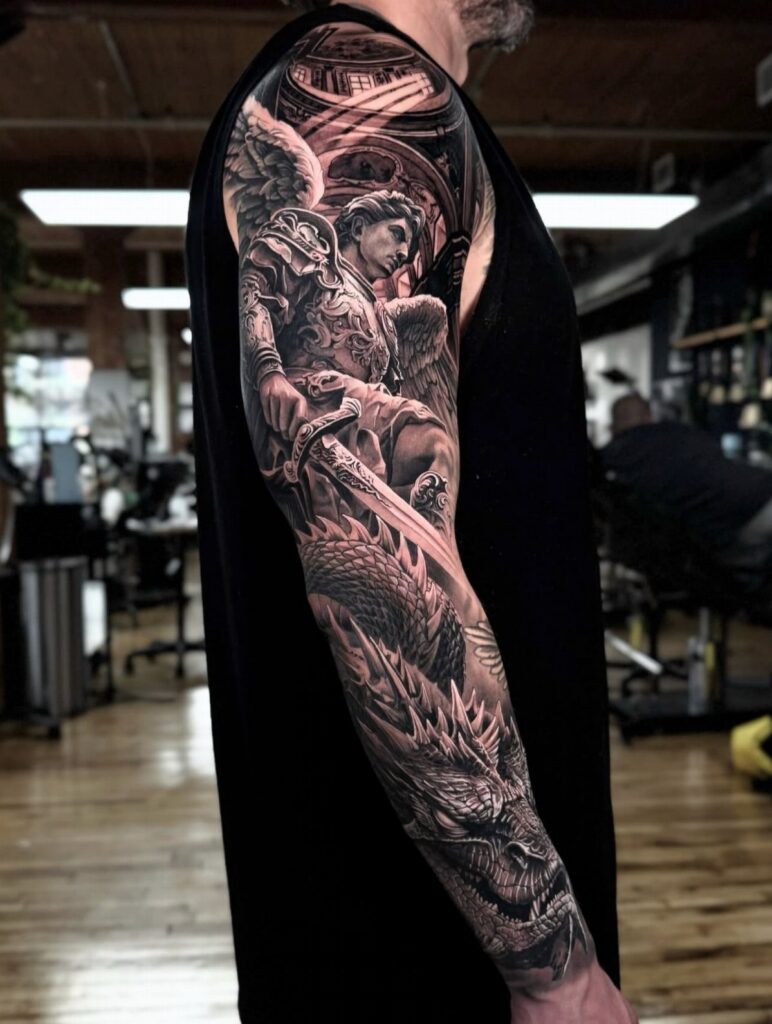
Dragons, phoenixes and other fantasy beings tattooed with the texture and lighting of a real animal. Color brings in the otherworldly element, glowing fire or iridescent scales, that separates the piece from a wildlife tattoo.
These need space to wrap or extend across a limb, because a cramped dragon loses the sense of movement that makes it feel alive. Budget for color saturation, which costs more per hour and requires touch-ups to stay bright.
10. Characters
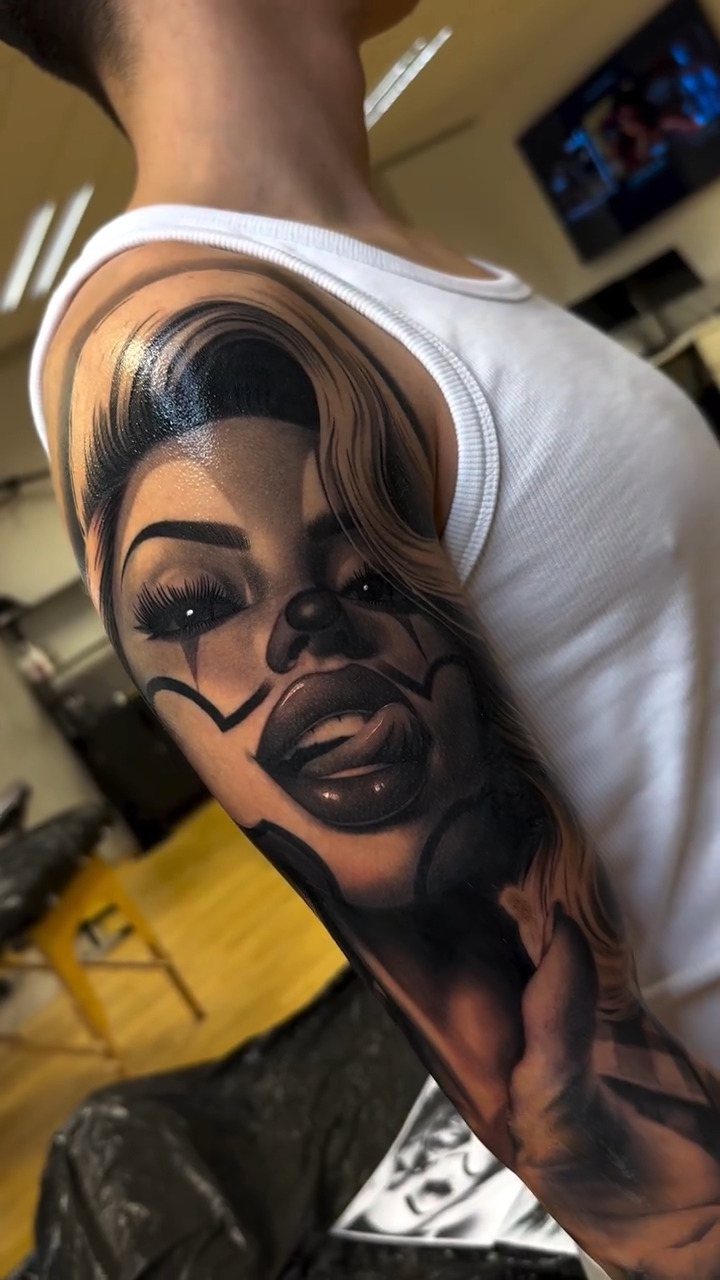
A fictional person tattooed with the same attention to light and shadow as a portrait, often from a film, comic or video game.
The artist works from reference stills, so bring high-resolution images that show the face clearly and the expression you want.
Clown makeup, scars and theatrical features translate well to ink because the exaggerated contrast helps the face stay sharp as it ages.
Choose an artist who has done character work before, because a slight shift in proportion makes the face unrecognizable.
11. Dark Realism Tattoos
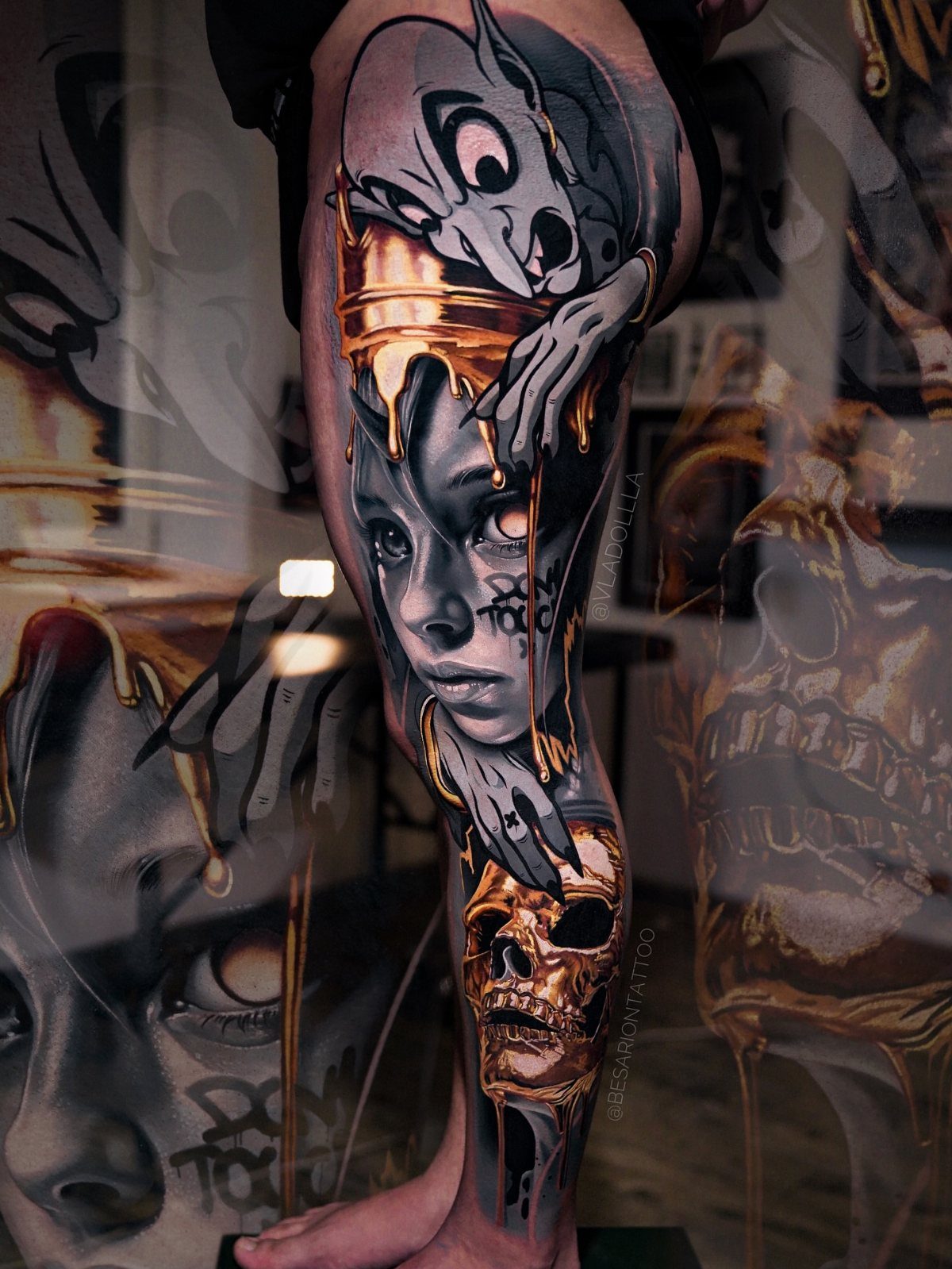
Surreal or horror imagery rendered with the lighting and texture of a photograph, often layering faces, skulls and abstract elements into one cohesive piece.
High contrast between deep blacks and bright highlights is what makes the composition read as intentional instead of muddy.
These age differently than softer realistic work because the heavy black holds longer and the piece stays legible even as fine details blur. Find an artist comfortable with surrealism, because balancing multiple subjects without losing clarity takes experience.
12. Semi-realistic Tattoos
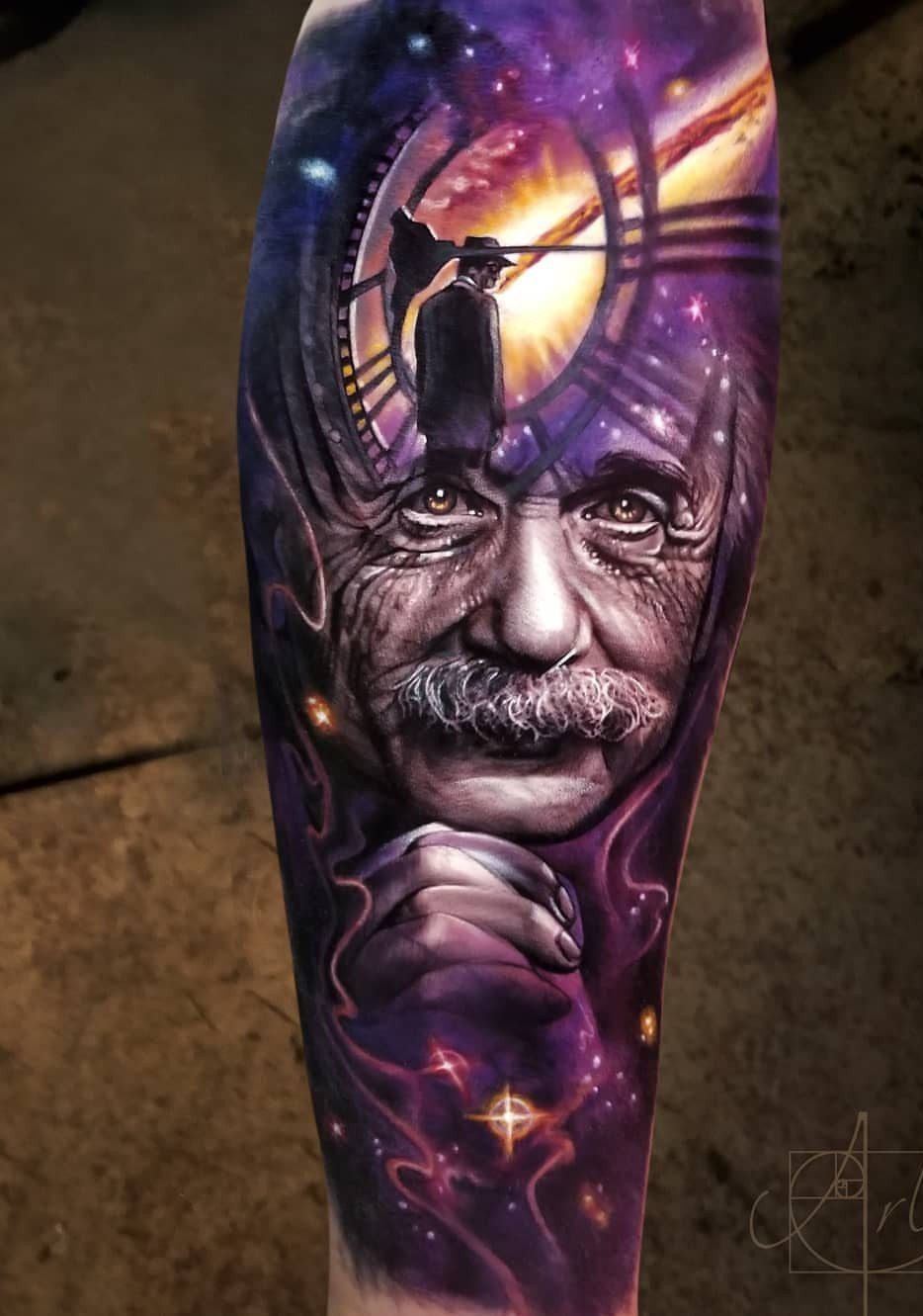
Realistic faces or objects paired with stylized backgrounds like watercolor washes, geometric shapes or cosmic scenes. The contrast between the detailed subject and the loose background gives the piece visual interest without requiring every inch to be hyper-rendered.
This approach works well when you want a realistic portrait but need to fill the surrounding space without committing to a full scene. The background can be added later if you decide the portrait alone feels unfinished.
13. Vintage Camera
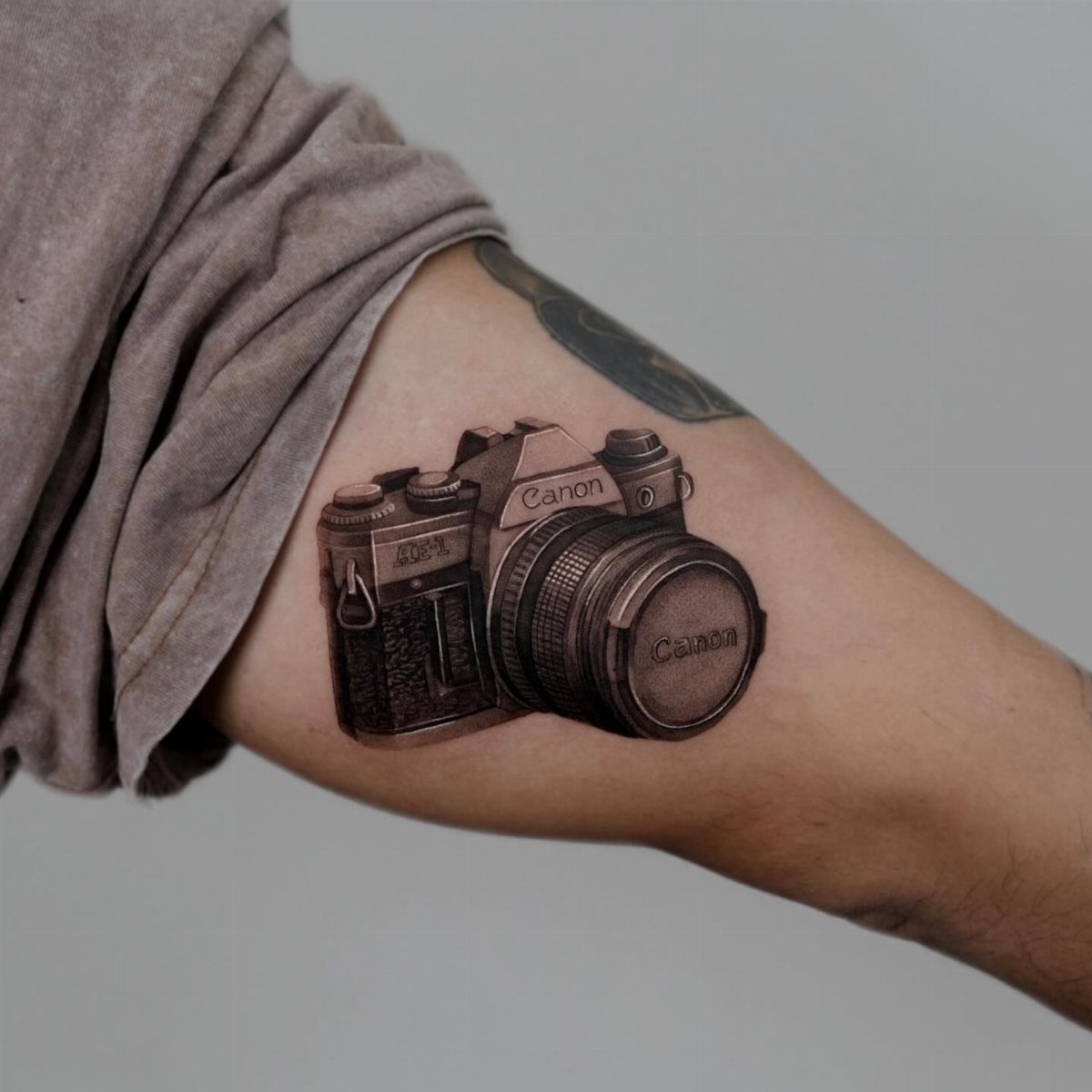
A vintage camera tattooed at full scale, with every knob, lens ring and body detail rendered the way the object sits in your hand.
A forearm gives you the length for a full camera body, and dials or engraved text give the artist a place to prove they can hold crisp detail.
Black and grey suits this better than color because the metal and glass textures depend on reflections and gradients.
14. Realistic Imagination
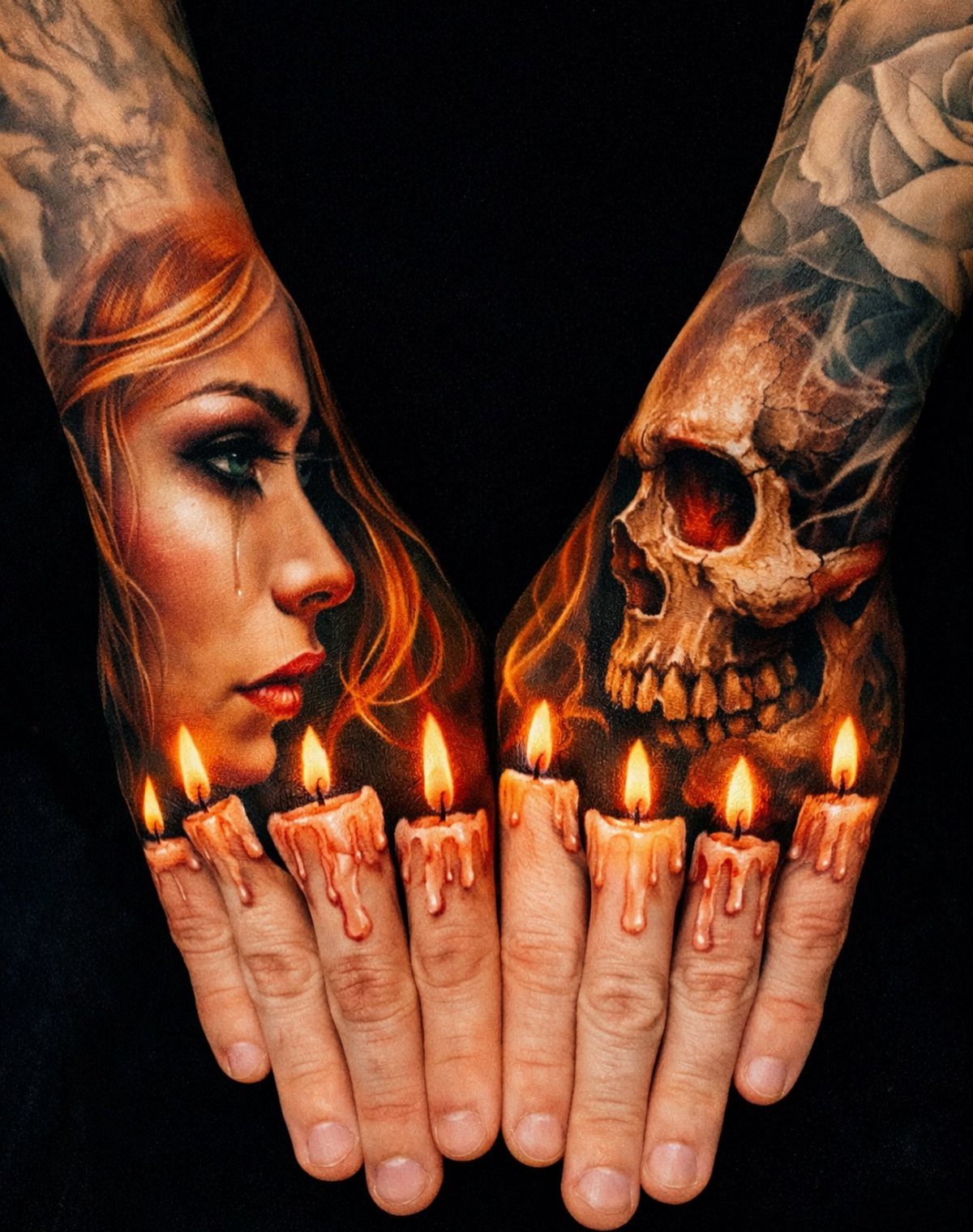
The realism sits in how the anatomy is drawn, not in whether the thing could happen: skin rendered as melting wax, a hand gripping a second face growing from the palm, or a ribcage opening onto something else entirely.
The realism is in the rendering, not the logic, and the result reads as surreal but grounded.
These pieces work best when the artist can map the illusion to the actual shape of your body.
A hand tattoo that uses your real fingers as part of the design changes how the piece reads depending on your gesture, which adds motion to an otherwise static image.
15. Realistic Charizard
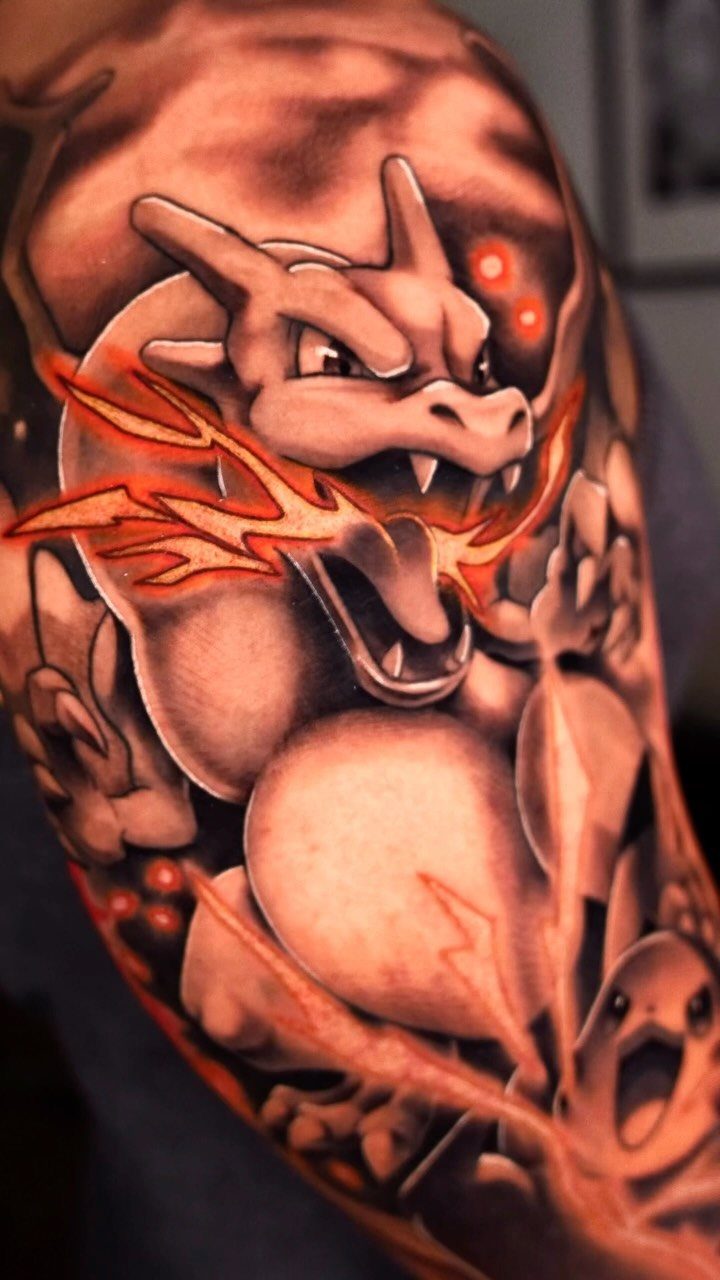
Charizard tattooed with the lighting and texture of a living creature, often breathing fire that wraps around the arm or extends into negative space.
The orange and red scales need color saturation to separate the piece from a generic dragon, and the wings usually fill the upper arm or shoulder to keep the proportions recognizable.
Character tattoos live or die on accuracy. Bring reference images that show Charizard from the angle you want, because a slight shift in the face or wing shape makes it read as a different creature entirely.
Aging & Longevity of Tattoos
Realism softens as the ink spreads under the skin, usually over years rather than months. Fine details like individual hairs, tiny highlights or thin shadows blur first, which is why larger designs hold their clarity longer.
Touch-ups every 5 to 10 years bring back the contrast and sharpness the piece had when it was fresh. Not every realistic tattoo needs one, but if the design depends on fine detail to read correctly, plan for it.
Placement changes how fast a tattoo ages. Areas that see more friction, like fingers or feet, blur faster than protected spots like the upper arm or back.
Skin tone also affects how color realism reads, especially in lighter or warmer shades that rely on contrast against your natural pigment.
How you treat it while it heals decides how much of that detail survives. Realistic work often uses deeper shading, which means the skin needs time to settle without scabbing or peeling unevenly.