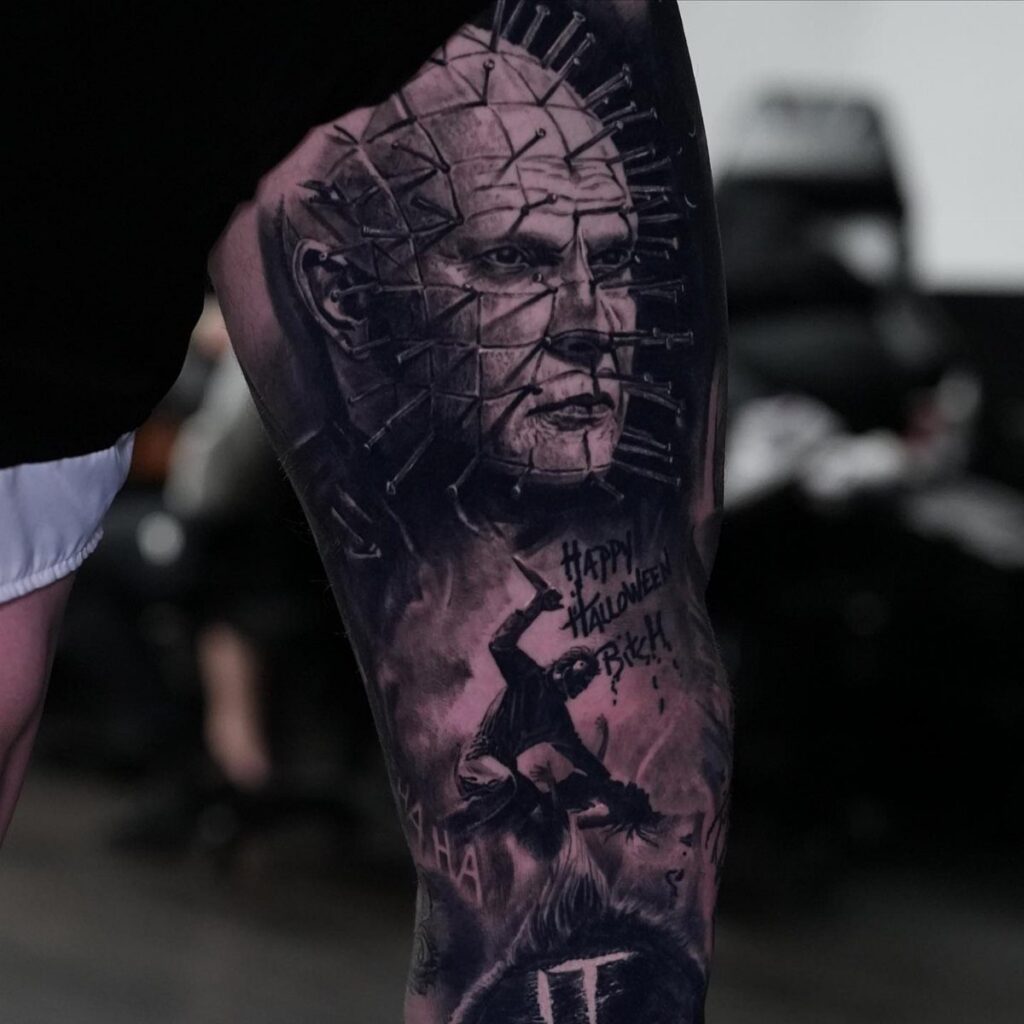
A realistic portrait of Leatherface or Hannibal Lecter requires an artist who specializes in photorealism and enough space on the forearm or calf for fine detail to stay readable as the tattoo settles, while simpler icons like Jason’s hockey mask or Ghostface work in smaller spots with bold outlines that hold up better over time.
The film that stuck with you decides the design: Scream’s Ghostface mask or dripping title, The Shining’s axe through the door, Jaws rising from dark water, or Universal Monsters grouped together as a tribute to early horror.
1. Silence of the Lambs Portrait Tattoo
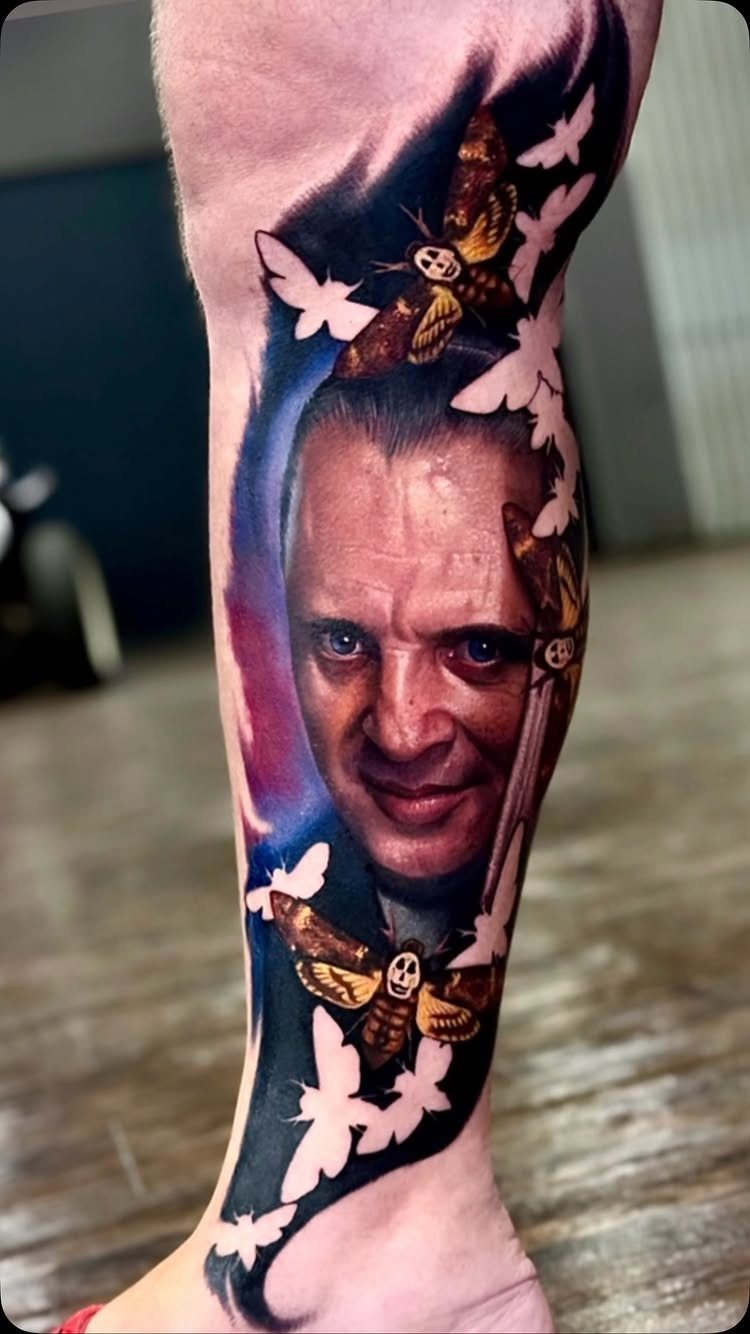
A portrait of Hannibal Lecter surrounded by moths centers on the death’s-head hawkmoth from the poster and the moths he leaves in his victims’ throats. The full-color version layers dark, moody backgrounds that frame the portrait without crowding it.
Black and grey keeps the focus tight on Lecter’s face. Either way, the forearm and lower leg give enough space for a portrait this detailed to read clearly from across a room, which matters when fine lines age.
2. Beetlejuice Tattoo
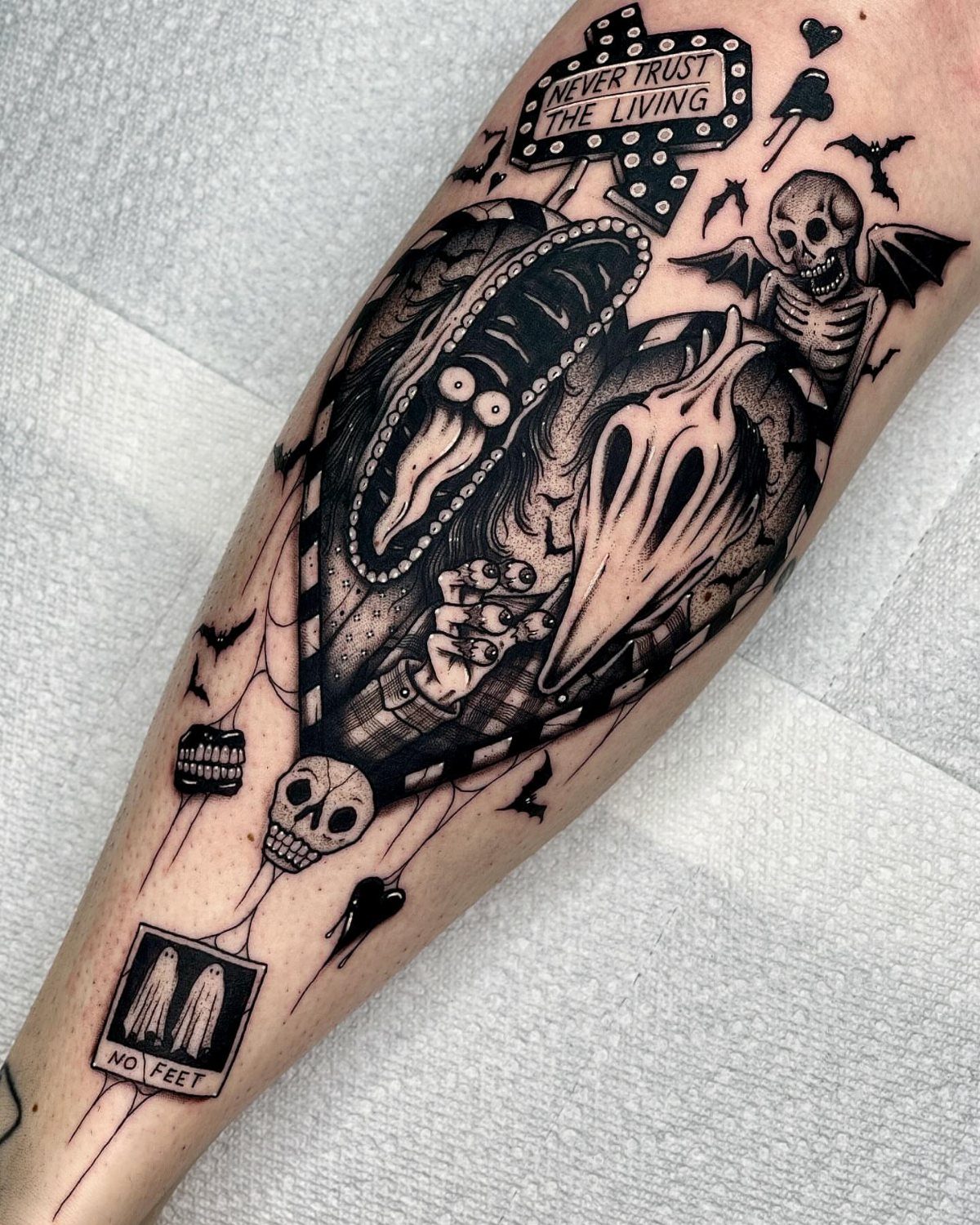
Beetlejuice tattoos work best when they pull a quote straight from the script. "Never trust the living" and "No feet" are 2 lines fans recognize immediately, and pairing them with the character himself makes the reference unmistakable.
Black and grey keeps color out of the way and lets the stripes and silhouette do the work.
The leg offers plenty of room for multiple elements: the ghost, the skeleton, and the text all fit without overlapping. A single quote on the forearm or ribs keeps it smaller for just the line.
3. Halloween Tattoo
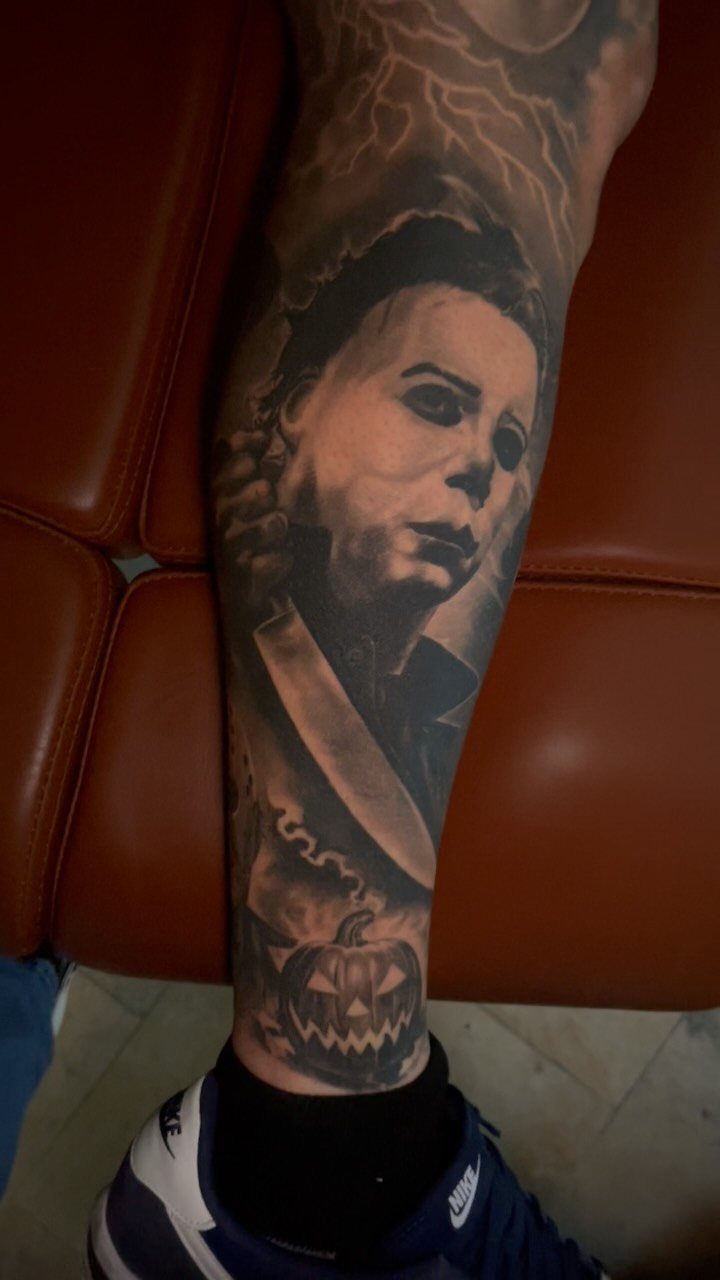
The mask is what makes it instantly recognizable, so a design that shows the full face rather than a silhouette reads better from a distance.
Black and grey suits the film’s tone.
Adding clouds or lightning fills negative space on the calf without taking over the whole piece. The lower leg works because the vertical space fits a standing figure and the pumpkin without cramping either one.
4. Jaws Shark Tattoo
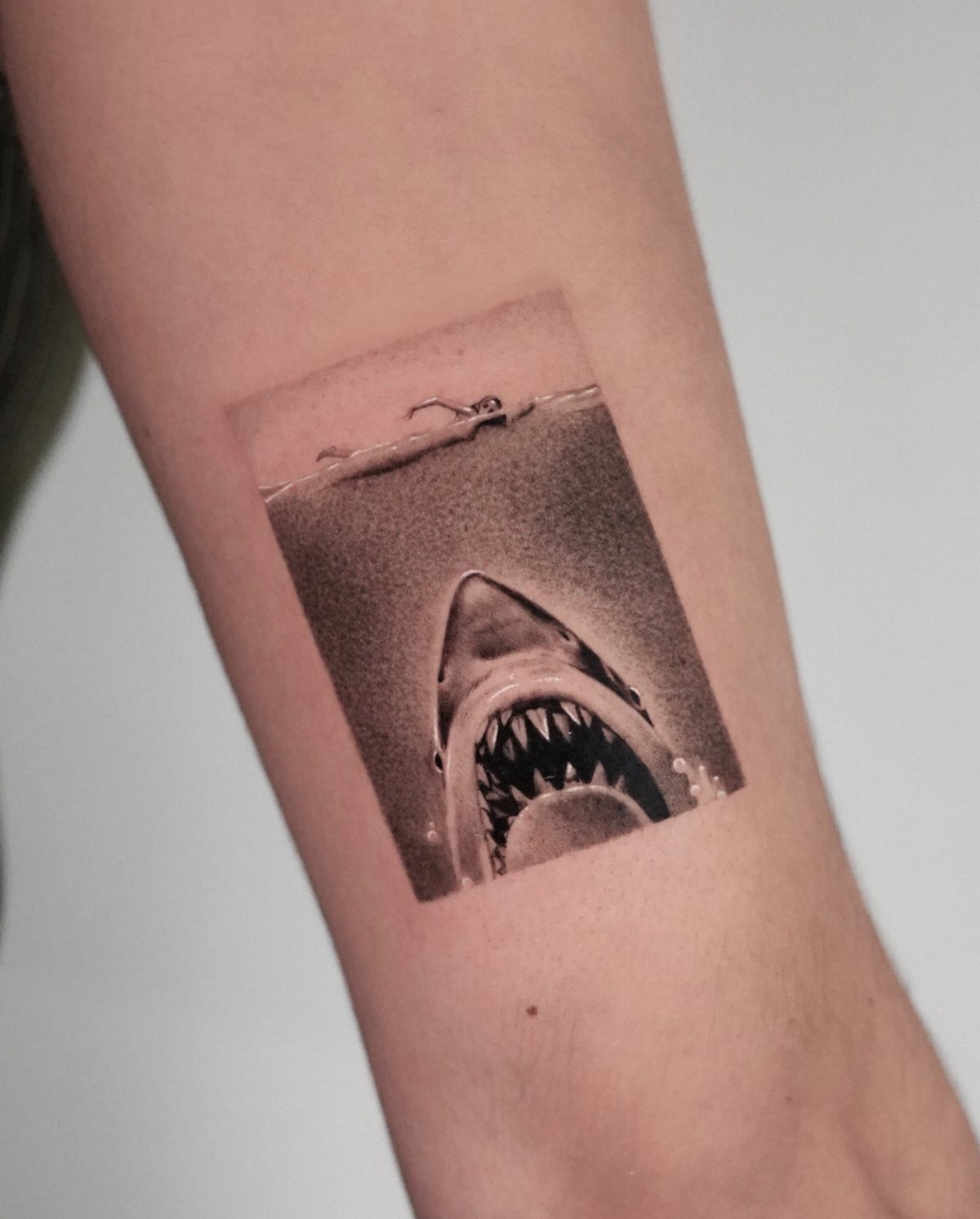
The shark rising toward a swimmer on the surface is the poster image, and it translates directly to skin. The forearm gives enough length to stack the 2 elements vertically, which keeps the proportions close to the original composition.
Black and grey holds up better than color on a design this graphic.
The shark’s open jaws need clean line work to stay readable as the tattoo settles, so finding an artist who can handle fine detail matters here more than on a simpler design.
5. Realistic Leatherface Portrait Tattoo
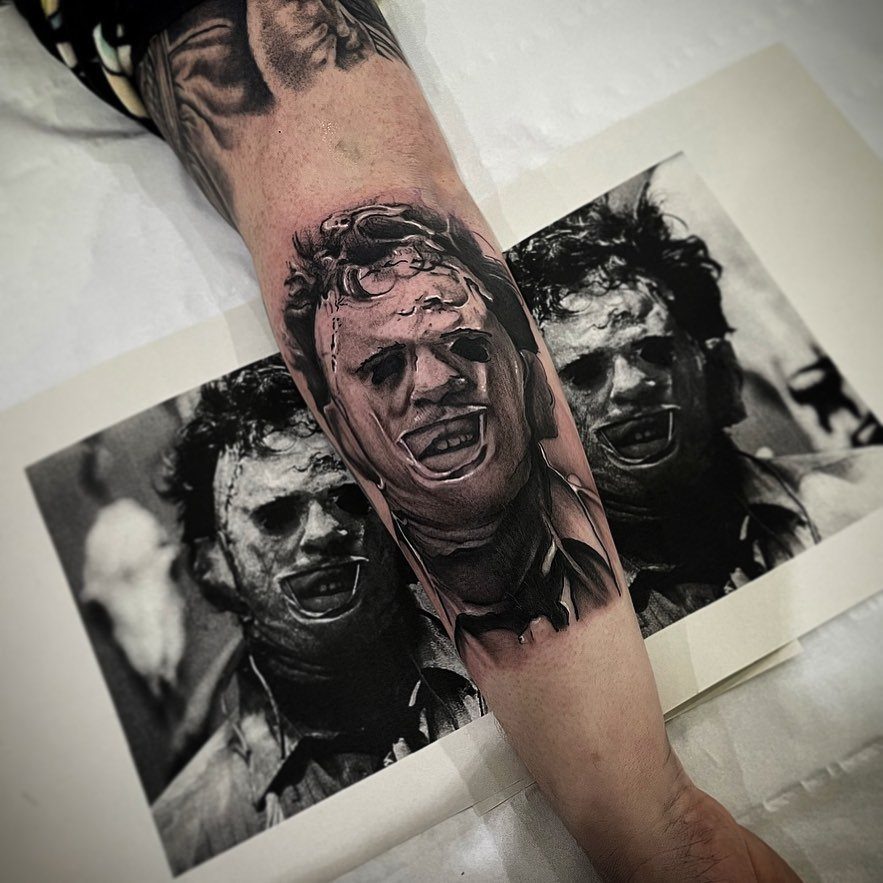
A realistic portrait of Leatherface requires an artist who specializes in photorealism. The mask’s texture, the stitching, and the shadows under the eyes all depend on precise shading.
The forearm places it where you can see it, and the flat surface helps the artist work without distortion. Bring a high-resolution reference photo; the artist will match it closely.
6. The Shining Axe Tattoo
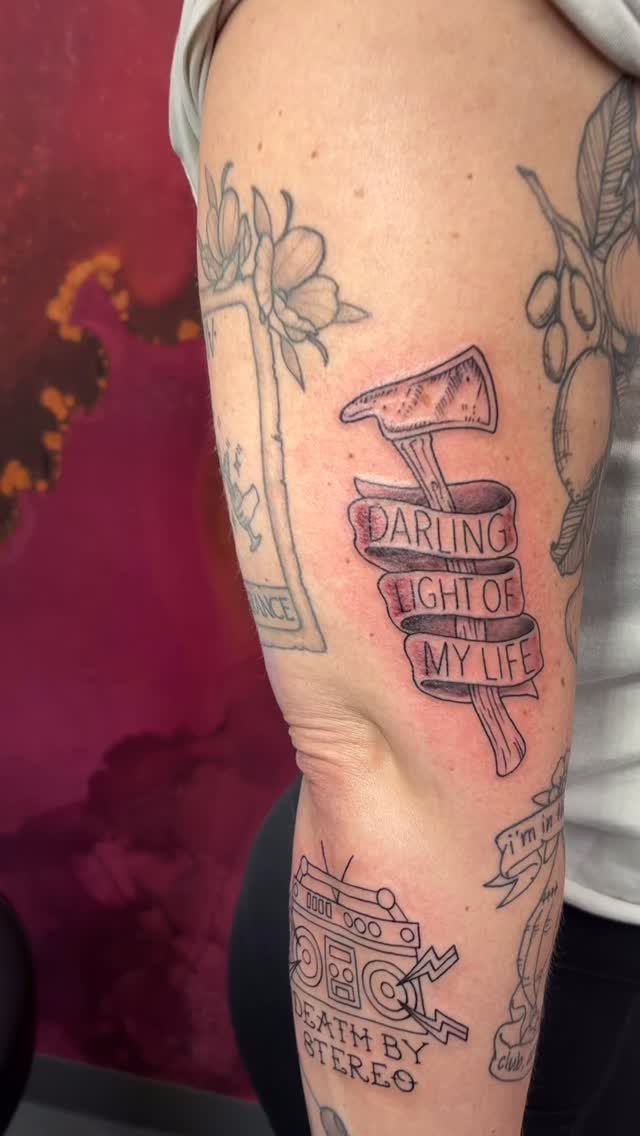
A small axe wrapped in a banner reading "Darling light of my life" pulls Jack Torrance’s most unhinged line from The Shining and pairs it with the weapon he used to break through the door.
The contrast between the endearment and the violence is what makes the tattoo work.
Blood drips or a distressed banner add to the horror feel without taking up more space.
The forearm fits this size comfortably, and black and grey keeps the line readable. A single-needle banner holds fine lettering better than bold script.
7. Evil Dead Necronomicon Tattoo
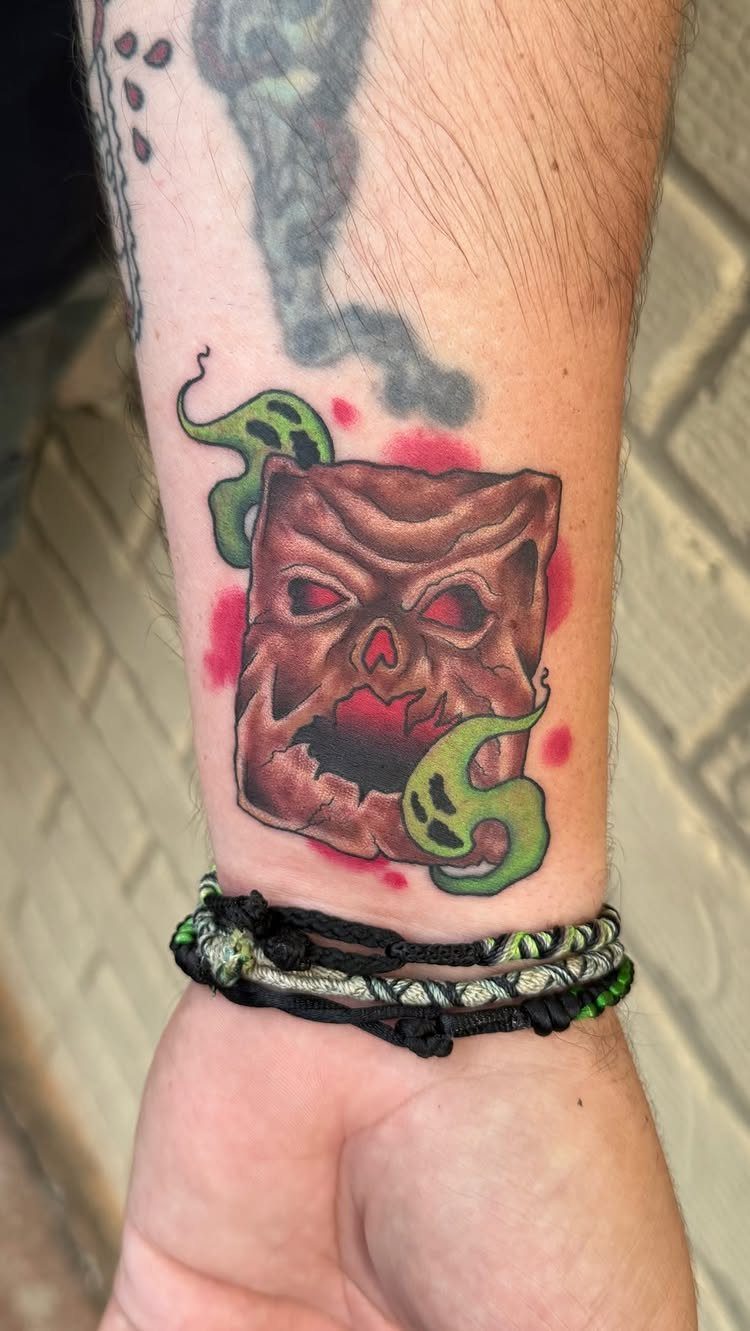
The Necronomicon’s textured cover and demonic face give an Evil Dead tattoo instant recognition, and the color version layers green smoke with red accents to match the film’s practical effects.
The wrist fits a book-sized design without needing much vertical space. Full color makes the supernatural elements stand out, but black and grey holds up better if you plan to add more horror pieces later.
The detail in the face requires an artist comfortable with fine line work, since the stitching and texture lose clarity if the lines bleed together as the tattoo settles.
8. Scream Movie Tattoos
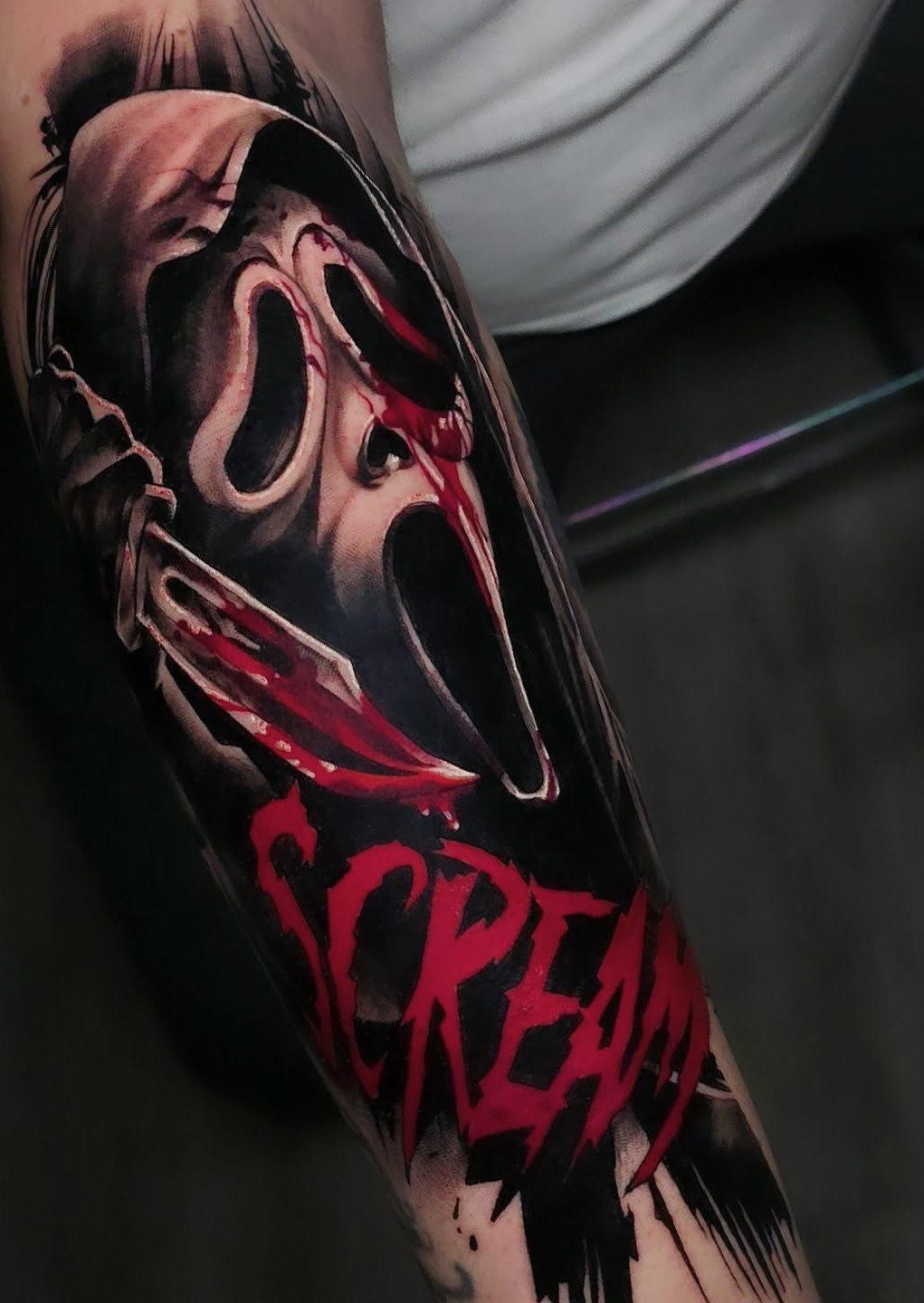
Ghostface’s mask paired with a bloody knife and the film’s title in red dripping letters is the most direct way to reference Scream.
The arm gives enough room to stack all 3 elements without cramping the mask, which needs space to stay recognizable.
Red lettering on the title and blood on the blade give you the only color this piece needs.
The rest works better in black and grey so the blood drips read clearly. An artist who can handle crisp line work on the mask’s expression will keep it from looking flat.
9. The Lost Boys
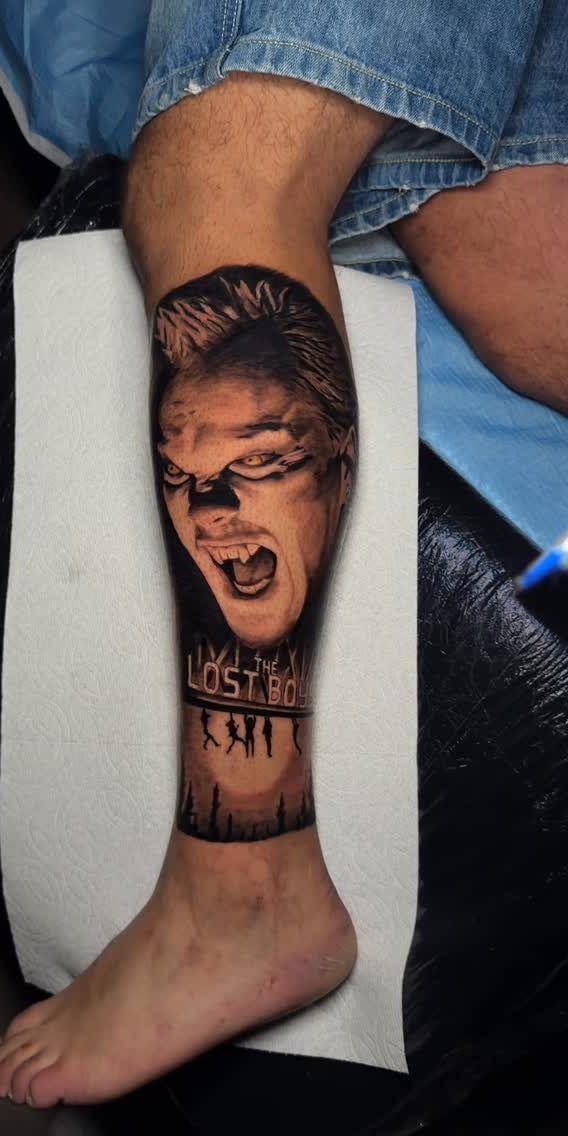
The screaming vampire face over silhouettes of bikers captures The Lost Boys without needing color.
Black and grey fits the film’s shadowy aesthetic, and the lower leg gives vertical space to stack the face, the text, and the figures without overlapping.
The title in bold lettering anchors the design.
A custom version of this in black and grey lets the shading carry the horror tone, and the face needs an artist who can handle expression work. The calf is wide enough for a piece this detailed to age well.
10. Friday the 13th Hockey Mask Tattoo
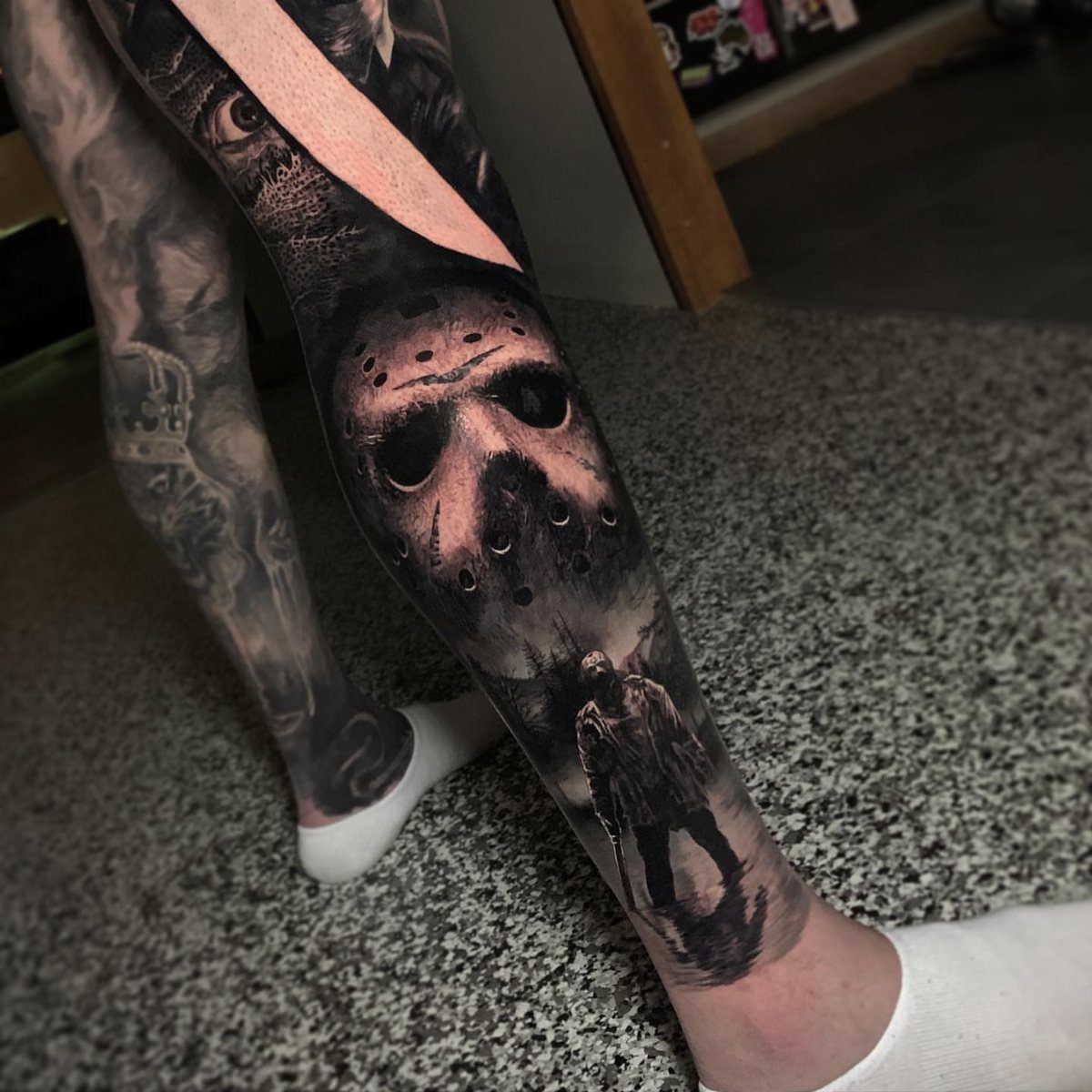
Jason’s hockey mask is immediately recognizable on its own, but adding the machete and a full figure makes the reference complete.
The lower leg fits all 3 elements stacked vertically, and black and grey keeps the focus on the shapes rather than adding color that competes with the icon.
The mask needs clean line work on the straps and openings to stay readable. A full-body Jason figure adds height to the design, which works on the calf where you have the length for it without distortion.
11. Chucky Portrait Tattoo
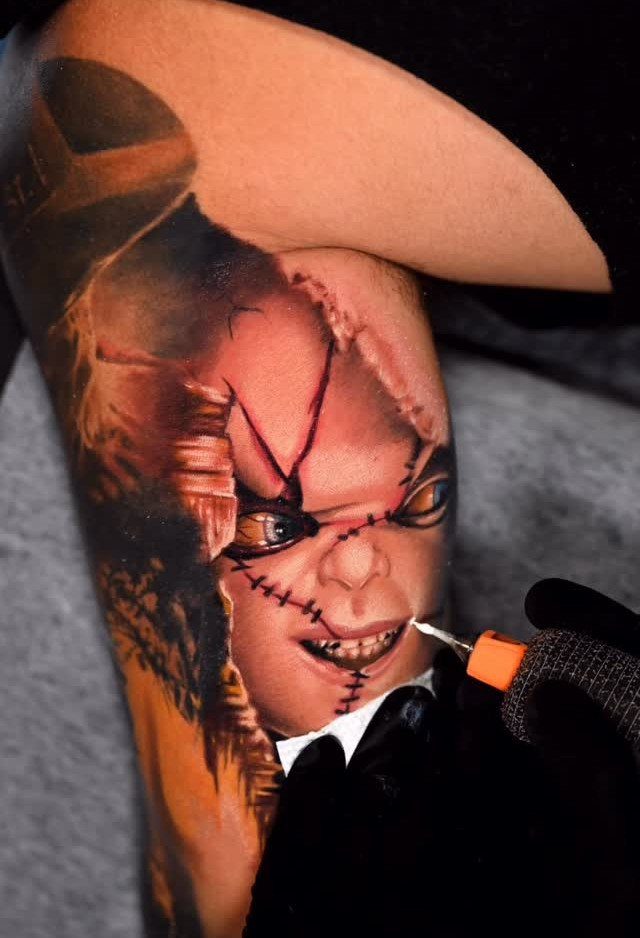
Chucky’s stitched face, red hair, and overalls are what make the character stick, so a realistic portrait requires an artist who can handle skin texture and the fabric details.
The stitching on Chucky’s face and the shading around his eyes depend on precise line work, and those details fade first if the artist rushes them.
Full color adds the red hair and blue overalls, but black and grey keeps the scars and expression front.
12. Freddy Krueger Scratch Tattoo
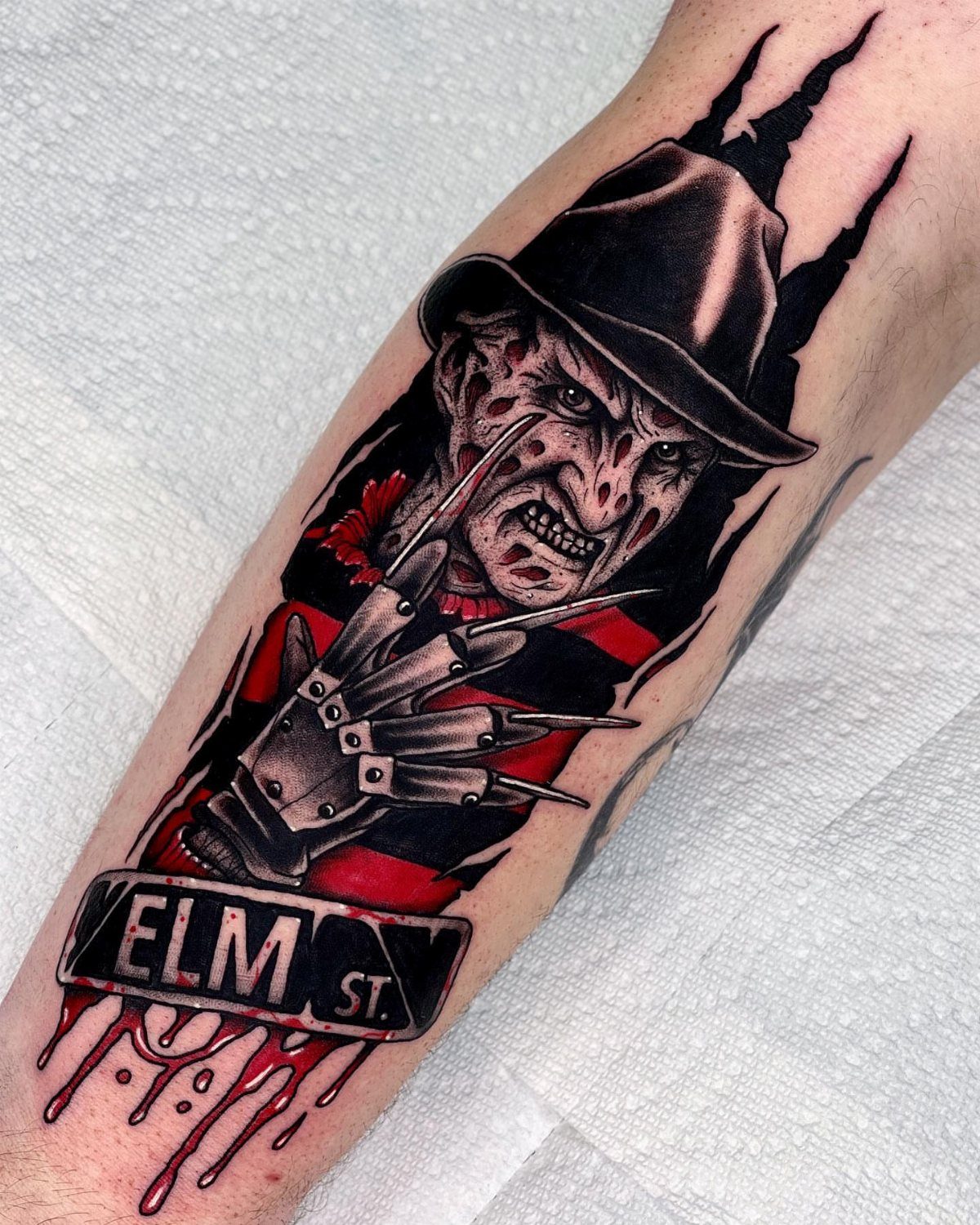
The arm gives both elements room to breathe, and each blade on the glove needs that separation to stay readable.
The blood dripping from the sign adds movement without filling the whole background.
Black and grey works here because the glove’s metal blades and the sign’s lettering both need contrast to read clearly. An artist comfortable with shading metal surfaces will keep the glove from looking flat.
13. Universal Monsters Tattoo
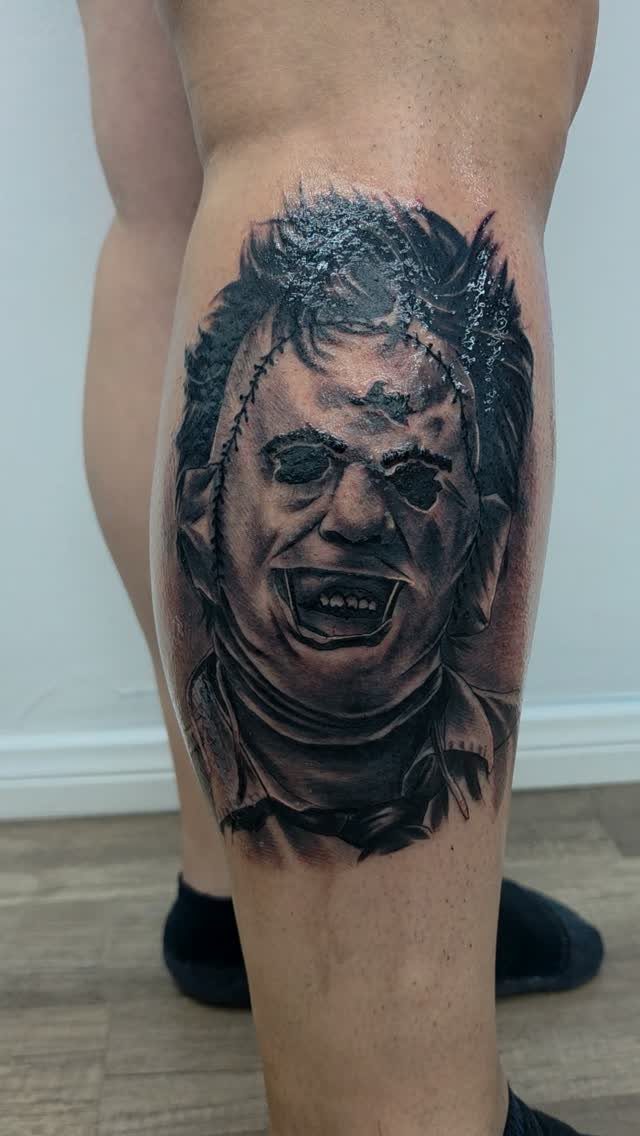
Frankenstein’s monster is one of Universal’s early horror icons, and a tattoo like this one gives you a tribute to the era that defined the genre.
The calf or forearm fits multiple portraits stacked or arranged side by side, and each face needs enough room to stay distinct as the tattoo settles.
An artist who can handle realistic portrait work will keep the expressions and period makeup details sharp.
Meaning of Horror Movie Tattoos
These tattoos usually point back to a film or character that stayed with you, tied to the first time you saw it or the way it made you feel.
The genre reflects societal fears across decades, and a tattoo of an icon from that era can acknowledge what scared people then and what still does now.
The darker imagery appeals to people who want to show a side of their personality that doesn’t fit softer designs.
A portrait of Leatherface or Universal Monsters wrapping your arm signals comfort with the macabre, and that reads as rebellion or simple honesty depending on who’s looking.
Photorealistic portraits lean on black and grey realism, while neo-traditional adds bold color and stylized shapes.
The choice comes down to whether you want the tattoo to look like a still from the film or a tribute that stands apart from it.
Styles of Horror Movie Tattoos
Neo-traditional adds bold outlines and saturated color, which suits characters with strong silhouettes like Ghostface or Beetlejuice. The thicker lines hold up better over time, and the color stays readable even when the tattoo fades slightly.
Illustrative styles fall between the two, using clean line work with selective shading. This approach works for iconic symbols like Jason’s hockey mask or Freddy’s glove, where you want the shape to stay recognizable without needing photorealistic detail.
Full color adds red blood, green smoke, or the specific palette of a film, but it fades faster than black and grey.
Placement of Tattoos
Arms and legs offer flat surfaces that let an artist work without distortion, which matters for portraits and detailed line work that need to age clearly.
The forearm fits smaller designs like a single character or quote, while the calf gives vertical space to stack multiple elements without cramping them.
The back handles large-scale pieces with room for multiple characters or full scenes, though you won’t see it as often yourself.
Ribs and sides curve more, so text and portraits can distort as the body moves, and the pain level is higher there than on the arm or leg.
Placement also depends on whether you want the tattoo visible in everyday clothing. The forearm and lower leg show unless you cover them, while the bicep, thigh, and back stay hidden under sleeves and pants.
Frequently Asked Questions
What is the scariest tattoo?
Photorealistic portraits of Leatherface or Hannibal Lecter sit at the top because the detail holds every line of expression and every bit of texture that made the character disturbing in the first place.
The stitching on Leatherface’s mask or the moths surrounding Lecter add detail that pulls the horror straight from the screen onto skin.
These designs require an artist who specializes in portrait work, since the shading and fine lines carry the entire effect.
What are some iconic movie tattoos?
Jason’s hockey mask, Freddy Krueger’s bladed glove, and Ghostface’s mask are instantly recognizable on their own without needing text or color to explain the reference.
The death’s-head hawkmoth framing Lecter’s face and the shark rising toward the swimmer both lift scenes straight from posters that defined their films.
Each one works because the shape or face is tied to a single film, so the tattoo reads clearly even as it ages.