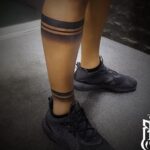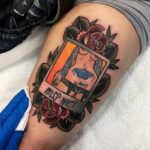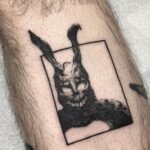
American traditional style runs on bold black outlines and high contrast, and the designs hold up better over time because thick lines stay crisp as the ink spreads.
If the tattoo needs to read from across the room and age cleanly without color fading, traditional black work does it.
Memorial pieces and geometric patterns both hold their clarity for years, which makes black line work a practical choice when you want something that still reads cleanly later.
1. American Traditional Style
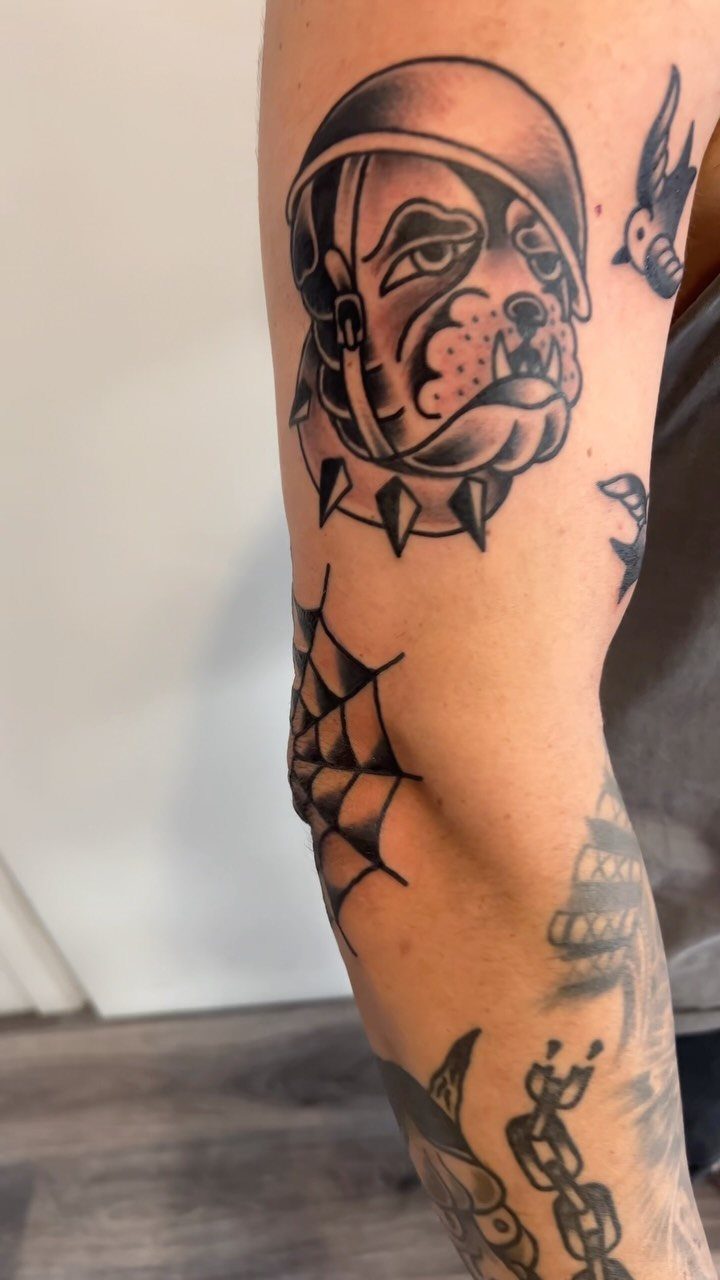
American traditional style runs on bold black outlines, high contrast and a flat color palette that stays tight: red, yellow, green, maybe a little blue. Black carries the structure.
The work relies on line weight and negative space to give each shape its presence. Thick outlines hold the shapes together, and shading stays simple, usually just solid black fill or a few gradations.
If you want a design that reads from across the room and holds up as the ink spreads over time, this approach does it. The bold lines stay crisp longer than fine detail or soft shading.
2. Traditional Black Tattoo Daggers
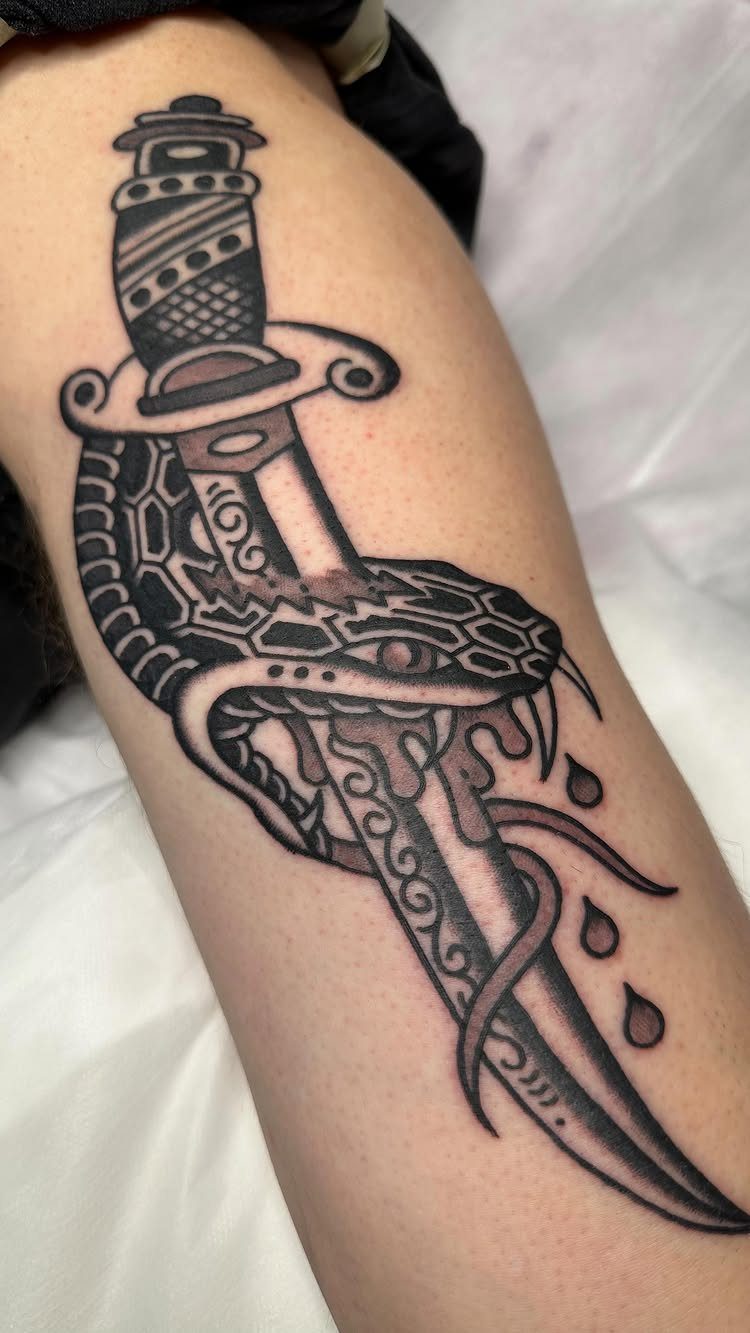
Daggers show up constantly in traditional black work, often paired with a snake, a rose or a banner. Wrapping the snake around the blade in a tight spiral lets solid black shading carry the weight without needing color.
The dagger motif suits a leg or forearm well because the vertical shape follows the limb. Placing it on the calf or outer forearm keeps the composition clear and easy to read.
Black ink alone makes the tattoo age cleanly. No color means no fading to manage, just the design itself holding its form.
3. Cultural Significance
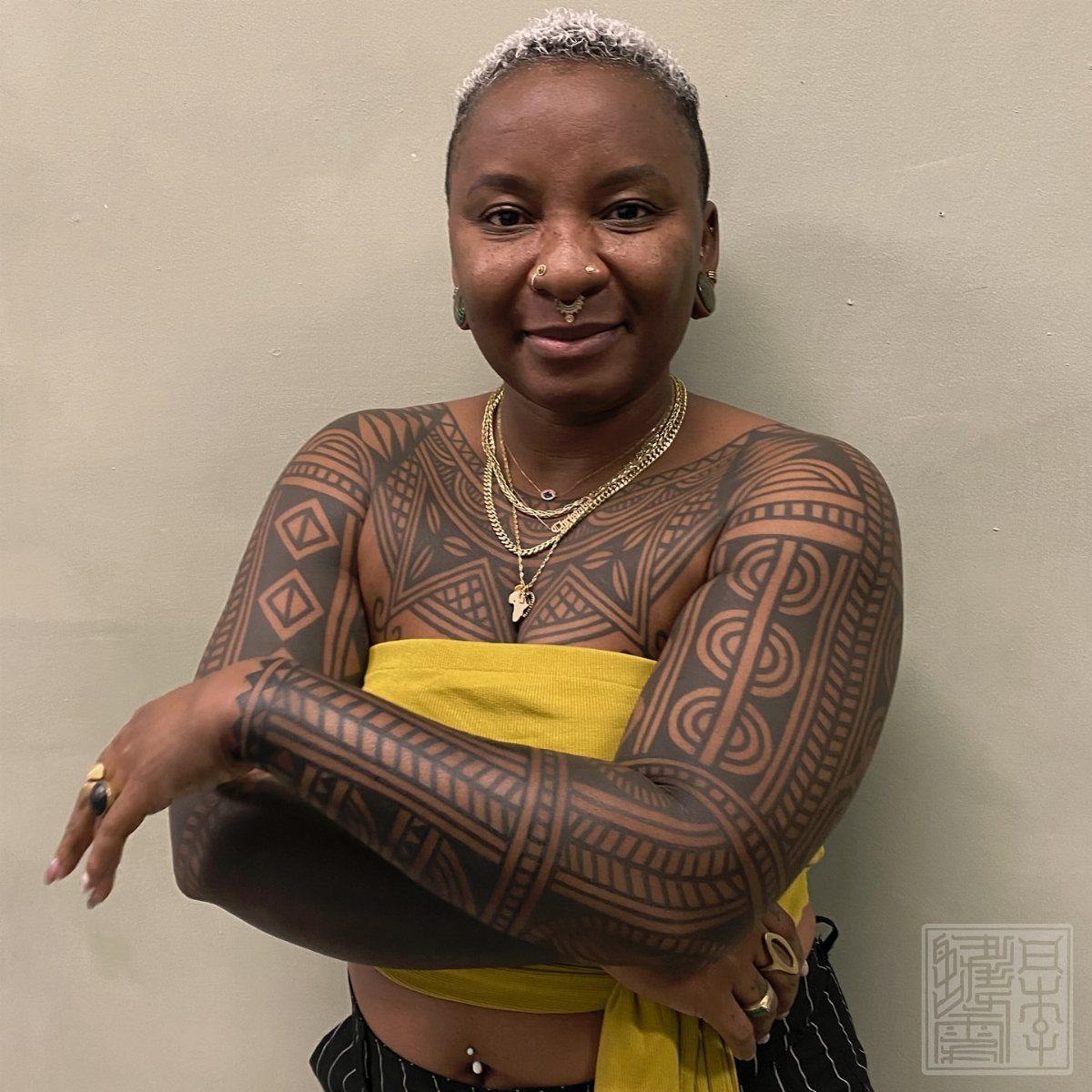
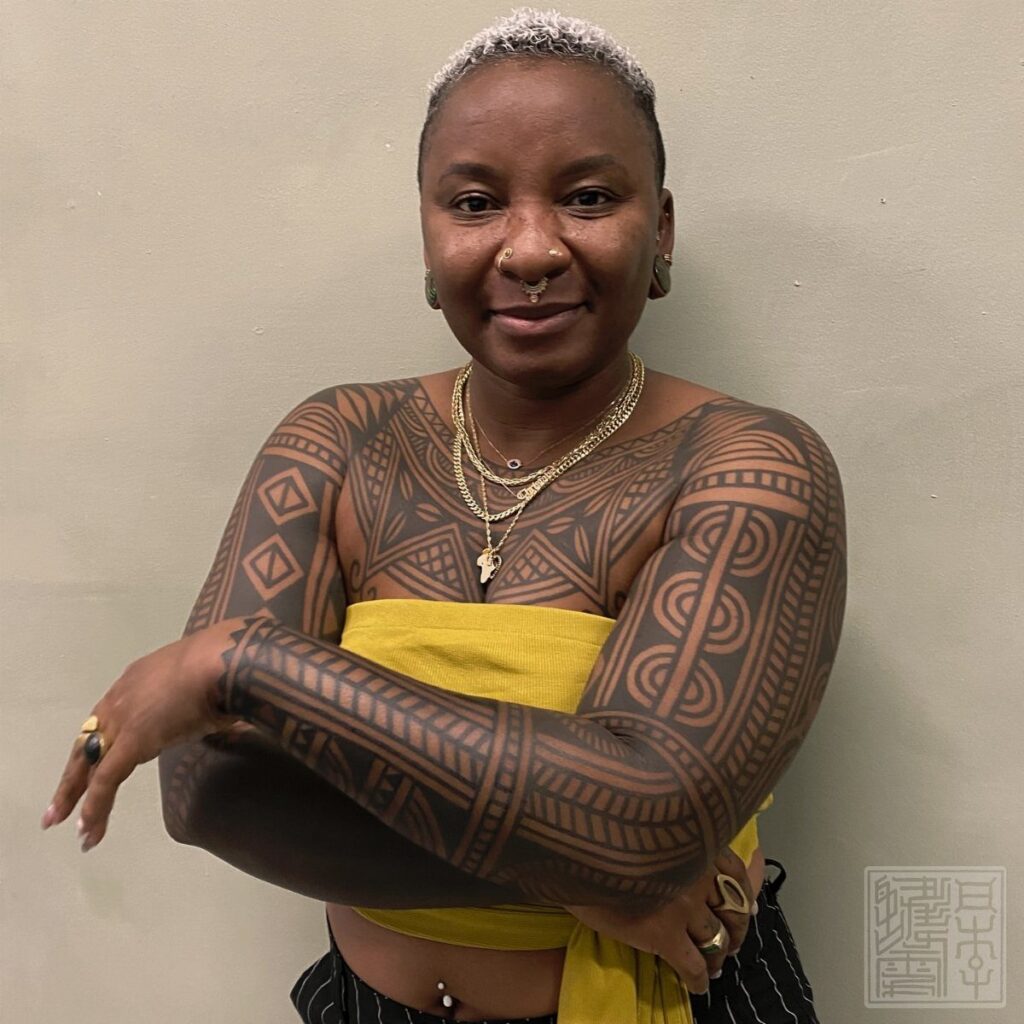
Geometric patterns in black ink can carry cultural meaning or simply reflect a personal aesthetic. Repeated shapes build into a larger composition that wraps the body.
Traditional black tattooing appears in many cultures, and the specific patterns often tie to heritage or identity. The geometric style visible here leans modern, but the approach of covering large areas in black linework has deep roots.
If you are drawn to symmetry and bold graphic forms, this direction gives you a lot of surface impact without needing shading or color.
4. Memorial Tattoos
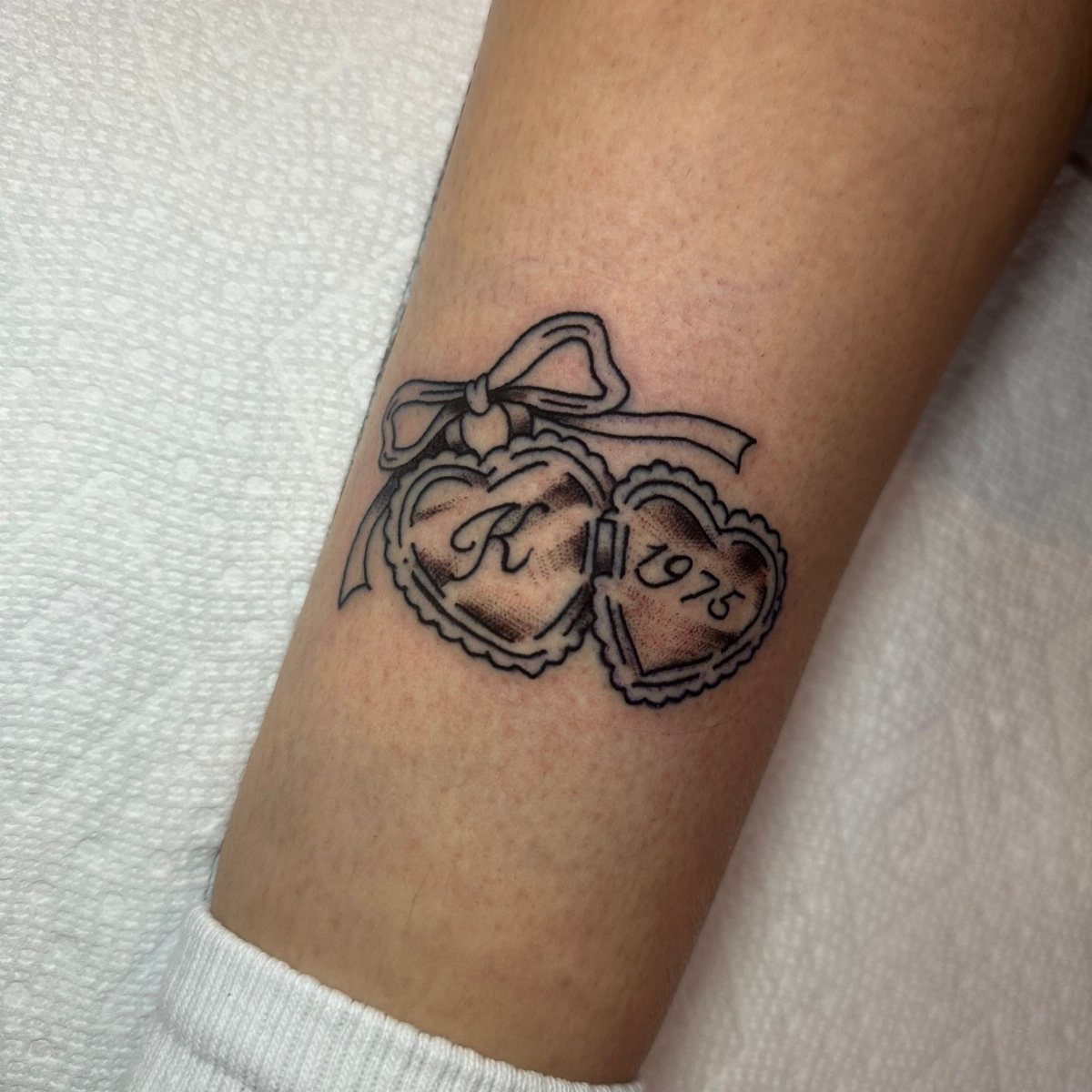
Memorial tattoos in traditional black style usually include names, dates or symbols tied to a specific person. Linked hearts can hold an initial and a year, and adding a bow softens the look compared to a plain banner.
Forearm placement keeps the tattoo visible to the wearer, which matters when the design is personal. Black line work stays clean without much shading.
Black ink suits memorial pieces because it ages well and keeps the sentiment legible over time.
Choosing the Right Design
Symbolism matters when the tattoo is permanent.
I check what each design means before I commit, especially with traditional imagery that carries specific associations. An anchor might represent stability, a dagger can signal sacrifice or loss, and a rose often ties to love or remembrance.
Placement shapes how the design reads.
Smaller symbols like anchors or daggers fit wrists or ankles without losing detail. Eagles and ships need the chest or back because those designs lose detail when you try to squeeze them small.
The composition should make sense for the spot. A symmetrical design works better centered on the chest or upper back.
Take the time to match the image to what it means to you, not just what looks good in a portfolio.
Finding the Right Artist
A tattooist who works regularly in black traditional style will handle the line weight and spacing better than someone who does it occasionally. Bold outlines and high contrast require confidence, and that shows up in the portfolio.
I look for clean lines, even shading and compositions that read clearly from a distance. If the work looks muddy up close or the shapes blur together, that artist is not the one.
Ask to see healed photos, not just fresh tattoos. Black ink settles differently depending on how it was applied, and a healed piece shows whether the lines stayed crisp or spread too much.
Check reviews for consistency. One great tattoo is not enough; I want to see that the artist delivers the same quality across multiple clients.
Aftercare for Tattoos
Keep the tattoo clean and moisturized while it heals. Wash it gently with unscented soap, pat it dry, and apply a thin layer of fragrance-free lotion or a product your artist recommends.
Direct sunlight fades black ink faster than anything else, so cover the tattoo or stay out of prolonged sun exposure for the first few weeks. Once it heals, sunscreen keeps the lines from breaking down over time.
Do not soak the tattoo in water. Showers are fine, but skip pools, baths and the ocean until the skin has fully closed.
Expect some peeling and itching as it heals. Do not scratch or pick at the scabs, or you risk pulling out ink and leaving gaps in the design.
Frequently Asked Questions
What are traditional American tattoos called?
Traditional American tattoos are often called old school or American traditional, and when done entirely in black ink they are known as black traditional tattoos.
Norman "Sailor Jerry" Collins refined this style in the early 20th century while serving in the Navy. Bold outlines and solid fill hold their shape as skin changes, which is why these designs still read clearly decades later.
What is a full black tattoo?
A full black tattoo uses only black ink, building contrast through solid fill, bold lines and the unmarked skin left around them.
Blackwork covers several distinct approaches: tribal work rooted in Polynesian and Maori traditions, geometric designs built from precise mathematical forms, and illustrative pieces that use detailed figurative imagery.