North star designs range from a single fine-line point small enough for a wrist to a realistic rendering that takes 3 to 4 hours across the upper back.
The spot you pick decides which version works: a wrist or ankle fits the fine-line point, the forearm holds a colorful version large enough to fill the space, and the neck suits a small star if you can accept the pain and visibility.
1. Minimalist North Star Tattoo on the Arm
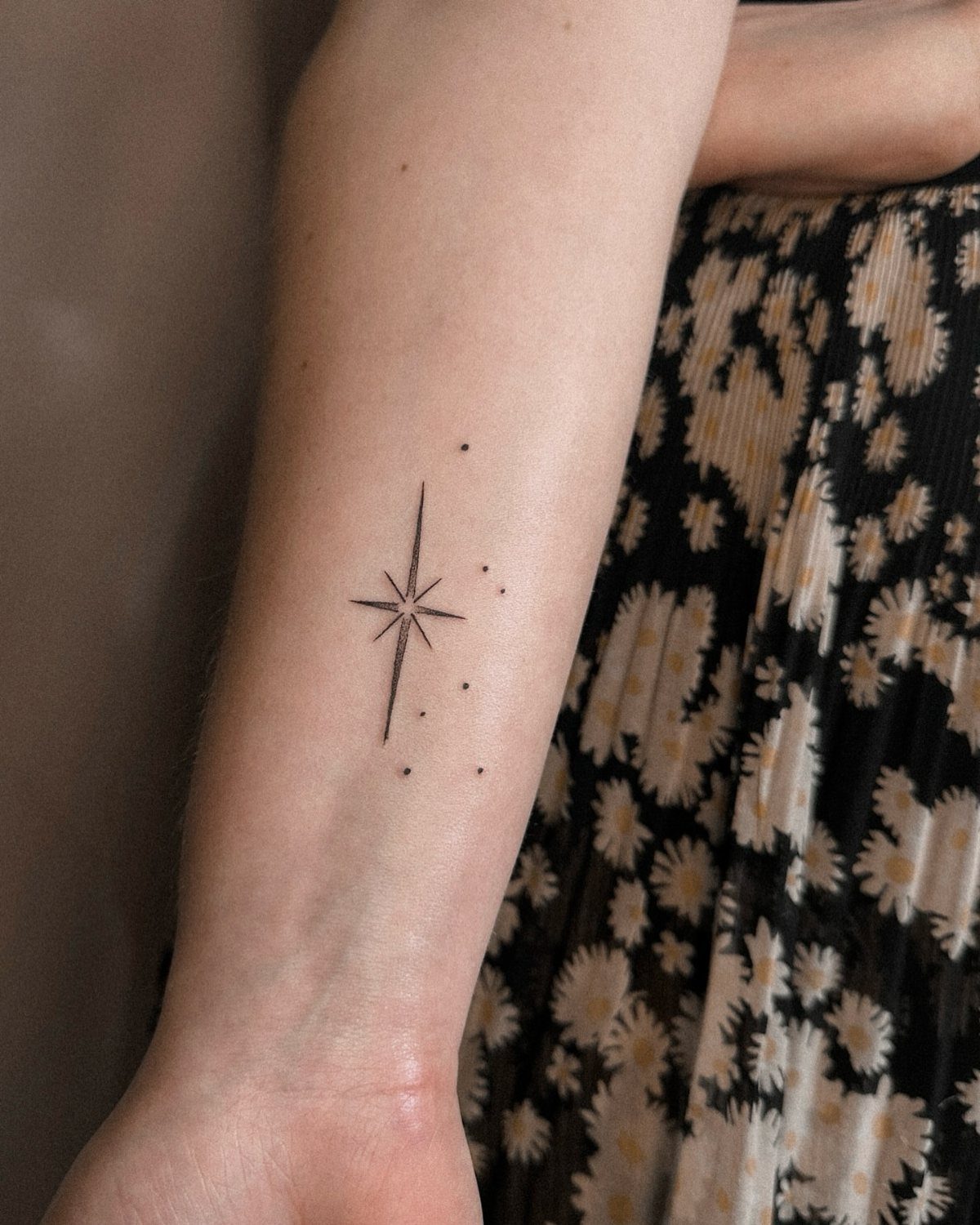
A single star with fine outlines and a few small dots to mark the space around it, kept small enough to fit cleanly on the inner forearm.
The design stays readable at this scale because there is nothing to crowd the lines.
Placement on the inner forearm puts the star where you will see it often, and the spot heals fast compared to areas that bend more. Pain here is moderate, most people find it manageable for a piece this size.
The dots can be spaced wider or pulled in tighter depending on how much empty space you want around the star itself.
2. Realistic North Star Tattoo on Upper Back
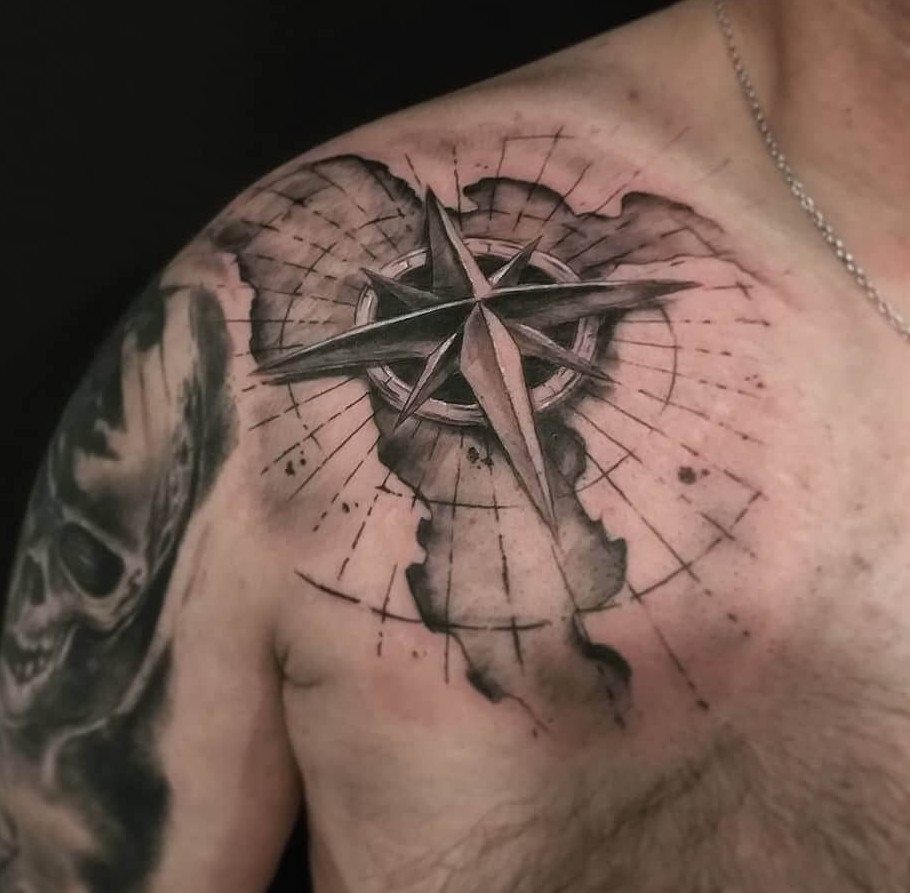
A compass rose rendered with shading and depth, layered over a map background that follows the curve of the upper back and shoulder. The black and gray work gives the piece a worn, navigational feel rather than a flat graphic.
This placement suits larger designs because the upper back offers a broad, relatively flat surface. Sessions for a piece this size often run 3 to 4 hours, sometimes split across 2 appointments if the map detail is dense.
If you already have ink on the shoulder or upper arm, a north star here can tie into that without feeling cramped.
3. Fine Line North Star Tattoo on Wrist
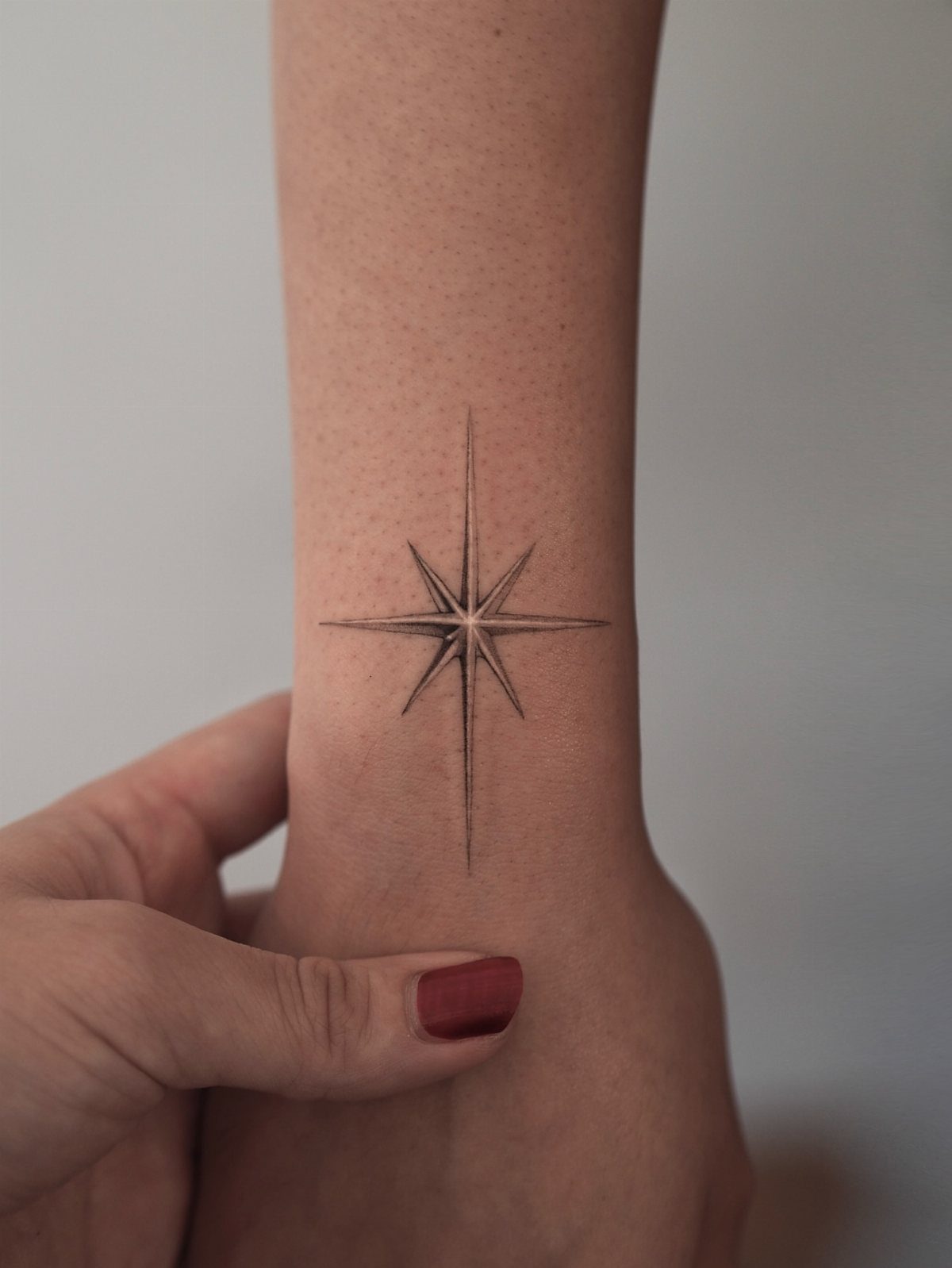
Sharp points and thin lines make up a small north star that sits on the wrist, visible whenever your hand is at rest.
Thin, precise linework depends on an artist who can hold steady detail at this scale, so ask to see healed examples before booking.
Wrist tattoos hurt more than fleshier spots; the bone and tendons sit close to the surface. The session is short, usually under an hour for a piece this small, but the area is sensitive.
Over time, fine lines on the wrist can blur slightly as the skin moves and ages. Touch-ups maintain crisp points if the detail starts to soften.
4. Black and Gray North Star Tattoo Arm
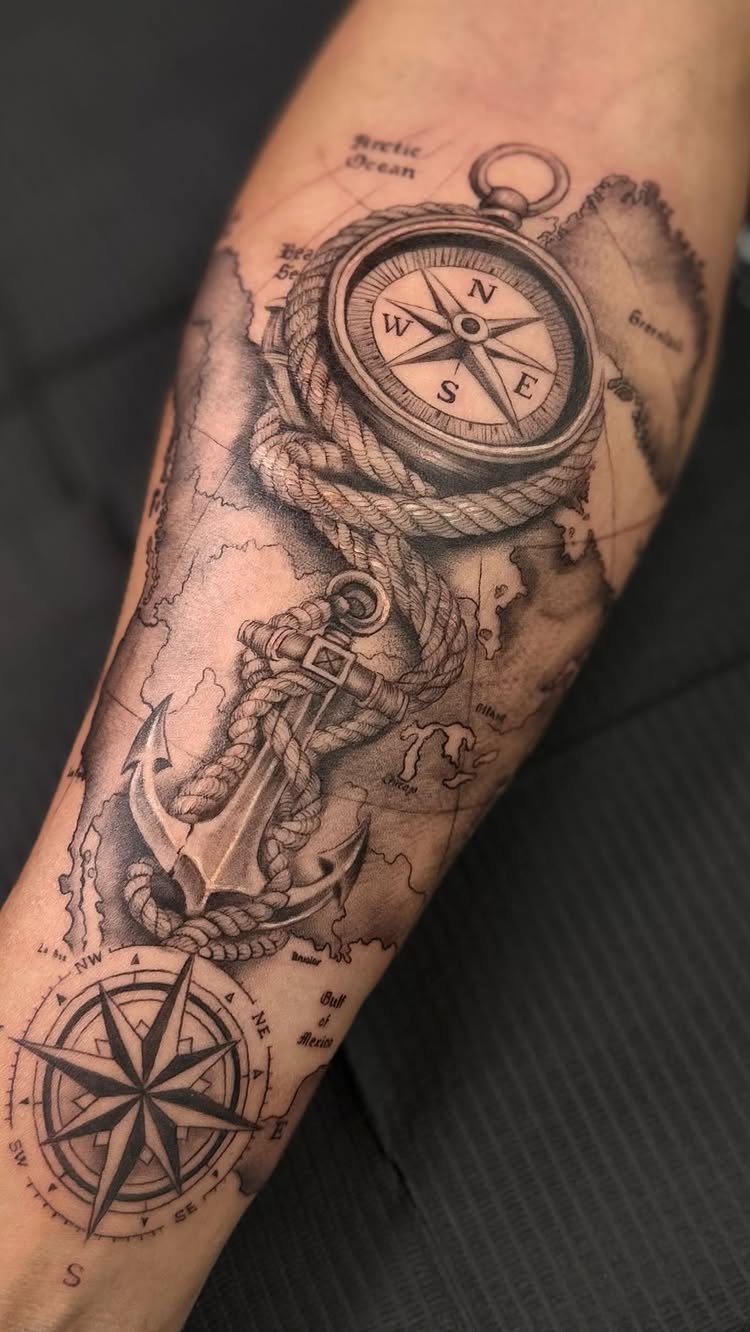
A compass rose anchors a nautical sleeve that pulls in a map, rope and anchor, all shaded in black and gray.
The star becomes part of a larger story rather than standing alone, and the vintage map detail gives the piece a sense of direction and travel.
Black and gray heals predictably and holds detail well over time, which matters when a design includes text and fine cartographic lines like the ocean names visible here.
If you are building a sleeve or half-sleeve, a north star works as a central element that other pieces can radiate from or connect to.
The North Star tattoos have historical significance with deep symbolic meaning. They represent leadership, guidance, and direction on the path of life.
5. Colorful North Star Tattoo Forearm
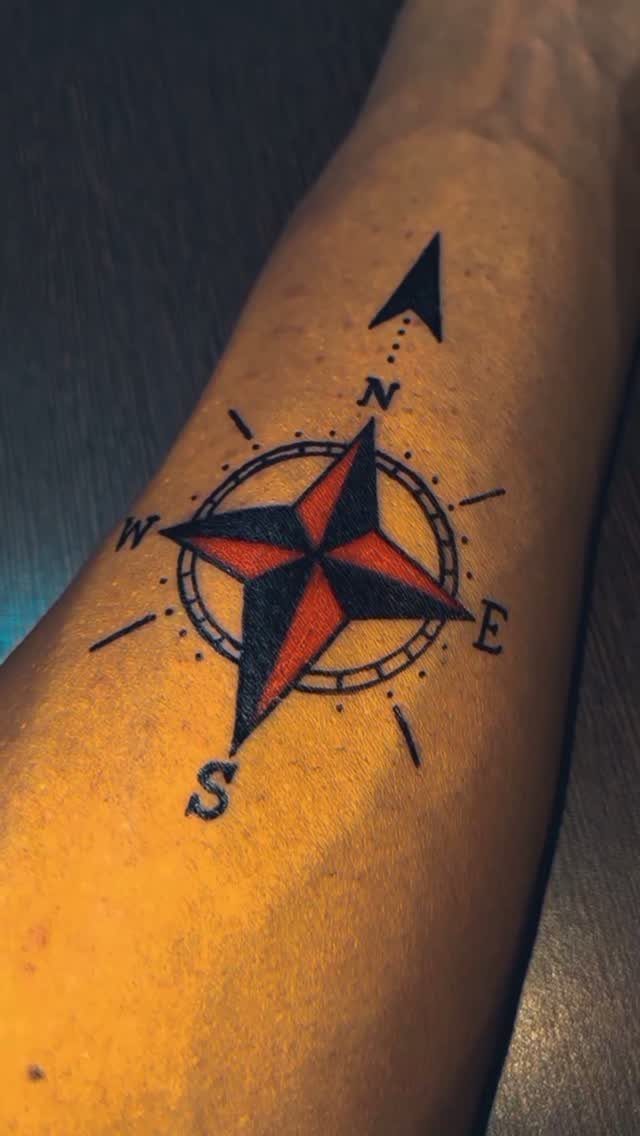
Red fills the star’s cardinal points while black outlines the compass rose and marks the directional letters, giving the design a bold two-tone look.
Color adds contrast and makes the star easier to read from a distance compared to all-black versions.
Red ink holds well on most skin tones, though sun exposure can lighten it faster than black. Sunscreen becomes part of the maintenance if you want the color to stay vivid.
The forearm offers enough space for a compass rose with all cardinal directions labeled clearly, and the spot is easy to show or cover depending on sleeves.
The forearm is one of the less painful places for a tattoo of this size.
6. North Star and Crescent Moon Tattoo
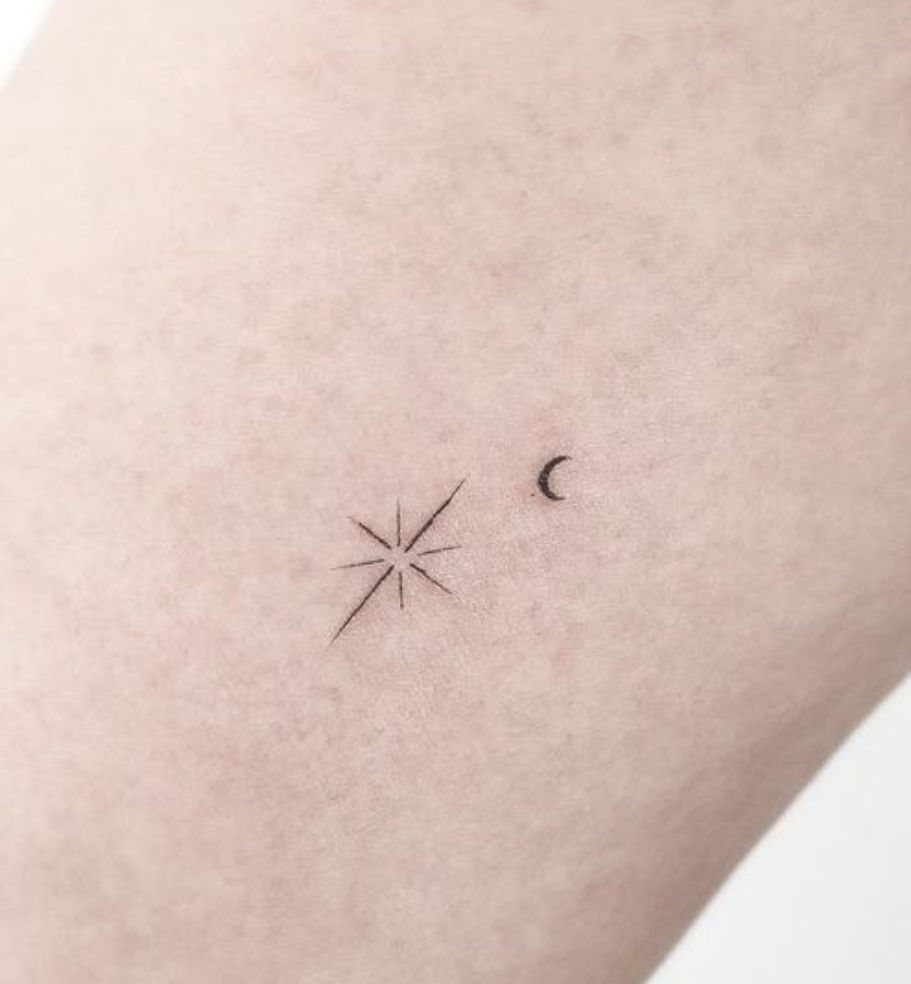
A 4-pointed star paired with a crescent moon, both rendered in simple black outlines without shading or fill. The combination reads as guidance and cycles, night sky symbols that sit well together at a small scale.
This design works on areas where you want something visible but compact: wrist, ankle, along the hairline, or on the side of a finger. The session is quick, and the pain level depends more on placement than the tattoo itself.
Both shapes stay recognizable even when small because the lines are clean and the forms are distinct. If you want the piece slightly larger, the moon can be sized up without losing the balance between the 2 elements.
7. Blue North Star Orbit Tattoo
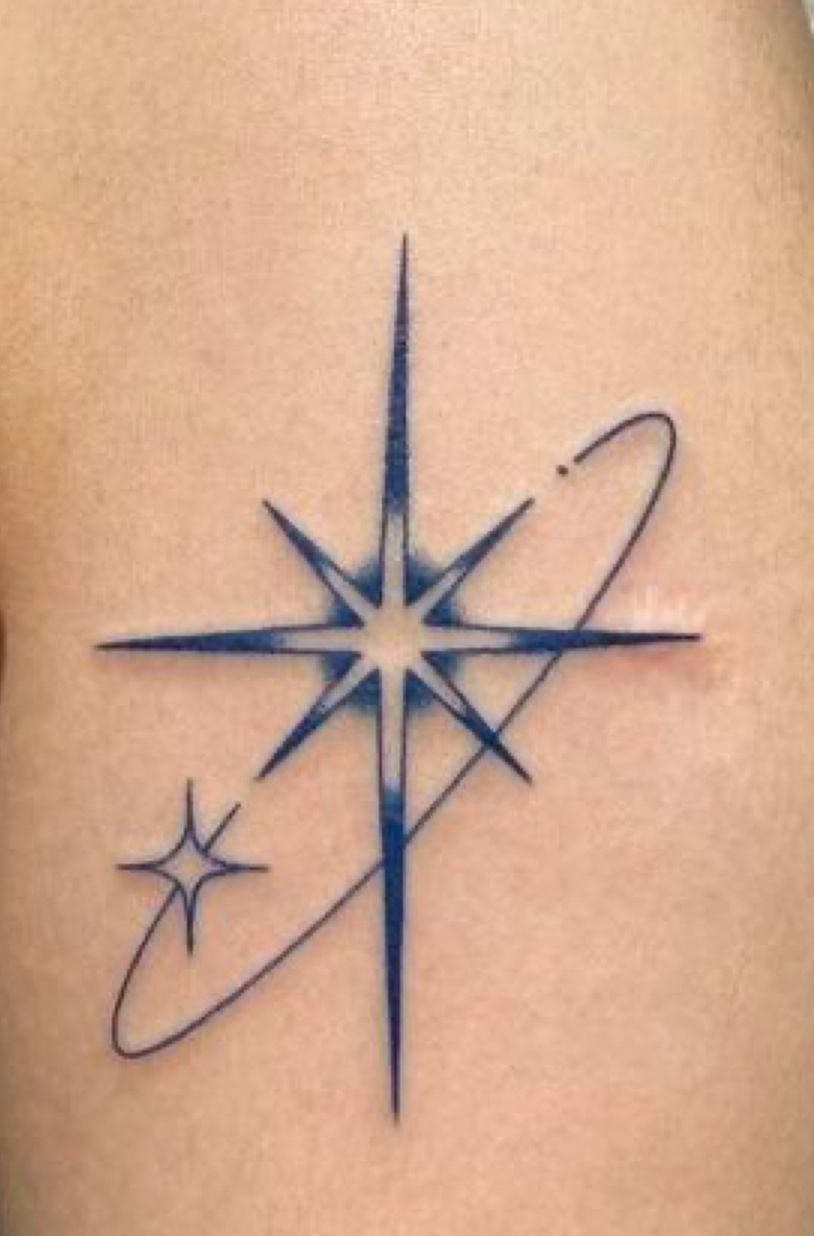
Blue ink gives this design a cooler, less traditional feel than standard black, and the color reads clearly on lighter skin tones.
The orbital ring around the smaller star adds a sense of motion without filling the piece with heavy linework.
Blue fades faster than black, especially when exposed to sun.
If you want the color to hold, sunscreen becomes part of the routine. The piece works well on the forearm or upper arm where the stars and ring have room to stay distinct.
8. Small North Star Neck Tattoo
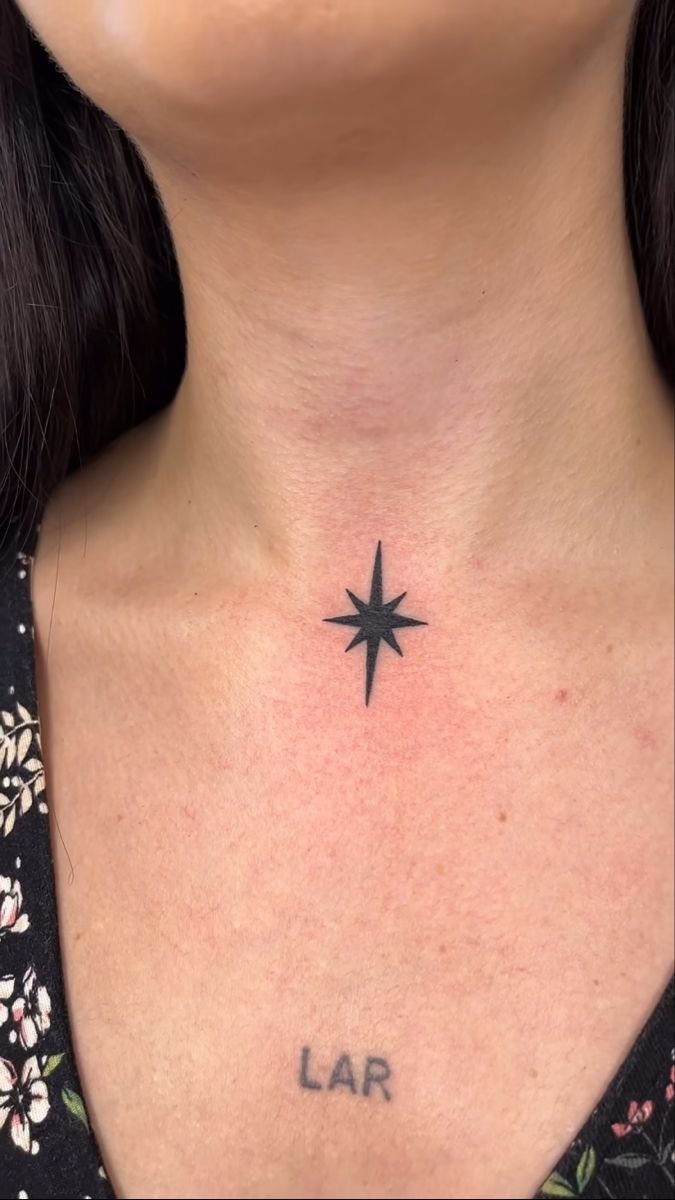
A small 4-pointed star placed at the base of the neck, just above any lettering or other detail.
The spot is visible most of the time unless you wear high collars, and the neck ranks among the more painful areas to tattoo due to thin coverage and dense nerves.
Sessions are short for a piece this small, but the pain is sharper than spots with more padding. Healing takes care, the neck moves constantly and clothing can rub the area while it is still fresh.
If you work in a setting where visible tattoos are restricted, the neck is harder to cover than the wrist or forearm.