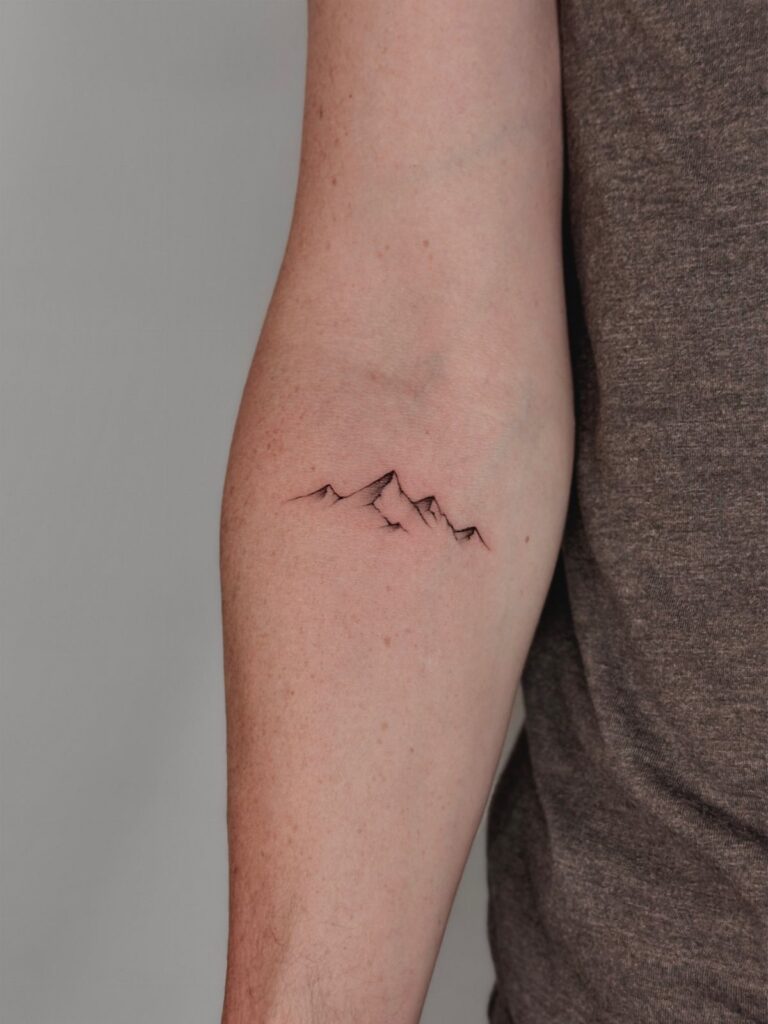
Mountain range tattoos span from dainty single-line marks that fit the ankle to full back pieces with shading, color washes and geometric structure.
Placement decides how much detail you can include: the ankle wraps a simple outline in under an hour, while the back gives you room for a hooded hiker, moon and birds across several appointments.
1. Geometric Mountain Range Tattoo
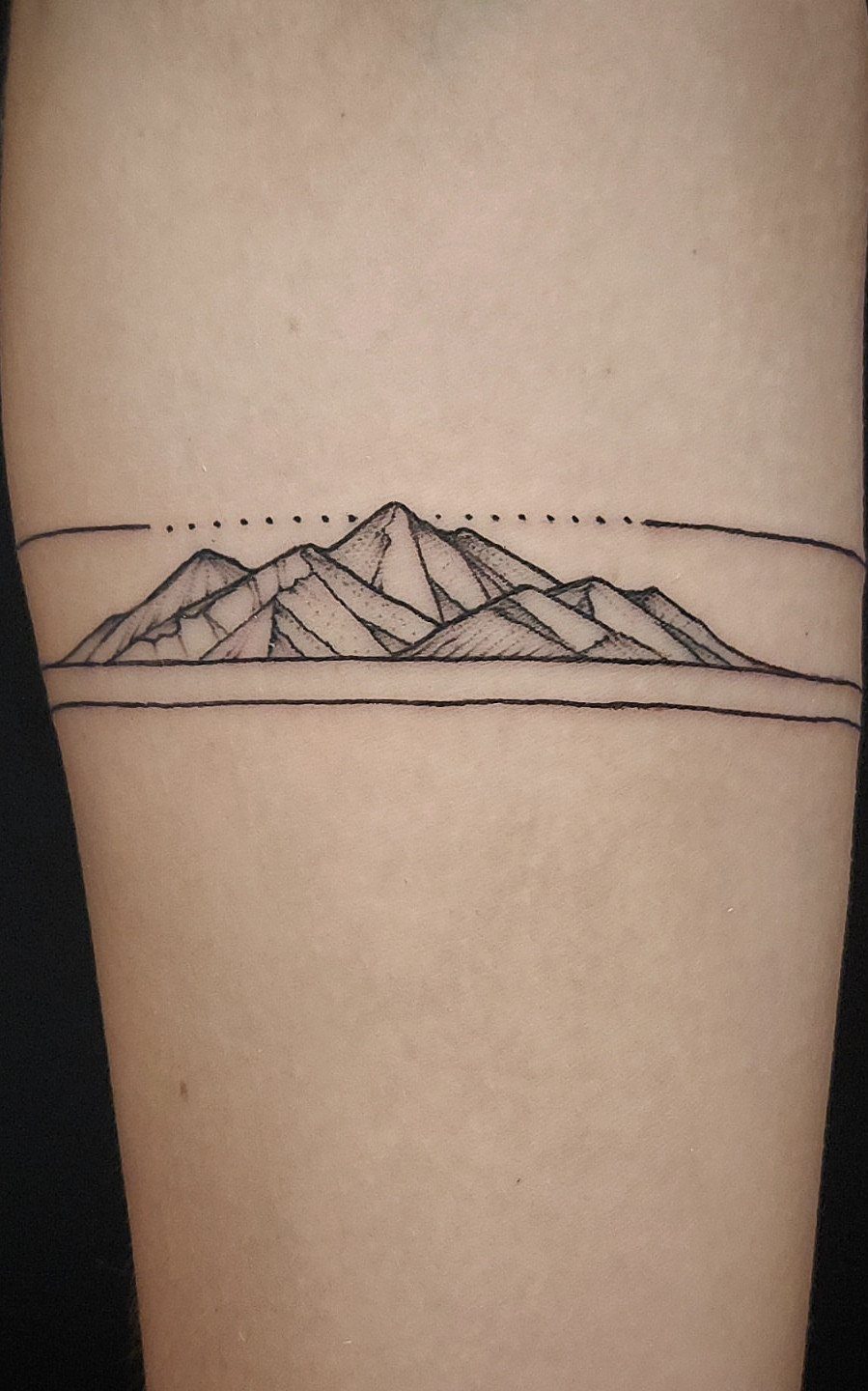
This approach treats the mountain range as a series of angular shapes instead of soft silhouettes. The forearm is one of the better spots for it because the design can wrap around the muscle and stay readable from multiple angles.
The linework stays clean and minimal, which means it ages better than heavily detailed pieces.
Dot accents add texture without filling the design too heavily. Geometric forearm pieces vary in price by size and how many elements you add.
2. Watercolor Mountain Tattoo
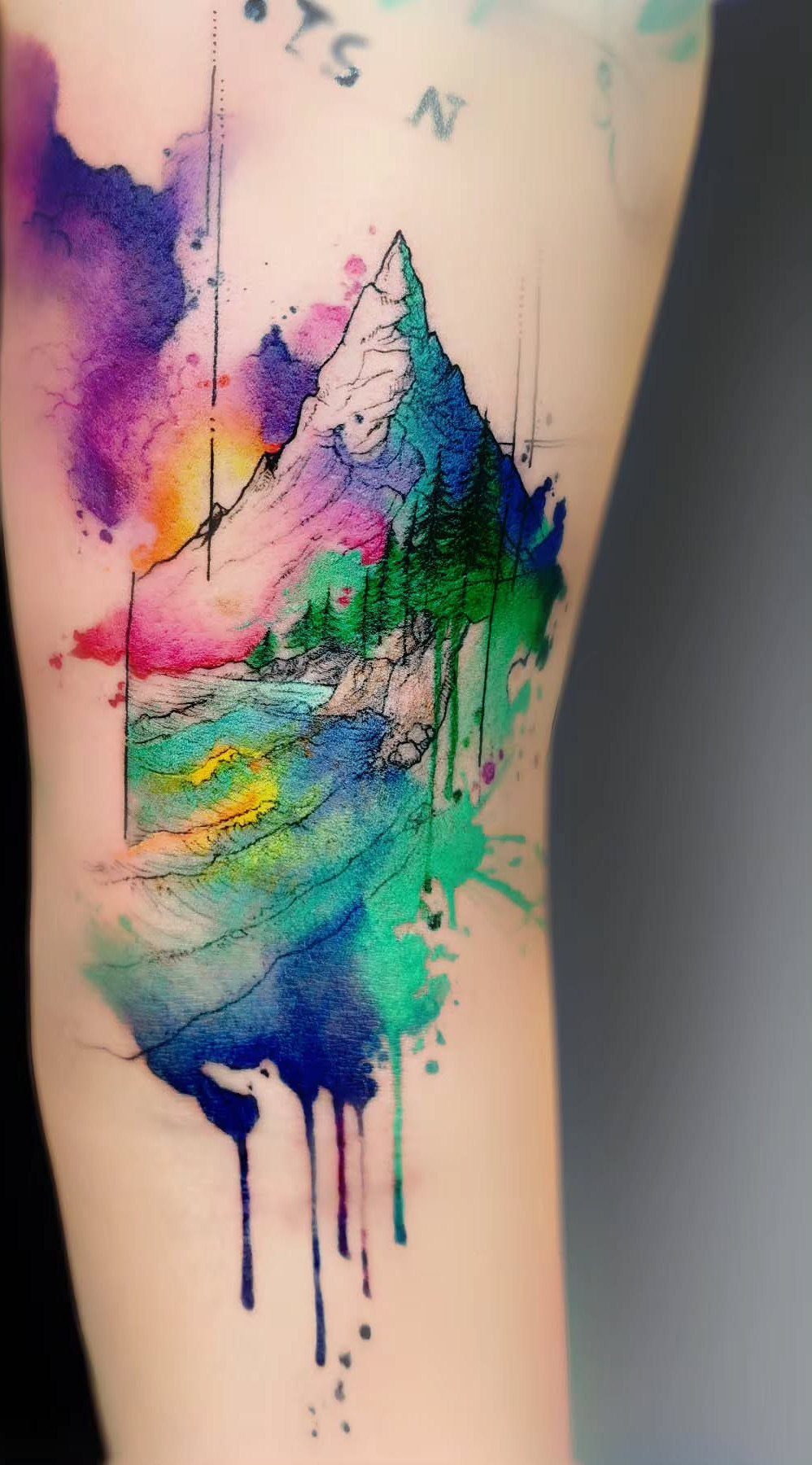
Soft washes of color bleed past the black outline the way watercolor paint spreads on paper.
The result reads more like a painting than a traditional tattoo, and it gives you room to bring in blues, purples, oranges or greens that reflect a real sunrise or sunset view.
Watercolor fades faster than solid black ink, so you’ll need touch-ups every few years for fresh color.
Placement matters: ankle and shoulder both work well, though any spot with heavy sun exposure will need more frequent touch-ups to keep the color looking sharp.
3. Japanese Style Mountain Tattoo
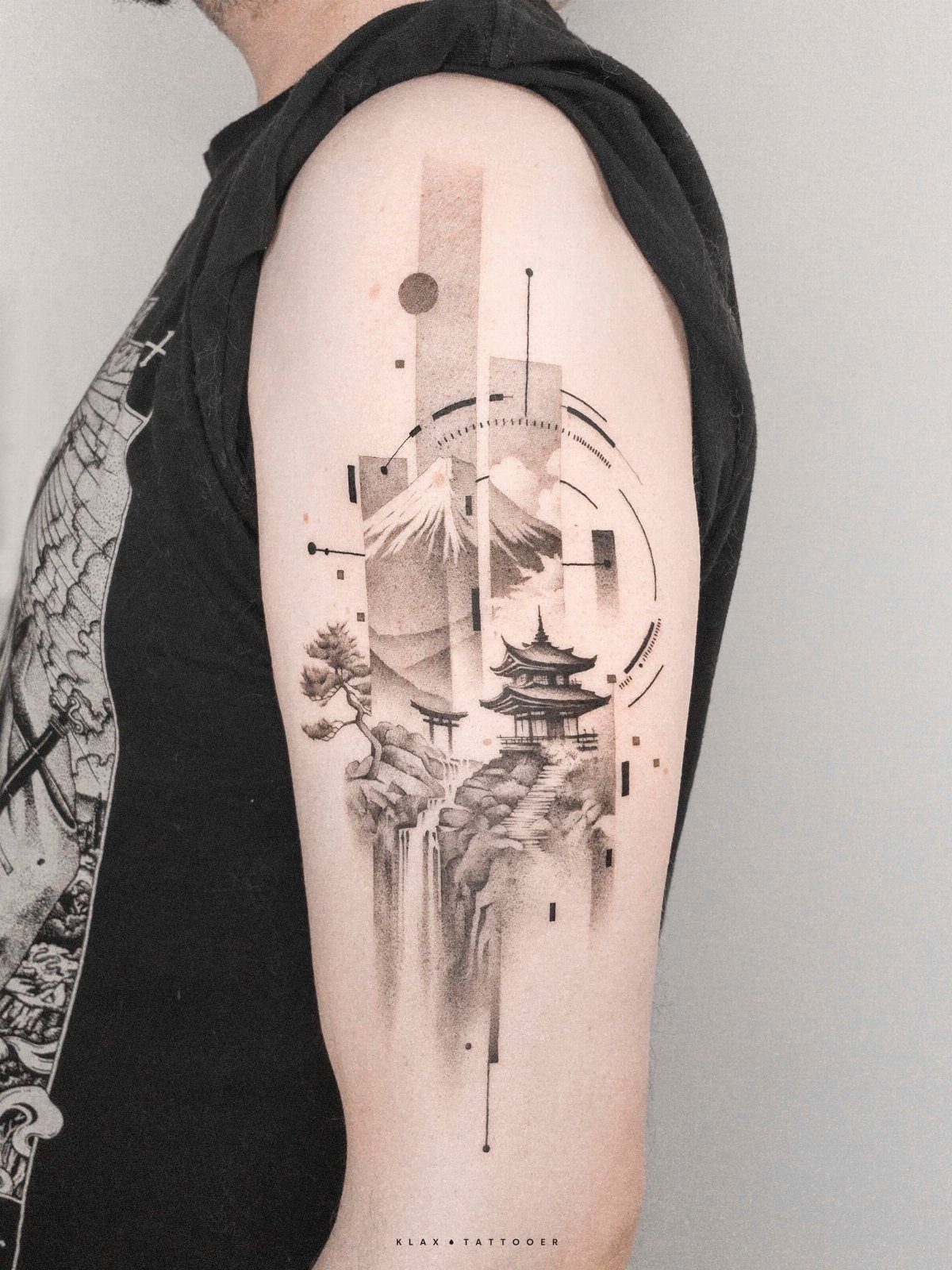
Traditional Japanese mountain tattoos pull in pagodas, pines and geometric framing that reflects ukiyo-e woodblock prints. Mount Fuji is the most common peak, and the composition usually balances the mountain with architectural or natural elements.
The black and grey shading keeps the design legible and ages cleanly.
Upper arm placement gives you enough space to include both the mountain and surrounding details without cramming them together. Artists who specialize in Japanese style charge more for upper arm pieces with this level of detail.
4. Mountain Valley Tattoo
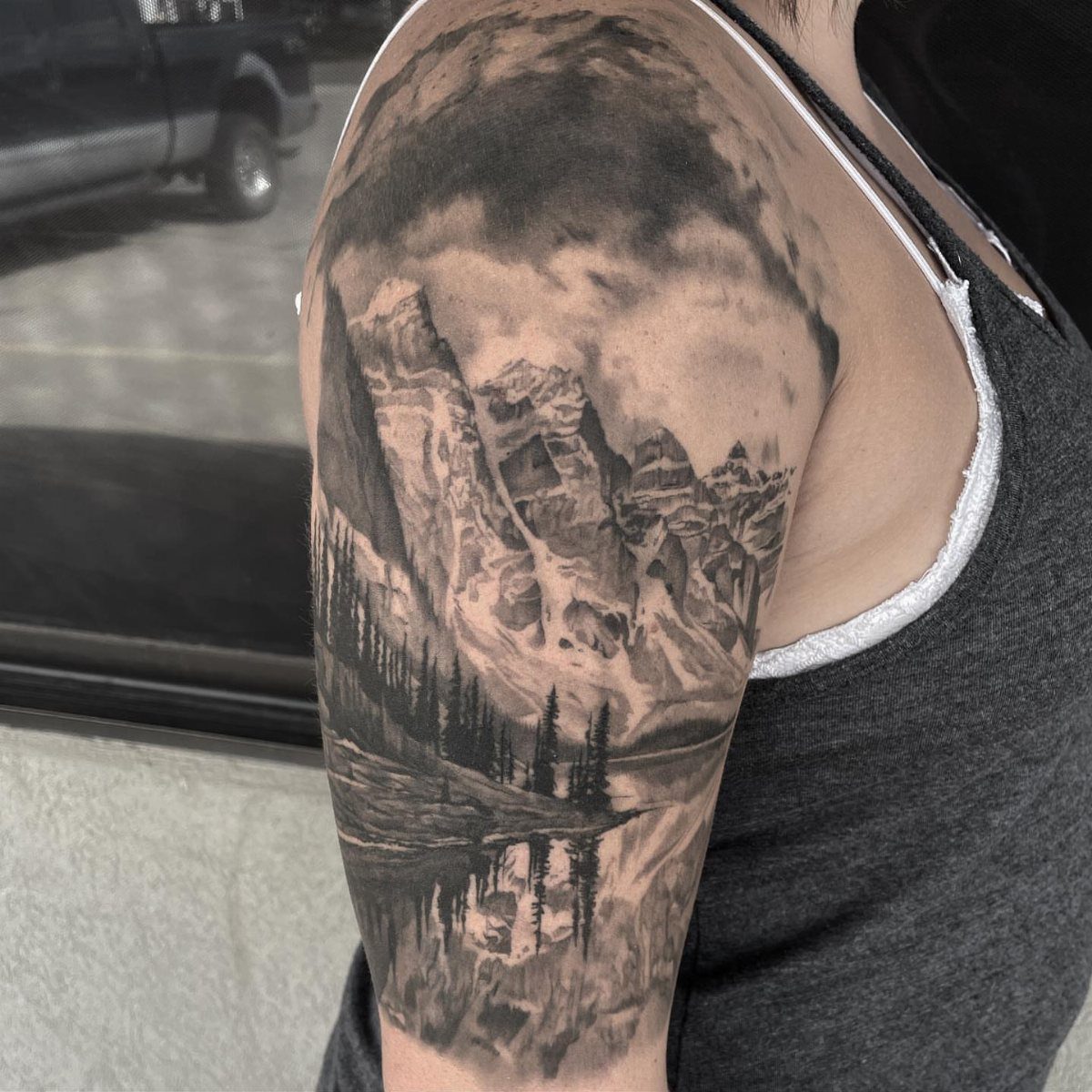
Adding a valley, trees and a lake turns the mountain from a simple outline into a full landscape. Realism shading gives you depth, and the reflecting water at the base grounds the whole design.
Upper arm placement works because you can fit the vertical sweep of the peaks and the valley floor without compressing the scene. Realism takes longer to complete than linework alone and requires an artist who can handle gradients and texture.
5. Mountain Ankle Tattoo
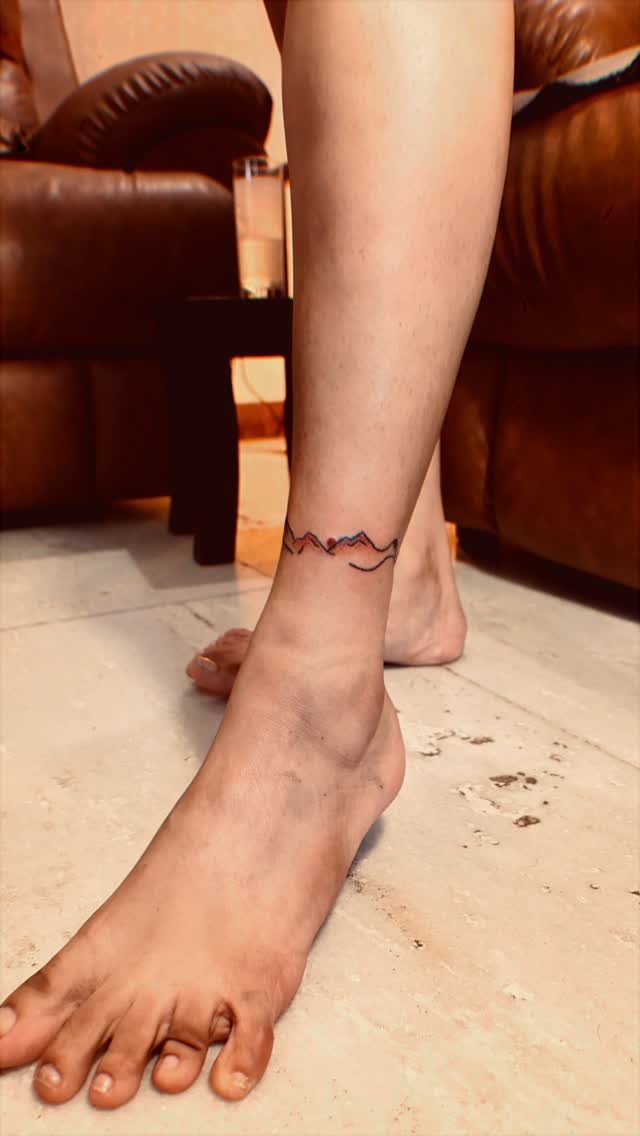
A minimalist mountain range wraps around the ankle in a single pass of linework with no shading or color. The design stays small and reads clearly from the side or front.
Ankle tattoos hurt more than fleshier spots because the skin sits close to bone, but the session is short for a piece this size, usually under an hour.
The ankle also sees a lot of movement and friction from shoes, so expect the lines to need a touch-up after a few years.
6. Mountain Back Tattoo
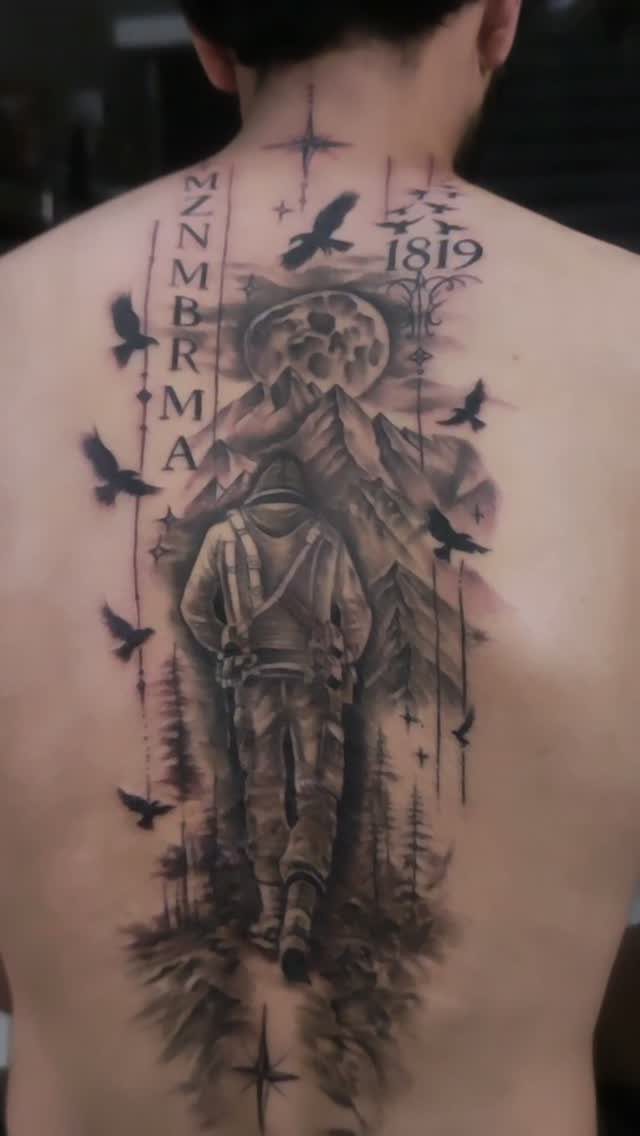
The back gives you the most space to build out a full mountain scene with a figure, moon, birds and text. This example includes a hooded hiker, which adds a narrative element instead of just the landscape itself.
Back tattoos take multiple sessions depending on how much shading and detail you include. Pain varies across the back: the upper section near the shoulder blade hurts less than the spine or lower back.
7. Dainty Mountain Tattoo
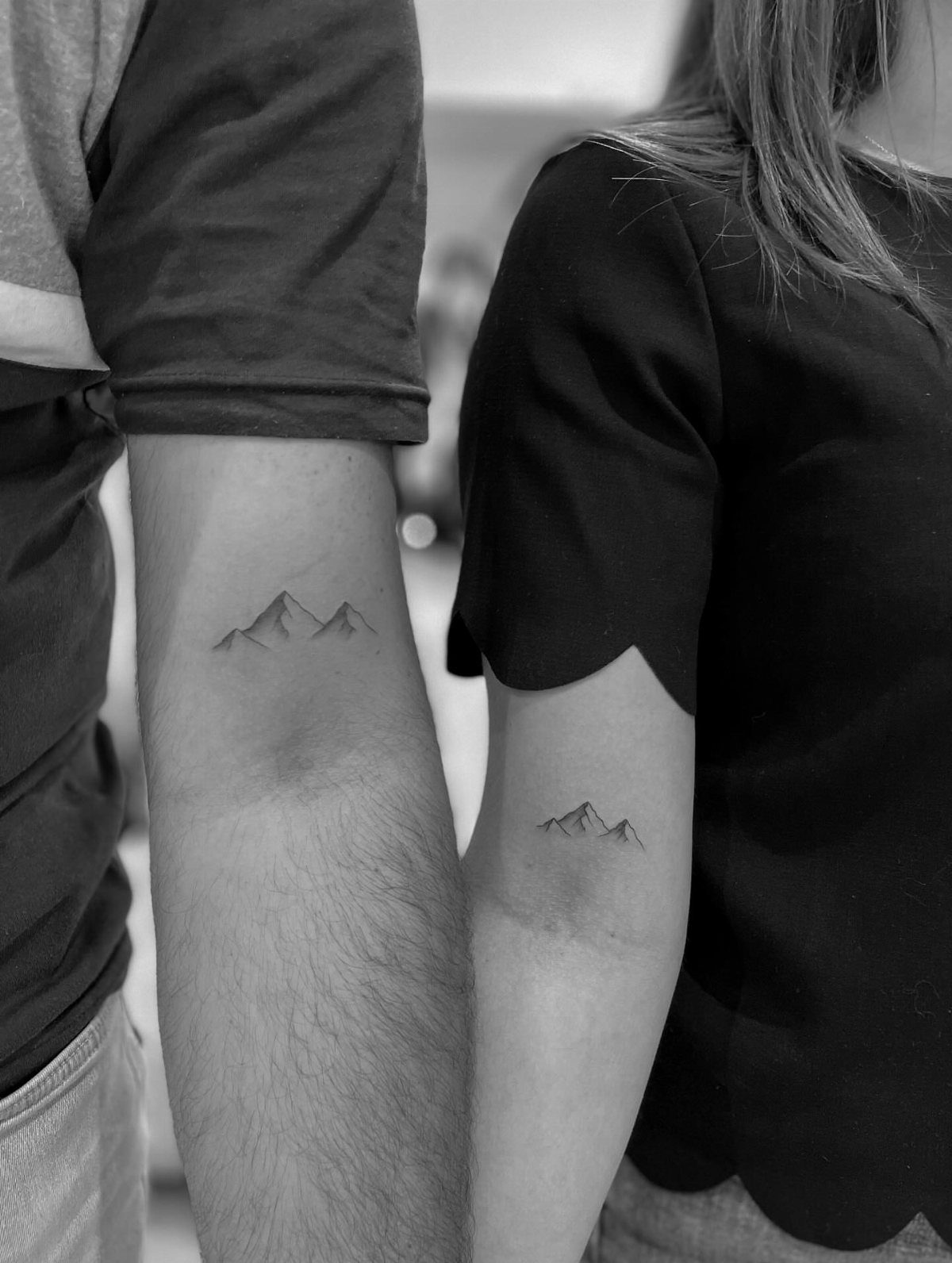
A single line of peaks sized small enough to fit on the inner forearm works for a subtle mark. The minimal approach reads clearly without heavy shading or added elements.
Inner forearm shows the tattoo to you while staying easy to cover when needed.
The session is short for a piece this size, often under an hour, and the pain is manageable since the inner forearm has more muscle than bone-close spots like the ankle or wrist.
8. Black and White Mountain Tattoo
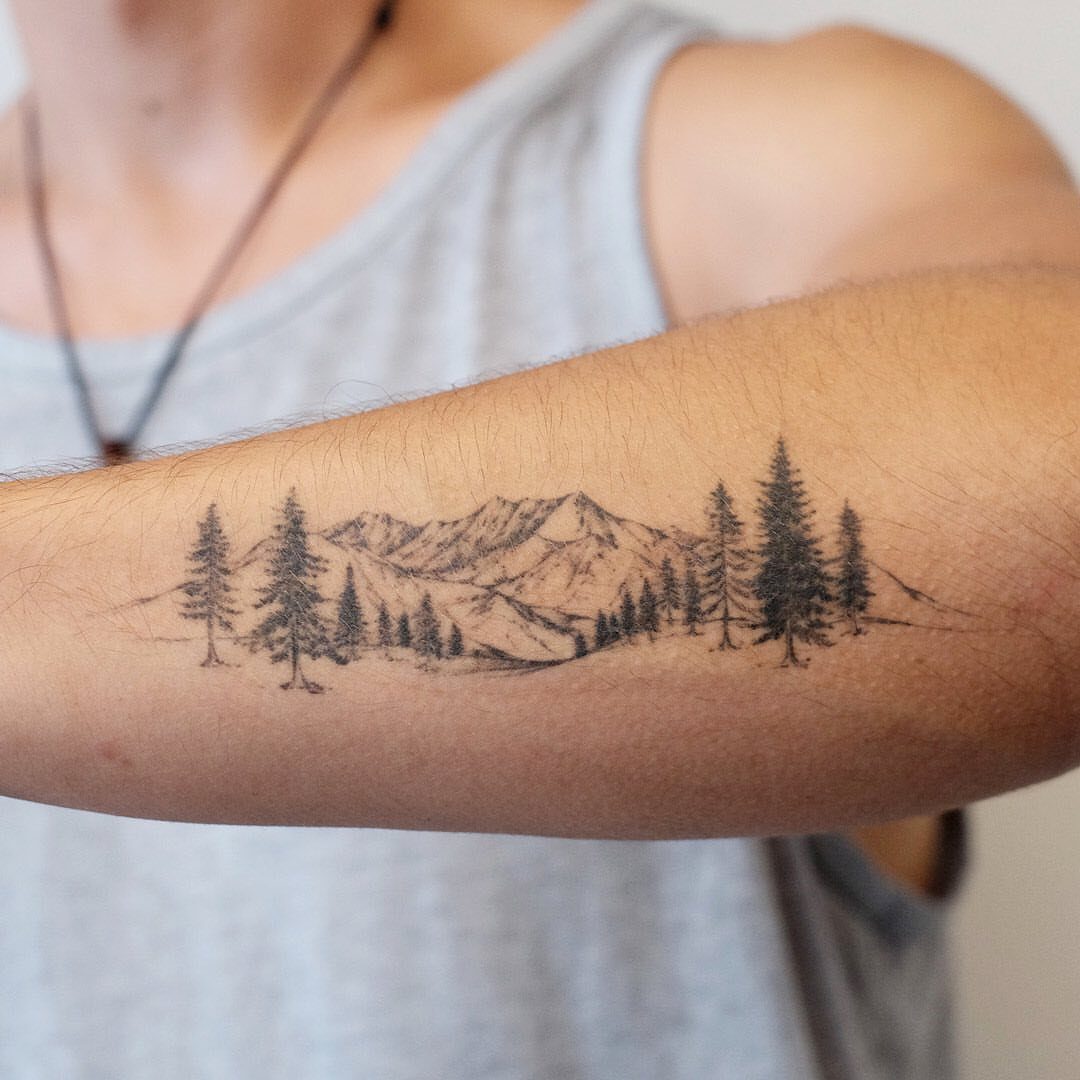
Solid black ink with no color stays sharp and gives you the longest lifespan before touch-ups. Pine trees anchored at the base of the peaks add scale and fill the negative space without crowding the composition.
Black ink holds up better in sun exposure than color, and the forearm is a forgiving spot for a first tattoo because the skin is relatively flat and the area heals cleanly.
Most artists charge by the hour, and a forearm piece with this level of detail depends on how fine the linework runs.
9. Mountain Range with Flying Birds
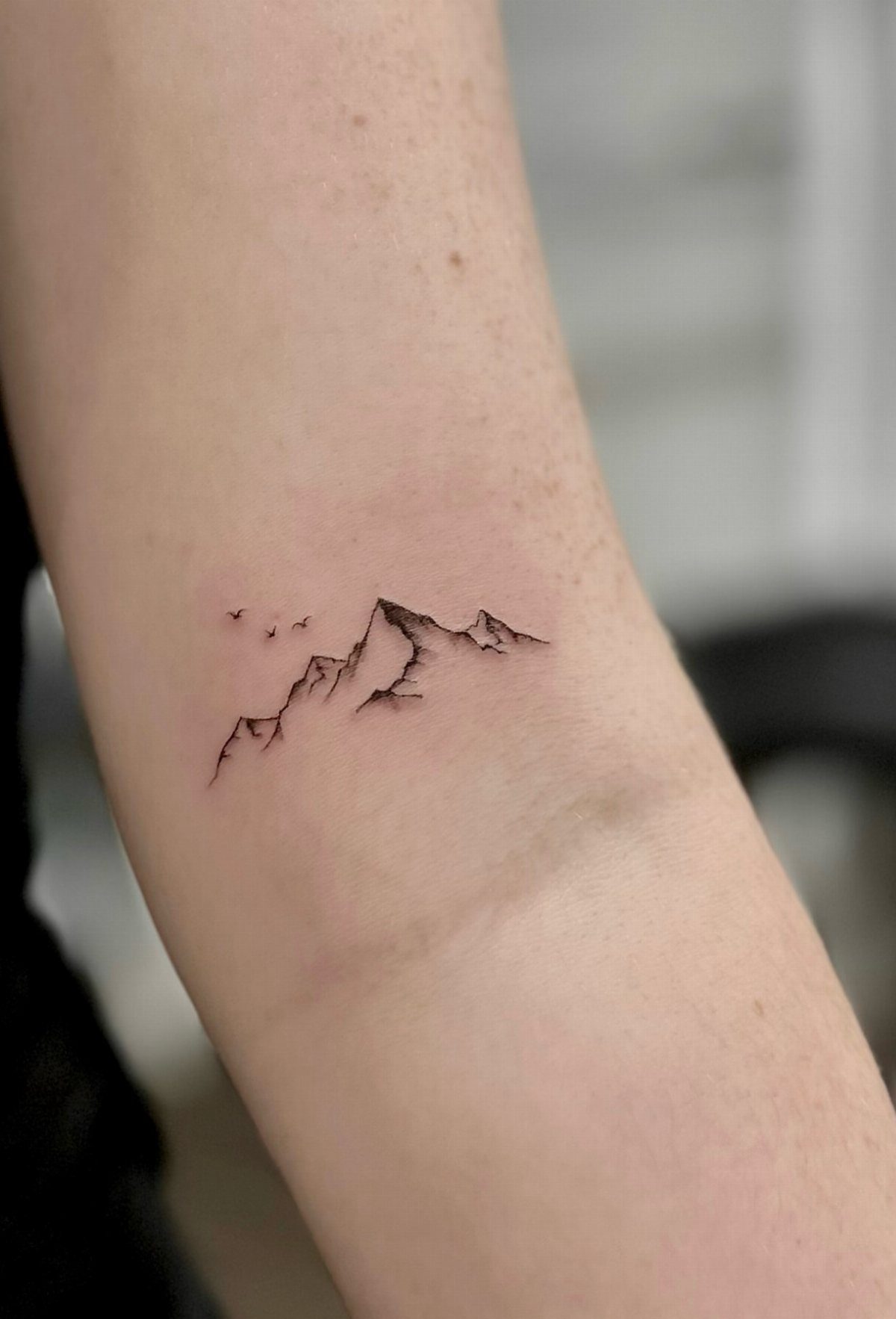
Birds in flight pull the eye upward and balance the weight of the mountain range at the bottom. The inner forearm gives you enough length to stack the elements vertically without compressing them.
3 birds is a common choice because it fills the space without feeling too busy. The black ink stays consistent across both the mountains and the birds, holding everything together and aging well over time.
Meaning of Mountain Tattoos
Mountains carry meaning that runs deeper than the landscape itself.
The symbol leans on resilience and the ability to stand through whatever comes next. That stability translates to permanence, the kind that holds when everything else shifts.
Personal growth shows up often in the choice.
Reaching the summit mirrors the process of working through something difficult and coming out different on the other side. The climb itself becomes the point.
The design reflects a connection to exploration and the pull toward wild spaces. That same instinct drives people toward hiking, camping and anywhere the map thins out.
If mountains already mean something to you, the tattoo locks that feeling in place. The symbol reads clearly and ages well, which matters for a mark you’ll carry long-term.