Blackwork silhouettes that read from across the room sit beside fine line designs that pack more detail into less space, and the style you pick changes how much skin the piece needs and how long the lines stay crisp.
Gothic turrets and Victorian trim need a forearm or calf to stay readable, while neo-traditional outlines hold saturation longer than lighter work.
A graveyard scene adds tombstones and dead trees around the house, a skull underneath it ties 2 horror symbols together, and a large moon behind the building creates scale that makes the whole structure feel isolated.
1. Blackwork Haunted House Tattoo
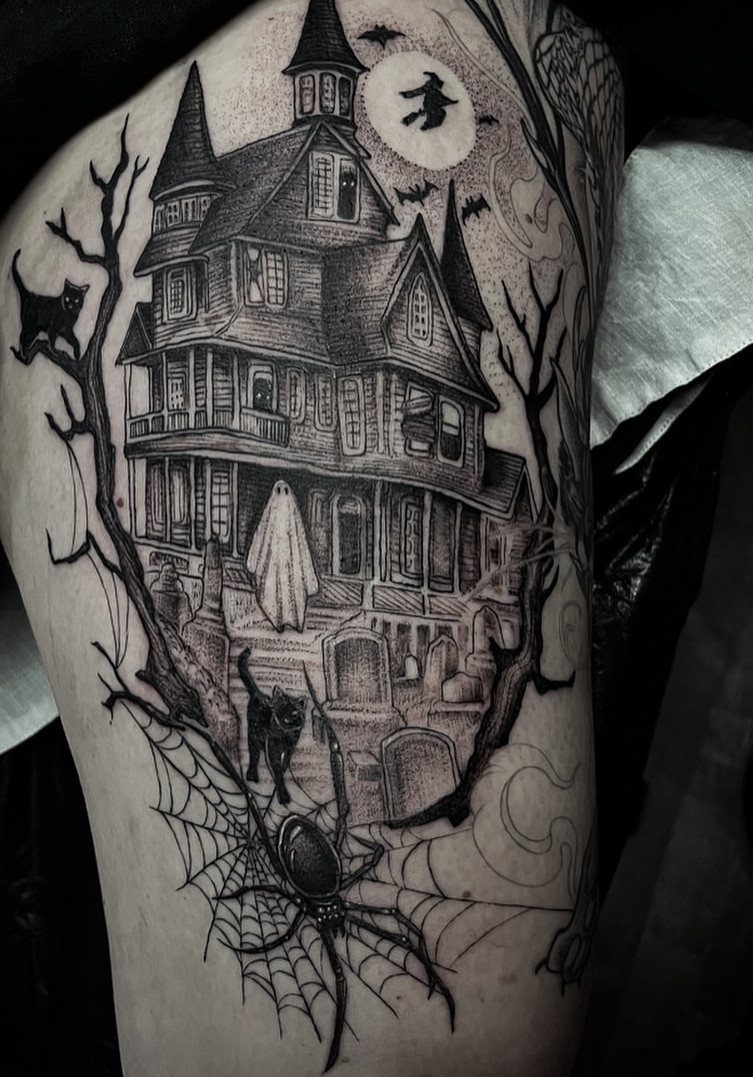
Solid black ink turns a haunted house into a silhouette that reads from across the room. The technique works because you get clean edges and deep contrast without shading to soften or fade over time.
Blackwork suits larger placements where detail can spread out: the thigh, calf, or upper arm give you space for the house, moon, and surrounding elements to breathe. Smaller pieces lose the definition that makes the style work.
The ghost, cats, spiderweb and witch here add story without breaking the black-only rule. If you want color, this approach trades it for boldness that lasts.
2. Fine Line Haunted House Tattoo
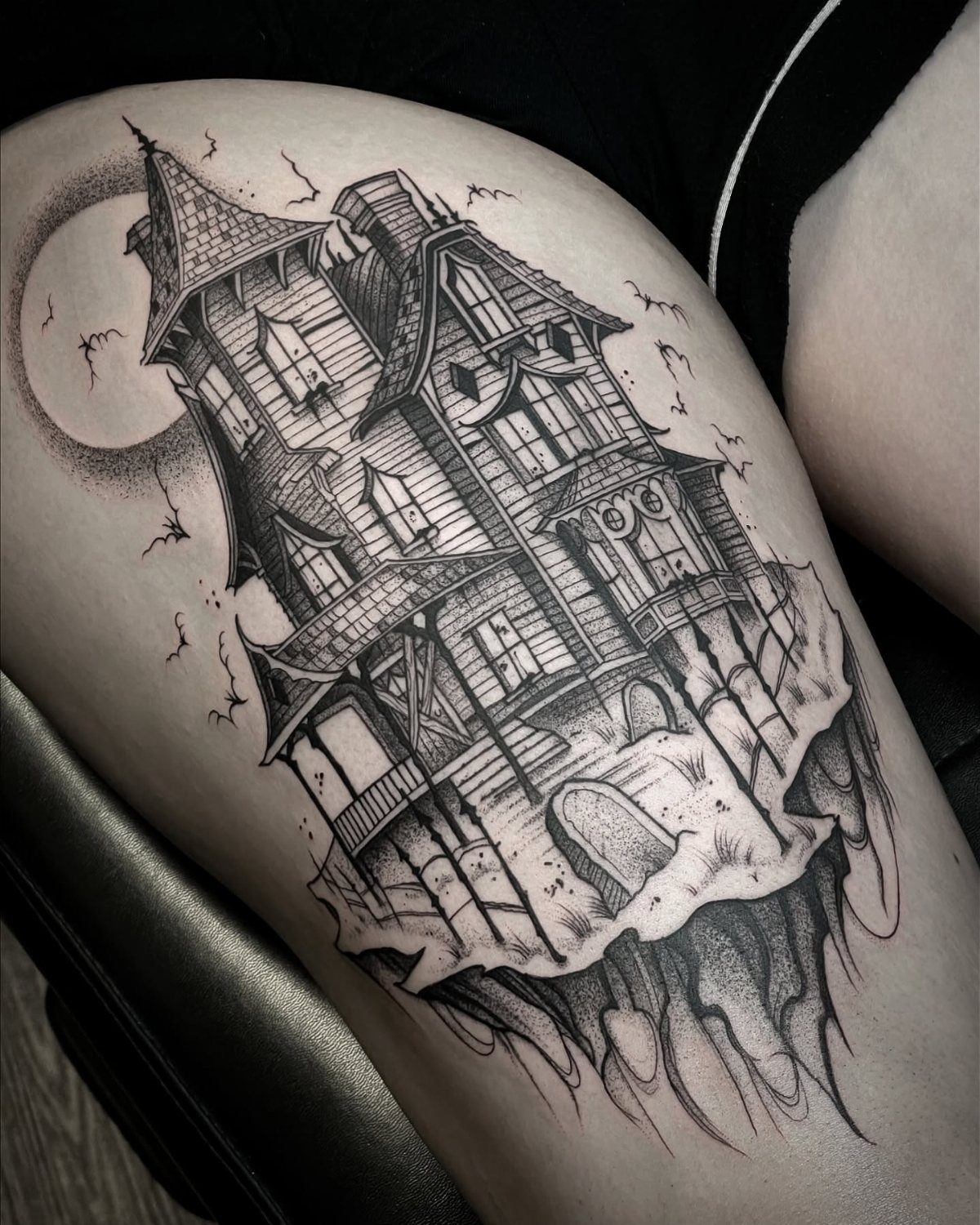
Thin needles and careful hands give you a haunted house with clean edges and layered detail.
Fine line tattoos hold more visual information in less space, so you can fit a full scene on a thigh or forearm without covering half the limb.
You give up some durability. Fine lines blur faster than bold ones, especially in areas that rub against clothing or get sun exposure.
Placement matters more here than with heavier styles. Avoid ribs, hands, or feet where skin moves a lot and lines soften quickly.
3. Gothic Haunted House Tattoo
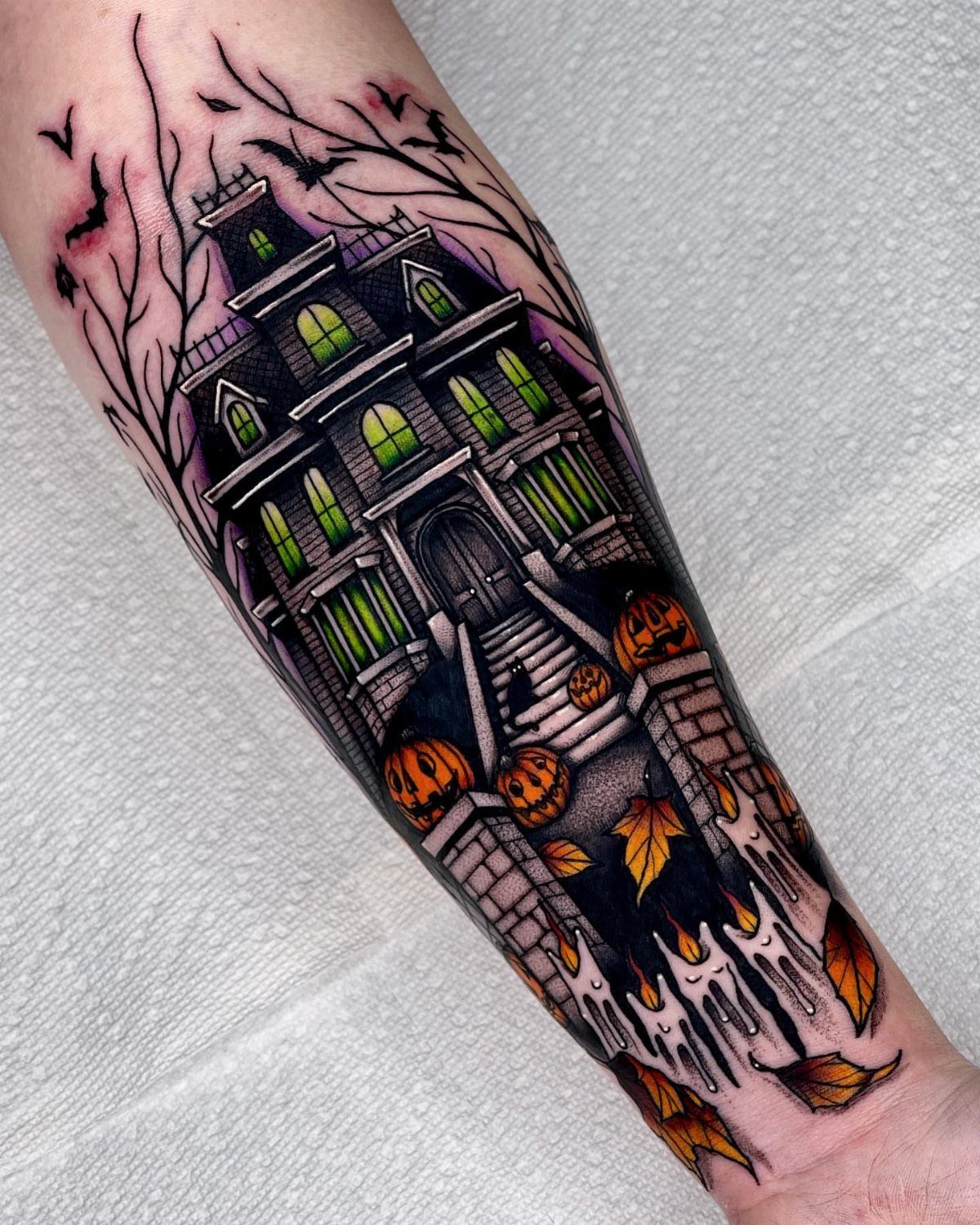
Ornate windows, pointed arches, and intricate trim give gothic architecture its dark fairy-tale look. Adding glowing color inside the windows creates contrast and draws the eye straight to the most unsettling part of the design.
The carved pumpkins and autumn leaves anchor the house in a Halloween setting, which works if you want seasonal energy. Leaving those out keeps the piece more general and less tied to one holiday.
Gothic detail needs room. A forearm gives enough length for vertical lines and decorative elements to stay readable, but this style can stretch to a calf or upper arm just as well.
4. Neo-Traditional Haunted House Tattoo
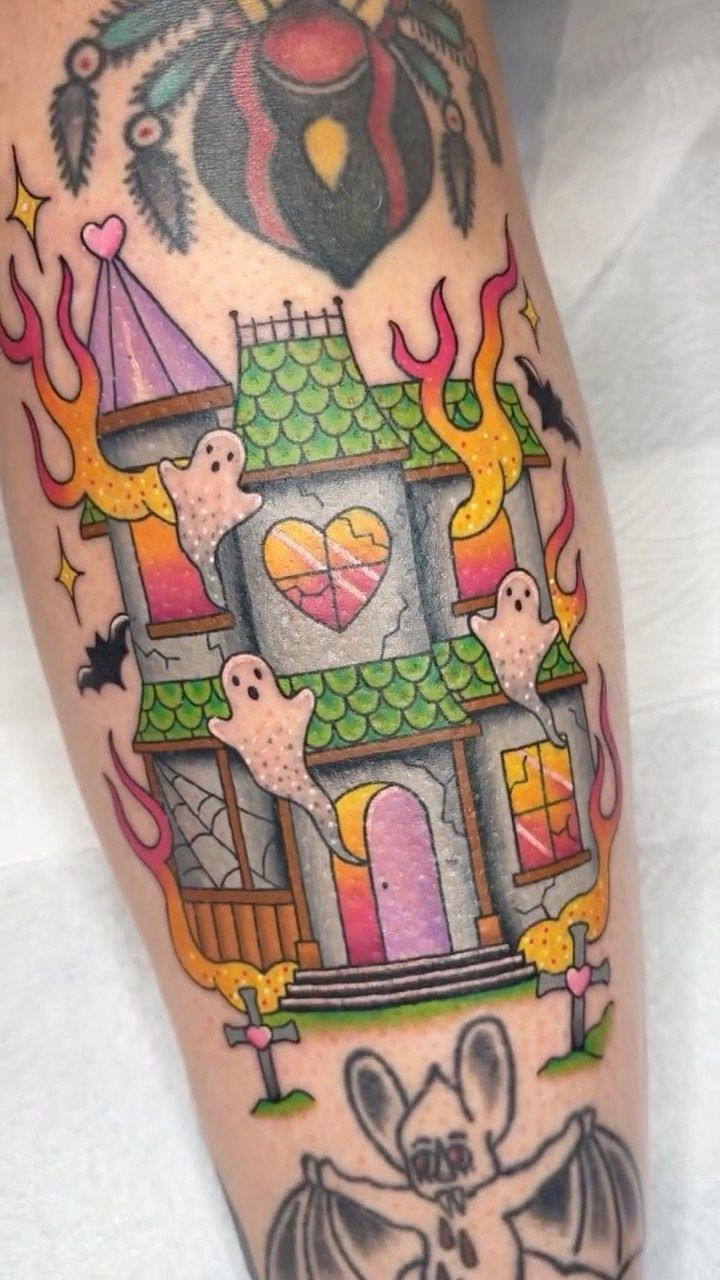
Bold outlines and saturated color separate neo-traditional work from older tattoo styles.
You get the spooky house and ghosts with a graphic punch that holds up over time, and the flames add motion without turning the piece into a full horror scene.
Color saturation is part of the design here.
Red, orange, and yellow flames stay bright for years if the artist packs the ink properly, and the contrast between warm fire tones and cool blacks keeps the house from disappearing into the background.
Placement on the leg works because neo-traditional pieces often fill irregular shapes well. The style adapts to calves, thighs, and forearms without losing balance.
5. Spooky Graveyard Haunted House Tattoo
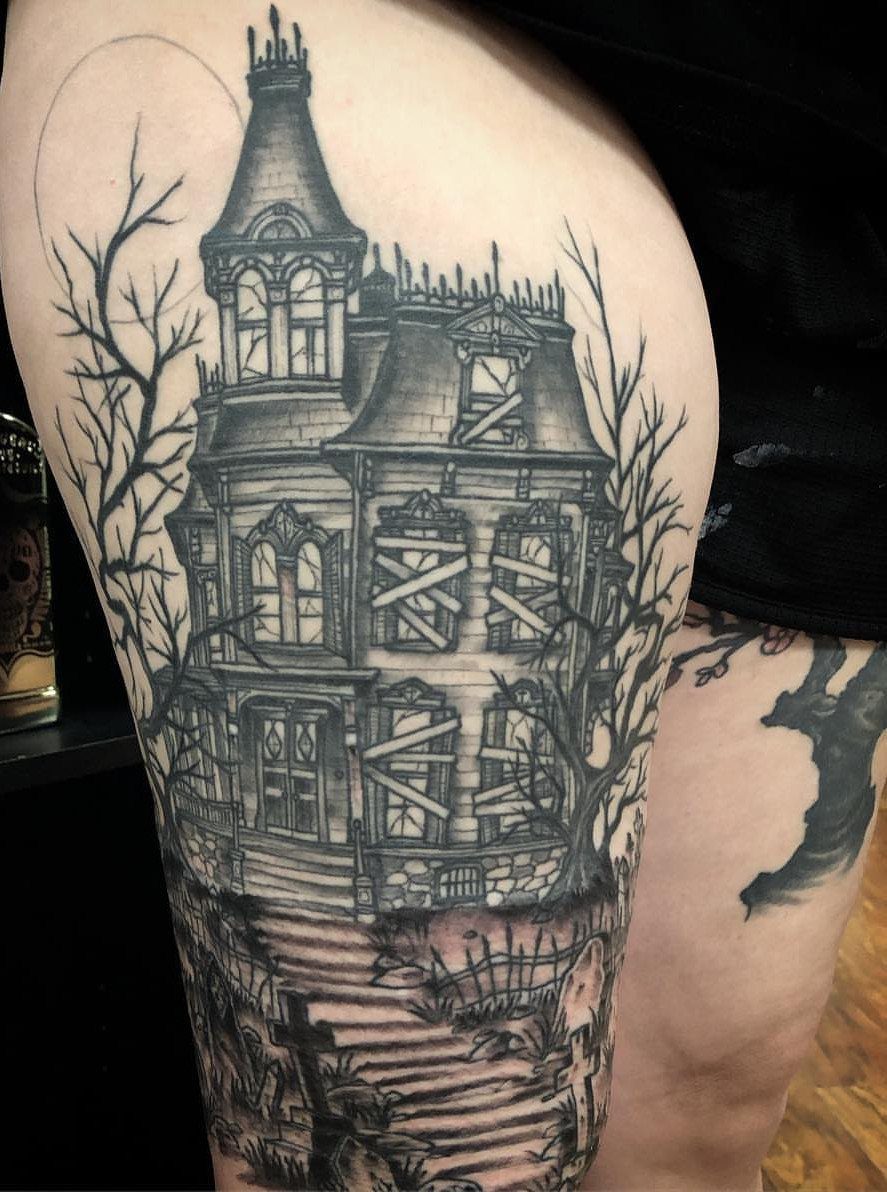
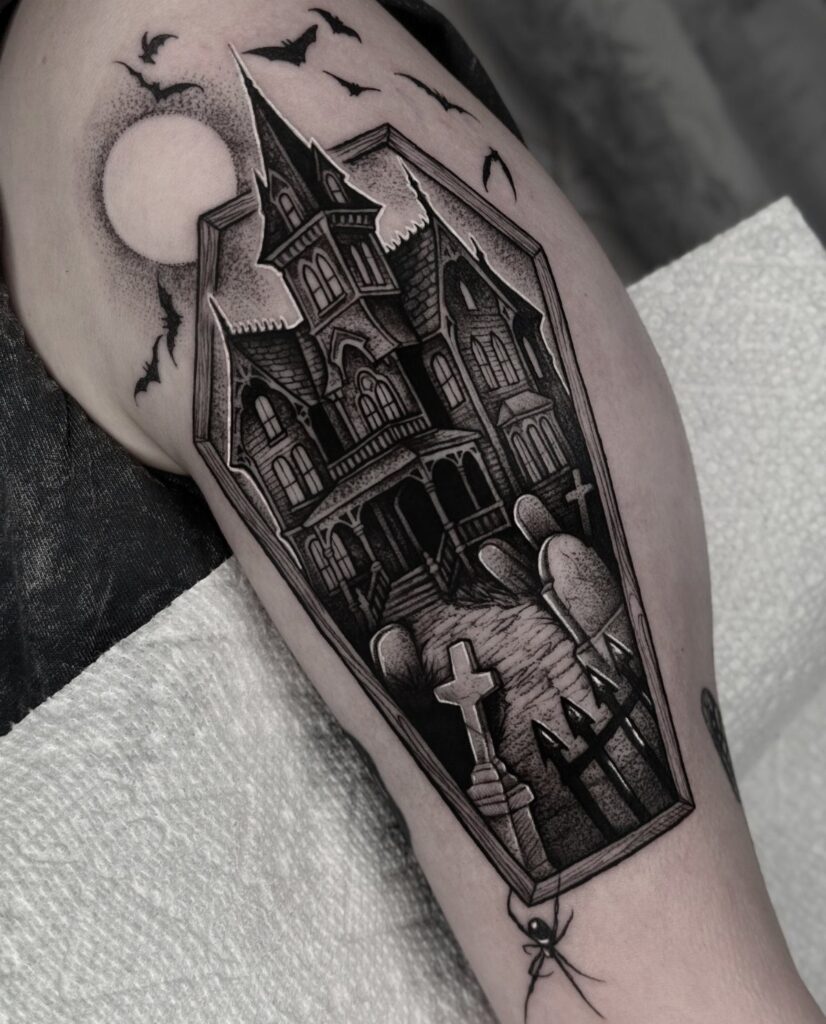
A graveyard shifts the focus from the house alone to the full setting. Tombstones, dead trees, and boarded windows give you multiple points of interest, and the black and grey palette keeps the mood somber without the distraction of color.
The thigh is one of the best spots for a vertical composition like this. You get several inches of uninterrupted skin, which lets the house sit above the graveyard without cramping either element.
Adding specific names or dates to the tombstones personalizes the piece, but readable text takes up space and limits how small you can go. Plain stones keep the design flexible.
6. Moonlight and Large Moon Haunted House Tattoo Design
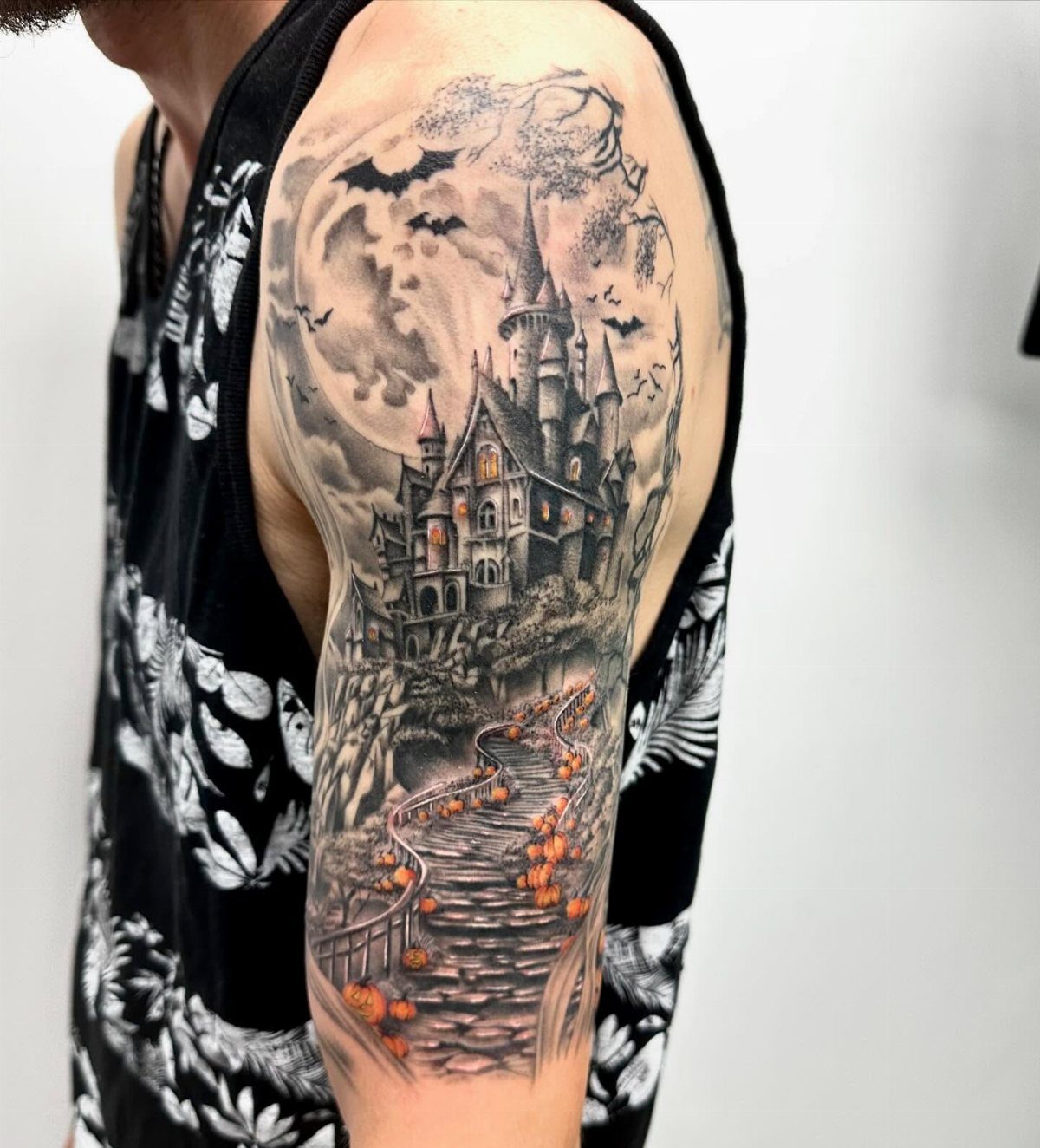
A large moon behind the house creates scale and drama. The size difference between the house and the overshadowing moon makes the building feel isolated, and bats crossing the moon add movement to an otherwise static scene.
Pumpkins lining the path bring Halloween directly into the design. If you prefer a piece that works year-round, swapping them for rocks, weeds, or bare ground keeps the spooky tone without seasonal markers.
The upper arm’s rounded surface suits circular compositions. The moon fits the curve naturally, and the house can sit centered or slightly off to one side depending on your arm shape.
7. Victorian Haunted House Tattoo
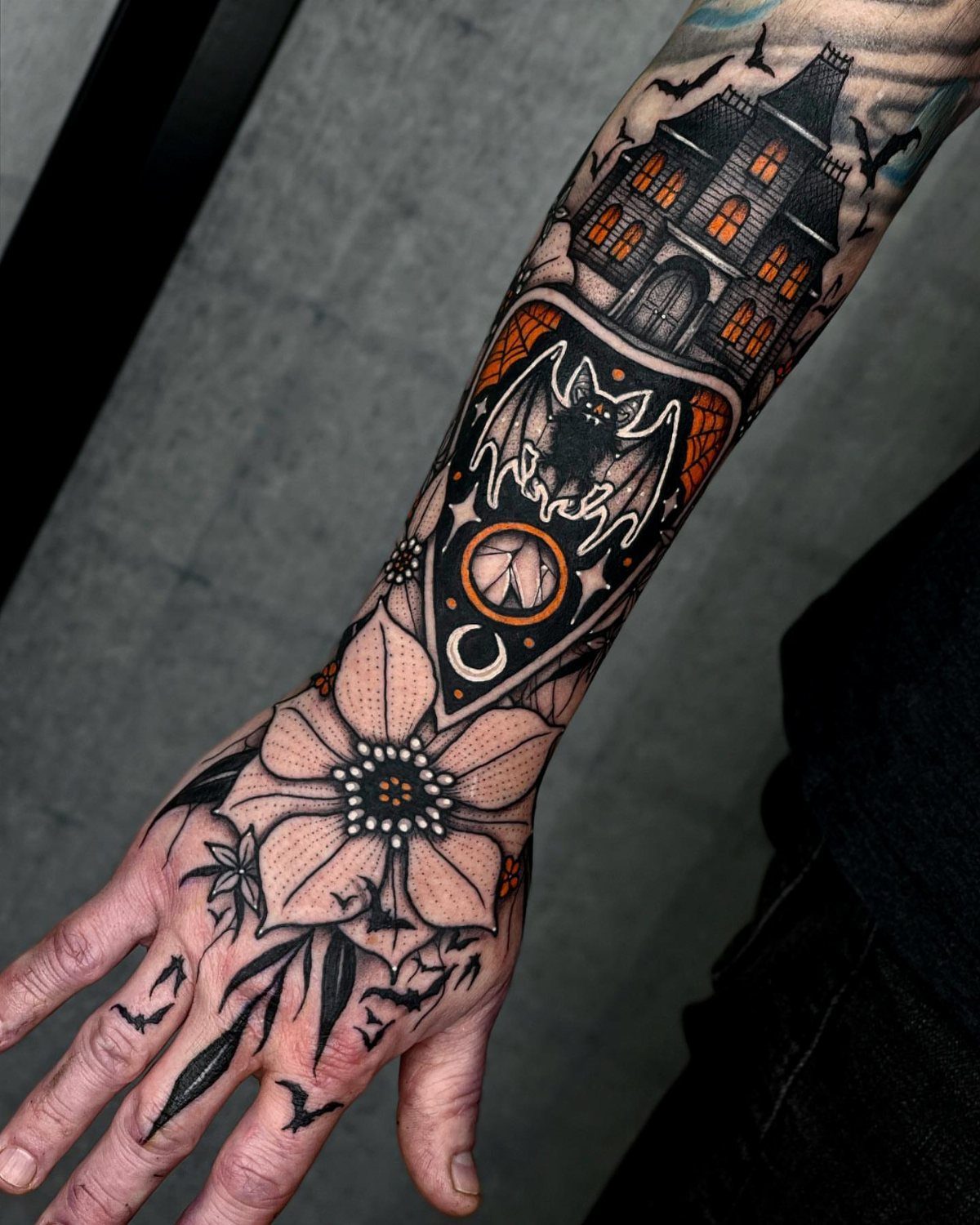
Victorian detail gives you turrets, gabled roofs, and decorative trim that sit somewhere between elegant and unsettling. The floral elements soften the gothic edge without losing the haunted feel.
Forearm placement lets the vertical lines of the house run with the natural length of the arm. Bats and flowers fill negative space and keep the main structure clear.
Mixing warm orange with black keeps the piece from feeling too dark while still reading as spooky. If you prefer a subtler look, dropping the color entirely pushes the design closer to classic horror.
8. Haunted House on a Skull Tattoo
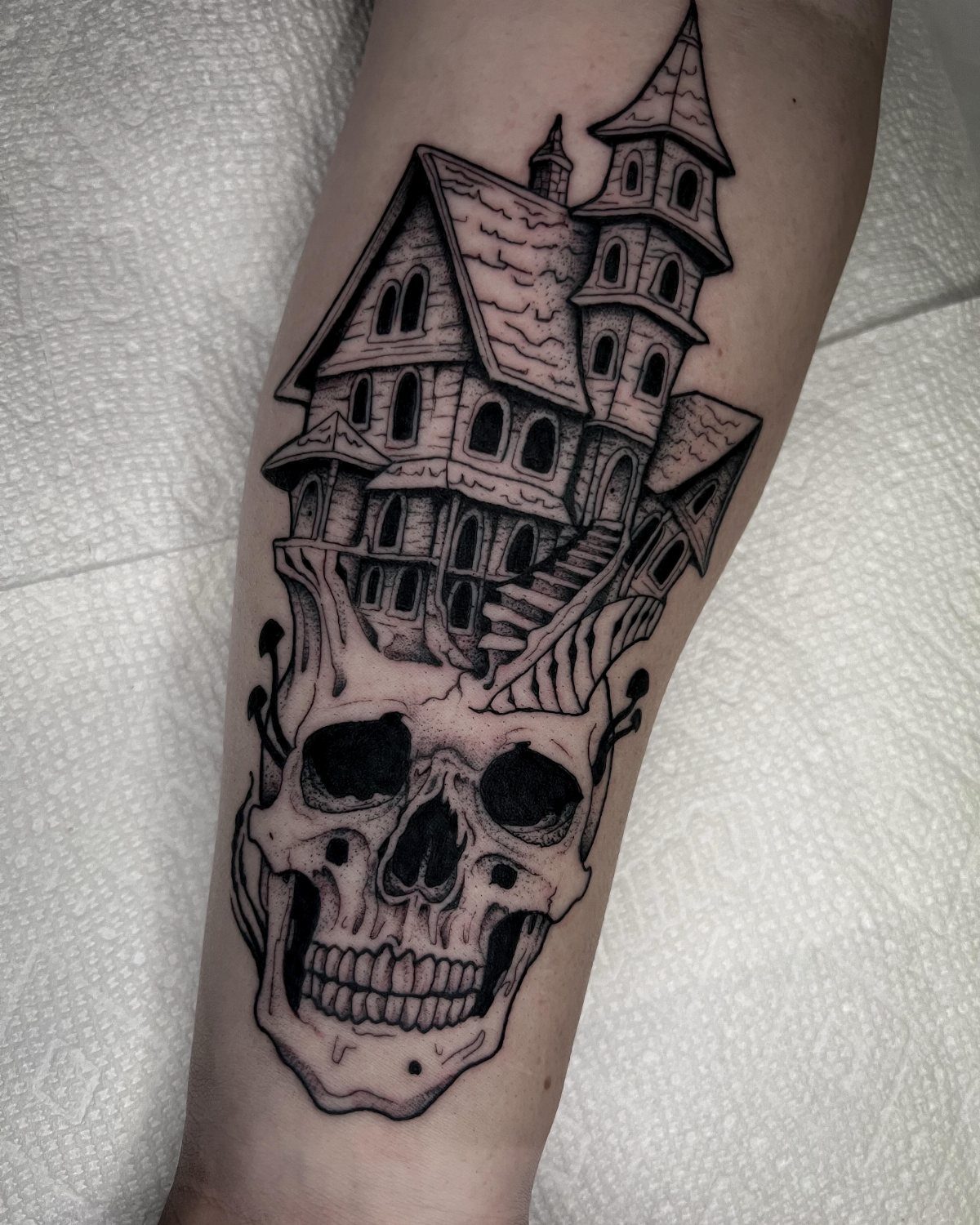
Placing the house directly on a skull ties 2 horror symbols together in a single piece. The crooked angle of the house adds instability, which makes the whole composition feel more unsettling than either element would alone.
Black and grey ink keeps the focus on form and shading rather than color. The style ages well because there are no bright tones to fade, just contrast between light and dark values.
Upper arm or calf fits both the skull and the tilted roofline comfortably.
Frequently Asked Questions
How long does a haunted house tattoo typically take to heal?
You’ll see the skin close over in 2 to 4 weeks, but full healing inside the dermis takes a few months longer.
Don’t pick at flaking ink, stay out of pools and baths, and keep it covered or shaded outdoors while it heals. Follow your artist’s aftercare instructions and keep the area clean and moisturized.
Can I go to the gym or swim after getting a haunted house tattoo?
Hold off on the gym and any time in water for 2 to 3 weeks minimum.
Sweat and soaking water both raise the risk of infection and can damage the ink while the skin is still healing. Wait until the surface is fully closed before returning to those activities.