Gold shows up as temporary foil transfers that wash off in days.
Temporary foil mimics jewelry and peels clean in days. Most photos showing mirror-bright shine were shot fresh or adjusted afterward, because healed metallic ink softens and the reflective finish shifts with how the particles settle in skin.
1. Gold Temporary Tattoos
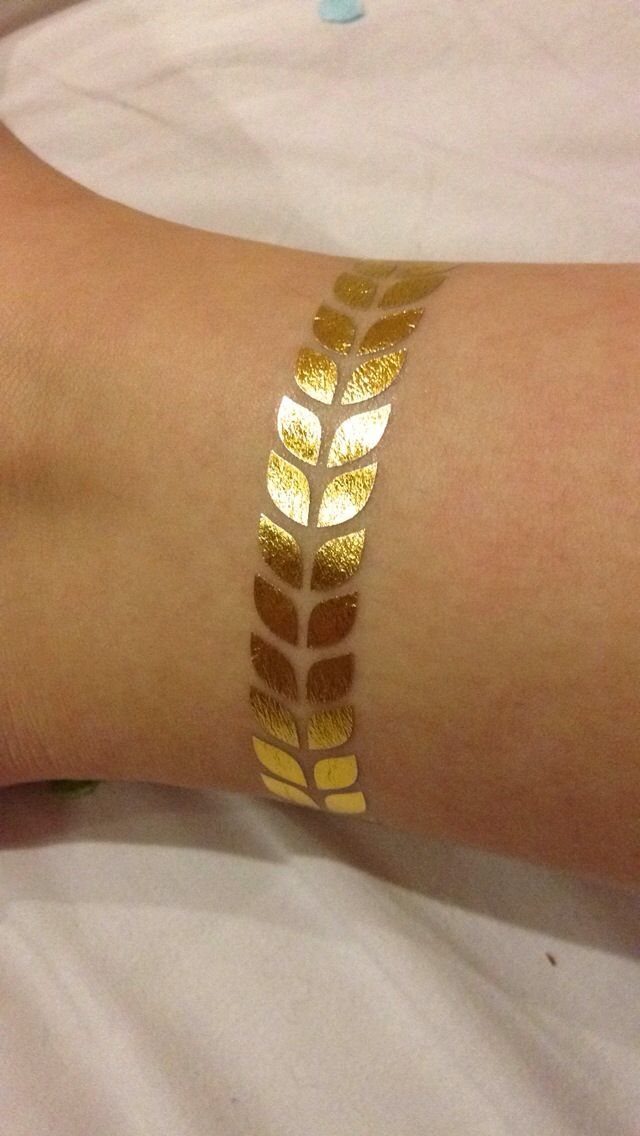
This is the metallic press-on route: a laurel branch applied to the wrist with water, worn for a day or a weekend, then peeled or scrubbed off.
The finish catches light the way foil does, and from a few feet away it reads as jewelry more than ink.
Most gold temporary tattoos lift at the edges after a few days of wear.
They survive a shower but fade faster with soap, lotion or friction from clothes. If you want the look for an event without the commitment, this is the version that gets you there.
2. Gold Metallic Ink Patterns
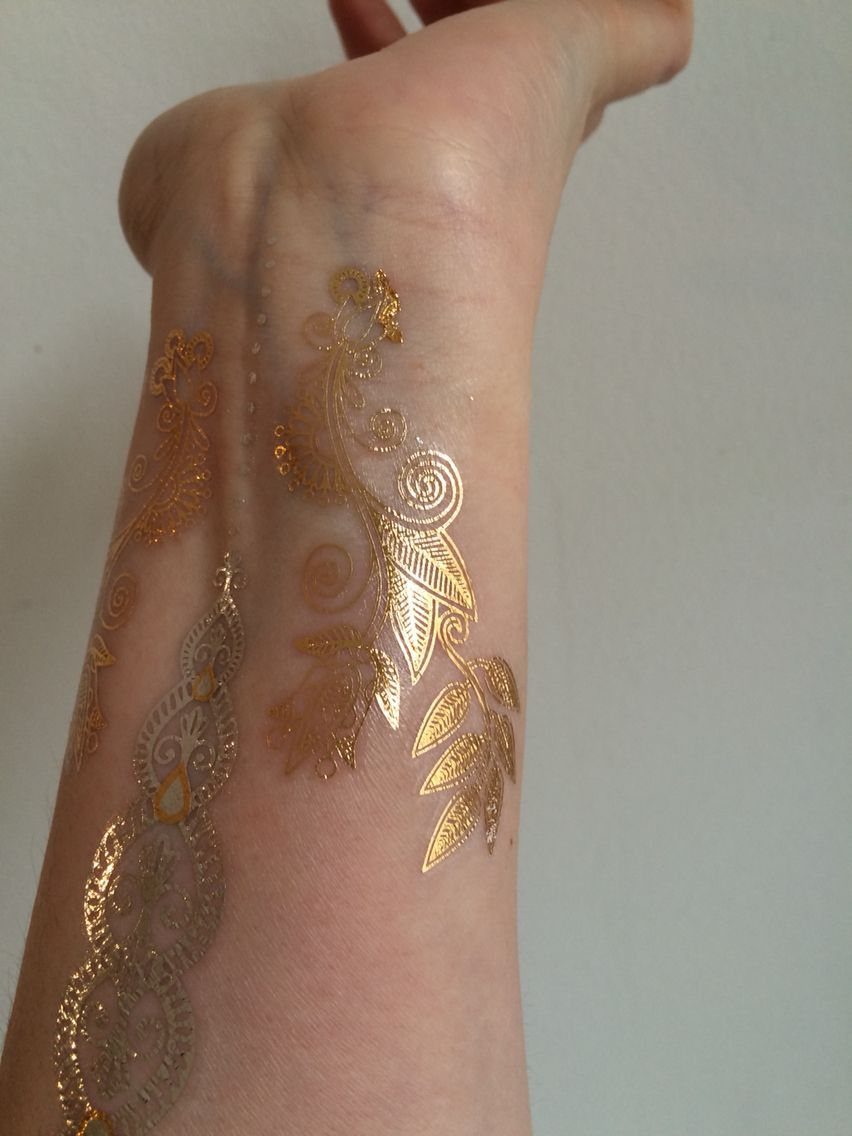
Floral and paisley motifs spread across the forearm and wrist in gold metallic ink, applied as temporary transfers the same way the laurel works.
The designs here are denser and more ornate, closer to henna in coverage but with a reflective finish instead of stain.
Placement on the forearm gives you room for the pattern to branch and curve without running into awkward gaps.
Gold reads warmest against deeper skin tones, where the contrast holds. On lighter skin the effect is softer, almost like gilt on paper.
3. 3D Dragon Design
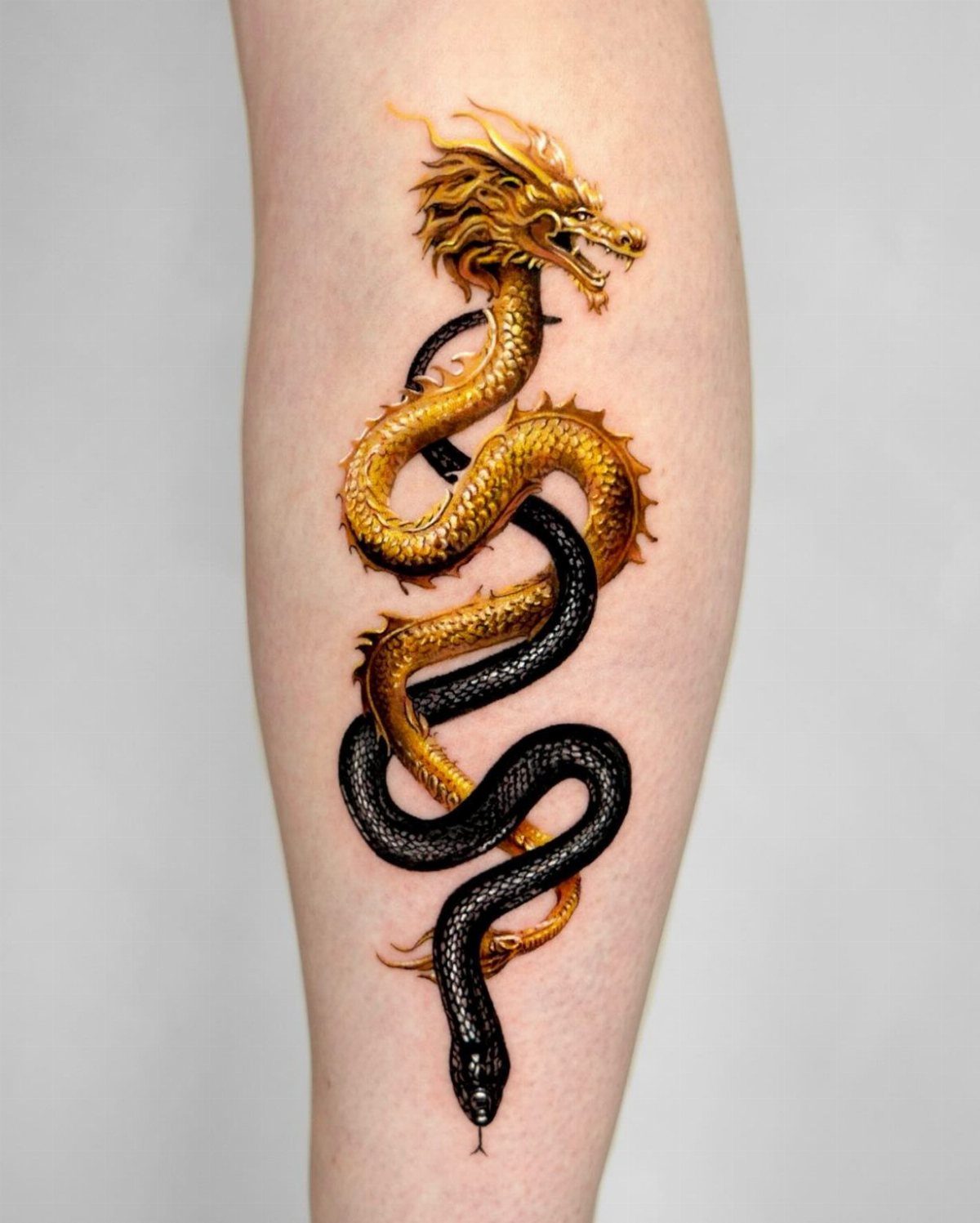
A dragon rendered in black linework with gold highlights on the scales, wings or claws. The metallic ink sits inside the design rather than replacing it, so the piece keeps its structure in black and uses gold for dimension.
This approach works best on larger placements like the forearm, calf or thigh, where the dragon has room to coil or extend.
The gold catches light when you move, which adds depth without shading. Most artists mix the gold sparingly; too much and the design loses contrast.
4. Gold Barbed Wire Pattern
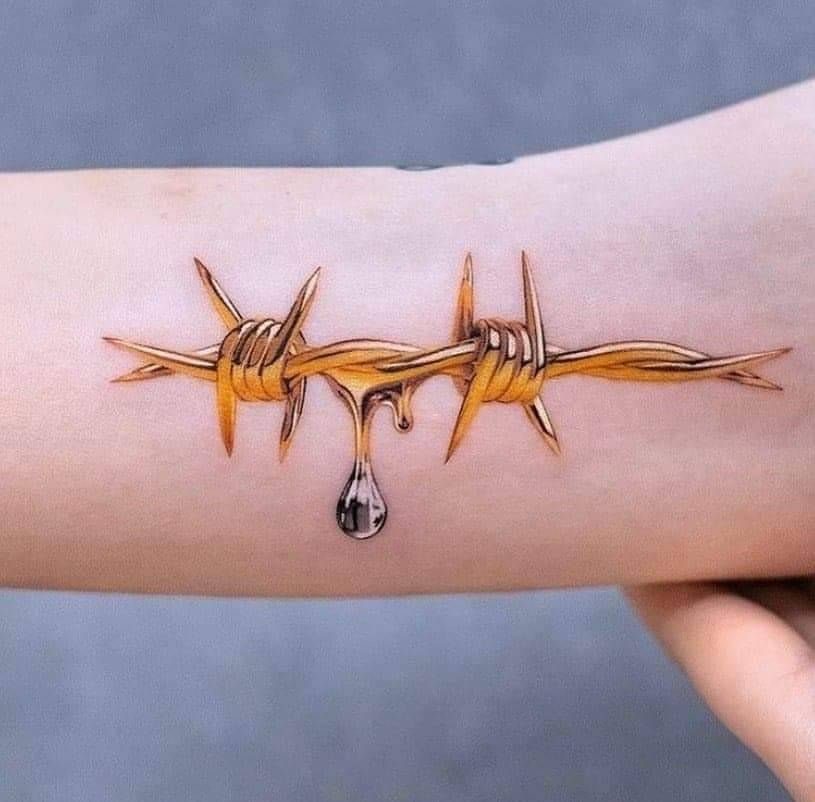
Barbed wire wraps the forearm in 3D style, with warm yellow and brown shading giving it a cast-metal look. The droplet hanging from one barb adds realism, as if the wire were freshly forged or dipped in liquid gold.
The 3D effect depends on shading and highlight placement, so this takes an artist comfortable with dimension work. Gold ink alone will not make it pop; the black shadows and white highlights do most of the lifting.
A full forearm band takes time, and the needle passes over the same line more than once if the wire doubles back or overlaps.
5. Embossed Gold Bar Tattoo
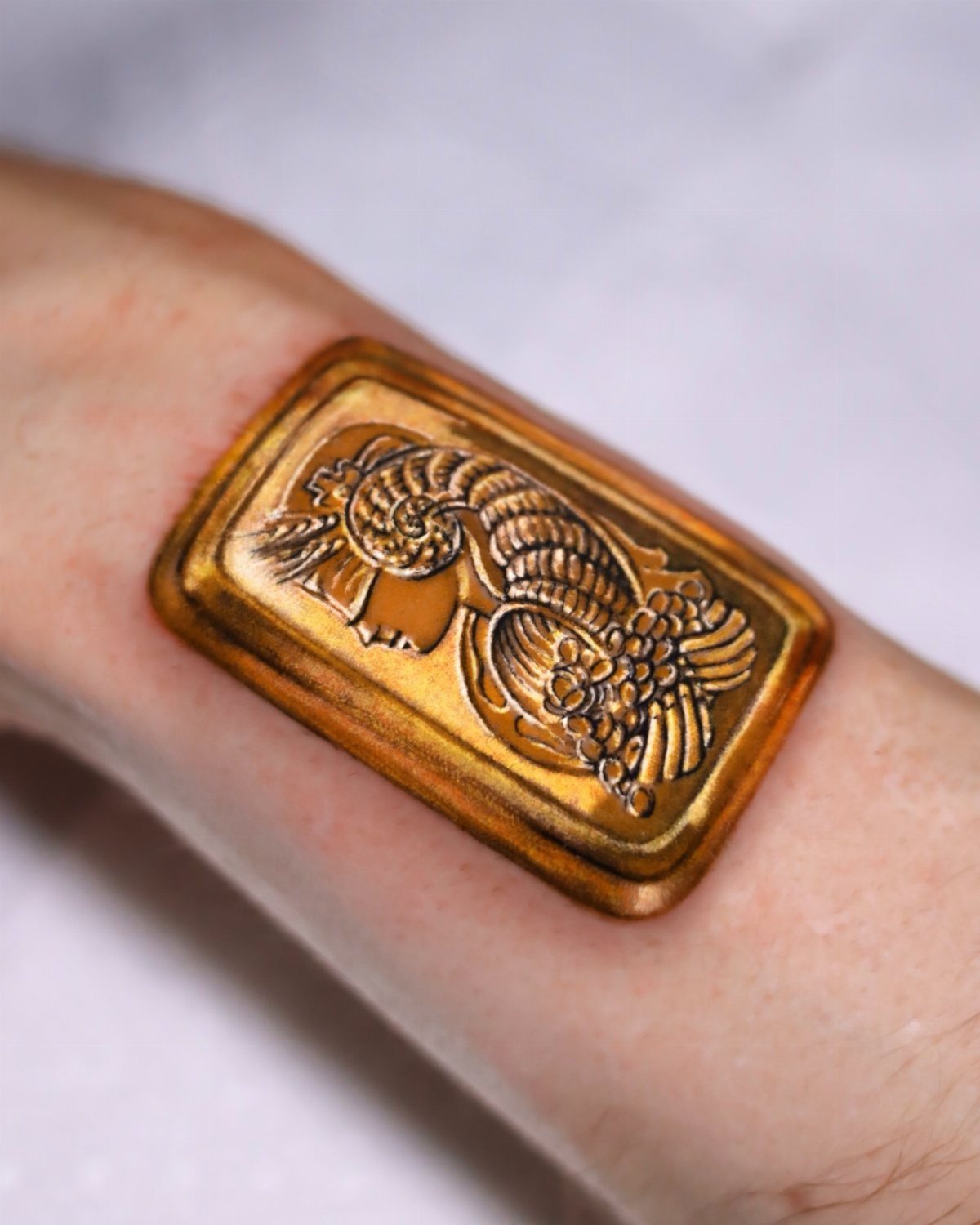
A gold bar stamped with a classical woman’s profile, done in raised detail as if the metal were embossed. The tattoo mimics the texture and shine of real bullion, with light and shadow giving it a sculptural edge.
This is realism work, so the artist needs a steady hand for fine detail and experience with metallic ink.
Gold tattoo ink fades faster than black, especially on areas that see sun or friction, so plan for a touch-up when the shine dulls.
6. Kintsugi Cracked Stone Tattoo
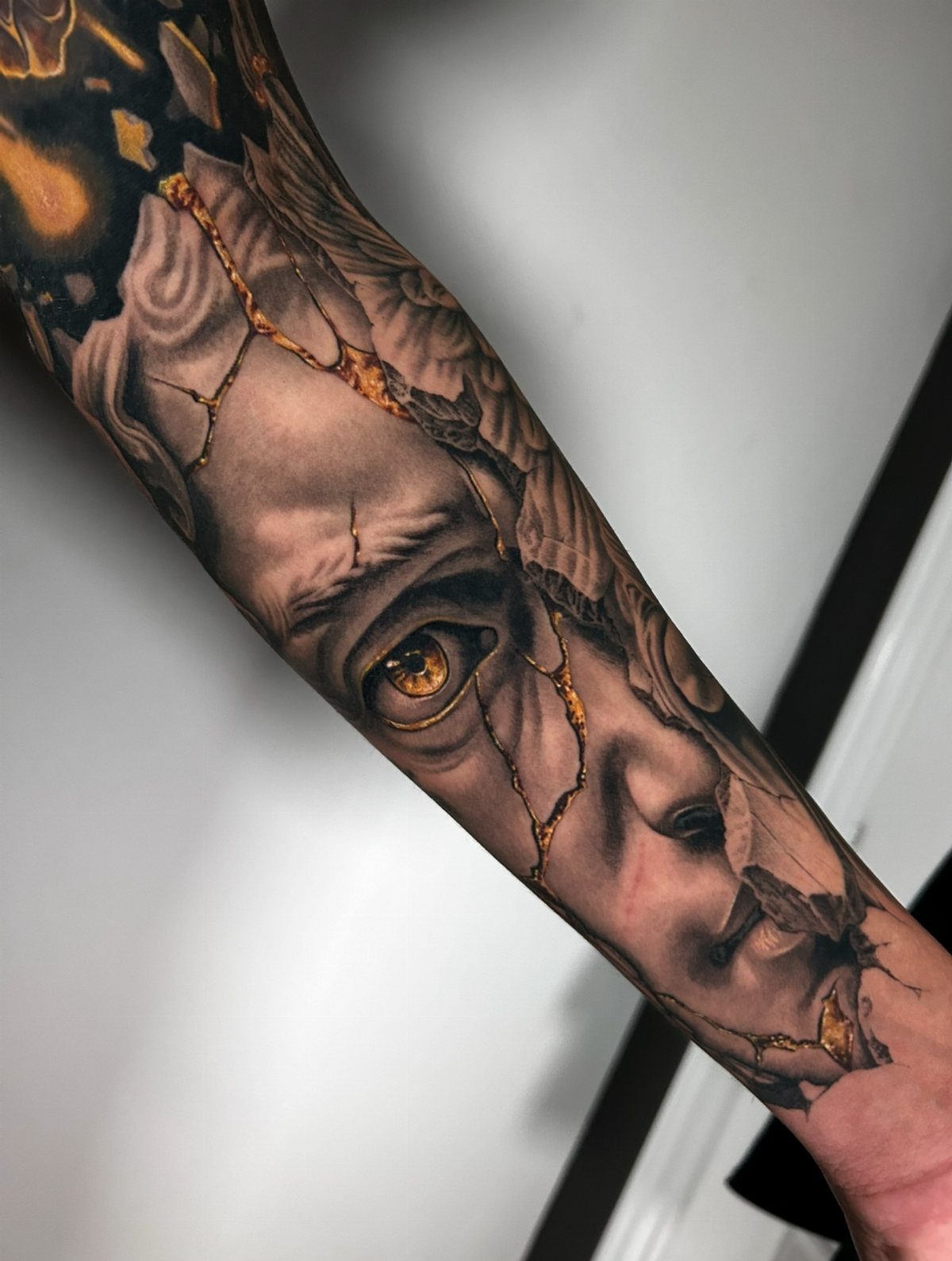
A stone face fractured into pieces, with gold ink filling the cracks in the style of kintsugi, the Japanese repair method that treats breaks as part of the object’s history.
The gold here is not an accent but the point: it holds the design together and makes the damage visible rather than hidden.
The effect depends on contrast between the gray stone texture and the bright gold seams.
Artists usually layer the gold over black linework to keep the cracks sharp. Forearm placement lets the fractures run vertically, which suits the way stone actually breaks under stress.
Gold Tattoo Ink Types
Gold ink breaks into 2 categories: temporary and permanent.
The temporary route covers metallic foil transfers in geometric bands, florals and leaf patterns that press on with water and peel off in a few days. These read as jewelry from a distance and work for short-term wear.
Most artists use it for highlights and small details rather than solid fills, since the pigment sits lighter in the skin and fades faster with sun exposure.
The metallic finish depends on particle suspension, so coverage varies by formulation and how the ink takes in your skin.
If Instagram shows a piece glowing like molten metal, odds are high it was shot fresh or enhanced in post. Healed gold softens considerably.
Gold Tattoo Ink Application
Gold ink works best as an accent, not the base layer. The black underneath keeps the structure readable and prevents the gold from looking washed out once it heals.
Gold tattoo ink typically requires multiple layered passes to achieve its metallic effect, which means more chair time and higher cost than a single-color piece of the same size.
The gold also requires a steadier hand, since metallic pigments do not flow as smoothly as standard ink and can streak if applied unevenly.
Gold Tattoo Ink on Dark Skin
The effect resembles actual gold leaf pressed into wood or stone, with the design standing off the skin rather than blending into it.
Pairing gold with black and gray shading gives you the most control over how the piece reads.
Objects like bees, helmets or geometric borders gain dimension when the gold sits next to shadow work. On its own, gold can look flat or disappear depending on the angle of light.
Frequently Asked Questions
Is gold tattoo ink real?
Artists use warm yellow and brown pigments layered with white to simulate gold highlights and fine accents, not solid fills.
Because gold sits lighter than black and breaks down under UV, it works best as an accent layered over dark line work. Temporary gold transfers also exist and mimic the look of metallic jewelry for short-term wear.
How long does gold tattoo ink last?
Sun and friction break down the metallic particles faster than traditional pigment.
Expect the metallic sheen to fade noticeably during healing, and plan for a touch-up once the brightness drops. Pairing it with black shading helps the design hold contrast over time.