Ear skull tattoos range from small designs that fit inside cartilage folds to realistic shaded pieces that extend onto the side of the head.
Your choice depends on how visible the design should be and how much pain cartilage work involves: bone hurts more than soft tissue, but small pieces finish fast.
Behind-the-ear placement hides the skull when hair falls forward and shows it in profile, while inner concha designs stay shadowed unless someone looks directly at your ear.
Skulls with flowers or geometric patterns soften the aggression, and a skeletal hand in a shushing gesture shifts the meaning toward secrecy rather than pure rebellion.
1. Skull with Skeletal Hand
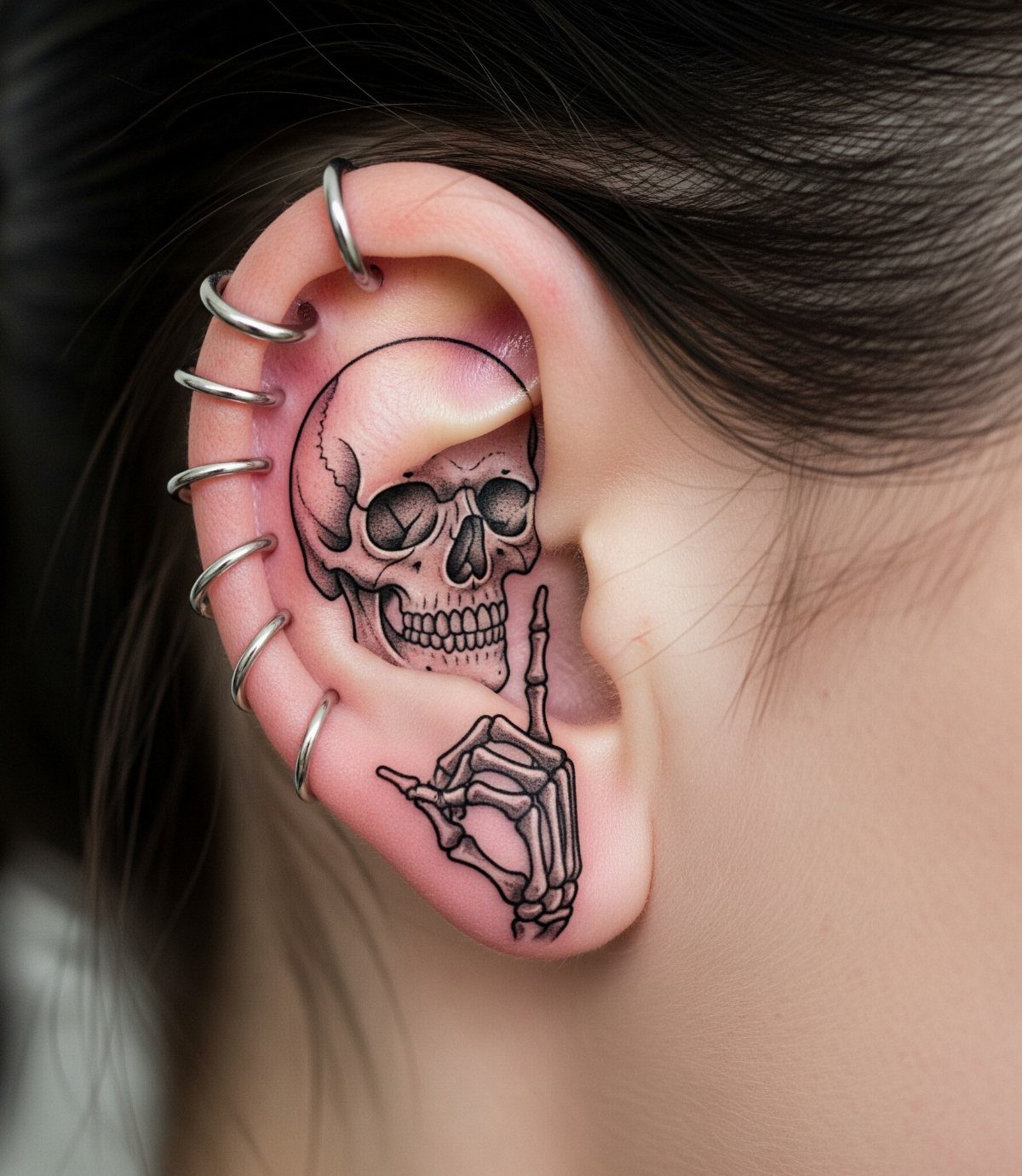
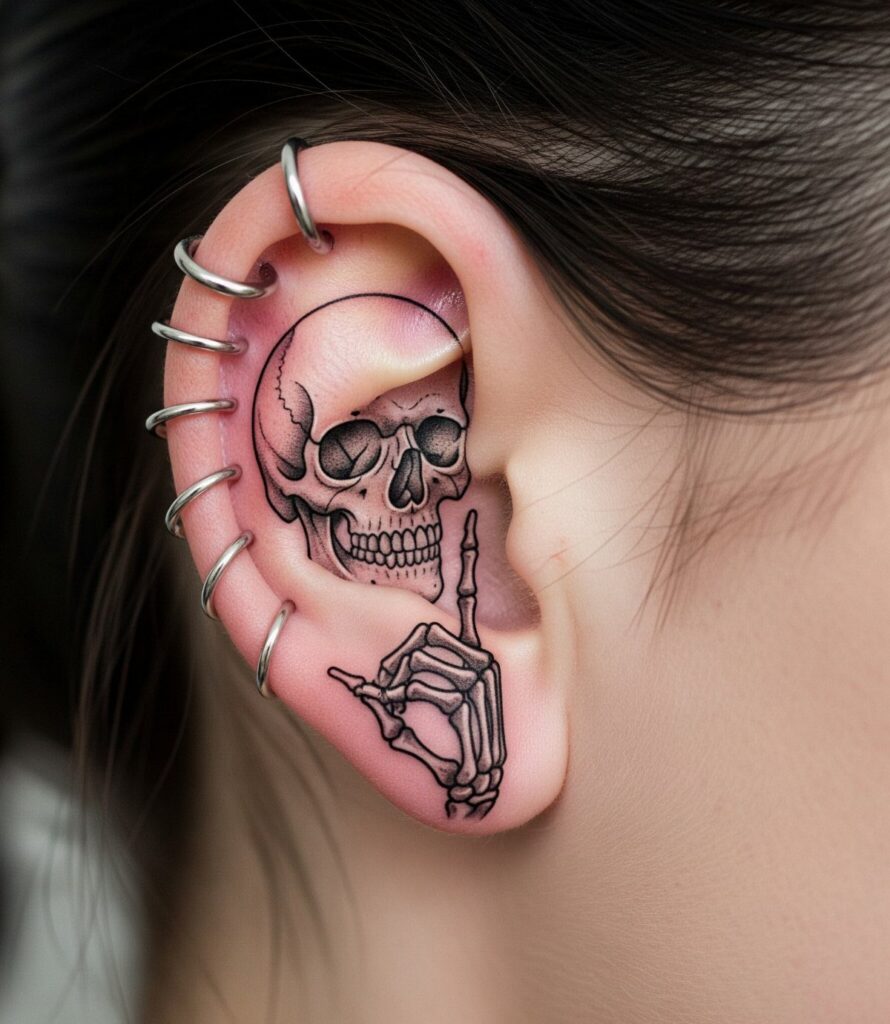
The skeletal hand pressed to the skull’s mouth, fingers held in a shushing gesture, turns this into a piece about silence or secrets rather than straight death imagery.
That hand gesture reads clearly on the ear’s curve and gives the design movement.
The piercings frame the skull without crowding it, and the silver tone stays neutral against black ink.
This spot on the ear keeps the tattoo visible when hair is up or tucked back, hidden when it falls forward.
2. Skull with Flowers
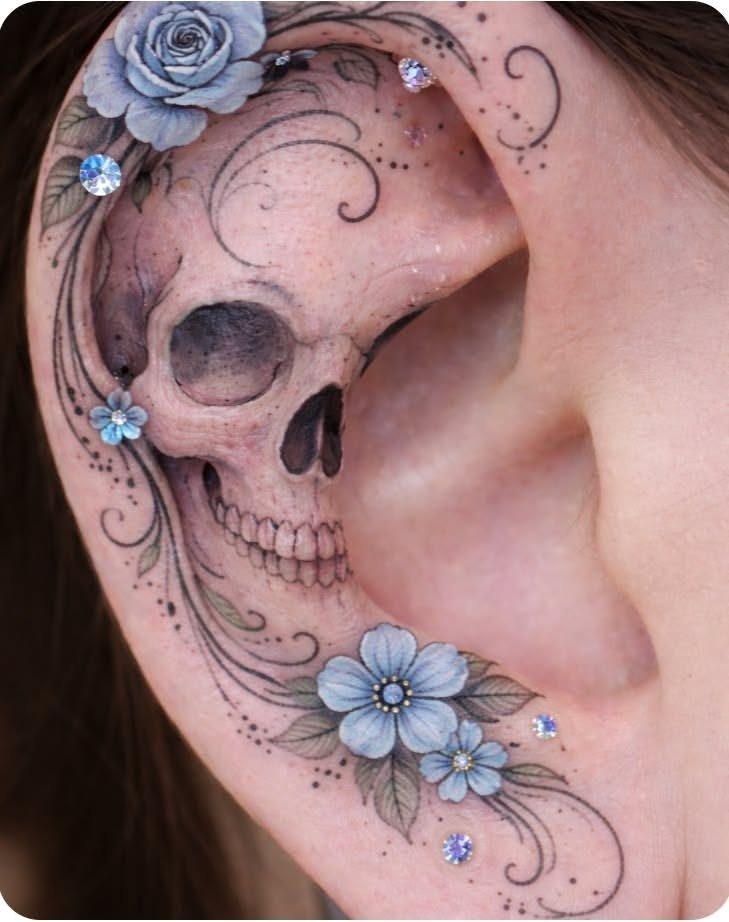
Blue flowers soften the skull and shift the tone from dark to decorative. The swirling linework around the petals fills the space without adding another object, and those small blue gemstones catch light the way ink alone cannot.
Floral skulls suit someone who wants death imagery without pure aggression.
The flowers read as life, growth or memory, depending on the type you choose. Roses carry different weight than daisies or cherry blossoms.
Color holds longer in larger areas. If you go with pale blue or lavender, expect touch-ups sooner than you would with deeper tones.
3. Realistic Grey and Black Ink Skull
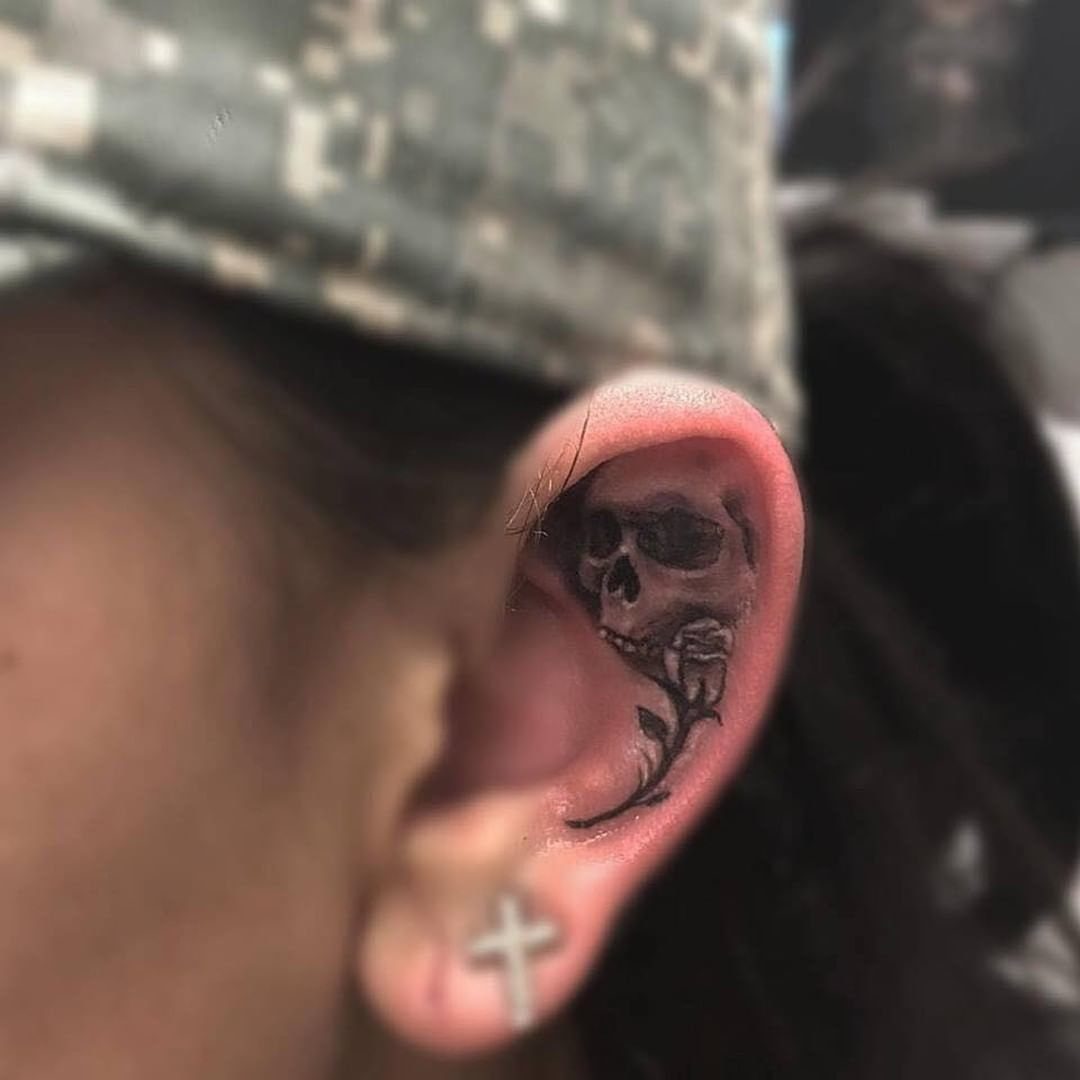
Grey and black shading builds depth without color, and realistic rendering means the skull looks like bone rather than a cartoon. The rose tucked beside it balances the starkness, and black ink on this scale ages better than fine-line work.
Realism takes longer in the chair than simpler styles. A piece this size with full shading takes time, and you’ll sit through detail work on contours and shadow.
This style suits someone who already has other dark ink or plans to build a sleeve. A single realistic skull on bare skin can look isolated.
4. Skull and Crossbones
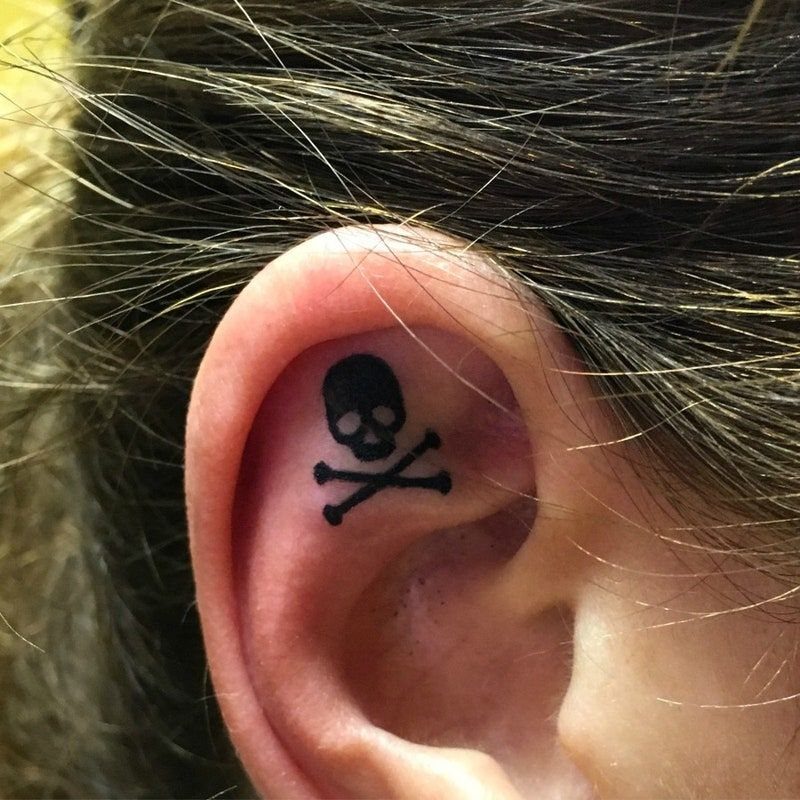
The skull and crossbones shrinks the design to its barest form and fits inside the ear’s cartilage folds.
That inner placement keeps it mostly hidden unless someone looks directly at your ear, and the small scale means less chair time and lower cost.
Black ink stays legible at this size better than grey wash or color. Fine lines can blur over time, so ask your artist to keep the bones thick enough to read as separate shapes years out.
Pain is higher on cartilage than on the lobe or behind the ear, but a piece this small is over fast.
5. Skull Integrated with Ear
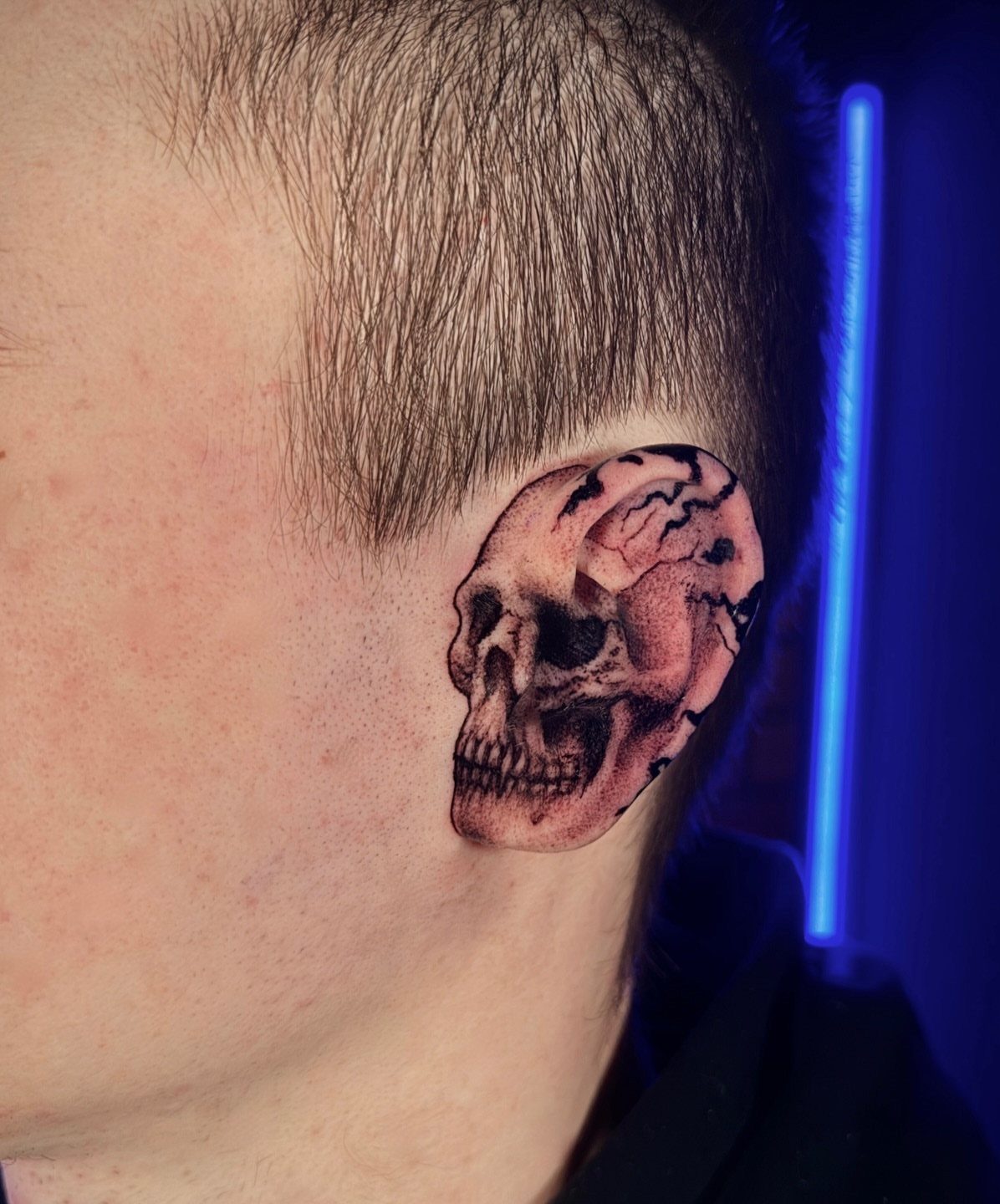
The skull’s eye socket or jaw line follows the ear’s ridges, so the anatomy of both merges into one shape.
This approach uses the body as part of the design rather than treating skin as a flat canvas, and it reads best when someone sees your profile.
Placement has to be exact. The tattoo won’t align with the ear’s curves unless your artist stencils it while you sit in the final position, head turned the way it will be seen.
This design works only on the ear. It cannot be mirrored or adapted to another spot, so commit to the location before you start.
6. Skull with Geometric Patterns
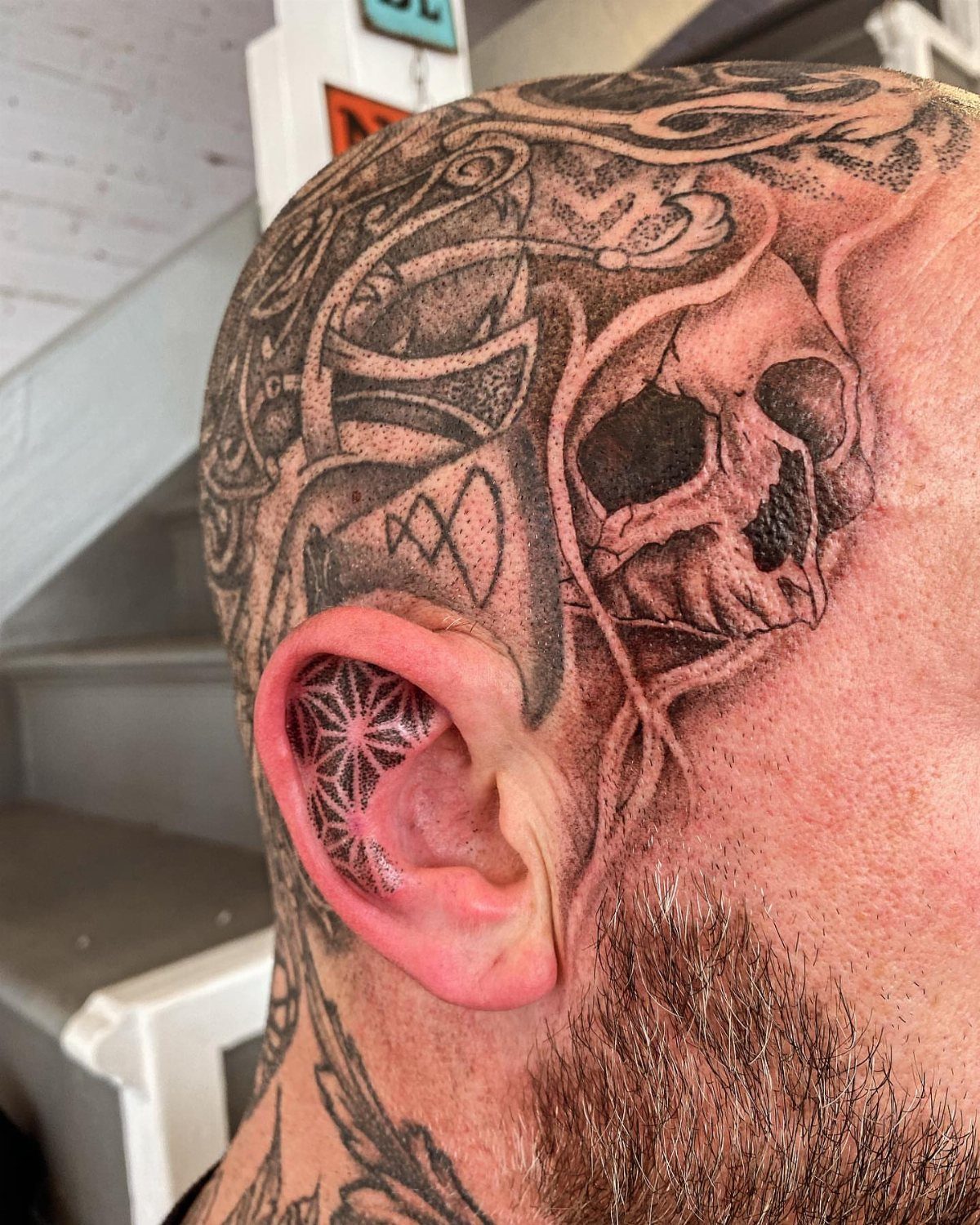
Geometric shapes inside the ear, paired with a skull on the side of the head, split the design between 2 styles.
The geometry keeps clean lines and sharp angles while the skull stays organic, and that contrast makes both elements read more clearly.
Dotwork, mandalas or sacred geometry fit inside the ear’s bowl without needing much depth. Solid black triangles or hexagons age better than intricate patterns with thin lines that can fade into each other.
If you already have tribal or blackwork tattoos, geometric patterns tie into that aesthetic better than florals or realism would.
7. Skull Wearing a Hood
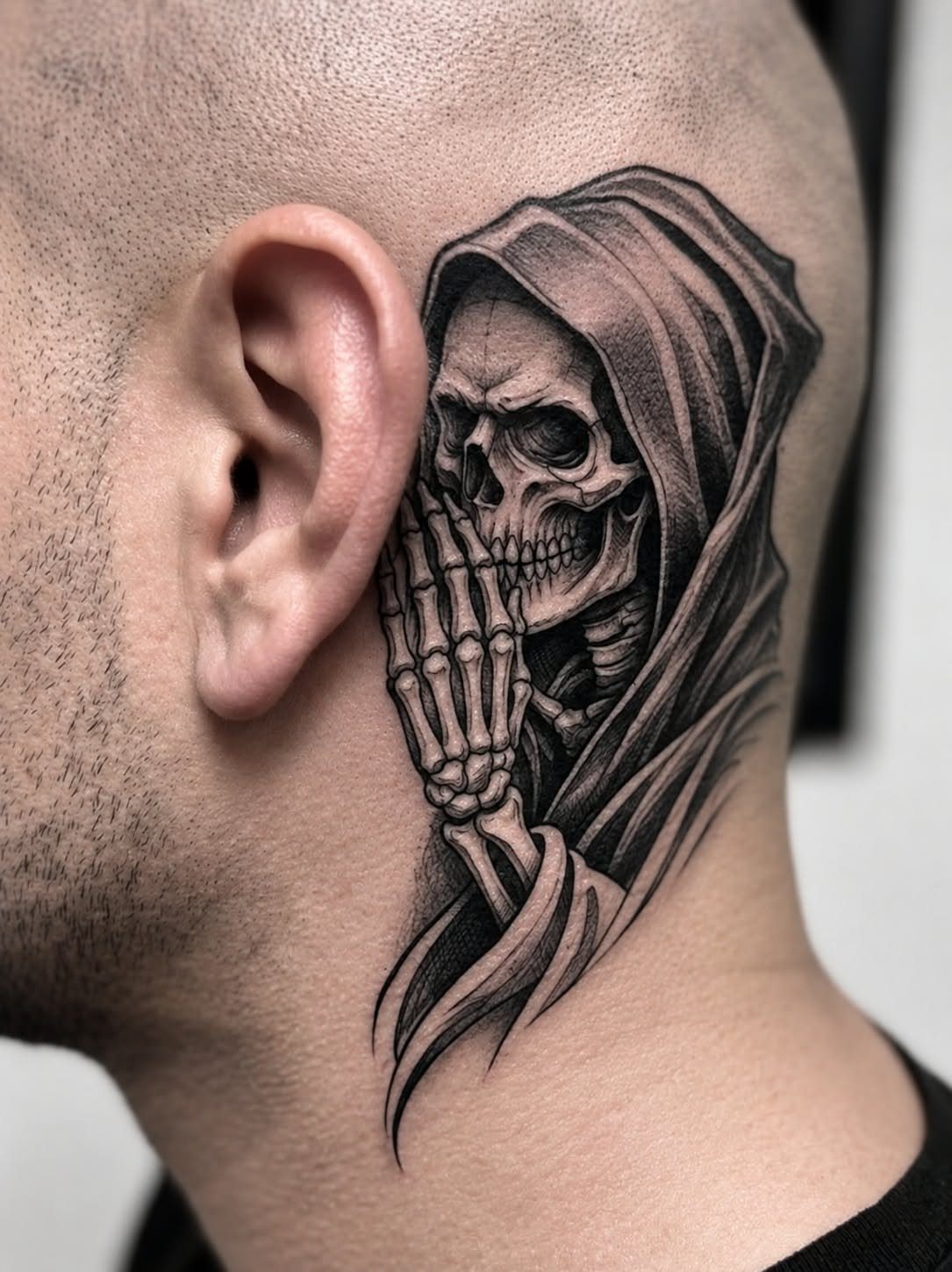
The hood adds shadow and concealment to the skull, turning it into a figure rather than just bone.
A skeletal hand emerging from the fabric gives the design a second layer of movement and suits placement that wraps from the ear down onto the neck.
Shading in black ink alone renders fabric folds better than outline by itself. The hood needs depth to read as cloth instead of a flat shape, and that takes time under the needle.
This style pairs well with other dark reaper or grim figure tattoos if you plan to build a larger piece later.
Pain Level of Ear Tattoos
The outer rim and the inner bowl both hurt more than a forearm or shoulder, and vibration travels through cartilage in a way soft tissue absorbs.
Pain varies with how much of the ear the design covers.
A small piece on the lobe finishes fast. A skull that wraps around cartilage ridges or extends onto the side of the head takes longer and tests endurance more.
If this is your first tattoo, expect sharper sensation than you would on fleshier areas. The trade is that small ear tattoos finish quickly, and chair time matters more than peak intensity for most people.
Symbolism of Skull Tattoos
Skulls carry meanings that shift with context.
Danger and rebellion are the most visible, especially in biker culture and punk iconography where the skull announces defiance. Mortality is the older reading, memento mori in visual form, a reminder that life is finite.
That hand gesture, skeletal fingers covering eye and mouth, nods to "see no evil, speak no evil" while keeping the skull’s edge. It softens the rebellion just enough to make the piece about restraint or secrecy rather than pure aggression.
A skull on the ear sits closer to the face than most tattoo spots, so it reads as more confrontational than the same design on a shoulder.
Behind-the-ear placement hides the design when hair falls forward but shows it the moment you tie hair back.
Tattoo Placement Considerations
Placement on the ear determines how the tattoo reads from different angles. The outer rim shows when someone faces you directly.
Behind the ear stays hidden in most positions and appears only in profile or when hair moves. Inside the concha, the skull sits in shadow and becomes visible only up close.
Smaller designs fit the ear’s limited surface better than large ones. A realistic skull with full shading can fit inside the concha, though the tight space means fine detail may soften over time.
A design that wraps the outer curve uses the ear’s shape as part of the anatomy, so the skull’s structure aligns with cartilage ridges instead of fighting them.