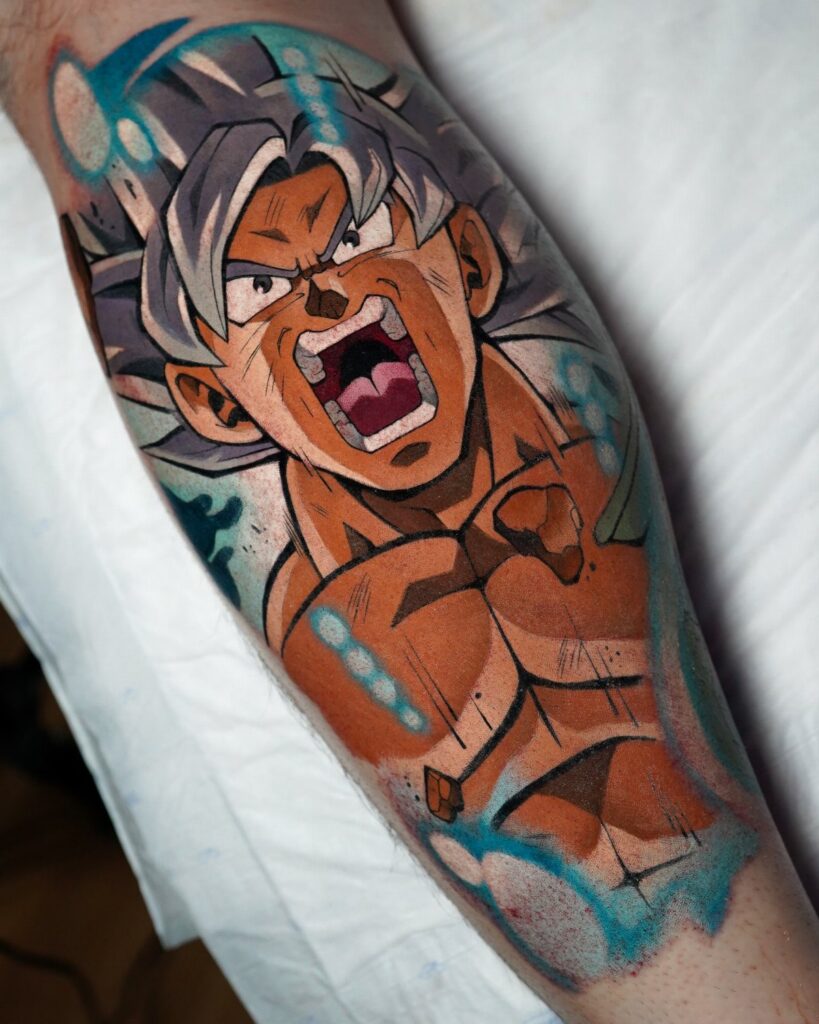
A full leg sleeve fits multiple characters across different sagas, while a forearm handles a single figure like Majin Vegeta, SSJ2 Gohan, or Broly with room for the details that separate one form from another.
The four-star ball singles out Goku’s connection to his grandfather, Roshi pulls from the comedic side, and Kame House anchors a tattoo in the early Z training arc instead of another fighter mid-battle.
1. Four Star Dragon Ball Tattoo
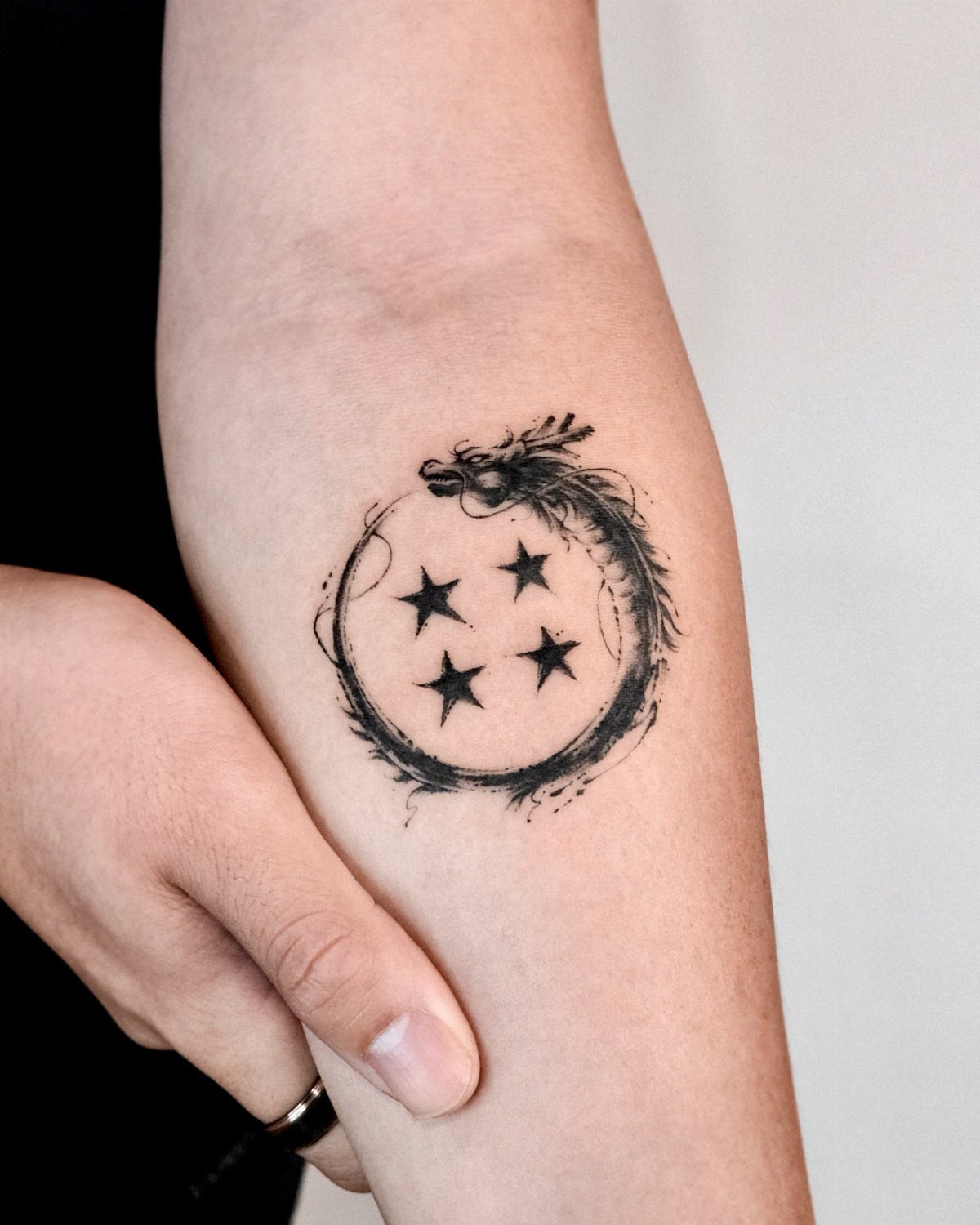
The four-star ball is the one that mattered most to Goku, the keepsake from his grandfather, so choosing it singles out that connection rather than collecting the full set.
A dragon coiled around the sphere adds motion and ties the design back to Shenron without needing the whole wish scene.
Black ink alone keeps the read clean at any size. Forearm placement lets you see it yourself, which feels right for a piece tied to family memory.
2. Chiaotzu Dragon Ball Tattoo
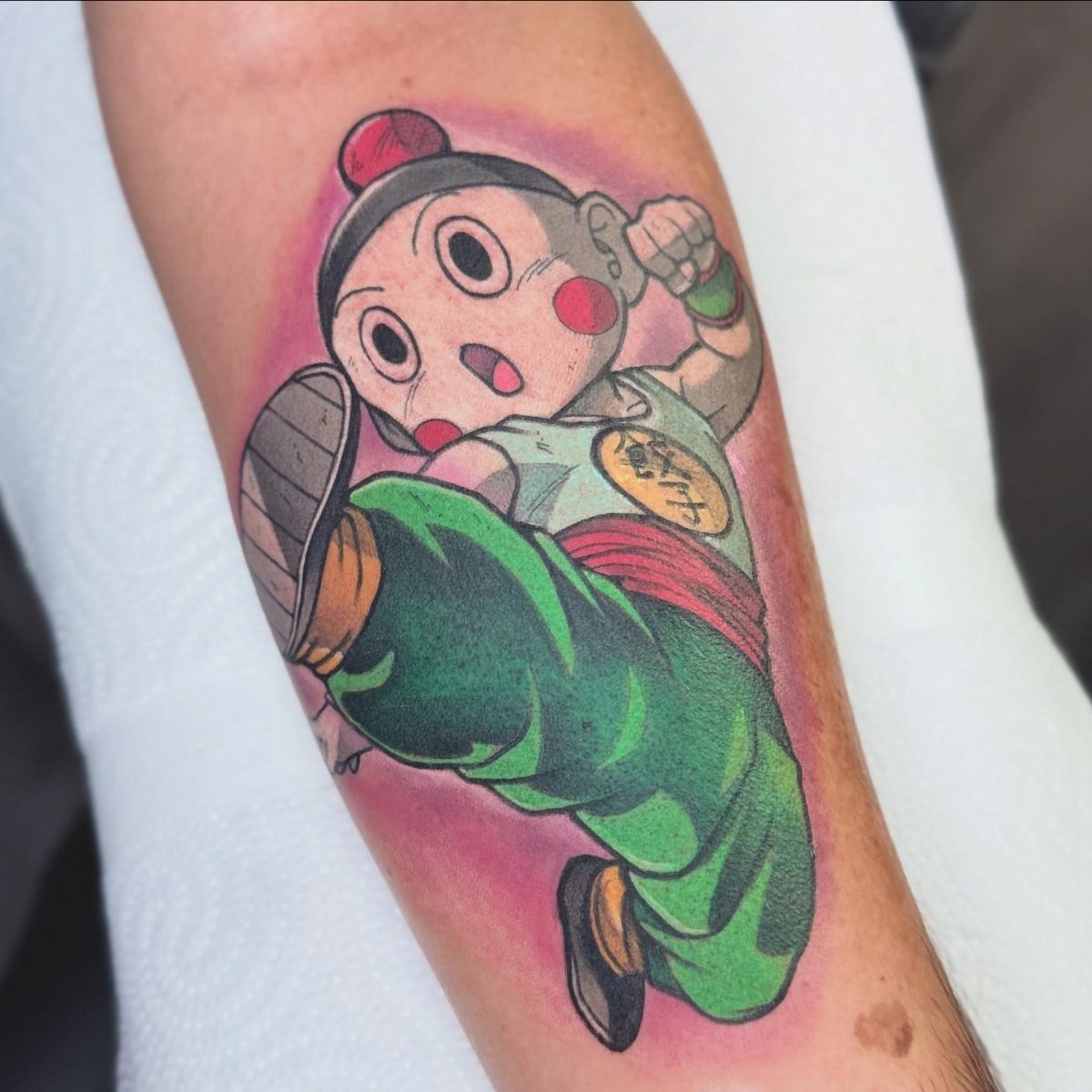
Chiaotzu rarely shows up in tattoo shops, which makes him a solid pick for a character that other Dragon Ball fans will recognize but won’t see repeated on every third arm.
His proportions and outfit translate cleanly to smaller areas because there’s no dense armor or transformation effects to cram in.
Color brings out the red cheeks and green pants that make him instantly readable. A dynamic pose like a kick stops the design from looking static, even though Chiaotzu himself is one of the calmer fighters in the series.
3. Shenron Dragon Ball Tattoo
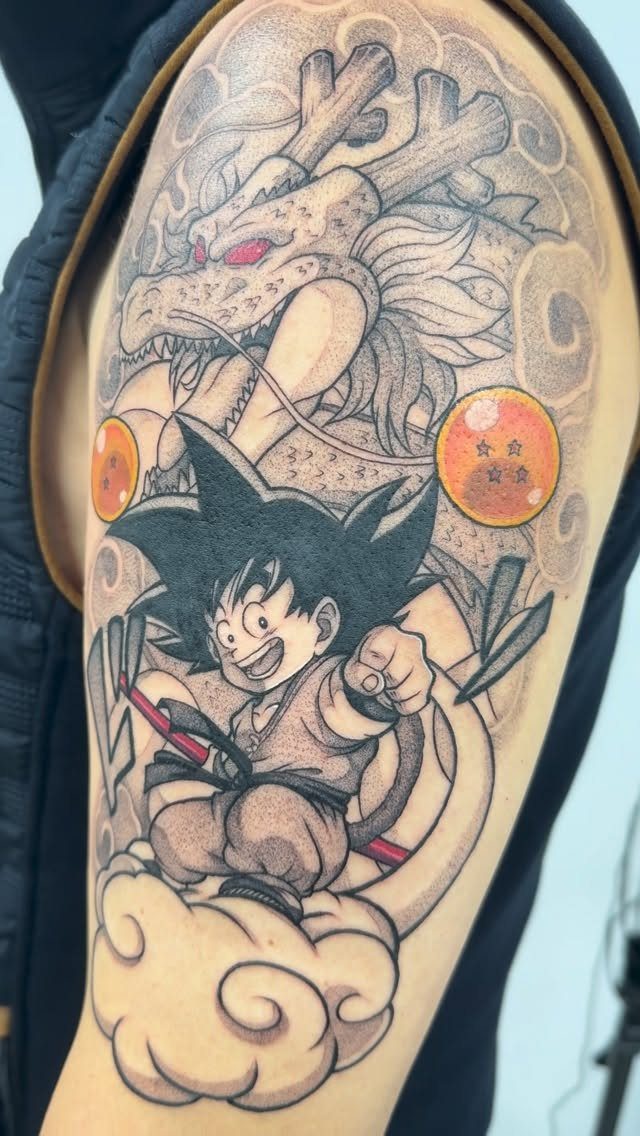
Shenron is the reward for every arc that involves the Dragon Balls, so including him alongside Goku on the nimbus cloud captures the whole journey in one piece.
The dragon’s long body gives an artist room to wrap around the arm or flow down a leg, and adding the orbs themselves reinforces what the dragon represents without spelling it out.
Upper arm placement works well because the curved surface lets Shenron’s coils follow the muscle. This one uses both the character and the creature, which reads as more narrative than a portrait alone.
4. Son Goku Dragonball Tattoo
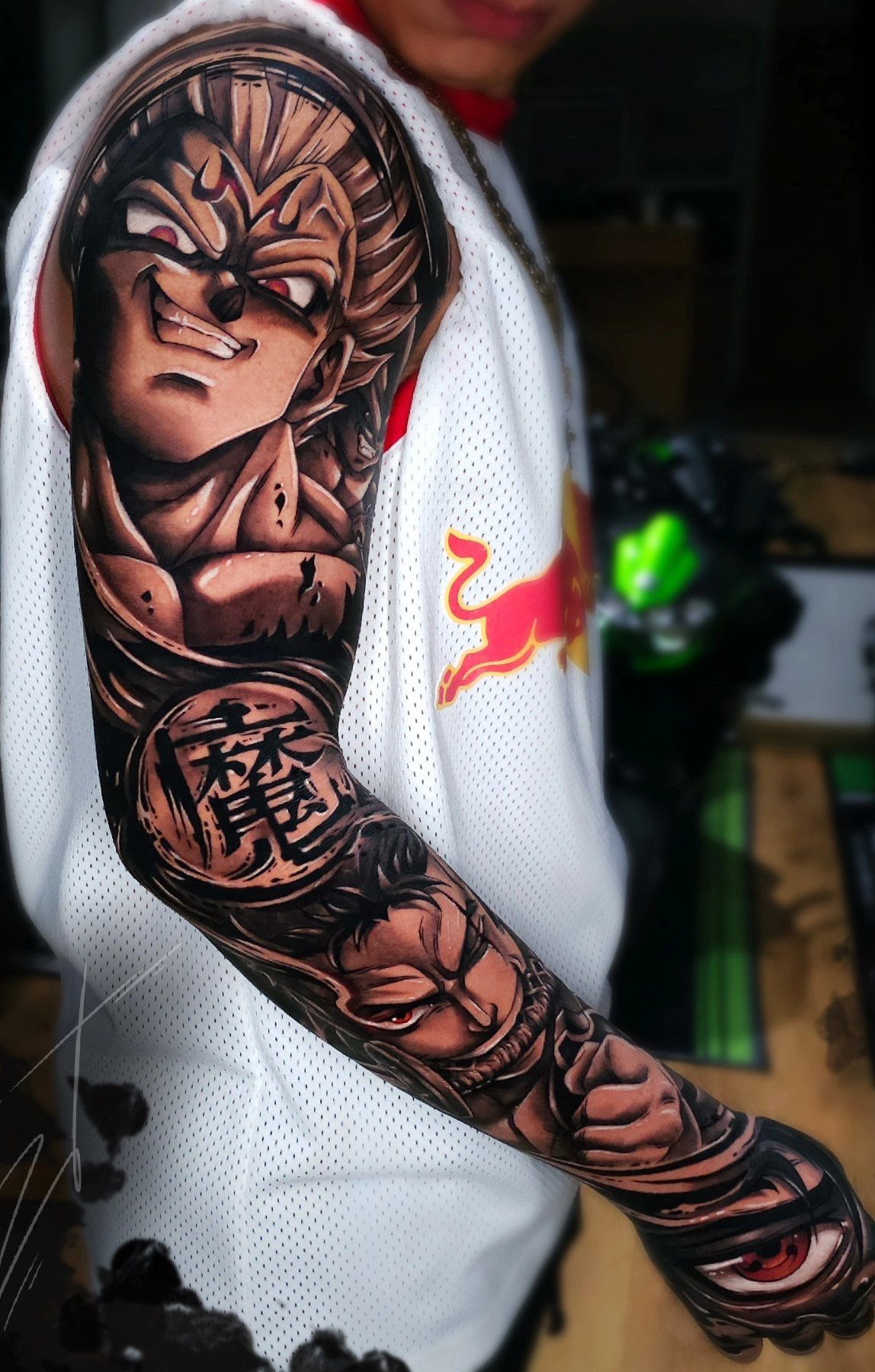
A sleeve gives space for multiple stages of Goku’s story, so you can show base form, Super Saiyan, and later transformations all in one piece rather than committing to a single snapshot.
The detail level in a sleeve requires multiple sessions. Arm placement means you’ll see it every day, which suits a character you’re confident will still resonate years from now.
5. Playful Goku Tattoo
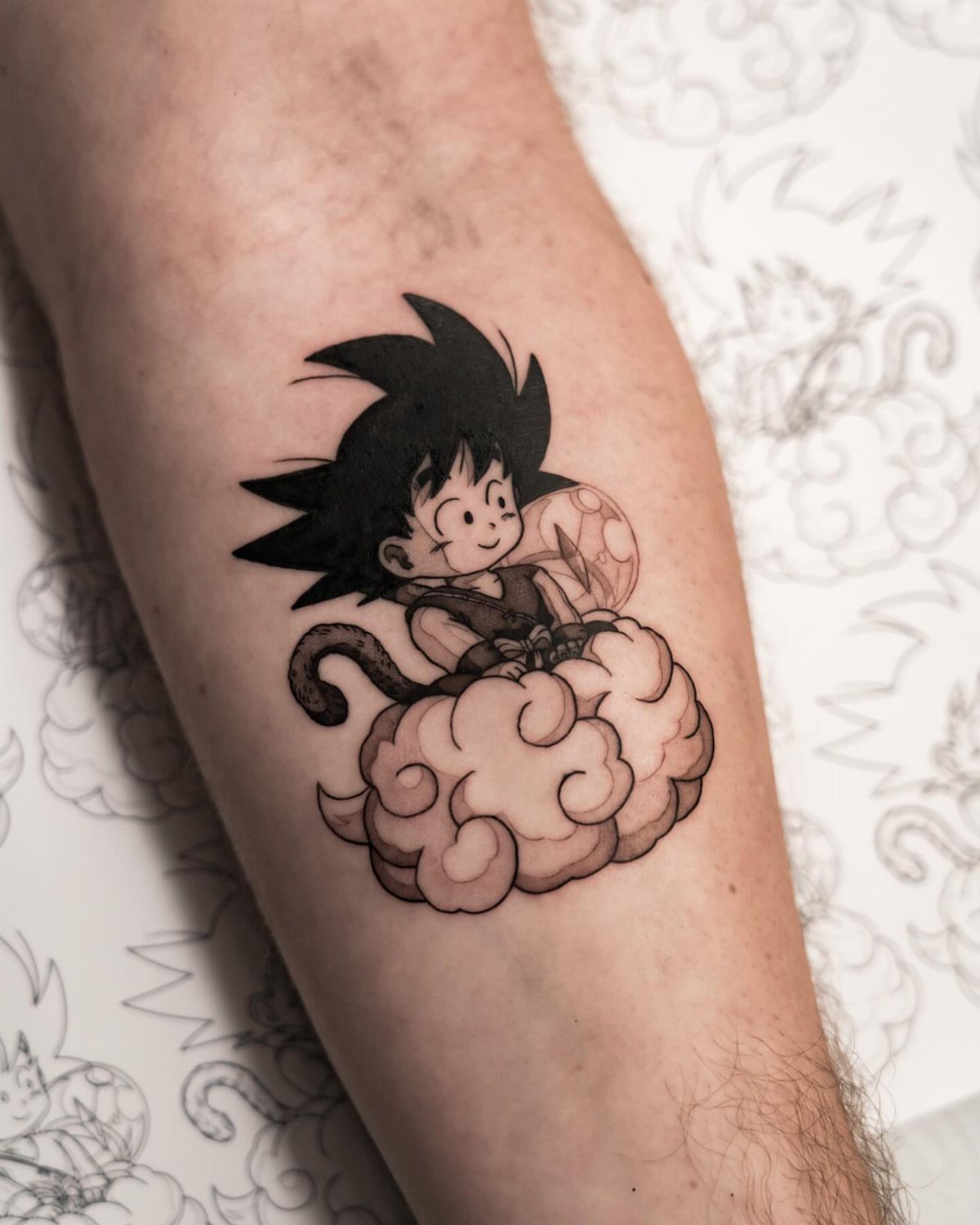
Young Goku on the nimbus captures the lighter tone of early Dragon Ball, before the series shifted toward high-stakes battles and planet-destroying villains.
Forearm is a practical spot because the design fits the natural taper of the arm, with the cloud stretching horizontally and Goku riding on top.
Playful poses age better than aggressive ones because the expression stays warm instead of locked into one intense moment.
6. Chibi Dragon Ball Characters Tattoo
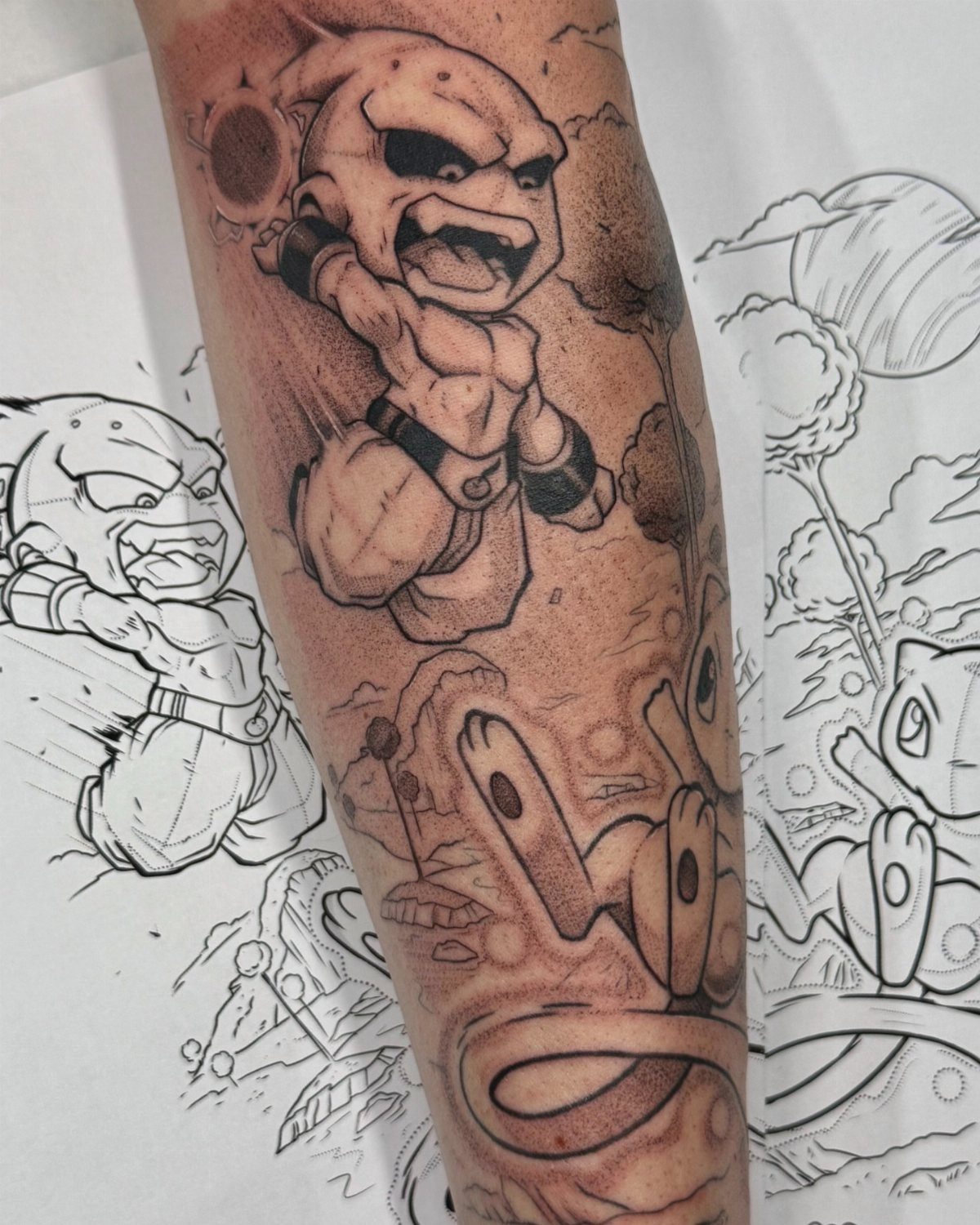
Chibi proportions shrink the characters down to simplified heads and bodies, which lets you fit multiple fighters into a smaller space without losing clarity.
Black and grey keeps the focus on the shapes rather than sorting out which character gets which color, and it sidesteps the problem of bright colors fading unevenly over time.
This style suits a forearm or calf where you want a full cast lineup without covering your entire limb.
The cuteness factor makes it less intimidating as a first large piece, and other fans will still recognize who’s who from the silhouettes and expressions alone.
7. Kame House Dragon Ball Tattoo
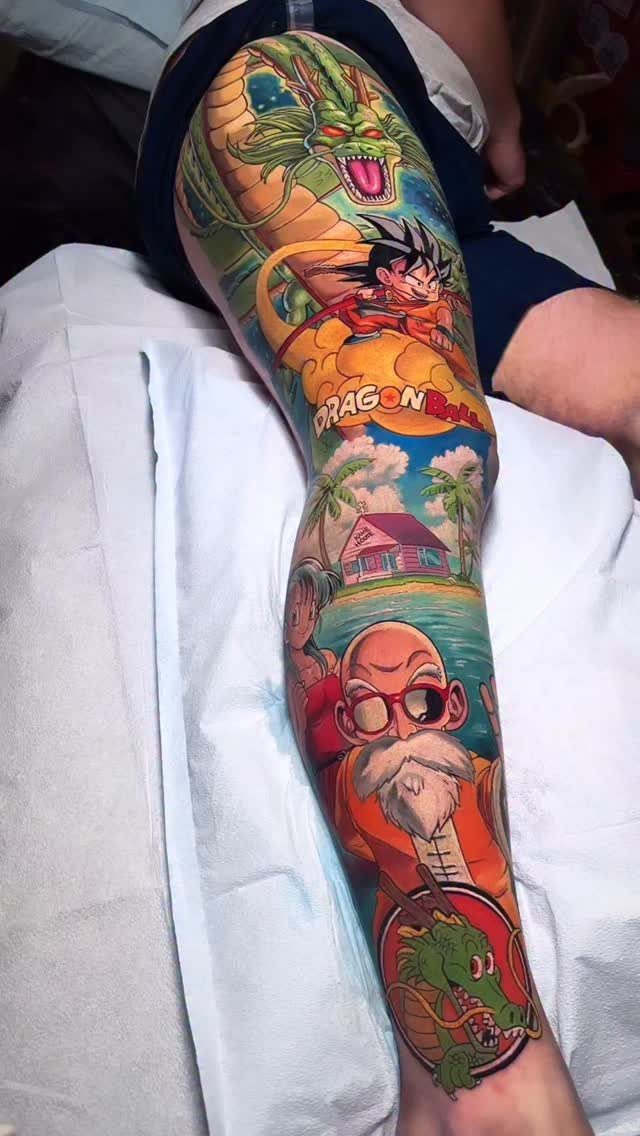
The island house with the palm tree and Kame symbol is where Goku trained, so it anchors the design in a specific chapter rather than just showing a character’s face.
A full leg sleeve like this one fits the building, Roshi, young Goku, and Shenron together because the vertical space lets each element sit at a different height without crowding.
3 days of work, according to the artist, which lines up with the amount of color and background detail a piece this size needs. Leg placement hides easily under pants, which matters if your workplace has tattoo policies.
8. Son Goku and Son Gohan
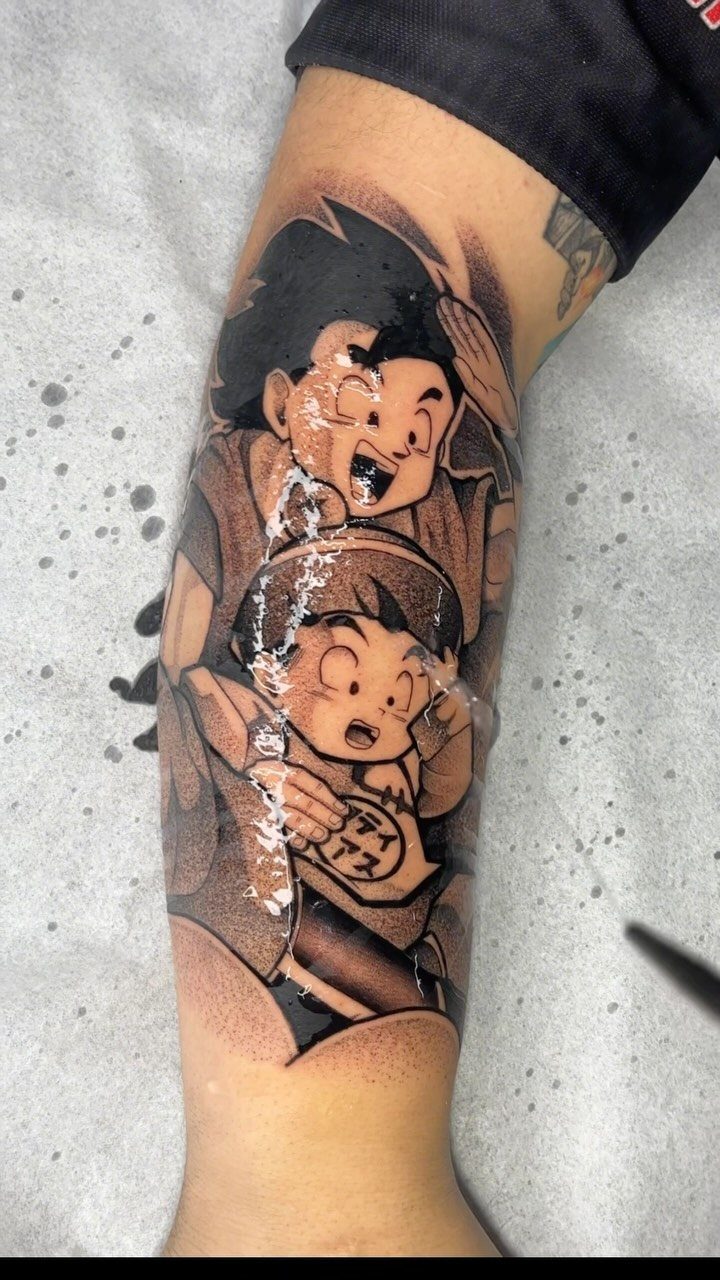
Father and son together catches the relationship that runs through the series, and black and grey keeps the focus on their expressions rather than sorting out Goku’s gi color or Gohan’s outfit.
Forearm placement means the design faces you when your arm is relaxed, which suits a piece about family.
9. Broly Tattoo
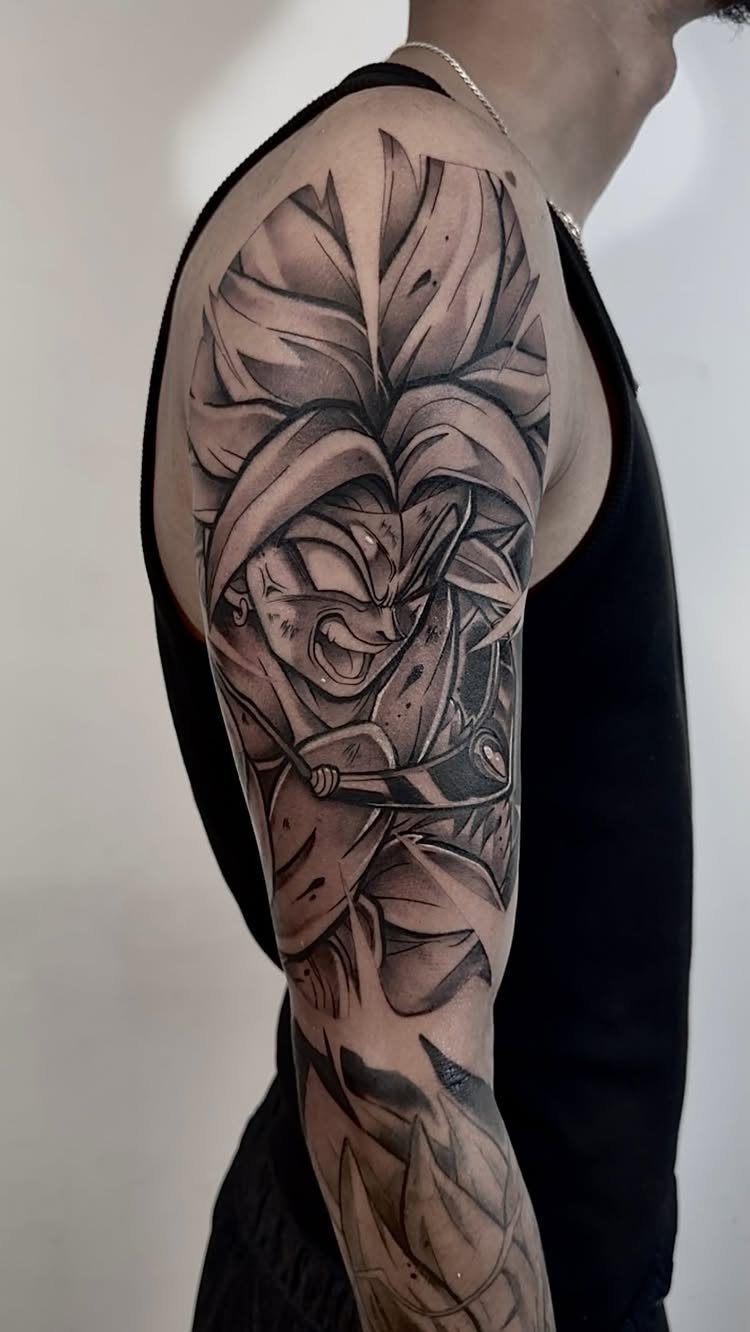
Broly’s bulk and wild hair fill a shoulder cap naturally because the design needs width, and his expression reads from across a room even without color.
Upper arm and shoulder give enough space for shading that shows muscle definition, which matters for a character whose whole presence is physical power.
10. Traditional Dragonball Tattoo
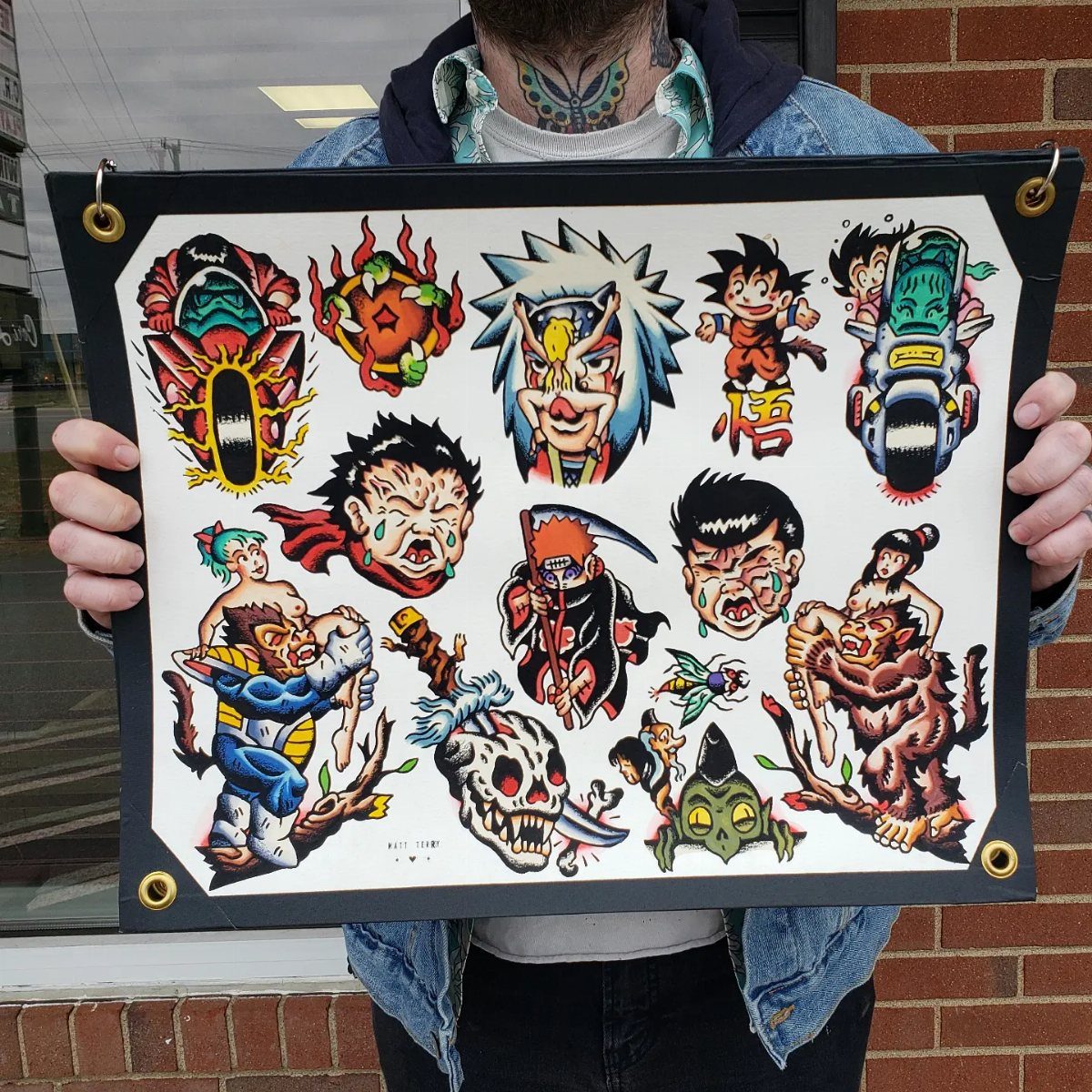
Traditional style simplifies the characters into bold outlines and flat color, which holds up better over decades than fine-line detail.
A flash sheet like this one lets you pick a character and size without commissioning custom art, and most artists who work in traditional can apply the design the same day if their schedule allows.
The style fits Dragon Ball because the retro tattoo look matches the era when the manga first ran.
11. Kamehameha Tattoo
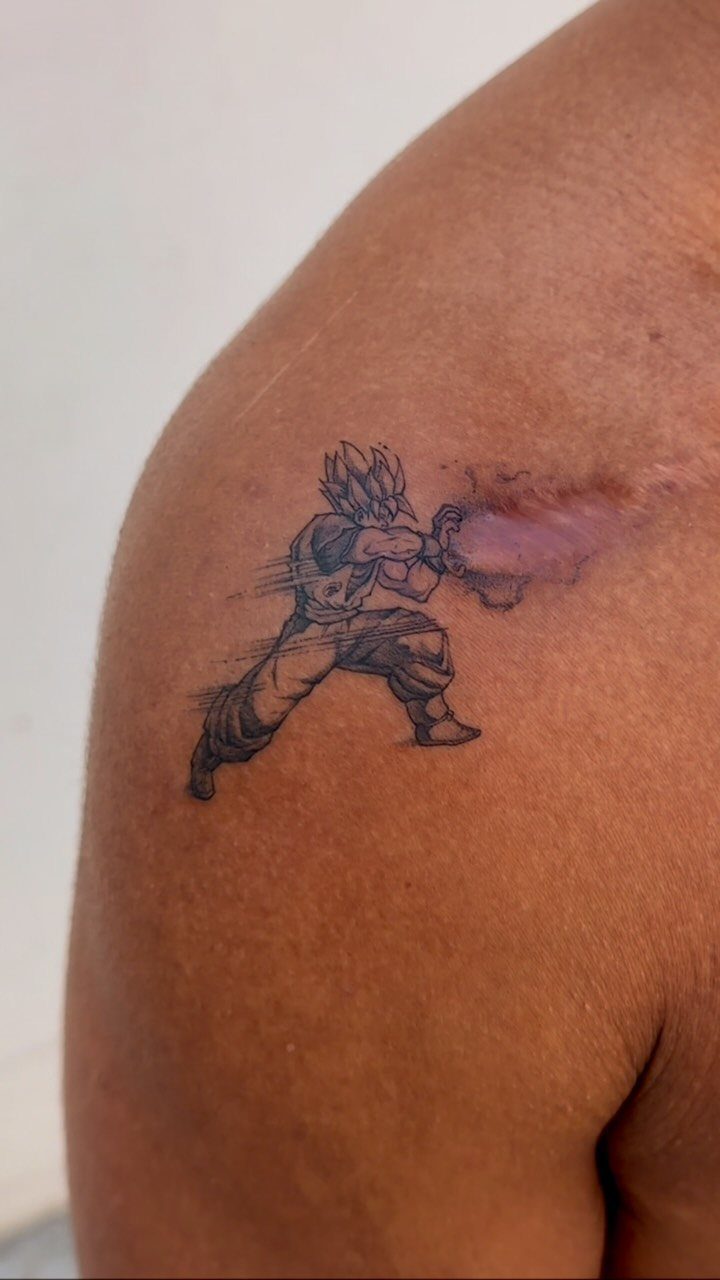
The energy blast gives motion to a static portrait, and purple instead of the usual blue sets it apart from the dozens of other Kamehameha tattoos already out there.
Shoulder placement works because the blast can extend down the arm or across the chest in a future session when you decide to expand it later.
12. Son Gohan Tattoo
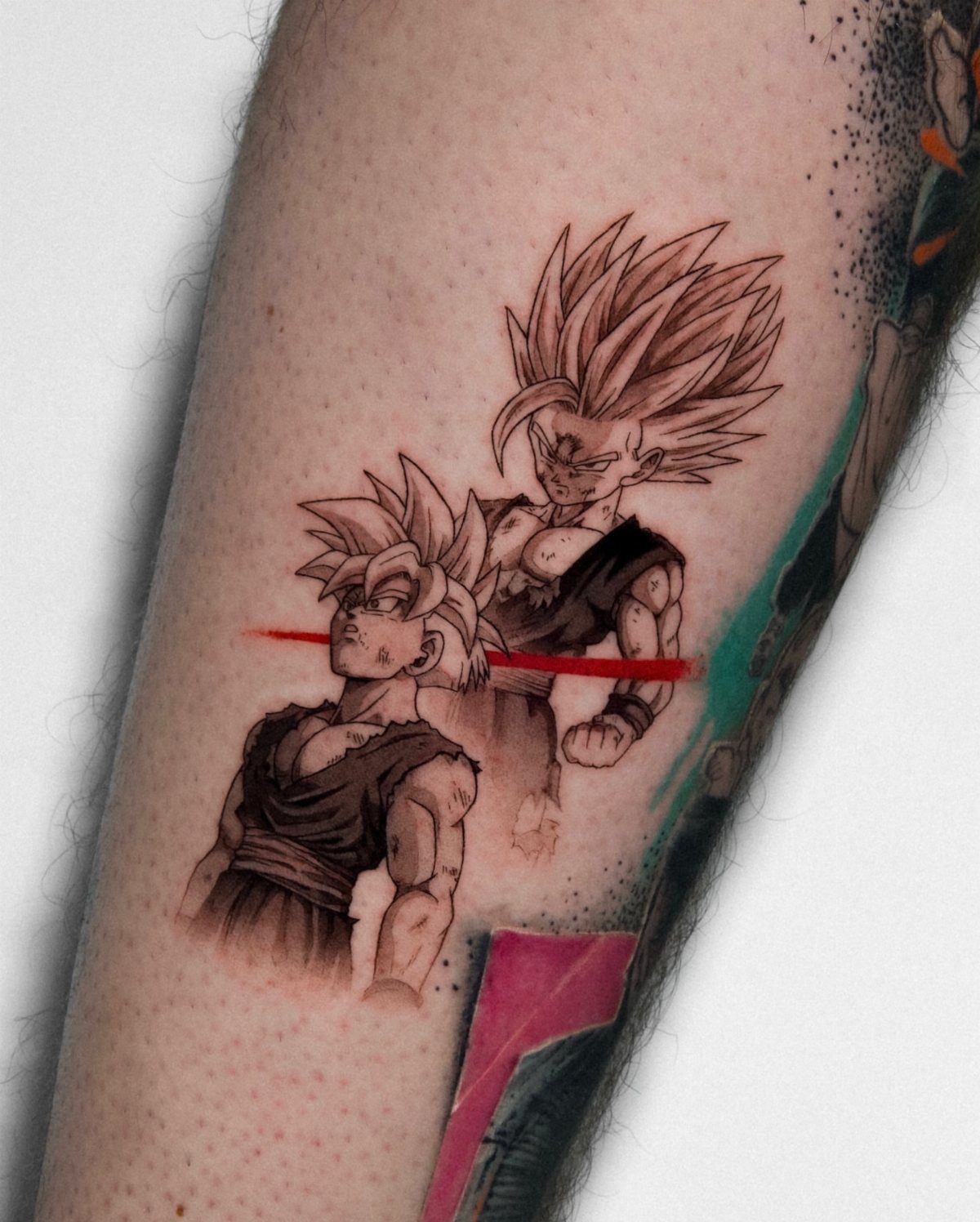
Two versions of Gohan in one piece track his growth from shy kid to fighter, and the sketch style with the red line gives it a storyboard feel rather than a polished portrait.
Arm placement keeps both figures visible at once. Gohan gets less ink than Goku or Vegeta, so choosing him signals you followed the series closely enough to pick a character arc over just the main hero.
13. Frieza Tattoo
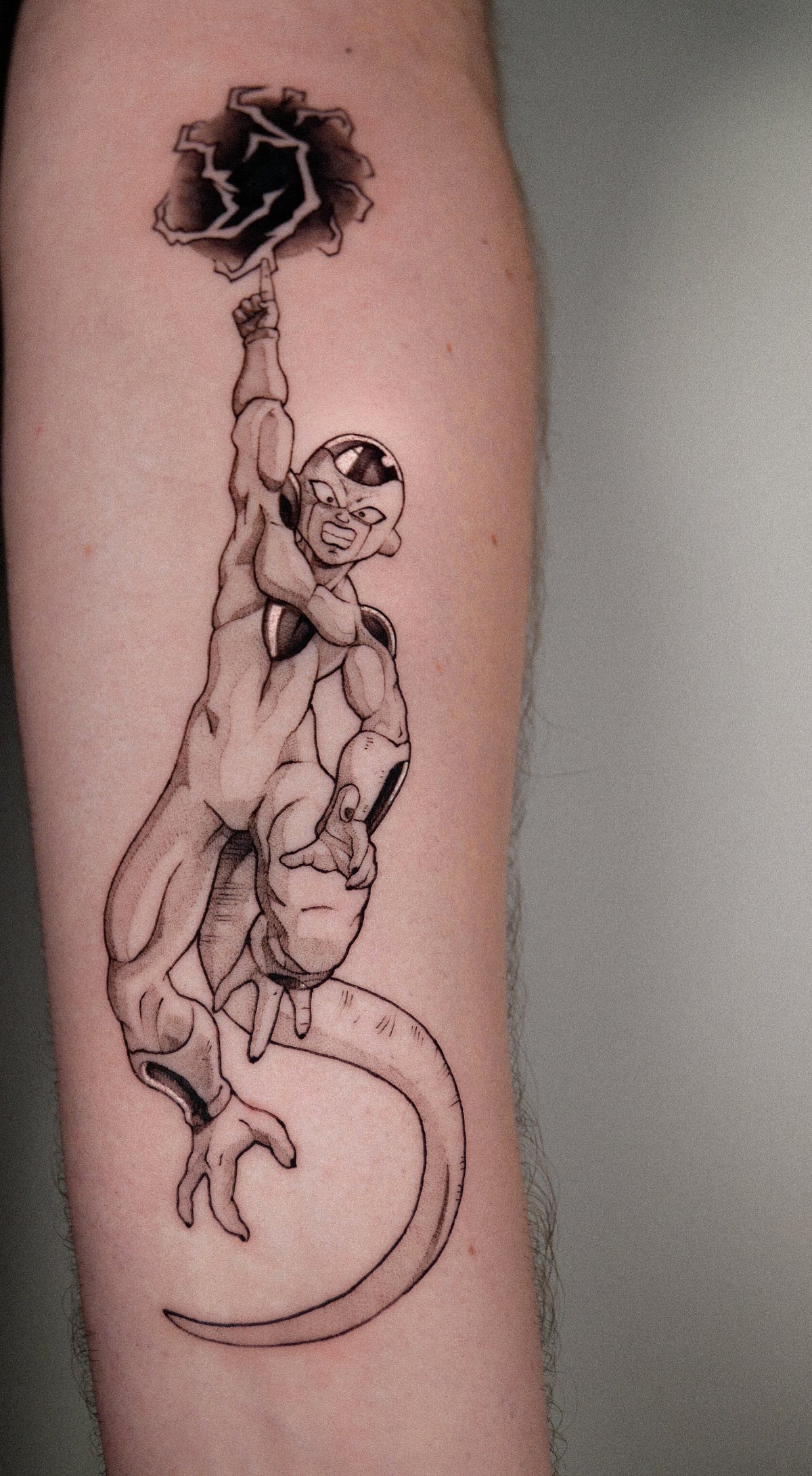
The sphere itself adds a focal point that balances the character’s angular armor and tail.
Forearm suits a villain portrait because the design faces outward, and Frieza’s smirk reads clearly at arm’s length. Black and grey skips the debate over which form’s color scheme to use and keeps the shading sharp.
14. Majin Vegeta Tattoo
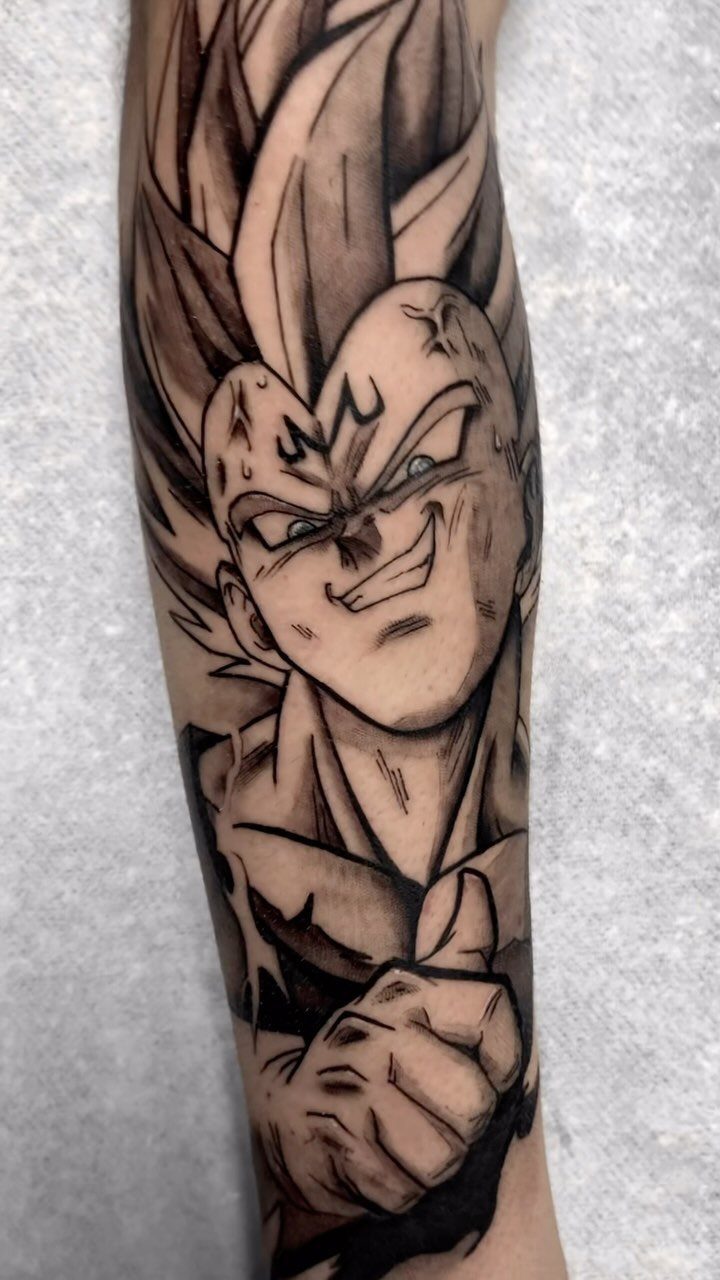
The M symbol on Vegeta’s forehead is the detail that separates this version from every other Vegeta tattoo, so placing it front and center makes the design instantly recognizable to anyone who followed the Majin Buu saga.
Black and grey handles the shadowing on his face and armor without needing to match the exact shade of his aura.
The symbol stays visible on the forearm, which is why this form reads better than base Vegeta or Super Saiyan.
15. Oozaru Tattoo
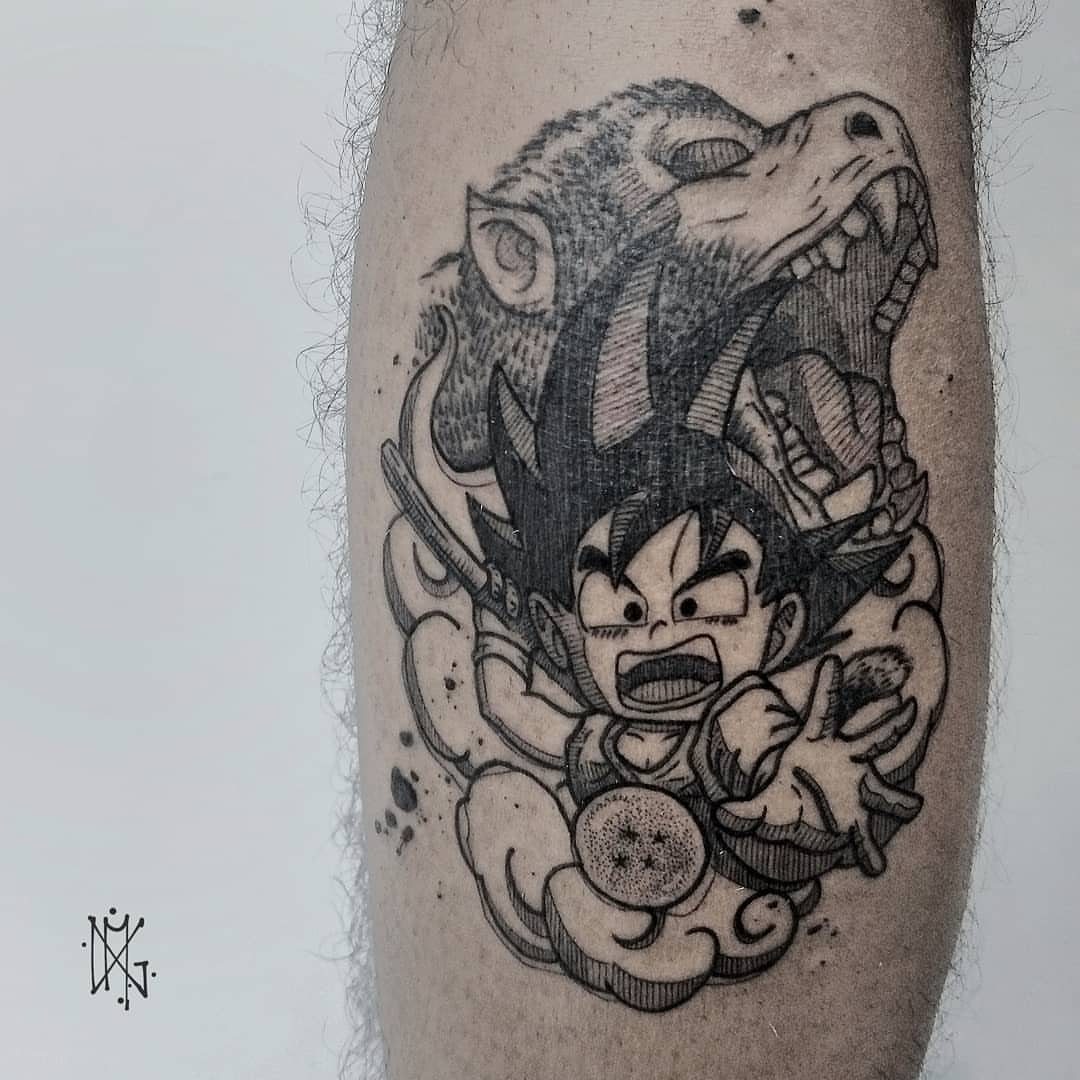
Pairing young Goku with the Great Ape shows both sides of his Saiyan heritage in one piece, and adding the four-star ball ties it back to his grandfather.
The scale difference between the small figure and the roaring ape fills the vertical space a leg offers without needing a second character.
Black and grey keeps the fur texture readable and lets the shading define the ape’s expression. Leg placement hides under pants when needed.
16. SSJ2 Gohan Dragon Ball Tattoo
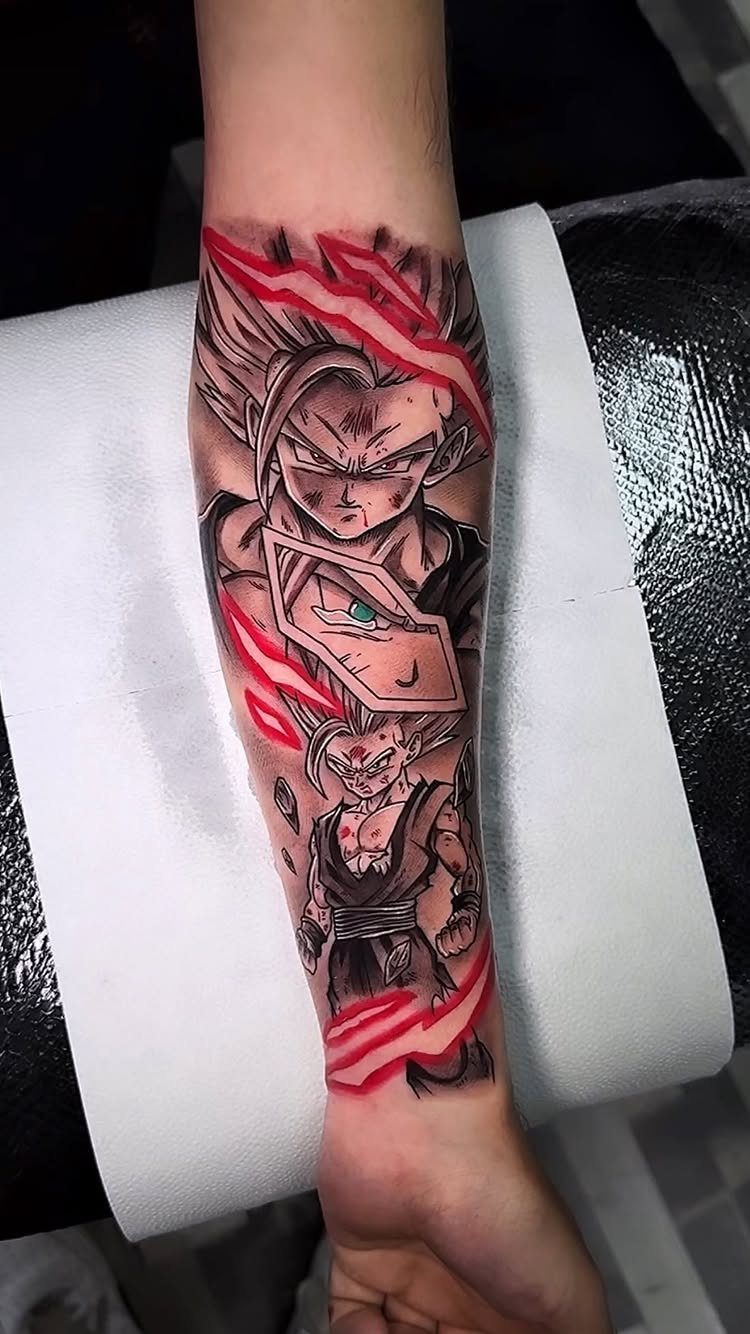
Red lightning instead of the usual yellow or white highlights the specific moment Gohan transformed during the Cell Games, which sets this apart from generic Super Saiyan designs.
2 poses of the same character give the piece motion and show different angles of the hair and aura.
Forearm fits both figures side by side without cramping the detail. The red accent pops against black and grey ink, so the energy reads even from a distance.
17. Goku and Goten Dragon Ball Tattoo
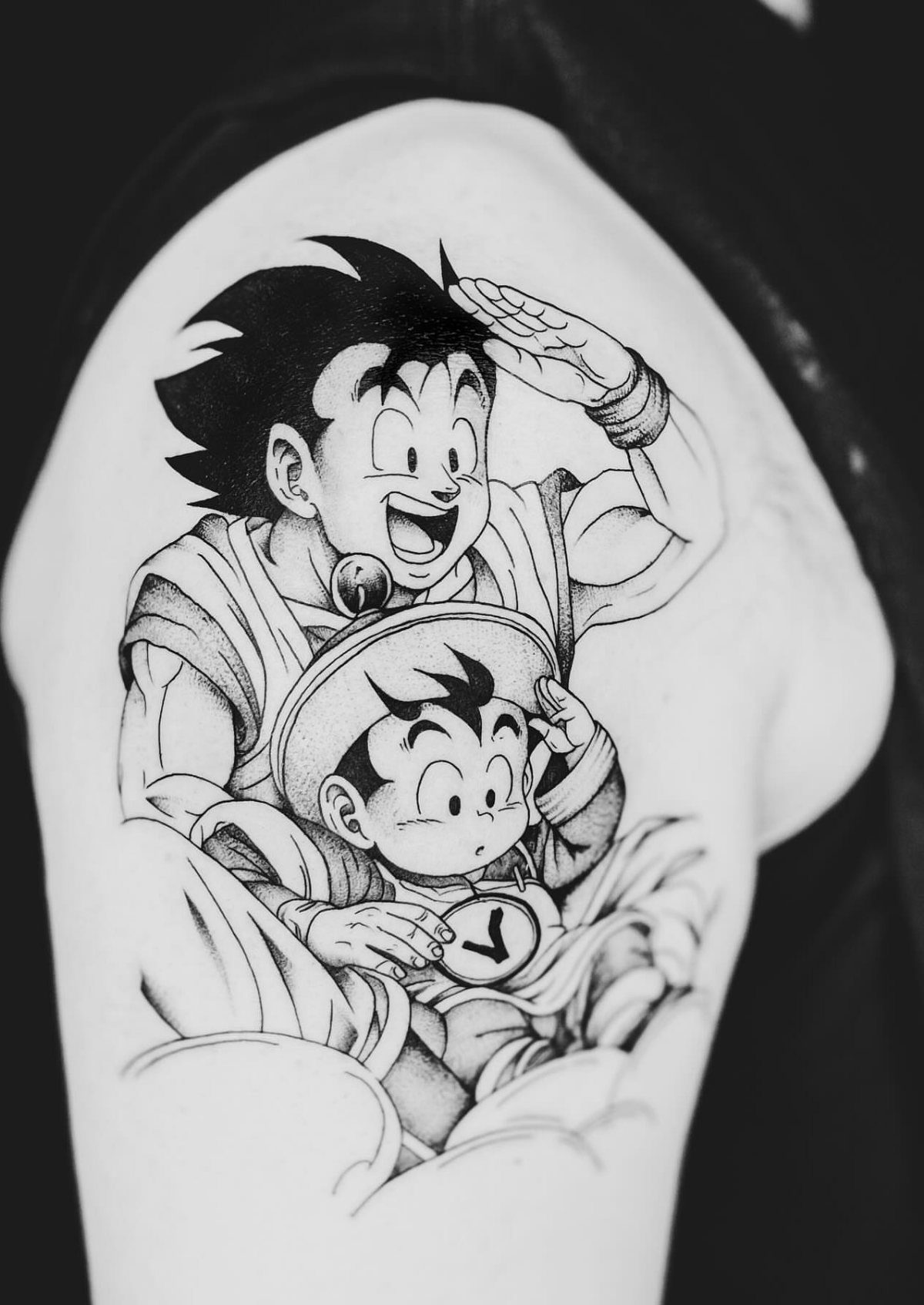
Goku with Goten mirrors the Goku and Gohan pairing but shifts the focus to the next generation, so it offers a family piece that isn’t the same one everyone else has.
Black and grey keeps the expressions clear without sorting out which gi color belongs to which character.
Upper arm gives enough width for both figures without overlapping. The father-son theme works for a first large piece because it carries meaning beyond just liking the show.
18. Cute Buu Tattoo
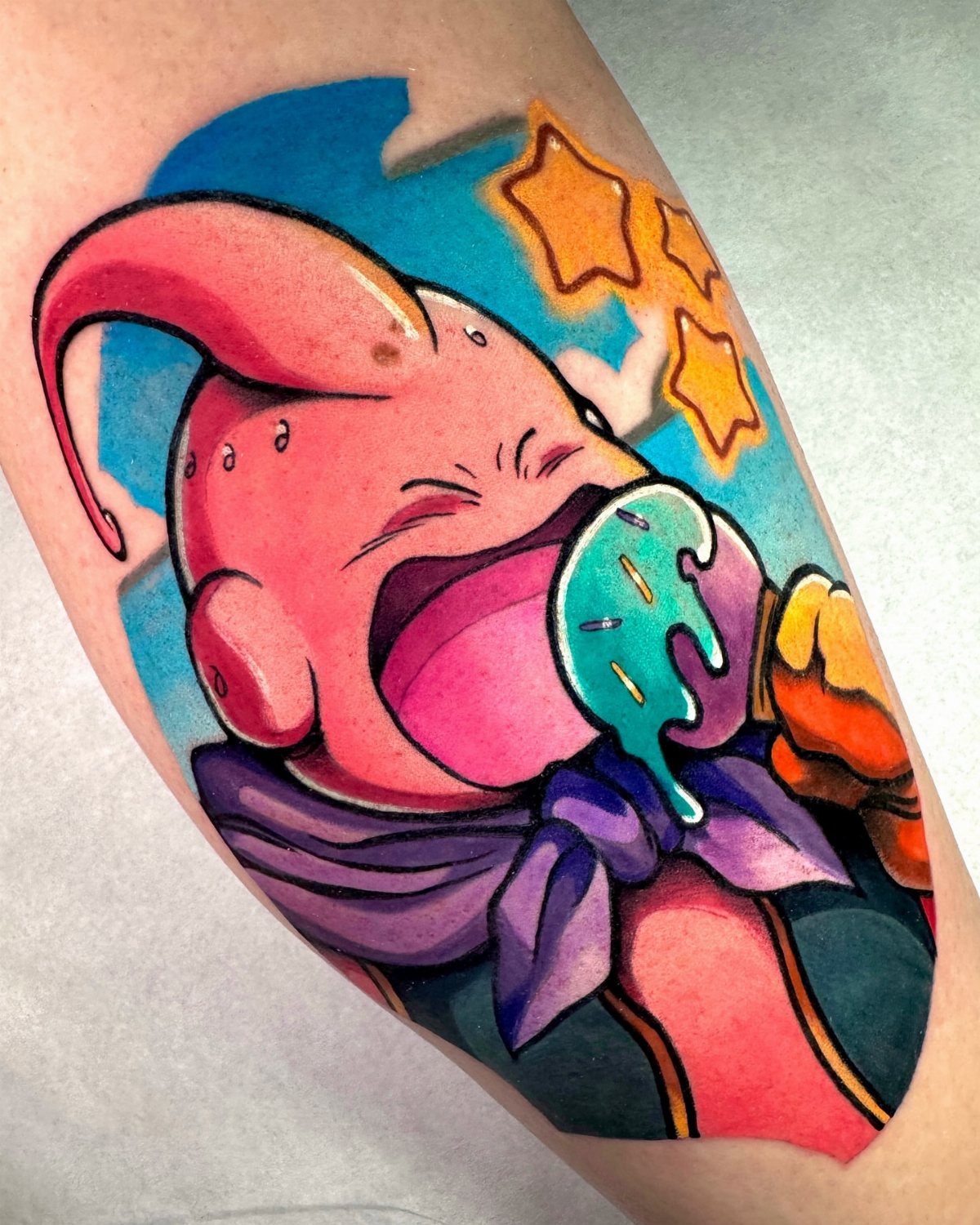
Buu eating instead of fighting softens the character into something playful, and the pink skin with the purple scarf gives the piece enough color to read from across a room.
The stars and blue background frame the figure without adding extra characters or complex scenery.
Color requires touch-ups over time, but pink holds better than lighter shades. Buu’s round proportions fit small spaces, so this works on an upper arm or calf without demanding sleeve coverage.
19. Piccolo Tattoo
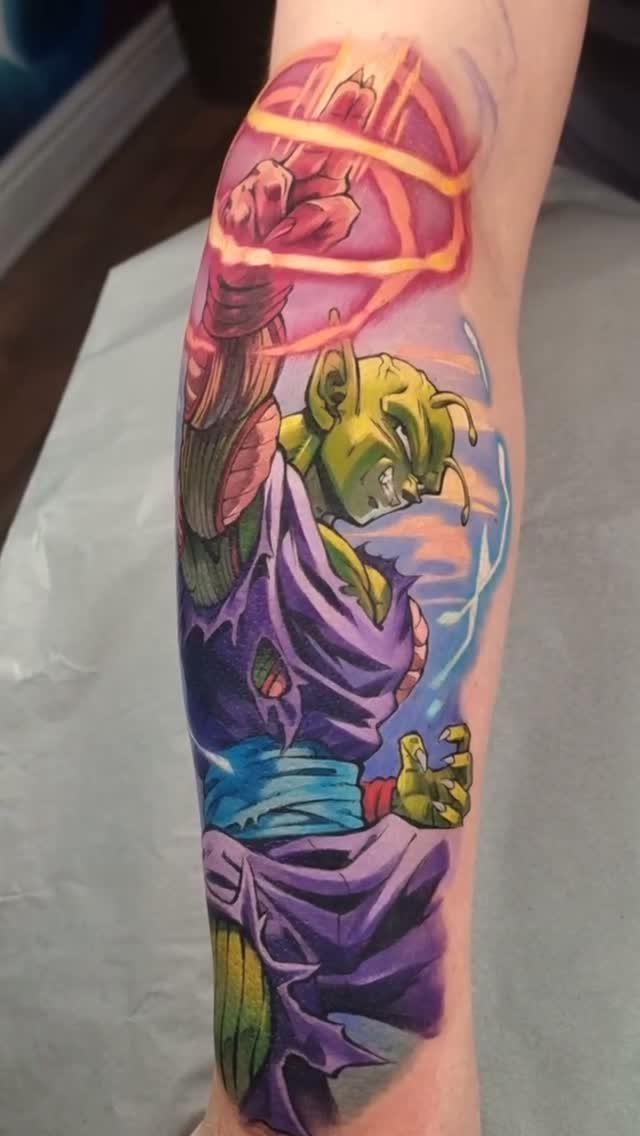
Piccolo mid-attack shows the character doing something rather than standing still, and the green skin against the glowing energy gives the piece a color contrast that holds up at any distance.
His antenna and cape make him instantly recognizable even to casual fans who might not name every Z Fighter.
Forearm placement lets the energy blast extend toward the hand, which adds direction to the design. He sits outside the usual Saiyan shortlist, which makes the choice more personal.
20. Cell Tattoo
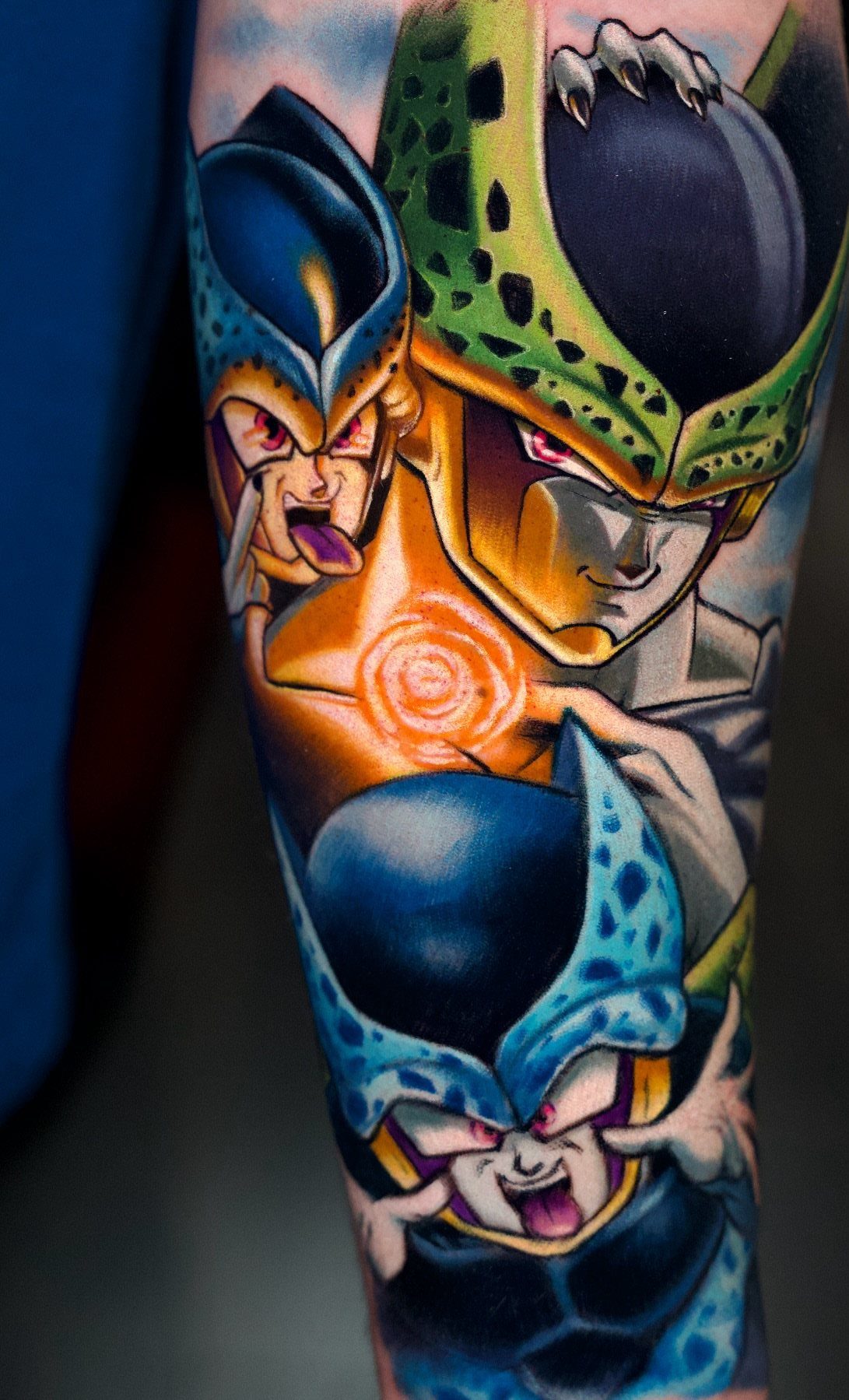
All three forms in one tattoo covers Cell’s entire evolution without needing separate pieces, and the energy sphere between them ties the stages together visually.
Each form has distinct features so the design reads as 3 separate figures even when placed close.
Arm placement fits the vertical stacking of Imperfect, Semi-Perfect, and Perfect Cell without cramping the wings or tail. Color makes the differences between forms clearer than black and grey would.
21. Goku Black Tattoo
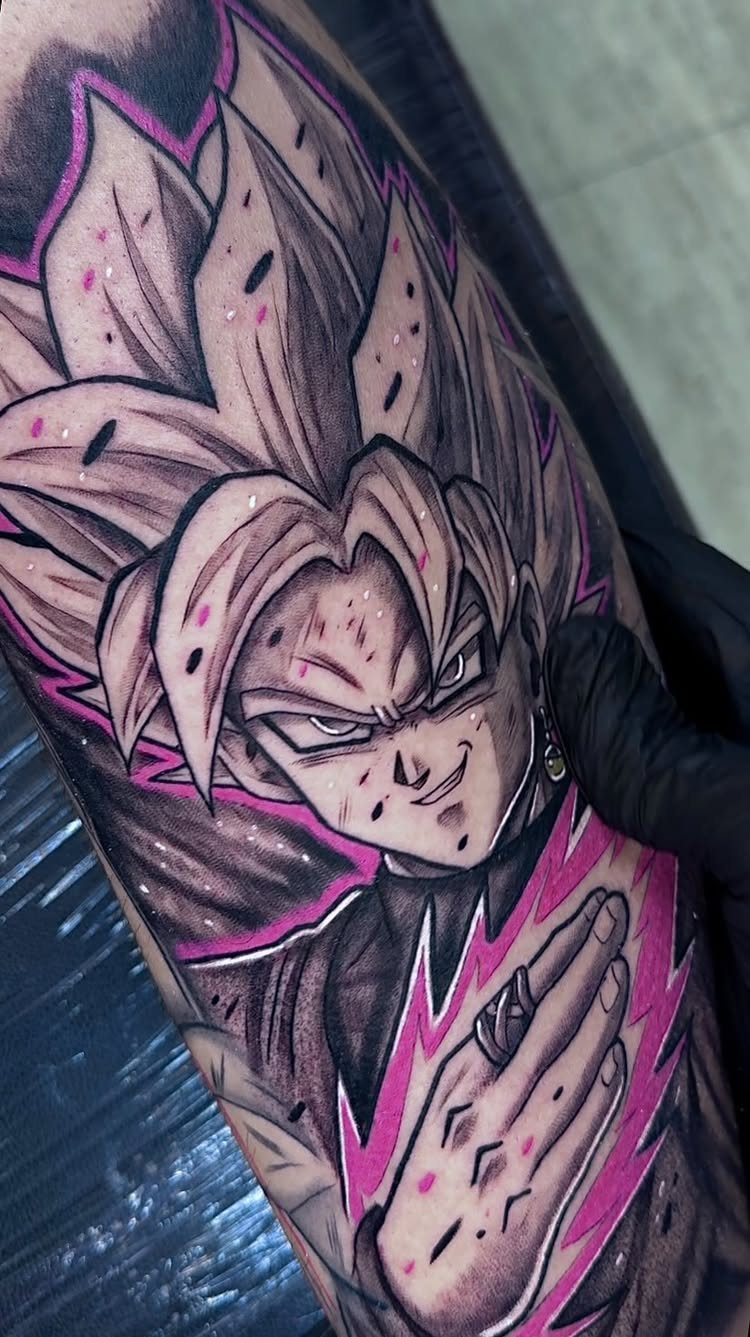
The pink aura instead of yellow singles out Goku Black from base Goku or Super Saiyan, and the potara earring confirms which version you picked. Black and grey with one color accent keeps the design sharp without needing full-color saturation.
Upper arm gives enough space for the hair spikes and aura without shrinking the face. This form pulls from Dragon Ball Super, so it reads as a deeper cut than another standard Goku portrait.
22. Beast Gohan Tattoo
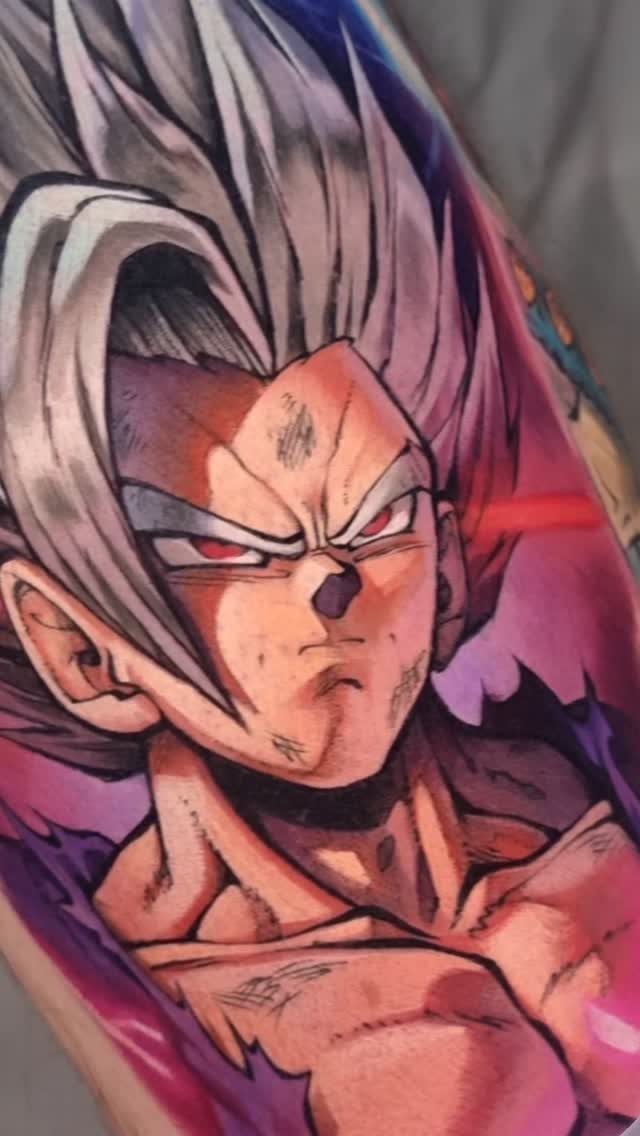
Silver hair and red eyes separate Beast Gohan from every other Gohan form, so fans who kept up with the latest arcs will recognize it immediately.
The color combination is specific enough that you can skip adding a transformation effect or background and the design still identifies itself.
This form is recent, which means fewer people have it tattooed yet. Upper arm or forearm both work because the portrait doesn’t need extra space for wings or energy blasts.
23. Custom Dragon Ball Tattoo Design
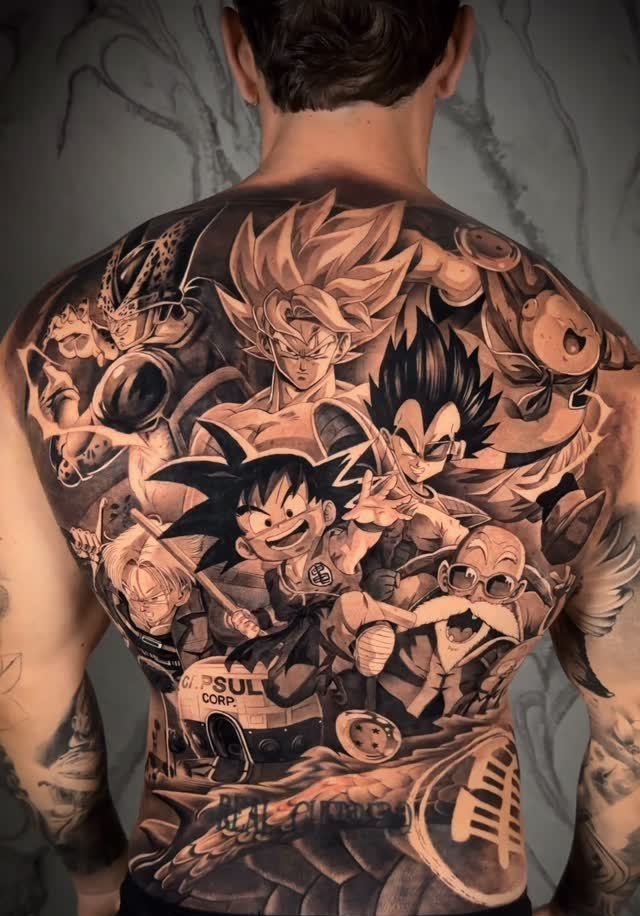
A back piece lets you combine multiple characters and the Capsule Corp vehicle into one scene instead of isolating a single fighter. Monochrome simplifies a crowded composition and sidesteps the uneven fade that hits bright cartoon primaries hardest.
Back placement requires commitment because it covers a large area and takes multiple sessions, but it also means you can add characters over time if you want to expand the roster later.
24. Baby Vegeta Dragon Ball GT Tattoo
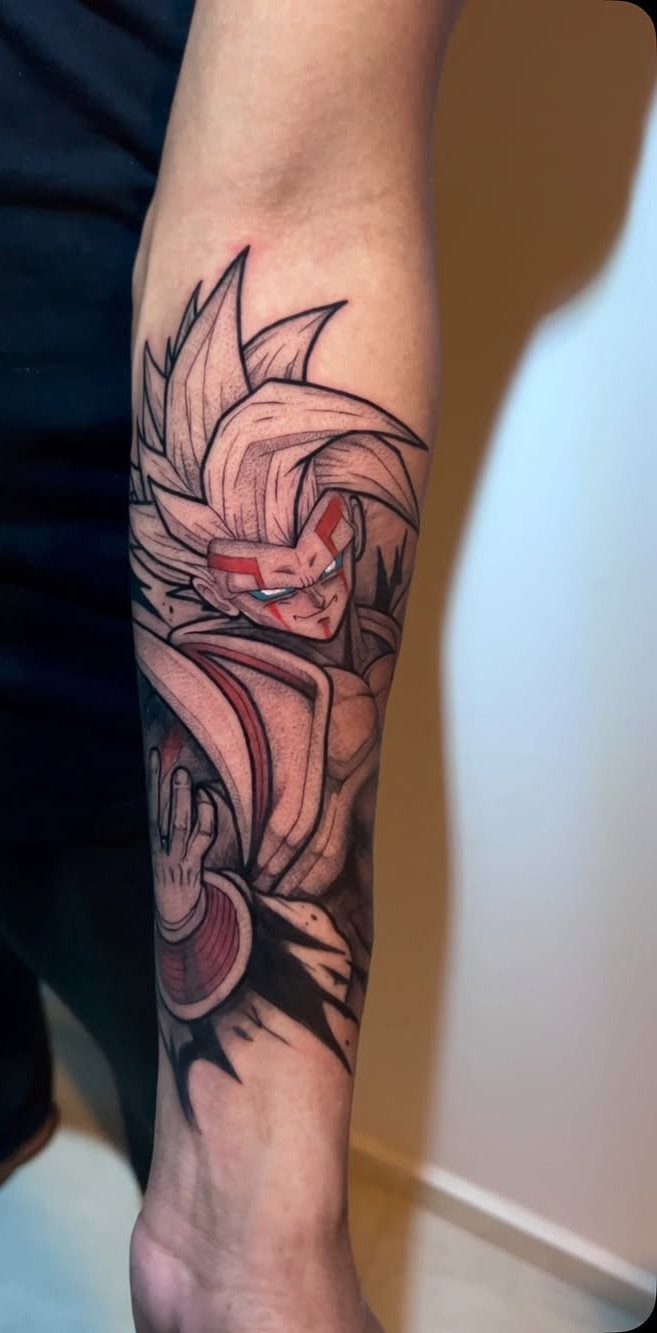
Baby Vegeta’s red facial markings and white hair set him apart from standard Vegeta or Majin Vegeta, so this reads as GT-specific rather than another Z portrait.
The red accents against black shading give the piece enough contrast to stay readable without full color.
A portrait placed there reads clearly whether your hand is at your side or holding something. The spinoff gets skipped by most fans, so the reference reads as intentional rather than default.
25. Super Saiyan 4 Goku Tattoo
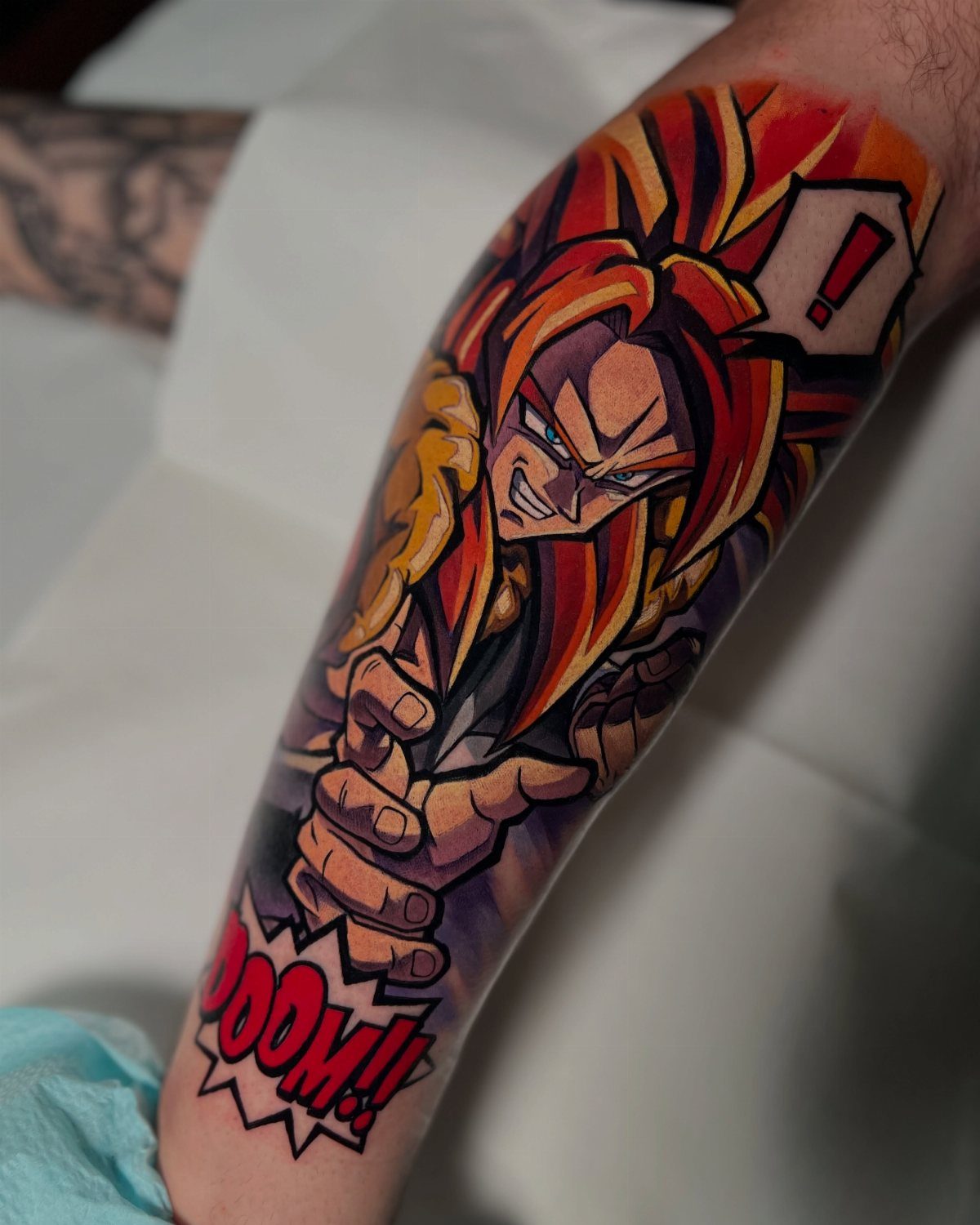
The red fur and yellow pants mark SSJ4 as the GT transformation that went its own direction, and the comic-book "BOOM!!" text adds a punch that straight portraiture skips.
Forearm gives the figure and lettering equal space without one overwhelming the other.
Full color on a form this detailed requires multiple sessions and eventual touch-ups as reds and yellows fade, but the design stays recognizable even as the saturation softens.
GT stays divisive, so choosing this form over Z transformations signals you followed the whole franchise.
26. Goku and Vegeta Split Tattoo
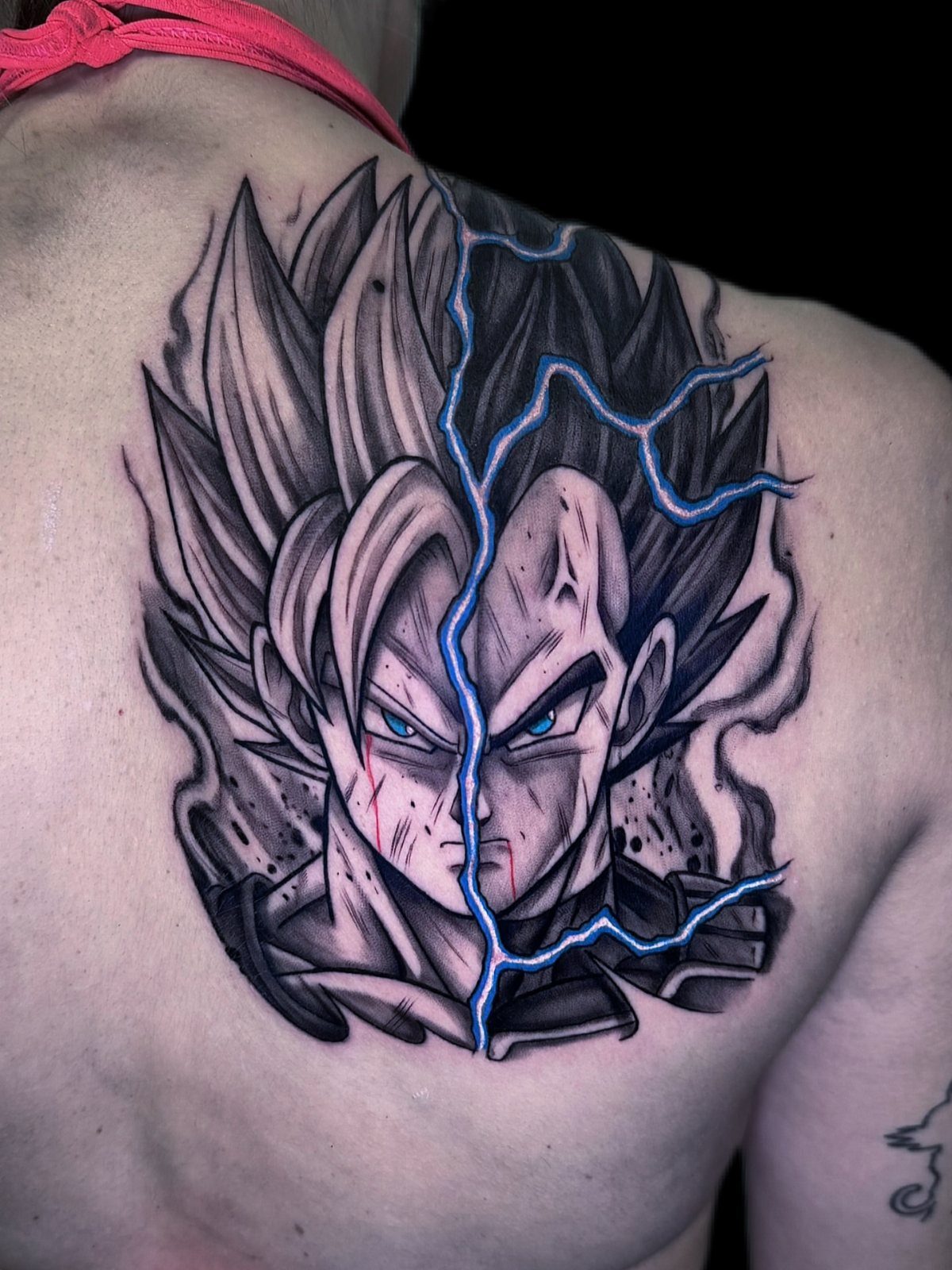
Splitting Goku and Vegeta down the center shows the rivalry without picking a side, and the blue lightning gives the division a charged edge rather than just a clean line.
Shoulder blade placement centers the design where it can expand later if you want to add energy effects or background elements.
27. Master Roshi Tattoo
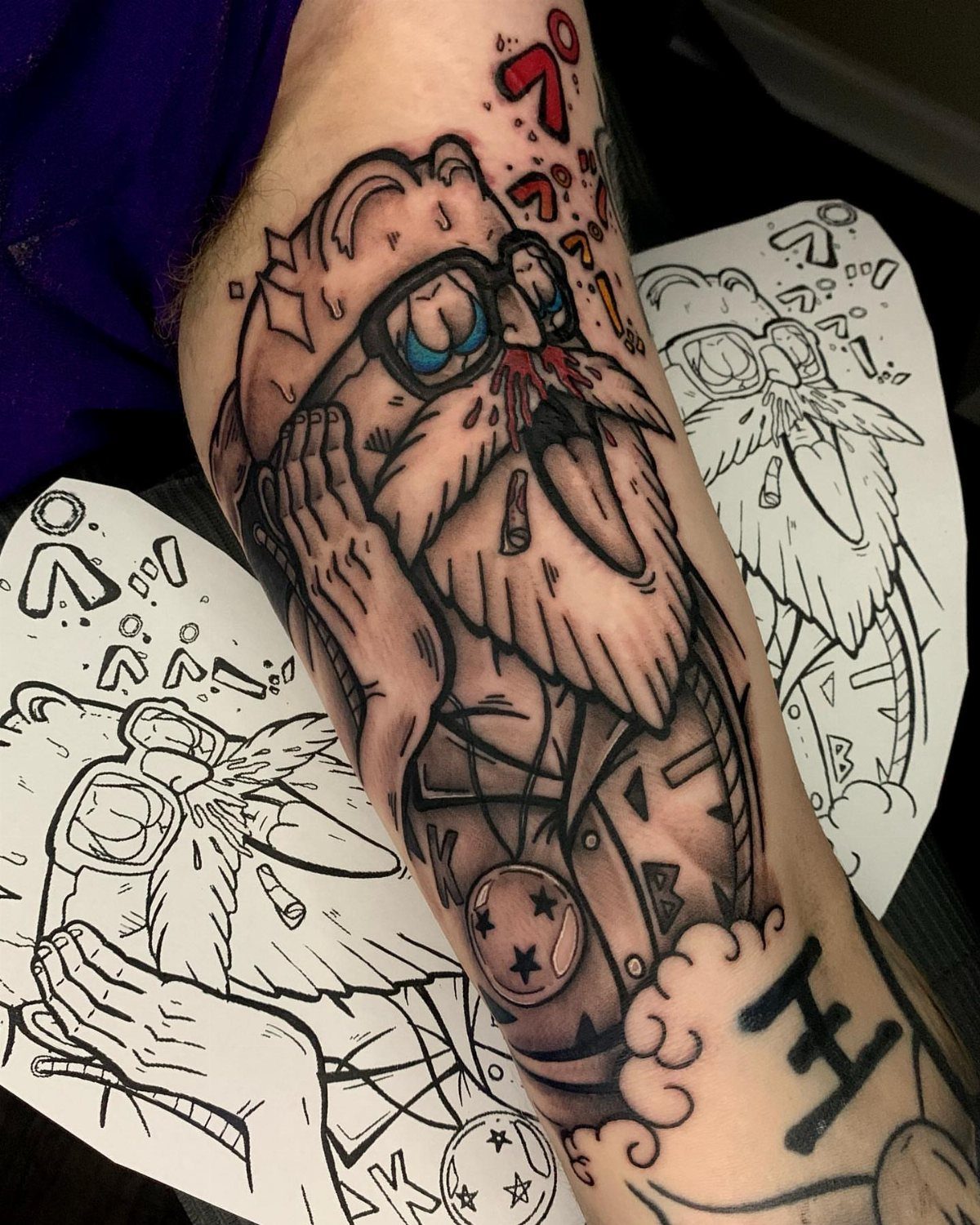
Roshi in sunglasses and his turtle shell pulls from the comedic side of the series instead of focusing on another fighter mid-battle, and black and grey suits a character whose appeal is personality rather than power levels.
His build and expression fit smaller placements like the forearm without losing detail.
Older characters get less ink than Goku or Vegeta, so choosing Roshi reads as intentional. Stencil work like this usually maps the design in one session and applies the ink the same day if time allows.
28. Master Roshi and Young Goku
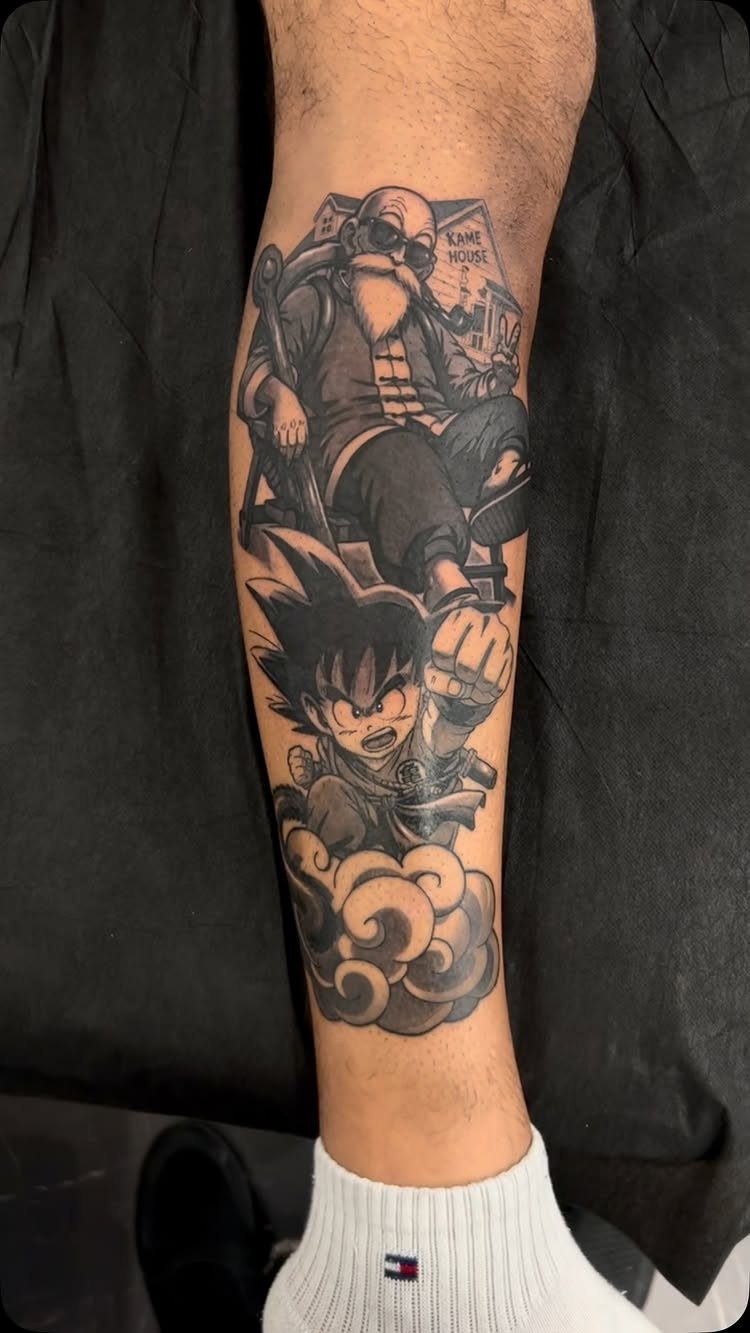
Stacking Roshi above young Goku with Kame House between them tells the training chapter in one vertical composition, which fits the lower leg naturally.
Black and grey keeps the building’s details sharp and lets the shading separate each element without needing color to distinguish them.
Leg placement hides under pants and gives room to expand into a full Dragon Ball landscape later if you decide to add Shenron or the palm tree.
The teacher-student pairing reads as a callback for fans who started with the original series rather than jumping in at Z.
29. Goku and Vegeta Duo Tattoo
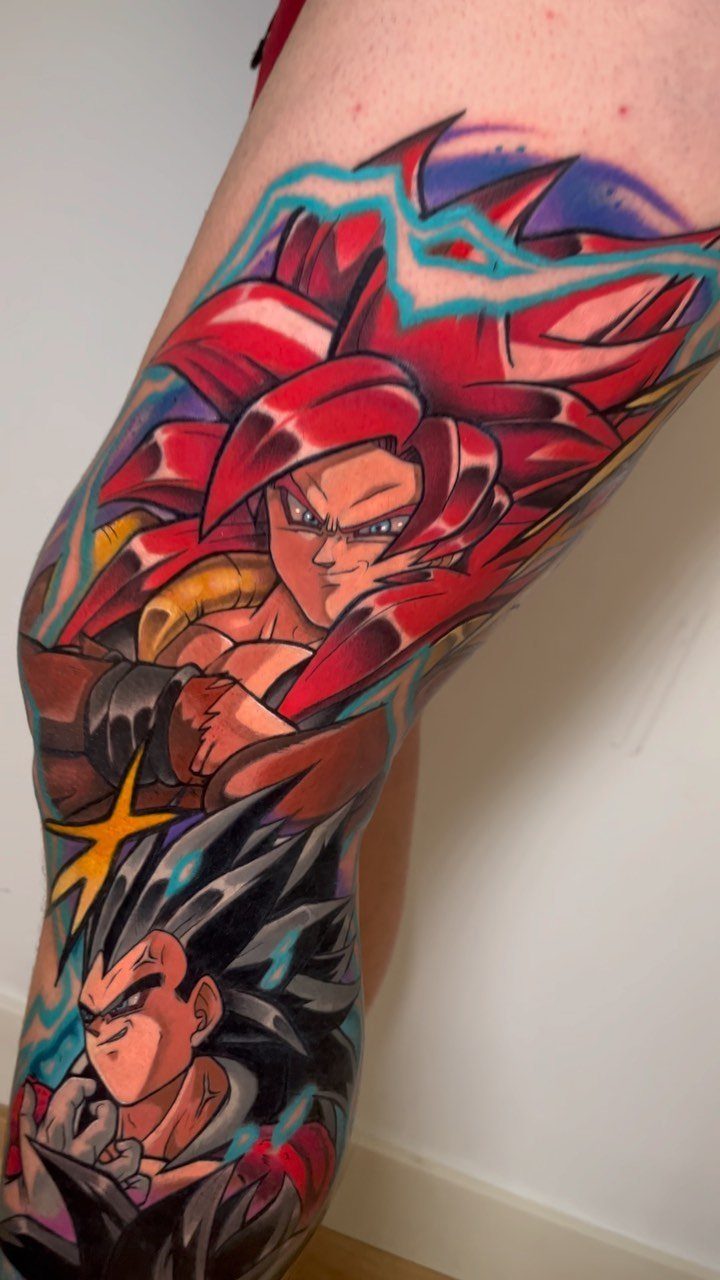
God form’s red hair next to Vegeta’s standard look contrasts two different power stages in one piece, and full color makes each character’s aura and outfit distinct.
Leg placement offers vertical space that fits 2 standing figures without shrinking them down to chibi proportions.
Bright primaries fade faster than black and grey, so expect to book a touch-up eventually if you want the reds and blues to stay saturated. Pairing these 2 catches the rivalry theme without the symmetry of a split-face design.
30. Super Saiyan Blue Goku Tattoo
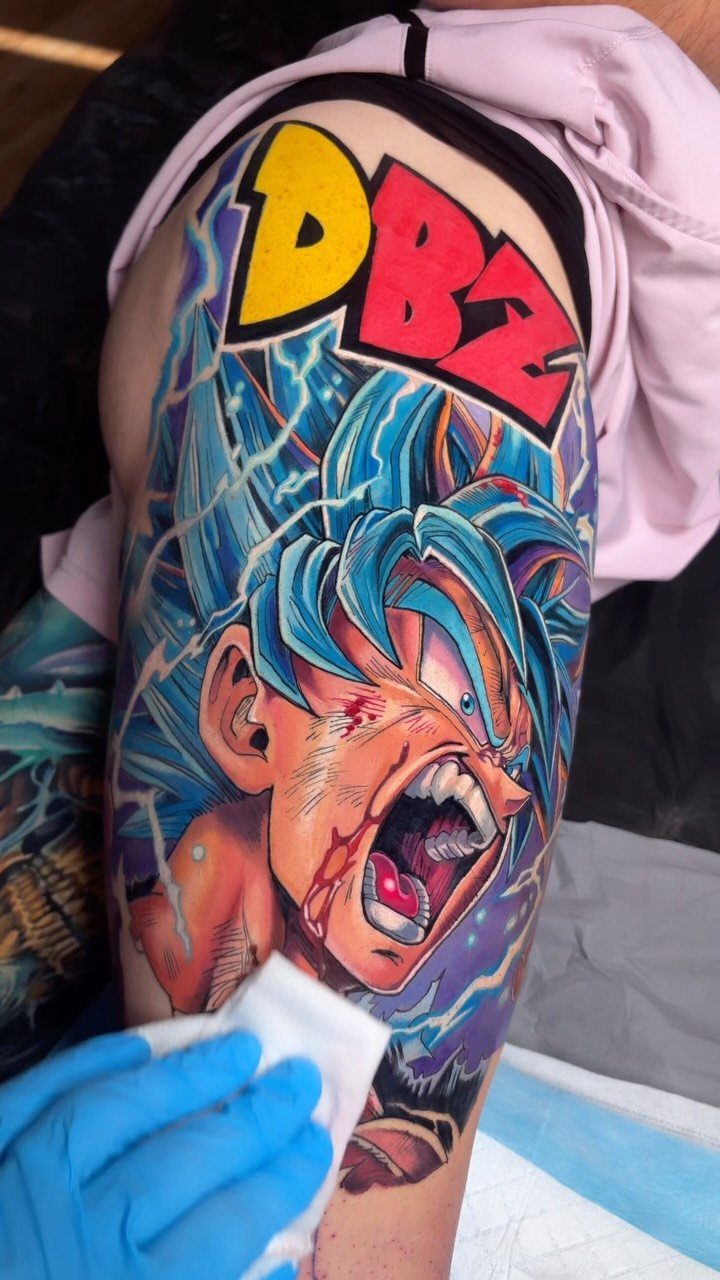
Blue hair instead of yellow marks Super Saiyan Blue as the Dragon Ball Super transformation, and the glowing aura around the figure adds motion to what would otherwise be a static portrait.
Thigh placement gives width for the energy effects without extending onto the knee, where detail blurs over time.
The DBZ text anchors the design to the franchise even for viewers who might not recognize the specific form. Full color on a piece this size demands multiple sessions, and bright blues hold better than pastels.
31. Full Leg Dragon Ball Sleeve
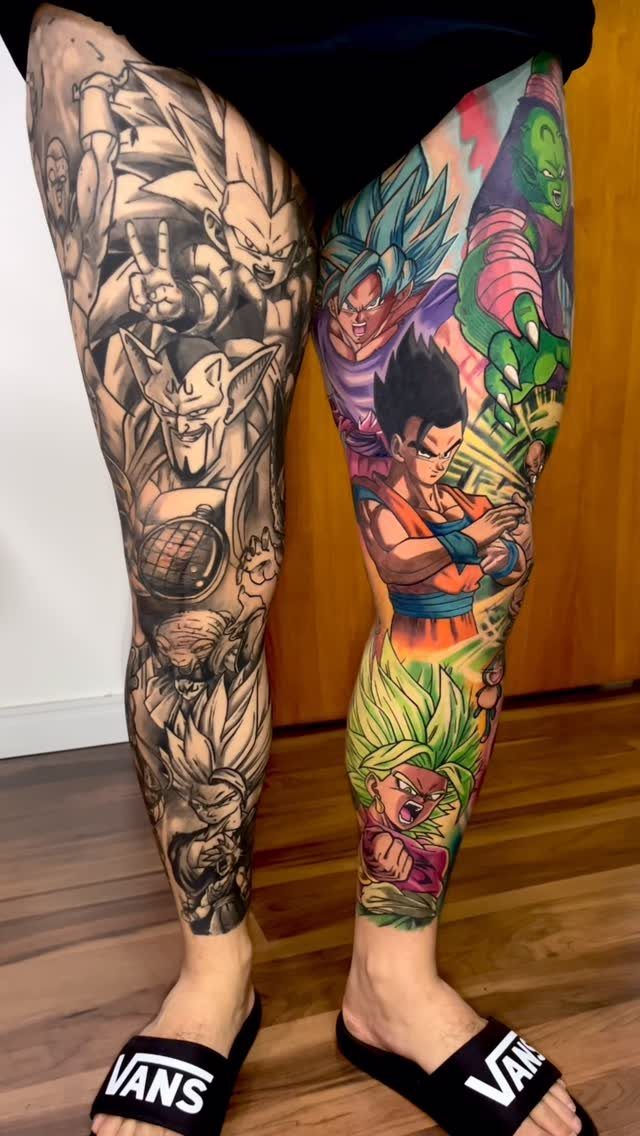
A full leg sleeve lets you fit characters across multiple sagas without reducing them to small portraits, and mixing black-and-grey on one leg with full color on the other keeps each side distinct.
The coverage demands multiple sessions spread over months, with heal time between each sitting.
Leg placement hides under jeans and gives you room to pack in secondary characters or background elements that wouldn’t fit on an arm.
This scale of work requires finding an artist whose Dragon Ball portfolio shows clean linework on large pieces, because any wobble will show once the swelling goes down.
32. Kid Goku Power Pole Tattoo
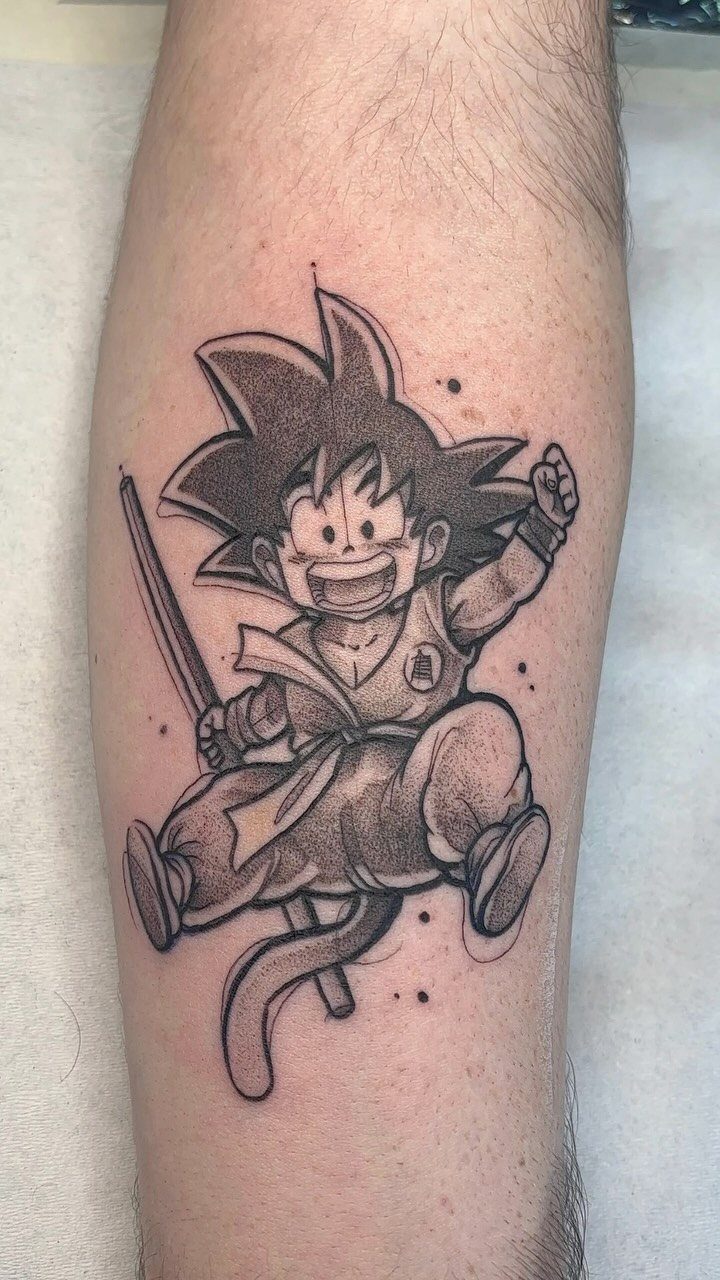
Young Goku with the Power Pole pulls from the original Dragon Ball rather than Z, which sets it apart from Super Saiyan designs.
Black and grey keeps the shading simple and lets the pole’s length stretch along the forearm without needing a bright red accent.
His smile and smaller build make this a lighter choice than another battle portrait. Forearm fits the vertical weapon naturally, and the design stays readable whether your sleeve is rolled or pushed up.
33. Gogeta and Goku Fusion Tattoo
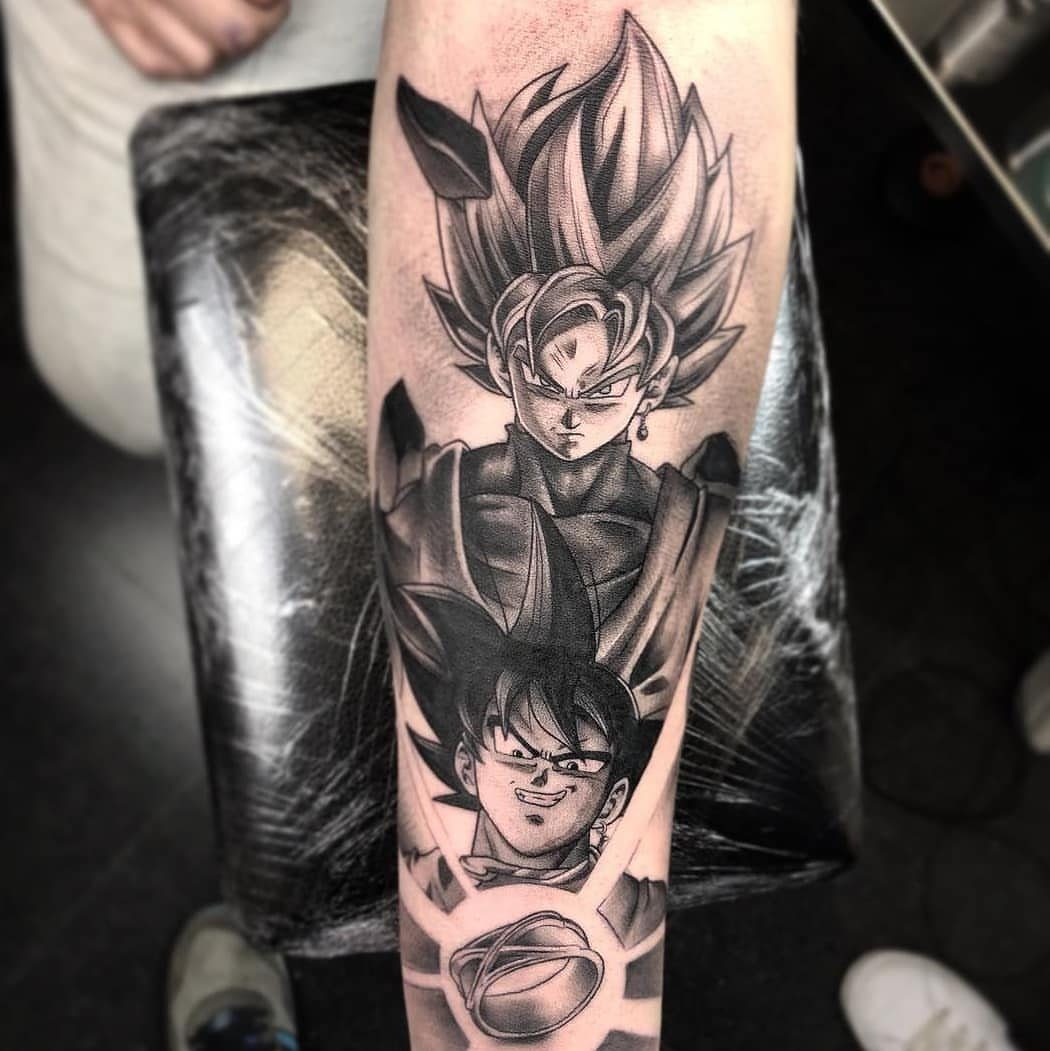
Pairing base Goku with Gogeta shows the character and the fusion side by side, which saves you from choosing one over the other.
Black and grey handles the manga shading style better than color would, and the forearm gives both figures enough space to include hair detail and facial expression.
Gogeta reads as the resolution of the Goku-Vegeta rivalry, so placing them together tells that story in one piece. The style skips bright auras and sticks to line weight for contrast.
34. Kami’s Lookout Tattoo Stencil
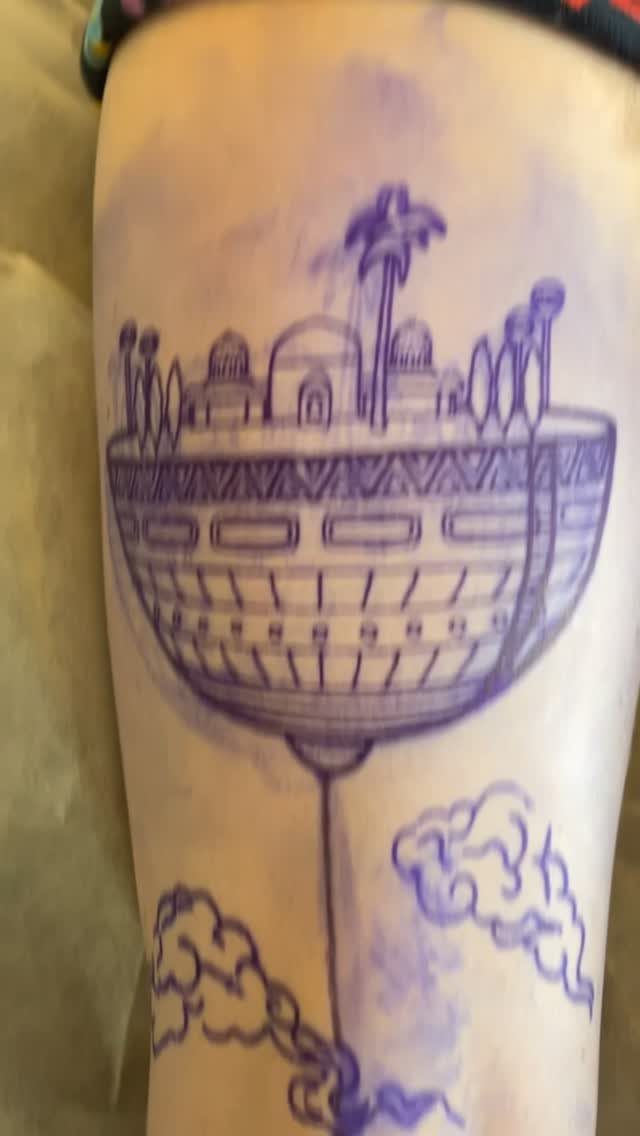
A stencil of Kami’s Lookout gives you the architecture fans recognize without adding characters, which opens space for a location piece rather than another fighter portrait.
The floating sanctuary and cloud base fit the curve of a leg or thigh better than a flat building would.
Purple ink marks the stencil stage before the final ink goes in, so this shows the design mapped out before shading. The lookout appeared across multiple arcs, which makes it a recognizable landmark even for casual viewers.
Meaning Behind Dragon Ball Tattoos
Goku’s arc is about pushing past your own ceiling, which is why people reach for him when they want a reminder that progress matters more than winning.
Vegeta’s story runs the opposite direction: pride, failure, and the slow work of becoming someone who protects instead of proving a point.
Both characters carry weight because they change, and a tattoo that locks in one moment of that change can mark a chapter in your own life.
The strength angle is obvious, but resilience is the trait that sticks. Goku loses constantly.
Vegeta spends half the series furious that he’s second best. What makes them work as tattoo subjects is that neither one quits, and that reads clearly whether you know the show or not.
Fans pick these designs because the characters map onto real struggle, not because they look tough.
Choosing a Design
A detailed portrait pulls in expression and posture, which gives you more narrative than a symbol alone.
Full color captures the transformation effects and auras that define each form, but black and grey holds longer and reads just as clearly if you pick a version with distinct features like the M on Majin Vegeta’s forehead or the red lightning around SSJ2 Gohan.
Minimalist designs strip the character down to a silhouette or a single object like the four-star ball, which works when you want the reference to stay subtle.
A detailed piece needs space to breathe, so think about whether you’re filling a forearm, a shoulder, or a full sleeve before you pick how much of the character to include.
Match the style to how much you want the tattoo to announce itself.
A full-color portrait does that. A line-work symbol doesn’t.
Personal Significance
A tattoo tied to a character’s transformation gives you a marker for your own, which is why people pick the moment Gohan goes SSJ2 or Vegeta accepts the Majin mark instead of just grabbing a neutral portrait.
The design works as a personal symbol when it reflects something you lived through, not just something you watched.
Struggles and triumphs sit inside the narrative the characters already carried, so matching a form to a chapter of your life makes the piece more than fan service.
The wound design with the Dragon Balls underneath the skin takes that further by making the series part of your internal story rather than something on the surface.
If the character’s arc mirrors yours, the tattoo holds meaning past the show ending.
Frequently Asked Questions
What does a dragon tattoo symbolize?
In Dragon Ball tattoos, the dragon represents the reward at the end of each arc’s journey, the wish granted after collecting all 7 orbs.
Shenron specifically ties the design to transformation and completing a quest, which is why pairing him with the Dragon Balls or a character like Goku reinforces the narrative without needing extra explanation.
What does Goku represent?
Goku moves through dozens of forms over the series, from the kid riding Nimbus to each numbered Super Saiyan transformation and the god-level states that came later.
His character carries the lighter early tone as well as the high-stakes battles that came later, so choosing which version to ink signals which part of his story resonates with you.
What are some popular Japanese tattoo designs?
The heavy black line work and flat color blocks of traditional Japanese style sit naturally with Dragon Ball characters, since both share the graphic clarity of 1980s manga.
The bold lines and limited palette hold up over decades better than fine-line detail, which is why flash sheets of Dragon Ball characters in traditional style stay popular.