Traditional designs for men range from small nautical stars and single anchors on the forearm to full chest eagles and multi-session dragons that take months and a much larger budget.
Eagles, ships, and dragons ask for vertical space on the leg or back, while panthers and coiled snakes wrap naturally around an arm or shoulder.
1. Eagle Tattoos
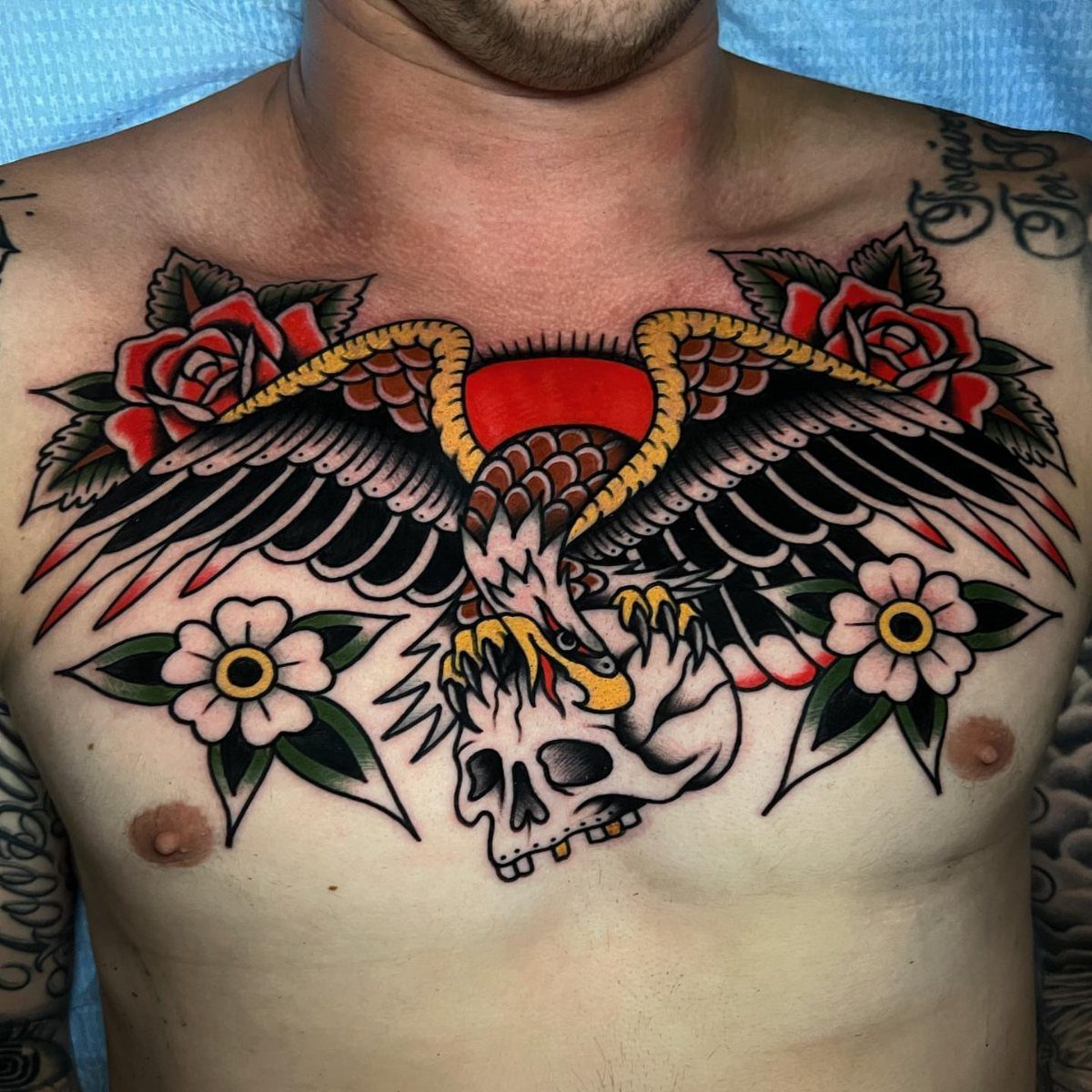
The eagle gripping a skull, surrounded by roses, delivers one of the boldest statements in traditional tattooing. That combination pulls together strength and mortality in a way few other designs manage.
The heavy black outlines and saturated reds hold up across decades. Placement on the chest gives the wingspan room to spread, and the symmetry reads cleanly whether you’re moving or standing still.
If you want something unmistakably American traditional that fills a large space without looking crowded, this is the design that does it.
2. Ship Tattoos
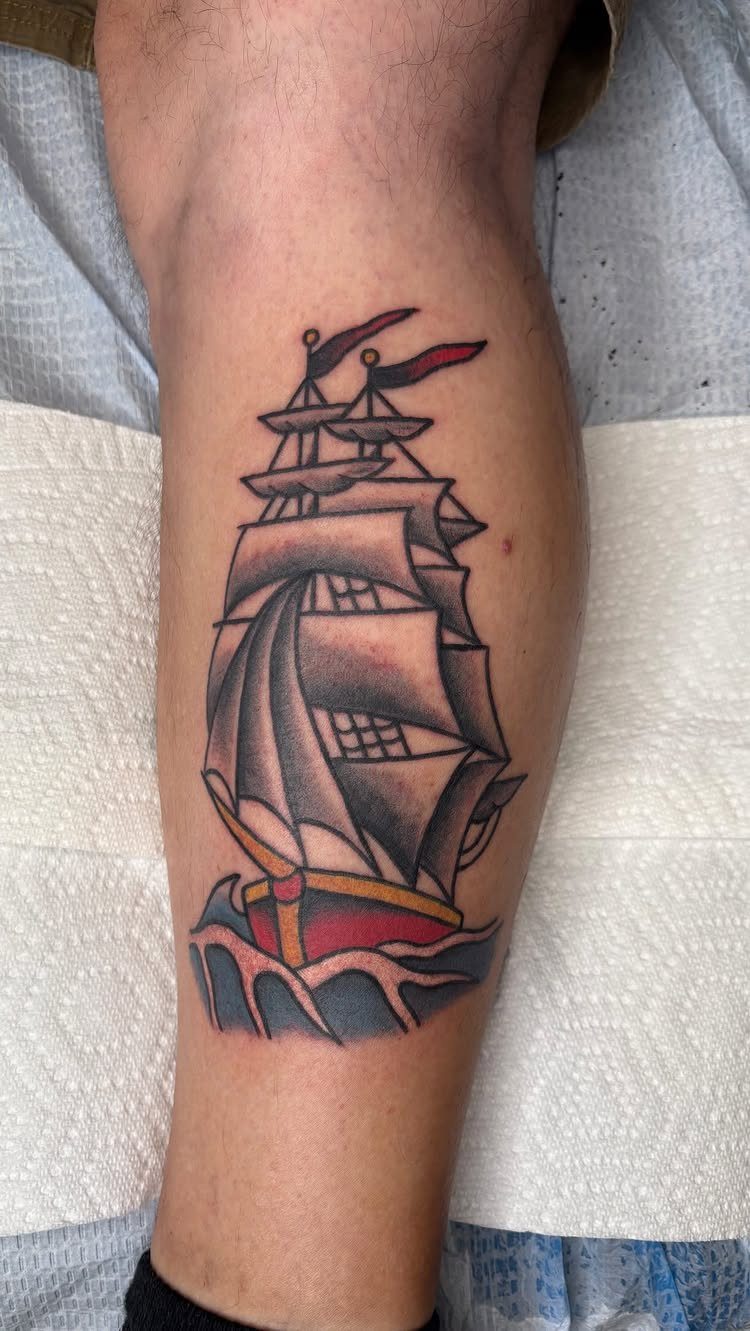
A full-rigged ship cutting through waves captures the spirit of exploration without needing any text to explain it.
Placement on the lower leg works because the vertical mast follows the natural line of the calf. The design holds detail at a distance, which matters if you want something that reads clearly in everyday situations.
Ships like this suit anyone who connects with travel, change, or the idea of steering through rough water. The symbolism is old, but it still holds.
3. Panther Tattoos
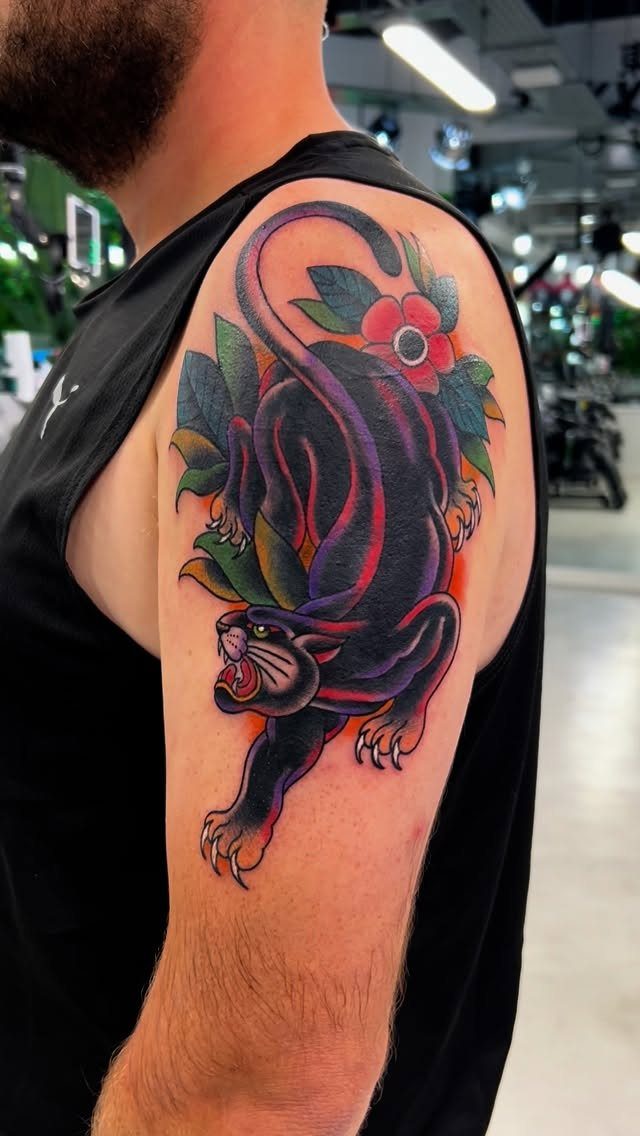
A black panther crawling over red flowers is about as close as traditional tattooing gets to raw aggression. The snarling face and heavy shading give the design weight, and the flowers soften the composition without undercutting the animal’s ferocity.
Upper arm placement lets the panther wrap around muscle, so the tattoo shifts when you move. That makes it feel more alive than a flat design.
This one suits someone who wants their ink to feel intimidating. The panther has been a go-to for that since the early days of American traditional work, and it still hits harder than most alternatives.
4. Skull Tattoos
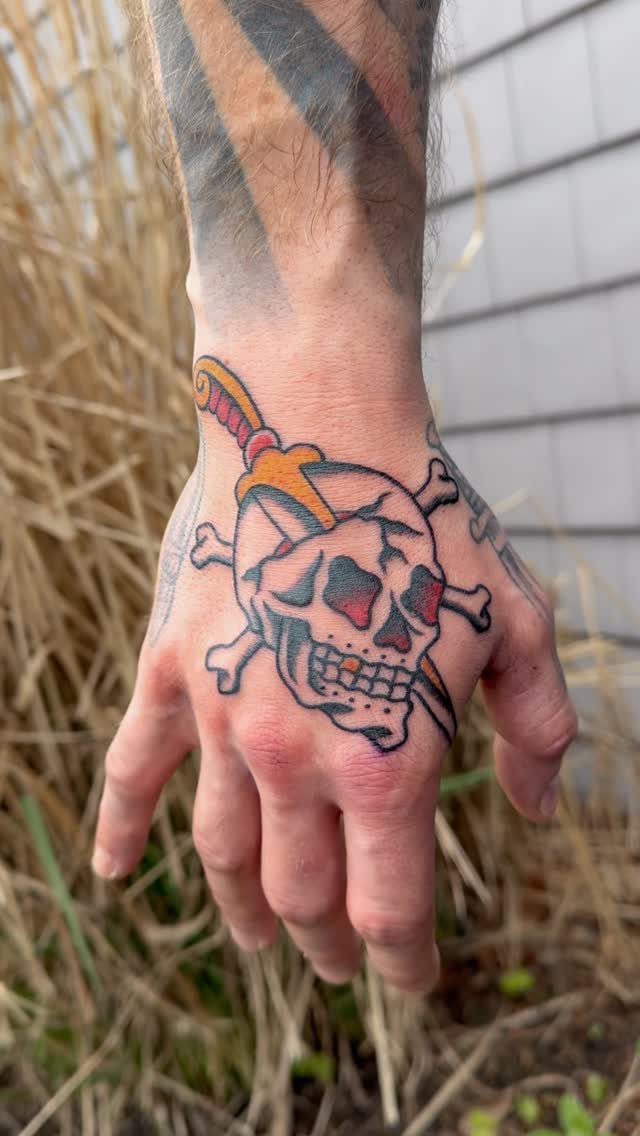
A skull with a dagger driven through it and crossbones beneath delivers one message: you’re not afraid of much. The placement on the hand makes it impossible to hide, which is part of the point.
Traditional skull tattoos use thick black outlines and minimal shading, so they age well even as ink tends to spread over time. The bold shapes hold their form longer than fine-line work would.
Hand tattoos hurt more than most other spots and limit job options in some fields. If those aren’t dealbreakers, the skull and dagger is one of the most recognizable symbols of fearlessness in tattooing.
5. Pin-Up Girl Tattoo
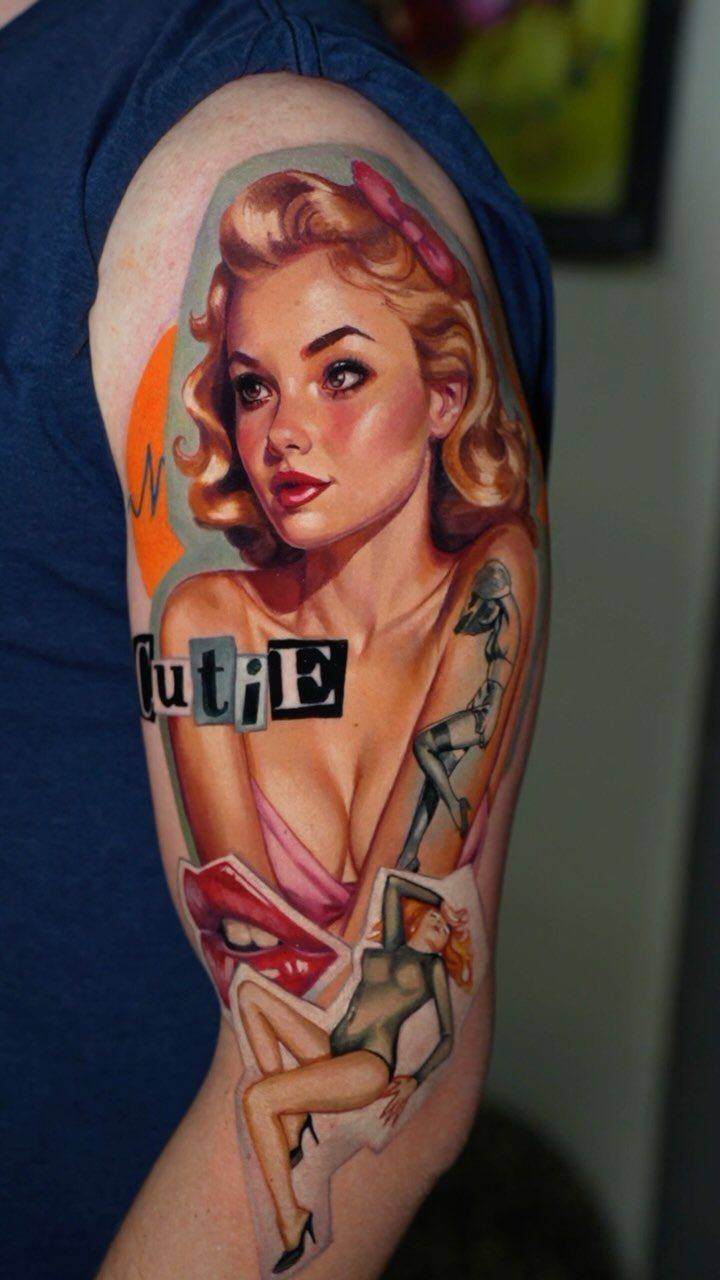
Pin-up girls in traditional tattooing capture a specific kind of beauty: playful, idealized, and rooted in mid-century imagery. The blonde hair, red lips, and script reading "Cutie" here follow that formula exactly.
The design fits the curve of the upper arm without wrapping all the way around, so it reads as a single image rather than something you have to rotate to see. That makes it easier to show off and photograph.
This style appeals to anyone drawn to vintage Americana. The pin-up has been a staple of traditional work since sailors started getting them, and it remains one of the most feminine images in a style dominated by hard symbols.
6. Traditional Rose Tattoo
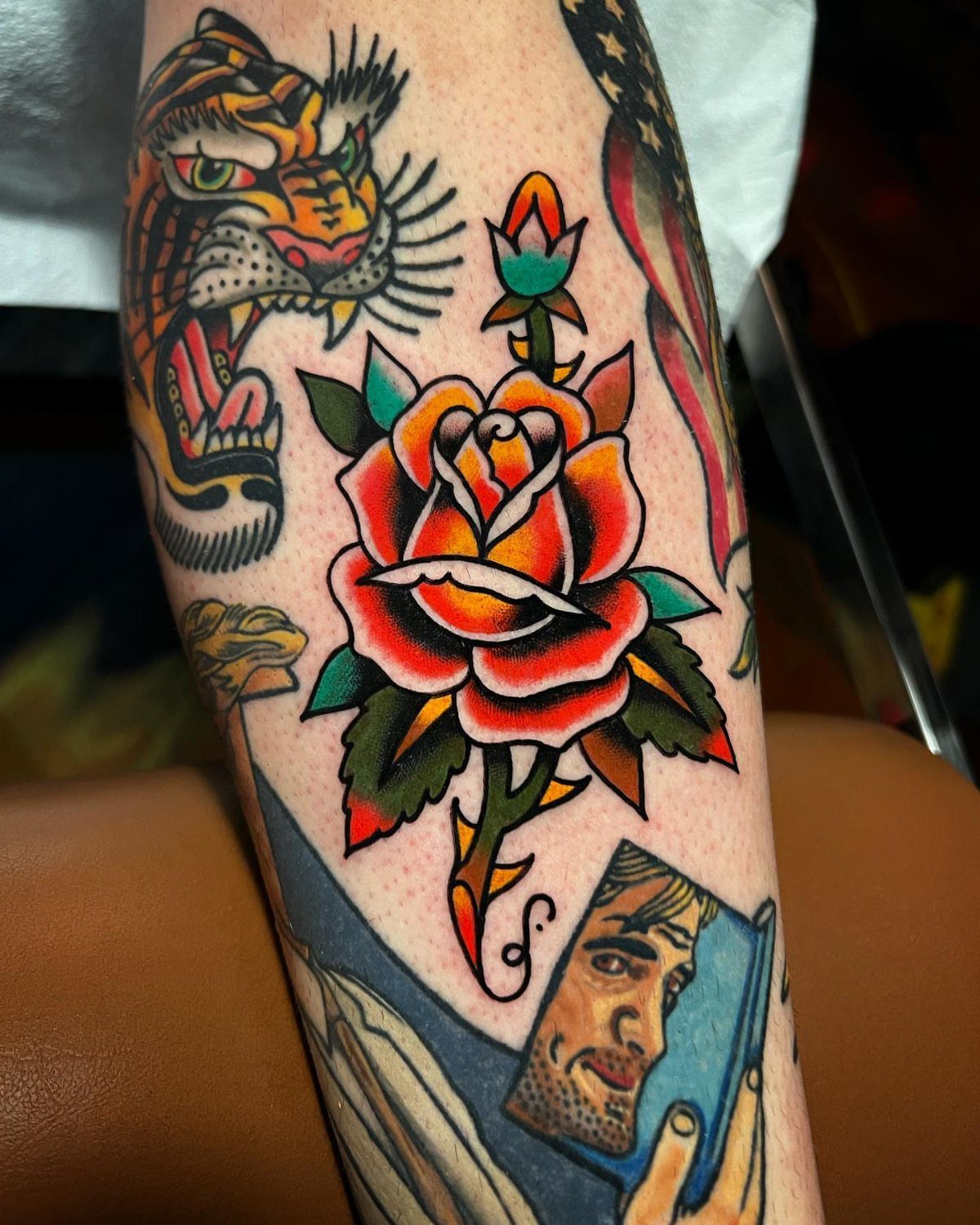
A red rose with green leaves is the simplest way to say love or loyalty in traditional tattooing.
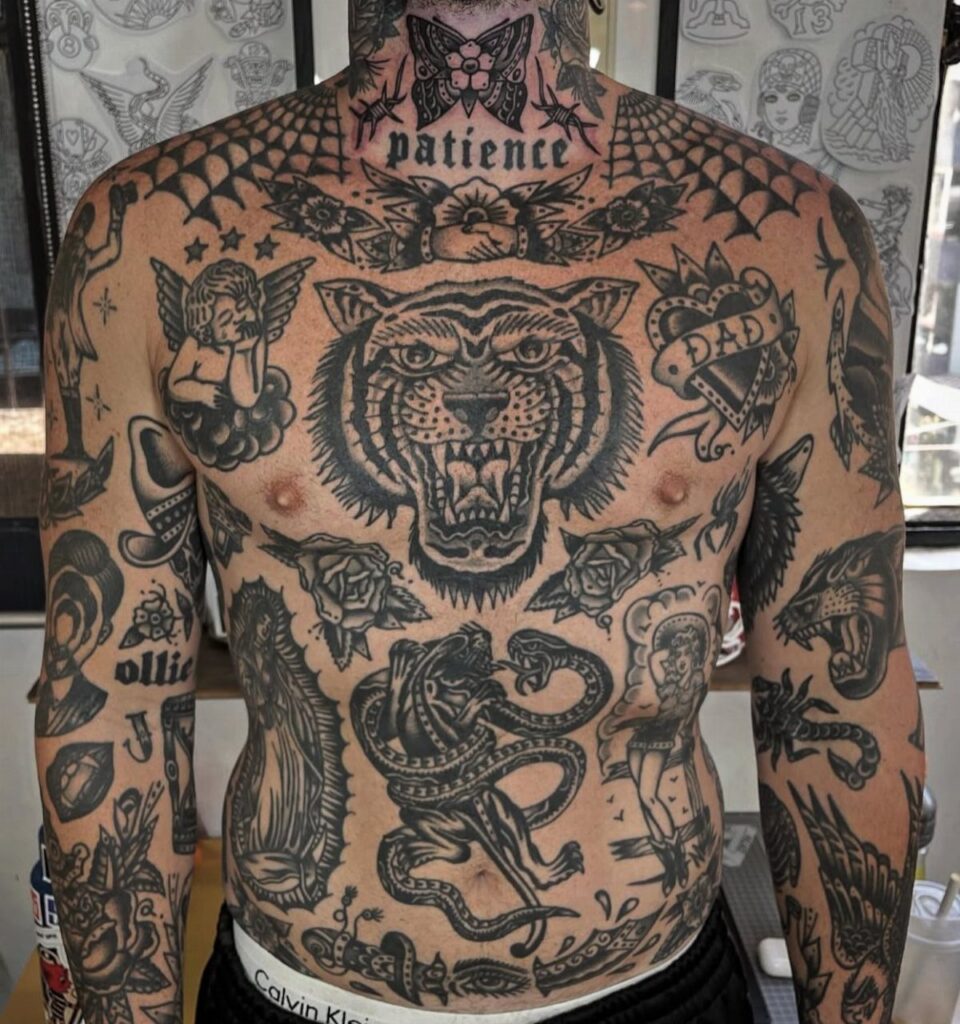
The design here sits among other bold pieces, which is how roses often function: they fill space between larger images without competing for attention.
The saturated red holds color longer than pinks or pastels, and the heavy black outline keeps the petals from blurring together as the tattoo ages. That durability is why roses show up in nearly every traditional sleeve.
If you need a filler that carries meaning instead of just decoration, the rose does more work than most other flowers. It pairs with almost anything and reads instantly.
7. Snake Tattoos
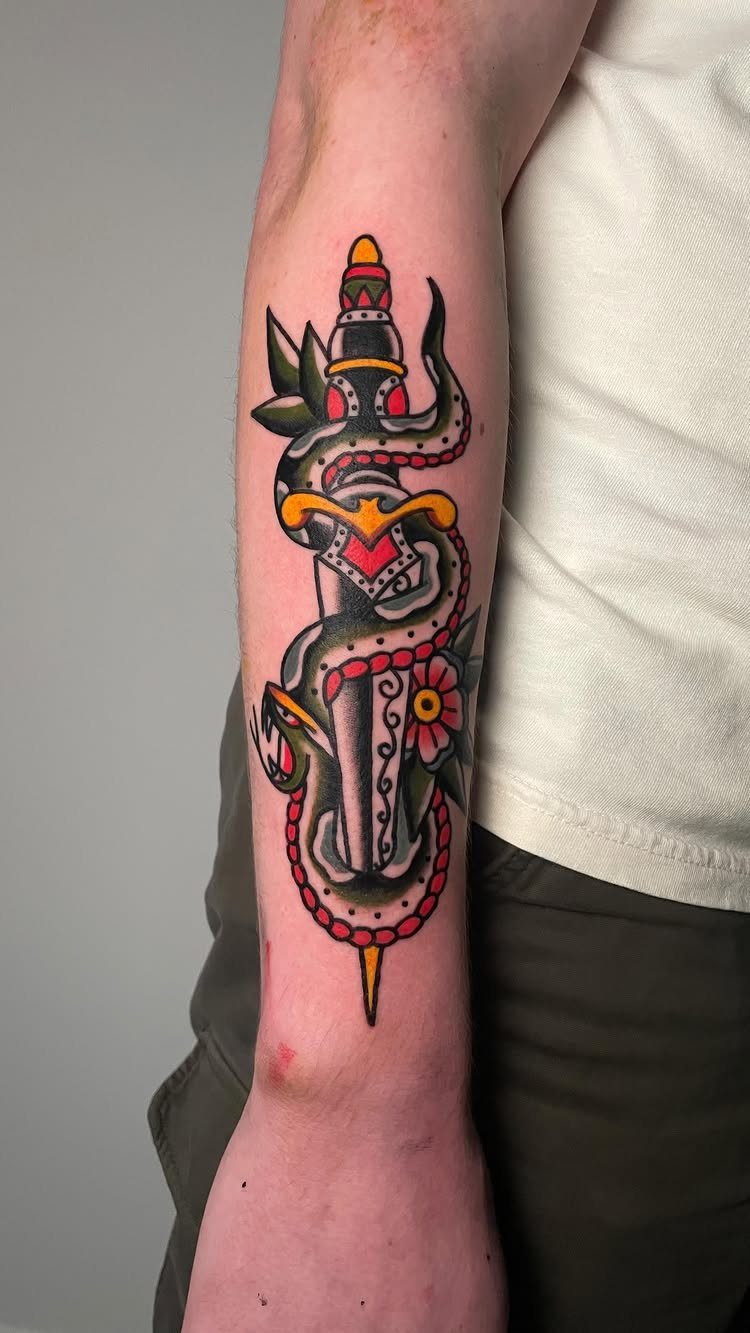
A snake coiled around a dagger with a flower underneath balances menace with meaning. The green scales stand out against traditional black and red, and the coiling shape wraps the forearm naturally.
Snakes in traditional work represent both danger and protection, depending on how they’re positioned. A snake on a dagger suggests overcoming enemies or guarding against harm.
Forearm placement keeps the design visible without requiring a large commitment of skin. The coil follows muscle contours, so it reads well from any angle.
8. Anchor Tattoo
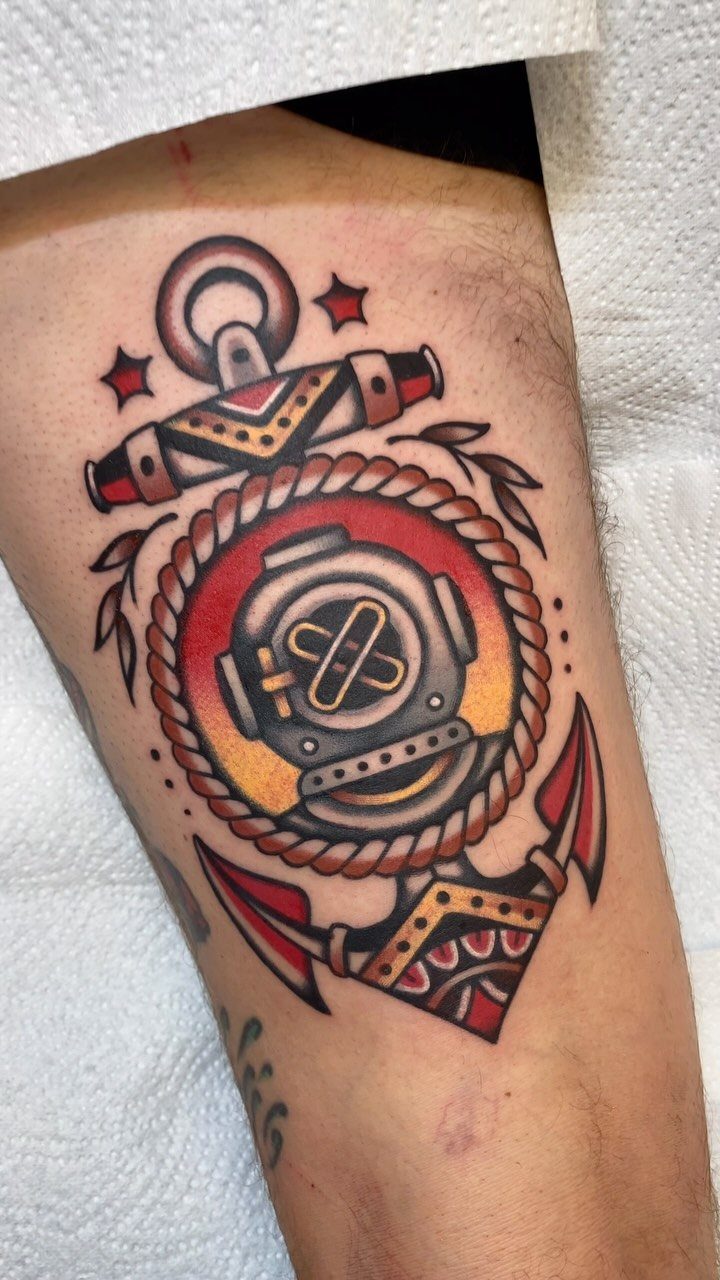
An anchor paired with a diving helmet and rope border roots the design in nautical history. The helmet adds depth to what could be a simple anchor, and the rope frame pulls the whole composition together.
Anchors represent stability and grounding, which is why they’ve been a staple of traditional work since sailors first started getting tattooed. The symbolism is straightforward: you stay put when things get rough.
The calf and shin give you the height an anchor needs without forcing the proportions. The design holds detail at smaller sizes, so it doesn’t demand a huge area.
9. Dragon Tattoo
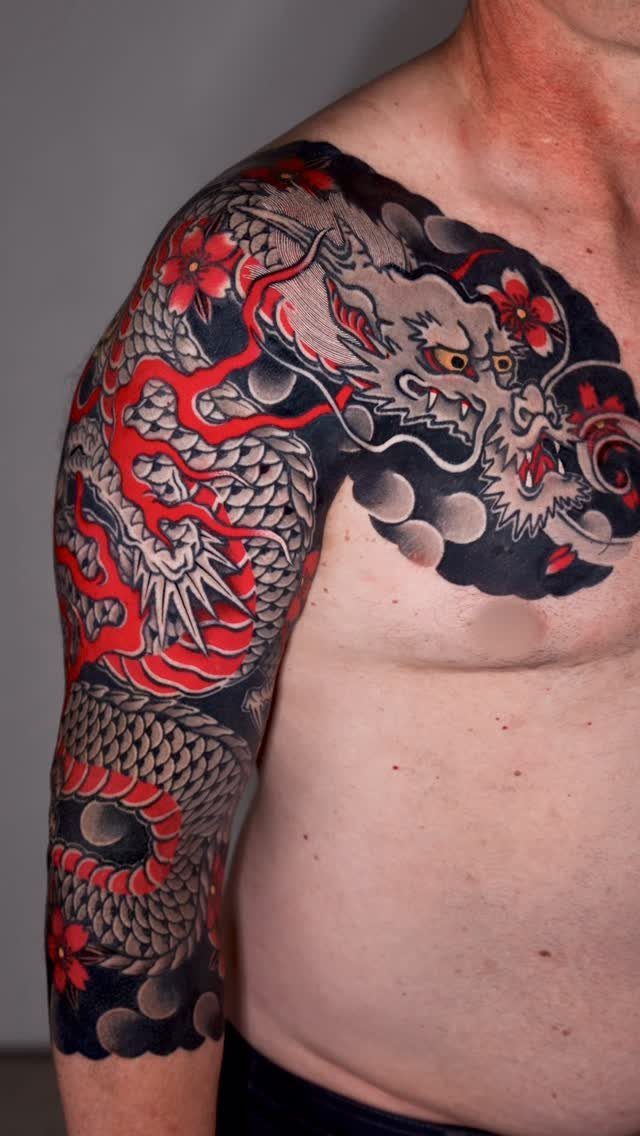
A dragon covering the shoulder and chest in red and grey delivers maximum impact. The scales, claws, and open mouth fill space with movement, and the color contrast keeps the design from feeling flat.
In traditional work, the dragon stands for strength and the idea that something watches your back. The large canvas here lets the artist work in detail that smaller placements can’t support.
This one requires multiple sessions and a significant budget. The pain level is high because of the proximity to bone and the size of the area, but the result is one of the most commanding pieces in traditional work.
10. Swallow Tattoos
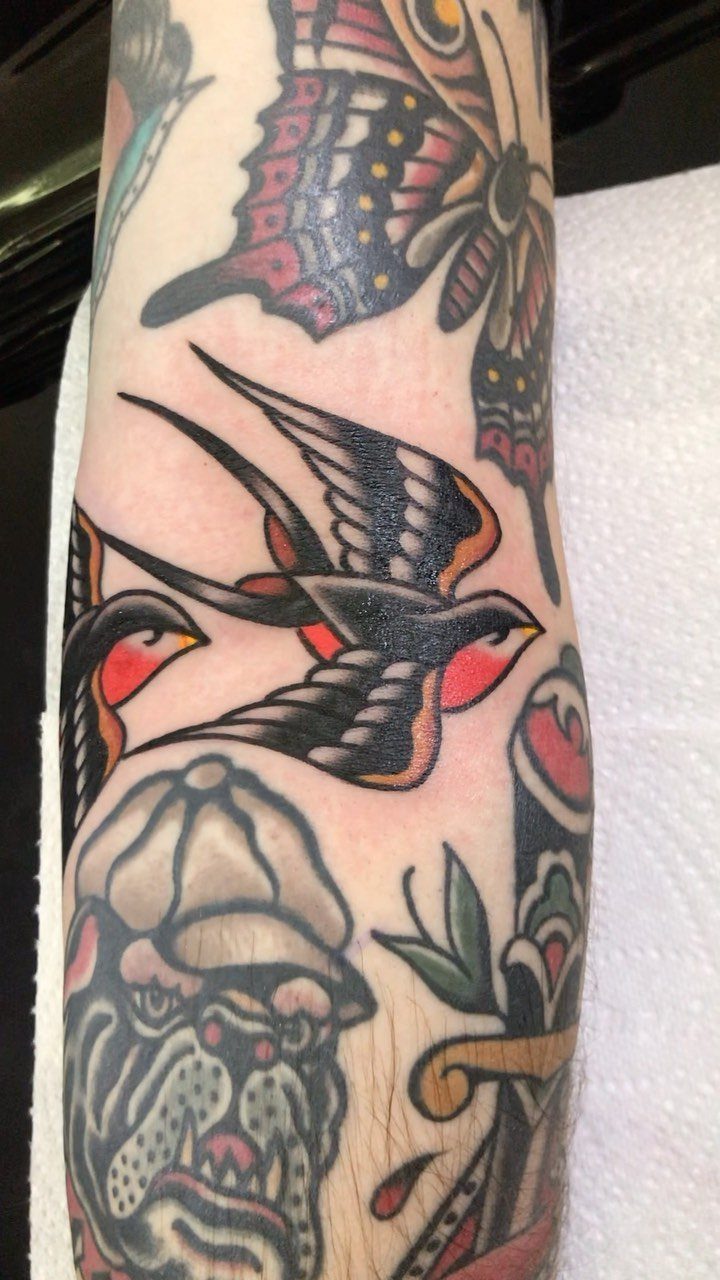
A swallow with red accents sits among other bold images, which is how these birds often appear: as part of a larger collection rather than a standalone piece.
Swallow tattoos mark a sailor’s return home after traveling 5,000 miles. That history gives the design meaning beyond the bird itself, and the small size makes it easy to fit between existing ink.
The red on the chest and wings adds color without overwhelming the design. Swallows work on almost any part of the body and pair well with other traditional symbols.
The traditional bird tattoo represented a sailor’s 5000th mile at sea. It was also believed that swallows would carry a sailor’s soul to heaven if he died at sea.
11. Nautical Stars
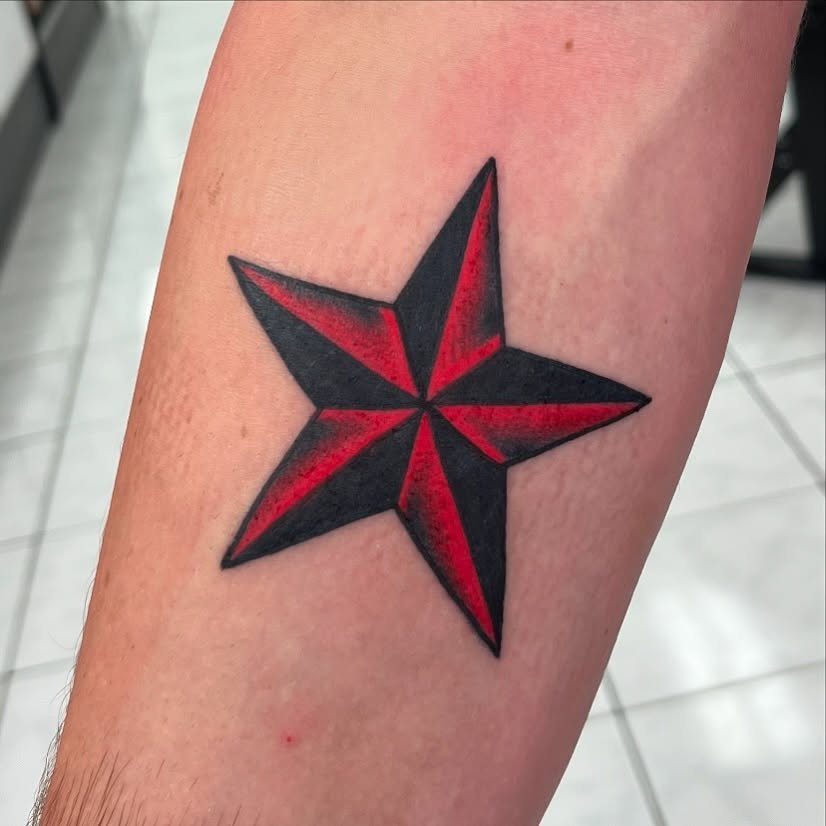
Nautical stars represent the North Star, which sailors used for navigation. Sailors wore them as a charm to find their way home, on water and off it.
Forearm placement makes the star easy to show or cover depending on the situation.
12. American Traditional Bear Tattoo
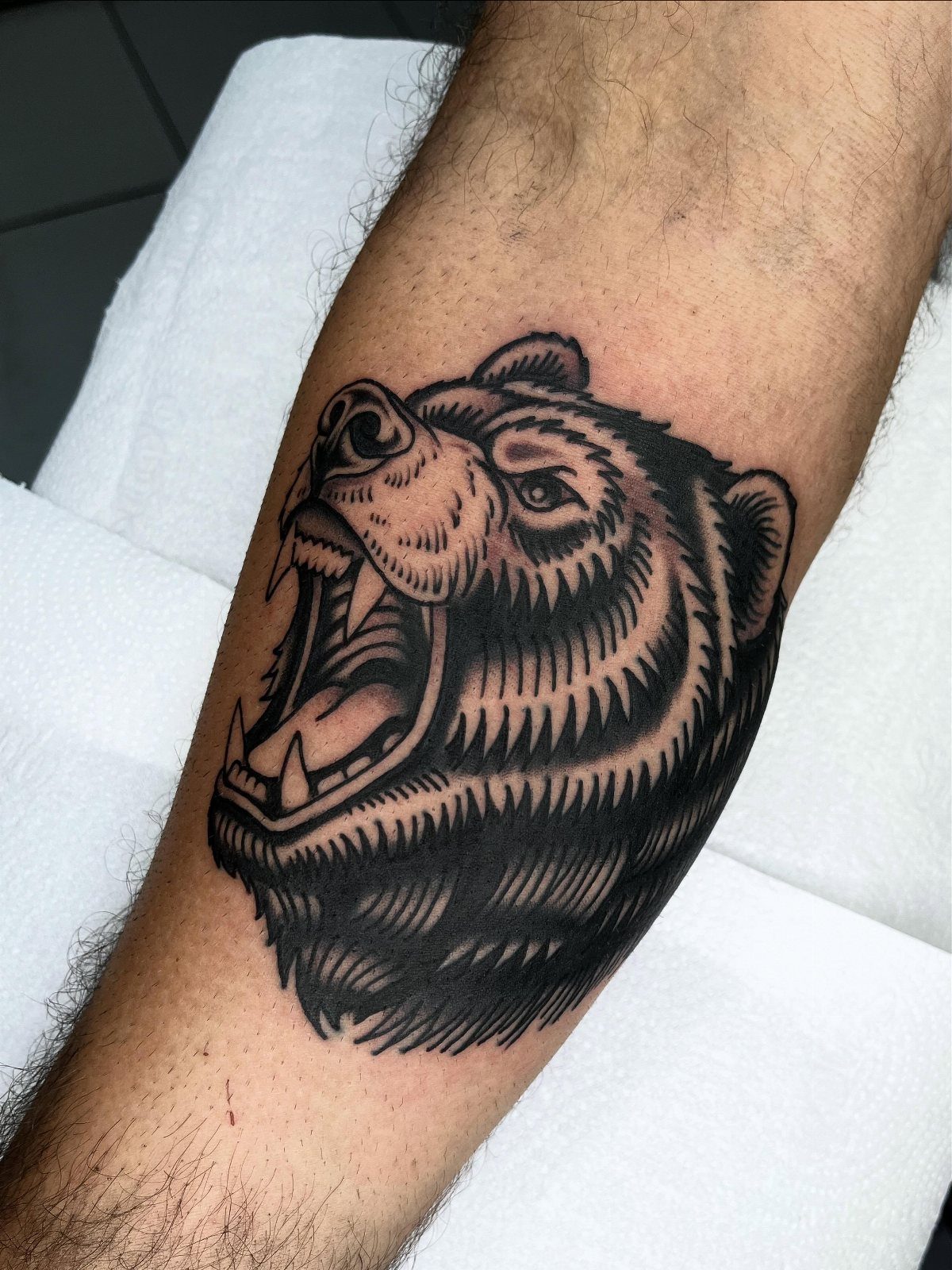
A roaring bear head in black and grey captures aggression without needing color to sell it.
Bears have become a popular subject for traditional work in recent years, and the bold outlines suit the style perfectly. The imagery connects to strength and wildness, which appeals to anyone wanting their ink to feel untamed.
Forearm placement keeps the tattoo visible and allows the head to sit flat rather than wrapping around muscle. The design ages well because the thick lines hold their shape over time.
13. American Traditional Tattoo Flash
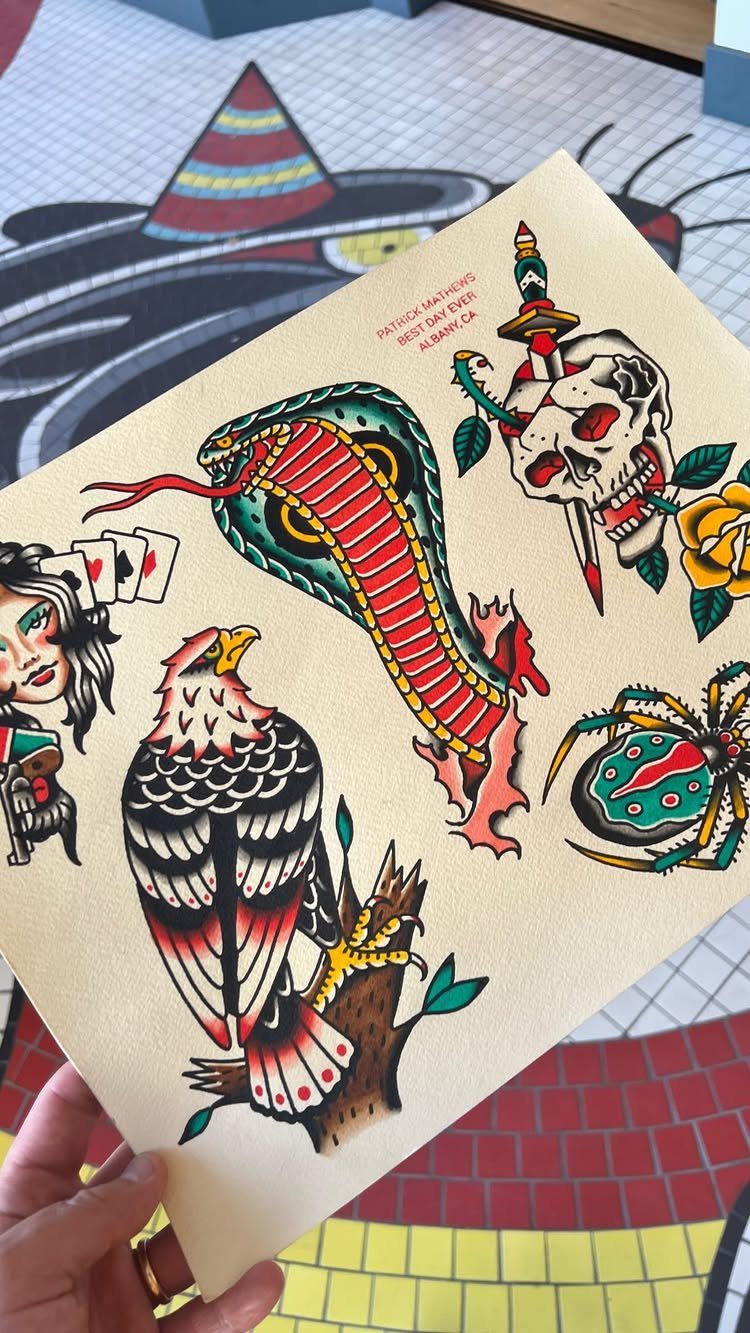
Flash sheets like this one hold the blueprints of traditional tattooing: cobras, eagles, skulls, spiders, all drawn in the bold, clean style that defines the genre.
These designs were meant to be chosen off the wall and tattooed the same day, which is why they work at small to medium sizes and hold detail without needing customization.
The cobra and eagle here show the thick outlines and limited color palette that make traditional work last.
If you want a design with history behind it, picking from flash connects you to how tattooing worked for decades before custom pieces became the standard.
14. Lighthouse Tattoo
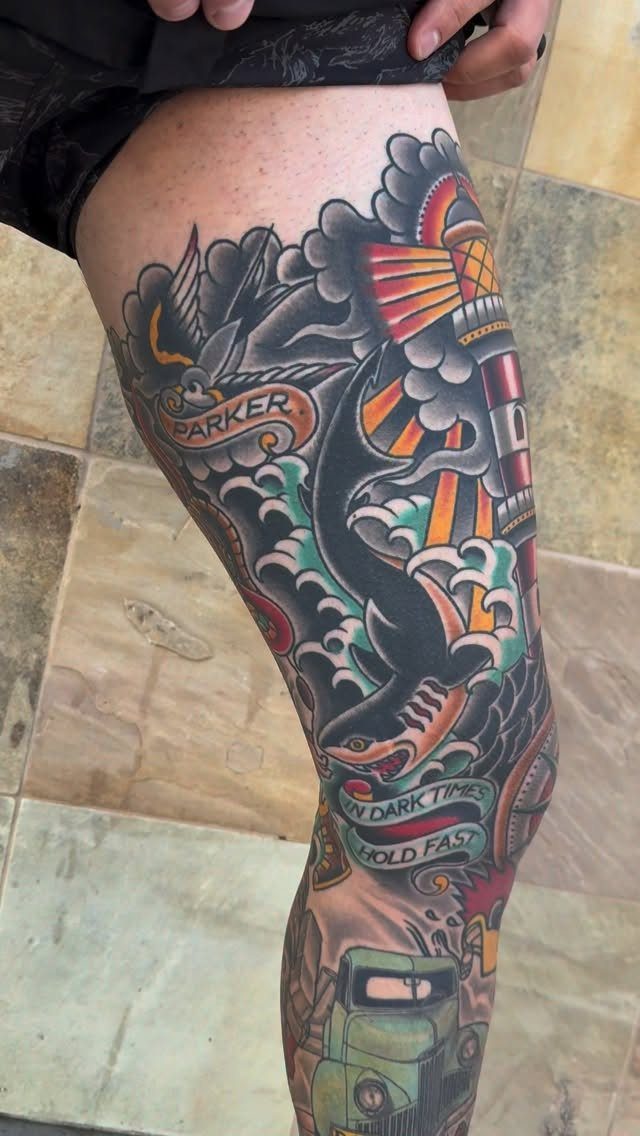
Lighthouses mark safe passage, which is why they show up in traditional work as symbols of guidance and direction.
A lighthouse pairs well with other nautical or travel motifs: ships, anchors, compasses, or even a truck if road trips are part of your story.
Leg placement gives you the vertical space a lighthouse needs, and the structure of the building reads clearly even when surrounded by other images. The symbolism is direct: something steady when everything else moves.
This suits anyone who thinks of home as the fixed point they return to, or who wants a reminder that staying grounded through rough stretches matters.
15. Tiger Tattoo
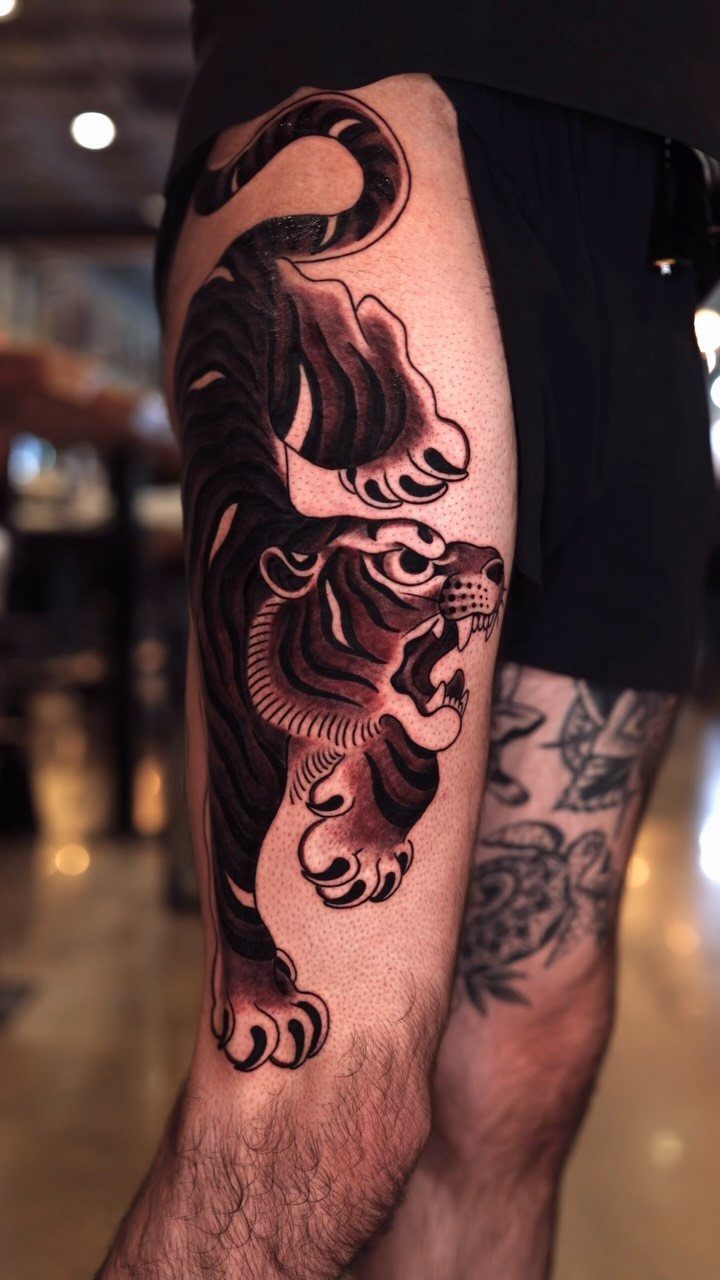
A tiger in red and black signals power and the refusal to back down.
The snarling face and heavy shading make the design impossible to ignore, and the thigh placement gives the animal enough room to look like it’s actually moving.
Traditional tiger tattoos use bold lines that hold up over time, even as the skin changes. The red accents add intensity without softening the aggression.
This one fits someone who wants their ink to convey strength without needing explanation. The tiger has carried that meaning in traditional work for as long as the panther, and it delivers the same punch.
16. Compass Tattoo

A compass on the upper arm points to the idea of finding your way, whether that means literal travel or figuring out which direction to take in life.
The design here uses traditional black outlines and minimal color, so it reads cleanly and ages well. Upper arm placement keeps it visible in short sleeves and easy to cover when needed.
Compasses suit anyone who values independence or who sees their life as something they steer themselves. The symbol is old, but the message still works.
Choosing the Right Tattoo
Symbolism drives most decisions in traditional work.
If you connect with nautical history, anchors and ships carry that weight. If strength matters more, the panther or bear delivers it without explanation.
Body placement changes how a design reads.
Vertical images like lighthouses and ships suit legs and calves because they follow the natural line. Wrapping designs like coiled snakes or crawling panthers work better on arms, where muscle movement adds dimension.
The palette is limited: black, red, green, yellow, and occasionally blue or grey. That restriction is part of what makes the style last.
Size determines detail. Larger pieces allow for scales, feathers, and facial features.
Durability of Traditional Tattoos
Thick outlines hold their shape as skin ages and ink spreads. That’s why traditional tattoos stay cleaner over the years than styles that rely on fine lines or soft shading.
The limited color palette works in your favor. Fully saturated reds, greens, and yellows fade slower than pastels or gradient blends.
Black stays black. The bold separation between colors prevents them from bleeding into each other over time.
Minimal shading means less gray wash to blur or fade unevenly. Traditional work uses solid fills and hard edges, so the design keeps its structure even when the skin loses elasticity.
If you want ink that still reads clearly decades from now, traditional tattooing is built for that.
The style was designed to last on sailors who worked in sun and salt water, and those same qualities make it durable for anyone.
Tattoo Placement Considerations
Arms, chest, and back give you room for thick outlines and solid color without cramming the design. Large pieces like dragons or full-rigged ships need that room to hold detail and stay readable.
The chest works for symmetrical designs like eagles with spread wings. The natural width supports the composition, and the flat surface keeps the image from distorting when you move.
Forearms and hands suit smaller motifs.
A coiled snake or nautical star fits the proportions without wrapping awkwardly. Hands fade faster because of constant exposure and washing, but that visibility is exactly why people choose them.
Larger designs across the shoulder and chest require multiple sessions. Pain level increases near bone, so ribs and collarbones are harder to sit through than outer arms or thighs.
Frequently Asked Questions
What is an American traditional tattoo?
American traditional tattoos use bold black outlines, fully saturated colors like red, green, and yellow, and simplified designs with minimal shading.
Classic subjects include eagles, ships, panthers, skulls, anchors, and roses, all drawn with clean edges and limited color palettes that stay readable for decades.
Do American Traditional tattoos fade quickly?
No, they hold up better than most other styles.
The thick outlines keep their shape as skin changes, and fully saturated colors fade slower than pastels or gradients. Solid fill inside a hard border keeps each color separate, so the design stays sharp instead of muddying into a smudge.