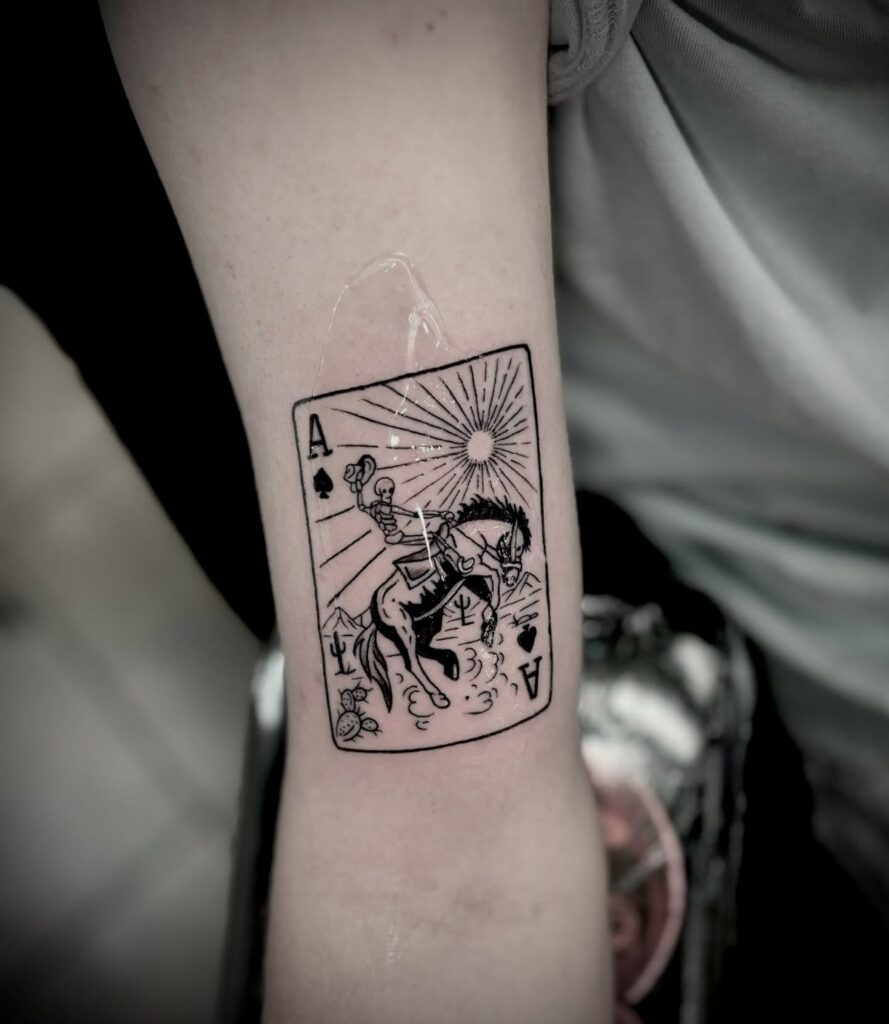
Card designs run from single aces that take an hour to full sleeves with roses, dice or money that can push 6–8 sessions, and the right choice depends on whether you want one clean symbol or a scene that ties multiple elements together.
1. Queen of Hearts Playing Card Tattoo
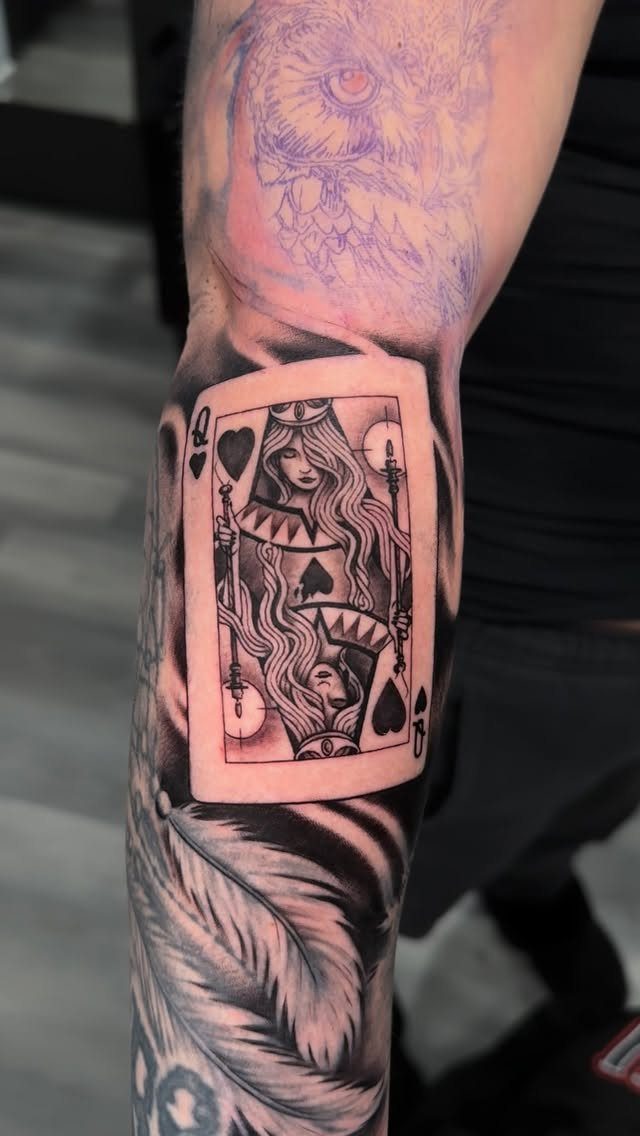
The Queen of Hearts sits on the forearm, rendered in black and grey without the usual border or full card frame.
The design reads clearly at arm’s length and ages well since it skips fine line details that blur over time.
A single card like this moves quickly when you stick to flat color or needs more time if you add gradient shading.
I like the simplicity here: the Queen’s face and the heart suit are enough, and leaving out extra flourishes keeps attention on the card itself.
2. Ace of Spades and Rose
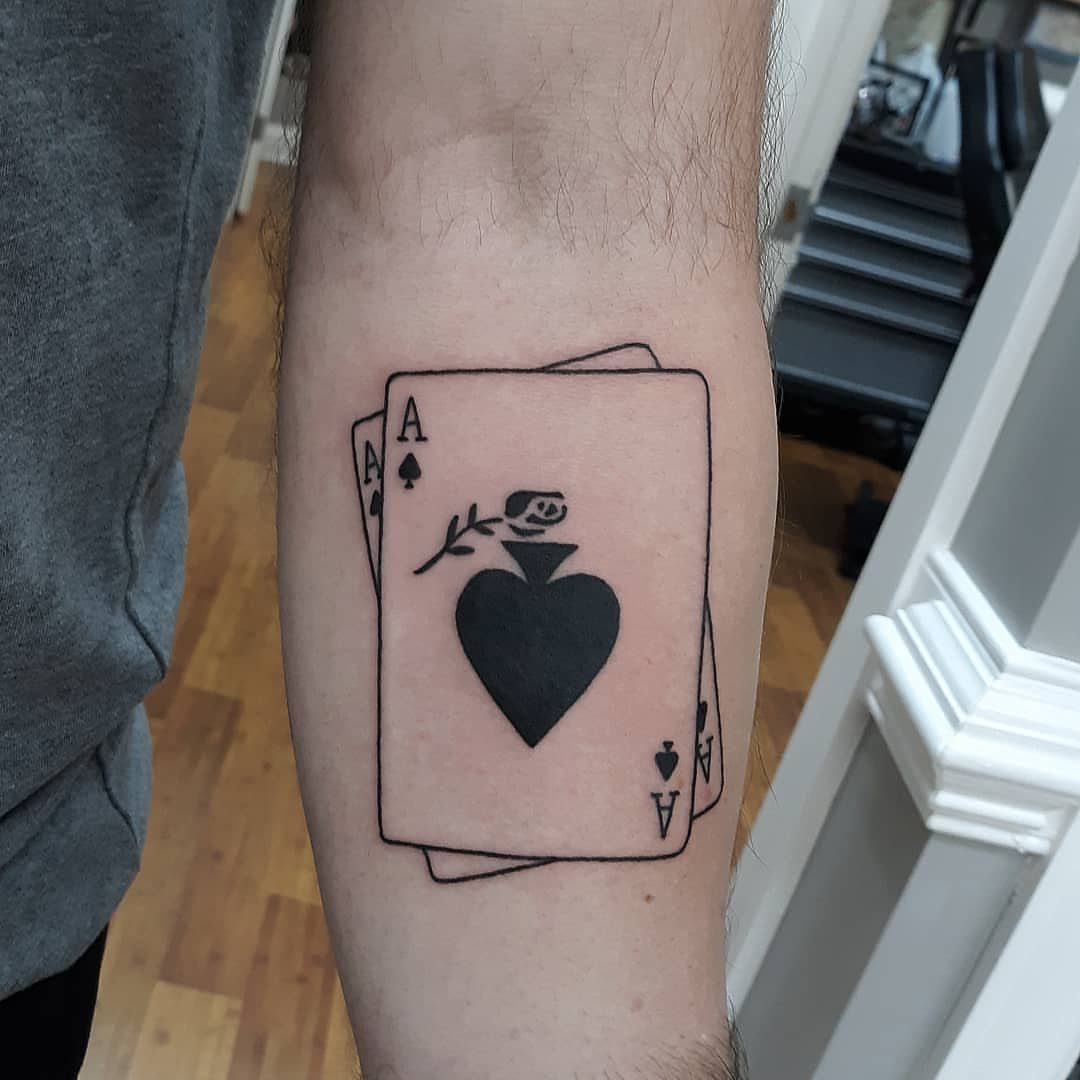
Pairing the Ace of Spades with a small rose balances two different ideas in one piece. The spade carries weight as the highest card in the deck, and the rose softens it while leaving both pieces readable.
Black and grey lets both elements stay legible.
A rose this size adds detail without turning the session into an all-day commitment. The forearm placement means you see it daily, and both symbols hold up across decades of sun exposure if you use SPF 30 or higher.
3. King and Queen Playing Cards
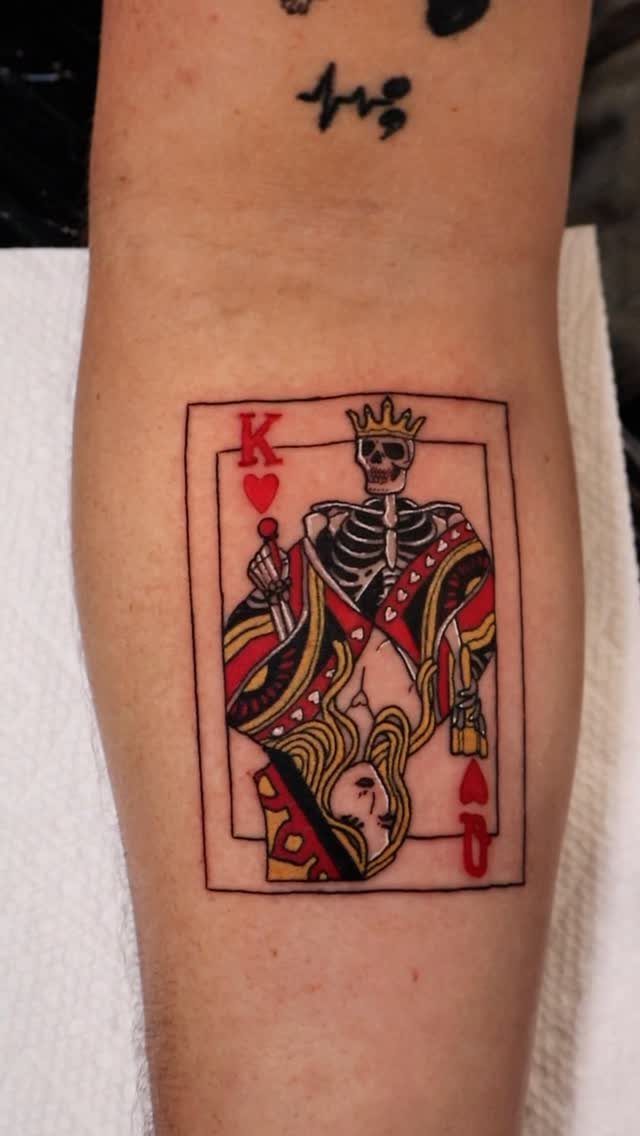
A split card showing a skeletal king on one side and a woman’s face on the other turns the standard king-and-queen pair into something darker.
The heart suit and the letter K anchor it as a playing card, but the mirrored faces make it feel custom rather than literal.
This works best as a forearm piece where the vertical card shape fits the muscle.
Expect 2–3 hours for the skull detail and portrait work. I prefer this version over two separate cards because it reads as one cohesive image.
4. Joker Card Tattoo
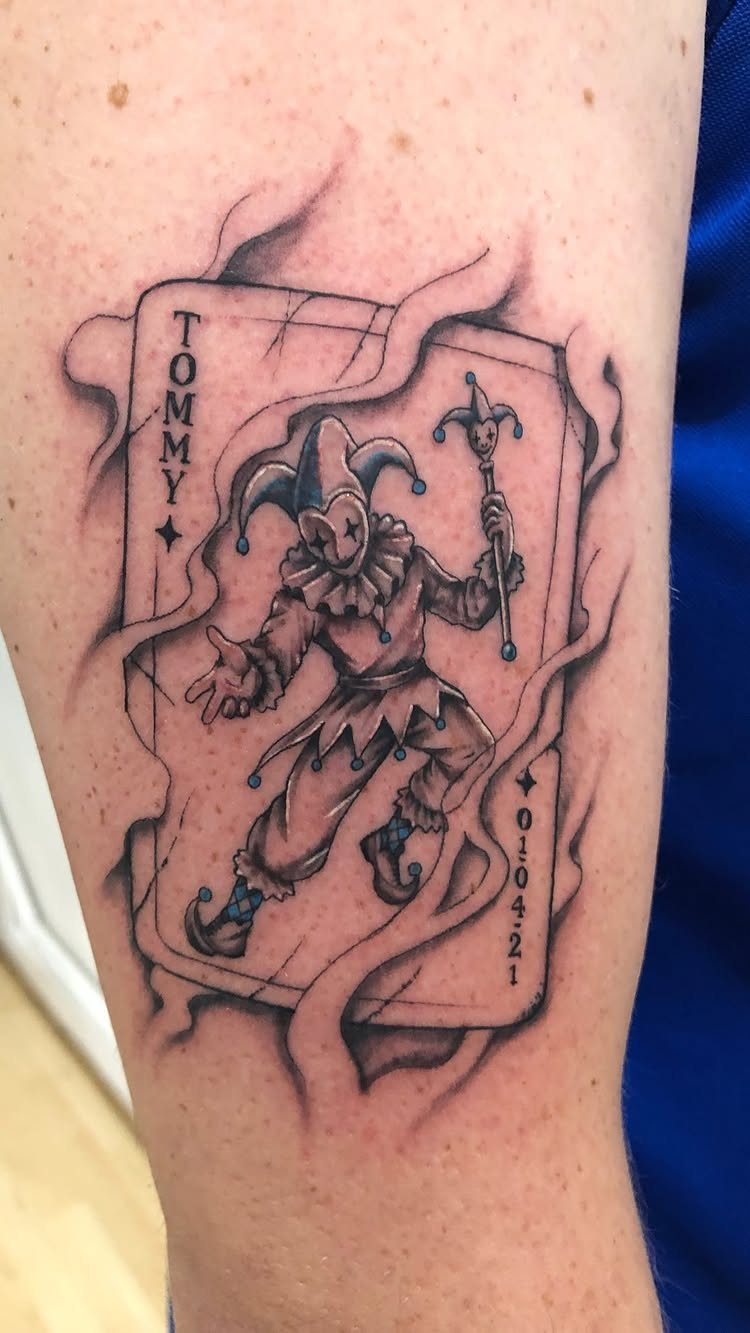
The Joker represents the wild card, the unpredictable, and that fits when you want to mark someone who lived outside the usual rules.
Smoke fills the background without adding hard edges that compete with the card itself. I think the Joker works better than a standard face card for something personal because it already carries that sense of risk and humor.
5. Burning Ace of Spades
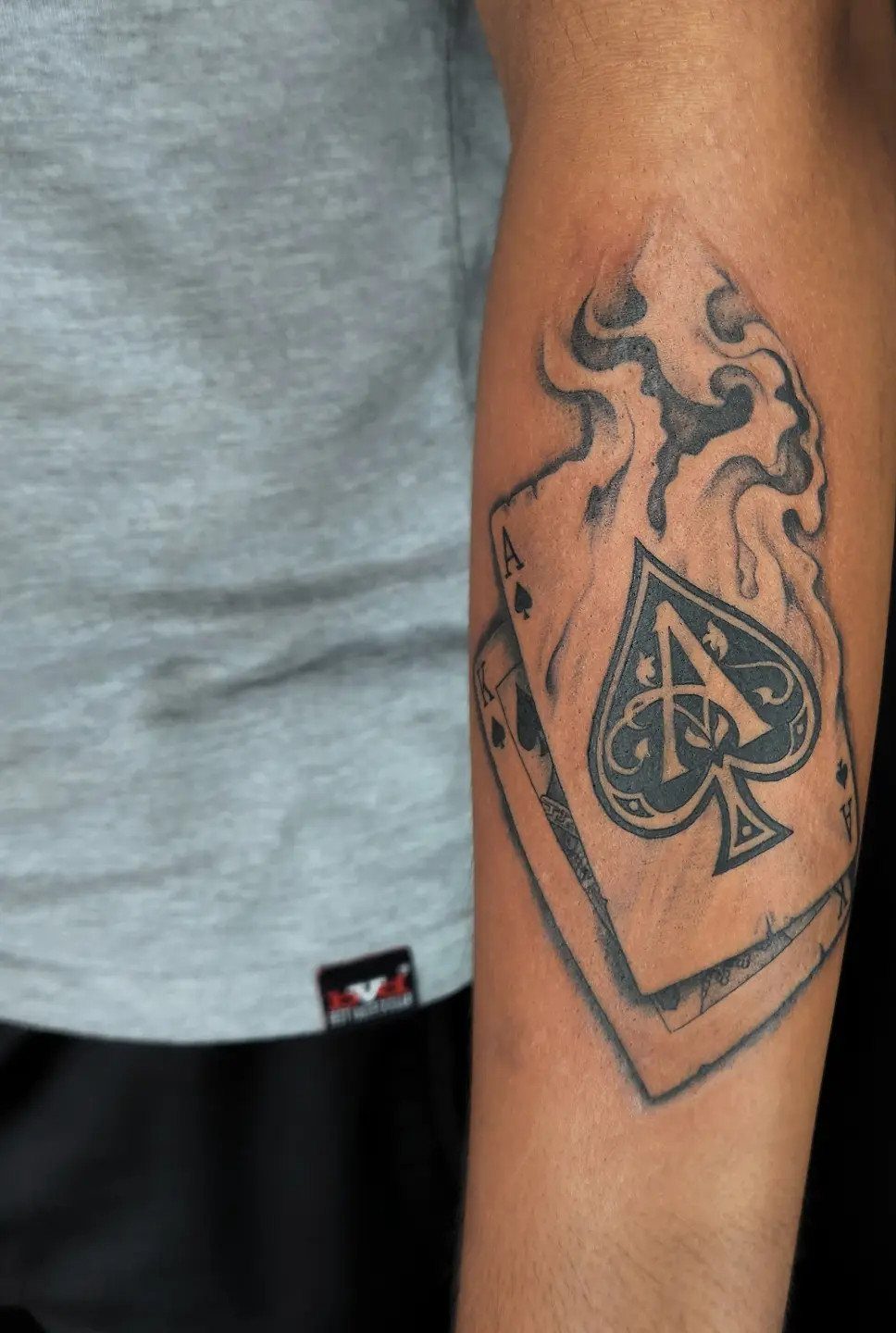
Flames rising from an Ace of Spades turn the card into a statement about taking chances.
The fire wraps around the top edge of the card and the shading stays dark enough to contrast with skin tone, so the flames read clearly without color.
3 cards stacked together like this fill the forearm and take longer if you add fine detail to the fire.
I think one burning card would work just as well and cut the session shorter, but the stack adds depth if you want a larger piece.
6. Playing Cards with Dice
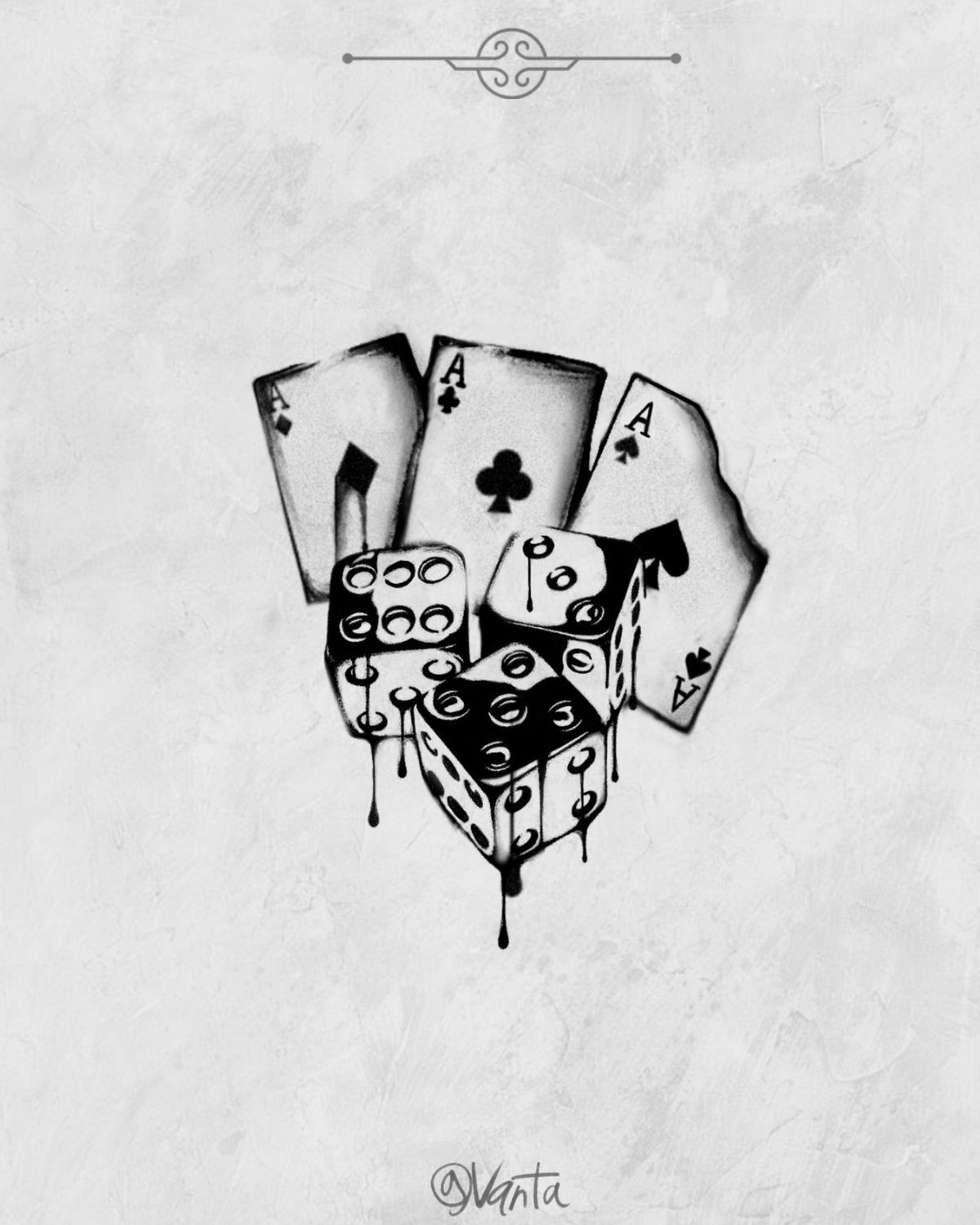
Three aces and three dice capture the full gambling moment in one design.
The dice appear to melt or drip, which keeps the composition from looking too static. Black and white line work like this translates well to skin and holds detail longer than heavy shading.
Placement depends on how large you want the dice.
A forearm or upper arm gives enough room for all the cards and dice without shrinking the suits down to where they blur. Session time runs 2–3 hours for line work this dense.
7. Playing Cards and Money Rose
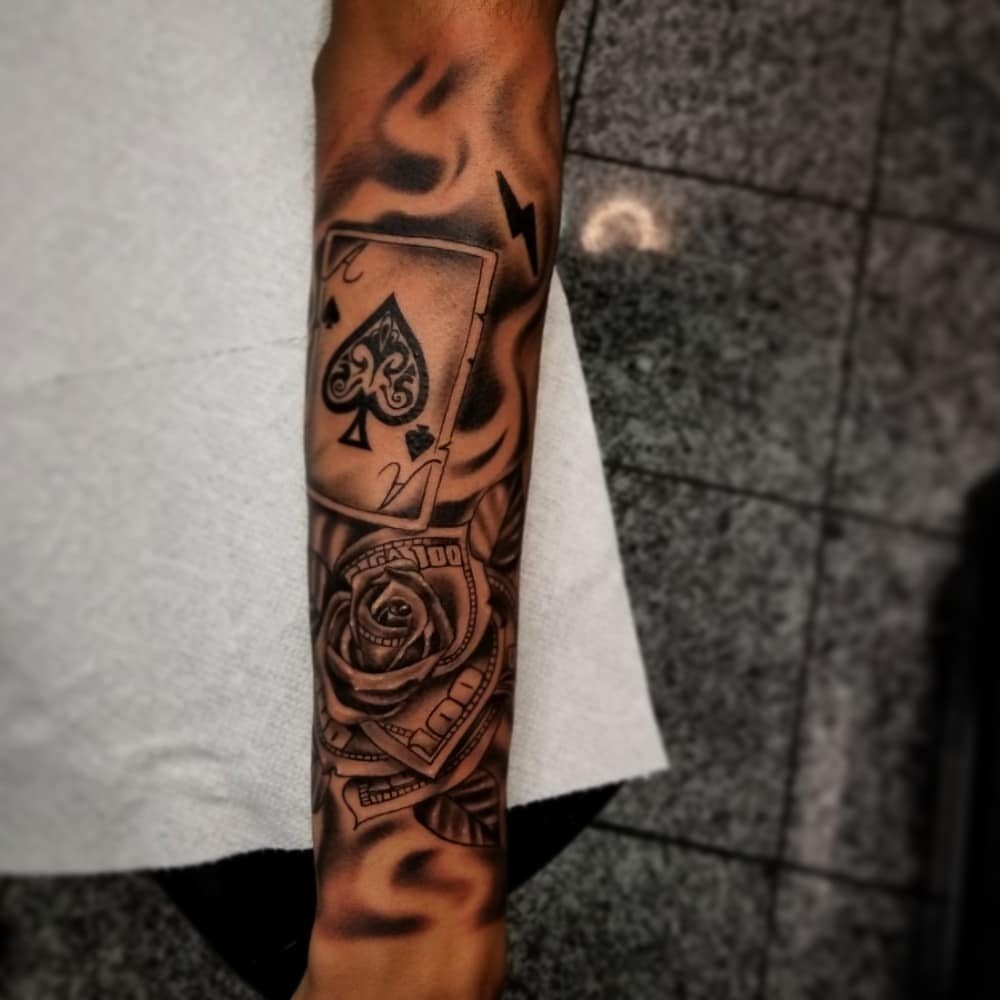
Folding bills into the rose petals turns this into a clear money-and-luck piece. The Ace of Spades anchors it as a gambling design, and the rose keeps it from reading too heavy.
Black and grey works here because it holds detail in both the bills and the card suit. A forearm gives enough space for all 3 elements without shrinking the spade down to where it loses clarity after a few years.
8. Playing Cards Sleeve
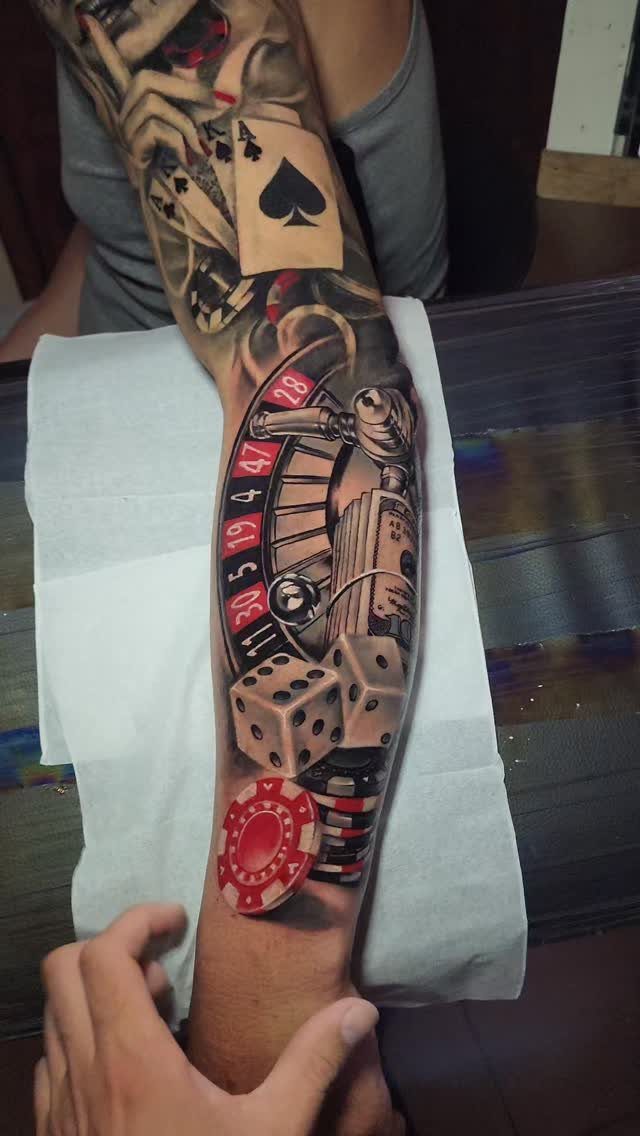
Casino elements spread across the full forearm create a sleeve that reads as one connected scene. The roulette wheel, dice, chips and cards sit close enough to fill the space without leaving gaps.
I prefer this layout to individual cards scattered up the arm because everything ties together, and the longer session means fewer touch-ups later.
9. Forearm Playing Cards Tattoo
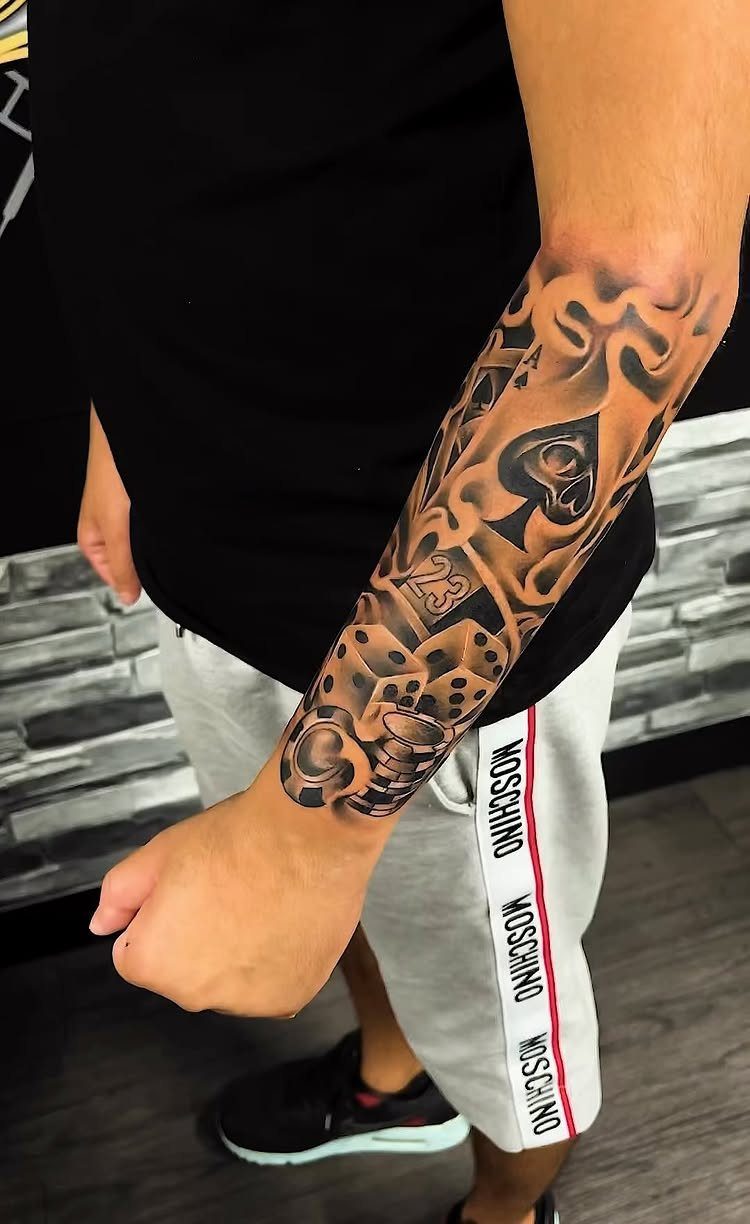
The forearm keeps everything visible when you wear short sleeves, and the vertical layout fits the muscle.
Smoke this soft stays legible longer than heavy gradient work because it does not need sharp edges to hold detail.
10. Playing Cards and Roses
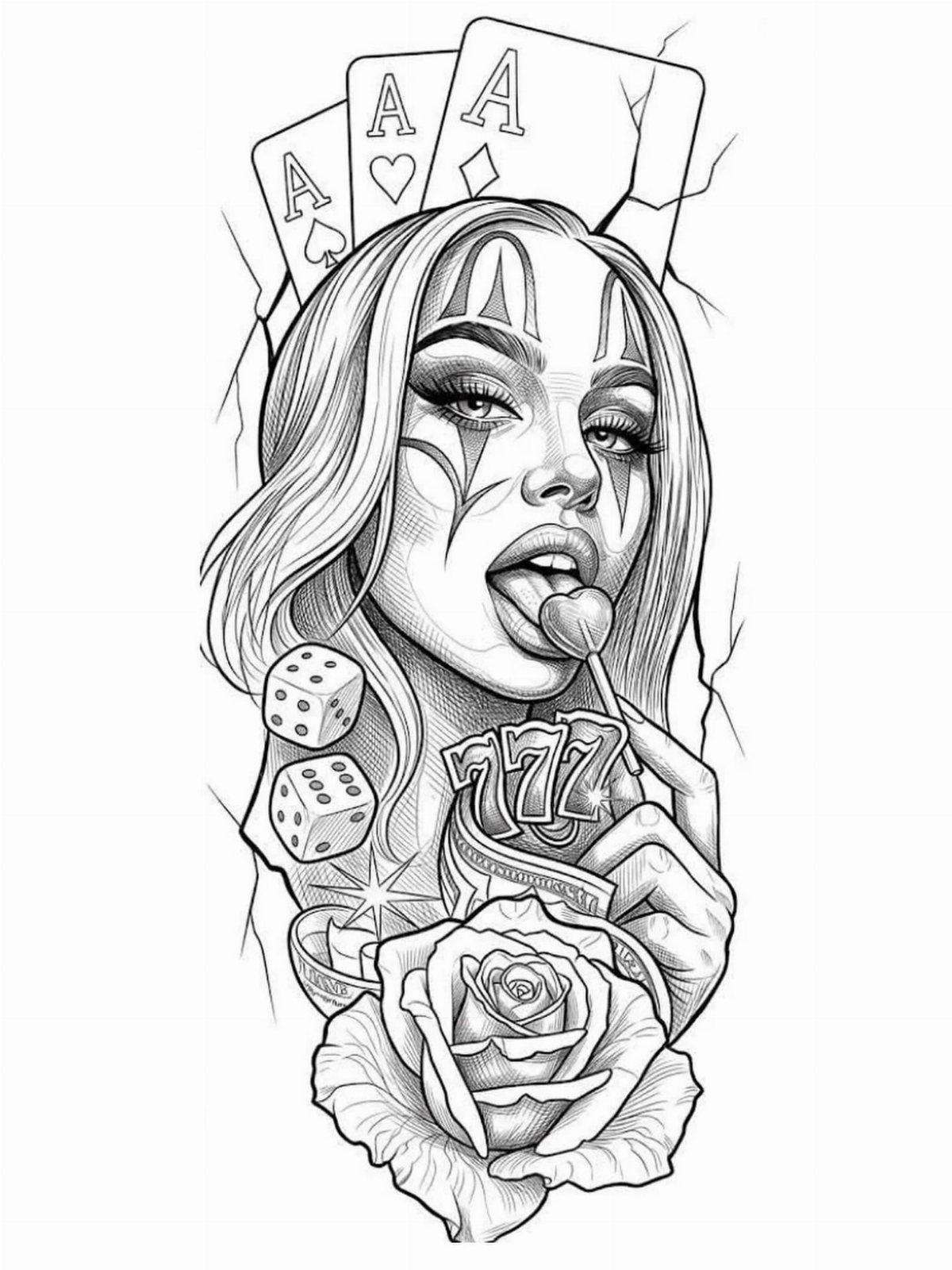
A woman’s face framed by aces, dice, a slot machine symbol and a rose mixes portrait work with straight gambling imagery. The clown makeup gives it a darker edge, and the number sequence ties it directly to a casino moment.
This takes longer than a simple card design because of the face. The mix works when you want something more personal than cards alone, though the portrait detail needs enough time to stay sharp.
11. Playing Cards and Pocket Watch
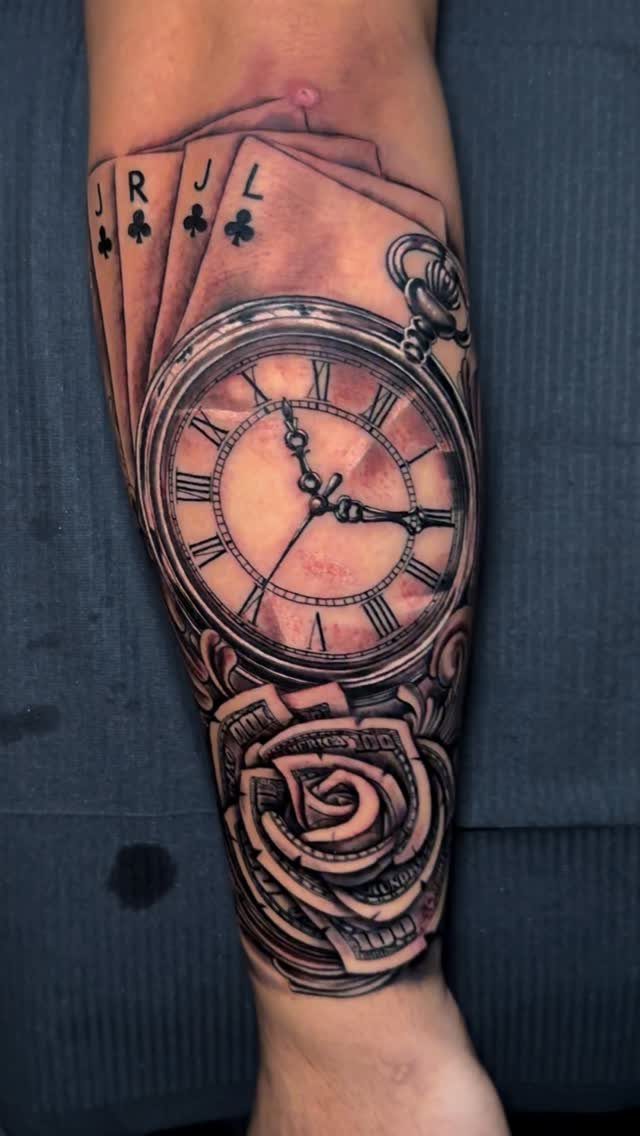
A pocket watch placed next to cards and rolled bills connects time to risk in one piece.
The letters on the cards personalize it without changing the card structure, and the watch face adds detail that balances the flat card shapes.
The forearm gives room for all three elements, and the grey ink holds well if you avoid direct sun without SPF 50 or higher.
12. King Playing Card Tattoo
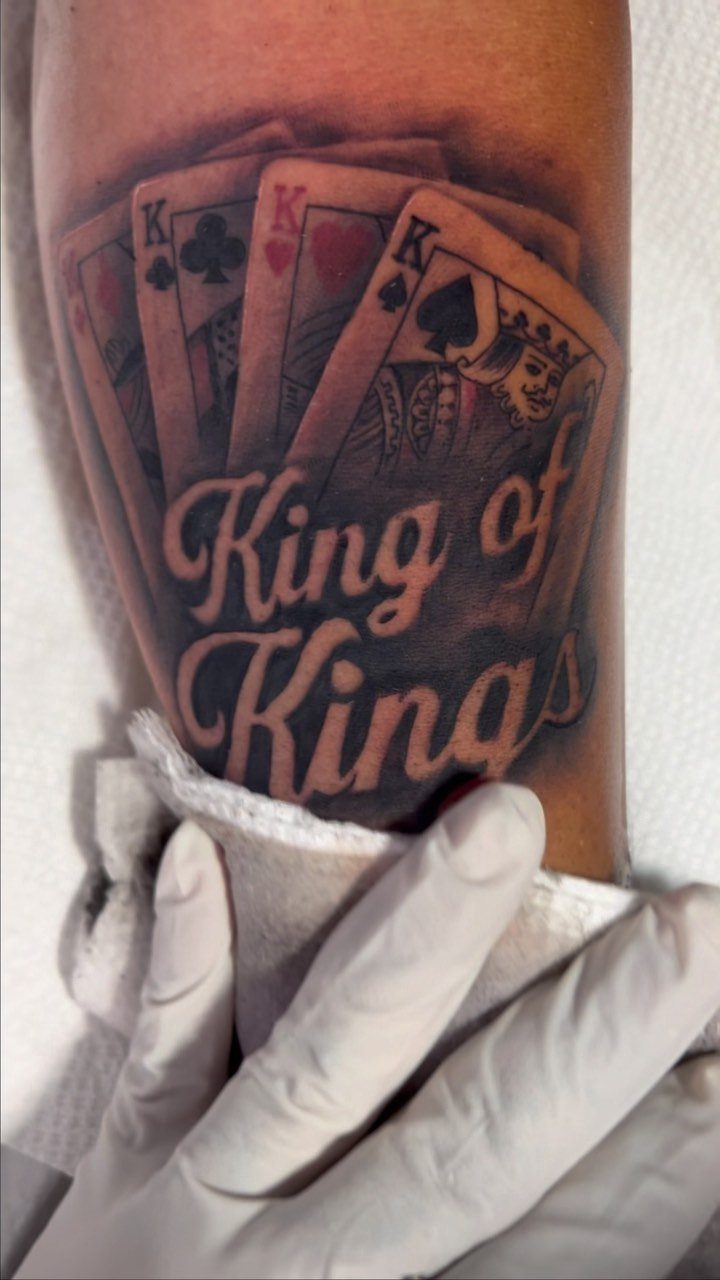
Multiple kings stacked together with "King of Kings" lettered below turn the standard king card into a statement piece. The script anchors the design and makes the message direct.
Black ink on the forearm means the card suits and text stay readable at a distance.
13. Playing Cards and Dice Tattoo
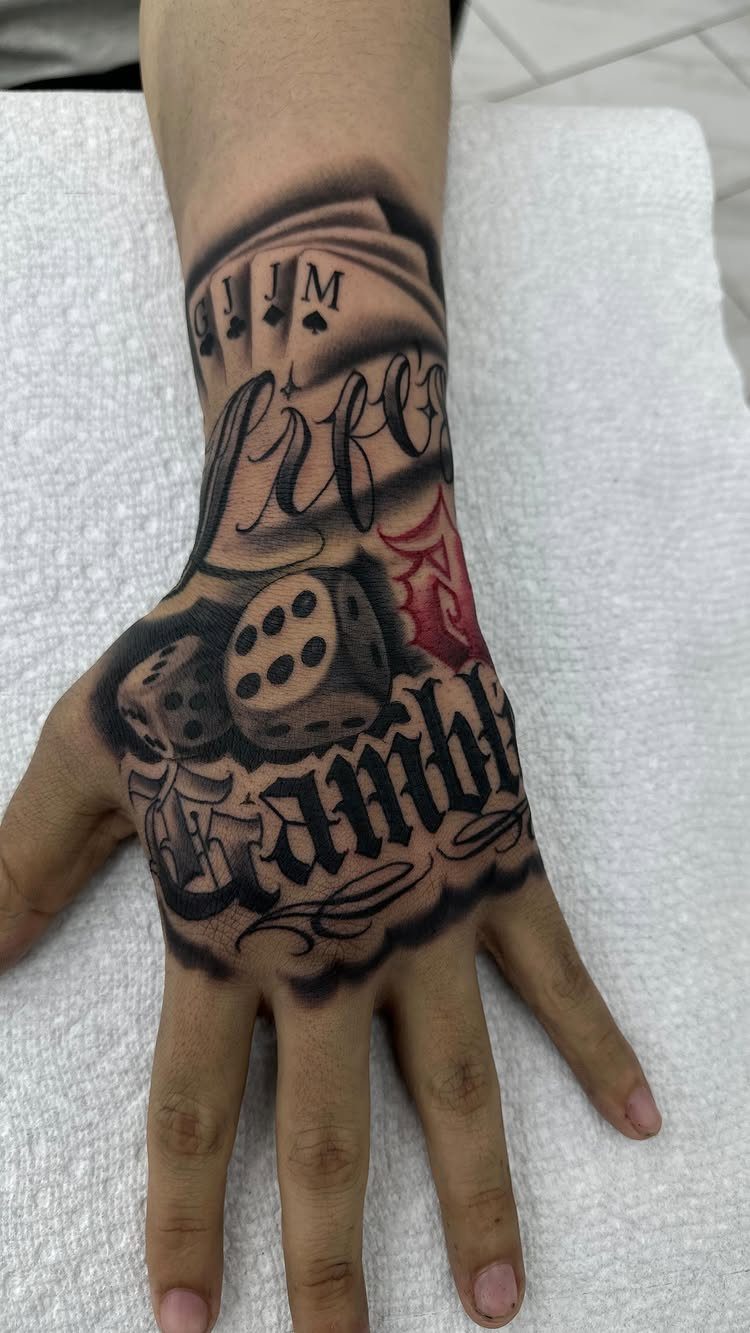
Placing "Life’s a Gamble" across the knuckles and wrist next to cards and dice puts the message where you see it every time you move your hand.
The text reinforces what the cards already say, and the hand placement means it stays visible in daily life.
Hand tattoos lose their sharpness sooner because the skin there turns over more quickly.
Plan for touch-ups when the lettering starts to soften. Pain runs higher on the knuckles and between the fingers than on flatter areas.
14. Hand Holding Playing Cards Tattoo
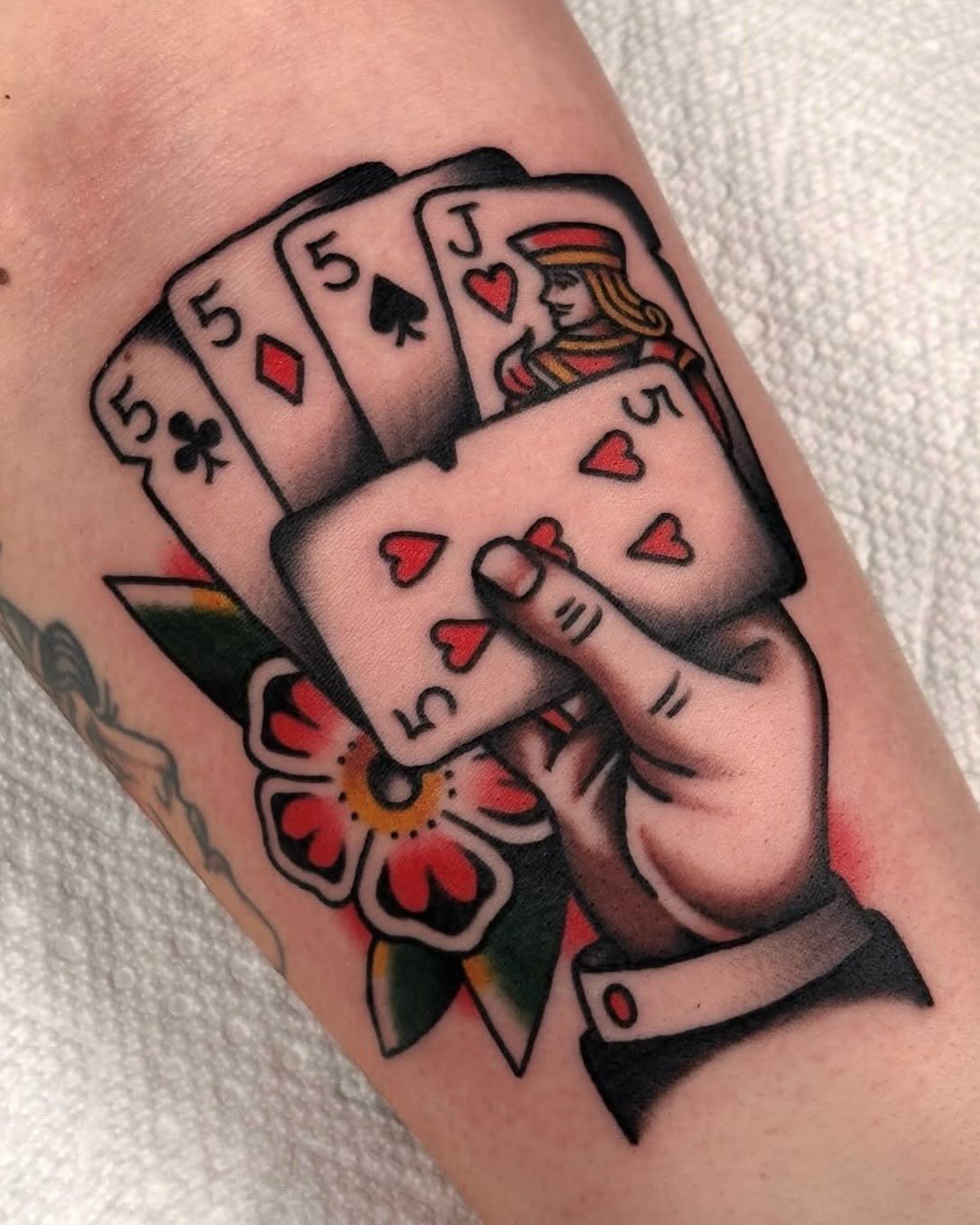
A hand holding a fan of 5 cards gives the design motion instead of laying the cards flat.
The Jack of Hearts visible in the spread keeps it recognizable as a poker hand, and the red flower underneath adds contrast without competing for space.
Shading the hand realistically takes longer than the cards themselves.
A design that runs from wrist to mid-forearm takes real chair time. The flower keeps the composition from feeling too hard-edged, and red ink holds well when kept out of direct sun.
15. Playing Cards Thigh Tattoo
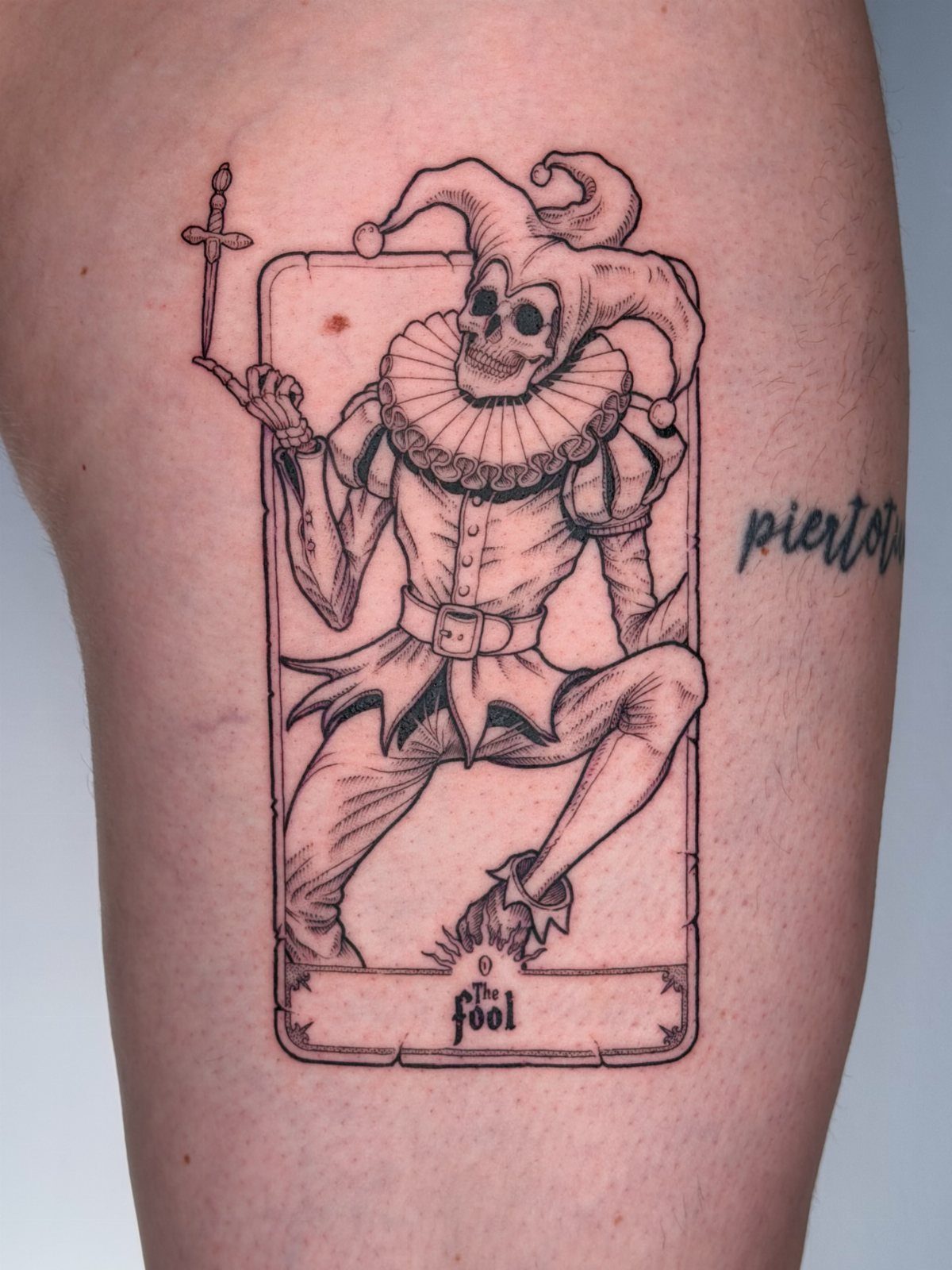
The thigh gives room for a vertical card without wrapping it around muscle, and "The Fool" lettered on the card ties it to tarot rather than a standard deck.
The skeletal jester reads darker than a traditional joker, and the added text anchors the design to one specific figure.
Thigh placement means you control when it shows.
Pain stays moderate across most of the thigh, though the inner section closer to the groin registers higher. Black ink on the thigh holds detail longer than areas that see more friction.
16. Playing Cards with Money
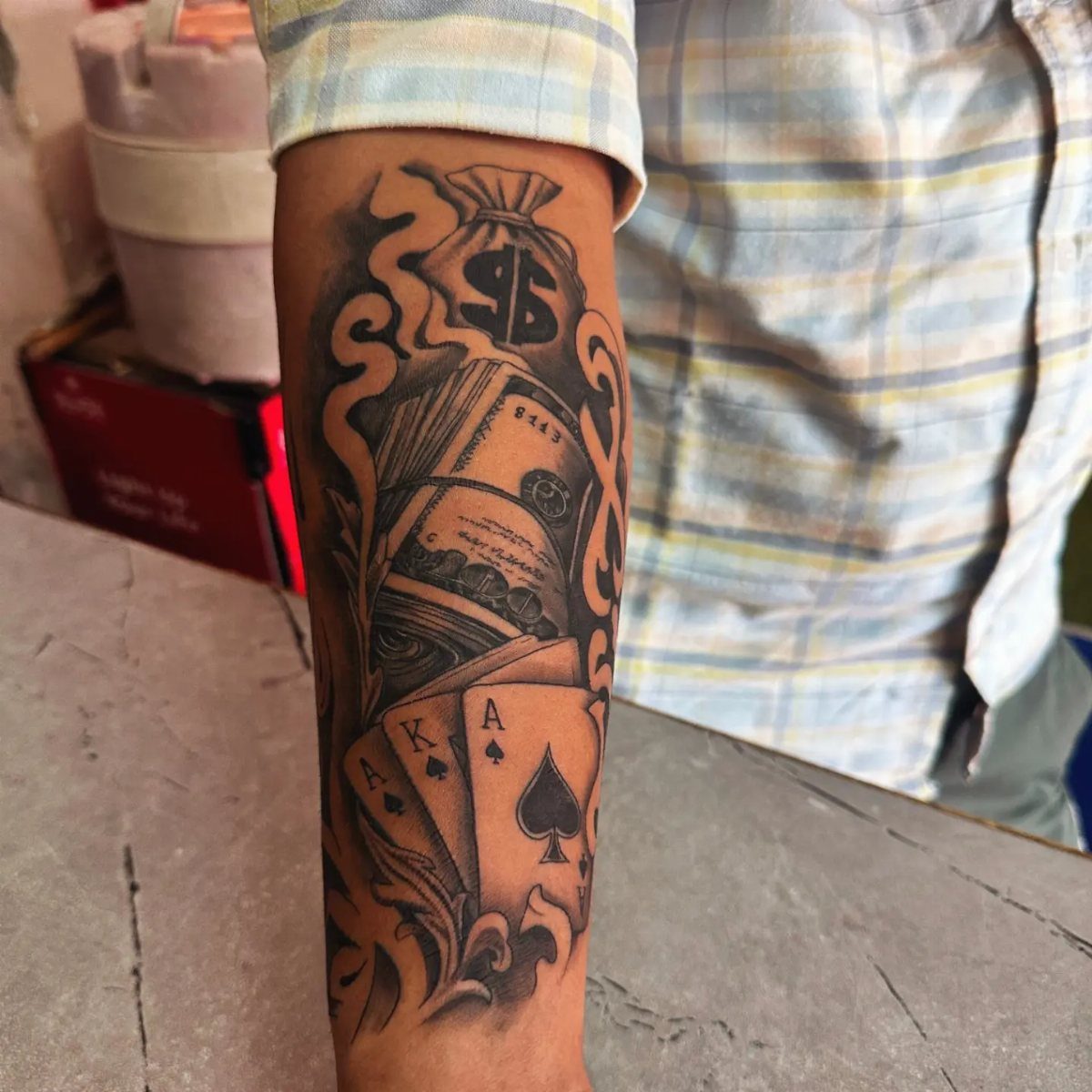
2 Aces of Spades framing stacks of cash and a money bag spell out the win without needing extra symbols.
The bag adds dimension to what would otherwise be flat bills, and the aces keep it tied to gambling rather than just wealth.
Black and grey keeps the bills readable and ages better than color for detail this fine.
Frequently Asked Questions
What do playing cards mean as a tattoo?
Each card carries its own weight: the Ace of Spades marks the highest card and often ties to risk or death, the Queen of Hearts speaks to love or a specific woman, and the Joker sits for unpredictability.
A full hand like 4 aces signals a winning moment, while a single card usually connects to something personal rather than gambling alone.
What does a 4 ace card tattoo mean?
Four aces represent one of the strongest hands you can hold in most card games, so the design captures a moment of winning or beating the odds.
It reads as a gambling win and a sign that luck is on your side. Most people fan the cards out to show all 4 suits at once.