Storm cloud tattoos range from fine-line minimalist designs to traditional bold pieces and realistic sleeves that take multiple sessions to build the shading.
If you want motion, rain droplets or lightning bolts give the design direction and pull the eye downward, which works well on vertical placements like arms.
Japanese cloud patterns rely on stylized swirls rather than shading, and those curves need room to develop across a larger piece.
1. Clouds with Rain
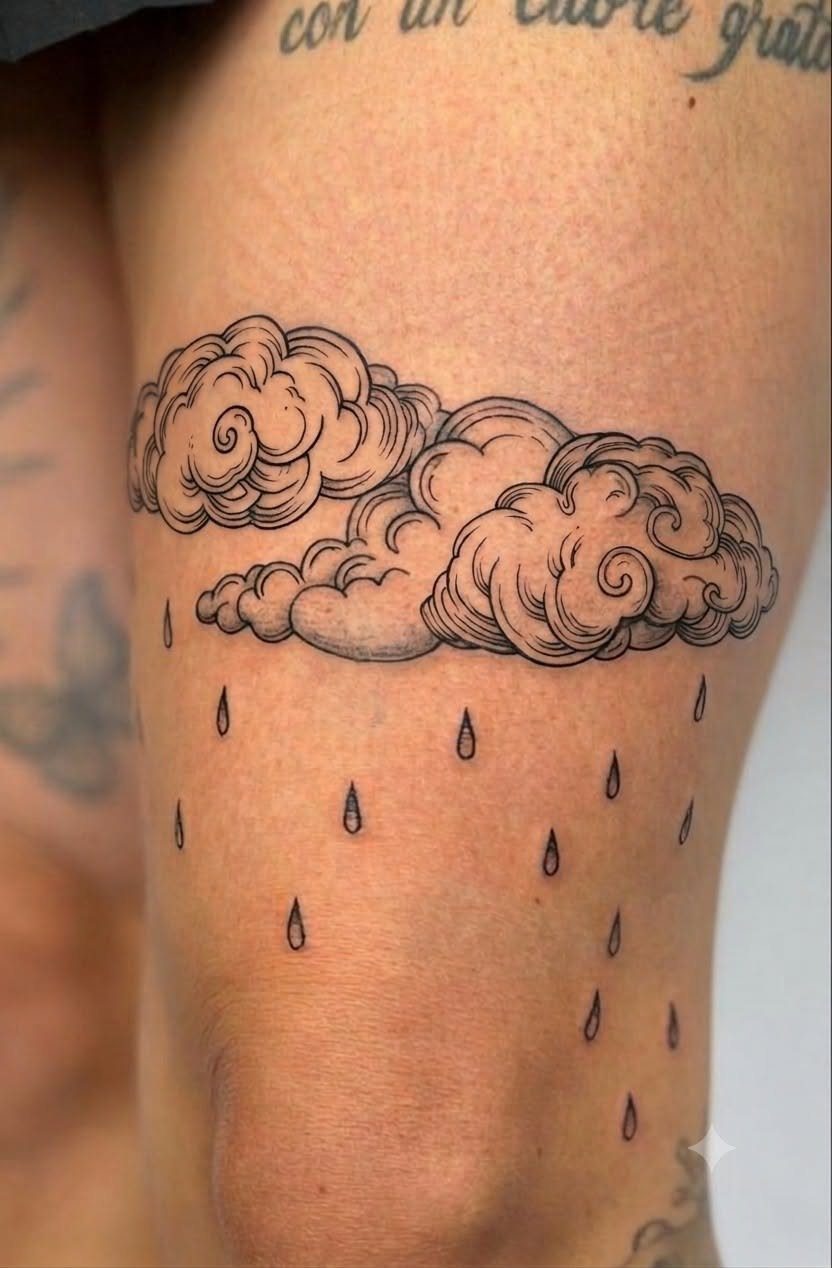
Rain droplets falling from dark clouds add movement without needing color or complex shading. The effect reads clearly at small sizes because each droplet is a simple shape, spaced apart so they stay distinct over time.
Black ink keeps the piece simple and ages well. Placement on the leg gives you enough room to space the drops evenly, which prevents them from bleeding together over time.
If you want the rain heavier or lighter, the number of droplets controls that. Fewer drops look cleaner, more drops fill the space.
2. Storm Cloud with Lightning
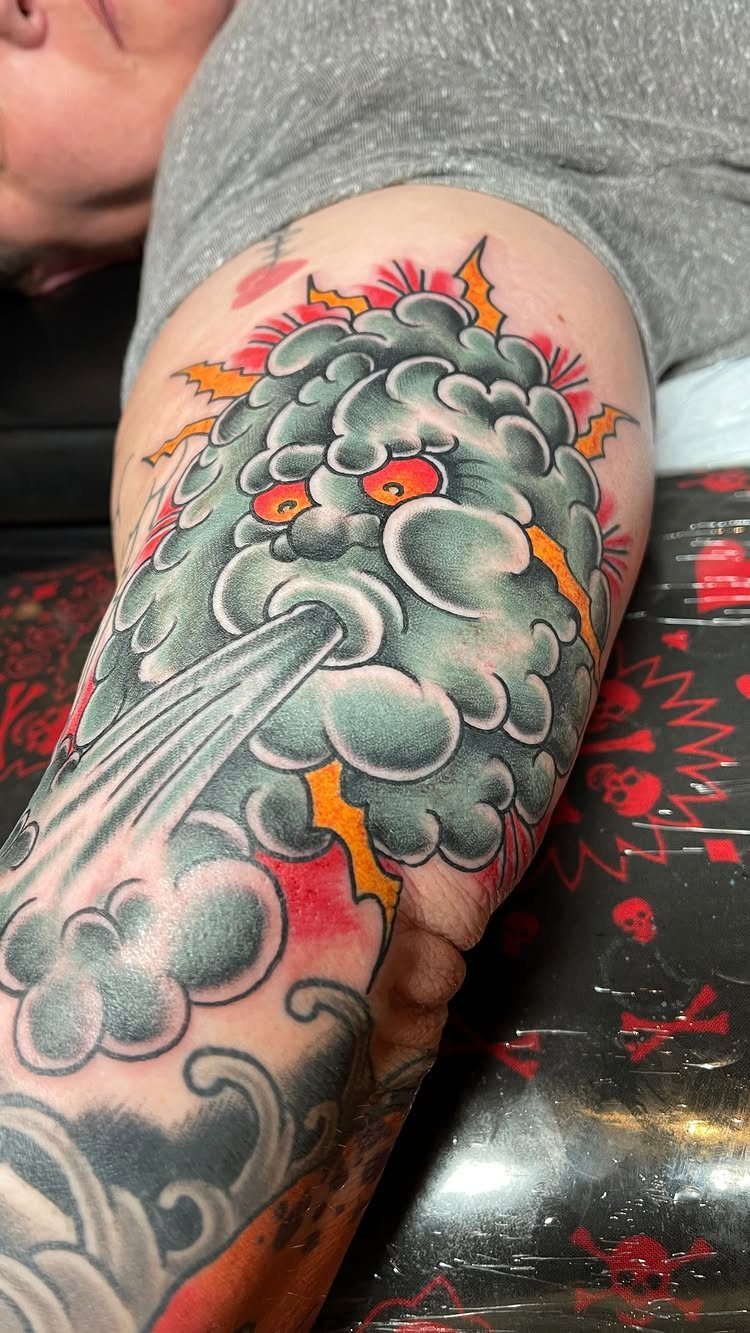
Lightning bolts give a storm cloud instant drama. The jagged lines cut through the design and pull the eye down, which works well on an arm or anywhere you want a vertical piece.
Adding a face to the cloud, like the grumpy expression visible here, turns the tattoo playful. It softens the intensity of the lightning without losing the storm theme.
Color makes the bolts stand out against darker skin or adds contrast if you want the cloud itself to stay lighter. Black and grey lightning still reads clearly, but saturated yellow or white ink makes the strike feel brighter.
3. Traditional Storm Cloud Tattoo
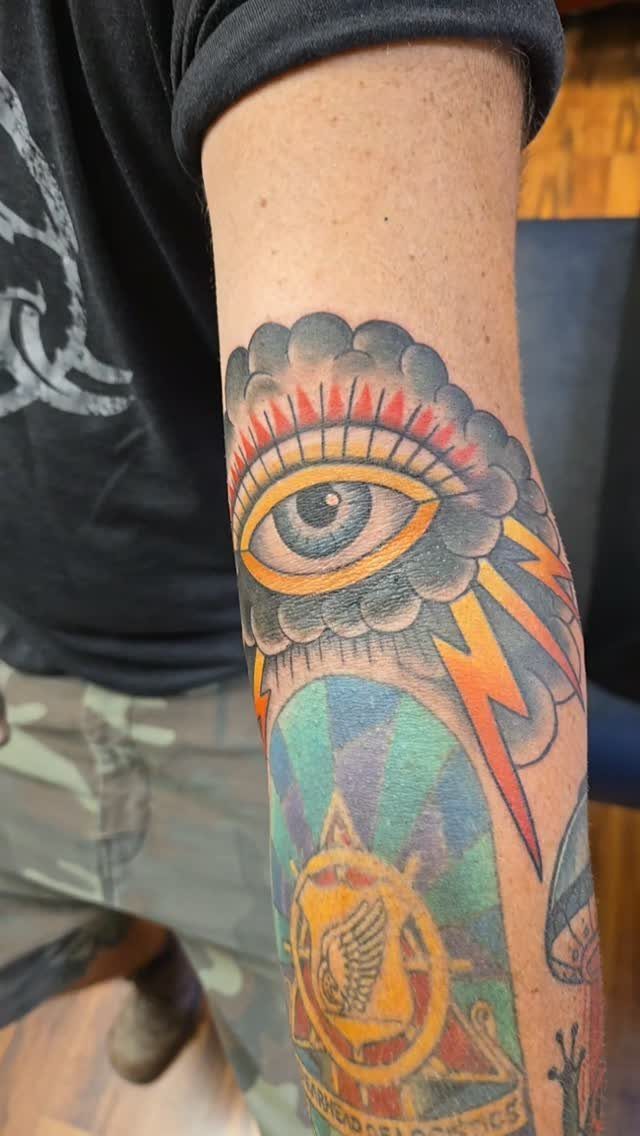
Bold black outlines and saturated color define traditional work, and a storm cloud fits the style when you add a strong central image. An eye inside the cloud anchors the design and gives the piece symbolism beyond the weather itself.
The thick lines hold up over decades, which matters for a tattoo meant to last. Traditional shading uses solid blocks of color rather than gradients, so the cloud reads as stormy without needing photorealistic detail.
Placement on the forearm gives you a flat canvas for the symmetry traditional designs favor. The style works at medium to large sizes because the bold lines need room to breathe.
4. Swirling Cloud Patterns
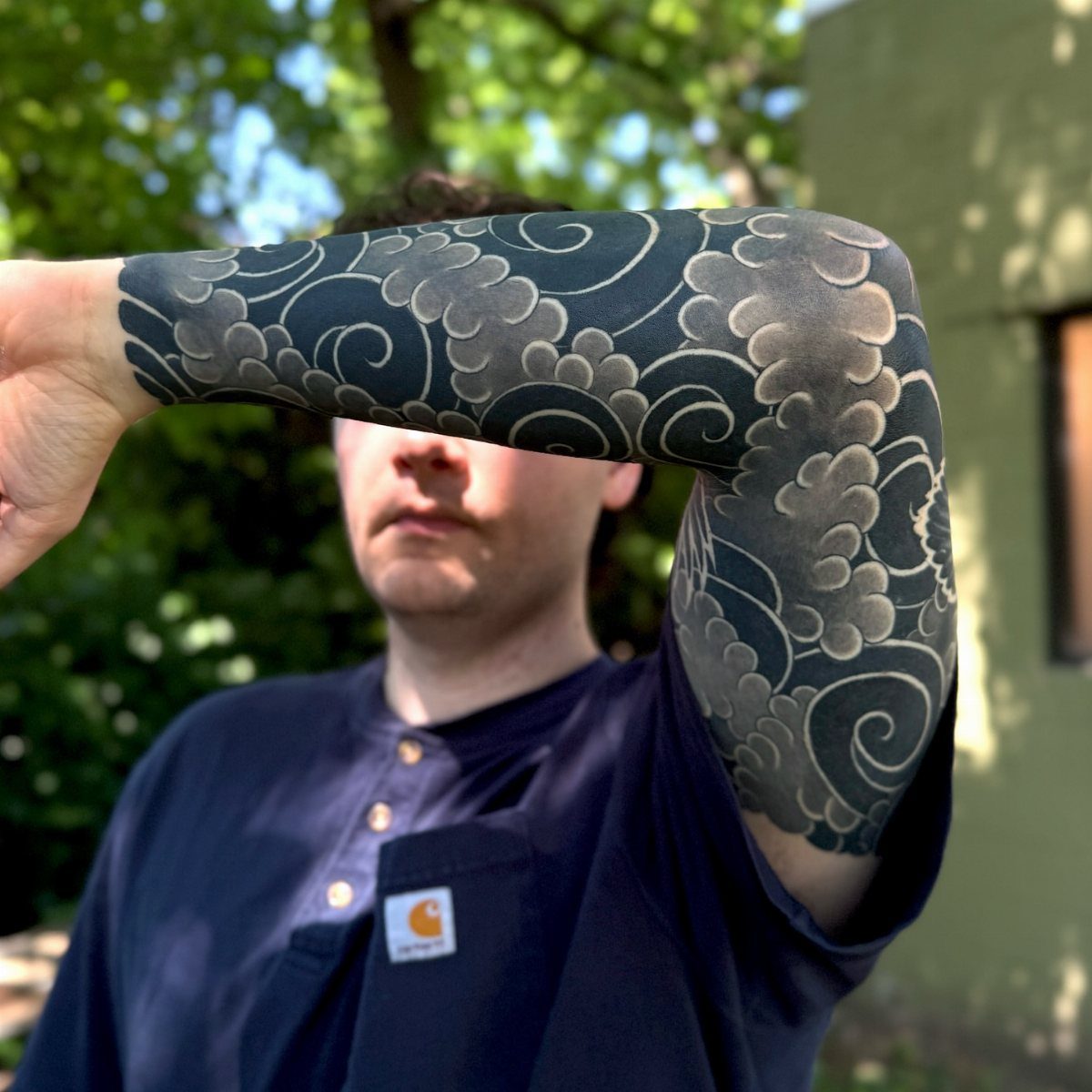
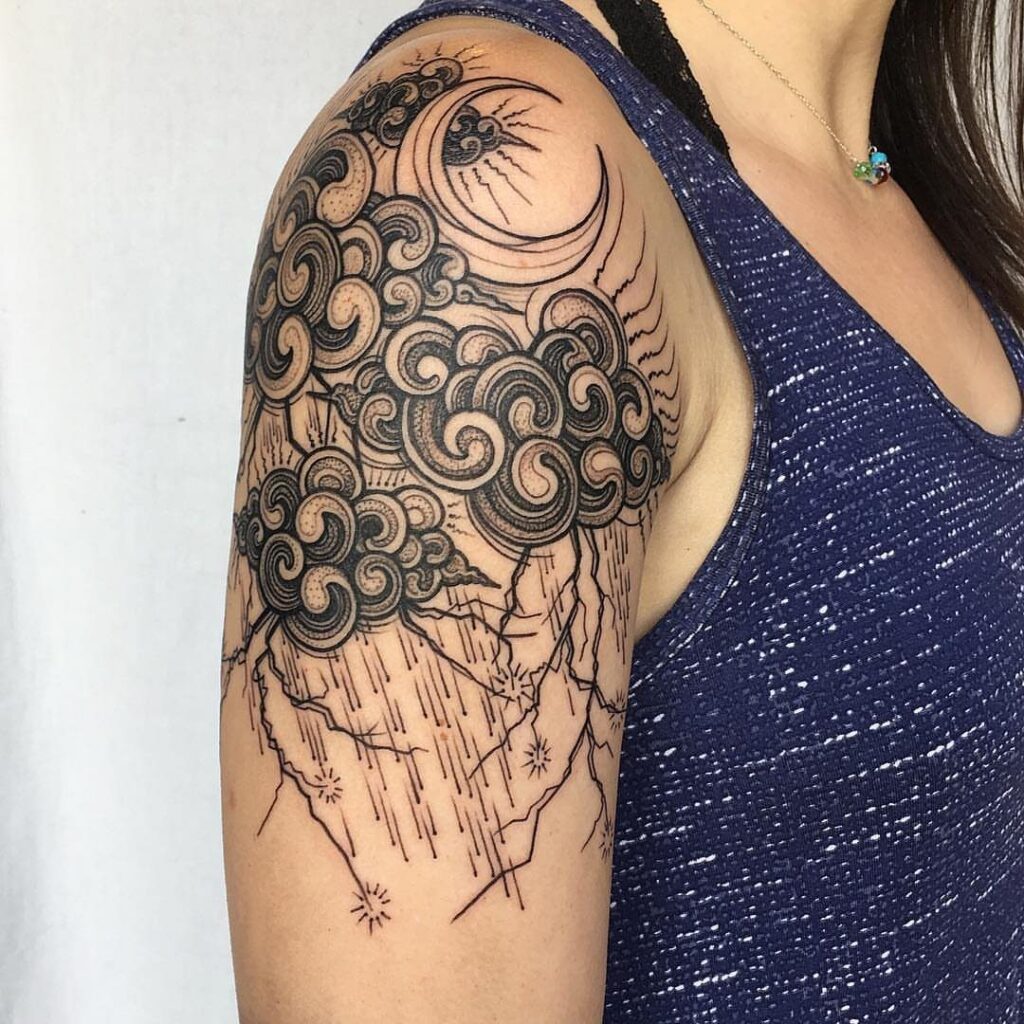
Swirling clouds fill a sleeve with motion. The curves wrap around the arm and create depth without relying on hard edges or geometric shapes, so the design flows naturally as your arm moves.
Dark grey and black ink give you the full range of storm tones, from heavy charcoal to almost white highlights. Shading controls how three-dimensional the clouds look, and a skilled artist can make them appear to roll over each other.
A full sleeve takes multiple sessions because the shading needs time to build up gradually.
5. Minimalist Cloud Tattoo with Fine Lines
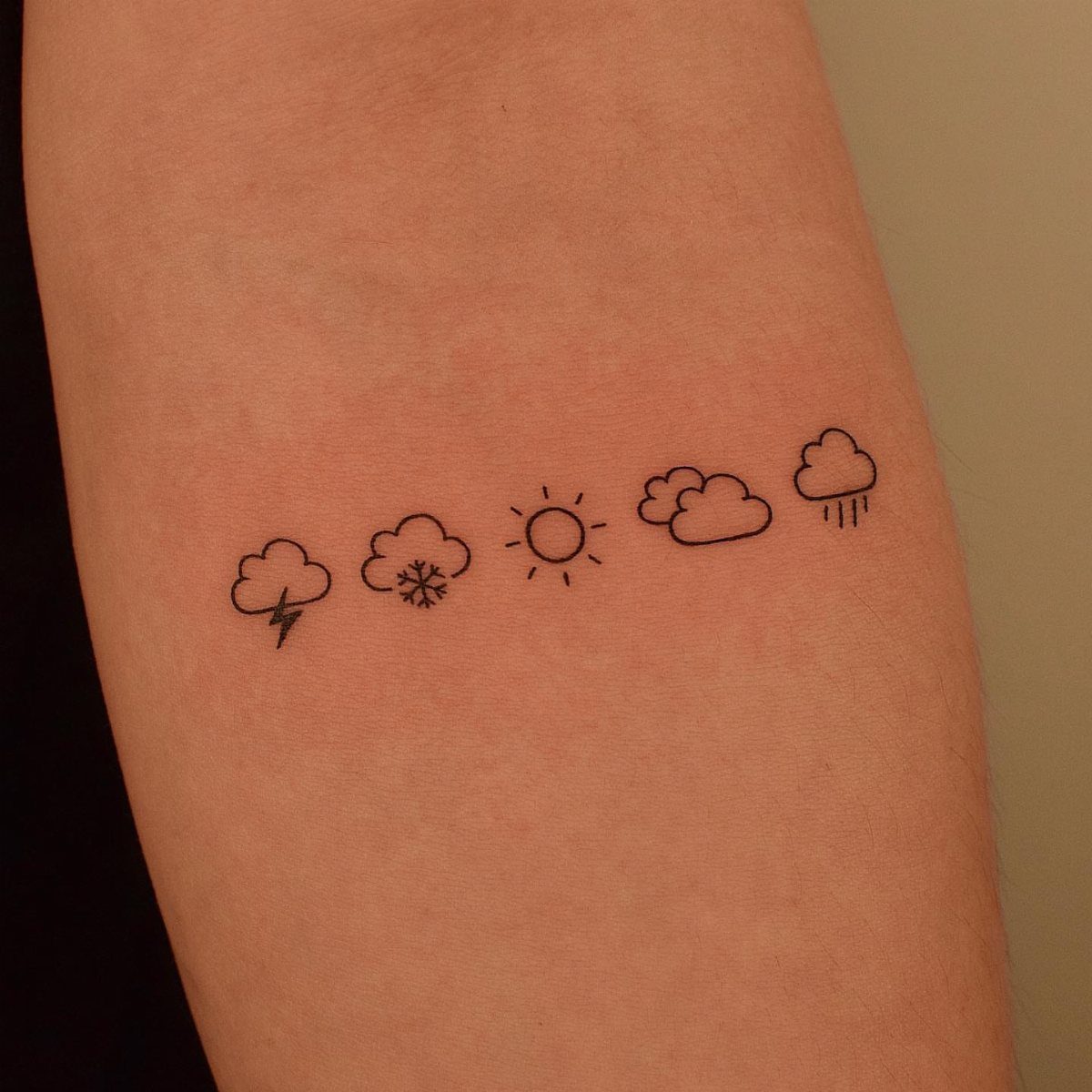
Fine lines reduce a storm cloud to its simplest form: an outline with one or two lightning bolts. The minimal approach works best at small sizes, where detail would blur, and suits wrists, ankles or the back of the ear.
Pairing the storm with other weather symbols, like sun or snow, gives you a set that tells a bigger story without enlarging any single piece. Each icon stays readable on its own.
Black ink fine lines fade faster than bolder work, so plan for a touch-up down the line if you want the lines crisp.
6. Japanese Storm Cloud Tattoo
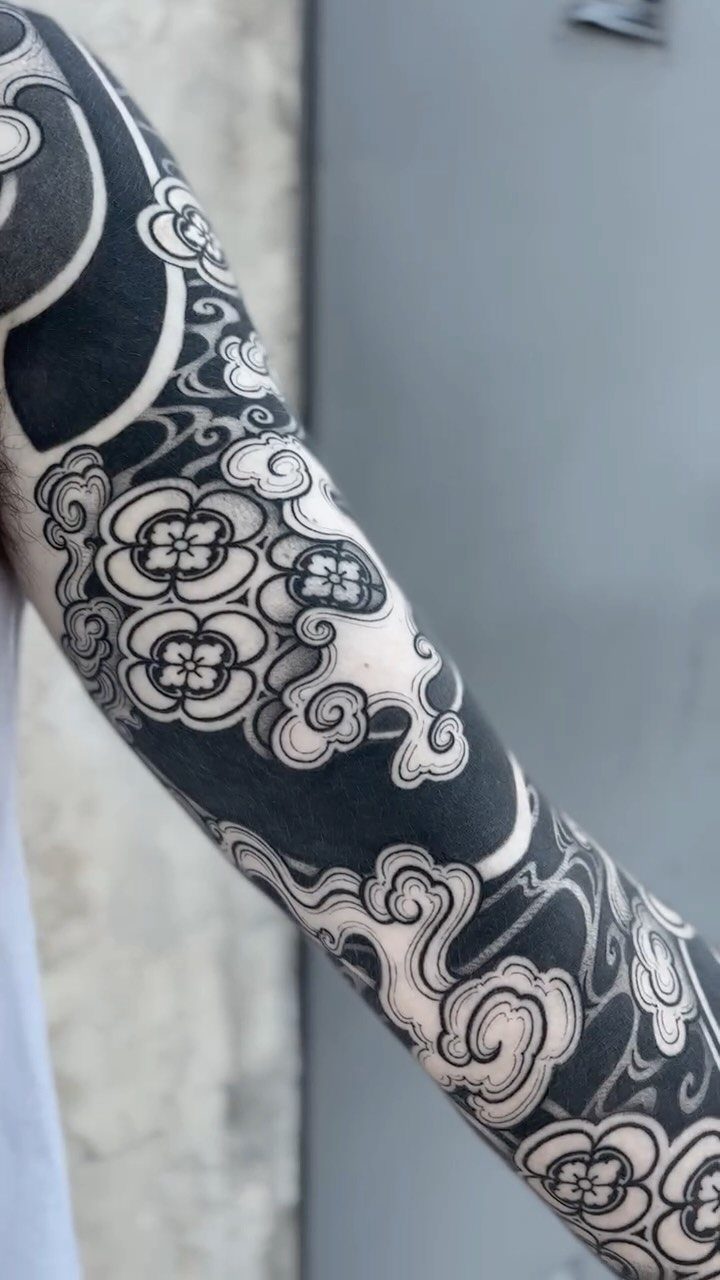
Japanese cloud patterns use stylized swirls and curves that differ from Western realism. The clouds sit flatter and rely on pattern repetition rather than shading to suggest depth, which ties into traditional woodblock prints.
Adding floral elements, like the patterns visible here, connects the storm to nature imagery common in Japanese tattooing. The black and grey palette keeps the design cohesive and lets the patterns stand out.
This style scales well to larger pieces because the swirls need room to develop their rhythm. Arms, thighs and backs give you the space for multiple cloud layers to stack and curve.
7. Clouds with Ocean Waves
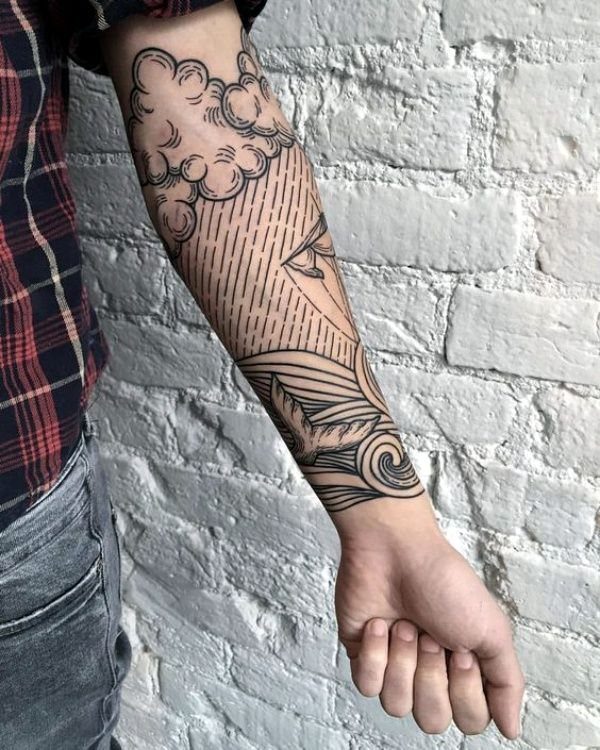
Pairing storm clouds with ocean waves stacks two sources of motion in one piece. The rain falls while the waves crash, and both elements move in different directions, which keeps the design from feeling static.
Black ink ties the two together and keeps the tattoo cohesive without needing color to separate sky from water.
If you want more contrast between the two, darker shading on the clouds makes the waves stand out lighter, or you can reverse it.
8. Realistic Storm Cloud Tattoo
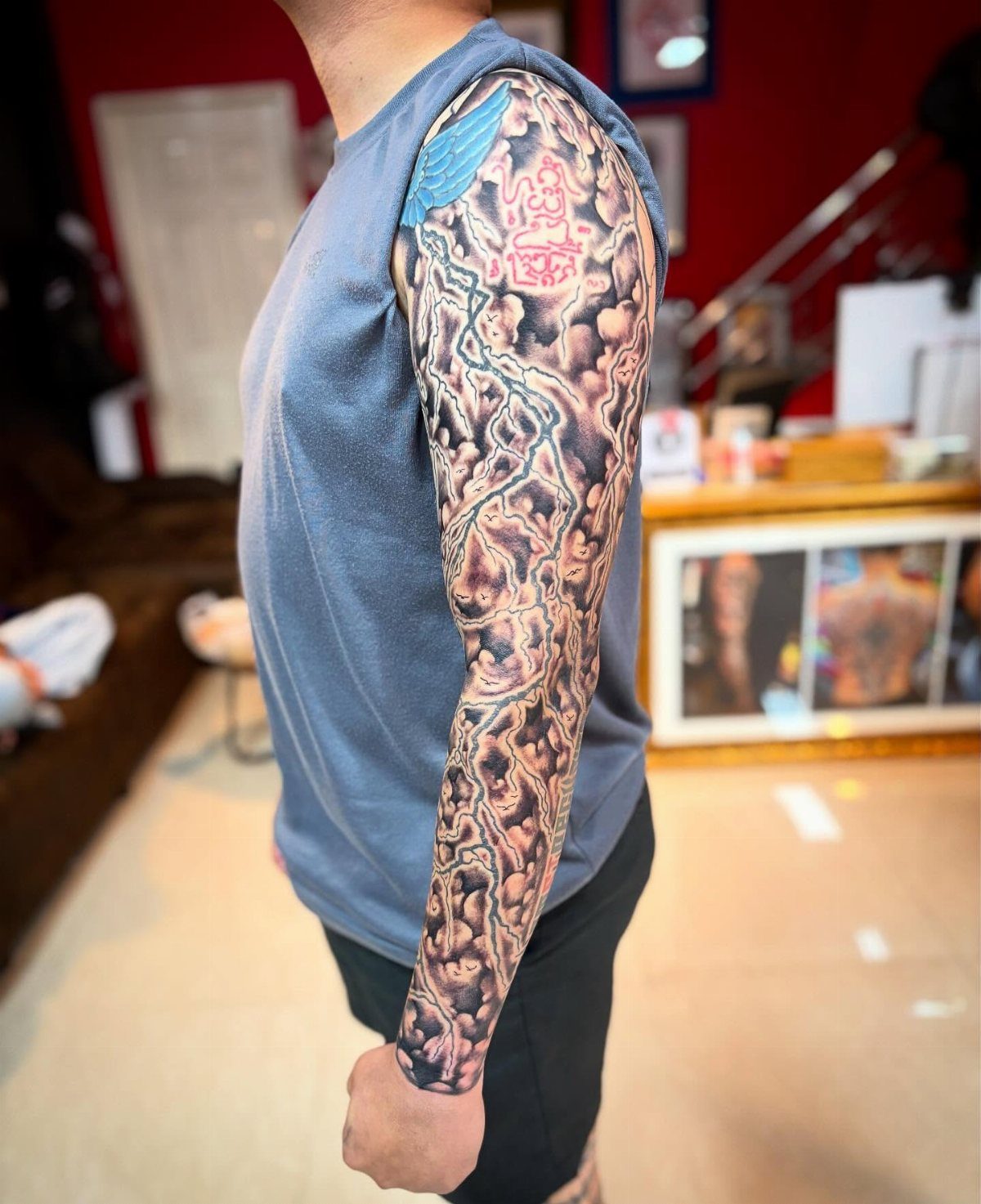
Realistic storm clouds rely on soft gradients and careful shading to capture the way light moves through a storm. The lighter edges around darker centers give depth, and the shading blends rather than stopping at hard lines.
A full sleeve gives the clouds room to develop their texture and lets you add elements like lightning or script while keeping each part readable.
The Arabic calligraphy visible here sits over the clouds and adds personal meaning without breaking up the storm itself.
This style takes longer to complete because the shading builds up gradually. Expect multiple sessions for a sleeve, and choose an artist experienced in realistic black and grey work.
Meaning of Storm Cloud Tattoos
Storm cloud tattoos carry weight because storms themselves do. They stand for inner turmoil and strength, the weight you carry and the power it takes to stay grounded when the pressure builds.
A storm passes, but the cloud that held it stays visible, which makes the image work as a marker of something survived or still underway.
The power angle matters too. Nature at full tilt commands attention, and a storm cloud distills that into a single shape.
Some people ink them for the aesthetic alone, the drama of dark shading and jagged lightning, but the meaning sits close to the surface either way.
Clouds shift and break apart in real weather. In a tattoo they hold still, which gives you a snapshot of turbulence frozen in place.
Placement Ideas for Tattoos
Forearms put the tattoo where you see it daily and where others notice it without effort. The flat surface works well for clouds that need even shading, and the vertical space suits lightning or rain falling downward.
Thighs offer more room if you want a larger piece or plan to add elements around the cloud later. The area stays private unless you choose otherwise, and the skin there handles shading with less distortion over time.
Placement there keeps the tattoo out of sun exposure most of the time, which helps the ink hold its tone longer.
The spot suits detailed work because the skin stays relatively flat and ages slower than areas that bend or stretch constantly.
Color Choices for Tattoos
Black ink forms the base of most storm cloud tattoos because it holds detail and reads as shadow without needing explanation.
Grey fills in the mid-tones and lets you build depth through layering, moving from near-black at the cloud’s center to lighter edges where light would hit.
Lightning changes the palette. White ink makes the bolt bright against darker clouds and works on medium to dark skin tones where yellow might not show up as cleanly.
Yellow gives lightning a warmer, more saturated look and pairs well with black and grey clouds if you want one element in color.
Some designs use both, layering white at the bolt’s core with yellow around it for a glow effect.
Shading technique matters more than color count. Smooth gradients make clouds look soft and realistic, while harder transitions suit traditional or illustrative styles.