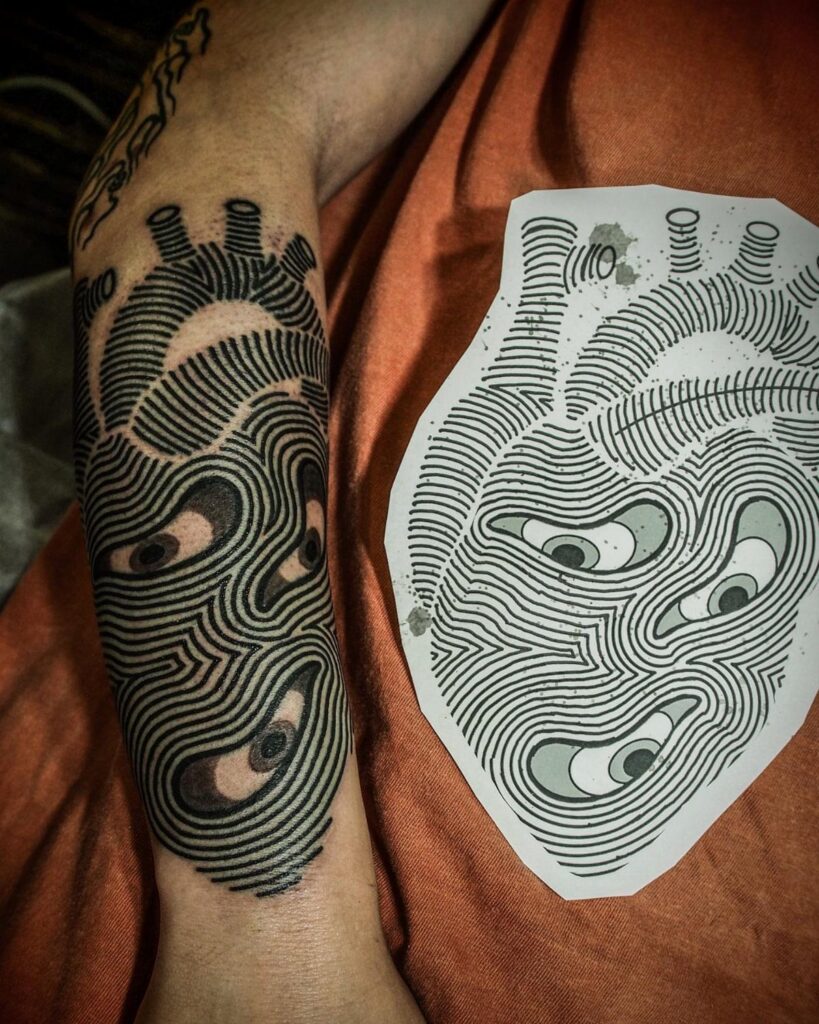
The eye lands inside the heart, outside it, or tucked into an anatomical chamber, and that choice decides how much detail the design can hold.
Red brings the valentine look without turning the piece too dark, adding flames or tears shifts the tone from graphic to narrative, and the Sacred Heart version sits somewhere between both.
1. Black Ink Heart with Eye
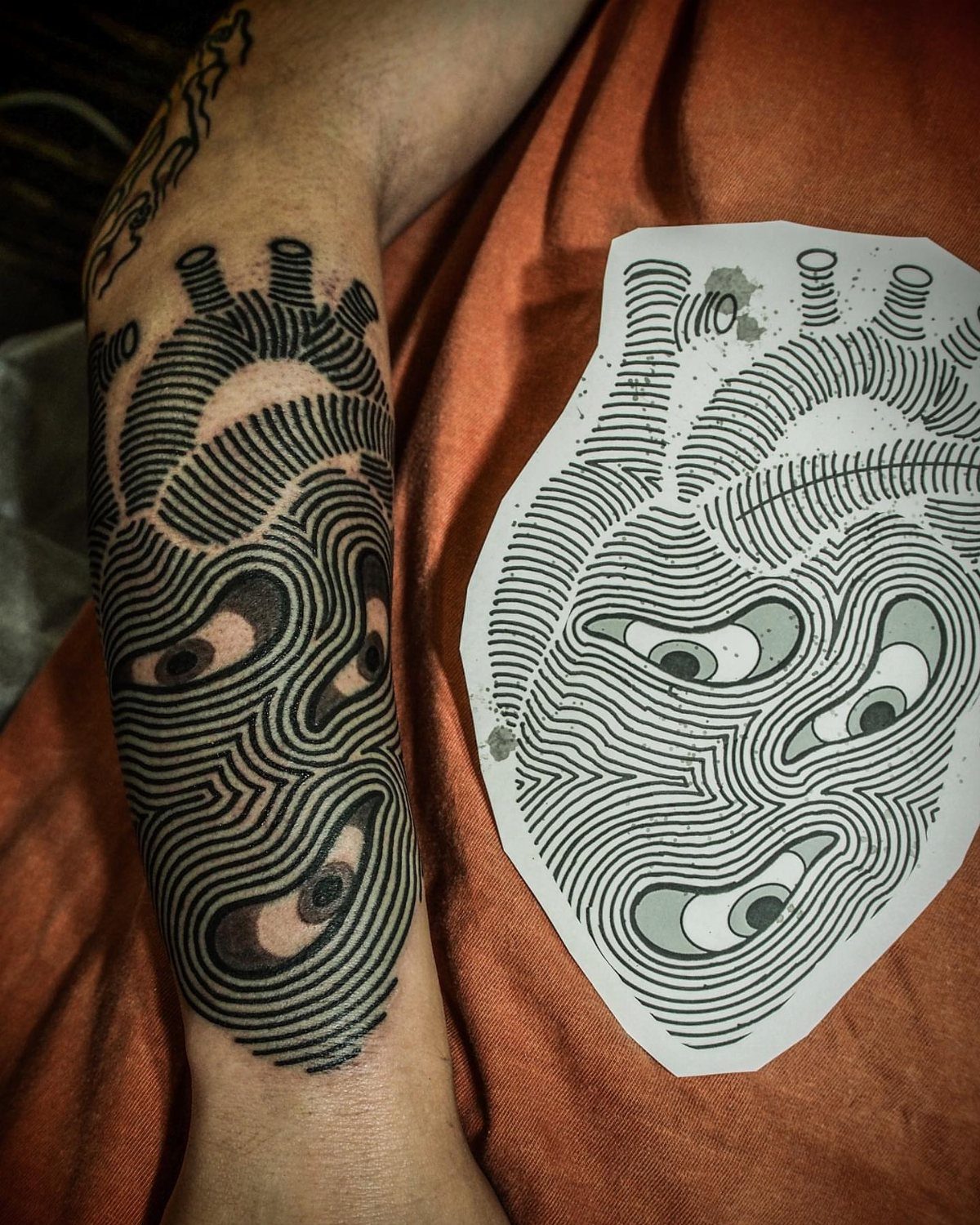
The eye sits in the center of the heart, often rendered with full realism while the heart outline stays graphic.
Black ink puts all the attention on linework and contrast, and working in one color lets an artist pack more detail into a small design.
Forearm placement gives you room to show the eye’s detail without cramping the design. Wrist and hand are also common, though the eye may lose clarity at that size.
2. Anatomical Heart with Eyes
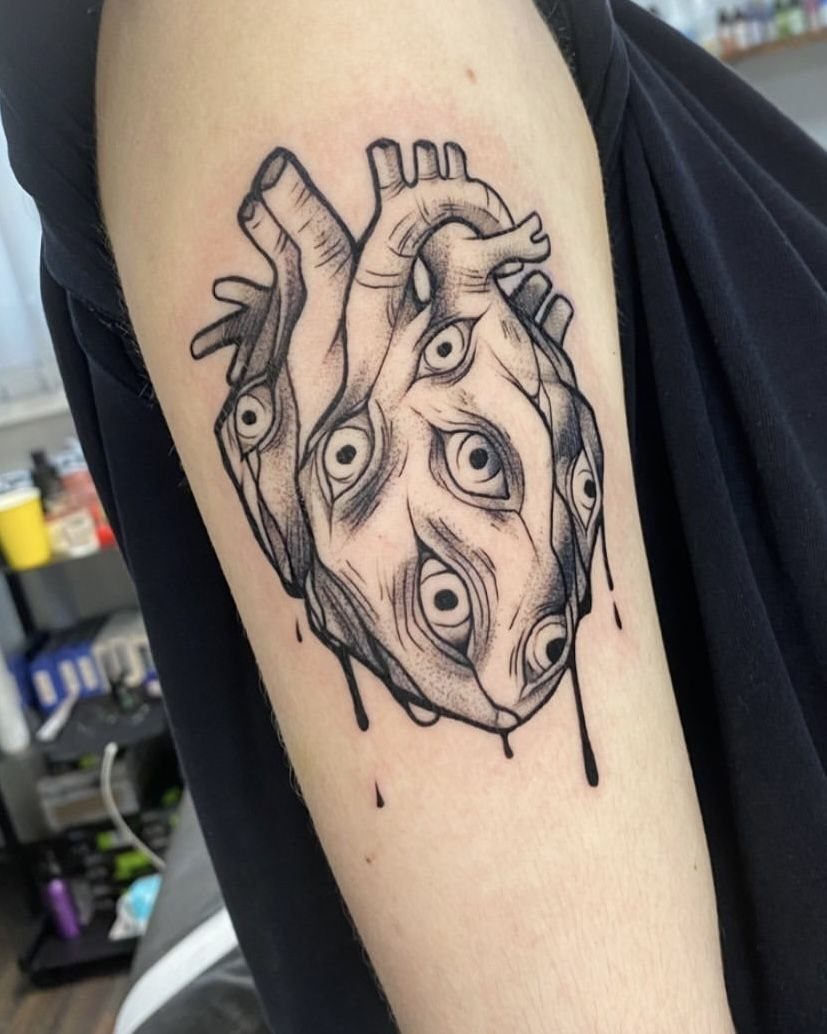
An anatomical heart replaces the simple valentine shape with chambers, veins and arteries, and the eyes are placed across the surface. Some versions scatter them randomly, others line them along the vessels or tuck them into the ventricles.
Upper arm and thigh offer the canvas this needs. The detail in an anatomical heart doesn’t read well at smaller sizes, and adding multiple eyes requires even more space.
3. Sacred Heart with Eye
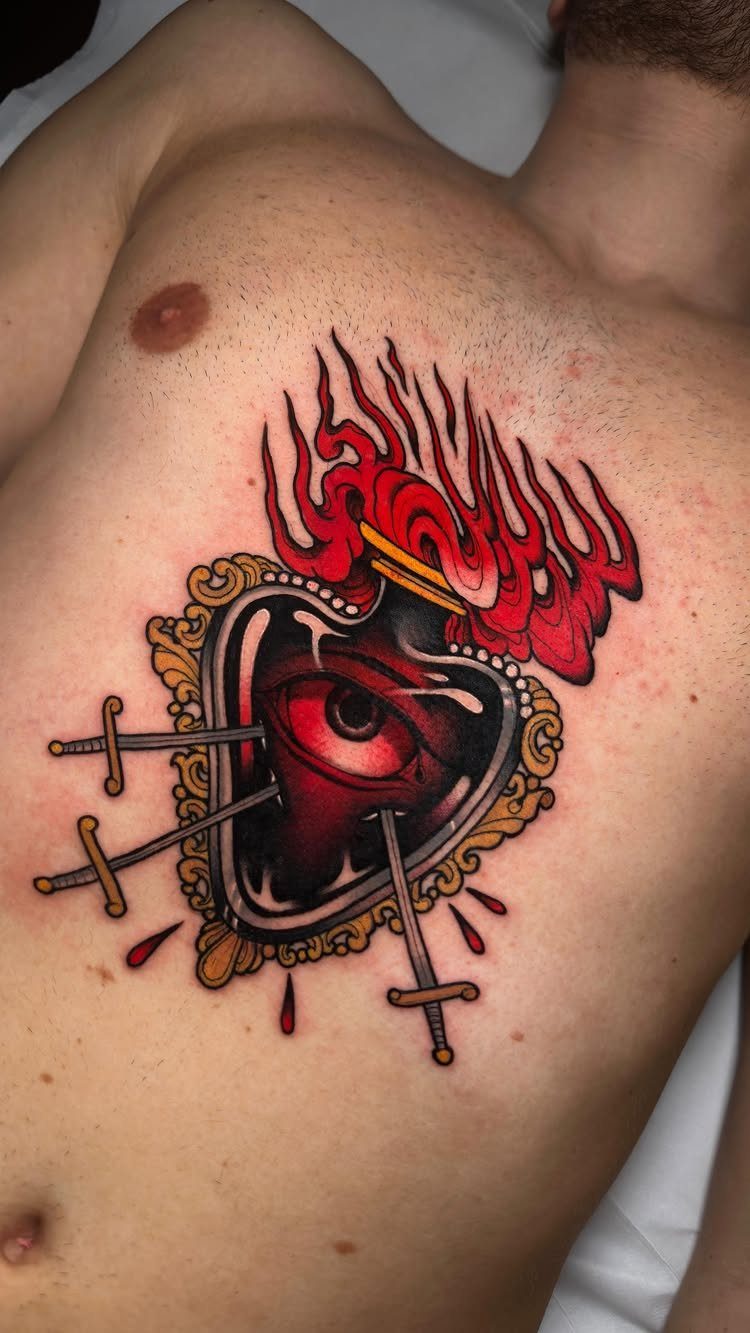
The sacred heart brings flames, a frame, and often a set of swords or thorns.
Adding an eye in the center turns the religious symbol into something more layered, with the eye reading as protection, awareness or judgment depending on what you bring to it.
Torso placement keeps the proportions right. The frame and flames need width, and cramming them into a smaller area flattens the composition.
4. Heart with Eye and Teardrop
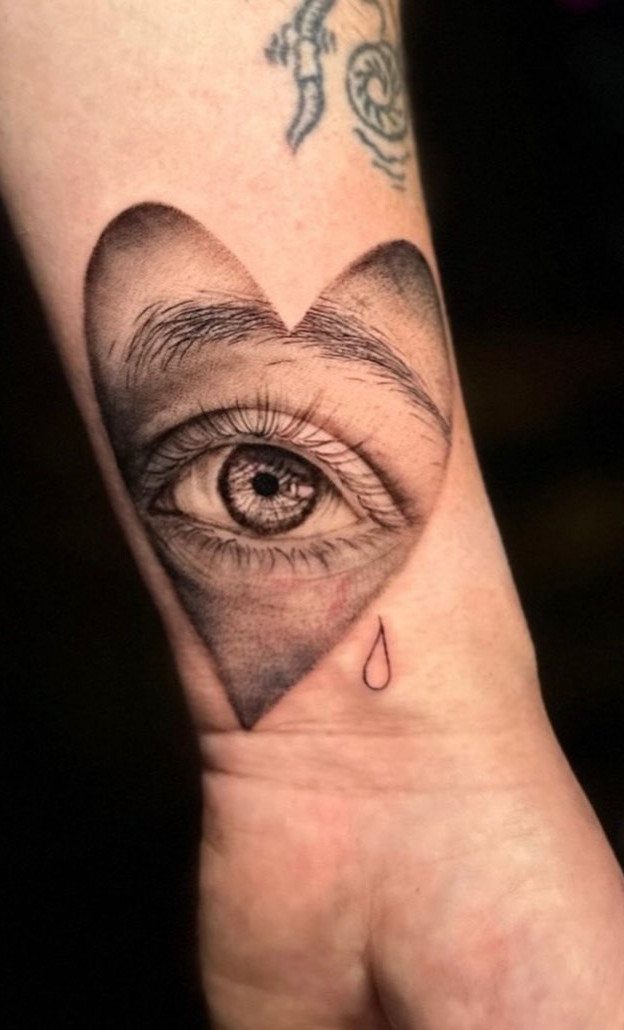
A teardrop adds weight to the design. It can signal loss, empathy or sadness, or just balance the composition if you prefer it without a specific meaning.
Wrist placement keeps this one intimate. The smaller size limits how much detail the eye can hold, so talk with your artist about whether to go realistic or stylized.
Black and grey softens the look and ages more predictably than color on the wrist, where ink tends to blur faster.
5. Red Heart with Eye
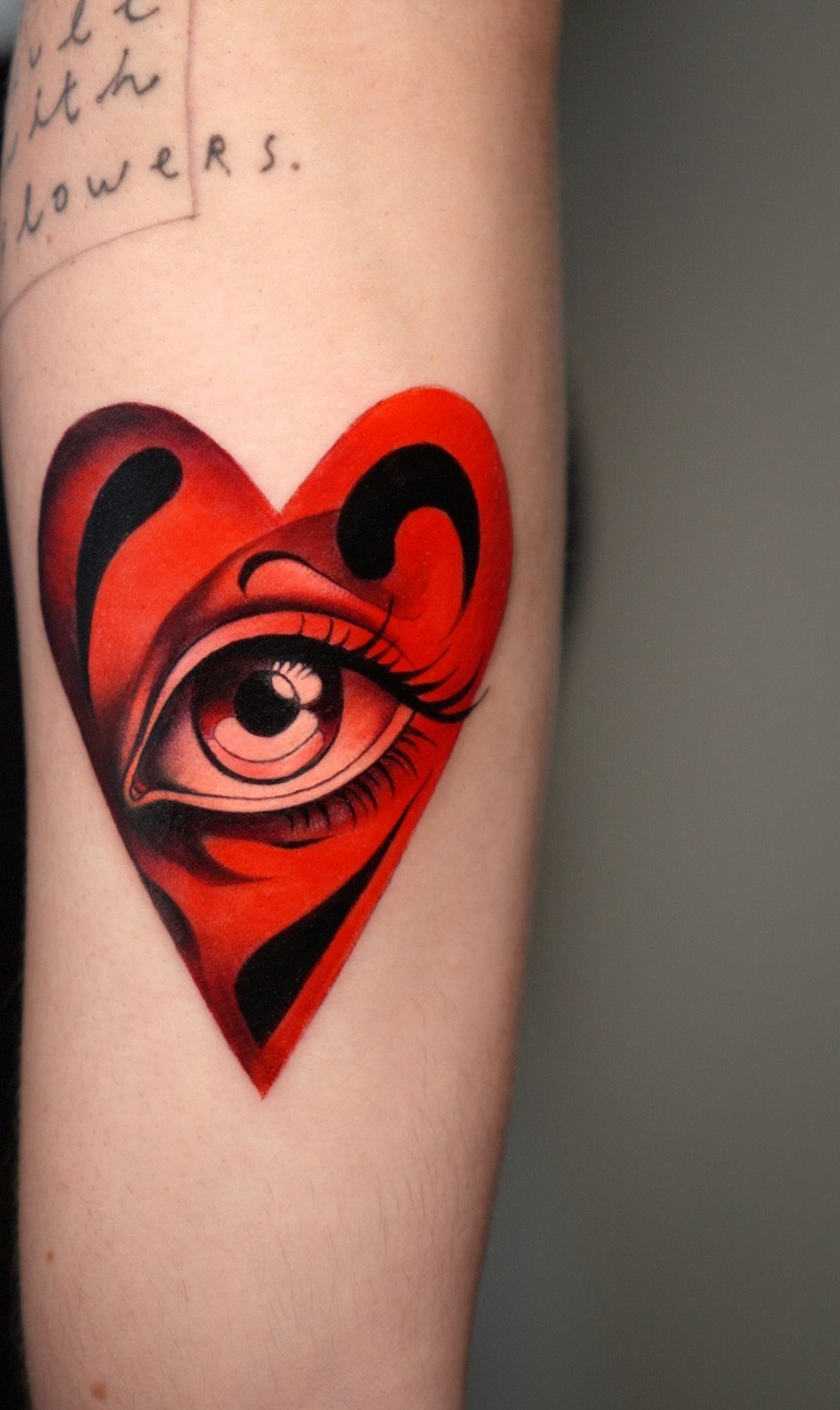
Red ink gives the heart its valentine look while the eye stays black and grey. The contrast makes the eye stand out, and the color stops things from feeling too dark or heavy.
Solid red lasts longer than shading. A heart this size filled with gradient or watercolor will fade unevenly, and touchups are harder to match.
6. Heart with Central Eye and Flames
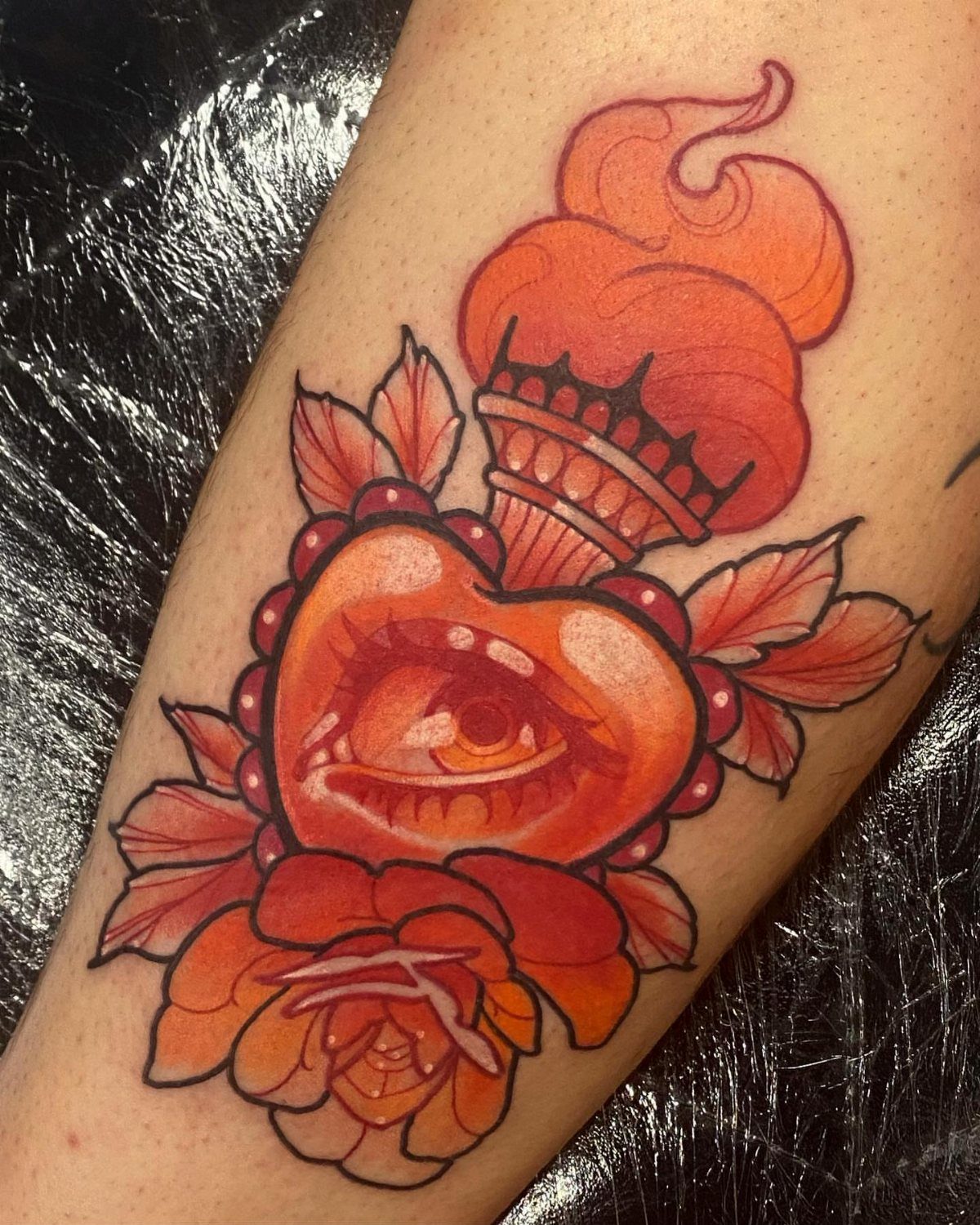
Flames at the top pull the eye upward and add movement to what would otherwise sit static. The roses and leaves frame the heart, and the orange and red tones keep the whole piece warm.
This needs space.
A design with this many elements won’t read well at smaller sizes, and the flames need room to taper without looking stubby. Shoulder, thigh or upper arm all work.
7. Crying Eyes with Hearts
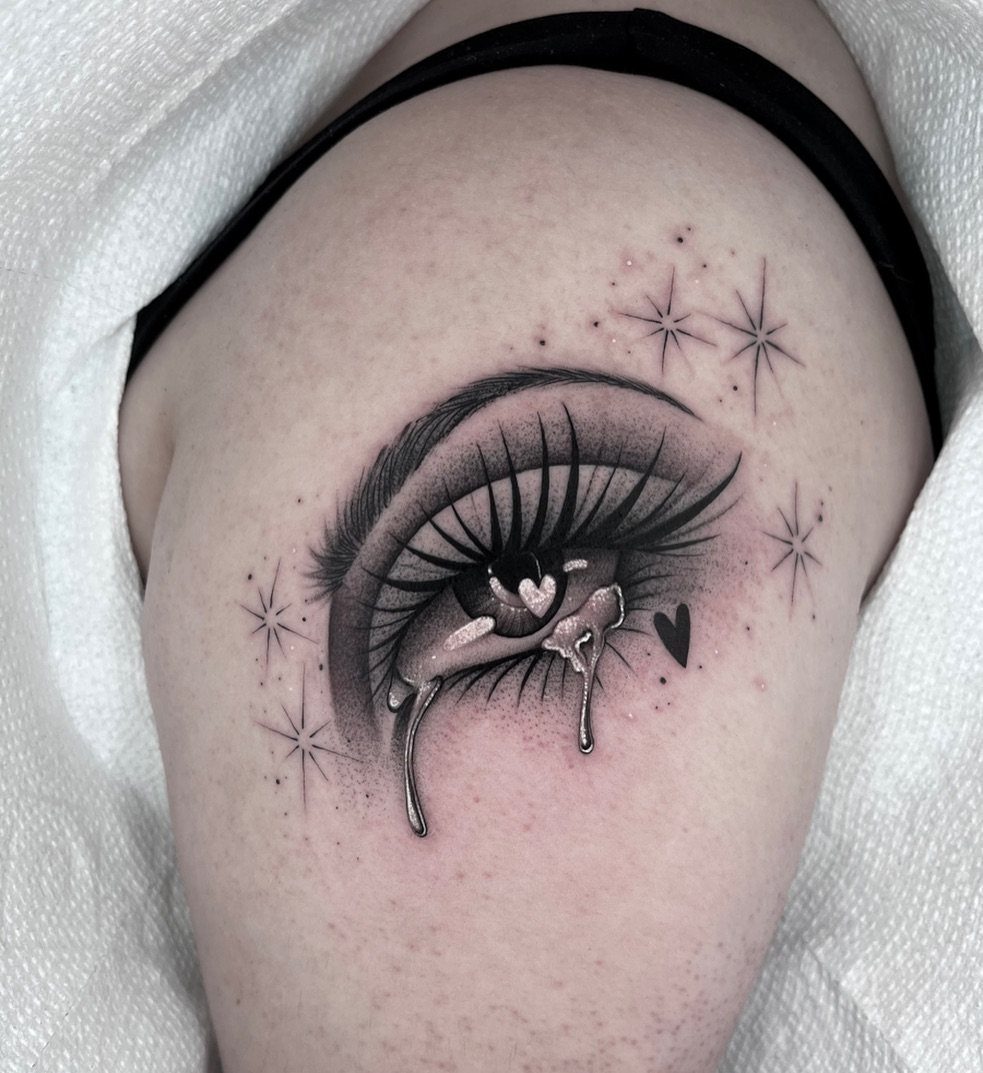
The heart sits inside the pupil, turning the eye into something more vulnerable. Tears add the narrative weight, and the stars fill the negative space while keeping the composition open.
Hip placement keeps this one private.
Black and grey ages cleanly here. Fine linework in the lashes stays crisp when the artist keeps the needle shallow, and a lighter hand on the shading means fewer touchups down the line.
8. Hearts and Stars with Eyes
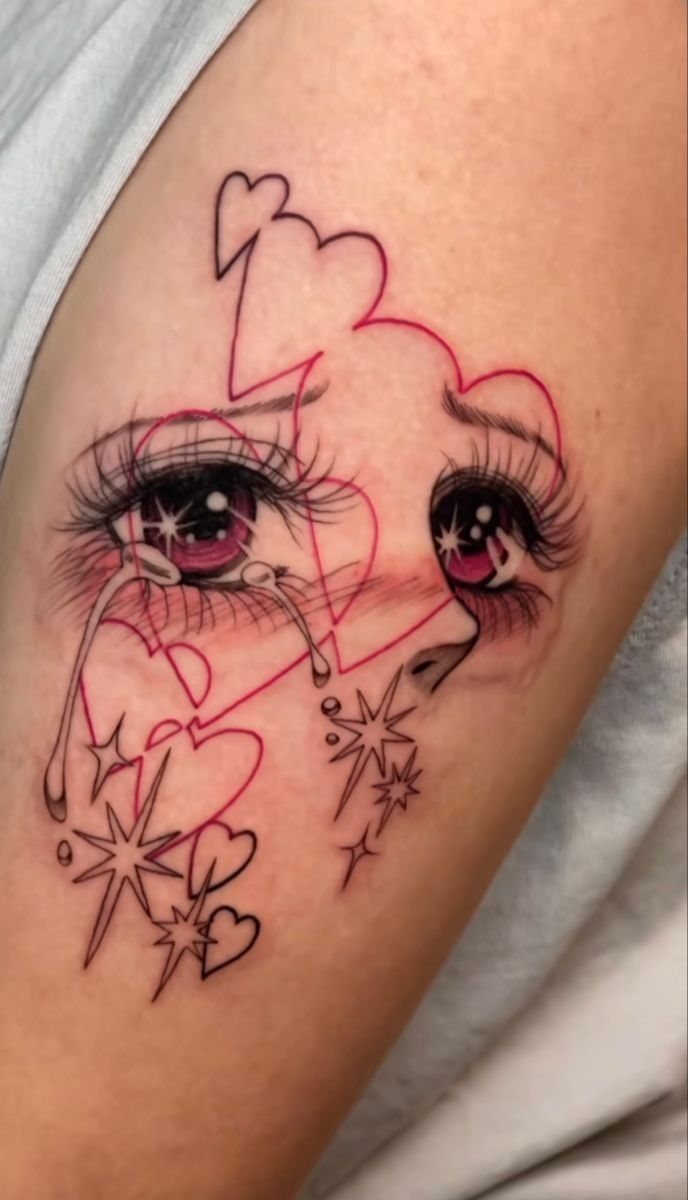
The hearts sit outside the eyes rather than inside them, which spreads the composition wider and gives you more freedom with placement. The anime approach leans on heavy outlines and flat color, which keeps the eyes graphic rather than realistic.
Red outlines on the hearts add a second color without committing to solid fills. The contrast pulls attention, and leaving the hearts hollow means less ink, which translates to a shorter session and faster healing.
Forearm works well for this layout. The horizontal spread fits the natural shape of the arm, and you can see the whole design without rotating your wrist.
Frequently Asked Questions
What does the heart with an eye symbol mean?
The heart with an eye typically represents love combined with awareness, protection or perception. Some people read it as watchful devotion, others as emotional insight, and the meaning shifts depending on what else surrounds it.
Adding flames, tears or religious framing changes how the eye reads, but the core idea stays the same: seeing and feeling at once.
What does a blue heart tattoo mean?
A blue heart often signals calm, loyalty or emotional depth rather than the passion a red heart carries.
When paired with an eye, blue tones soften the design and keep it from feeling too intense. The color choice affects mood more than meaning, and most people pick it because they prefer the palette over any specific symbolism.