Placement decides how visible the design stays day to day and how often the forehead piece or the arm band draws questions.
An arm band heals in 2 weeks and hides under long sleeves when needed, while a forehead or neck piece draws constant attention and closes doors in fields with dress codes.
Fine-line barbed wire suits tighter spaces and reads cleaner than bold traditional work, but those thinner lines lose sharpness sooner and need a touch-up when they start to soften.
1. Barbed Wire Heart
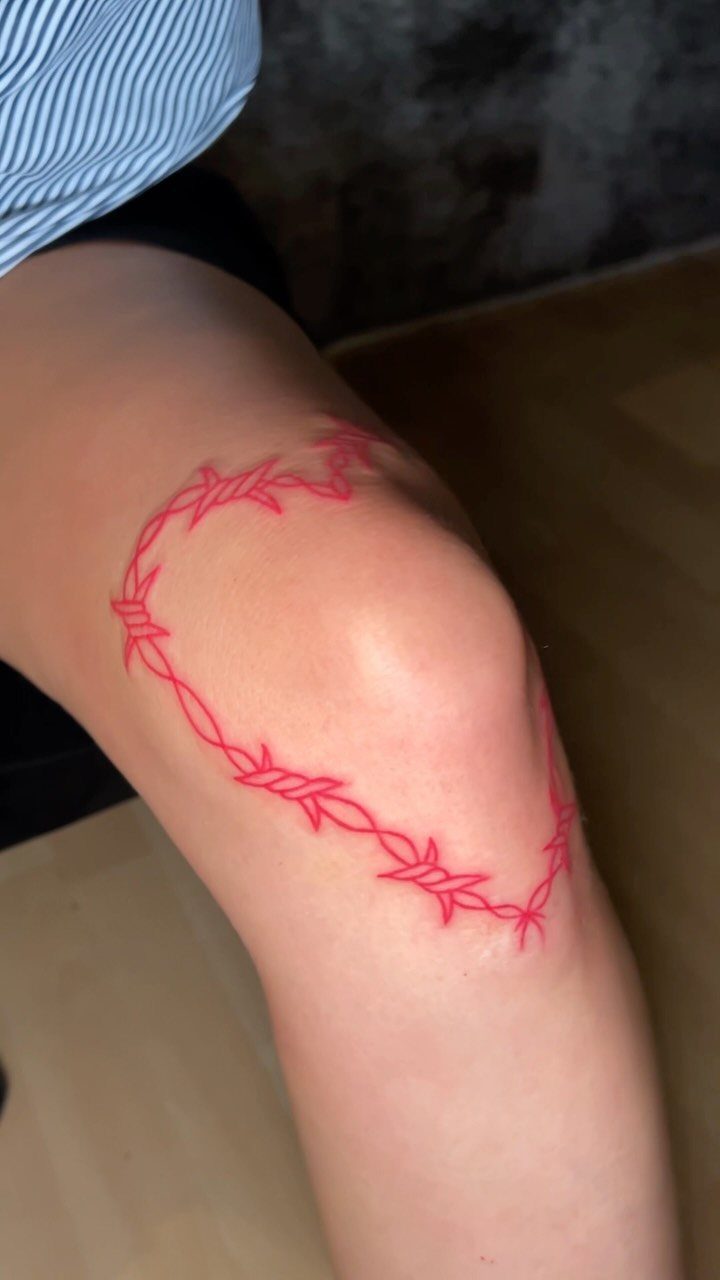
A barbed wire heart puts 2 symbols together: protection and connection, defense and feeling. The wire forms the outline of a heart, with the barbs pointing outward.
Red ink makes the image softer than black, which is the usual choice for barbed wire. The color shifts the meaning slightly, closer to blood and pulse than to metal and boundary.
Placement on the knee works for visibility in shorts or skirts while staying covered most of the time.
The skin moves a lot there, so expect the lines to need a touch-up after a few years. Anywhere else with more stable skin will hold the detail longer.
2. Barbed Wire Wrapped Around an Arm
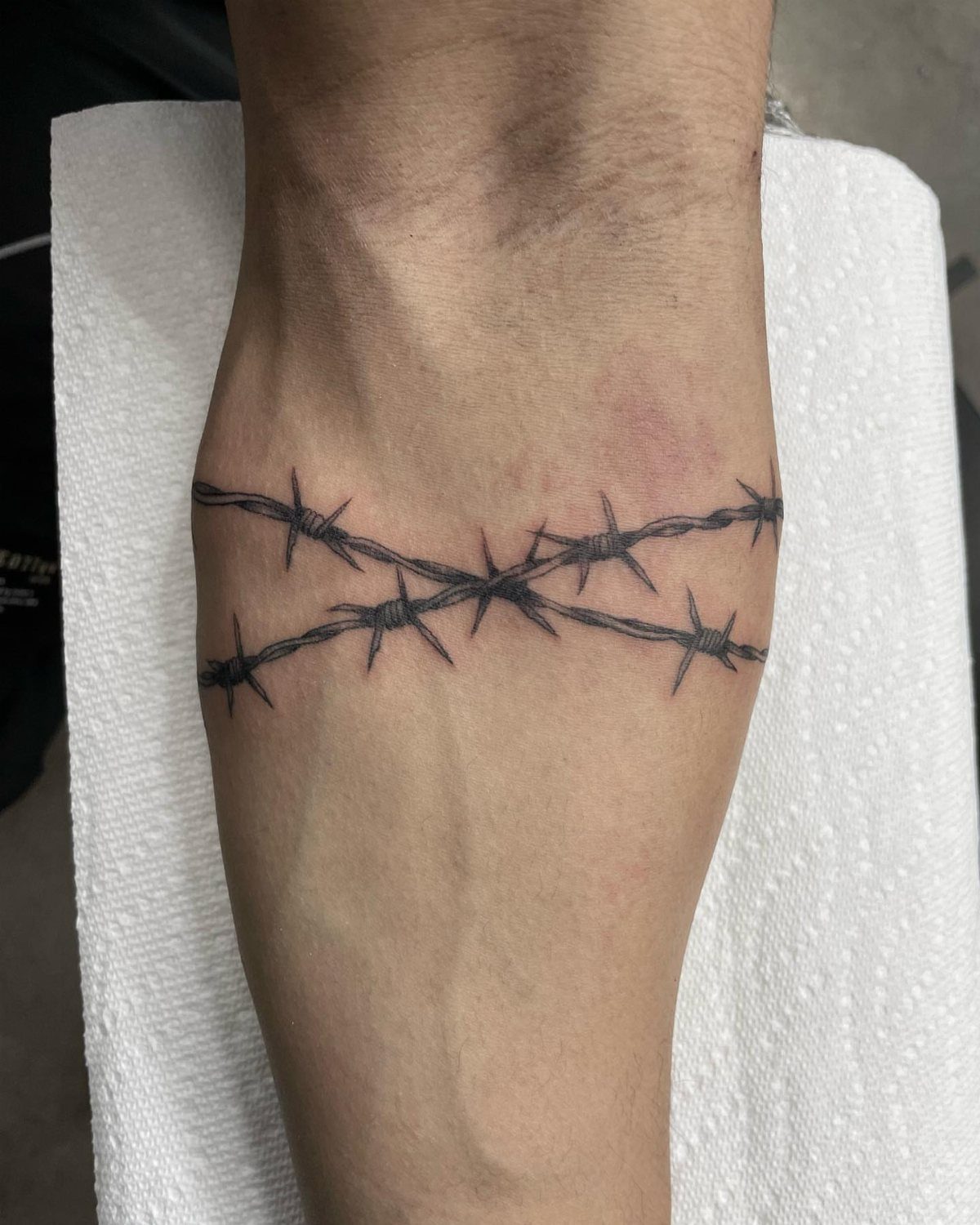
Wrapping the wire as a band gives it the look of restraint or boundary. The design follows the contour of the limb, usually placed on the forearm where it sits visible.
Black ink keeps it sharp. The band can run as a single loop or stack 2 or 3 strands close together, which fills more space and reads from farther away.
This placement heals faster than spots with thinner skin.
Pain is moderate on the forearm. Cost depends on size and detail.
3. Barbed Wire Tattoo on the Arm
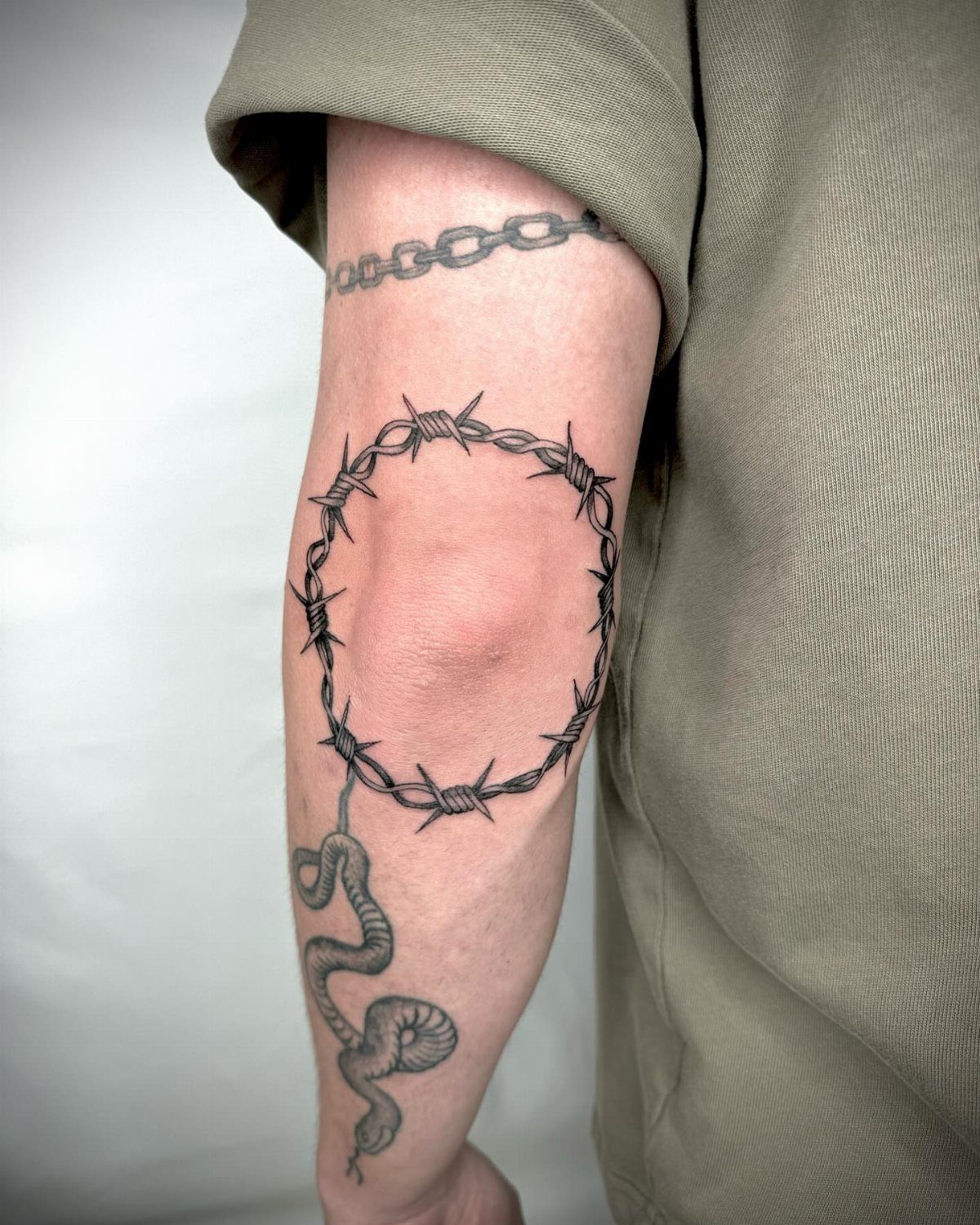
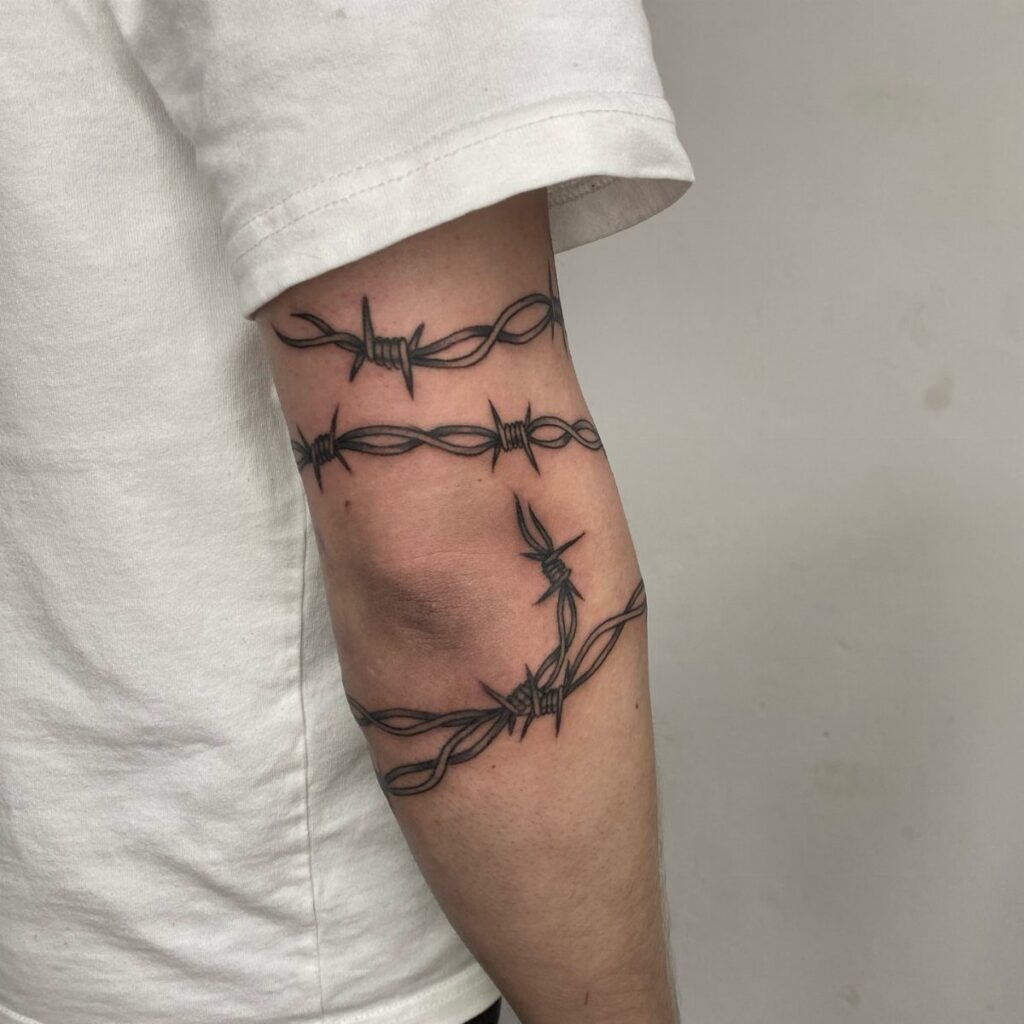
Barbed wire circling the bicep or elbow adds a raw edge to sleeve work. It often sits between other pieces, acting as a divider or transition.
The elbow is tougher to tattoo than the bicep. Skin stretches and folds there, and the bone sits close to the surface.
Pain is higher, around a 6 or 7 out of 10. Healing takes longer because the joint bends constantly, so plan on 2–3 weeks of careful movement.
Stacking it with other imagery, like a chain or a snake, gives the wire context.
On its own, it reads as a boundary marker. Either way, it suits an arm that already has ink or plans to add more.
4. Neck Tattoo
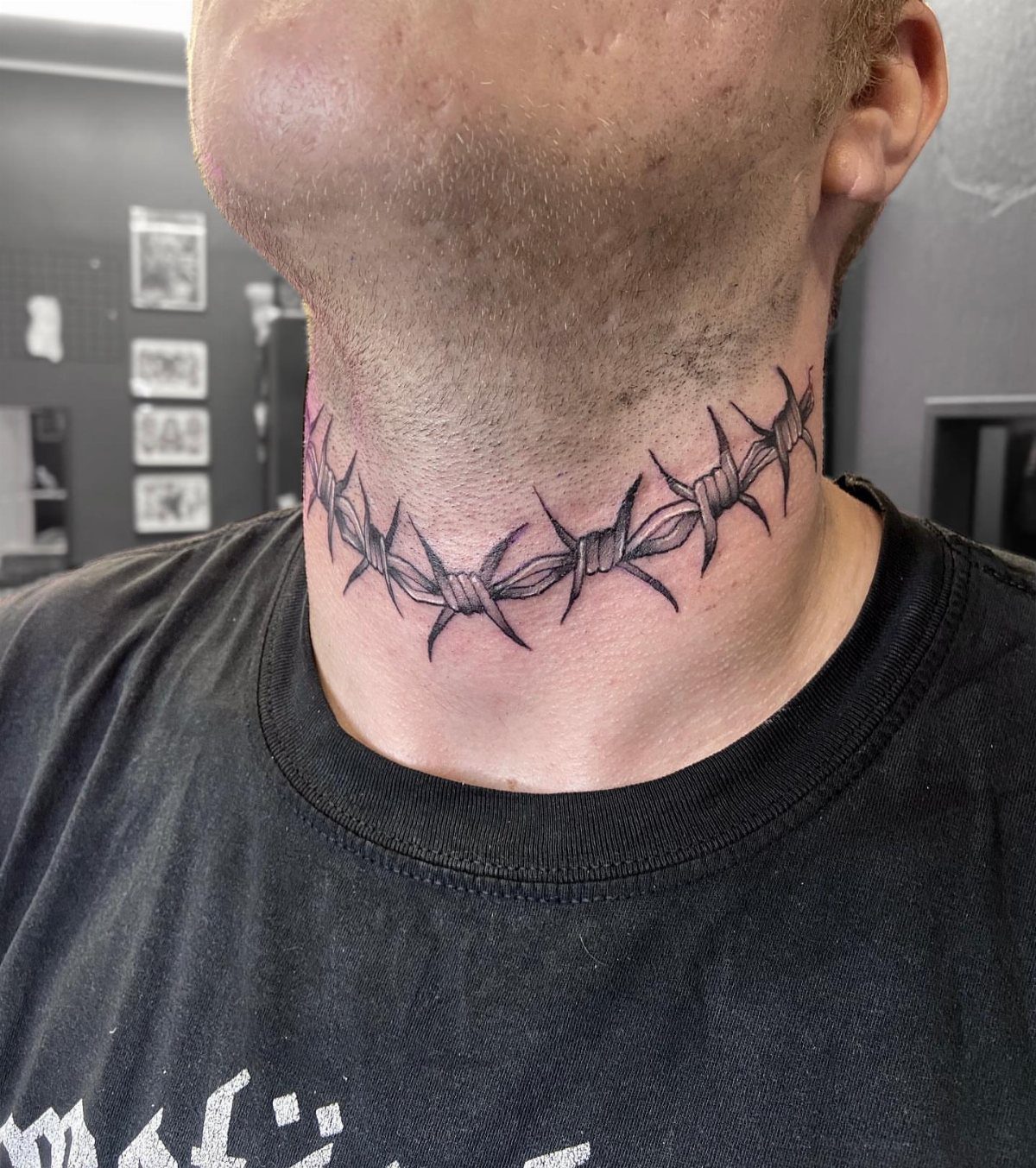
A neck tattoo puts the wire where everyone sees it. The design wraps around the throat, following the natural line where a collar would sit.
Pain is high here, around a 7 out of 10.
The skin is thin, and the vibration from the needle travels through the neck. Healing happens quickly, but rubbing from shirts or scarves can slow it down.
Visibility is the trade-off.
A neck tattoo limits job options in fields with dress codes. If that does not apply, the placement works.
Black ink is standard. This skin moves with every turn of the head, so placement and line weight need careful planning.
5. Chest Tattoo
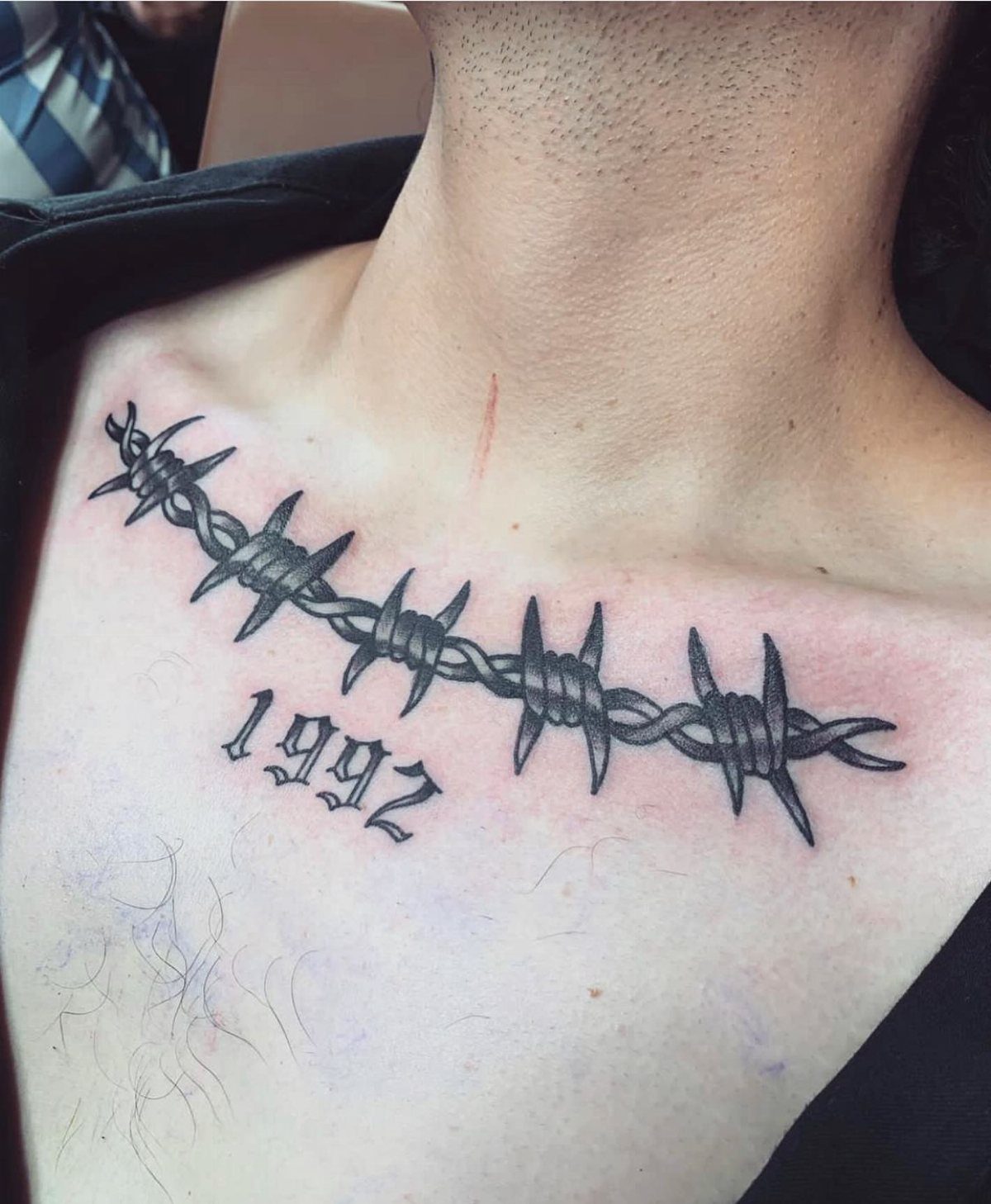
The chest gives room for barbed wire paired with text or dates. The wire often frames lettering, running across the collarbone or sternum in a horizontal line.
Pain varies by spot. The collarbone sits close to bone and hurts more than fleshier spots.
The center of the chest, over the sternum, is worse, closer to an 8. The pectoral muscle is easier, around a 5.
Adding a year in gothic or blackletter font ties the wire to a specific memory. Placement over the heart side carries more symbolic weight, though it does not change the technical side.
6. Leg Tattoo
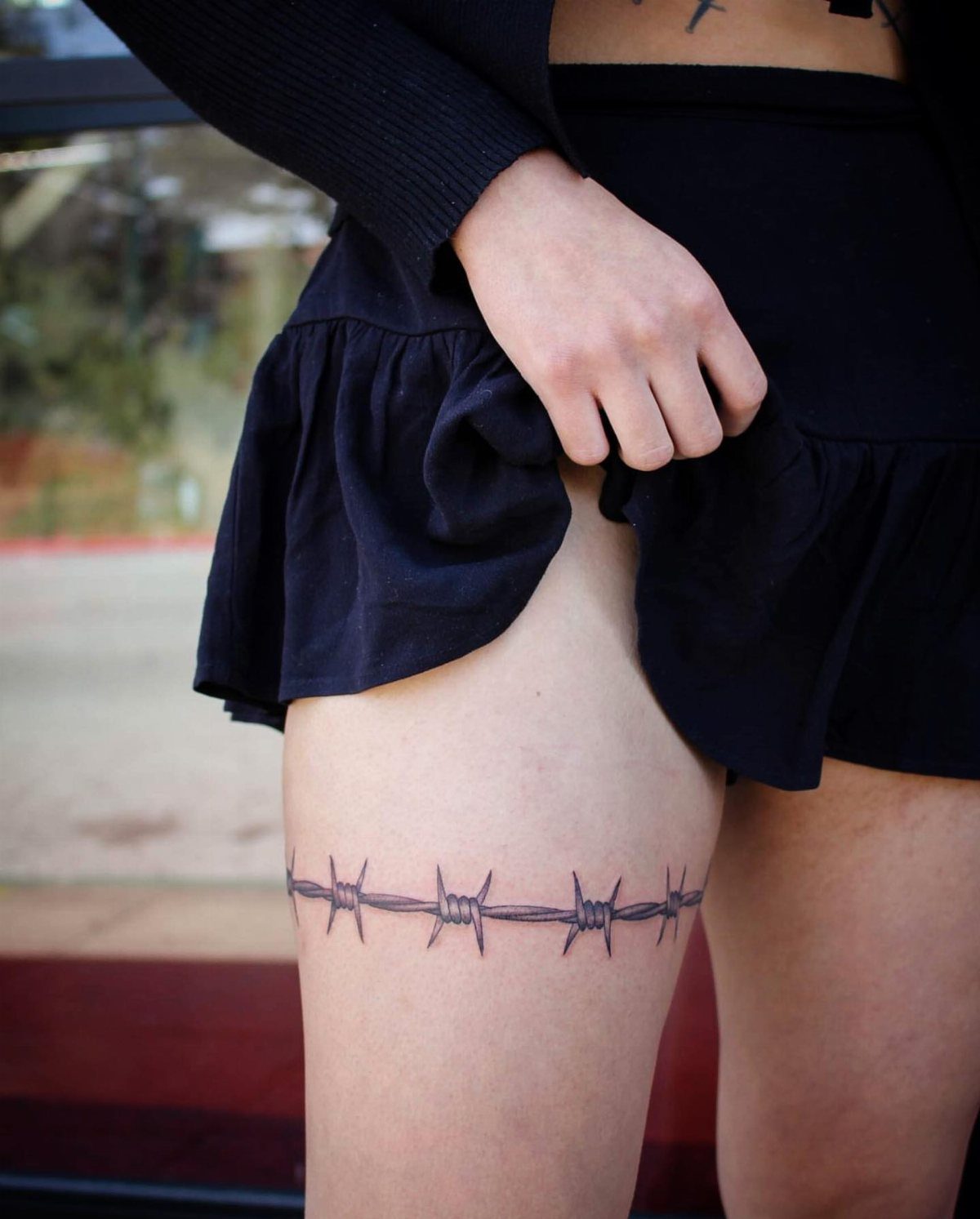
The thigh offers a large, flat surface that holds barbed wire cleanly. The design can wrap around the leg in a band or run vertically along the outer or inner side.
Pain is low here.
The muscle cushions the needle, and the skin is thicker than on the arm or ribs. Healing takes about 2 weeks, with minimal interference from clothing if you wear loose pants or skirts.
This placement hides easily under most clothes but shows in swimwear or shorts.
A wrapped band sits higher on the thigh, closer to the hip, while a straight line works better along the side. Cost depends on whether the wire includes additional detail or shading.
7. Tattoo on the Foot
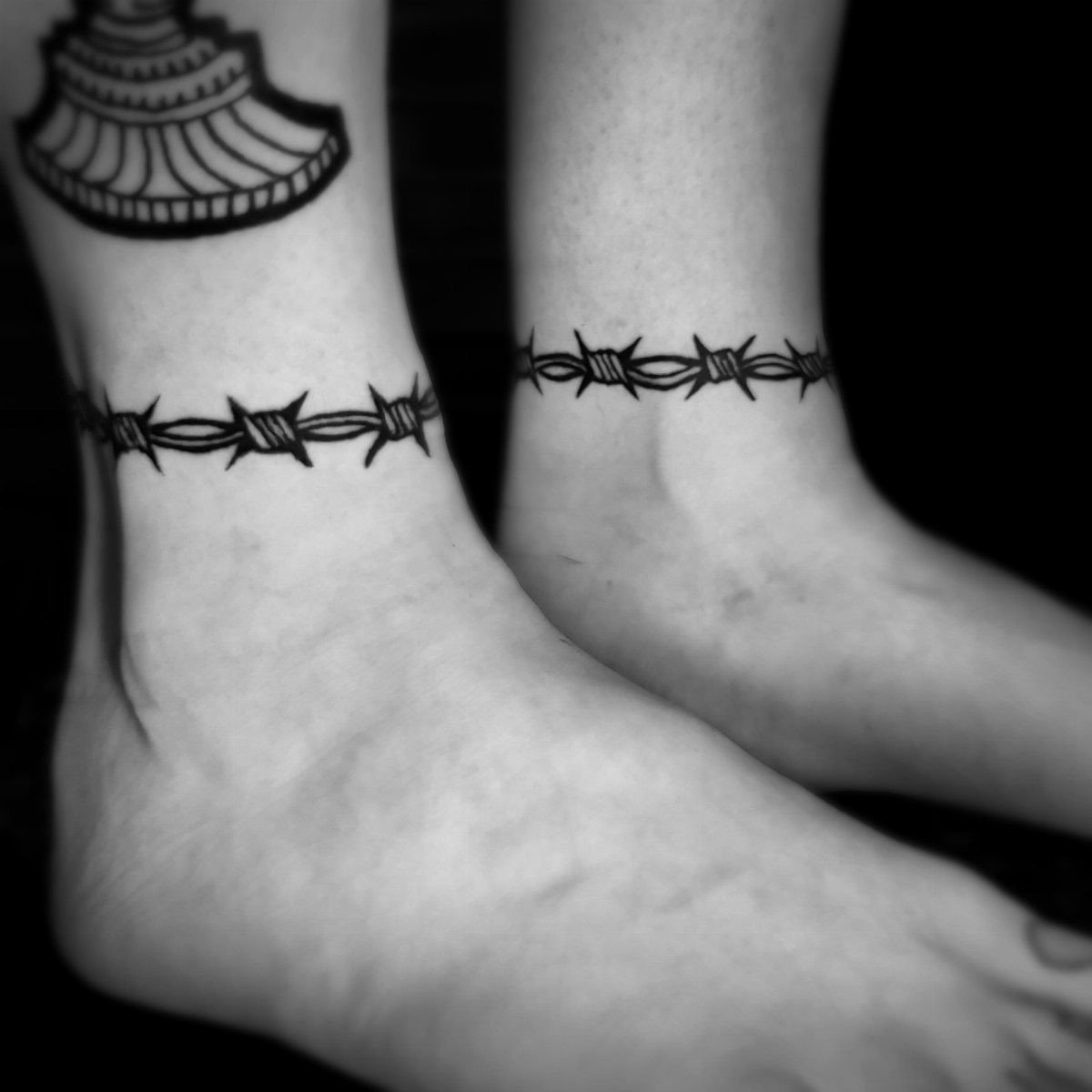
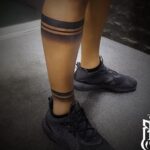
Wrapping barbed wire around the ankle places the design where it reads as a band or restraint. The circle follows the bone, sitting low enough to show with sneakers or slip-ons.
The foot sits in the middle range for pain.
The skin is thin and the bone sits close, but the area is small enough that sessions stay short. Healing takes 2 weeks, longer if shoes rub the fresh ink.
Matching designs work well on this spot. Two people can wear the same wire at the same height, which makes the symbolism clear without adding extra imagery.
8. Fine-line Barbed Wire Tattoo
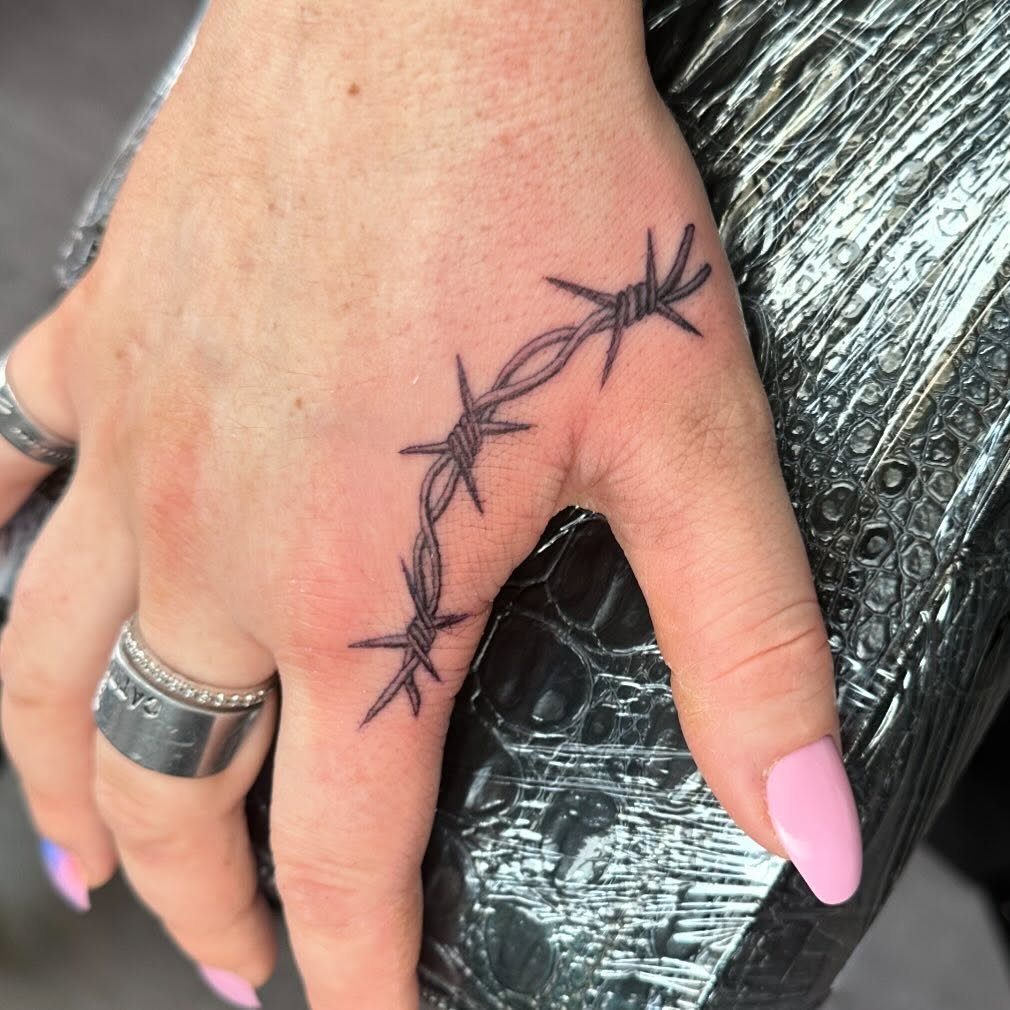
Fine-line barbed wire trades thickness for precision. The wire runs thinner than a standard tattoo, with smaller barbs that sit closer together.
This style suits hands, wrists or fingers, where space is tight and bold lines can look clumsy.
The back of the hand, between the knuckles and wrist, is a common spot. Pain is high there, around a 7, because the skin is thin and the bones sit right under it.
Fine lines lose sharpness sooner than bold work. Plan on a touch-up when the lines start to soften, especially if the piece gets regular sun.
9. Traditional Barbed Wire Tattoo
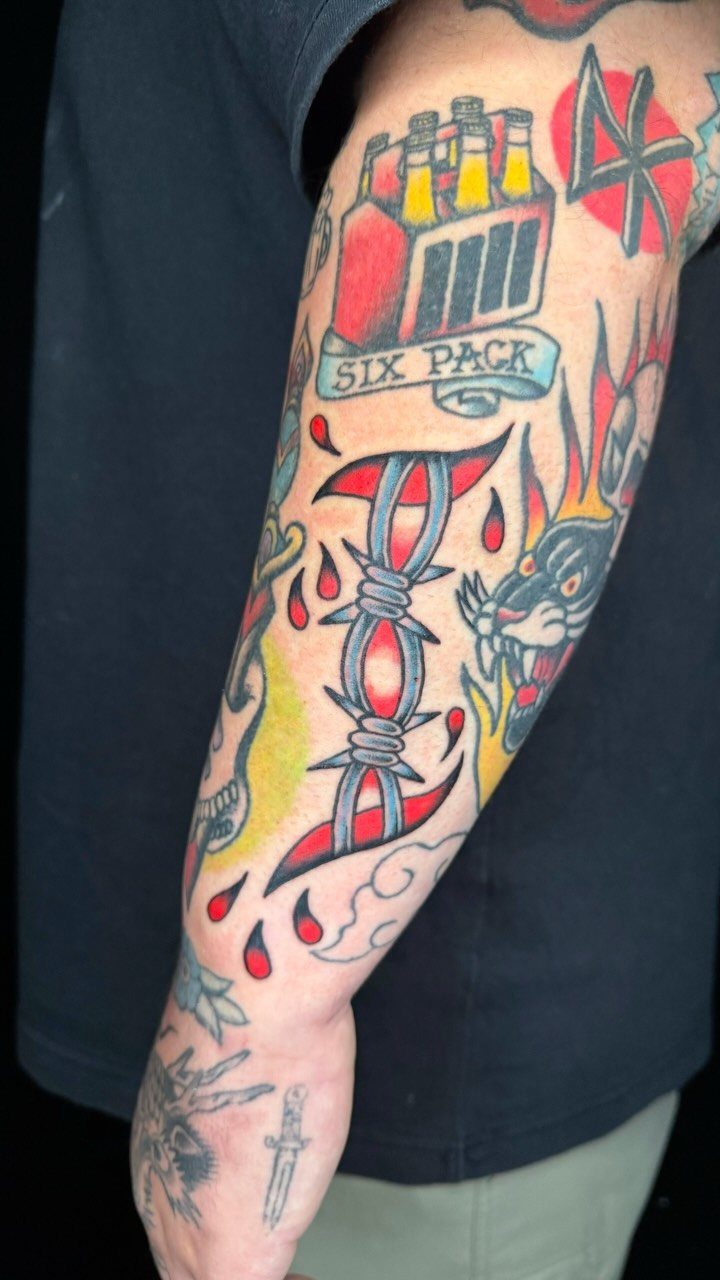
Traditional barbed wire uses bold black outlines and minimal shading. The barbs are bigger and more angular than in other styles, with clean separation between each spike.
This version fits into American traditional sleeves or flash sets.
The thick lines hold up well over time and stay readable even when you’re not up close. Placement around the bicep or tricep works, especially alongside other traditional images like animals, bottles or text.
Color stays optional. Most traditional barbed wire sticks to black, but red or grey can fill the spaces between the barbs if the design needs contrast with surrounding ink.
10. Forehead Barbed Wire Tattoo
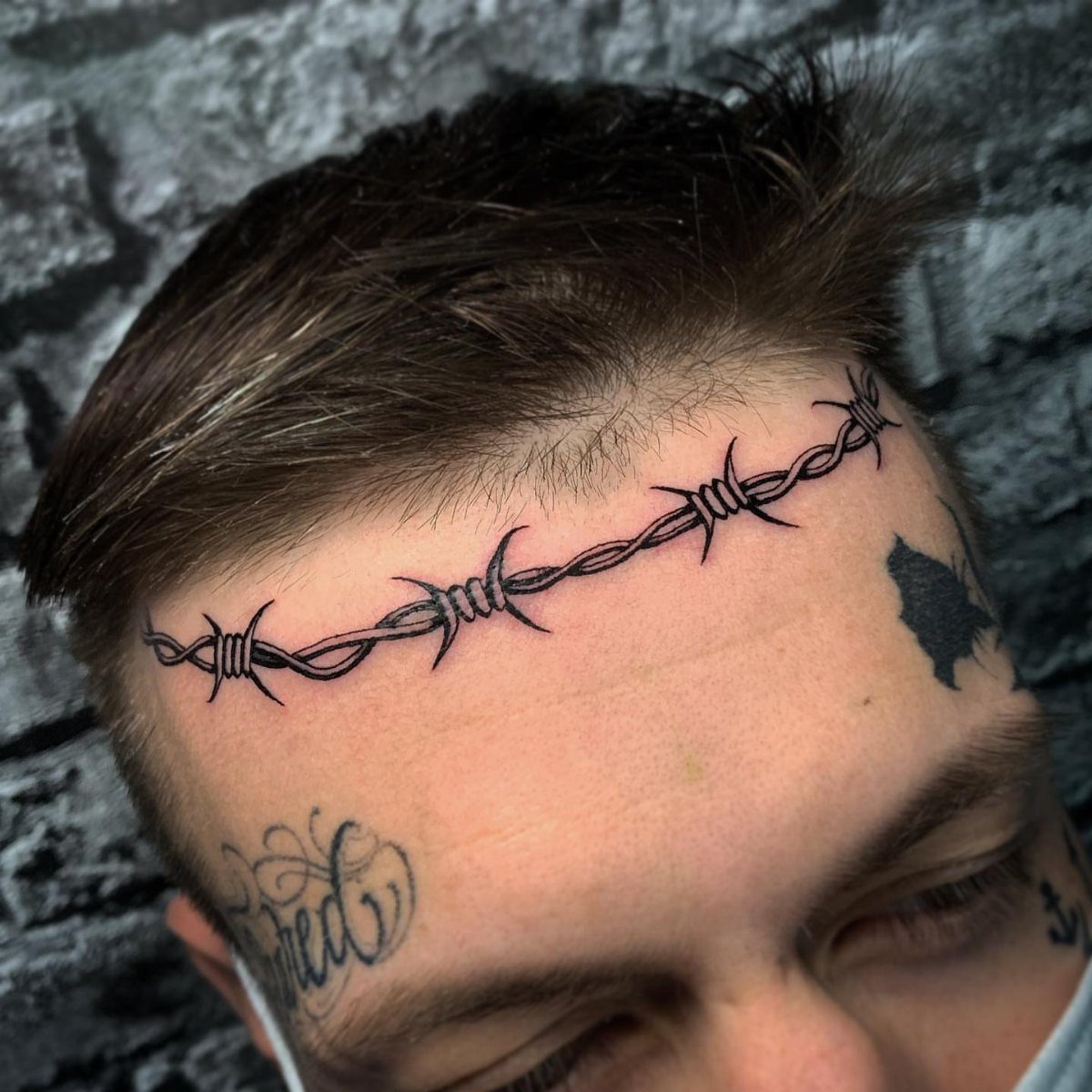
Placing barbed wire across the forehead makes it the first thing anyone sees. The wire sits horizontally, usually just above the eyebrows, following the natural line of the brow.
Healing takes about a week, but the placement draws constant attention during that time.
This is not a discreet choice. A forehead tattoo limits job opportunities more than any other placement.
If that does not matter, the design works technically. Expect questions every time someone looks at you.
11. Spider Web and Barbed Wire
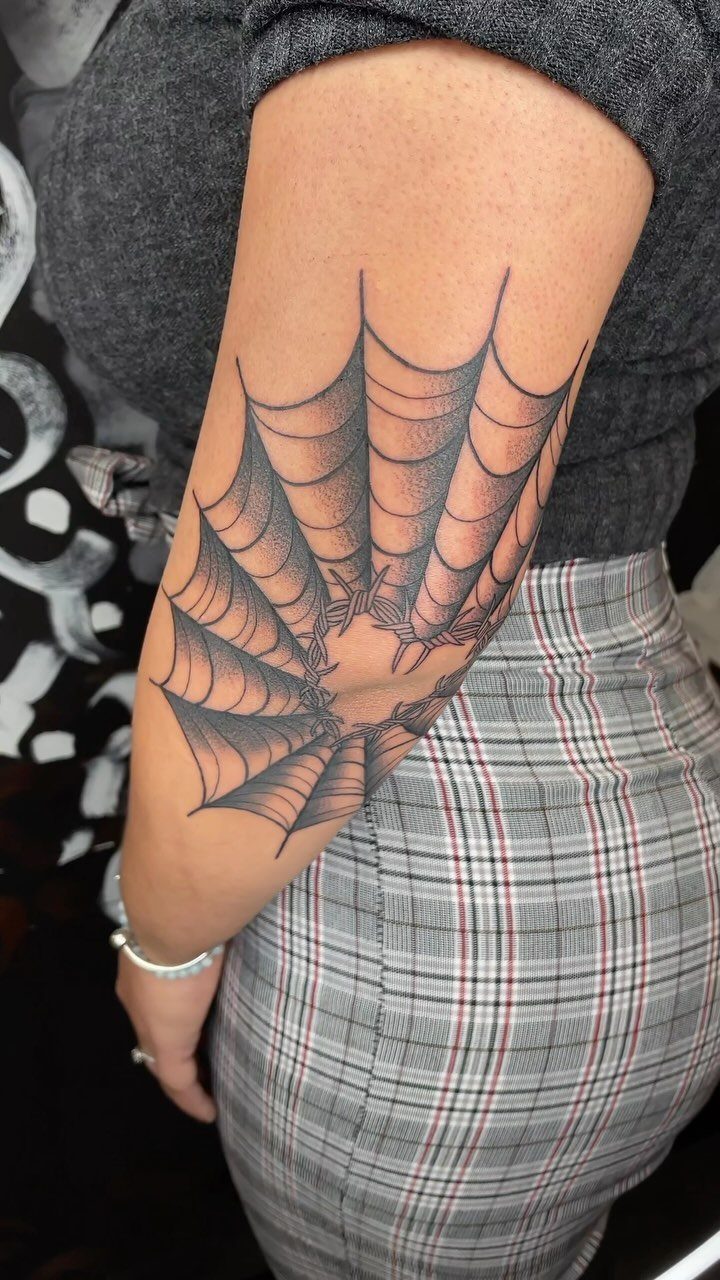
Combining a spider web with barbed wire in the center swaps the usual radial symmetry for a jagged focal point. The web forms the outer structure, and the wire crosses through the middle or wraps around the inner strands.
Placement on the bicep or shoulder gives enough room for both elements to read clearly. The web needs space to spread, so a small version on a wrist or ankle loses detail.
Both symbols carry prison associations in some contexts.
If that matters to you, consider whether the combination sends a message you want. If not, the design works as a visual pairing of 2 geometric patterns in black ink.
Resurgence in Popularity
Barbed wire tattoos are back.
They hit their peak in the late 1990s and early 2000s, mostly as armband designs in black ink. That version was everywhere, then disappeared almost completely for a decade.
The current version looks different.
Fine-line work shows up more often than the thick bands that defined the first wave, and placement has moved beyond the bicep. Hands, ankles and collarbones now carry wire that would have stayed on the upper arm in decades past.
The symbolism holds. Wire still reads as restraint, boundary or hardship, and the design still suits someone adding their first bold piece or filling a gap in existing work.
What changed is the execution: thinner lines, tighter spacing and more attention to how the wire interacts with the skin underneath it.
Back in the 1990s and early 2000s, tramp stamps, tribal and barbed wire were all the rage. In fact, even Pamela Anderson had a barbed wire armband.