Neo-traditional work opens up the palette and lets the composition breathe compared to vintage flash, while Varga reproductions and classic Sailor Jerry figures hold tight to mid-century line work.
Bold outlines and saturated color age more reliably than soft pastels or fine detail, and black and grey alone still reads clearly when the contrast stays high.
1. Neo-Traditional Style Pin Up Tattoos
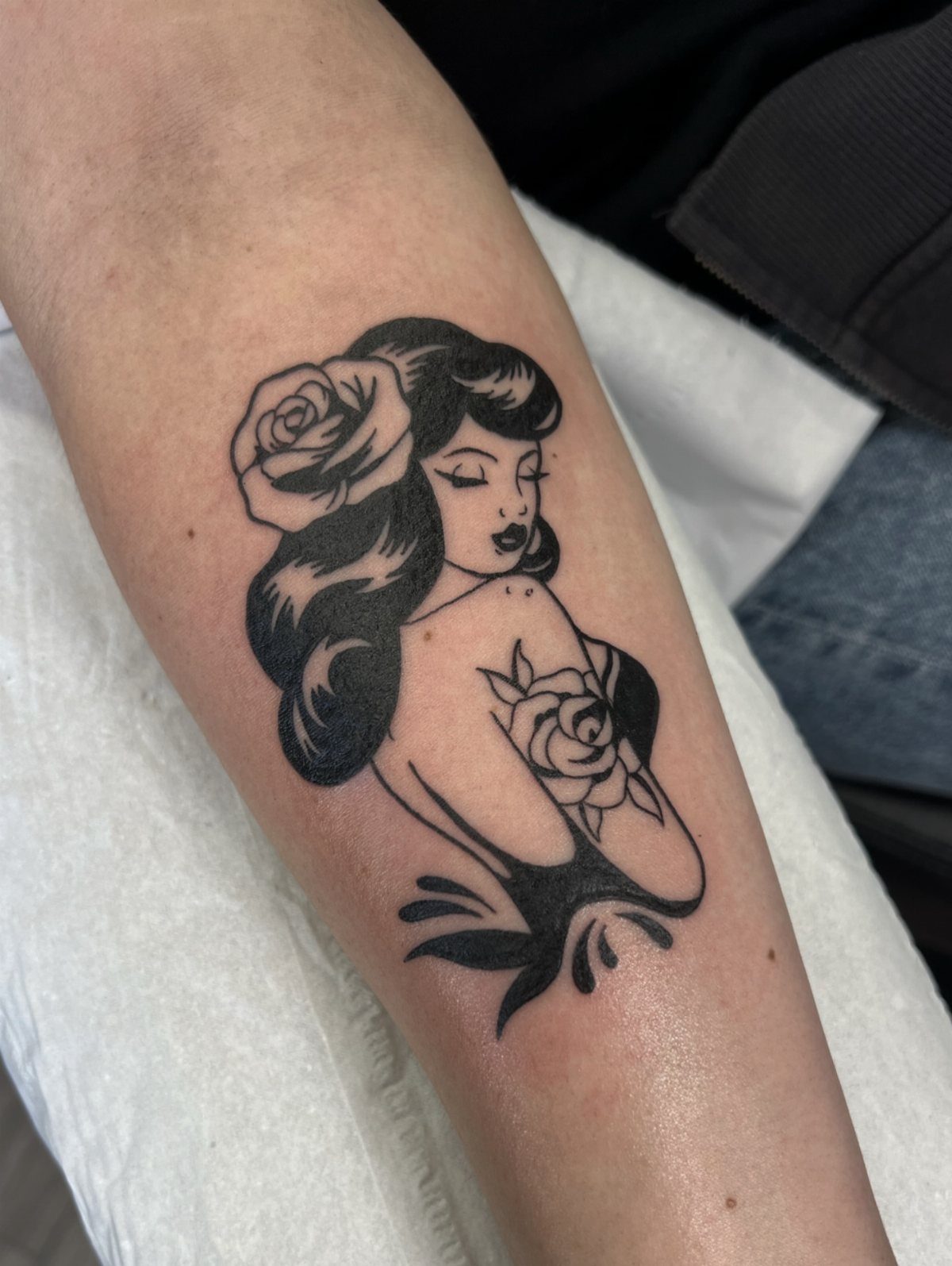
Neo-traditional pin-up pulls in bold outlines and saturated color, keeping the classic figure but sharpening the edges and adding depth through modern shading.
Roses and other florals get layered in as supporting elements, and the whole composition reads crisper than a vintage flash sheet.
Black ink alone still carries the design when the contrast is high. Forearm placement gives you enough width to show the figure without cramping her, and the vertical space lets supporting details breathe above or below.
The pin-up mood with harder contrast ages more reliably than soft pastels.
2. Varga Girls
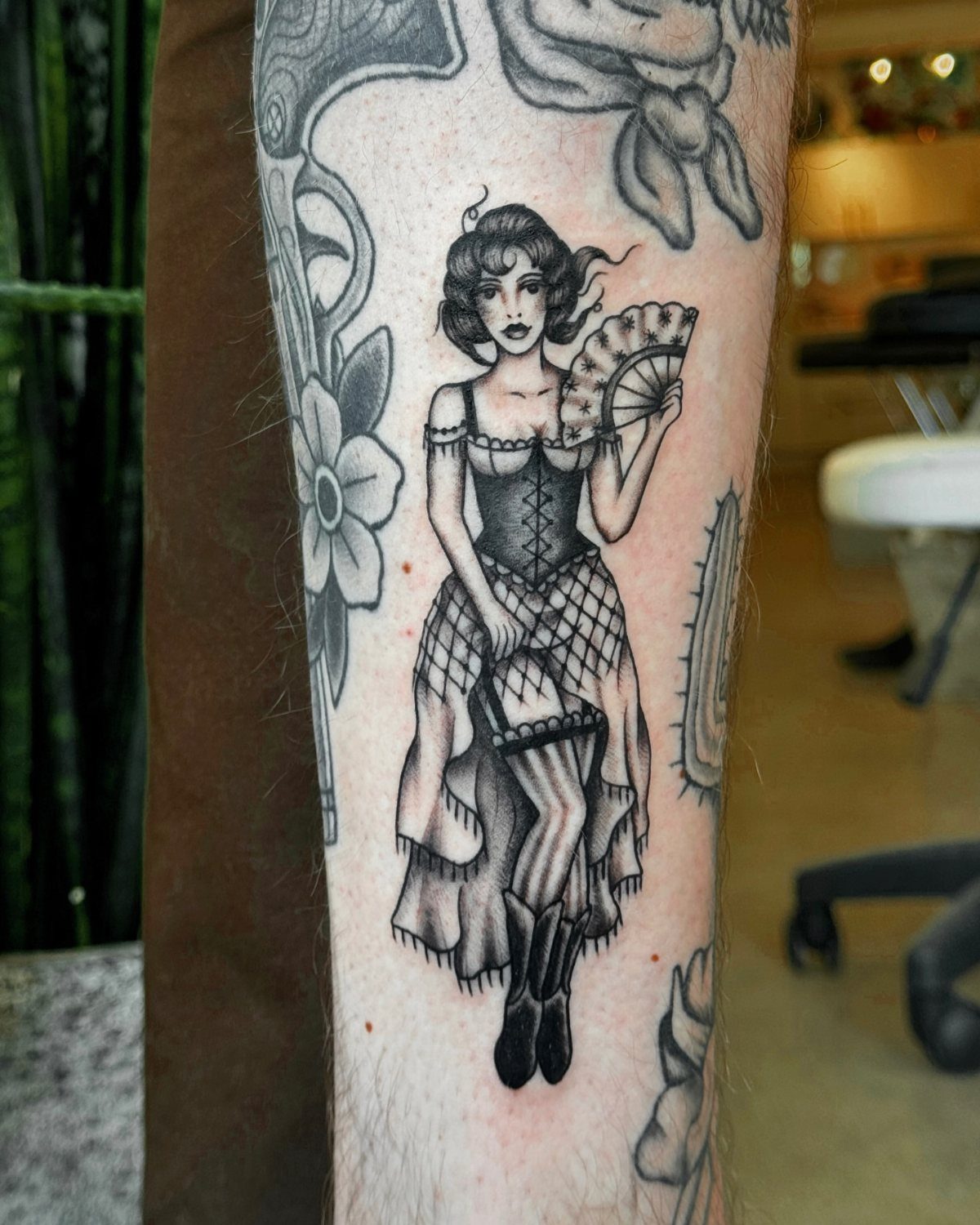
Varga girls lean on elegance over exaggeration.
The figures sit or pose in ways that suggest motion without action, often with a fan, a fur stole, or fishnets as the only props. Shading stays soft, and legs stretch long.
Black and grey suits this style more reliably.
You lose the airbrushed glow of the originals, but the linework and silhouette stay readable at any size. Calf or thigh placement gives you the length these figures need.
Most artists working in this vein will reference Alberto Vargas’s original illustrations, so bring a few for a specific pose or finish.
3. Playboy Bunnies
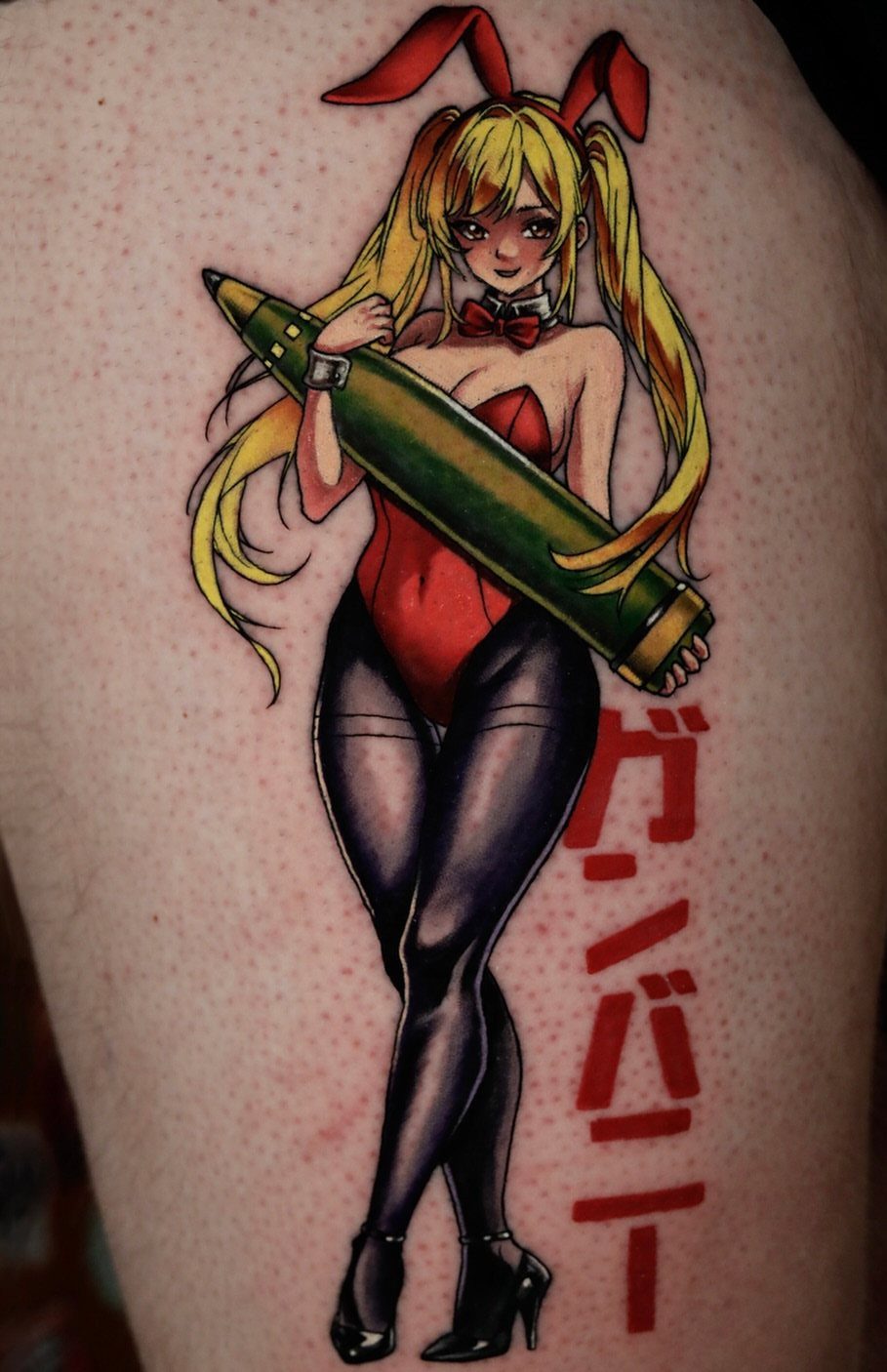
Playboy bunny tattoos mix the costume’s recognizable silhouette with anime styling, bright color, and oversized props. The suit stays red or black, the bow tie and cuffs stay white, and everything else opens up for interpretation.
This example drops in a green pencil and vertical Japanese script, both large enough to balance the figure. Anime faces flatten perspective and simplify features, so the tattoo reads clearly even when the artist adds detail elsewhere.
Placement depends on how much supporting imagery you add. An arm or thigh handles the figure plus one object; anything more needs a larger canvas.
4. Betty Boop
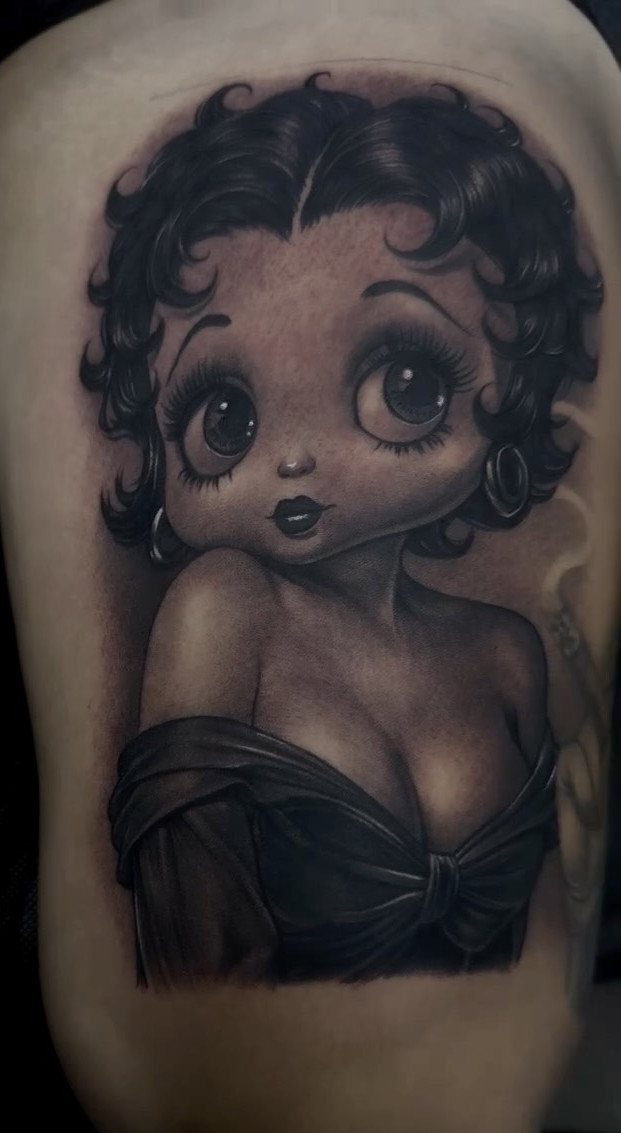
Betty Boop converts cleanly to black and grey.
The character was designed for animation, so the shapes stay bold and the proportions cartoonish. Big eyes, short dress, garter, high heels, all built to read at a glance.
Arm placement keeps her visible without needing much real estate.
Most artists stick to the classic pose, one leg kicked up, because that’s the silhouette everyone recognizes. Adding color is possible, but black and grey keeps the vintage feel closer to the original style.
If you grew up with her, she ages well as a tattoo. Simple shapes hold ink better than fine detail.
5. Hula Girls
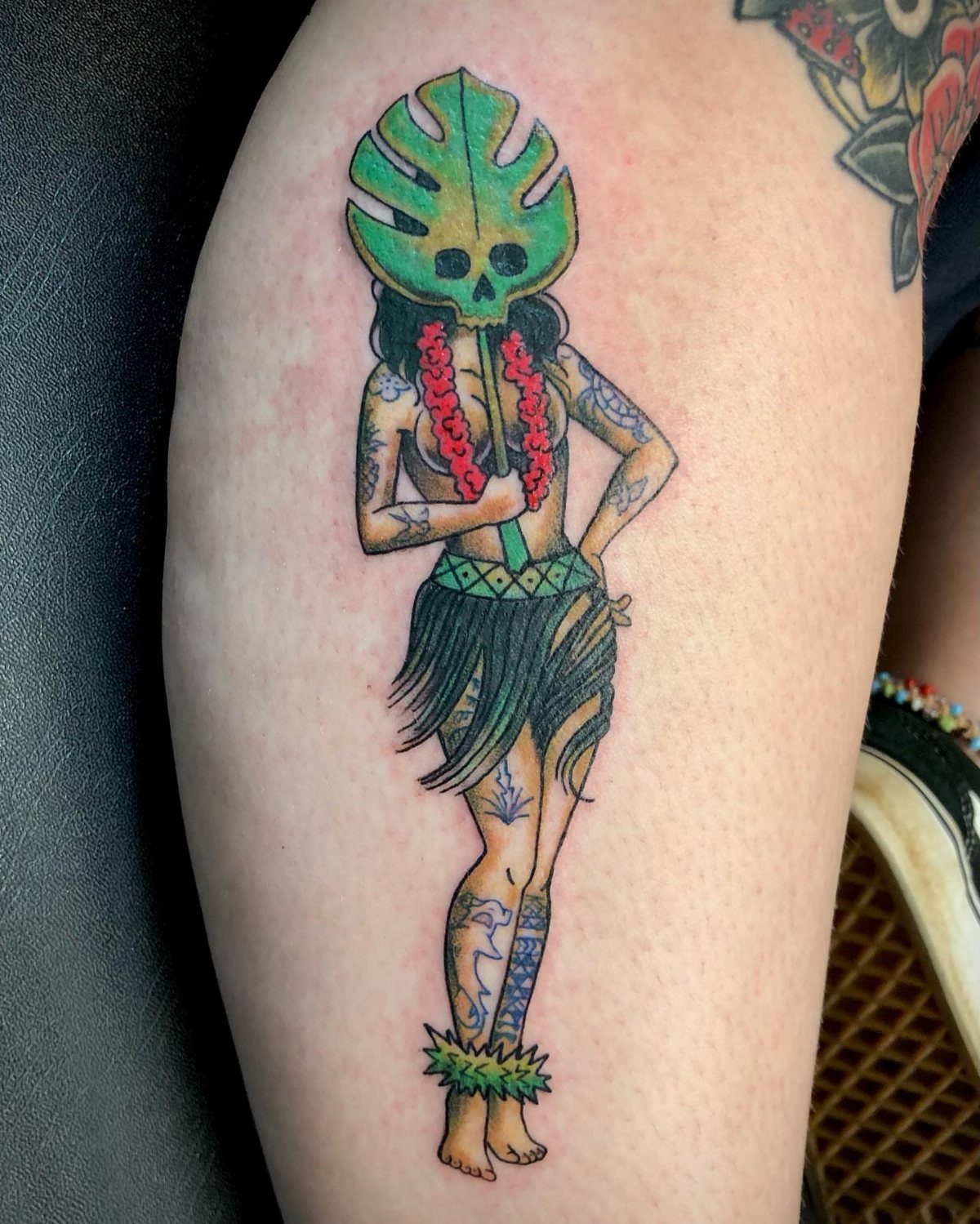
Hula girl pin-ups bring in grass skirts, leis, and tropical flowers, but this version adds a skull-shaped leaf mask, which pushes the design darker without losing the playful mood.
Leg placement suits the figure’s proportions and lets the design stretch from ankle to mid-thigh at full height.
Color or black and grey both work. Color emphasizes the tropical elements, but black and grey keeps the skull detail sharp and focuses attention on the figure’s pose rather than decoration.
Expect an artist to ask whether you prefer the mask element or a more traditional smiling face. Both versions exist in flash, and the mood changes completely.
6. Cowgirls
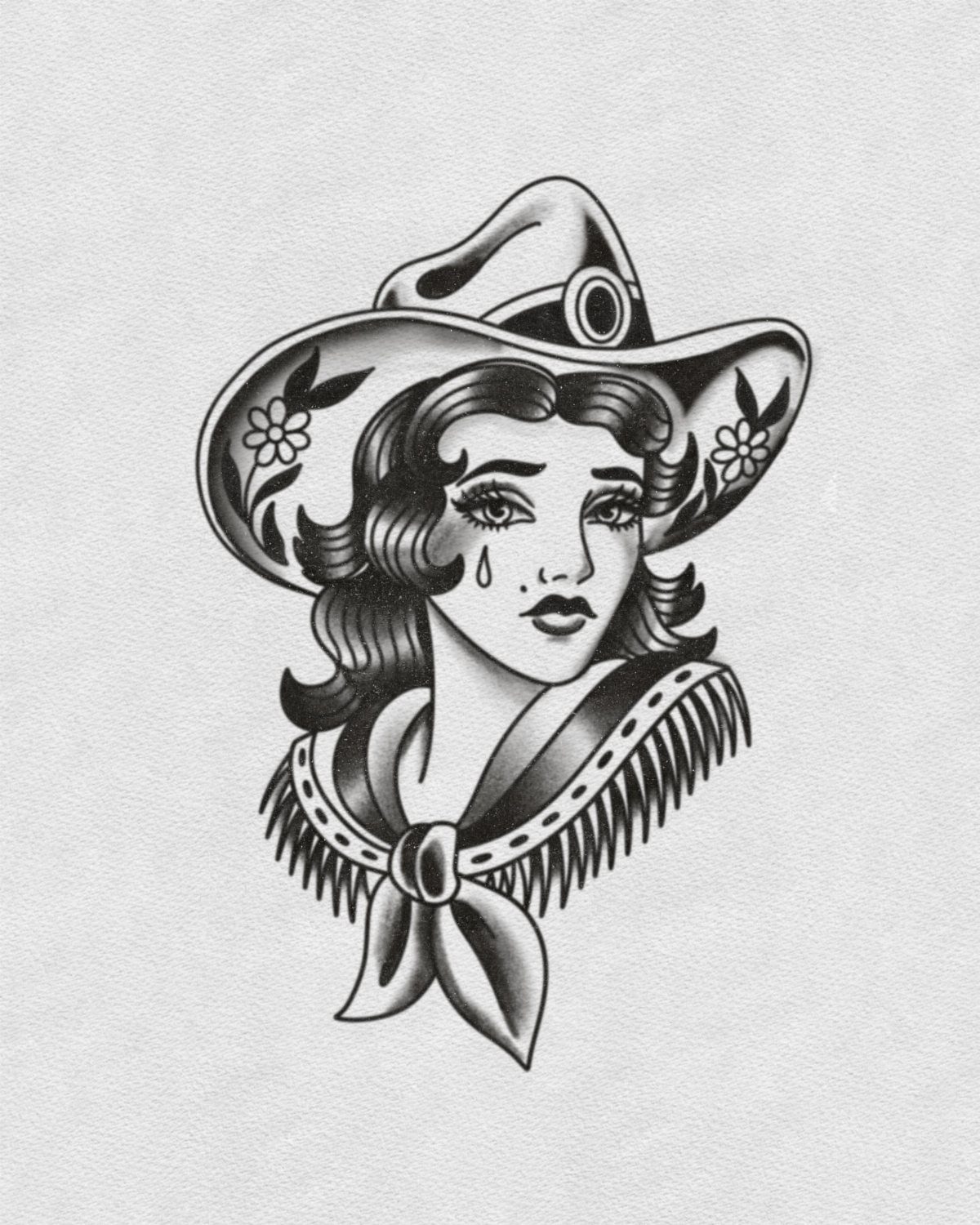
Cowgirl pin-ups carry a melancholy edge when the artist adds a tear or drops the smile. This design stays traditional: cowboy hat, neckerchief, clean linework, and black shading that emphasizes the face over the costume.
Flash illustrations like this one work well as-is or adapted to fit your placement. Shoulder, arm, or thigh all handle the vertical format without cramping the hat brim or the figure’s shoulders.
If you want something that nods to Western imagery without going full rodeo, this version balances toughness and vulnerability better than most pin-up styles. The single tear reads as strength, not sadness.
7. Navy Girls
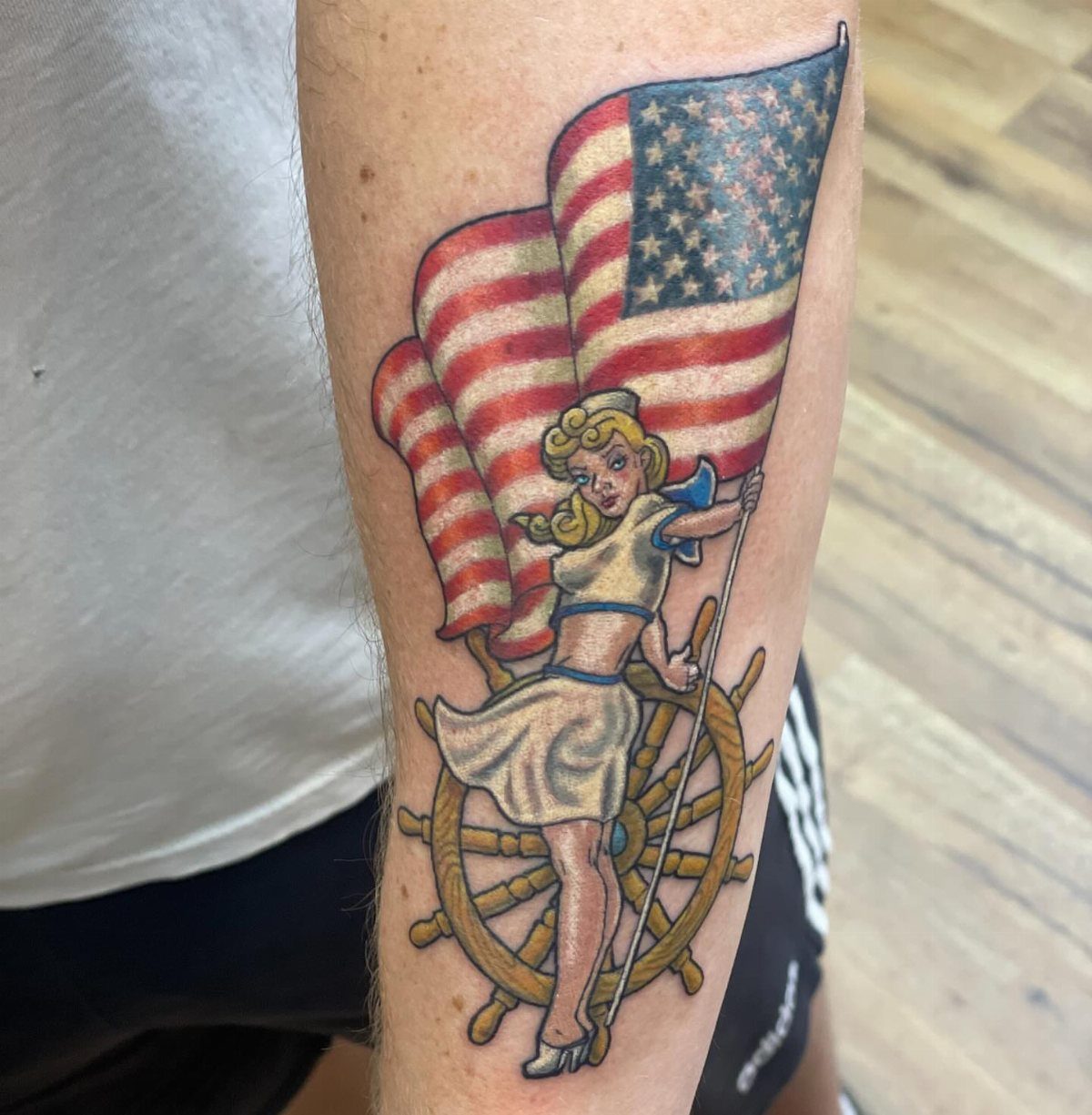
Sailor pin-ups pair the uniform with patriotic imagery, and this version brings in an American flag and ship’s wheel to ground the nautical theme. The blonde figure holds the flag at an angle, which adds motion without crowding the forearm.
Black shading keeps the uniform details crisp, and red and blue accents on the flag give the design a focal point without overwhelming the line work. Forearm placement suits the vertical format and leaves room for the wheel behind her.
If you want a pin-up that nods to military service or maritime history, the uniform and props do the work without text.
8. Man’s Ruin Pin Up Tattoo
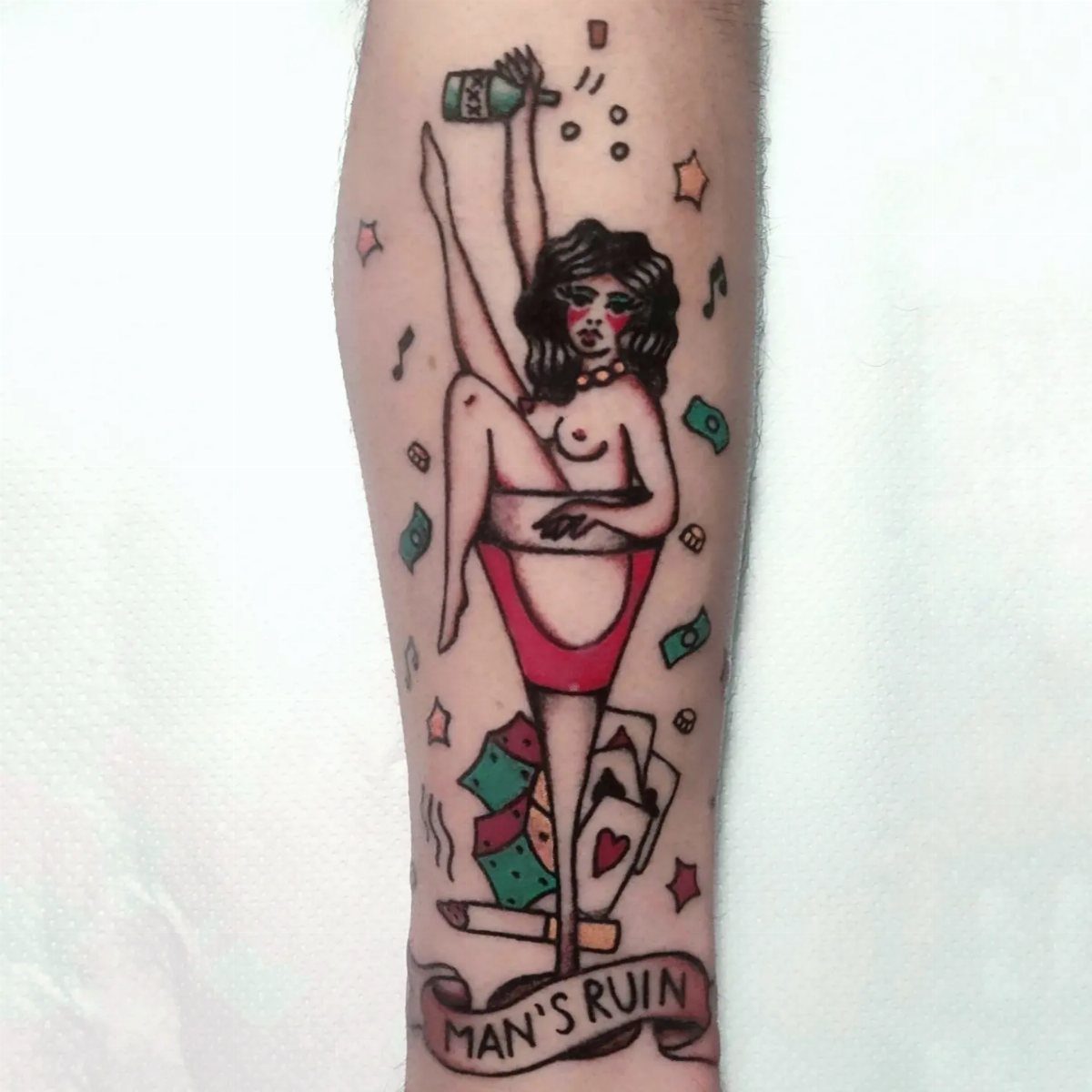
Man’s ruin designs bundle the figure with vices: dice, cards, bottles, cigarettes, sometimes cash or a banner spelling it out. This tattoo stacks all of them around a dark-haired pin-up, with "MAN’S RUIN" in a ribbon across the top.
The motif comes from mid-century flash, where the imagery warned against temptation while celebrating it at the same time. Black and grey handles the traditional look, and the supporting elements fill the space around the figure without needing much color.
Arm or thigh placement gives you enough room to include multiple props. Most artists working in American traditional will have a version in their portfolio.
9. Mermaids
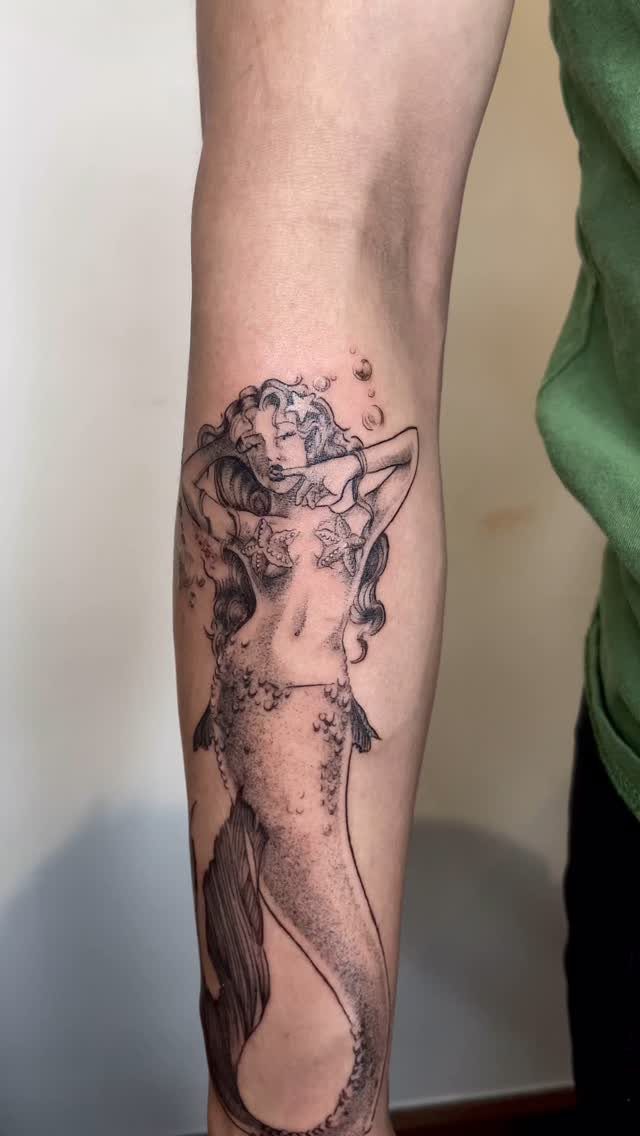
Mermaid pin-ups trade legs for a tail but keep the pose and proportions intact.
Black and grey suits the fantasy element without pushing the design too far into cartoon territory, and the scales give the artist room to add texture through shading alone.
Forearm placement works when the tail curves or the figure reclines. Vertical space matters less here than width, since the tail usually bends or flows to one side.
If you want a pin-up that feels less grounded in wartime nostalgia, the mermaid version keeps the figure but shifts the mood toward myth.
10. Pin-Up Leaning on Dragon Tattoo
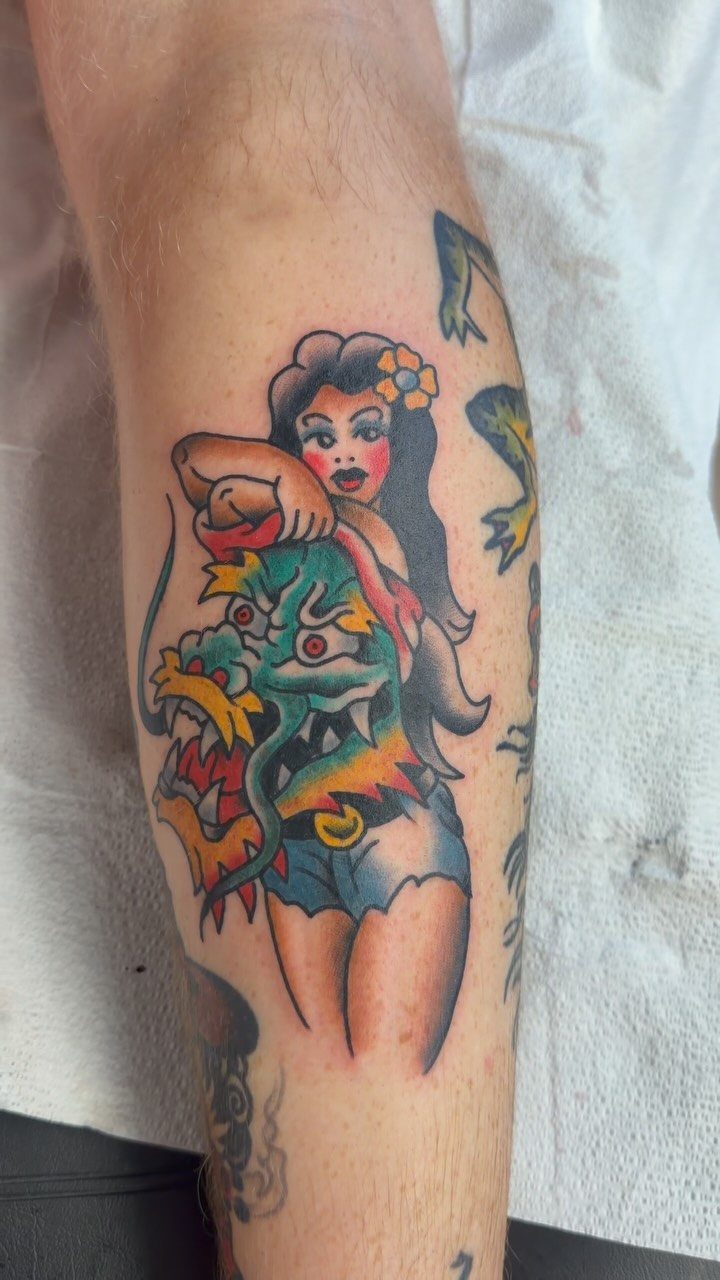
Pairing a pin-up with a dragon head pulls two tattoo traditions into one design. The figure leans casually against the dragon, which gives both elements equal weight without splitting the composition.
Color brings out the dragon’s scales and the flower in her hair, and the green and orange contrast keeps the piece from blending into one mass.
Lower leg placement handles the vertical format and lets the dragon’s head sit at the widest part of the calf. Black and grey would flatten the detail here, so color serves a structural purpose.
If you like neo-traditional but want something less predictable than roses or anchors, the dragon adds visual interest without turning the design into pure fantasy.
11. Cocktail Pin-Up Girl Tattoo
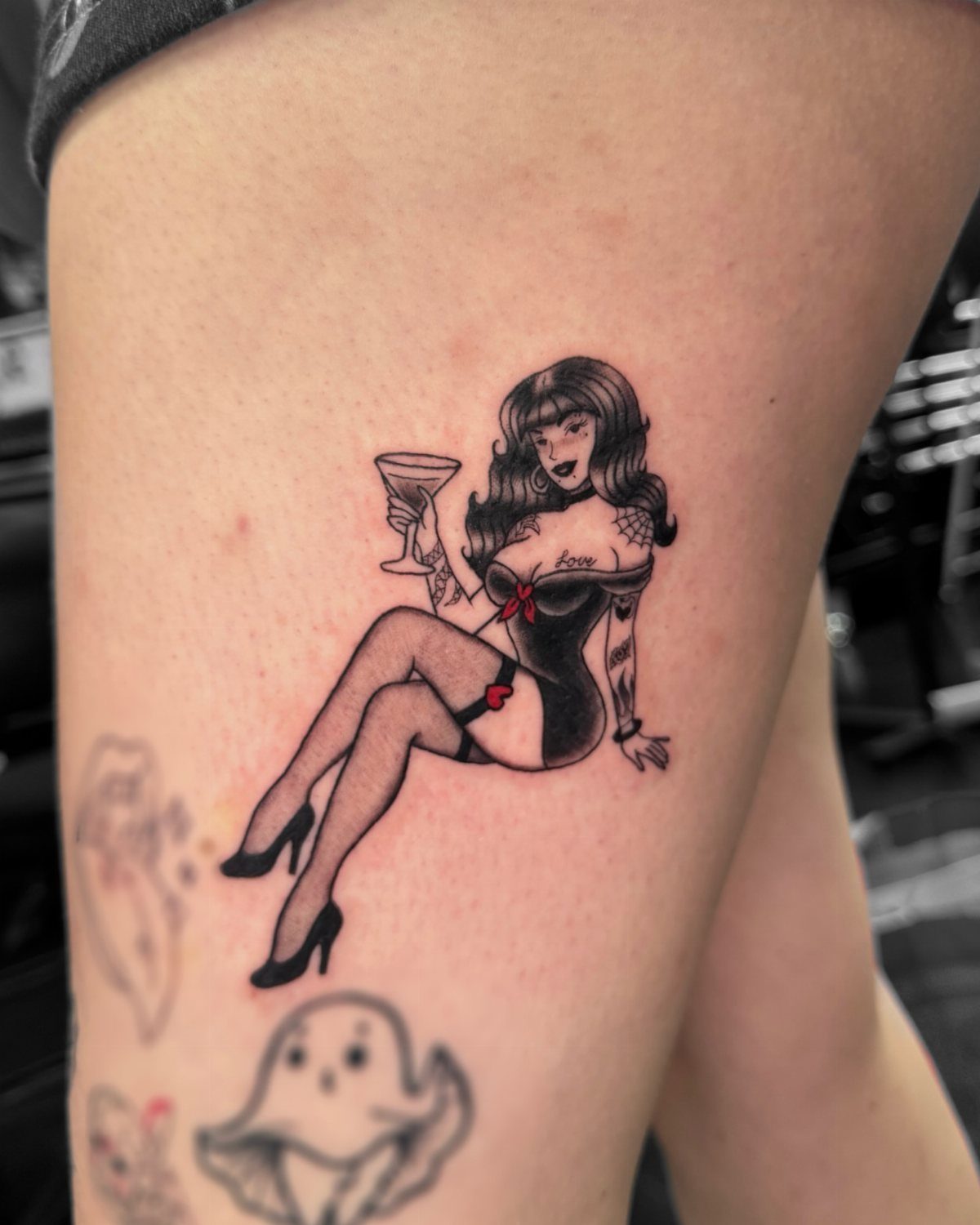
Black and grey with selective red accents keeps the focus on the figure while giving the design one bright element.
The corset, glass, and "love" lettering across her chest lean into pin-up glamour without military or nautical props, and the red lipstick and garter pull the eye without requiring full color saturation.
Thigh placement suits the vertical format and gives the artist room to add shading that models the figure without cramping the glass or corset detail. The cocktail theme reads as lounge rather than barracks, so the mood shifts toward nightlife.
The cocktail theme trades military nostalgia for lounge glamour without losing the pin-up silhouette.
12. Stylized Afro Pin-Up Tattoo
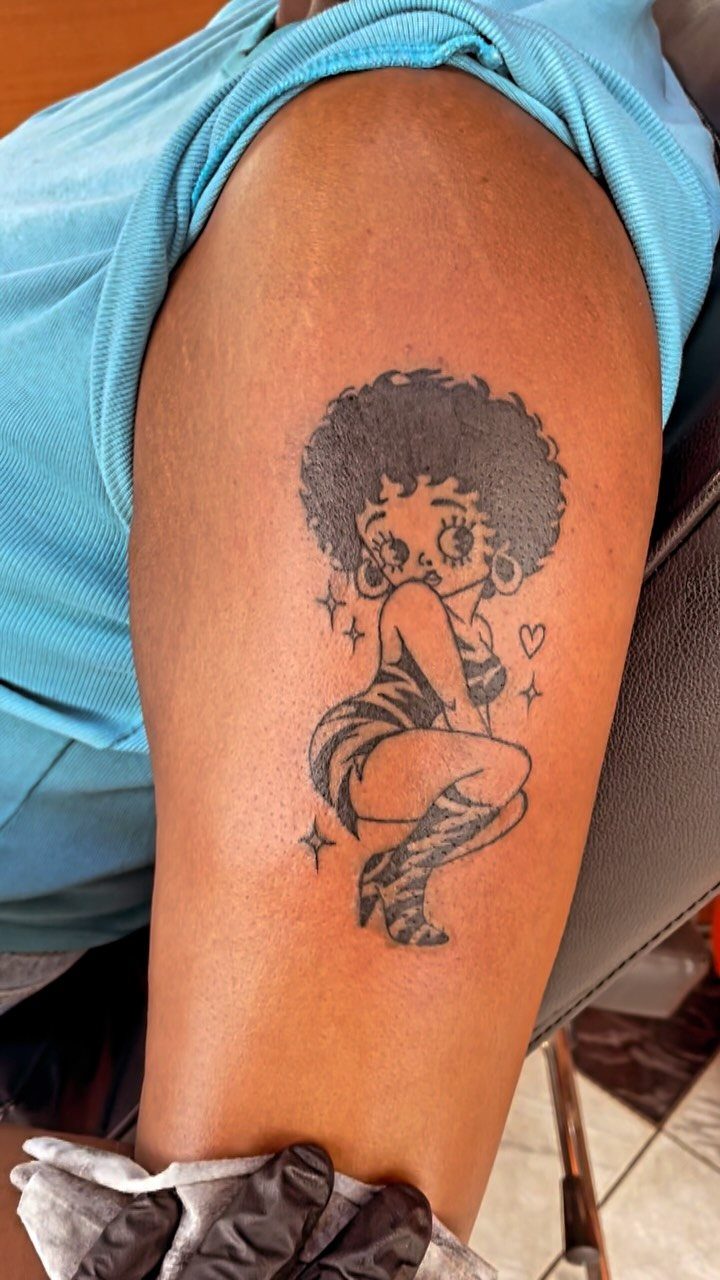
Black ink alone can carry a stylized pin-up when the shapes stay bold and the surrounding elements add contrast.
The afro gives the figure a silhouette that stands out without relying on shading, and the stars and heart balance the design without cluttering the space.
The vertical format suits a thigh, and the space lets the artist hold detail in both the hair texture and the figure. Line work matters more here than shading, so the design reads clearly even from a distance.
This design centers Black beauty in a format usually dominated by midcentury white subjects, keeping the pose recognizable while shifting the reference.
13. Pink Hair Chair Pose Pin-Up
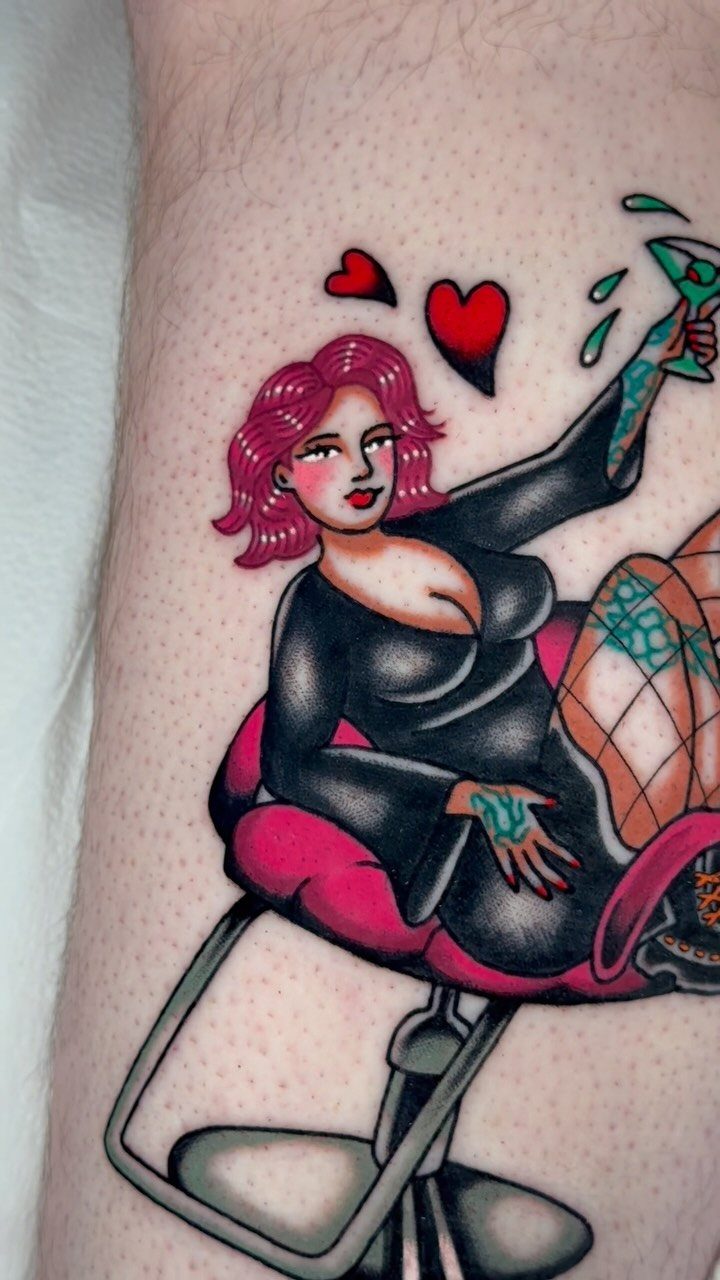
Pink hair and a matching chair turn a traditional pose into something closer to illustration than flash.
The black dress keeps the figure grounded while the color anchors the composition, and the floating hearts fill space without requiring much shading detail.
Chair poses give the artist room to work with body language. A seated figure reads as relaxed rather than posed for action, and the glass adds a prop without cluttering the hand.
Thigh or upper arm handles the width this needs. The pink pulls the design away from vintage americana, so expect it to age as pop art rather than traditional.
Historical Context of Pin-up Tattoos
Pin-up tattoos came out of World War II when soldiers carried images of idealized women as reminders of home.
The art itself existed earlier, mostly in magazines and newspapers from the early 1900s, but it moved onto skin when servicemen started getting the figures inked as luck symbols.
Sailor Jerry and other American traditional artists cemented the style in the 1930s and 40s. Bold lines and patriotic accents defined the original look, which held up under the technical limits of the time and still reads clearly decades later.
By the mid-20th century the imagery started shifting.
What began as longing and idealization turned into something closer to independence and self-expression. The figures stayed recognizable, but the cultural weight behind them changed as ideas about femininity moved away from pure decoration.
Pin-up tattoos were first popularized in the 1930s by historic Traditional style artists like Sailor Jerry. To remind them of home and bring them luck, many soldiers and sailors chose to get pin-up style tattoos, creating a popular trend nationwide.
— Tattoodo
Artistic Elements of Pin-up Tattoos
Color does structural work in pin-up tattoos. Deep reds in a dress, skin tone gradients, and accent shades create depth and pull the figure forward without relying entirely on shading.
Artists working in this style use saturated palettes to add motion and mood where the line work alone would flatten.
Bold outlines matter just as much. They define the form and keep the tattoo readable at a distance, which is why the style ages better than fine detail or soft blending.
The lines stay crisp even as the color settles, and the shapes hold together when viewed from any angle.
Evolution of Pin-up Tattoos
The figures still reference wartime flash, but the rendering adds dimension and lets artists push color saturation higher than the originals could.
The subject matter widened as the style aged.
The pose and proportions translate across subjects, so I see everything from cowgirls and fantasy figures to Disney characters rendered as pin-ups in styles that run from photorealistic black and grey to full cartoon.
The core elements stay the same: recognizable pose, stylized figure, supporting props that ground the theme.
What changed most is the cultural reading.
Pin-ups stopped being purely about idealized beauty and started carrying themes of empowerment and individuality. The figure still commands attention, but the context around it shifted as norms around femininity and self-expression moved.
Frequently Asked Questions
What does a pin-up tattoo mean?
They started as good luck charms for sailors and soldiers heading overseas, a way to carry something beautiful into dangerous places.
The imagery has since shifted toward empowerment and self-expression, moving away from pure idealization as ideas about femininity changed. The meaning has shifted: what once decorated a barracks locker now signals confidence, nostalgia, or a refusal to play down femininity.
How much does a pin-up tattoo cost?
Cost depends on size, detail level, and color work. A simple black and grey design on your forearm or calf runs lower than a full-color thigh piece with supporting props like dragons, florals, or Americana elements.